Webinar happening TODAY!
Last chance to register!
| |
Utilization of Interventional Techniques shows an exponential decline from 2019 to 2022:
Overall:
- 28.9% decrease from 2019-2022, with a 10.7% geometric average annual change.
Epidural Services:
- 24.7% decrease from 2019-2022, with a 9.0% geometric average annual change.
Facet Joint Interventions:
- 37.0% decrease from 2019-2022, with a 14.3% geometric average annual change.
| |
|
Audit Risk for Pain Physicians:
- 90% of pain physicians will be audited within their first 10 years of practice.
- Currently, over 40% of physicians are under active investigation for fraud and abuse.
Risk of Losing Appeals:
- 90% of physicians may lose fraud and abuse appeals, even after meeting all LCD criteria.
| |
Find the Answers to Your Questions! | |
The cost of the webinar is $175 and will provide you with 2 AMA PRA Category 1 Credits™ | |
|
Novel treatment is indicated for children and adults with the rare disorder
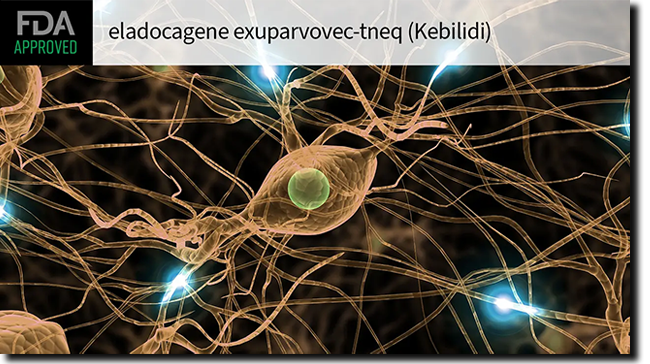
The FDA granted accelerated approval to eladocagene exuparvovec (Kebilidi) to treat children and adults with aromatic L-amino acid decarboxylase (AADC) deficiency, the agency announced Thursday.
The treatment is the first approved gene therapy for AADC deficiency, the FDA said. People with this rare disorder have decreased AADC activity that causes severe disability, including gross motor function deficits, weak muscle tone, and developmental and cognitive delays.
AADC is an enzyme involved in dopamine and serotonin synthesis. Eladocagene exuparvovec is a recombinant adeno-associated virus serotype 2-based therapy that delivers a functioning human DDC gene directly into the putamen, increasing the AADC enzyme and restoring dopamine production.
Read More
| |
Abstract submissions are open for
ASIPP's 2025 Annual Meeting!
The abstract submission deadline is March 10, 2025.
Don't miss this opportunity to share your insights
and help shape the future of pain management.
| |
|
Vaccine skeptic tapped to run massive agency overseeing everything from drug to food safety
Donald Trump has nominated Robert F. Kennedy Jr. to be secretary of the Department of Health and Human Services, the president-elect announced.
The move is expected to send a jolt through the medical and public health community, which has long criticized Kennedy's anti-vaccine activism.
During a campaign rally at Madison Square Garden in New York City in October, Trump talked about letting Kennedy "go wild" on health, medicine, and food.
"For too long, Americans have been crushed by the industrial food complex and drug companies who have engaged in deception, misinformation, and disinformation when it comes to public health," Trump said in a social media post announcing his pick of Kennedy.
Read More
| |
|
Nearly three quarters of U.S. adults are overweight or obese, according to a new study.
The findings have wide-reaching implications for the nation's health and medical costs as it faces a growing burden of weight-related diseases, The New York Times reported.
The study, published in The Lancet on Thursday, revealed the striking rise of obesity rates across the country since 1990, when just over half of adults were overweight or obese, and showed how more people are becoming overweight or obese at younger ages than in the past. Both conditions can raise the risk of diabetes, high blood pressure and heart disease, and shorten life expectancy.
Read More
| |
|
Mehmet Oz, MD, has been an outspoken supporter of the President-elect
President-elect Donald Trump says he is nominating Mehmet Oz, MD, who hosted a long-running television talk show, to lead the Centers for Medicare & Medicaid Services (CMS).
"Dr. Oz will be a leader in incentivizing Disease Prevention, so we get the best results in the World for every dollar we spend on Healthcare in our Great Country," Trump said in a statement. "He will also cut waste and fraud within our Country's most expensive Government Agency, which is a third of our Nation's Healthcare spend, and a quarter of our entire National Budget."
Oz unsuccessfully ran for Senate in Pennsylvania as a Republican in 2022 and is an outspoken supporter of Trump.
Read More
| |
|
Virtual
December 14
Four (4) hour virtual exam
- ABIPP Path – Combined CCPM/ CSM Exam
For those with subspecialty in Pain Medicine
Two (2) hour virtual exam
- ABIPP Competency Exam in IPM
For those without primary board certification
Two (2) hour virtual exam
- ABIPP Competency Exam in Regenerative Medicine
Two (2) hour virtual exam
- Controlled Substance Management Competency Exam
Two (2) hour virtual exam
- Documentation, Coding, Compliance, Practice Management Competency Exam
Two (2) hour virtual exam
2025 Exam Dates Coming Soon!
| |
|
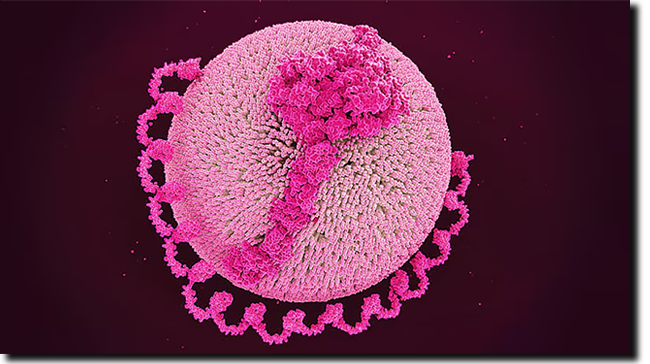
Muvalaplin, a novel oral medication, safely and effectively lowers high levels of lipoprotein(a), or Lp(a), results from the phase 2 KRAKEN trial show.
Concentrations of Lp(a) cholesterol are genetically determined and remain steady throughout life. Levels of 125 nmol/L or higher promote clotting and inflammation, significantly increasing the risk for heart attack, stroke, aortic stenosis, and peripheral artery disease. This affects about 20% of the population, particularly people of Black African and South Asian descent.
There are currently no approved therapies that lower Lp(a), said study author Stephen Nicholls, MBBS, PhD, director of the Victorian Heart Institute at Monash University in Melbourne, Australia. Several injectable therapies are currently in clinical trials, but muvalaplin is the only oral option. The new drug lowers Lp(a) levels by disrupting the bond between the two parts of the Lp(a) particle.
Read More
| |
Registration is open for
ASIPP's 2025 Annual Meeting
We would love it if you would register and join us in Orlando!
| |
|
Issues include workload, bureaucracy, and loss of autonomy
Several hundred primary care physicians at Mass General Brigham (MGB) notified the National Labor Relations Board on Friday that they support unionization, a move they called historic and increasingly common throughout the country.
The petition to link up with the Doctors Council, a labor union for physicians, was prompted by a growing number of factors, said Michael Barnett, MD, an MGB internist and associate professor of medicine at Harvard Medical School and the Harvard School of Public Health.
Through a union, the doctors hope to fight back on what they perceive as too many layers of bureaucracy that hinder physicians' access to leadership to help solve problems, he said.
Read More
| |
- ASIPP Members Only Site Information - | |
-
To log in for the first time you will need to click “forgot password” at the bottom of the login window.
- Check your email and then log in as directed.
-
If you have problems logging into your account, click here.
| |
|
Let's not bury our heads in the sand
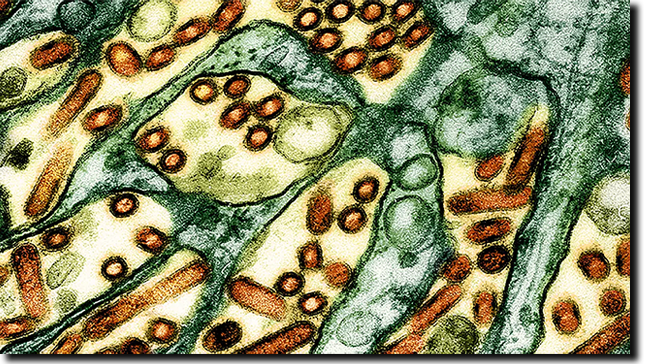
Colleagues, it's time to wake up and smell the coffee. Or, for a true reality check, just scan the Department of Agriculture's frequently-updated map and tables naming the many animals that have tested positive for highly pathogenic avian influenza (HPAI) in the U.S. since May 2022.
Finding influenza A/H5N1 in wild birds and waterfowl and poultry is nothing new, of course. During 2024, however, our country has seen its first-ever multi-state outbreak in dairy cows expressing milk heavily tainted with the virus, as well as illness, deaths, or detections in cats, goats, alpaca, skunks, and house mice, among others. The latest species found to harbor A/H5N1 was a backyard pig in Oregon. Once euthanized, its tissues teeming with virus fueled further unease because pigs are classic mixing vessels in which human and avian flu viruses can recombine and form new, virulent strains.
Now for some less ominous news: the viral strain currently circulating in American dairy cows and poultry has not yet caused serious disease in people. Thus far, based on very limited testing, roughly four dozen A/H5N1 infections almost equally divided between dairy and poultry workers have been mild or even asymptomatic. As a result, CDC continues to state that the risk to the general public is low.
Read More
| |
|
Pain Medicine Case Reports (PMCR) and Editor-in-Chief Alaa Abd-Elsayed, MD, PhD would like to invite you to submit case reports and case series to the PMCR journal. Your article will be published free of charge.
Open access journals are freely available online for immediate worldwide open access to the full text of published articles. There is no subscription fee for open access journals. Open access journals are no different from traditional subscription-based journals: they undergo the same peer review and quality control as any other scholarly journal.
Interested in becoming a member of the PMCR Editorial Board?
Editorial board members are asked to review 2-6 manuscripts per year. Please submit your most up-to-date CV to sgold@asipp.org for consideration.
For more information or to submit your articles, click here.
| |
|
Azem A. Chami, MD, William C. Upshaw, BS, Sahar Shekoohi, PhD, and Alan D. Kaye, MD, PhD
Abstract
BACKGROUND: Many treatments for severe complex regional pain syndrome (CRPS) are ineffective as patients may still experience pain even after various therapeutic approaches. Therefore, it is important to consider novel and creative treatment options for patients suffering from unremitting refractory pain.
CASE REPORT: We report the case of a patient with severe CRPS, which proved to be refractory to numerous conventional treatments. CRPS is a disease that causes chronic pain, typically in distal extremities.
CONCLUSIONS: Treatment for CRPS includes pharmacotherapy, sympathetic nerve block, and/or various surgical procedures. However, some patients may receive little benefit from these treatments with persistent severe pain despite undergoing treatment. Thus, novel treatments have been attempted to lessen CRPS-mediated pain. We present a case where one of these unconventional therapeutic approaches was utilized involving the administration of sufentanil through an intrathecal pump providing effective pain reduction in a patient with CRPS.
KEY WORDS: Complex regional pain syndrome, sufentanil, intrathecal pump, pharmacotherapy, pain
Read More
| |
New PNS Guidelines NOW AVAILABLE! | |
|
Laxmaiah Manchikanti, MD, Mahendra R. Sanapati, MD, Amol Soin, MD, Alan D. Kaye, MD, PhD, Adam M. Kaye, PharmD, Daneshvari R. Solanki, MD, Grant H. Chen, MD, Devi Nampiaparampil, MD, Nebojsa Nick Knezevic, MD, PhD, Paul Christo, MD, Alexander Bautista, MD, Jay Karri, MD, Shalini Shah, MD, Standiford Helm II, MD, Annu Navani, MD, Bradley W. Wargo, DO, Christopher G. Gharibo, MD, David Rosenblum, MD, Komal Luthra, MD, Kunj G. Patel, MD, Saba Javed, MD, Warren Reuland, MD, Mayank Gupta, MD, Alaa Abd-Elsayed, MD, Gerard Limerick, MD, PhD, Ramarao Pasupuleti, MD, Gary Schwartz, MD, Matthew Chung, MD, Konstantin V. Slavin, MD, Vidyasagar Pampati, MSc, and Joshua A. Hirsch, MD
Abstract
BACKGROUND: Peripheral nerve stimulation (PNS) has been used for over 50 years to treat chronic pain by delivering electrical pulses through small electrodes placed near targeted peripheral nerves those outside the brain and spinal cord. Early PNS systems often required invasive neurosurgical procedures. However, since 2015, the Food and Drug Administration (FDA) approved percutaneously implanted PNS leads and neurostimulators offering a much less invasive, non-opioid option for managing recalcitrant chronic pain.
The following FDA-cleared PNS systems are commercially available in the United States for the management of chronic, intractable pain:
• Freedom® Peripheral Nerve Stimulator (PNS) System (Curonix LLC, 2017)
• StimRouter® Neuromodulation System (Bioness, now Bioventus, 2015)
• SPRINT® PNS System (SPR® Therapeutics, Inc., 2016)
• Nalu™ Neurostimulation System (Nalu Medical Inc., 2019)
• ReActiv8® Implantable Neurostimulation System (Mainstay Medical Limited, 2020)
The American Society of Interventional Pain Physicians (ASIPP) has published evidence-based consensus guidelines for the application of PNS systems in managing chronic pain.
OBJECTIVE: The guidelines aim to provide evidence-based recommendations for the utilization of peripheral nerve stimulation (PNS) in the management of moderate to severe chronic pain. These guidelines exclude field stimulation, or sacral nerve stimulation.
METHODS: A multidisciplinary panel of experts in various medical and pharmaceutical fields, convened by ASIPP, reviewed the evidence, considered patient perspectives, and formulated recommendations for implantable peripheral nerve stimulation in chronic pain management.
The methodology included developing key questions with evidence-based statements and recommendations. The grading of evidence and recommendations followed a modified approach described by ASIPP, the Grading of Recommendations Assessment, Development and Evaluation (GRADE) method, and the Agency for Healthcare Research and Quality (AHRQ) strength of recommendations methods. The evidence review includes existing guidelines, systematic reviews, comprehensive reviews, randomized controlled trials (RCTs), and observational studies on the effectiveness and safety of implantable peripheral nerve stimulation in managing chronic pain. The quality of published studies was assessed using appropriate instruments for systematic reviews, RCTs, and observational studies.
In the development of consensus statements and guidelines, we used a modified Delphi technique, which has been described to minimize bias related to group interactions. Panelists without a primary conflict of interest voted to approve specific guideline statements. Each panelist could suggest edits to the guideline statement wording and could suggest additional qualifying remarks or comments as to the implementation of the guideline in clinical practice to achieve consensus and for inclusion in the final guidelines, each guideline statement required at least 80% agreement among eligible panel members without primary conflict of interest.
RESULTS: A total of 31 authors participated in the development of these guidelines. Of these, 23 participated in the voting process. A total of 8 recommendations were developed. Overall, 100% acceptance was obtained for 8 of 8 items. Thus, with appropriate literature review, consensus-based statements were developed for implantable peripheral nerve stimulation in chronic pain management.
In preparation of these guidelines, evidence synthesis included 7 systematic reviews, 8 RCTs, and 9 observational studies covering all PNS treatments. The evidence was developed using GRADE criteria or certainty of evidence, and qualitative synthesis based on the best available evidence. The evidence level and recommendations are as follows:
For implantable peripheral nerve stimulation systems following a trial or selective lumbar medial branch stimulation without a trial, the evidence is Level III or fair with moderate certainty.
Evidence Level: Fair; Strength of Recommendation: Moderate
For temporary peripheral nerve stimulation for 60 days, the evidence is Level III or fair, with moderate certainty.
Evidence Level: Fair; Strength of Recommendation: Moderate
Based on the available evidence, it is our recommendation to expand the existing PNS related local coverage determination (LCD) to include craniofacial pain, phantom limb pain, and nociceptive pain in the lower back as present evidence shows Level III or fair with moderate certainty.
LIMITATIONS: The primary limitation of these guidelines is the paucity of the available literature.
CONCLUSION: These evidence-based guidelines support the use of implantable peripheral nerve stimulation leads and neurostimulators in patients with moderate to severe chronic pain refractory to two or more conservative treatments. These guidelines aim to optimize patient outcomes and promote health equity through the integration of PNS technology in clinical practice.
KEY WORDS: Chronic pain, interventional techniques, peripheral neuropathy, peripheral neuropathic pain, peripheral nerve stimulation, selective lumbar medial branch stimulation
DISCLAIMER: These guidelines do not constitute inflexible treatment recommendations. Clinicians are expected to establish a plan of care on a case-by-case basis, considering an individual patient’s medical condition, personal needs, and preferences, and the physician’s experience. Consequently, these guidelines do not represent a “standard of care.”
Read More
| |
|
ASIPP is now in collaboration with Curi Medical Liability Program
| |
|
Since this malpractice insurance program officially launched in November 2018, ASIPP has signed up hundreds of providers with an average savings of 30%. This is professional liability insurance tailored to our specialty and will stand up for us and defend our practices.
Curi is a full-service advisory firm that serves physicians and their practices. Their valued advice is grounded in your priorities and elevated in your outcomes. They are driven by a deep understanding of your specific circumstances in medicine, business, and life. To read a few important points to keep in mind about the program, including discounts, administrative defense, cyber coverage, aggressive claims handling, and complimentary risk management CME activities, visit our website.
| | |
|
Group Purchasing Organization Offer Better Pricing and Creates Added Value
ASIPP has formed a partnership with Henry Schein and PedsPal, a national GPO that has a successful history of negotiating better prices on medical supplies and creating value-added services for independent physicians. Working with MedAssets, PedsPal provides excellent pricing on products like contrast media that alleviate some of the financial pressures you experience today.
Learn More
| |  |
|
ASIPP, Fedora Healthcare Solutions Partnership
ASIPP offers our members the benefit of a unique revenue cycle management/ billing service.
We have received a tremendous amount of interest in the ASIPP billing and coding program.
Click here to learn more about the negotiated rate for practices and more!
| |
|
Like and follow ASIPP® on Facebook, X, and LinkedIn for the most
up-to-date news related to you, your practice, and your patients!
| | | | |