The Institute for Health Equity Research, Evaluation & Policy | | Health Center-led Science | | Using Data to Improve Maternal and Perinatal Health | Spring 2025 | |
This spring, IHE is focusing on the significance of maternal and perinatal health and how data can be used to improve care.
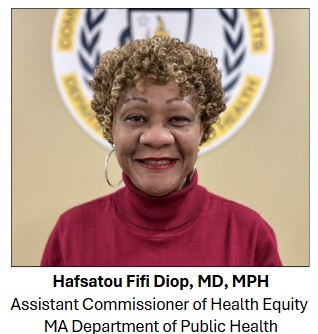
IHE connected with Hafsatou Fifi Diop, MD, MPH, Assistant Commissioner of Health Equity at the Massachusetts Department of Public Health (DPH), Leah Dafoulas, MPH, Director of Clinical Transformation at Azara Healthcare, Samuel Bar, Director of Solutions Engineering at Azara Healthcare, and Mimi Gardner, MPH, MA, Vice President and Chief Equity Officer at NeighborHealth.
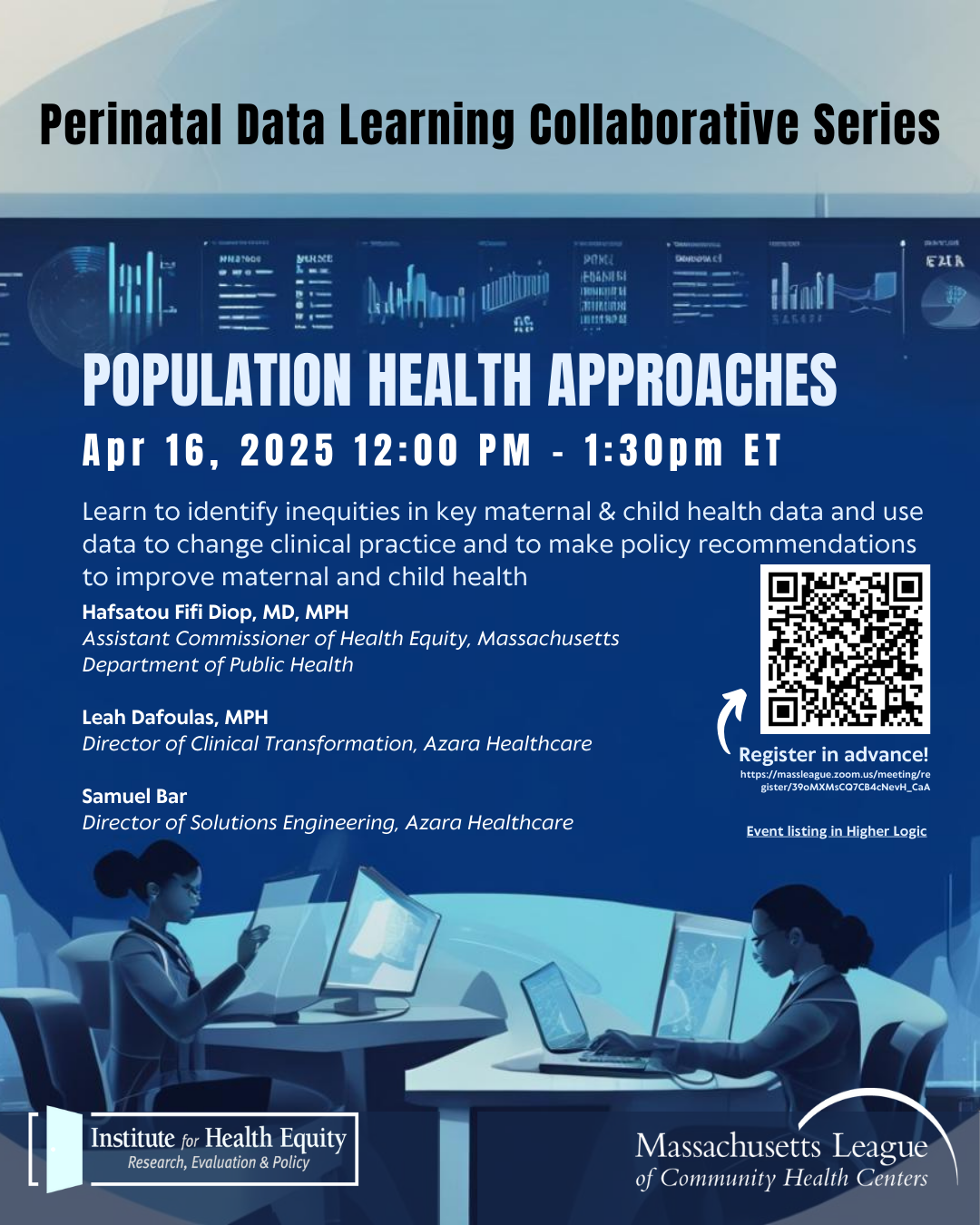
IHE is also pleased to invite you to Perinatal Data Learning Collaborative Series: Session1: Population Health Approaches 4.16.25.
Read the full article below.
| |
Using Data to Improve Maternal and Perinatal Health
| IHE: What do you think the general public should know about the importance of perinatal and maternal health? | |
Dr. Diop: Perinatal maternal health refers to the health of pregnant people before and during pregnancy, at the time of delivery, and during the postpartum period up to 12 months. People who remain healthy during pregnancy and after birth are more likely to stay healthy later in life and have better birth outcomes, influencing infancy, childhood, and adulthood.
Before pregnancy, the overall health and lifestyle of parents, which is influenced by many things, can affect maternal and infant health. For example, substance use, infertility, smoking, periodontal disease, depression, caffeine and anemia are risk factors for low birth weight, which is a critical indicator of neonatal health and predicts future developmental outcomes. When pregnant, people can reduce the risk of low birth weight by maintaining good oral health, eating a healthy diet, taking their prenatal vitamins, managing stress and mental health, and avoiding smoking, alcohol, and drug use. People contemplating pregnancy should be screened for health concerns, so they can be identified and managed.
| | |
During pregnancy, high-quality antenatal care is essential to ensure not only a healthy pregnancy for the pregnant person and the fetus, but also an effective transition to positive labor and delivery. Services should include the provision of education and easily understood information on health care and perinatal services for expectant parents.
During delivery, high-quality, evidence-based obstetric and neonatal care should be one of the highest priorities to reduce morbidity and prevent maternal and infant death.
In the postpartum period, it is critical to monitor maternal and newborn health as the risk of death is higher during the first week postpartum for both. Timely screening, detection and management of symptoms can reduce the risk of complications and prevent mortality.
IHE: How can public health data in Massachusetts help identify opportunities to improve perinatal and maternal health outcomes?
| |
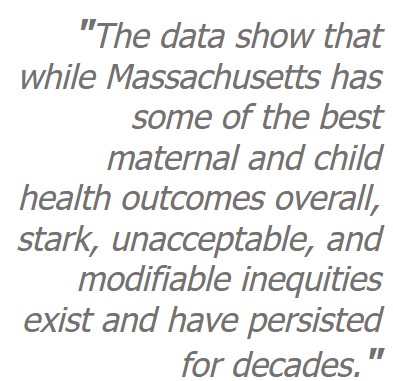
Dr. Diop: Population-based surveillance systems in Massachusetts have been used to highlight inequities in health outcomes, build partnerships, and develop guidelines and policies. The data show that while Massachusetts has some of the best maternal and child health outcomes overall, stark, unacceptable, and modifiable inequities exist and have persisted for decades.
For example, between the 1998–2000 and 2016–2018 periods, overall severe maternal morbidity (SMM) rates increased significantly from 36.9 to 92.3 per 10,000 deliveries. While the rates of SMM during the same periods steadily increased for all racial/ethnic groups, people who identify as Black experienced the greatest absolute increase going from 69.4 in 1998–2000 to 173.7 per 10,000 deliveries in 2016–2018. The rates of SMM per 10,000 deliveries increased from 33.4 to 76.1 for White, 39.2 to 92.8 for Hispanic, and 37.9 to 99.6 for Other non-Hispanic birthing people between 1998–2000 and 2016–2018.
| |
These data were used to inform state legislation Chapter 348 of the Acts of 2020, an Act to Reduce Racial Inequities in Maternal Health, which established a commission tasked with seeking steps to address racial inequities in maternal health. The 27-member Commission was required to file a report, with recommendations and any draft legislation to reduce or eliminate inequities in maternal mortality or “severe maternal morbidity” and investigate challenges to accessing prenatal and postpartum care, the availability of doulas and birthing centers, and the impacts of “historical and current structural, institutional, and individual forms of racism.”
In July 2023, DPH released another report showing that rates of severe maternal morbidity increased significantly for all people, nearly doubling from 52.3 per 10,000 deliveries in 2011 to 100.4 per 10,000 deliveries in 2020, with an average annual increase of 8.9 percent. SMM rates increased by 7.8 percent per year on average for white non-Hispanic, 8.2 percent for Hispanic, and 10.5 percent for people who identify as Asian/Pacific Islander non-Hispanic.
The gap between SMM rates for people who identify as Black non-Hispanic and people who identify as white non-Hispanic was two-fold in 2011. By 2020, there was a 25 percent increase in the gap over that time.
Based on these latest findings, in September 2023, Governor Healey instructed Secretary Walsh, Undersecretary Mahaniah and DPH Commissioner Dr. Goldstein to conduct a review of maternal health services across the Commonwealth and to develop a plan to improve access and quality of care, where needed. In response, DPH submitted a report entitled “Review of Maternal Health Services, 2023.” This report included 25 actionable recommendations. Several of those recommendations are now being directly supported by the Momnibus law.
IHE: Can you provide a concrete example of a health center in Massachusetts that has successfully improved perinatal care? What best practices from their approach could be scaled or replicated across other health systems?
Dr. Diop: In 2015, Massachusetts developed statewide priorities for standard measures of equitable access to dental care and preventive measures for care during pregnancy and childhood. To further advance this priority and improve oral health screening during pregnancy, DPH convened a multidisciplinary Oral Health Steering Committee, including providers from Community Health Centers to develop the Massachusetts Perinatal Oral Health Practice Guidelines for Pregnancy and Early Childhood. The guidelines were released in 2016 and updated in 2024.
At South Cove Community Health Center, implementation of the guidelines greatly improved the oral health knowledge and oral health care for the pregnant and pediatric populations. Education and information regarding the safety and importance of oral health care in pregnancy became standard of care, and more pregnant patients now receive the recommended dental care. The percentage of pediatric patients from age 0-3 years of age seen by our dental department dramatically increased from 0.5% to 37%. Besides benefiting the patients, the health center staff saw better interdisciplinary collaboration among the dental, obstetric, and pediatric departments, increased oral health awareness by obstetric and pediatric staff, and increased confidence of dental staff in treating pregnant people and very young patients.
| |
IHE: What strategies do health centers use to understand the needs of their populations and the quality of maternal and perinatal healthcare they deliver?
Leah Dafoulas: From what Azara has seen, the key strategies health centers use to manage their perinatal care are population stratification, diversified engagement, and team-based care. By using risk stratification algorithms, particularly those that incorporate social drivers of health data, health centers can identify which perinatal patients need additional services.
A diversified set of engagement tools, such as automated text-messaging for routine events, human-powered outreaches via phone for higher priority services, and wrap around care management for those patients with the most complex health needs ensures that health center resources are appropriately allocated. Then, by utilizing pre-visit planning tools for care-team huddles, all the screenings and procedures can be distributed across the care team to ensure high quality care is delivered to perinatal patients of all types.
| IHE: What recommendations do you have for health centers that are looking to improve the quality of the data they collect to improve maternal and perinatal healthcare delivery? | |
Samuel Bar: Any improvement in the collection of data used to inform perinatal health must begin by addressing its applications and significance. Providing staff with a clear sense of mission for any project is essential for securing their commitment, and this is particularly true for quality improvement initiatives.
Whether it involves linking documentation workflows to the operations that depend on them or emphasizing the fields utilized by funders to assess patient eligibility, connecting the efforts of front-line employees to the population health activities conducted for their patients ensures programmatic alignment. This approach can also facilitate discussions regarding the outcomes measured with this data, so organizations have a clear definition of success. Even when there are grant reporting or government regulatory requirements for data collection, emphasizing the benefits of perinatal data collection for pregnant patients constitutes the most effective data quality strategy.
| |
IHE: What kinds of organizations have been helpful to improve maternal and perinatal healthcare in MA?
Mimi Gardner: Several organizations are actively working to improve maternal and perinatal healthcare in Massachusetts. The key players are the Perinatal-Neonatal Quality Improvement Network of Massachusetts (PNQIN), the Massachusetts Department of Public Health, the Betsy Lehman Center for Patient Safety, and the Maternal Health Access and Birth Patient Safety Task Force.
These organizations, along with healthcare providers and community-based organizations, are working collaboratively to address the challenges and improve maternal and perinatal healthcare in Massachusetts.
| IHE: Can you tell us about the importance of perinatal data? | |
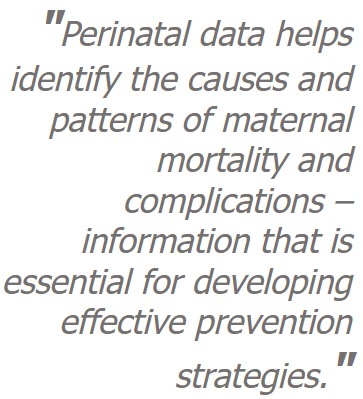
Mimi Gardner: The collection of perinatal data is crucial for improving maternal health. Perinatal data helps identify the causes and patterns of maternal mortality and complications – information that is essential for developing effective prevention strategies. Healthcare providers and policymakers can pinpoint risk factors and implement targeted interventions by analyzing data.
Data collection allows for the monitoring of healthcare practices and outcomes. This enables healthcare facilities to identify areas for improvement and implement evidence-based practices. Perinatal data can reveal disparities in maternal health outcomes among different populations. This allows for developing targeted interventions to address inequities and, therefore, promote health equity.
Data analysis also provides valuable insights for developing and implementing public health policies and programs to improve maternal health. This includes allocating resources effectively and tracking the impact of interventions.
| In essence, perinatal data collection is fundamental for making informed decisions and taking practical actions to safeguard the health and well-being of mothers and their babies. | Hafsatou Fifi Diop, MD, MPH, is the Assistant Commissioner of Health Equity at the Massachusetts Department of Public Health (DPH). Leah Dafoulas, MPH, is the Director of Clinical Transformation at Azara Healthcare and Samuel Bar is the Director of Solutions Engineering at Azara Healthcare. Mimi Gardner, MPH, MA, is the Vice President and Chief Equity Officer at NeighborHealth. |
|
Perinatal Data Learning Collaborative Series
Session1: Population Health Approaches 4.16.25
| |
Please join us on April 16, 2025, at 12pm for Perinatal Data Learning Collaborative Series Session 1: Population Health Approaches where we will address how a population health platform can assist with managing perinatal health data. | |
The key note address will be delivered by Hafsatou Fifi Diop, MD, MPH, Assistant Commissioner of Health Equity, MA Department of Public Health. Leah Defoulas, MPH and Samuel Bar from Azara Healthcare will share tools for improving perinatal data collection within the Azara DRVS platform. Learn more on Higher Logic.
This event is the first of three webinars in this series, scheduled to take place in April, August, and December 2025. The series is hosted by the Perinatal Data Learning Collaborative, a collaborative between NeighborHealth and Brockton Neighborhood Health Center, supported by the Institute for Health Equity Research, Evaluation, and Policy.
Register to receive the Zoom link.
| | | | Black Maternal Health Week | | |
Black Maternal Health Week is recognized each year from April 11-17 to bring attention and action in improving Black maternal health.
Everyone can play a role in working to prevent pregnancy-related deaths and improving maternal health outcomes.
Learn more.
| | |
IHE March Feature:
In March, IHE connected with Alejandro J. Esparza Perez of Holyoke Health Center, Inc on his health center's approach to chronic disease management and the vital role community health centers play in improving health outcomes.
| |
Dr. Esparza Perez's leadership at HHC highlights the importance of strategic, compassionate care in transforming health narratives and ensuring comprehensive access to healthcare for all.
The article delves into HHC’s innovative strategies for chronic disease management and the pivotal role CHCs play in building healthier communities.
Read the full feature.
| | | The Institute for Health Equity Research, Evaluation, and Policy | |
In 2023, The Massachusetts League of Community Health Centers (Mass League) created the Institute for Health Equity Research, Evaluation, and Policy, Inc. (IHE), a 501(c)(3) non-profit organization designed to support Health Center-led Science driven by community health centers.
IHE convenes communities and supports the scientific infrastructure, implementation, program evaluation and training needed to identify and sustain the most effective strategies for attaining equity in health and healthcare, as defined by those with lived experience of health inequities.
Learn more about IHE on our webpage of the Mass League website and on our LinkedIn page.
| | | | |