|
Hello Thomas,
As reported last month, “Neuroscience Suggests Electromagnetic Fields Could Drastically Boost Your Focus” since the clinical trial EMF frequency ranged from 6 to 20 Hz, aligning with the amygdala’s firing patterns. So you may want to try our EM Pulser 78, with its optimum 7.8 HZ pulse rate (the earth’s Schumann Resonance) while we are honoring the PC22 discount rate for the next month for 10% off.
Just posted, Valone’s interview on the Love Covered Life podcast with Melissa Denyce https://www.youtube.com/watch?v=0otxmO6ZIU0 which is about one hour long and enthusiastically supported by a wonderful interviewer.
Our YouTube channel continues to grow in subscribers and content. If you have not yet subscribed here is THE LINK and you will get access to all the content and latest information on energy, propulsion, and bioenergetics. This is an End of Summer subscription drive for our YouTube Channel, since we are within a few dozen of reaching 1000 subscribers! We appreciate your support and interest in our progressive, cutting-edge reporting on energy, propulsion, and bioenergetics research.
And while we are promoting IRI, you may want to become an IRI Member in the next month or so. After October 1st, we extend your membership for a full year, through 2025, so you will receive TWO holiday gifts instead of one, besides the quarterly mailing benefits.
Story #1 is a summary of a great four-year report just released in September called Hydrogen Insights 2024, available for download (PDF), released by the international HydrogenCouncil.com. It unites 140 companies from diverse subdivisions as well as regions, indicating about $9 trillion in marketplace financing, about a seven-fold increase. Furthermore, clean hydrogen projects that reached final investment decision (FID) have seen a dramatic increase from 102 committed projects in 2020, representing some USD $10 billion in committed investment, to 434 in 2024, representing some USD $75 billion investment in clean energy hydrogen.
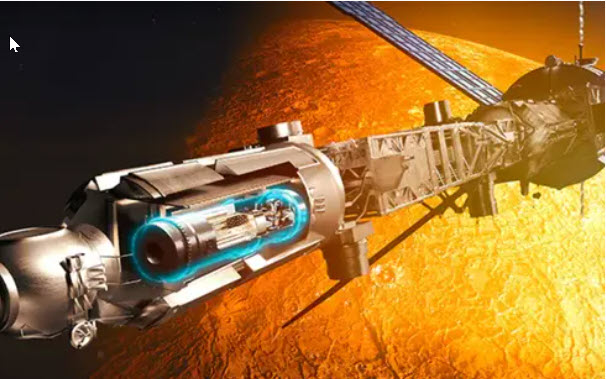
Story #2 offers a new perspective on a safe mini nuclear reactor, about 3 by 10 feet in size, which can be used for space flights and for the future Moon Base. The short 5 minute video explains a little more about the Space Micro-Reactor, which was presented at a recent UK Space Conference by Rolls Royce. It is funded under the Lunar Surface Nuclear Power Contract by the UK Space Agency.
Story #3 could have been the lead story since it represents everything that our institute has been advocating for sustainability. Reported by CNN Climate, the Hunters Point community is advertised as the world's first “net-zero” single-family home development in the US. During the last two hurricanes, as parts of Florida went dark from Helene and Milton, the lights stayed on in this net-zero, storm-proof community, so they are proving to have a self-sufficient, modular generation design, based on solar power.
Story #4 is a really exciting satellite launch system by SpinLaunch now in trial runs catapulting satellite rockets into space electromagnetically, resulting in a 4 times fuel reduction and a ten times cost reduction. Watch the three minute amplified animation of the launch sequence, which seems like science fiction. Check out recent developments in our Suborbital Flight Program and Space Systems.
A Related Story is about the development of an actual “tractor beam” to retrieve space junk while in space.
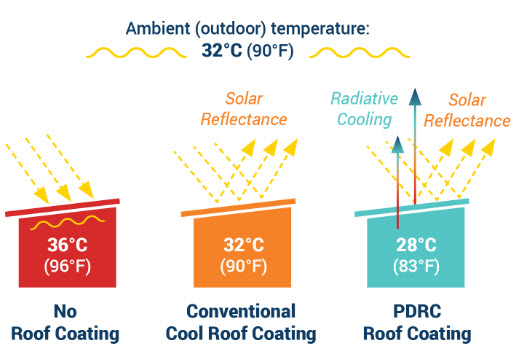
Story #5 is the latest Rocky Mountain Institute’s report on alternative air conditioning. With the world warming at an unprecedented rate, the demand for cooling is expected to put an additional 5.6 billion air conditioners into homes by 2050, adding another 100 gigatons of CO2 to the atmosphere if alternatives are not implemented. What RMI is particularly excited about is a class of advanced materials that provide a passive daytime radiative cooling (PDRC) effect. It creates a 16 to 20 percent decrease in the inside temperature when the outside can be at or above 50 C or 90 F. RMI even created a video to explain how this new material, actually works using optically selective aerogel. Another principle that we have reported on is phase-change insulation that also has similar temperature decrease statistics.
Onward and Upward.
Tom Valone, Editor
|