OCTOBER 12, 2026

KEEP THIS NEWSLETTER COMING TO YOUR INBOX"

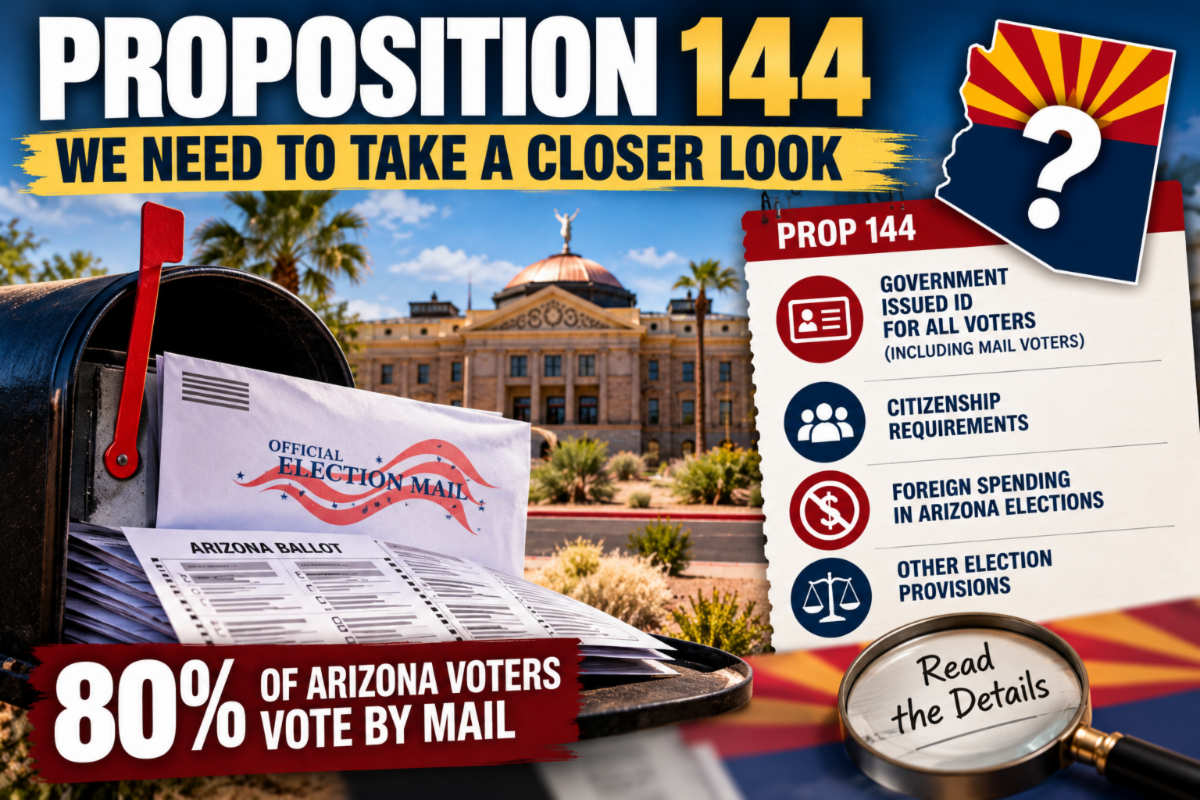
Proposition 144: We Need to Take a Closer Look


After doing more research on Proposition 144, I believe we need to take a closer look at exactly what we are being asked to put into the Arizona Constitution.


At first glance, Proposition 144 sounds simple: citizenship and voter identification.

Of course I believe only U.S. citizens should vote in our elections. Arizona already requires documentary proof of citizenship to vote a full ballot containing federal, state and local races.

But Proposition 144 goes further.


According to the official ballot language, it would require all voters—including those voting by mail—to provide government-issued identification for every election. It also addresses foreign spending in Arizona elections and includes several other election-related provisions.

That's important because approximately 80% of Arizona voters choose to vote by mail, according to Arizona's Citizens Clean Elections Commission.


Arizona Votes by Mail

We live differently today than we did decades ago. People commute long distances. Parents juggle work, children and activities. Seniors and people with disabilities may find voting from home easier.


And let's not forget how long our Arizona ballots can be.


Voting by mail gives people the opportunity to sit at their kitchen table, research candidates, judges and propositions, and make informed decisions.


Imagine if most voters instead had to stand at a voting booth for 30 minutes while reading and considering everything on the ballot. What would that do to voting-center lines?

Yes, voters who are sick or out of town could still have options for voting by mail. But I don't think we should dismiss the convenience and participation that Arizona's existing mail-voting system provides.

What Would Prop. 144 Mean for Mail Voting?

Proposition 144 does not simply eliminate voting by mail.


But it would constitutionally require identification for mail voters, while leaving lawmakers to determine how that requirement would actually work.


That's where I have questions.


Would voters provide a driver's license or state identification number? What happens when information doesn't match a government database? How would that information be protected? What would the curing process look like?


Those aren't arguments against election security.


They are legitimate questions about implementation.


Arizona already has safeguards for mail ballots, including voter-registration identification requirements and signature verification.


I support secure elections.


I support voter identification.


And I absolutely support ensuring that only eligible U.S. citizens vote in our elections.

But I also support making voting accessible to eligible voters.


Those principles don't have to conflict.


This is why we should never vote for a proposition based simply on its title or a campaign slogan.

When I first looked at Proposition 144, I focused on citizenship and voter ID. After researching it further, I realized there are questions I hadn't initially considered—particularly about how it could affect the vote-by-mail system used by roughly four out of five Arizona voters.


That doesn't automatically make Proposition 144 good or bad.


It means we should understand exactly what we're putting into our Constitution before we fill in that oval.


Read the proposition. Ask questions. Look beyond the headline. The details matter.

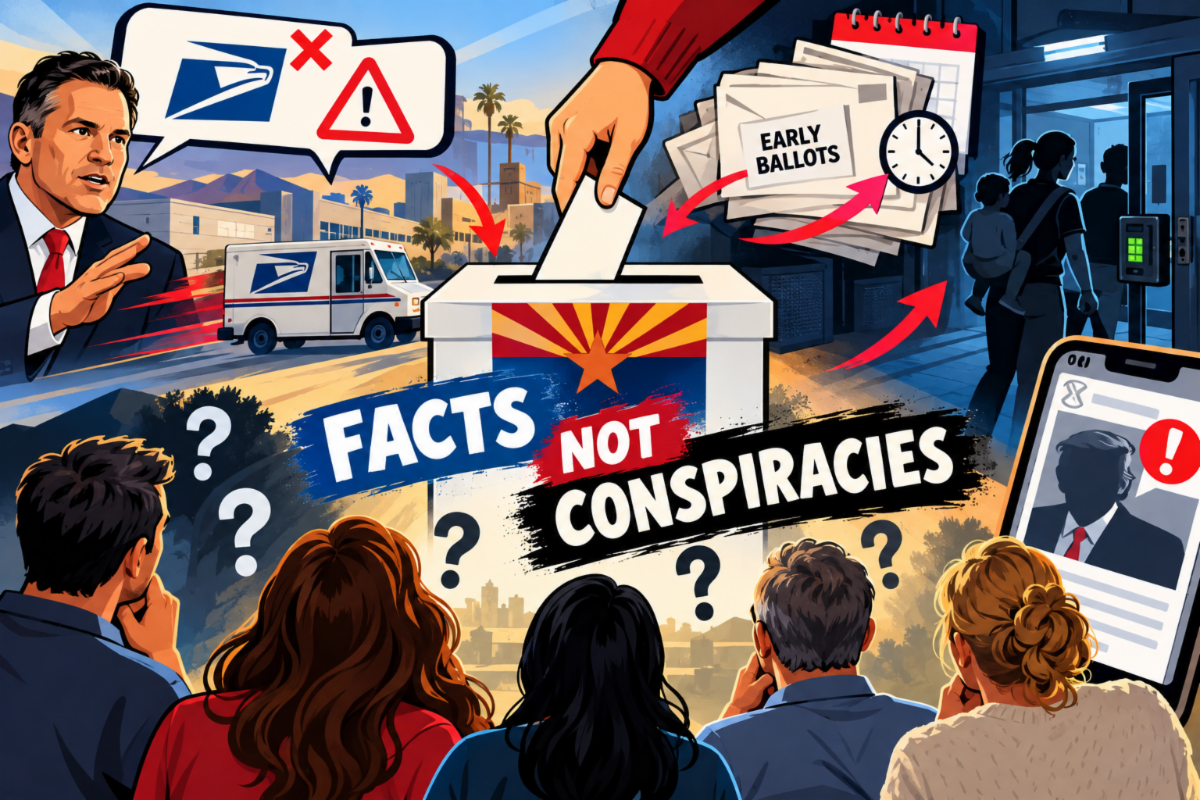
When Every Election Question Becomes a Conspiracy, Voter Confidence Suffers


Maricopa County voters deserve accurate information, transparency, and confidence in their elections. Unfortunately, as early voting gets underway, we are once again watching routine mistakes, unverified claims, and ordinary election operations become reasons for people to question the integrity of our elections.


There is a difference between asking legitimate questions and creating suspicion before the facts are known.


I have said repeatedly that mistakes happen. Elections are complicated operations involving millions of voters, thousands of employees and temporary workers, outside vendors, sophisticated equipment, and countless procedures designed to protect the integrity of every ballot. The question should never be whether a mistake occurred. The questions should be: What happened? Why did it happen? Was anyone's vote affected? And what is being done to prevent it from happening again?


Unfortunately, some people seem more interested in finding something suspicious than finding the truth.


There is another important point we need to remember. If we continue to cry wolf every time a minor administrative error occurs, we risk losing the public's trust when a legitimate problem or actual election fraud is discovered. Not every mistake is fraud, and not every discrepancy is evidence of wrongdoing. When we constantly sound the alarm without sufficient evidence, people eventually stop listening. That is dangerous because if real fraud does occur, we need the public to take it seriously and election officials to investigate it thoroughly. We should absolutely demand accountability, transparency and accuracy in our elections, but we must also be responsible with our accusations. If everything is treated as election fraud, eventually no one will believe us when something truly serious happens.

First, the Postal Service Claims

Just days before nearly 2 million early ballots were scheduled to be mailed, Maricopa County Recorder Justin Heap warned the Board of Supervisors that voters should expect postal delays.

Heap claimed the U.S. Postal Service had closed its central Phoenix processing facility near 49th Avenue and Van Buren Street and that mail would have to travel through San Diego before returning to Maricopa County.


That would certainly be concerning if it were true.


However, Arizona USPS stated that the Phoenix processing center remained operational. Local postal union representatives also disputed the claim that Maricopa County ballots would routinely be routed through San Diego. The Secretary of State's own election information identified operating USPS processing facilities in Phoenix and Tucson.


Then Came the 3,126 Early Ballots

On October 1, Runbeck Election Services mistakenly released 3,126 Maricopa County early ballots, six days before the scheduled October 7 mailing date.


The vendor notified the Recorder's Office on October 2.


According to the Recorder's Office, the ballots were correctly addressed and contained the correct ballot information. The mistake involved the mailing date, not the voters or the ballots themselves. After consultation with the Maricopa County Attorney's Office, officials determined the ballots remained valid and did not need to be canceled or replaced. Any ballots returned before early voting officially began would be securely stored until processing could begin.


Was it a mistake? Absolutely.


Should procedures be reviewed to prevent it from happening again? Of course. But there was no reported evidence that this error compromised anyone's vote. That is an important distinction, and one that too often gets lost when every election mistake becomes a social media controversy.

Now, Late-Night Video Becomes Another Controversy

The latest controversy involves surveillance footage circulated by We the People USA Alliance, showing election employees working late at night inside a Maricopa County election facility after logic and accuracy testing had been completed. The group raised concerns about the employees' activities, the equipment being used, and the presence of a young child.


But a video without context does not establish wrongdoing.


According to the explanation provided by county officials, the two individuals were county Elections Department employees performing legitimate election-related work. The employees were attempting to finish their responsibilities before the weekend, and one parent reportedly brought a toddler because childcare was unavailable.


County officials also explained that security procedures required two authorized employees to badge in together. The explanation further indicated that the employee was not working on the Election Management System (EMS), no security seals were broken, and access to election systems was controlled and logged.


Those details matter. Logic and accuracy testing does not mean election employees stop working. There are numerous legitimate preparations that must continue before Election Day.

I understand why someone seeing surveillance footage late at night might ask questions. There is nothing wrong with asking questions. But publishing footage accompanied by implications of misconduct before obtaining an explanation can create suspicion where none may be warranted.

It also raises concerns about the safety and privacy of election workers who are simply doing their jobs.

Even Supervisor Thomas Galvin Has Defended Heap When Appropriate - The Two Sides are Working Together

One point worth emphasizing is that Maricopa County Supervisor Thomas Galvin has been willing to defend Recorder Justin Heap when he believes criticism of Heap is unwarranted.

That matters because Galvin and Heap have had very public disagreements over election administration.


The same standard should apply to the employees in the late-night surveillance footage. If county officials can account for who entered the building, why they were there, what equipment they accessed, and whether security procedures were followed, those facts deserve to be considered before accusations are made.


Based on the county's explanation, there is no demonstrated election misconduct in the footage. In other words, there is no established wrongdoing here. That does not mean election operations should be beyond scrutiny. It means accusations should be supported by evidence.

President Trump Hears About a Mistake, and Maricopa County Is Suddenly Corrupt

Perhaps the most frustrating example came when President Donald Trump was asked about the 3,126 ballots mailed early.


After hearing about the mistake, Trump told reporters that Maricopa County was a very dishonest county and criticized officials for characterizing the incident as an error.


The Associated Press


Think about that.


A vendor made a mailing mistake. The vendor acknowledged it. The Recorder's Office disclosed it. Officials determined the ballots were valid, and safeguards were put in place to prevent the error from happening again.


Yet the incident became another reason for the President of the United States to publicly question Maricopa County's integrity.


I respect the importance of election security, regardless of who raises the concern. But making sweeping accusations based on incomplete information does not help restore public confidence.

Words have consequences, especially when they come from elected officials.

Are We Looking for Information or Affirmation?

This is the question I wish more people would ask themselves.


When a video surfaces showing an election employee working late at night, are we genuinely interested in understanding what happened? Or are we hoping to find something that confirms what we already believe?


When a vendor makes a mistake, are we interested in learning how it occurred and whether it affected any ballots? Or are we immediately assuming someone had dishonest intentions?

There is a significant difference.


Transparency is essential. So is accountability. But transparency only works when people are willing to accept an explanation supported by evidence, even when that explanation does not fit their preferred narrative.


We should never discourage citizens from asking questions about elections. In fact, I encourage it. But questions should lead to answers, not automatically to accusations.

Election Workers Are Human Beings

There is another part of this conversation that is often overlooked. The people administering our elections are human beings.


They have families, children, responsibilities, and sometimes unexpected childcare problems. They work long hours, including nights and weekends, particularly during election season.

They are not perfect. Neither are the vendors, elected officials, or anyone else involved in the process.


Mistakes will happen.


But a mistake is not automatically evidence of fraud. Working late is not evidence of criminal activity. And a video showing someone performing a task we do not understand is not proof that something improper occurred.


These individuals deserve the same fairness and presumption of good faith that we would want for ourselves.

Restoring Trust Requires More Than Talking About Election Integrity

I have spent considerable time studying Maricopa County elections, attending meetings, asking questions, and reviewing the information provided by election officials.


I do not believe our election system is perfect. No system involving millions of transactions and thousands of people will ever be perfect. But I also do not believe every mistake, every unanswered question, or every unusual-looking video is evidence of something nefarious.

When officials provide a documented explanation, acknowledge errors, and take corrective action, that is how accountability is supposed to work.


We should demand honesty from Recorder Heap, the Board of Supervisors, the Elections Department, vendors, and everyone involved in administering our elections. And we should demand the same honesty from the people questioning them. You cannot claim to be restoring confidence in elections while continually encouraging people to distrust every aspect of the process without sufficient evidence.


Maricopa County voters deserve facts, not speculation. They deserve transparency, not sensationalism. And they deserve elected officials who understand that their words can either strengthen or weaken public confidence.


I believe most people involved in administering our elections are trying to do the right thing.

No one is perfect. Mistakes happen.


But when mistakes are disclosed, investigated, explained, and corrected, that is evidence of accountability—not automatically evidence of corruption.


Our elections deserve serious oversight. Our election workers deserve fairness. And our voters deserve the truth.


Let's stop turning every question into a conspiracy and start recognizing the difference between a legitimate concern and an unsupported accusation.

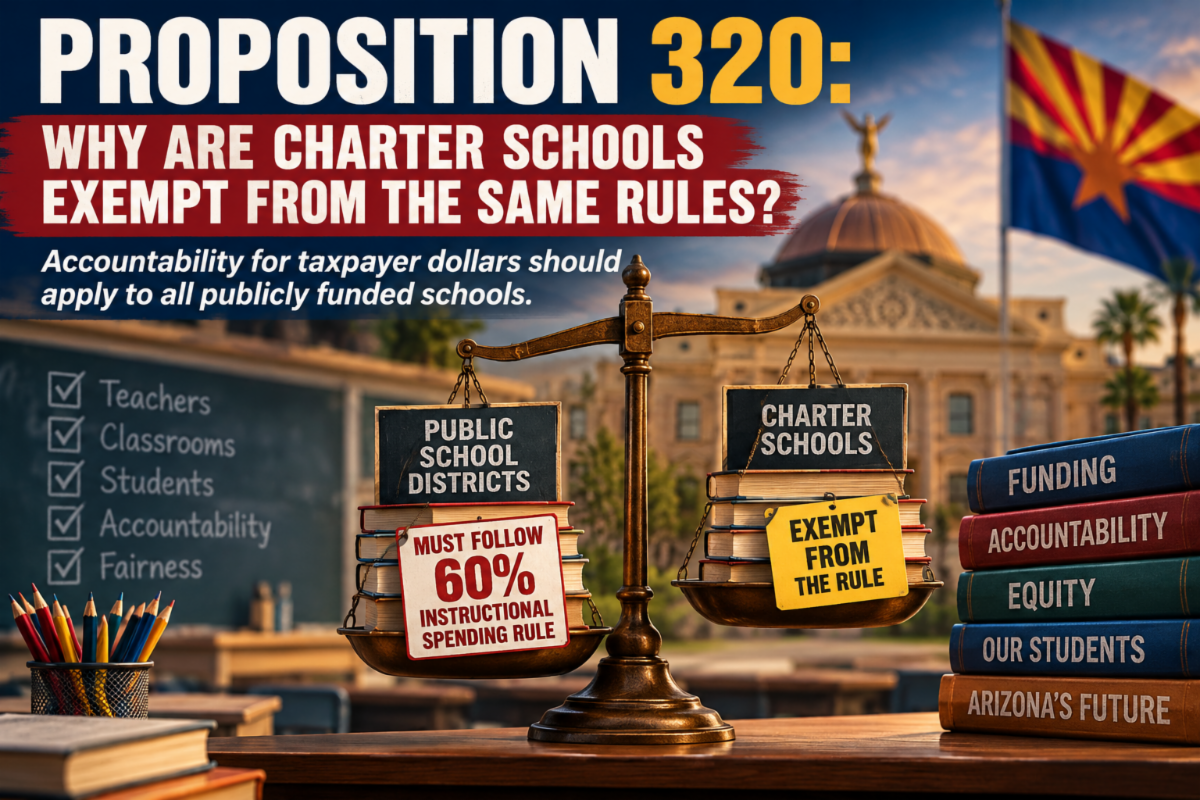
Proposition 320: Why Are Charter Schools Exempt From the Same Rules? - VOTE NO


Accountability for taxpayer dollars should apply to all publicly funded schools.

Arizona voters will decide Proposition 320 in November. The measure would require certain public school districts to spend at least 60% of their operational budgets on direct instructional expenses.


On the surface, the goal sounds reasonable. More money reaching classrooms, teachers, and students is something most parents and taxpayers can support.

But there is an important question that deserves attention: Why does Proposition 320 impose these requirements on traditional public school districts while exempting charter schools?

Charter schools are public schools. They receive taxpayer funding, educate Arizona children, and are held to statewide academic standards. Yet Proposition 320 would not subject them to the same 60% instructional spending mandate.


Follow the Money

According to the Arizona Legislature's Joint Legislative Budget Committee, in fiscal year 2025, traditional public school districts received an average of $8,166 per student through the state equalization formula, compared with $9,206 for charter schools.


That means charter schools received approximately $1,040 more per student through that particular funding formula.


However, when all reported funding sources are included, district schools averaged $16,013 per student compared with $12,405 for charter schools. The difference reflects the substantially different ways Arizona finances these two public education systems, including local property taxes, bonds, and other funding available to districts.


These figures demonstrate why comparing school funding is more complicated than looking at a single number.


Yet Proposition 320 would establish an instructional spending mandate for one system without applying the same requirement to the other.

What Happens When Districts Fail to Comply?

Beginning in fiscal year 2027–2028, affected school districts spending less than 60% on direct instruction would generally be required to increase that percentage by at least half a percentage point annually until reaching compliance.


Districts failing to meet the requirements could face reductions in their Classroom Site Fund allocations, increasing by 25% for each year of noncompliance, potentially reaching 100% after four years. The measure includes provisions for waivers.


Charter schools would face no equivalent penalty under Proposition 320.


There is also a significant distinction between direct instructional spending and other necessary school expenses.


School transportation, campus security, maintenance, counselors, psychologists, and certain special education services may fall outside the direct instructional category, depending on the definitions established by the Arizona Auditor General.


These services are not luxuries. They are essential to operating safe, functional schools and supporting student achievement.

What About Local Control?

Arizona has a longstanding tradition of locally elected school governing boards. These boards are accountable to the voters who elect them and are responsible for making financial decisions based on the needs of their communities.


A growing school district may have substantial transportation and facility expenses. Another district may serve a higher percentage of students requiring specialized services.


A single statewide spending percentage does not necessarily account for these differences.

Supporters of Proposition 320 argue that requiring districts to increase direct instructional spending will encourage greater financial accountability and direct more resources toward teachers and classrooms.


That objective deserves consideration. But the question remains whether imposing the mandate on only one category of public schools creates a consistent standard of accountability.

Accountability Should Be Consistent

I believe taxpayers deserve transparency about how education dollars are spent. Parents deserve schools that prioritize instruction, and teachers deserve the resources necessary to do their jobs.


But meaningful accountability requires examining all publicly funded education systems, not simply imposing additional requirements on traditional school districts.

If a 60% direct instructional spending requirement is considered essential to educational accountability, policymakers should explain why charter schools are not subject to an equivalent standard.


Arizona should also examine whether the spending categories accurately reflect the services necessary to educate students.


The fundamental question is not whether we should prioritize classroom spending. It is how we create an accountability system that treats public education funding consistently while recognizing the different responsibilities of individual schools.


Before voting on Proposition 320, Arizonans deserve a clear explanation of why the measure applies to some publicly funded schools but not others.


Our students deserve responsible spending, strong academic instruction, and a system of accountability that is both transparent and consistent.

Cleaner Air or Economic Growth? Arizona's Rule 204 Says We Can Have Both


Arizona continues to face a challenge: how do we maintain economic growth while meeting federal air-quality requirements?


A new proposal from the Environmental Protection Agency could give Maricopa County another tool to accomplish both.


EPA Administrator Lee Zeldin was in Arizona this week to announce the agency's proposed approval of Maricopa County Rule 204, an innovative program designed to reduce emissions while allowing continued business investment and job creation.


The Phoenix-Mesa area is designated as a federal ozone nonattainment area. Under the Clean Air Act, certain new or expanding major facilities must obtain emission offsets to compensate for additional emissions.


The problem is that these credits can be difficult to obtain, potentially creating another obstacle for companies considering major investments in Maricopa County.

How Rule 204 Works

Rule 204 would allow qualifying businesses to voluntarily replace or retrofit older, higher-polluting nonroad engines and equipment with cleaner technology.


Those verified emission reductions could generate credits that could then be used by qualifying new or expanding major facilities to meet federal requirements.


This could include replacing older construction equipment, bulldozers, cranes and other nonroad engines with cleaner equipment.


The credits aren't simply handed out. Maricopa County requires the emission reductions to be real, measurable, enforceable and surplus. In general, the reductions must also remain in place for at least 20 years.


That means we aren't eliminating environmental requirements. We are finding another way to meet them.

Why This Matters to Arizona

EPA specifically identified high-tech manufacturing and power plants as industries that could benefit from Rule 204 if it receives final approval.


That's important for Arizona.


Our state continues attracting semiconductor manufacturers, data centers, advanced manufacturing and other major employers. Those businesses require infrastructure, electricity and environmental permits.


If a shortage of emission credits prevents responsible projects from moving forward, we should look for innovative solutions.


Arizona Chamber of Commerce & Industry President and CEO Danny Seiden called the EPA announcement "an important win for cleaner air, economic growth and the kind of practical problem-solving Arizona does best."


Maricopa County Board of Supervisors Chair Kate Brophy McGee said the plan demonstrates that "a healthy environment and growing economy can work together."

Supervisor Thomas Galvin similarly called the announcement a victory for the environment, economy and common-sense regulatory reform.


Arizona Commerce Authority President and CEO Sandra Watson said Rule 204 provides a market-driven tool for reducing emissions while allowing companies to continue investing and creating jobs.

Incentives Instead of Simply More Regulation

One aspect of Rule 204 I particularly like is that it creates an incentive for businesses to voluntarily replace older, higher-polluting equipment.


Instead of simply telling businesses what they cannot do, we can create value for doing something environmentally beneficial.


Replace old equipment with cleaner technology.


Reduce emissions.


Document the reduction.


Allow that reduction to help another company meet its environmental obligations.

That's practical problem-solving.


EPA's approval is still proposed, not final, and the federal rulemaking process will include an opportunity for public comment.


But the larger principle is worth considering.


We don't always have to choose between protecting our environment and protecting our economy.


Cleaner air and economic growth can—and should—work together.

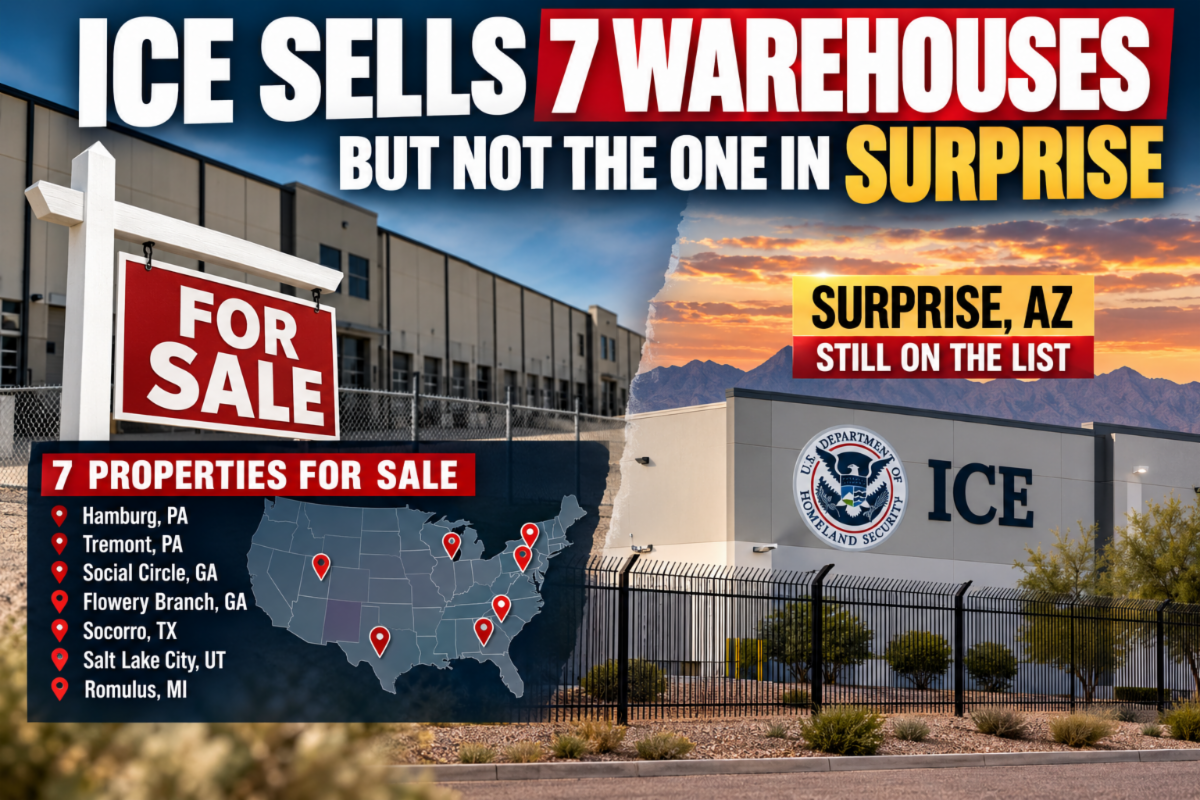
ICE Is Selling Seven Detention Warehouses — But Not the One in Surprise


The federal government is now trying to sell seven warehouses purchased earlier this year as part of Immigration and Customs Enforcement's massive expansion of immigration detention facilities.


Unfortunately for those of us in Surprise who have opposed putting a detention facility in our community, the Surprise warehouse is not one of them.


According to reporting published October 6, the seven properties being marketed for sale are in Hamburg and Tremont, Pennsylvania; Social Circle and Flowery Branch, Georgia; Socorro, Texas; Salt Lake City, Utah; and Romulus, Michigan. Cushman & Wakefield is marketing the properties individually or as a package through its Federal Warehouse Portfolio. The government spent more than $700 million purchasing these seven properties.


This is part of a much bigger story about government spending and poor planning.


The nonpartisan Government Accountability Office reported in September that ICE purchased 11 warehouses for approximately $1.07 billion as part of its detention expansion. ICE subsequently decided to sell seven of them. According to the GAO, ICE has already incurred more than $20 million in costs it cannot recover on those seven properties, including zoning assessments, security and other expenses.


The GAO didn't mince words. It concluded that ICE pursued its detention expansion initiatives without the necessary analysis and planning and said the effort had resulted in millions of dollars of waste.


That should concern every taxpayer, regardless of where you stand on immigration.

Surprise Is Still on the List

As many of you know, I have opposed converting the warehouse in Surprise into an ICE detention center.


I believe our immigration system is seriously broken. I believe our immigration laws should be enforced. I also believe the federal government has an obligation to spend our tax dollars wisely and consider the impact its decisions have on local communities.


Those positions are not mutually exclusive.


The federal government purchased the Surprise warehouse for approximately $70 million in January with plans to convert it into a facility capable of holding between 500 and 1,500 detainees.


The planned facility is near Sweetwater Avenue and Dysart Road, approximately 300 yards from residential homes.


The project has already changed our community, and in my opinion, not for the better.


One of my friends recently summed up the frustration perfectly:

"I don't mind the ICE detention center. It's the clown show that comes with it I have a problem with."

That statement stuck with me.


Our community did not ask to become the center of a national immigration controversy. Surprise residents and countless outsiders have had protests, counterprotests, political arguments and national attention brought practically to their doorsteps because the federal government decided to purchase an industrial warehouse and convert it into a detention facility.


You can support immigration enforcement and still ask whether this was the right location or the right approach.

The Project Is Currently Paused

Arizona Attorney General Kris Mayes sued DHS and ICE in April, alleging that the federal government failed to conduct the environmental review required under federal law before moving forward with the Surprise facility.


In June, Arizona and the federal government reached an agreement that prevents detainees from being housed there and prevents physical conversion of the warehouse until the environmental review is completed.


That means the Surprise facility is paused — not canceled.


And unlike these seven warehouses now being offered for sale, the federal government has not announced that it is abandoning the Surprise property.

What Are We Actually Accomplishing?

This is where I believe we need a serious national conversation.


Immigration enforcement cannot simply be measured by how many people we arrest or how many detention beds we build. We should measure success by whether the system actually works.


If people are detained only to become entangled in lengthy legal proceedings, if courts determine that some detentions cannot legally continue, and if billions of taxpayer dollars are being spent building detention capacity without adequate planning, then we should be asking whether the system is accomplishing its intended purpose.


The federal government absolutely has a responsibility to secure our borders and enforce our immigration laws.


But enforcement without planning isn't good government.


Spending more than $1 billion purchasing warehouses, deciding months later that seven of them aren't needed, and losing millions of additional taxpayer dollars in the process isn't something taxpayers should simply shrug off.


ICE's mission is important. That makes competent planning even more important.


I hope the Surprise warehouse eventually joins these seven properties on the market.


Until then, I will continue asking questions and advocating for my community.


Surprise should not have to bear the consequences of a poorly planned federal experiment.

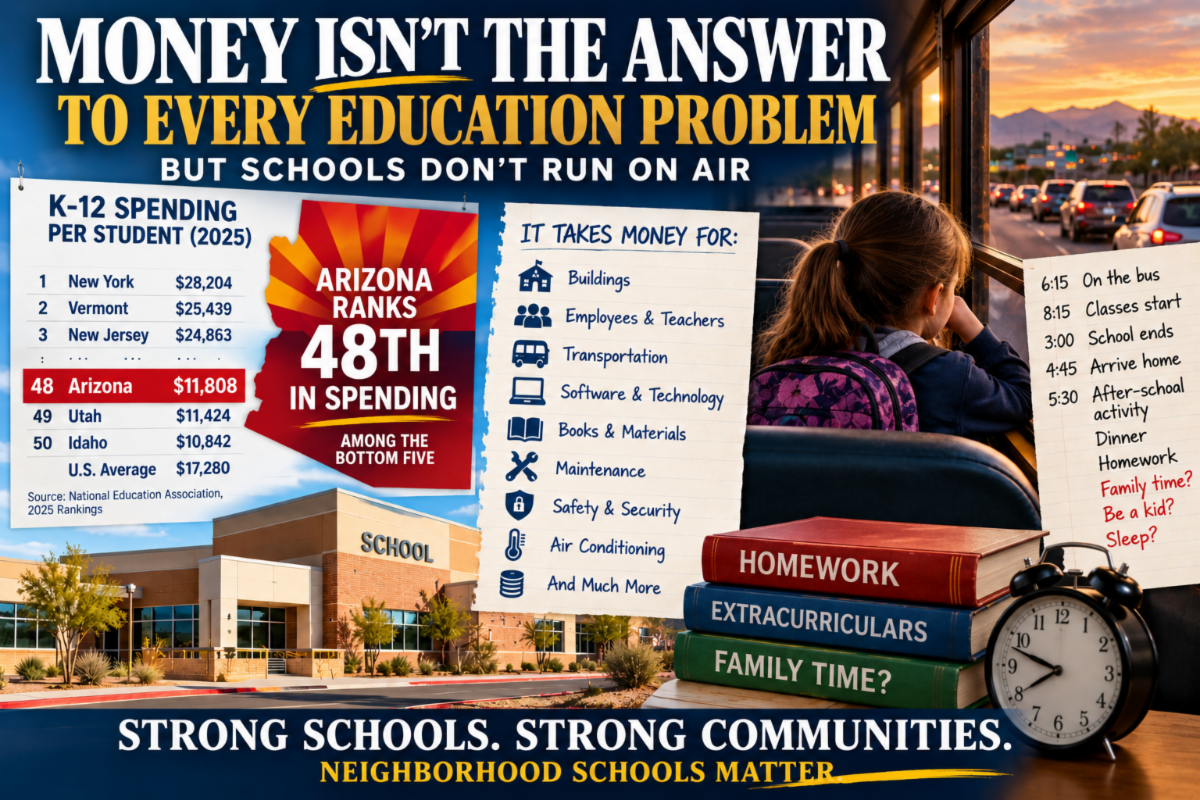
Money Isn't the Answer to Every Education Problem — But Schools Don't Run on Air


As voters consider school bonds and other education funding measures this November, we are going to hear the familiar arguments from both sides.


One side will say our schools desperately need more money. The other will say there is already plenty of money in education and schools simply need to spend it better.


I think the truth is more complicated.


Money is not the answer to every problem in education. But pretending money doesn't matter isn't the answer either.


According to the National Education Association's 2025 rankings, Arizona spent approximately $11,808 per student, ranking 48th in the nation.


The U.S. Census Bureau's earlier FY2022 comparison told a similar story. Arizona spent $10,315 per pupil and was among the five lowest-spending states in the country. The national average was $15,633.


Those numbers don't automatically mean Arizona schools are failing.


Spending more money doesn't guarantee better education.

Money Cannot Fix Everything

There are serious problems in education today that cannot be solved simply by writing a bigger check.


Too much screen time is a policy issue.


Teachers who don't feel supported when dealing with disruptive or violent students is a leadership issue.


Lack of parental involvement is not something government can fix with another appropriation.

Neither are declining discipline, excessive bureaucracy, poor curriculum decisions or replacing good teaching with technology.


We need to be willing to talk about all of those things.


But we also need to recognize reality: teachers cost money. Bus drivers cost money. Buildings cost money. Air conditioning costs money. Books, software, technology, special education services, security, maintenance and transportation all cost money.


And in rapidly growing communities, new schools cost money.

An Empty Seat Isn't Helpful If It's 15 Miles Away

One argument I hear regarding school construction is that districts shouldn't need additional schools because there are empty seats somewhere else in the district.


That sounds reasonable until you look at a map.


Arizona has some geographically large school districts, and population growth doesn't occur evenly throughout them.


Imagine a district where a school on the south side has room for another 100 students while a school on the north side is 200 students over capacity and using portable classrooms.

Technically, the district has "available seats."


Practically, those seats may be nowhere near the children who need them.


Arizona law actually recognizes this problem. State law requires districts seeking new-school funding to provide enrollment projections and identify new schools or additions needed to accommodate growth. The state's School Facilities Oversight Board reviews those projections when determining whether additional space is necessary.


In other words, school capacity isn't simply a matter of adding every empty chair in a district and declaring there is enough room.


Location matters.

Think About the Child on the Bus

This is particularly important in growing parts of the Valley.


Anyone who drives around the West Valley knows what traffic can be like. A trip across a growing community can easily become a long commute during morning and afternoon rush hours.

Now think about that commute from a child's perspective.


Imagine a student getting on a school bus at 6:15 in the morning for classes that don't begin until 8:15.


School ends at 3:00.


After another long bus ride, that student finally arrives home at 4:45.


What if that child participates in sports, band, clubs or another extracurricular activity and doesn't leave school until 5:30?


Then there is dinner.


Then homework.


Suppose there are two hours of homework that night.


Exactly when is that child supposed to spend time with family?


When do they simply get to be a kid?


And perhaps most importantly, when do they sleep?


There is value in neighborhood schools that can't always be measured on a spreadsheet.

Look at Each Bond on Its Merits

There are numerous bonds, overrides and propositions before Arizona voters this November. I don't believe voters should automatically vote yes because something is "for education."

I also don't believe we should automatically vote no because someone says schools already have enough money.


Ask questions.


What exactly will the money purchase? Is it going toward classrooms, transportation, safety, aging facilities or genuine enrollment growth? Is the district being responsible with the money it already has? Are the enrollment projections realistic? How much will taxpayers pay? Are there less expensive alternatives?


Those are legitimate questions.


Arizona law itself recognizes that growing enrollment can require additional school construction, and it provides a process for evaluating that need.


We should demand accountability for every education dollar.


We should expect school districts to eliminate waste, control administrative costs, support teachers, involve parents and focus resources on classrooms.


But fiscal responsibility also means acknowledging when a community genuinely needs infrastructure.


Money will not solve every problem in education.


It won't create involved parents. It won't restore classroom discipline. It won't automatically improve curriculum or reduce excessive screen time.


But money does build schools.


And as Arizona continues to grow, sometimes the responsible investment isn't simply adding another portable classroom or putting a child on a bus for hours every day.


Sometimes the responsible investment is making sure children have a good school in their own neighborhood.

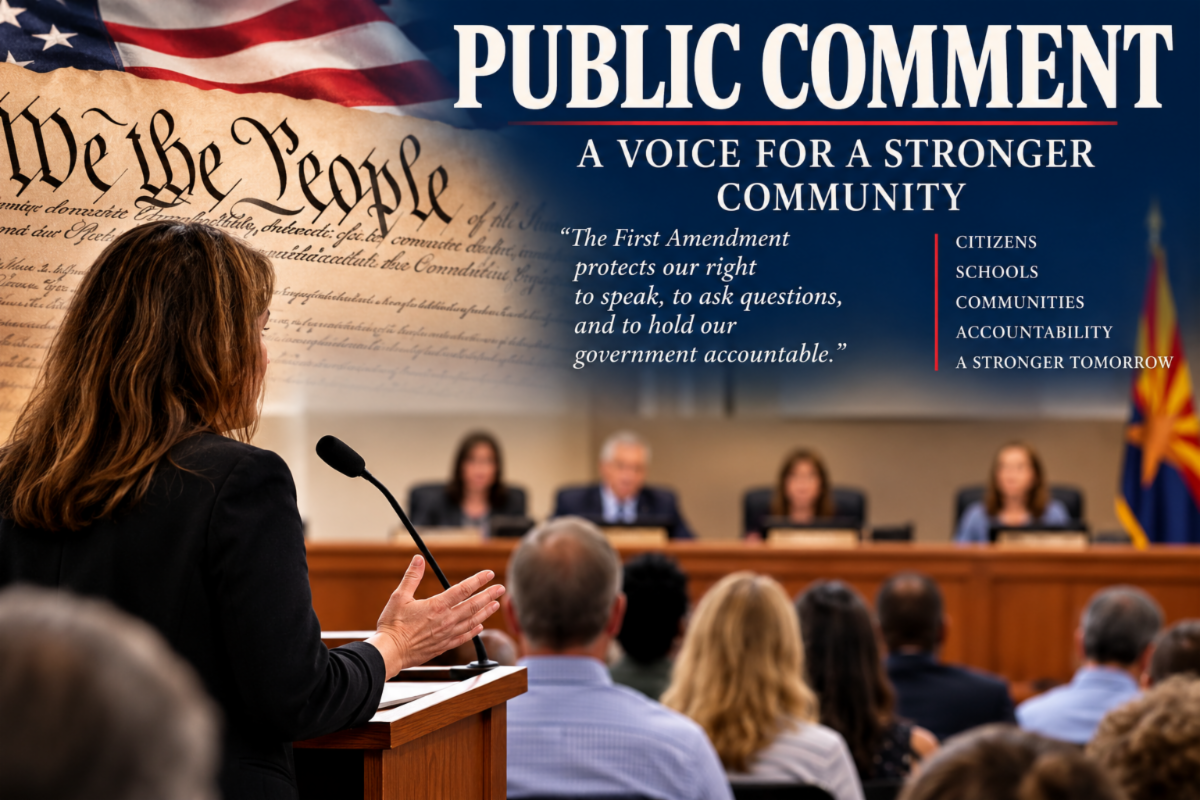
Public Comment is a Right


Public comment at government meetings can sometimes feel routine. A citizen approaches a microphone, states their name, watches a clock count down, and tries to squeeze an important concern into a few minutes.


But those few minutes matter.


Whether the meeting involves a school board, city council, county board or another public body, public comment provides citizens with something fundamental to representative government: the opportunity to speak directly to the people making decisions on their behalf.


Arizona law strongly favors open government. Arizona's Open Meeting Law requires meetings of public bodies to be open so citizens can attend and listen to their government's deliberations. Arizona law also allows public bodies to hold an "open call to the public," subject to reasonable time, place and manner restrictions.


There is an important distinction, however. Arizona's Open Meeting Law guarantees the public's ability to attend public meetings, but it does not automatically guarantee everyone a right to speak at every meeting.


Once government creates an opportunity for public comment, the First Amendment enters the picture.


Government bodies can establish reasonable rules for conducting meetings, including time limits designed to allow everyone an opportunity to speak and to permit the board to conduct its business. But restrictions cannot simply be used to silence speakers because government officials dislike their opinions. Arizona's Attorney General has recognized that reasonable time, place and manner restrictions may be imposed during an open call to the public.


That principle is important because the First Amendment protects more than our ability to praise government.


It protects our ability to criticize it.

What Happened at Dysart Unified School District

The recent controversy surrounding public comment at Dysart Unified School District illustrates why these policies deserve public attention.


At the September Dysart Governing Board meeting, the public learned that the amount of time provided to individual speakers had been reduced from three minutes to 90 seconds. The change was made by the board president rather than through a vote of the full Governing Board.

That decision has generated concern among citizens who believe such a significant change to public participation should be discussed openly by the entire board.


At the October 5 meeting, I addressed the board and asked that the three-minute public-comment period be restored. I also asked board members to place the issue on a future agenda so it could be publicly discussed.


And that is exactly what public comment is supposed to accomplish.


Arizona law specifically provides that after an open call to the public, individual members of a public body may ask staff to review an issue or ask that an issue raised by a citizen be placed on a future agenda.


The Dysart controversy is important, but this issue is much bigger than one school district.

Public Comment Is Sometimes Uncomfortable — and That's Okay

Elected officials will not always like what citizens have to say.


Sometimes speakers will be angry. Sometimes they will be wrong. Sometimes they will criticize an elected official directly. Sometimes they will raise an issue government officials would rather not discuss.


That is part of representative government.


Public comment should remain orderly and government bodies have every right to maintain decorum and enforce reasonable rules. But efficiency should never become an excuse for creating unnecessary barriers between citizens and their government.


The Arizona Legislature has declared that public meetings should be conducted openly and that Arizona's Open Meeting Law should be interpreted in favor of open and public meetings.


There is also something government officials should remember when someone approaches that microphone: The public is not an inconvenience to government. The public is the reason government exists.


Those three minutes may be the only opportunity a working parent has to tell a school board about something happening in their child's classroom. It may be the only opportunity a homeowner has to address a city council about development near their neighborhood. It may be the only opportunity a taxpayer has to publicly question how government is spending their money.


Public comment does not mean elected officials must agree with every speaker. It does not mean every demand must be granted.


It means citizens get to be heard.


And protecting that opportunity should matter to every one of us — regardless of our politics, our party or whether we agree with the person standing at the microphone.


Because someday, we may be the person who needs those three minutes.

Thank you,

Lisa Everett


www.patriotnheels.com


Follow me on:

X - @patriotnheels

Facebook - @patriotnheels

Instagram - @patriotnheels