|
November 2025
YOUR WOODLAND WORDS...
| | |
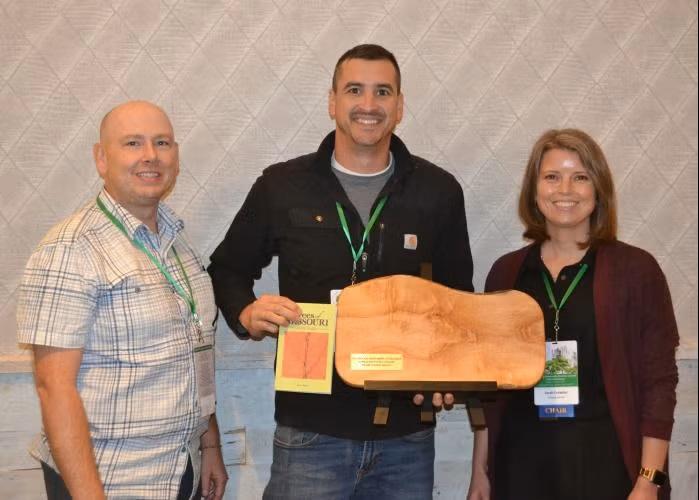
MDC AND MCFC RECOGNIZE MISSOURIANS FOR MAKING TREES WORK IN THEIR COMMUNITIES
For more than 30 years, the Missouri Department of Conservation (MDC) and the Missouri Community Forestry Council (MCFC) have recognized Missourians who prove themselves to be outstanding stewards of community trees. MDC and the MCFC recently recognized a new group of these tree stewards for their efforts with the Missouri Arbor Awards of Excellence. The awards were presented by MDC Community Forestry Coordinator Russell Hinnah at the annual Missouri Community Forestry Council Conference in Kirkwood on Sept. 25.
“The Missouri Arbor Awards of Excellence highlight the people and organizations working to provide sustainable, long-term efforts to care for trees,” said Hinnah. “Their work is extremely important to assure the many economic, social, and environmental benefits of a healthy community forest.”
The awards were presented to five recipients in four categories: Individual, Municipalities/Governments, Business/Institution, and Organization. Nominations for this year’s awards were evaluated based on sustainability, innovation, use of sound tree management principles, contribution the effort made to the community, and the effectiveness of the tree care work, event, or program.
| |
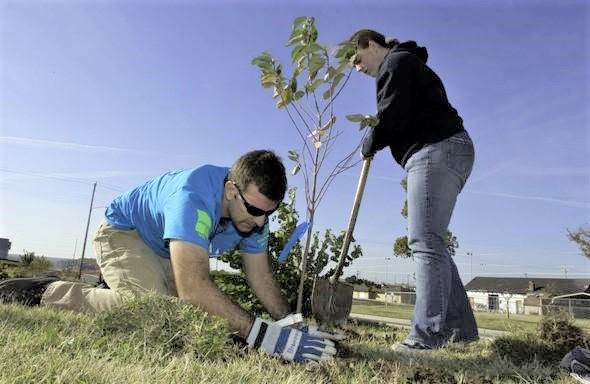
FALL TREE PLANTING: ROOTING FOR A GREENER TOMORROW
As autumn paints Missouri’s landscapes in brilliant hues, it also signals the start of the best season for planting trees, says University of Missouri Extension state forestry specialist Hank Stelzer. “Fall offers a unique window of opportunity for tree establishment, making it the preferred time for forestry professionals, municipalities and homeowners alike.”
Why Plant in Fall?
Cooler weather reduce stress: Trees planted in fall face less heat stress, letting them acclimate more easily to their new environment.
Increased soil moisture: Seasonal rains help keep soil moist, supporting root development without the need for frequent watering.
Dormancy promotes root growth: As trees enter dormancy, they shift energy from leaf production to root establishment, giving them a strong foundation before spring.
Fewer pest and disease pressures: Cooler weather means fewer insects and pathogens, reducing the risk of damage to young trees.
Better long-term survival: Trees planted in fall are often better prepared to withstand the heat and drought of the following summer.
Across Missouri, organizations like Forest ReLeaf are mobilizing volunteers and distributing thousands of trees to communities in need, Stelzer says. ReLeaf’s CommuniTree program supports public and nonprofit planting projects. Fall planting helps rebuild urban canopies and reconnect people with nature.
“Whether you’re planting a native tree in your backyard or joining a community effort, fall is the season to dig deep and invest in a healthier, greener future,” he says.
For more information, see the MU Extension guide “How To Plant a Tree” at https://extension.missouri.edu/publications/g6850.
| |
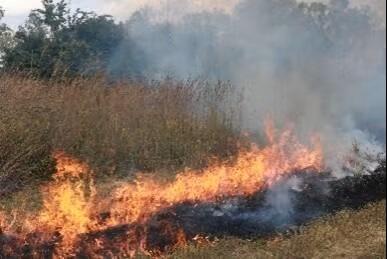
LEARN TO USE PRESCRIBED FIRE AS A LAND MANAGEMENT TOOL WITH MDC NOVEMBER 7 IN JEFFERSON CITY
The Missouri Department of Conservation (MDC) invites landowners to a prescribed burn workshop Nov. 7 from 9:30 a.m. to 3:30 p.m. at Lincoln University - Carver Farm.
Prescribed burning can be a valuable tool for managing native plant diversity and controlling undesirable vegetation, but it can be dangerous and ineffective when not used properly. This workshop will provide basic information on how to plan and execute a prescribed burn for land management.
Registration for this event is required. Upon registration, participants will be asked to complete the online portion of the prescribed burn course. This online course is a mandatory prerequisite to the workshop, and there is a $25 fee to complete the online training. Participants are asked to bring their certificate of completion to the workshop.
| |
TICKS ‘VANT TO SUCK YOUR BLOOD’ THIS FALL
Missouri ticks are worse than a Transylvanian vampire on Halloween. Many people think ticks are most active during summer. However, fall is prime time for ticks. Deer are primary hosts for ticks, and fall is when deer move due to mating season and to find vegetation to build fat reserves for winter, says Emily Althoff, University of Missouri Extension and Lincoln University urban entomologist.
Ticks are especially concerning now due to increased incidences of alpha-gal syndrome, which can cause a variety of symptoms, including an allergy to red meat. Ticks also transmit other diseases such as Lyme disease, Rocky Mountain spotted fever, encephalitis and anaplasmosis.
Ticks use their barbed mouthparts to cut through the skin of humans and animals like a saw. They insert a small feeding tube into the skin to feed. You can’t flick a tick because it hooks itself into the skin when it bites. Revenge is difficult: their tough “skin,” or exoskeleton, makes them hard to crush. Once engorged with blood, they can swell from the size of a sesame seed to about 3/8 inches long.
| |
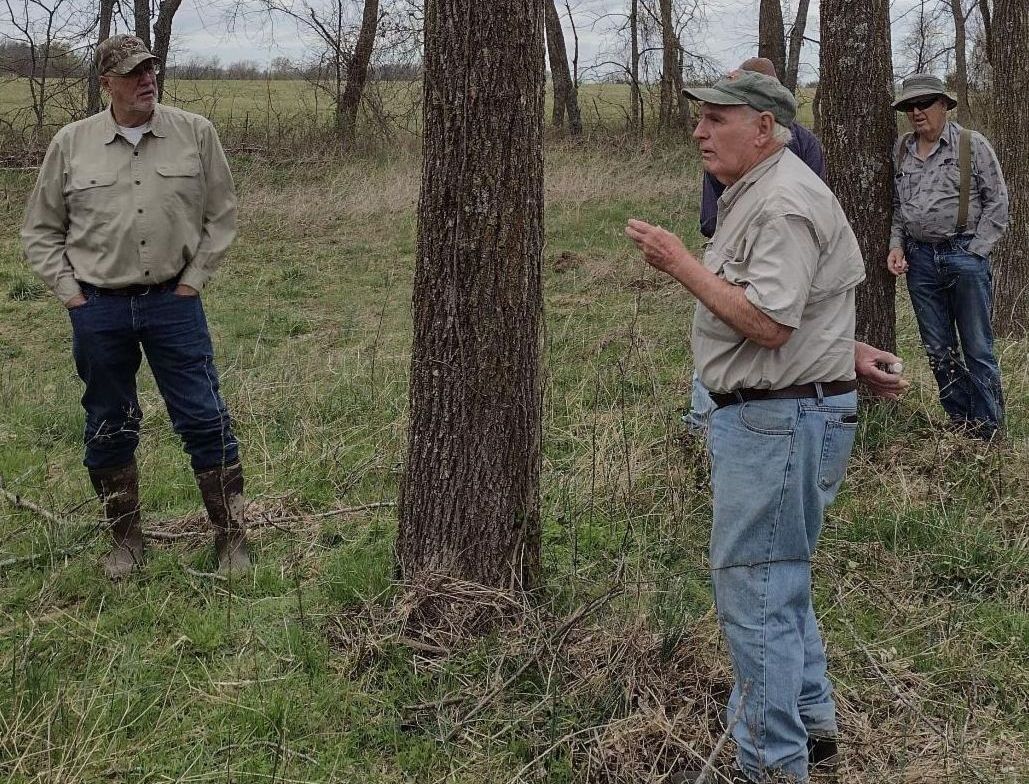
WOODLAND MENTOR PROGRAM
Over 35,000 timber sales are estimated to have taken place in Missouri over the last 5 years on private land. Yet only, 9% of landowners sought assistance from a Department of Conservation forester and 4% from private consulting forester. (According to the National Woodland Owners Survey)
Landowners often look to other landowners for information. That is why MU Extension, and the Missouri Department of Conservation have partnered to form a Woodland Mentor Program. Missouri’s woods are one of our greatest natural assets, but good stewardship doesn’t happen by accident. The Missouri Woodland Mentor program will connect landowners with others who have real, on-the-ground experience and a shared passion for healthy forests. George Kipp, Forestry Program Supervisor with the Missouri Department of Conservation, is excited about the program. “By pairing passion with practical know-how, we can help more Missourians care for their forests for generations to come”.
The program will leverage the outreach efforts of Call Before You Cut (CBYC) to assist in identifying landowners looking for a mentor. Kipp states that 44% of landowners requesting CBYC information also express interest in a landowner mentor.
Woodland Mentors are:
· Landowners with experience caring for their woods
· They are knowledgeable about Missouri woods
· And most of all, they are passionate about nature and helping others take care of nature
| | |
MDC DONATES RUSH CREEK AND WALNUT WOODS TRACTS TO CITY OF LIBERTY PARKS & REC
During their September 22 city council meeting, the City of Liberty approved the donation of two parcels of land from the Missouri Department of Conservation (MDC) to the City of Liberty Parks & Rec. The city will pay $10 to MDC for each property. The tracts, Rush Creek and Walnut Woods conservation areas, contain roughly 108 acres of forested land along a creek.
Due to the proximity of nearby residential lots, both tracts are only accessible through city-owned park land or private conservation land at the Martha Lafite Thompson Nature Sanctuary. This ownership change will allow the land to be more easily managed alongside existing park land while maintaining its natural state. The areas and their existing hiking trails will remain open to the public with access points from established public parks.
“We are excited to bring 100+ acres into the fold of the Liberty Parks & Rec system,” said Parks & Rec Director BJ Staab. “Our dedicated and experienced Parks Maintenance Team is already working on future maintenance plans. These properties are an integral part of two of Liberty’s well-loved community amenities and we are looking forward to welcoming even more visitors in the future.”
| |
THOUSAND CANKERS DISEASE
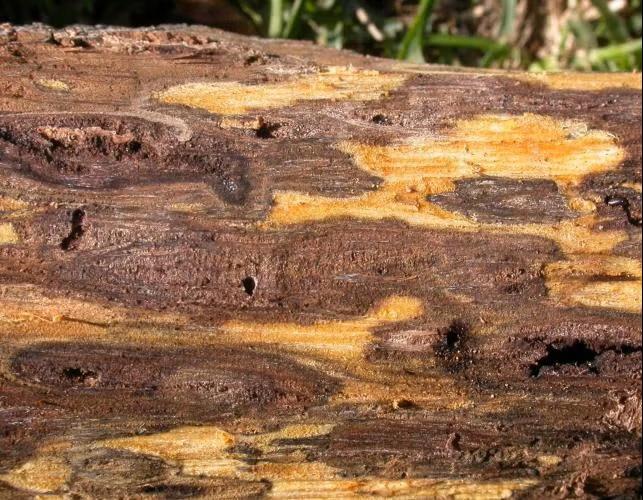
Identified in 2008, thousand cankers disease (TCD) has killed thousands of walnut trees. It has been found in five eastern states (North Carolina, Ohio, Pennsylvania, Tennessee, and Virginia) and in nine western states. The name “thousand cankers” describes the numerous cankers that appear on affected black walnut trees. The walnut twig beetle carries a fungus that causes TCD. The fungus kills small patches of tissue, creating cankers under the bark where the beetles attack. These cankers grow together, weakening and eventually killing the tree.
Missouri has more black walnut trees than any other state. The potential loss of black walnut for lumber, edible nuts, and as a shade tree in our communities is estimated at $851 million over 20 years.
| |
MDC TO OFFER PRESCRIBED BURN WORKSHOPS AND DEMONSTRATION BURNS FOR LANDOWNERS IN FRANKLIN AND JEFFERSON COUNTIES THIS FALL
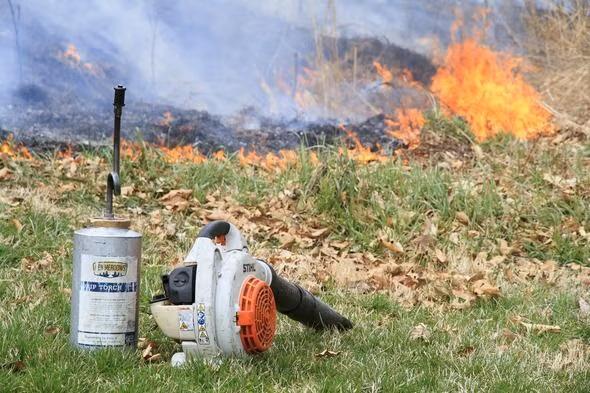
Prescribed burning can be a valuable tool for managing native plant diversity and controlling undesirable vegetation, but it can be dangerous and ineffective when not used properly. The Missouri Department of Conservation (MDC) is offering landowners and managers a chance to learn how to use this effective technique at two free workshops/demonstration burns this fall. One will be held in Franklin County in November, and the other in Jefferson County in December, weather permitting.
The workshops consist of an online portion, followed by an in-person demonstration burn to gain hands-on experience. They will provide basic information about how to plan and execute a prescribed burn for grassland management. Participants will learn about burn equipment, burn line installation, safe weather parameters, ignition operations, and other techniques to safely conduct a prescribed burn.
The dates and times for the demonstration burns are as follows:
Franklin County - Tuesday, Nov. 4
Jefferson County - Friday, Dec. 12
Both in-field portions will run from 10 a.m.–3 p.m. and require advanced registration.
| |
UNCOVER SECRETS TO CONQUERING INVASIVE PLANTS WITH FREE MDC WORKSHOP NOVEMBER 7 AT CALDWELL CONSERVATION AREA
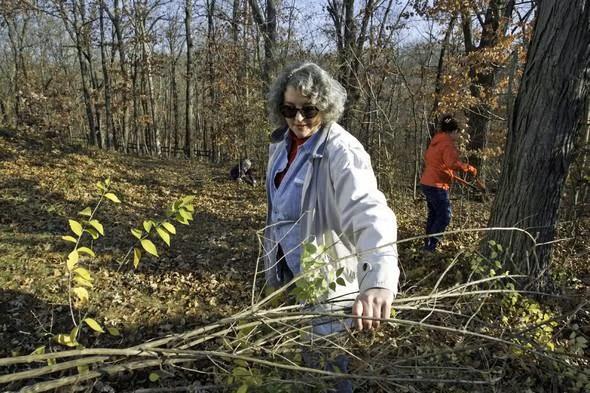
Non-native invaders can wreak havoc on native woodlands, habitat for wildlife, and even impact the quality of foraging for cattle.
If your woods are being invaded by undesirable plants, the Missouri Department of Conservation (MDC) is presenting an event that can help. MDC’s Invasive Species Management workshop will take place on Friday, Nov. 7 from 10 a.m.– 3 p.m. at Caldwell Conservation Area in Franklin County. It will be a chance to tap into the knowledge of MDC land management experts for some of the best practices to keep invasive plants at bay.
Attendees will learn about the history of non-native invasive plants, how they disrupt the native ecosystems, wildlife populations, timber production, and recreational opportunities on your land.
The Invasive Species Management workshop is free, and lunch will be provided. However, online preregistration is required to attend.
| |
FALL COLOR
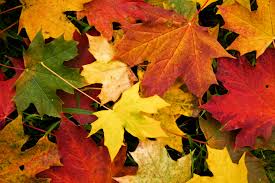
Missouri is blessed with a great variety of trees, shrubs, and woody vines. In autumn, their leaves turn color at different times, so Missourians enjoy a fall color season that may last six to eight weeks. It progresses in phases. Sassafras, sumac, and Virginia creeper are some of the earliest to change, beginning in mid-September. By late September, black gum, bittersweet, and dogwood are turning.
The peak of fall color in Missouri is usually around mid-October. This is when maples, ashes, hickories, and oaks are at the height of their fall display. Normally by late October, the colors are fading, and the leaves are dropping from the trees. Fall color is usually finished by the middle of November.
The progression of color change usually starts earliest in northern and western Missouri and moves southward and eastward across the state. Generally, the color change is predictable, but it can vary from year to year.
| | |
NOMINATE AN OUTSTANDING TREE FARMER
Nominations are now being accepted for the Missouri Tree Farmer of the Year award. Every year the Missouri State Tree Farm Committee selects a Tree Farmer of the Year winner from a list of nominees from all regions of the state. The Missouri winner then has the opportunity to compete for the North Central Tree Farmer of the Year. If they win there, they can compete for the National Tree Farmer of the Year award.
If you know of a deserving Certified Tree Farmer to nominate, contact Laurie Wilson at fwam.trees@gmail.com for more information and a nomination form.
Nominations are due by November 30, 2025.
| | |
WHY FOREST LANDOWNERS SHOULD ENROLL IN THE TREE FARM PROGRAM
Private landowners in Missouri own 82 percent of the state’s 15.5 million acres of forestland. “Managing private forestland sustainably can enhance its ecological, economic, and recreational value, but doing so requires knowledge, support, and long-term planning”, says University Extension State Forestry Specialist, Hank Stelzer.
The American Tree Farm System, through its Tree Farm certification program, offers a wealth of resources and incentives to help landowners succeed. Enrolling in Tree Farm is not only a smart move for managing your woodland effectively, but it also contributes positively to your legacy, your community, and the environment.
One of the most compelling reasons to enroll in Tree Farm is the technical support it provides. Certified Tree Farmers gain access to a network of forestry professionals, including foresters and conservation specialists, who can help develop and implement a forest management plan tailored to your goals. Stelzer says, “Whether you aim to enhance wildlife habitat, harvest timber sustainably, or improve recreational access, Tree Farm can connect you with expert guidance that ensures best practices are followed.”
Another key benefit is recognition. The Tree Farm sign signals a landowner's commitment to sustainable forestry. This recognition can foster a sense of pride and demonstrate to neighbors, local communities, and future generations that your land is managed with care and stewardship. In some cases, certification may even increase the value of your property by showcasing its responsible management.
Tree Farm also opens the door to financial advantages. Many certified landowners qualify for cost-sharing opportunities, tax incentives, and grants to offset the expense of conservation work such as tree planting, invasive species removal, or erosion control. Additionally, Tree Farm certification can give your timber a competitive edge in the market, as more buyers are seeking wood products from sustainably managed forests.
Importantly, enrolling in Tree Farm helps protect and enhance ecosystem services. Certified Tree Farms support biodiversity, improve air and water quality, and contribute to carbon sequestration—all critical in the fight against climate change. By following a written management plan that balances conservation and production, landowners play a key role in sustaining healthy forests for the future.
Beyond the land itself, Tree Farm fosters a community of like-minded landowners. Through workshops, field days, and regional meetings, Tree Farmers can share knowledge, exchange experiences, and build lasting relationships. These connections offer ongoing learning and motivation, helping landowners stay engaged and inspired in their forestry journey.
| |
Forest and Woodland Association of MO
PO Box 1632
Saint Peters, MO 63376
573-353-6436
| | | | | |