Rail Workers Weekly News Digest
Number 31 - August 4th, 2020
|
|
Below is a series of articles compiled over the previous week.
They are of interest to railroad workers and activists.
|
|
ARTICLE #1 - CREW CONSIST NEWS
Kansas DOT Proposes Two Person Crew Regulation
|
|
Another state is making a two-person freight crew the law of their land.
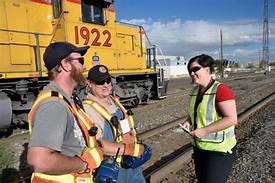
On July 27, the Kansas State Department of Transportation proposed a regulation that requires railroads that operate in the state to maintain a two-person crew in the lead locomotive.
“Kansas now joins a growing list of states that believe federal inaction on this issue is too great of importance to public safety and our members’ safety,” SMART Transportation Division Kansas State Legislative Director Ty Dragoo said in an email to TD members in his state. “The work we have done, the years of relationship building, the local, county and regional meetings where we have presented our case, and above all else, your efforts in your communities have finally paid off.
“Today is the proudest day of my career and, indeed, my tenure as a member of this great union.”
“Kansas has faced issues ranging from crew member fatigue to derailments which pose a threat to our safety and security – but by maintaining the current practice of requiring a two-person crew we can ensure the health and safety of Kansas workers,” she said. “This proposed regulation is a commonsense, necessary measure to protect our state’s railroad crew members and keep every community along the tracks safe.”
At the federal level, a number of states and rail labor unions continue to engage in a lawsuit against the Federal Railroad Administration (FRA) in the U.S. Court of Appeals Ninth Circuit. The federal agency, led by Donald Trump appointee Ron Batory, has attempted to prevent states from passing laws mandating a minimum train crew size
|
|
ARTICLE #2 - TRAIN DERAILMENT NEWS
A Bridge Over an Arizona Lake was Engulfed in Flames and Partially Collapsed After a Train Derailment
|
|
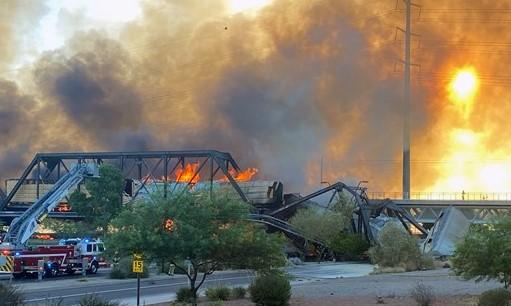
The Salt River Union Pacific Bridge in Tempe, Arizona, caught fire early Wednesday and partially collapsed amid a train derailment, according to multiple reports.
A train car carrying lumber across the bridge was engulfed in flames and a tanker car that had a hazardous materials warning sign fell off the bridge and landed on the street below, per KTVK.
Information about the cause of the incident or any injuries wasn't immediately available.
Fire crews in Tempe, Arizona, battled a massive blaze on Wednesday morning after a train derailed and a bridge collapsed at Tempe Town Lake.
Local station KTVK reported that a train car transporting lumber across the Salt River Union Pacific Bridge caught fire around 6 a.m. while a tanker car with a hazardous materials warning sign had fallen off the bridge.
Footage from the scene showed mangled train cars, some of which were engulfed in flames while others had plummeted onto the street below. A towering plume of black smoke was also visible.
A Tempe Fire Department spokesperson told ABC-affiliate KNXV-TV that a Union Pacific train was involved. Around 90 firefighters and multiple agencies responded to the two-alarm fire, the news outlet reported.
Tempe police said on Twitter that streets in the area were closed and the lake was shut down. Local reports said that no one was injured, but one person was treated for smoke inhalation.
Information about the cause of the collapse wasn't immediately available.
|
|
ARTICLE #3 - PASSENGER RAIL NEWS
House Passes Amtrak Relief; Nothing Yet from Senate
|
|
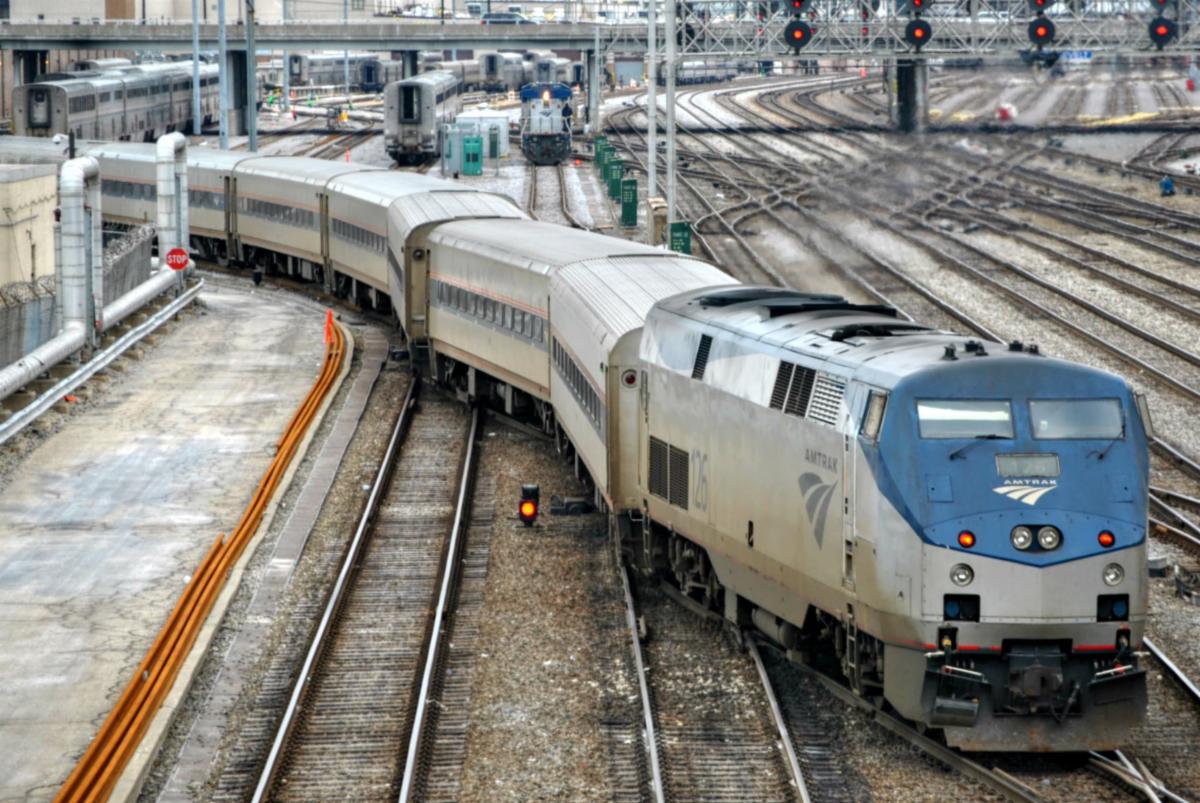
The U.S. House of Representatives today passed a Fiscal Year 2021 budget "mini-bus" that includes $10 billion for Amtrak and $24 billion for transit. The seven-bill package also includes language that protects daily service, prevents further furloughs for Amtrak workers, and requires that passengers and employees wear masks on trains, planes, and large transit systems.
The House passed H.R. 7617—which in addition to the Transportation, Housing, and Urban Development Appropriations Act, includes Defense, Commerce, Justice, Science, Energy and Water Development, Financial Services and General Government, Homeland Security, Labor, Health and Human Services, and Education—by a vote of 217 to 197. The bill, if enacted into law, would avert the crisis facing rail systems across the U.S.
However, with the Senate dragging its heels on passing any meaningful legislation, that enactment is far from certain. The Senate has yet to introduce even draft appropriations language for transportation, and the most recent coronavirus relief package included no money for transit or Amtrak (although it did include $10 billion for airports).
We can’t let this happen! Please let your Senators know you demand relief for America’s trains!
|
|
ARTICLE #4 - RAIL AND CORONAVIRUS NEWS
Unions Petition U.S. Officials to Require Masks on Planes, Buses, Trains
|
|
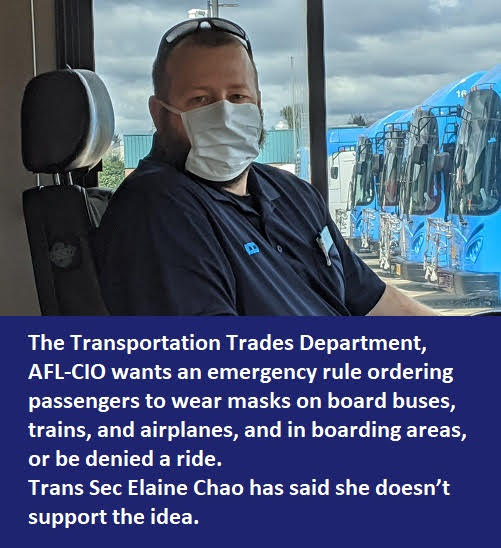
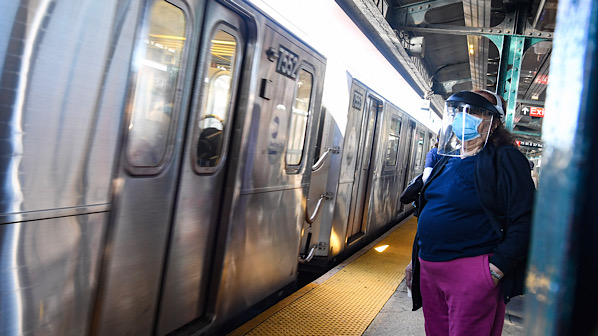
Labor unions representing transportation workers formally asked the U.S. Department of Transportation this week to issue an emergency rule ordering passengers to wear masks on planes, buses and trains or be denied a ride.
Larry Willis, the president of the Transportation Trades Department, a coalition of 33 unions, wrote in the petition that the government needed to go beyond issuing guidance and set clear rules for the use of masks to protect workers and passengers from the coronavirus.
“This regulation should require that passengers wear masks covering the nose and mouth while on board buses, trains, airplanes, and passenger vessels, as well as in boarding areas and associated facilities including airports and stations,” Willis wrote to Transportation Secretary Elaine Chao on Monday.
“The regulation should also make clear that a transportation provider has an obligation to refuse to transport any passenger who is unwilling to comply for reasons unrelated to a disability that would prevent them from doing so.”
|
|
ARTICLE #5 - FREIGHT RAIL TRAFFIC NEWS
North American Class 1s Report Shrinking Revenue in Second Quarter
|
|
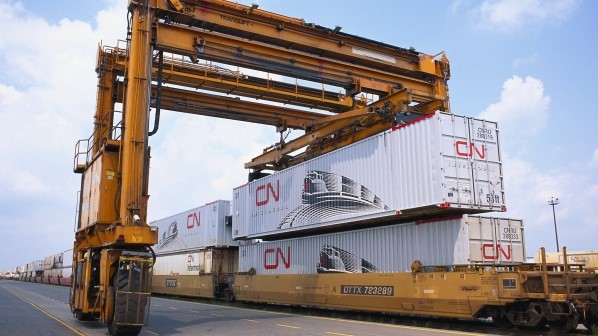
NORTH American Class 1 railways have reported a difficult second quarter, as the effects of the coronavirus pandemic caused a reduction in freight traffic. However, the railways remain confident as the economy begins its recovery.
Union Pacific (UP) reported net income of $US 1.1bn, down from $US 1.6bn during the same period last year. Operating revenue was $US 4.2bn, down 24% compared with 2019, while total revenue wagonloads decreased by 20%.
“The second quarter proved very challenging as we faced a volume decline of 20% due to the economic impact of the Covid-19 pandemic,” says Mr Lance Fritz, UP chairman, president and CEO. “Demonstrating the transformation our company is experiencing through the implementation of Unified Plan 2020, we were able to largely mitigate the impact of that volume loss.”
With uncertainty in the state of the global economy, UP currently expects full year wagon volumes to be down by around 10% compared with 2019.
Canadian Pacific (CP) announced second-quarter revenues of $US 1.79bn for the quarter, down 9% from $US 1.98bn year-on-year, with an operating ratio of 57%.
“While economic uncertainty remains, we’re controlling what we can control – our costs,” says Mr Keith Creel, CP president and CEO. “Our strong bulk franchise, which included record movements for Canadian grain and potash in the first half of the year, helped to offset some of the declines we experienced in other lines of business. Given our strong cost control measures, industry-leading execution of the PSR model, and improved clarity on the volume environment, we now expect positive adjusted diluted earnings per share (EPS) growth for the year. As a result of the continued strength of our balance sheet, we have also restarted our share repurchase program.”
|
|
ARTICLE #6 - TRANSIT AND COMMUTER NEWS
Covid-19 Offers ‘Best Opportunity for Decades’ to Reshape Public Transport
|
|
THE Covid-19 pandemic is an opportunity to shape more sustainable, resilient and human-centric urban mobility systems with many cities and transit authorities primed and ready to embrace the challenge, a new study presented by the International Association of Public Transport (UITP) and consultancy Arthur D Little has found.
In The Future of Mobility post-Covid, the authors engaged with 70 leaders and top executives from more than 30 organisations, ranging from transport authorities, mass transit operators, “new mobility” providers and professional bodies. The participants shared views on the impact of the crisis, actual and planned responses as well as insight on the longer term.
The study assessed the impact of the crisis on 12 key mobility trends in three areas – global, behavioural, and technology/market. It says that while the crisis has and will continue to have tragic consequences for many people, it has also led to new conditions which can be leveraged to drive innovation.
“The striking result is that with the exception of passenger demand growth (measured in passenger-km) which is expected to slightly decelerate in the coming years, all the other trends will be likely to be accelerated by the crisis, which, in itself, opens up opportunities to drive change, provided that policy makers and public transport operators and “new mobility” MSPs are able to seize the opportunity,” the study notes.
“Covid-19 was, for everyone, a “life-changing moment,” and it is easier to change behaviours during such moments; city centres with less car traffic can be more easily used as “sandboxes” for innovation; there is increased public awareness of environmental and health benefits; and rapid actions taken during the crisis by authorities and operators have demonstrated the “art of the possible” in terms of rapid and agile decision-making.”
The study says that among the key players that can have the greatest impact are city governments and transport authorities. Encouragingly, it says many of the actors engaged with during the study have been taking the new ‘framing’ and ‘enabling’ actions required to institute significant change.
Framing encompasses changes to regulations governing the mobility system and its components such as urban space allocation, new mobility reregulation, contract reengineering with private mass transport providers, new data regulation and new enforcement measures. Enabling covers new governance arrangements for better collaboration across the system, a reassessment of investments to favour , accelerated investment in digital infrastructure for Mobility as a Service (MaaS)
|
|
ARTICLE #7 - RAIL INFRASTRUCTURE NEWS
Solutionary Rail in a Time of Pandemic
|
|
CoViD-19 is a confluence of crises that further exacerbates inequities and exposes vulnerabilities. It is also an opportunity to undertake a transformational national infrastructure project that delivers climate and environmental justice, improves public health, and rebuilds local and national economic vitality.
- CoViD-19 is in part a symptom of the climate emergency. Climate change is causing a biodiversity crisis that makes it easier for viruses to spread from animals to humans. Fossil fuel emissions are the biggest factor in exacerbating the climate crisis, causing habitat loss and ecosystem degradation. As climate change accelerates, the frequency and severity of pandemics will increase.
- The CoViD-19 pandemic discriminates according to preexisting conditions. CoViD-19 is killing rich and poor alike, but communities of color are suffering dramatically higher infection and fatality rates. One factor in this disparity is proximity to the environmental pollution created by high-use highways, mega-warehouse hubs, railway yards, airports, and ports. Living near these pollution centers leads to higher rates of respiratory illnesses and creates disproportionate vulnerability to diseases like CoViD-19.
- Air travel contributes disproportionately to CO2 emissions and the spread of diseases. Crowded airplanes and airports are petri dishes for viruses like CoViD-19. Prior to the pandemic, aviation was projected to be responsible for 27% of CO2 emissions by 2050. France is using the CoViD-19 crisis to transition away from shorter distance air travel and invest in railroads rather than bail out airlines.
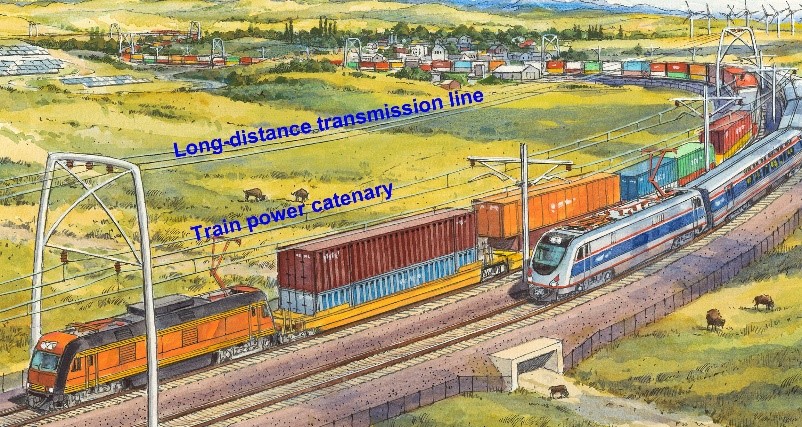
It is time for bold solutions. Instead of more Wall Street bailouts, let’s transform our national infrastructure to align with domestic resilience, public health and the common good. Investing in an Interstate Rail system is a winning strategy for local and national resilience.
|
|
ARTICLE #8 - RAIL WORKERS' RIGHTS NEWS
Federal Employers Liability Act (FELA) Under Attack?
|
|
BLET, SMART-TD and ARLA urge Supreme Court to protect FELA
The Brotherhood of Locomotive Engineers and Trainmen (BLET), along with the SMART Transportation Division (SMART-TD) and the Academy of Rail Labor Attorneys (ARLA), have filed a joint motion and brief urging the United States Supreme Court to prevent railroads from seeking property damages from their employees who are involved in railroad accidents.
The joint amicus curiae brief was filed in the case of Melvin Ammons and Darrin Riley v. Wisconsin Central, Ltd. Following a 2014 derailment, Conductor Ammons and Locomotive Engineer Riley filed suit under the Federal Employers’ Liability Act (FELA), claiming the Carrier had failed to provide a safe place to work resulting in injuries to them. In its counter claim, Wisconsin Central blamed Ammons and Riley for causing the accident. The carrier further argued that the crew acted in a negligent manner and sought damages from the employees in excess of $1 million for damage to railroad property.
In their brief, the BLET, SMART-TD and ARLA argue that to allow a railroad to recover property damages from employees following an accident is an unlawful device that permits the railroad to evade its own legal liability, and will create a potential catastrophe in the railroad industry because the safety-reinforcing purpose of FELA will be destroyed.
“No tactic by the railroads has more potential for destroying employees’ rights — the exclusive remedial recourse available to railroad employees — under the Federal Employers’ Liability Act (‘FELA’ or the ‘Act’) than allowing a railroad to seek property damages from an employee arising out of an accident,” the group wrote in its amicus brief.
Congress created the FELA in 1908 with the “twin objectives of providing effective relief to railroad workers injured or killed because of their employer’s negligence and giving railroads an economic incentive to improve the safety of this nation’s railroads.” This remedial purpose was underscored by amendments to the Act in 1908 and numerous times thereafter.
|
|
|
|
|
|
|