|
“If you love your job, you’ll never work a day in your life.”
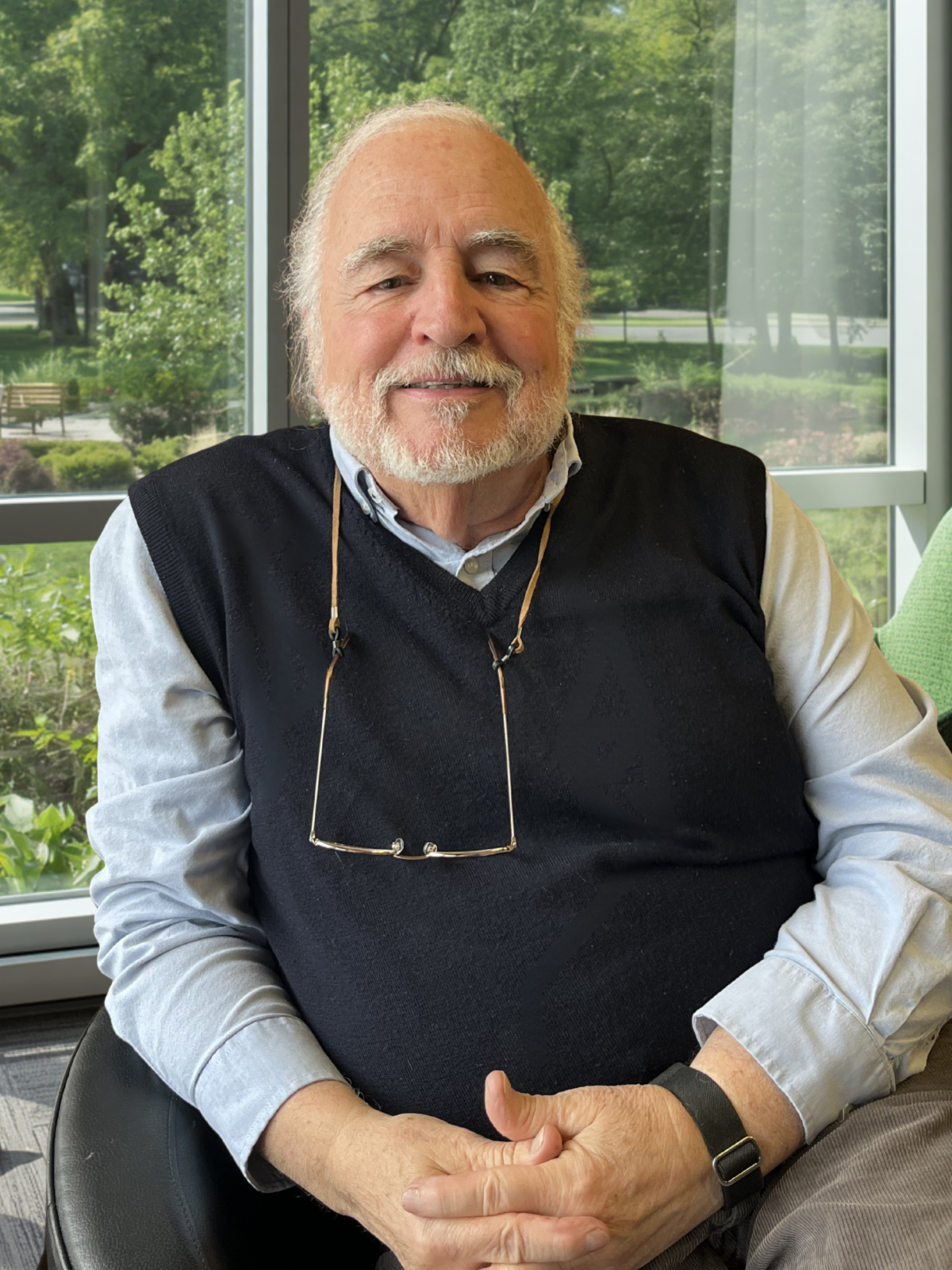
These words ring true for Rex LaMore, Ph.D., who has dedicated 50 years to a distinguished career at Michigan State University focused on advancing community-based solutions to local challenges.
LaMore serves as director of the Center for Community and Economic Development (CCED), housed within the Office of University Outreach and Engagement (UOE), and holds an affiliated faculty appointment in the Urban and Regional Planning Program in the College of Agriculture and Natural Resources (CANR).
An architect of the 1992 Outreach Partnership Act with U.S. Senator Don Riegle of Michigan, LaMore's work has shaped the nature of university-community partnerships nationwide. Closer to home, he served as president of the Michigan Association of Planning 2016–17 and as a commissioner on the Williamstown Township Planning Commission for over 15 years.
Throughout his career, LaMore has been a dedicated leader in advancing equitable and sustainable development, with a particular focus on revitalizing distressed communities. His work has had a lasting impact across Michigan, helping to shape a model for community-engaged economic development that positions communities as active partners in defining and co-creating solutions alongside higher education. Grounded in equity and trust, his approach consistently centers community knowledge, priorities, and lived experience, while contributing to innovative, community-based strategies that continue to influence the field. He has also helped develop enduring infrastructure that strengthens collaboration between communities and institutions, creating systems that extend well beyond any single project or funding cycle.
More career highlights include being the founding director of the MSU Regional Economic Innovation (REI) partnership, a collaborative initiative that advances new tools, models, and practices in community and economic development. In addition, he founded the “Science of Domicology,” a framework and field of study that redefines the built environment through the lens of circular life cycles.
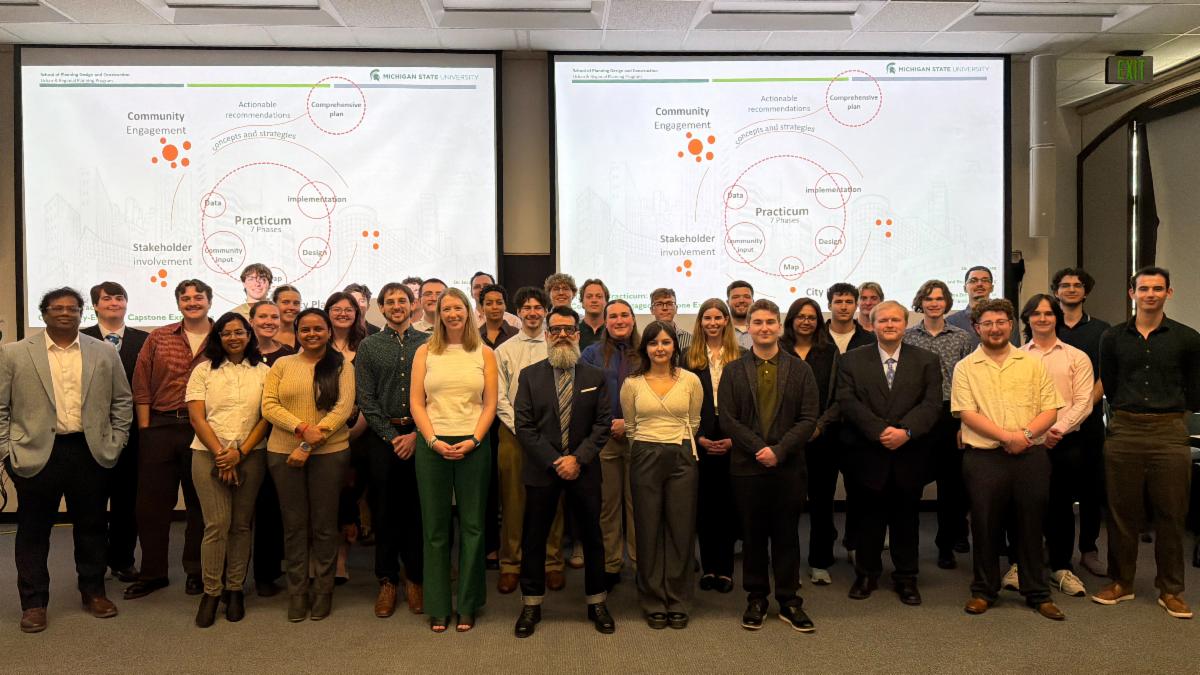
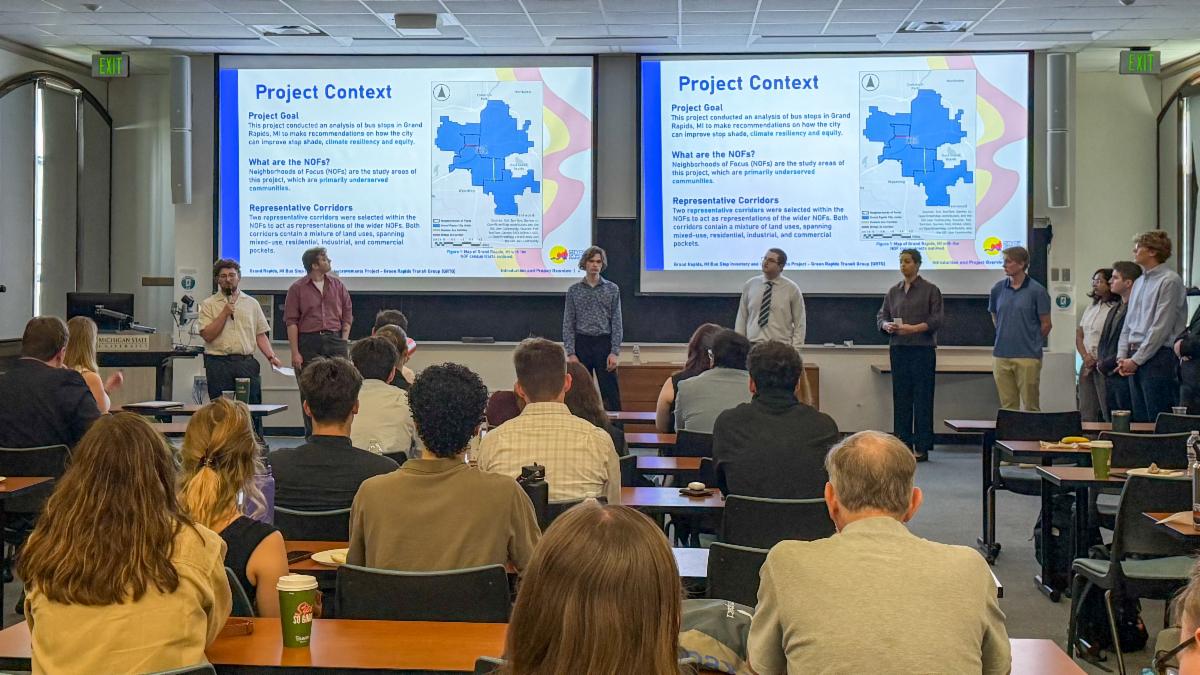
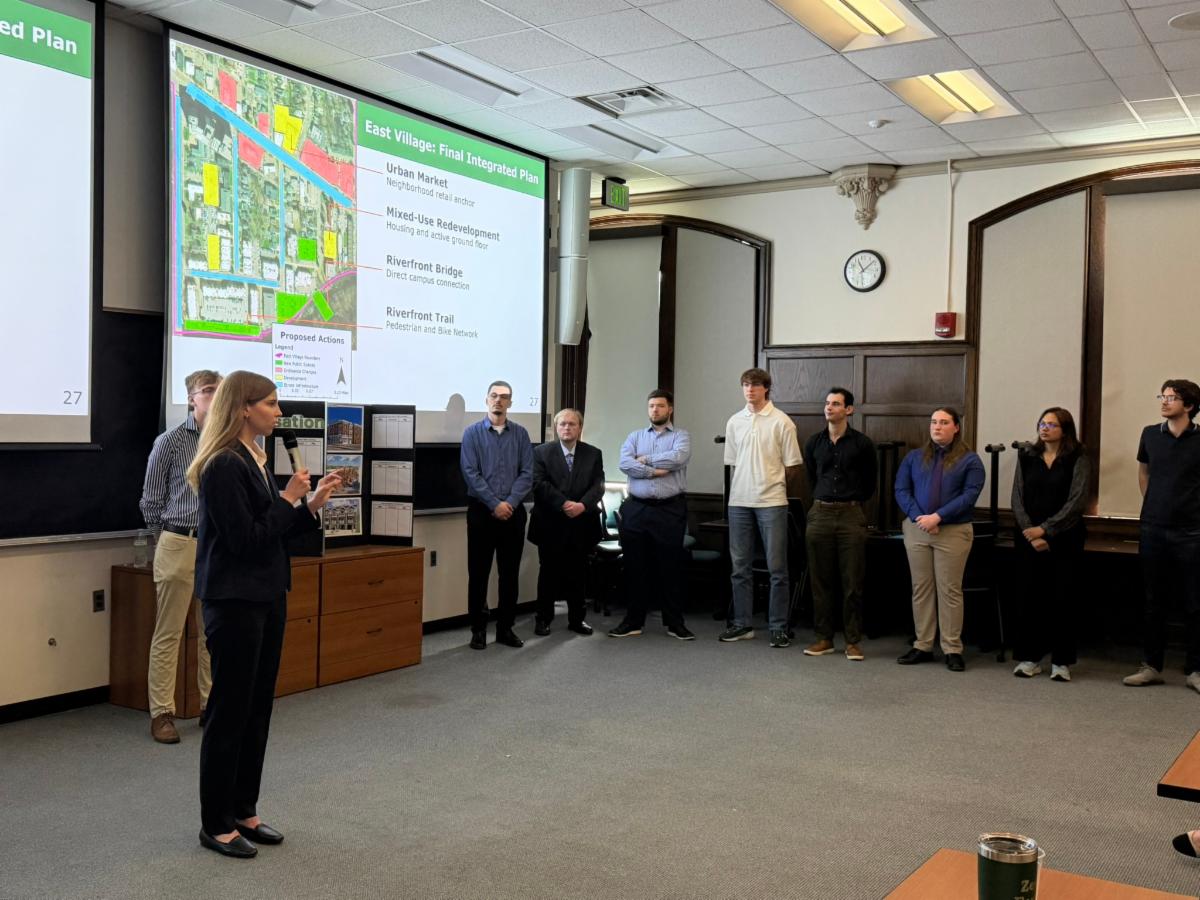
Through more than two decades of teaching, LaMore has inspired generations of students in environmental planning, community economic development, urban policy, and ethics. Through the field-based planning practicum, his students partnered directly with communities on real-world projects. Most recently, in fall 2024, he co-taught the university’s first Honors College course on the circular economy.
“Several years ago, as we were exploring models for how universities can partner with communities to drive meaningful and equitable change, I came to visit CCED because of its national reputation in this work,” said Kwesi Brookins, vice provost for UOE. “It became immediately clear to me that Dr. LaMore’s impact on MSU and the communities it serves is truly immeasurable. In fact, CCED’s leadership in this arena was one of the top reasons I was excited to return to lead MSU’s outreach and engagement office. Through his leadership and his ability to connect people, ideas, and opportunities, Rex has strengthened our work across the state that will continue to shape our efforts in the years to come.”
This sentiment is shared by colleagues who have worked closely with LaMore, including Zenia Kotval, professor and program director for Urban and Regional Planning in CANR’s School of Planning, Design, and Construction.
“Rex’s reputation for running one of the premier EDA university centers in the Midwest preceded my arrival at MSU—and in every way, he exceeded it. He has a remarkable ability to build meaningful connections with communities and truly understand their needs, and his expertise in helping communities build capacity for economic and community development is unmatched in Michigan. I had the pleasure of teaching the urban planning practicum course with Rex for nearly a decade, and the practical experience he brings into the classroom is phenomenal.”
Notably, LaMore has been recognized for his many contributions throughout his career. He is a national recipient of the Community Development Society's Distinguished Service Award (1995) and the prestigious Educator of the Year Award of the Michigan Economic Developers Association (2008). He has also been recognized by his peers at MSU with the University Distinguished Academic Specialist Award (2011), the Excellence Award in Interdisciplinary Scholarship from the MSU Chapter of the Honor Society of Phi Kappa Phi (2013), and, notably, as an inaugural recipient of the Simmons Chivukula Award for Academic Leadership (2018), an honor presented by MSU’s Office of the Provost.
Reflecting on both her time as a student and her continued work as a colleague, Jenan Jondy shared, “He changes people, and in doing so, he has changed communities for the better.”
LaMore earned a B.S. and M.S. in Resource Development from Michigan State University and a Ph.D. in Education and Community Development from the University of Michigan.
As he prepares to retire in June 2026, he will be honored with emeritus status in recognition of his years of service. His legacy at MSU is defined by a deep commitment to community engagement, innovation, and student mentorship, as well as the lasting impact of the students, colleagues, and community members who will carry this work forward.
|