Weekly Digest Number #6 - February 8th, 2022 |
|
Welcome to the RWU Rail & Labor News! This news bulletin is produced and emailed out each Tuesday morning. We hope you find the week's news and information useful. If so, please share with co-workers, friends, and colleagues. If you like, you can sign them up to get all the news from RWU HERE. Or simply forward them the link. Note: If you read over this news bulletin each week, you will be sure to never miss the important news of what is going on in the railroad world from a worker's perspective!
|
|
U.S. Freight Railroad Workers Struggle Heating Up |
|
(Editor's Note: A lot happened this past week, as a threatened strike by BNSF workers captured national attention. The strike was thwarted by a pro-company Texas judge, and the new "Hi Viz" attendance policy went into effect on Feb.1. Meantime, the larger of the two rail union bargaining coalitions reached impasse and is appealing for mediation, while the smaller coalition is now done with mediation and calling for a Presidential Emergency Board. Fully half of this week's Rail & Labor News is devoted to this developing situation. Read on!) |
|
BLET and SMART-TD Seek Immediate Federal Government Investigation of Carrier Attendance Policies |
|
By letter dated January 31, 2022, BLET and SMART-TD are seeking review by both the Department of Labor and the U.S. Department of Transportation of all Class I attendance policies. In a joint letter to Labor Secretary Martin Walsh and Transportation Secretary Pete Buttigieg, SMART-TD President Jeremy Ferguson and BLET President Dennis Pierce ask the secretaries to immediately investigate all Carrier attendance policies that refuse to provide exceptions for fatigue-related absences, as well as those that refuse to provide exceptions for illness-related absences.
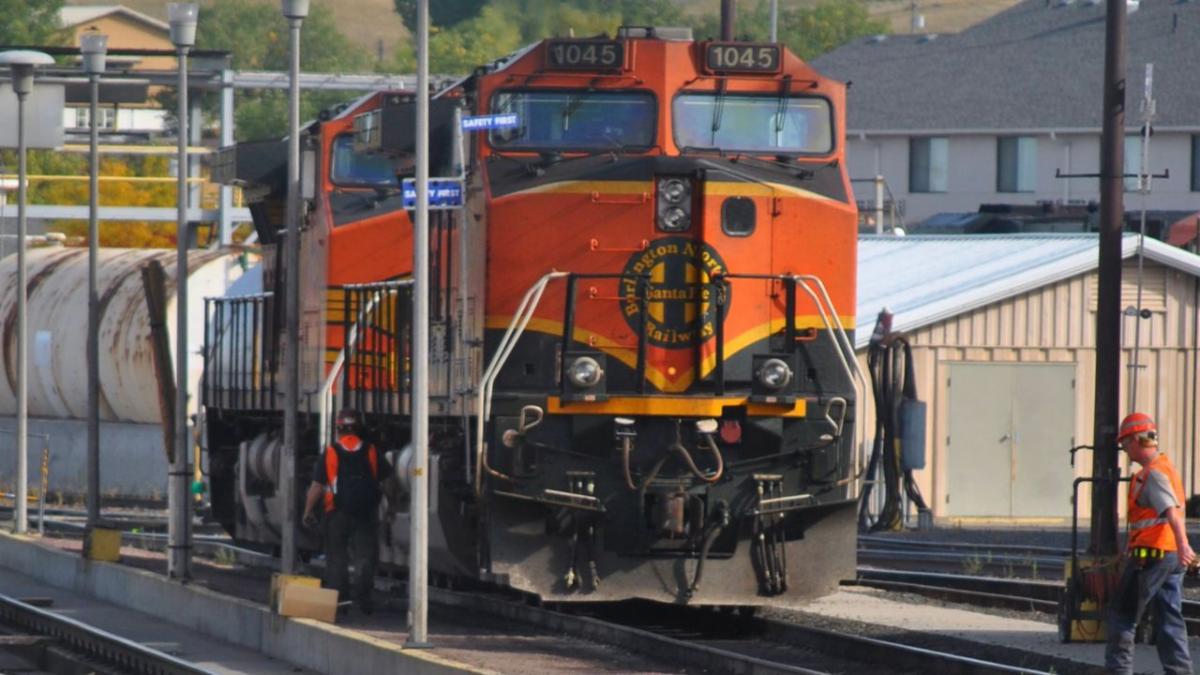
Referencing the most recent “Hi-Viz” policy on BNSF set to go into effect today, the presidents said: “The new policy also potentially subjects employees to disciplinary action when they request time off because they are ill or when they need to tend to sick family members. This includes time off under the Family Medical Leave Act (FMLA), as this policy disincentivizes employees from utilizing this protected leave by prohibiting ‘Good Attendance Credit’ from ever being gained because of its use.”
Addressing fatigue concerns, the presidents said: “The only tool these engineers and trainmen have to prepare for their unscheduled work shifts are so-called ‘train lineups,’ which are managed solely by the railroad. Moreover, BNSF has openly admitted that the quality of these lineups and the related predictability for the on-duty times is far from adequate. As a result, engineers and trainmen are routinely called for duty without having any knowledge or awareness of the potential for work (at that particular time), thus subsequently preventing them from the ability to be physically rested prior to their being called to work. For example, it is commonplace for these employees to be suddenly called into work for an evening shift when they didn’t expect to be called in until the morning according to the available train lineups. Under BNSF’s new Hi-Viz policy, even though they may be fatigued, they are not allowed to refuse the unpredicted call for duty without potentially being subjected to employer discipline, up to and including dismissal. Forcing these employees to choose between their job or their safety in the workplace is in complete contradiction to BNSF’s obligation to protect public safety and to provide a safe workplace environment.”
|
|
Former Engineer Describes Dangerous and Hostile Conditions at BNSF |
|
A former BNSF worker, who wished to remain anonymous, recently described her experiences at the company to us. This interview has been edited for length and clarity.
Erik Schreiber: Where did you work for BNSF?
Anonymous Engineer: I hired out in North Dakota and I transferred out to Seattle in 2016....
ES: How would you describe your work schedule?
AE: Trainmasters are supposed to work with management to come up with the train lineups, which are absolute trash. Something that’s been on the schedule for an entire day, all of a sudden, isn’t being called or is being pushed back and pushed back and pushed back. When they say it’s a 24 on call, they’re not kidding.
If you go more than 24 hours without being called, you get “reset.” What that means is the railroad and the Federal Railroad Administration [FRA] consider that your day off. And, according to the FRA, if you get six starts—meaning they call you, you go into work—if you get six of those in a row—mind you, you have to be called before 24 hours—then you get 48 hours off at the end of your sixth start. If you get seven starts, then you get 36 hours off. That I’ve only had a couple of times, because it’s so rare. You have to be out of town, and then you get called, and on the way back, you could have seven starts after staying at a hotel. If you get called beyond 24 hours after, say, your third start, then that resets your start. You don’t go into your next day as a fourth start, you would start over as start one.
See how maddening that can be? You can go an entire month without a day off. And even if you get that magical 48 hours off, that’s not like your average nine-to-fiver’s weekend. If you clock out on 5 pm on a Friday, you don’t go back to work at 8 am on Monday. You go back to work at 5 pm Sunday. Your schedule is completely flipped. You go from working days to nights, and there’s no predictability.
|
|
(Editor's Note: In this segment, The Real News' Editor-in-Chief Max Alvarez interview former BNSF engineer and RWU member Jeff Kurtz on the subject of the BNSF "Hi Viz" attendance policy and the general treatment of railroad workers today.) |
|
Court Blocks Railroad Workers from Striking Over Draconian Attendance Policy |
|
A crucial labor battle is currently unfolding between railroad workers and BNSF Railway, the largest freight railroad network in North America. Earlier in January, the Brotherhood of Locomotive Engineers and Trainmen (BLET) and the Transportation Division of the International Association of Sheet Metal, Air, Rail, and Transportation Workers (SMART-TD), which together represent roughly 17,000 railroad workers, initiated steps to prepare for a strike that would have begun on the Feb. 1. This would comprise the largest railway strike in recent memory, and the unions have cited as the main point of contention a new BNSF scheduling and availability policy that workers say will separate them from their families and make it next to impossible to live and reasonably plan their lives. BLET National President Dennis Pierce and SMART-TD President Jeremy Ferguson called BNSF’s so-called “Hi-Viz” policy “the worst and most egregious attendance policy ever adopted by any rail carrier.”
However, on Tuesday, Jan. 25, a US District Court judge granted BNSF a temporary restraining order blocking the two unions from striking, saying that a strike would cause the rail company “substantial, immediate and irreparable harm.” In this interview, TRNN Editor-in-Chief Maximillian Alvarez speaks with retired railroad worker and union leader Jeff Kurtz about BNSF’s “Hi-Viz” policy and why workers in the railroad industry are prepared to strike.
|
|
(Editor's Note: Our friends at Labor Notes put this excellent article together. See their website at www.labornotes.org. You can subscribe to their online labor news there for free, and/or subscribe to their excellent monthly magazine in hard copy for a small fee. They also put on a great labor conference in June that RWU will proudly take part in.)
|
|
Rail Unions Are Bargaining Over a Good Job Made Miserable |
|
Contract negotiations covering 115,000 rail workers in the U.S. are expected to heat up in 2022.
Workers are seething over the impact of extreme cost-cutting measures. Rail unions are escalating through the slow steps of negotiations under the Railway Labor Act—toward a resolution, a strike, or a lockout.
Rail remains one of the most heavily unionized industries in the country, and rail workers maintain the arteries of the economic system.
In 2018, U.S. railroads moved 1.73 trillion ton-miles of freight, while trucks moved 2.03 trillion. (One ton-mile is one ton of freight moved one mile.) A slim majority of rail freight consists of bulk commodities, ranging from grain to mined ores to automobiles; slightly less is made up of consumer goods.
COST-CUTTING FRENZY
In the flurry of reporting on what’s slowing down the supply chain, little has been said about one contributing factor—the years-long squeeze that major railroads have put on their operations and workforces.
Precision Scheduled Railroading is a nebulous term that has come to cover many measures aimed at cutting costs and increasing profits. (Although the name refers to trains operating on a set schedule, that’s just one piece.) All the railroads engage in elements of it.
PSR is basically the railroad version of lean production—the methodology of systematic speedup and job-cutting that caught on in manufacturing in the ’80s and spread to many industries.
The railroads have done it by cutting less-profitable routes; closing and consolidating railyards, repair barns, and other facilities; running fewer, longer trains; and laying off tens of thousands of workers while demanding the remaining workers do more.
Class I railroads—the companies with annual revenues over $900 million—employed fewer workers this January than any month since 2012, falling below even the early-pandemic slump.
Railroads have cut as many as 35 percent of workers in some titles over the past several years. Overall there were 160,795 Class I rail workers in December 2015, and only 114,499 by December 2021.
|
|
(Editor's Note: The smaller of the two rail labor coalitions is moving on from mediation now as the larger coalition appeals for mediation. The process is moving along. RWU holds out hope that all 12 unions can get together as one in this round. We are very close to achieving this long sought goal of universal unity in bargaining!) |
|
Bargaining Update: National Bargaining at Impasse, BMWED/SMART Coalition Calls for P.E.B. |
|
The BMWED/SMART-MD Coalition held a mediation session on Jan. 28 with the National Carriers Conference Committee (NCCC) under the direction of the National Mediation Board.
Once again, and unsurprisingly, the carriers did not present a comprehensive proposal. Rather, they continued to maintain their position that any voluntary agreement with what they would describe as “fair wage increases” would require substantial union concessions on health and welfare benefits and changes to wok rules. Our coalition remains far apart from the carriers and we are at impasse in negotiations.
“It is clear the railroads have waged a war on its employees,” BMWED President Freddie N. Simpson said. “They refuse to give us a comprehensive proposal, but their circular comments continue to be that they want less employees to do more work, through a pandemic to boot, while taking cuts to their health and welfare benefits. They are disrespectful to the great men and women that make the railroad run profitably. There is no path forward in mediation. We are at an impasse. I have urged the federal government to establish a Presidential Emergency Board as soon as possible. Railroad workers have had enough, and we ask the NMB and President Biden to give us a fair and impartial shake at an agreement for these hard-working men and women.”
As a reminder, Labor Economist Tom Roth’s presentation on behalf of the BMWED/SMART-MD coalition reaffirms that the railroads’ bargaining position is unrealistic and unreasonable considering the carriers’ recovery from the Covid-19 pandemic and continued spree of record profitability and record low operating ratios. Roth also pointed out that the railroads have so much cash money on hand that the “Big 3” railroads (CSX, NS and Union Pacific) spent over $28 billion in stock buybacks in the last 33 months, while spending only $25.3 billion in wages and benefits for all their employees combined.
|
|
(Editor's Note: RWU was approached by the media outlet "More Perfect Union" and agreed to have a number of our members interviewed - some with voice disguise to protect them from corporate reprisal - for this in-depth look at what is going on with the BNSF "Hi Viz" attendance policy and in the rail industry in general.) |
|
17,000 Train Operators at Railroad Giant BNSF Will Get Just 12 Days Off *Per Year* Under a New Policy |
|
Workers at the company owned by Warren Buffett work 12-hour days and often operate trains alone.
Outraged workers voted to strike but a Trump-appointed judge barred it.
News outlet "More Perfect Union" interviews a series of railroad workers about the current situation on the nation's Class One rail carriers.
|
|
(Editor's Note: The rail industry likes to tout the idea that freight rates have declined by 27% in the past 34 years or so. But as we now know from the STB, that figure does not tell the true story, as the rates have been increasing steadily the last 16 years. Now, this fascinating - but complex - article below shows that the STB's study underestimates the numbers. The carriers have actually been gouging shippers.) |
|
STB’s Annual Rail Rate Index Study: A Deeper Dive |
|
The newly released STB Annual Rail Rate Index Study (Study) summarizes trends in freight rail rates between 1985 and 2019. The Study shows that inflation-adjusted Real Rail Rates have decreased 27% over the past 34 years. Because Real rail rates are lower now than in 1985, the STB Study may be read by some to imply that current rail rates are reasonable in relation to what they have been historically. Unfortunately, this is not an accurate conclusion, because the historical trend in rates provides an incomplete picture of the change in cost of shipping freight by rail.
There are numerous problems associated with using a basic Revenue Per Revenue Ton-Mile Rate Trend Analysis to determine the change in cost of shipping by rail over a large number of years. Some of the major problems the Study does not address that deflate the historical rate trend in the Study are:
- The ownership of freight cars has changed substantially.
- The substantial increase in the average distance movements traveled.
- The large amount of rail revenue collected from demurrage and other miscellaneous charges.
In addition to these issues, the impact of big changes in the composition of traffic that moves by rail appears to be only partly addressed in the Study.
The top two issues are addressed in this response as they have the biggest deflation impact on the historical trends in the Study.
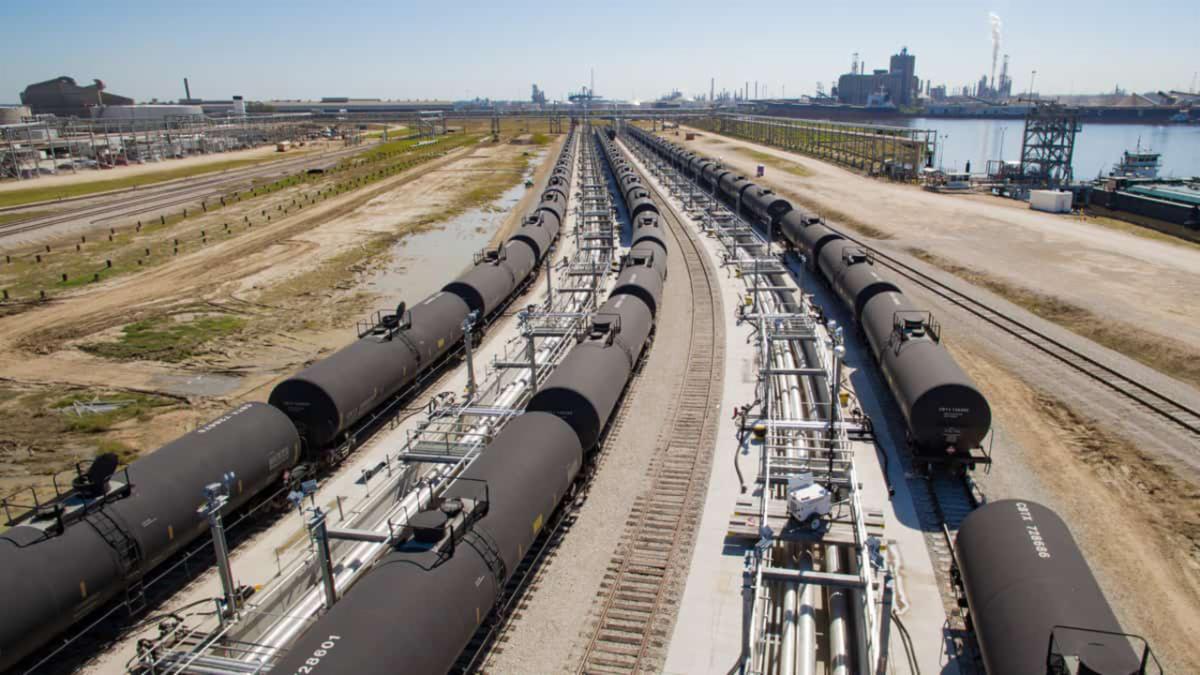
Freight Car Ownership Has Changed: A big problem with tracking rail rate trends over a long period of time is that what is included in rail rates has changed dramatically over time. Illustration 1 shows the magnitude of the change in railcar ownership:
|
|
Rail Workers Hazardous Materials Training Program |
|
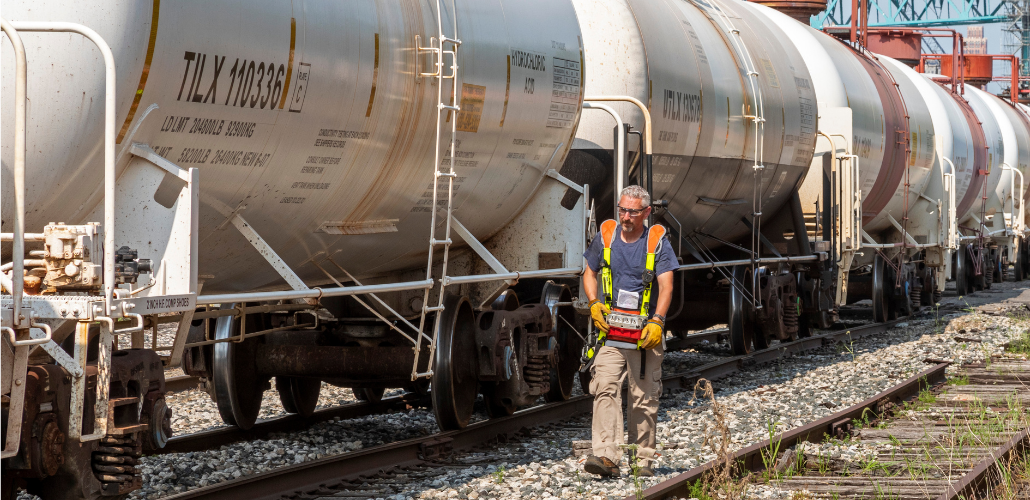
The Rail Workers Hazardous Materials Training Program is funded by a federal grant from the National Institute of Environmental Health Sciences (NIEHS) to provide hazmat training to rail workers. The IBT Rail Workers Hazmat Training Program was awarded funding to provide safety training to rail workers to increase their knowledge of the transportation of hazardous materials. The Rail Program will conduct the following courses virtually 10-Hour OSHA General Industry Course (An incentive of $175.00 is available to participants who take this course) • February 7, 2022 - 11:00am-4:00pm Eastern Time (5 hours/per day…must attend both days) • February 14, 2022 - 11:00am-4:00pm Eastern Time (5 hours/per day…must attend both days) 8-Hour DOT Hazardous Materials Awareness Course (An incentive of $175.00 is available to participants who take this course) • February 24, 2022 – 11:00am-3:00pm Eastern Time (4 hours/per day…must attend both days) • March 3, 2022 – 11:00am-3:00pm Eastern Time (4 hours/per day…must attend both days) Register now at www.teamstersafety.org/moodle Contact Rail Workers Hazmat Training Program (202) 624-6963 (M-F, 9:00am – 5:00pm ET)
|
|
(Editor's Note: The important take-away here is near the bottom. Make sure to read the "Blaze's Take" segment. The rail carriers do not want to divulge train movement information, citing the delicate and confidential nature of such "trade secrets." This is of course nonsense, but the carriers know that if they can keep this information a secret, then it becomes harder for Amtrak and others to prove that there is ample track capacity to run a couple of 500 foot long passenger trains a day without the sky falling, as the carriers like to claim.) |
|
STB Sets Gulf Coast Hearing, But Amtrak Loses Pre-Hearing Round |
|
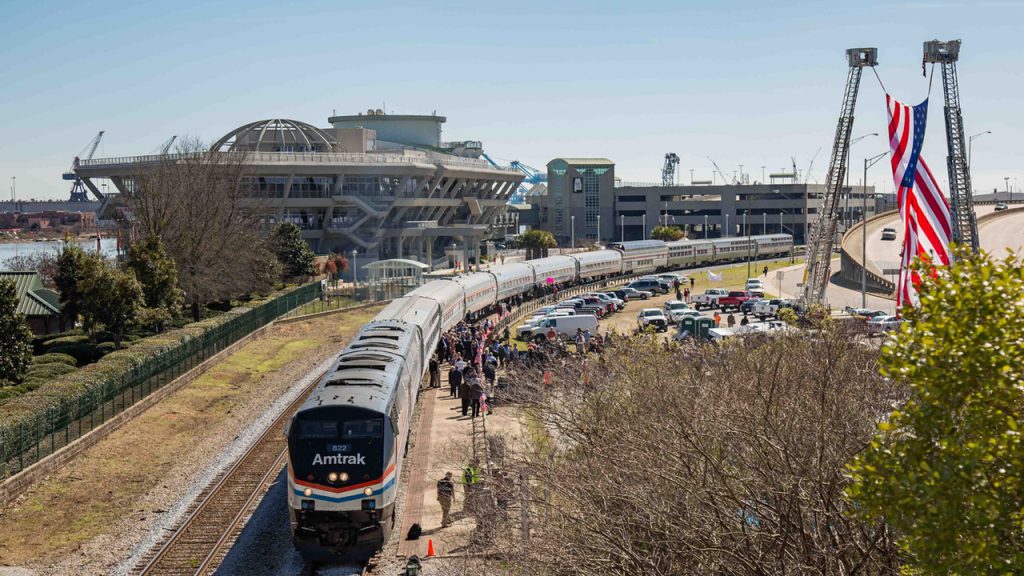
Decision Day draws closer in the tussle between Amtrak and potential host railroads CSX and Norfolk Southern (NS) before the Surface Transportation Board (STB) over whether or not there will be passenger trains running between New Orleans and Mobile in the near future.
STB on Feb. 1 issued a notice that hearings are coming up, and gave potential commenters a narrow window of time to register. Meanwhile, the Board also issued a pre-hearing ruling about procedure and confidentiality, and it looks like Amtrak has lost this round.
The upcoming public hearing regarding Amtrak’s application to operate Gulf Coast service will be held in two phases. The first phase consisting of public comments—many have been submitted via filings, STB said—will begin on Feb. 15, 2022, and will be followed by a pre-evidentiary hearing conference with the parties, phase two. The evidentiary hearing will be March 9, 2022.
The window of time that the STB is allowing for commenters to register is short. Requests to speak must be filed no later than Feb. 7. Directions for filing requests are contained in the notice. Persons who cannot be accommodated on the first day will be heard on the following day. The caption of the case is APPLICATION OF THE NATIONAL RAILROAD PASSENGER CORPORATION UNDER 49 U.S.C. § 24308(e) – CSX TRANSPORTATION, INC., AND NORFOLK SOUTHERN RAILWAY COMPANY and its Docket Number is FD 36496.
|
|
(Editor's Note: Many of these webinars are extremely informative, and are very worthwhile watching for those involved in promoting passenger rail expansion.) |
|
Great Webinars Archived to Watch at Your Convenience! |
|
Thanks for your interest in the webinars we produce here at the High Speed Rail Alliance. In case you missed any, we record them, and here are a few of our ‘greatest hits’—the ones that attracted the biggest audiences:
We’ve covered more than 30 topics, and we have them all here.
We plan to continue producing these events and keep them free for everyone. By becoming a member you can ensure that we're able to do this.
We hope to see you at our next webinar. We have some exciting topics in the works!
|
|
IANA: Q4 Intermodal Volume Tumbled, Total Volume Rose in 2021 |
|
All market segments showed year-over-year declines: international containers fell 16.2% to 2,013,879 units; trailers fell 10.9% to 306,344 units; and domestic containers fell 2.4% to 2,076,790 units.
However, total intermodal traffic rose 3.6% to 18,435,249 units for all of 2021 compared with 2020.
"Although Q4 volumes were down, intermodal loads grew during 2021, albeit at a much slower rate than the previous year," said Joni Casey, president and CEO of IANA, in a press release. "Performance continues to be affected by the virus, as well as network congestion and the intermittent scarcity of equipment and labor."
The seven highest-density trade corridors, which collectively handled more than 60% of total volume, were all down in Q4 2021. The Trans-Canada corridor, with a 21% deficit, led the losses, followed by the South Central-Southwest, Midwest-Southwest and Intra-Southeast at 14.7%, 13.3% and 11.1%, respectively.
The Southeast-Southwest dropped 9.9%; the Northeast-Midwest fell 3.8%, and the Midwest-Northwest held losses to 1.4%.
|
|
UP to Assemble Largest Battery-Electric Locomotive Freight Fleet |
|
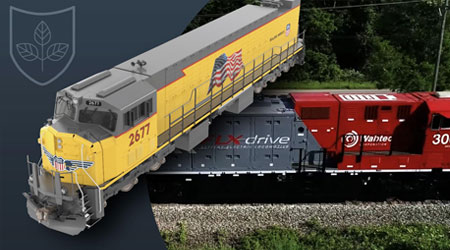
Union Pacific Railroad last week announced plans to assemble the world’s largest battery electric freight locomotive fleet.
UP will purchase 20 battery-electric locomotives from Progress Rail and Wabtec Corp. for testing in yard operations. The combined purchases and upgrades to yard infrastructure are expected to exceed $100 million, representing the largest investment in battery-electric technology by a U.S. railroad, UP officials said in a press release. President Joe Biden shared UP's announcement during a Jan. 28 speech in Pennsylvania.
"We’re committed to actions that reduce Union Pacific’s environmental footprint as we work toward our ultimate goal of reaching net zero emissions by 2050," said UP Chairman, President and CEO Lance Fritz. "These investments will contribute to further developing this important technology and providing industry-wide benefits."
UP officials anticipate the first units to arrive on site in late 2023, with complete delivery by late 2024. The locomotives will be used in yards in California and Nebraska, where they will be tested for performance in cold and warm weather, helping identify the locomotives’ capabilities and challenges for broader deployment.
Battery-electric locomotives do not use fuel and emit zero emissions.
The purchase includes 10 FLXdrive battery-electric locomotives from Wabtec. The approximately 2.5-MWh locomotives are each powered solely by 7,000 battery cells, providing UP a zero-emission solution for its yard operations. The FLXdrives will enable the railroad to eliminate 4,000 tons of carbon annually from its rail yards, the equivalent of removing 800 cars from the highway, UP officials said.
The EMD Joule locomotives from Progress Rail will be manufactured in Muncie, Indiana, Progress Rail officials said in a press release.
The Class I is collaborating with community partners on its environmental goals. The Port of Los Angeles, which recently received a Diesel Emission Reduction Act grant from the U.S. Environmental Protection Agency, awarded UP a sub-award that will partially cover the cost of one battery-electric locomotive.
|
|
|
|
|
|
|