|
- What is the target of this technology: advertising market, video games, the general
public, … ?
Everywhere visual content is needed. There is not one specific target. Even lawyers can use generative AI to recreate a scene or reproduce an item that might have been destroyed. Scientists, to create visual projections of their research. Doctors, to illustrate a procedure never done before, as well as, yes, everyday people to create content on their phones ( not there yet, but coming soon) whenever needed. The question should rather be, what is not the target?
- What is the interest of the players in the field? If Google and Meta are involved, what is their objective and what is their business model?
That is a great question. Cui bono? Well, for one, it was created to help generate content at scale to train other AI to learn. For example, self-driving machines like cars, trucks, boats…Since they learn by seeing examples, and there are just not enough of those available, creating synthetic content is the next best thing. You can generate millions of real-life scenarios with little cost.
Second, and maybe more important and valuable, it's about learning to speak human. For a machine to create visual content, it has to "understand" what it is. Google, Meta and others have long been working on solving that puzzle since we humans communicate mostly via visual cues. Understanding the meaning of these cues is understanding humans. A by-product of this research is creating visual content from scratch, which we see emerging today. The fact that there is no set business model confirms it. Some, like Midjourney and Dall-E 2, currently charge to get access to their servers, but it's mostly to cover their costs. Ultimately, that model will be obsolete when the technology is small enough to fit in our phones. It will just be another feature, like the camera app. Meanwhile, it would not surprise me if Google made their version, Imagen, available for free as an option in their Google image search.
- In a recent announcement, Getty has banned the uploading and selling of art generated using AI tools such as DALL-E, Midjourney, and Stable Diffusion on its site. What was the risk for Getty and its clients?
There is confusion and uncertainty about two aspects of generative AI content. One is a weak argument that since those generative AI engines were trained using scraping and some copyright images, they might be operating outside the law. However, scrapping is not illegal, and using publicly available copyrighted content for training is also not illegal. In some countries, like Japan, it is expressly authorized, and in others, like the USA, the law does not mention it.
The second grey area is who owns the copyright to content generated by a machine. Since the computer that produces it cannot legally own it, is it the person who coded the software or the person who entered the prompt to generate the image? Here also, there is no clear legislation. So, out of liability prudence, Getty and others decided to ban the content for now.
Quite frankly, all this is akin to someone who is about to be eaten by a wolf telling him that he cannot do it because its fur is not the right colour.
- In the future, if the technology improves, and it will, to a satisfactory degree of realism, cost, and speed of production (we can even imagine a "made-to-measure service"), isn't it a serious risk of competition for the traditional image banks?
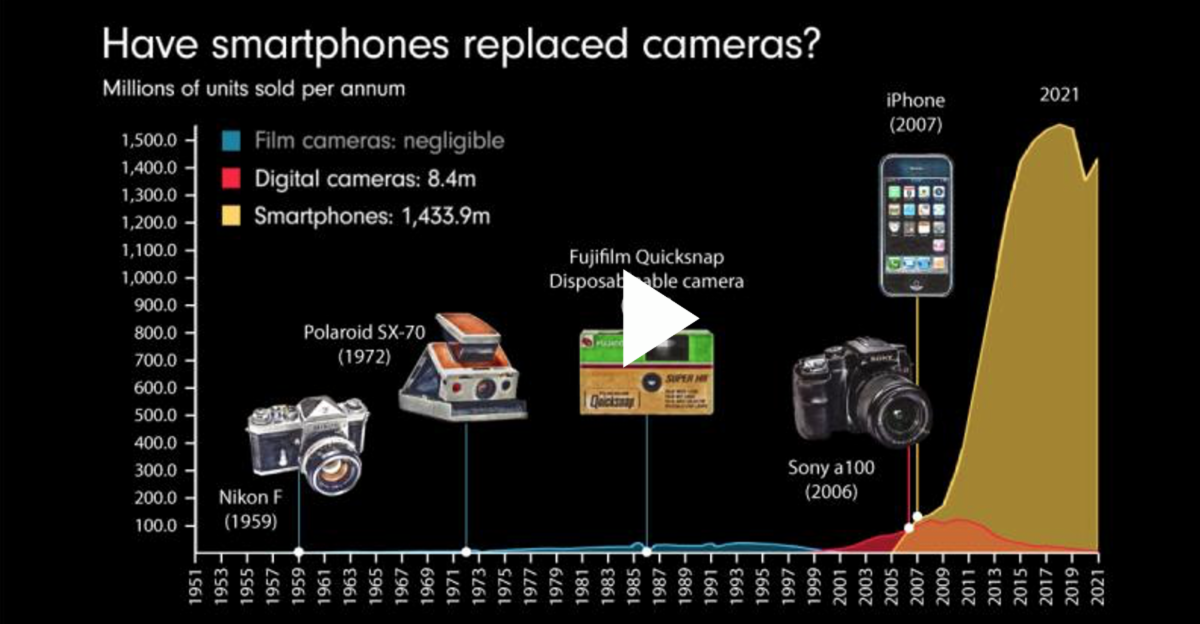
Yes. Absolutely. It's an existential threat. There will soon be no reason to go and license a photo from an image bank since you will be able to create one, probably better, for free, on your desktop or phone. The only reason would be to license real news, sports, or celebrity images. What is called "editorial content". But for everything else, it is game over.
-But can the image banks ignore this resource for long?
They can, up until the day they have to close their doors. But they shouldn't. It is not going away. The good news is that there are ways for them to remain relevant and competitive—for example, hybrid imagery. Using generative AI, one can customize real images with new computer-generated elements. So you can take an existing photo of a couple walking on a beach at sunset, for example, and add a beard to the man and make him look older while adding glasses to the woman and changing her hair to light blond. All that via simple sliders. This technology is available today and enables existing photo libraries to extend the usefulness of their content and greatly enrich their clients' experiences. So, for the smart ones, all is certainly not lost.
- Knowing that this technology can only go to an increasingly credible rendering, the question of manipulation with a criminal or defamatory aim can be asked. Will we need new control tools in the future, and which ones?
That is the biggest drawback of this technology, and it is massive. We, humans, tend to trust our vision over every other sense we have, so it is the perfect tool for deception. We have seen attempts to do so, the most famous ones being deepfakes, and we will certainly see some more, especially in politics. The good news is that genuine efforts and progress are being made. First, at the company level. For example, Open AI (Dall-E 2), is extremely sensitive to the issue of using its solution for deception and purposely blocks specific keywords and images. It will not allow you to replicate famous people's faces. Others, like Bria, have a VP of Ethics on staff to oversee every step of the process to guarantee that the company respects stringent ethical guidelines.
There are also organizations, like the Content Authenticity Initiative and the C2PA, that have co-jointly built a framework for everyone to use for free. It allows a viewer to know the source of an image and grasp its intent, so they can decide if they believe it or not. It is a very potent tool as it relies entirely on human intelligence, rather than technology, to support or not the integrity of the content.
- Is there not a risk of standardization of creation?
I don't think this technology changes the status quo in this domain. People tend to copy what they like, and thus it creates this mass of similar-looking images. Social media is mainly responsible for making it worse, not AI. Look at Instagram today, and you will see millions of images with the same type of framing, colors, subject etc. Generative AI can be as creative as its users, so the result will depend on how people use it.
- How do you see the future in this domain ?
Generative AI will trigger a new age of visual content. It will offer access to creativity to those who don't have the means to go to design school or travel to create beautiful and fantastic images. It will push existing photographers to rethink their roles and develop new ways to be indispensable.
True, certified photography will become even more important and respected, especially for news. Photojournalism will become the exclusive domain of very well-trained and certified professionals who will be held to very high, verifiable professional standards. Trustability will become an extremely valuable attribute.
On the technology side, we will soon see machines creating their own content, unassisted by humans. Relations between art forms will become more symbiotic as computers will be able to transform not just text but sound or shapes into images and vice versa. Instead of text, we will be able to write musical notes as prompts and output corresponding visual content. We will build and adopt new infallible tools (probably in and around blockchain) to help distinguish between prompted and real photography. And that's just next year…
|