Once again, physician payment, as well as ASC and HOPD rules, are out. The most alarming is physician payment, followed by ASC and HOPD rules. The rules show reductions of 4.4% in the conversion factor even though the makeup was only 3% during last year. In addition to this, we must add, as we have been repeatedly saying, a total of 6% leading to 10.4%. With 9% inflation, we are looking for physician payment cuts of 20%.
Enclosed, please see sample rates compared to 2022. In addition to the 4.4% cuts, some codes have faced higher reductions with very few codes facing increases. The same applies to 10.4% cuts.
In reference to ASCs, as of now, they are not proposing any cuts; however, a 6% cut will remain in effect unless the 2% sequester cut from ACA and 4% statutory PAYGO from the American Rescue Plan Act are eliminated.
The fee schedule remains stable except for a few small increases. Some of the procedures that received major increases include sacroiliac joint arthrodesis and moderate increases for peripheral nerve stimulators.
|
|
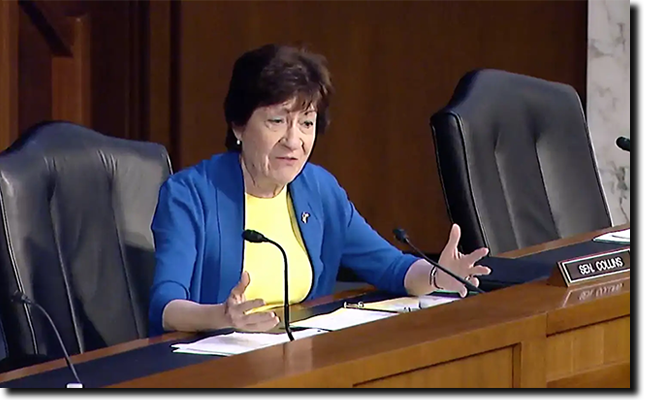
"What we're doing is not working," said Sen. Susan Collins
The federal government is not doing enough to lessen the fentanyl overdose crisis, Sen. Susan Collins (R-Maine) said Tuesday.
"The data overwhelmingly demonstrate [that], whether you look at national data, or data from the state of Maine," she noted. For example, Maine lost a "record high" 627 residents to drug overdoses in 2021, she added. "Last year, fentanyl was involved in 77% of deadly overdoses in Maine. That's a dramatic increase."
|
|
As healthcare professionals, we advocate for changes with profound impacts
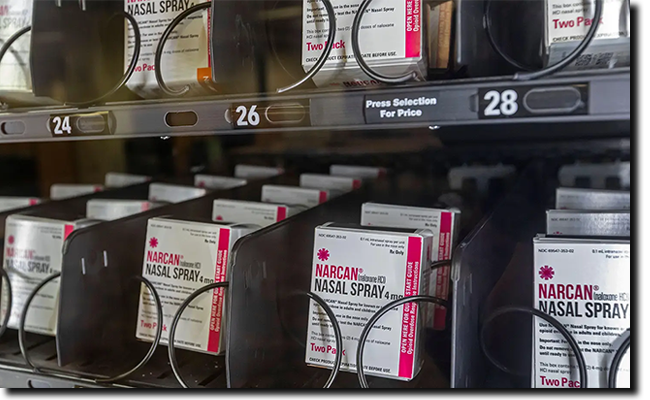
The U.S. continues to struggle with public health epidemics, with the gun violence crisis and COVID-19 case counts still grabbing many of the headlines. Meanwhile, another epidemic continues to kill people by the tens of thousands annually: substance use.
A research letter published in JAMA showed that 1,150 adolescents ages 14 to 18 died of drug overdoses in the first half of 2021. This is a 20% increase from 2020, and more than double the 2019 number. In total, more than 100,300 people in the U.S. died from drug overdoses during the 12-month period ending in April 2021. Additionally, according to a new report from the CDC, racial disparities in overdose deaths have widened significantly.
This uptick in overdoses is, in part, driven by a rise in overdoses of fentanyl, a synthetic opioid, which is being used as a cheap alternative to cut drugs. According to the CDC, fentanyl has played a major role in the increase of deaths from synthetic opioids, and the number of overdose deaths involving synthetic opioids in 2020 was 13 times higher than in 2013. Clearly, we've entered a new phase of the opioid crisis. It's not just heroin that is cut with fentanyl, and it is not just individuals who use drugs on a regular basis who are dying. It's counterfeit pills, it's cocaine, it's laced into marijuana, and it's impacting individuals who use one of these drugs once in a blue moon, who have no intention or knowledge they are using opioids. Whether it's the death of a consistent or one-time drug user, these are preventable losses of precious life.
|
|
Patient claims doctor prescribed at least 7,400 oxycodone pills over 4-year period
A Pennsylvania physician is being sued for allegedly prescribing opioids in a reckless manner that caused a former patient's addiction, according to a civil lawsuit filed earlier this month.
The doctor, Ajeeb John Titus, MD, has been accused by former patient Carl Graves of prescribing at least 7,400 oxycodone pills and 1,700 amphetamine pills between 2016 and 2020, without ordering any diagnostic testing or attempting alternative treatment options, according to the legal filing. Graves claims that Titus' prescribing practices led directly to a severe opioid addiction.
Graves, who is joined in the lawsuit by his wife, Sandi Jo, claims he was hospitalized several times after receiving his final prescription from Titus on Sept. 21, 2020 -- shortly before the physician was charged with multiple felony counts over alleged unlawful prescribing -- and that he continued to require medical care for his addiction to the opioids prescribed by Titus, according to the legal filing.
|
|
The declaration of a public health emergency of international concern by WHO Director-General Tedros Adhanom Ghebreyesus comes as the monkeypox outbreak has expanded quickly to more than 16,000 cases in 75 countries. Five people have died in the outbreak, he said.
“There is also a clear risk of further international spread,” Ghebreyesus said in explaining his decision to declare the emergency, even though the WHO committee convened to determine whether to classify the outbreak at the agency’s highest alert level had not reached a consensus to do so. The WHO last declared a global health emergency at the start of the COVID-19 pandemic in January 2020.
The U.S. is also considering declaring a public health emergency for monkeypox but has not yet made that decision, Ashish Jha, White House COVID-19 response coordinator, told CBS News on Sunday. Since the first U.S. infection was confirmed on May 18, nearly 2,900 cases of monkeypox have been identified across the U.S., with roughly 1,000 cases added to the count in the past week alone.
|
|
NEXT EXAM DATES:
Part I
August 27, September 17,
October 22, November 19 & December 17
Part II
September 23
|
|
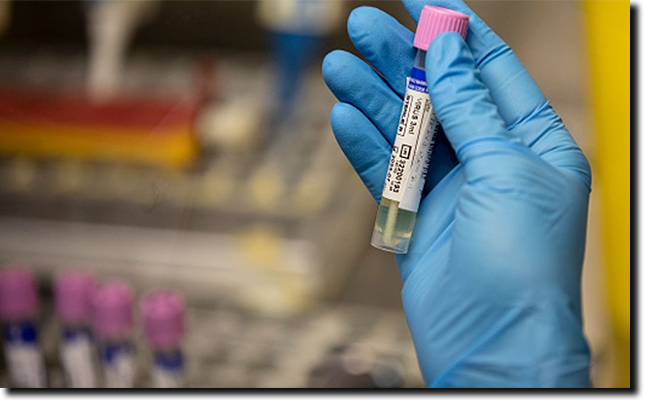
The Centers for Disease Control and Prevention (CDC) has expanded access to vaccines, tests, and treatments for monkeypox, agency officials said in a webinar Tuesday.
The CDC expects to release more than 750,000 doses of the JYNNEOS vaccine from its strategic stockpile within days, said panelists at the Clinician Outreach and Communication Activity (COCA) call.
In addition, by working with commercial labs, the agency has expanded US testing capacity and streamlined requirements for administering the antiviral tecovirimat, they said.
|
|
FDA should follow up on warning letters, researchers urge
Even after manufacturers were hit with FDA warning letters, about 30% of supplements with banned ingredients remained available for customers to purchase online, researchers found.
Among 31 products with FDA warning letters, only one had been recalled by the manufacturer, and nine (29%) were still available to buy online a mean 6 years after those warning letters, reported Pieter Cohen, MD, of Cambridge Health Alliance in Somerville, Massachusetts, and colleagues in a research letter in JAMA.
"What I find interesting here is that the law is clear. These products are illegal," Cohen wrote in an email to MedPage Today. "However, the FDA doesn't use the authority that it has to enforce it, even in these crystal-clear cases of violations."
|
|
Trusted Health's new report shows only minor improvements in current mental health ratings
Nurses continue to report ongoing mental health issues, according to Trusted Health's third annual report, a trend that has been developing since 2020.
Among over 2,500 nurses who responded to an emailed online survey in May, one in 10 reported experiencing suicidal thoughts as a result of the COVID-19 pandemic, with the majority reporting feelings of burnout (75%), compassion fatigue (66%), depression (64%), declines in their physical health (64%), and extreme feelings of trauma, extreme stress, and/or PTSD (50%).
Moreover, 50% said they have been "verbally attacked, intimidated or assaulted" by a patient or patient's family member, and 22% reported having been "physically attacked, intimidated or assaulted" by a patient or patient's family member.
|
|
|
|
Please plan to join us at the
2023 ASIPP Annual Meeting
March 16-18 National Harbor, Maryland
Register Early
More details will be posted on our website at asipp.org.
Registration begins November 2022.
|
|
For meeting or exhibitor/sponsor information:
|
|
- ASIPP Members Only Site Information - |
|
-
To log in for the first time you will need to click “forgot password” at the bottom of the login window.
- Check your email and then log in as directed.
-
If you have problems logging into your account, click here.
|
|
Pain Medicine Case Reports (PMCR) and Editor-in-Chief Alaa Abd-Elsayed, MD, PhD would like to invite you to submit case reports and case series to the PMCR journal. Your article will be published free of charge.
Open access journals are freely available online for immediate worldwide open access to the full text of published articles. There is no subscription fee for open access journals. Open access journals are no different from traditional subscription-based journals: they undergo the same peer-review and quality control as any other scholarly journal.
Interested in becoming a member of the PMCR Editorial Board?
Editorial board members are asked to review 2-6 manuscripts per year. Please submit your most up-to-date CV to sgold@asipp.org for consideration.
For more information or to submit your articles, click here.
|
|
| CASE REPORT |
Andrea Tinnirello, MD, and Carola Santi, MD
Abstract
BACKGROUND: Refilling intrathecal drug delivery systems is a delicate procedure that can lead to serious complications. We report the first case of catheter damage during a refill.
CASE REPORT: A patient implanted with a 20-mL reservoir pump for intrathecal baclofen infusion for severe spasticity complained of spasticity increase after a complex refill. Despite increasing the drug dosage, the patient’s symptoms did not improve, and, after another refill, he was hospitalized for deep sedation and unresponsiveness.
Surgical revision demonstrated a catheter lesion close to the connection with the pump reservoir.
We hypothesize that the catheter had been lesioned during the first refill and, after the last refill, a pocket fill occurred with a significant dose of baclofen reaching the intrathecal space.
CONCLUSION: Ultrasound or fluoroscopic guidance should be used when performing challenging pump refills to avoid potentially catastrophic adverse events such as catheter lesions or pocket fills.
KEY WORDS: Baclofen, case report, catheter, intrathecal therapy, pocket fill, spasticity
|
|
| RANDOMIZED CONTROLLED STUDY |
Min Li, PhD, Han Hu, PhD, Sheng-Xiong Tong, PhD, Shao-Jun Li, PhD, Jia-Yu Tian, PhD, Shu-Li Zhang, PhD, and Dan Feng, PhD
Abstract
Background: Pulsed radiofrequency (PRF) of the Gasserian ganglion is a common surgical intervention used to treat trigeminal postherpetic neuralgia (PHN). Dexamethasone has been reported to possess anti-inflammatory effects and potential analgesic benefits.
Objectives: The primary objective of our study was to compare the therapeutic efficacies of PRF alone versus a combination of PRF and dexamethasone for trigeminal PHN.
Study design: A prospective, double-blind, randomized controlled trial.
Setting: Department of Pain Management, Wuhan First Hospital.
Methods: A total of 103 patients diagnosed with trigeminal PHN were randomly assigned into 2 groups (the PRF group and PRF plus dexamethasone [PRF+D] group). Digital subtraction angiography-guided puncture of the Gasserian ganglion was performed. All patients received PRF of the Gasserian ganglion first, and then a local injection was administered into the Gasserian ganglion. Patients in the PRF+D group received PRF therapy and one mL of 5 mg dexamethasone in the Gasserian ganglion, while patients in the PRF group received PRF therapy and one mL of normal saline in the Gasserian ganglion. The primary outcome was pain intensity, measured by the visual analog scale (VAS). The secondary outcome was quality of life, assessed by the Short Form-36 questionnaire (SF-36). The dosage of pregabalin administered was recorded to assess treatment effectiveness.
Results: Compared with the PRF group in this study, the PRF+D group showed more promising outcome results in pain relief as measured by the VAS; quality of life enhancement, as measured by the SF-36; and a reduced requirement for antiepileptic drugs (P < 0.01).
Limitations: Single center study, relatively small number of patients.
Conclusions: The therapeutic efficacy of PRF combined with a dexamethasone injection into the Gasserian ganglion was superior to that of PRF{and saline injection} alone of the Gasserian ganglion for trigeminal PHN.
Keywords: dexamethasone; quality of life; trigeminal postherpetic neuralgia; Pulsed radiofrequency
|
|
| SCOPING REVIEW |
William Schnapp, MD, Kenneth Martiatu, CRA, and Gaëtan J.-R. Delcroix, PhD
Abstract
Background: Chronic low back pain is a leading cause of disability worldwide and its pathophysiology remains poorly understood, a problem exacerbated by the heterogeneity of the patient population with chronic low back pain. Although the intervertebral discs are often implicated in chronic low back pain, studies have demonstrated strong innervation of the vertebral endplates by the basivertebral nerve, therefore making it a possible target for ablation in the treatment of vertebrogenic chronic low back pain.
Objectives: This work reviews the current evidence for the efficacy and safety of basivertebral nerve ablation as a treatment modality for chronic low back pain, and discusses the possible study biases and gaps in the current knowledge to provide insight on future research.
Study design: The authors registered with the Center for Open Sciences and followed the Preferred Reporting Items for Systematic Reviews and Meta-analyses Extension for Scoping Reviews (PRISMA-ScR).
Setting: A private clinic.
Methods: This study was performed in accordance with the following 5-stage methodological framework for scoping reviews: (i) identifying the research question; (ii) identifying relevant studies; (iii) selecting studies; (iv) charting the data; and (v) collating, summarizing and reporting the results. Three databases (PubMed, Web of Science, Embase) were searched using the keywords "basivertebral", "nerve", and "ablation".
Results: From March 2002 to March 2022, a total of 47 articles were identified, of which 12 were included in this scoping review, based on the exclusion criteria described in Table 1.
Limitations: The limitations found were: • A very specific chronic pain population is typically utilized for this intervention. The inclusion criteria leave many who experience chronic low back pain ineligible for the procedure. • Study demographics need to be more diversified to truly represent the chronic low back pain population.• There is a lack of true control groups due to high crossover rates in published studies.• Very few high-level or long-term studies have been published.• Funding for many of the studies published on the subject is industry-led (Table 6). With an already limited amount of published research, a need for out-of-industry funding is required to avoid any possibility of bias.
Conclusions: Current research has shown that basivertebral nerve ablation might be a promising treatment for chronic low back pain in patients exhibiting Modic type 1 or 2 endplate changes, while additional research on the association between Modic changes and low back pain is still needed to gain widespread use and acceptance of this new treatment modality. The introduction of new devices and a larger number of independent studies would greatly enhance the confidence in the outcomes reported with this treatment modality in order to ultimately benefit patients, clinicians, and society.
Keywords: Modic changes; basivertebral nerve; chronic low back pain; endplate degeneration; intraosseous nerves; radiofrequency; vertebrae; Ablation
|
|
Since this malpractice insurance program officially launched in November 2018, ASIPP has signed up hundreds of providers with an average savings of 30%. This is professional liability insurance tailored to our specialty and will stand up for us and defend our practices.
Norcal Mutual is A-Rated by AM best and is licensed in all 50 states. To read a few important points to keep in mind about the program, including discounts, administrative defense, cyber coverage, aggressive claims handling, and complimentary award-winning risk management CME activities, click here.
|
|
ASIPP® has formed a partnership with Henry Schein and PedsPal, a national GPO that has a successful history of negotiating better prices on medical supplies and creating value-added services for independent physicians. Working with MedAssets, PedsPal provides excellent pricing on products like contrast media that alleviate some of the financial pressures you experience today.
|
|
ASIPP® is now offering our members the benefit of a unique revenue cycle management/ billing service.
We have received a tremendous amount of interest in the ASIPP® billing and coding program.
Click here to learn more about the negotiated rate for practices and more!
|
|
|
up-to-date news related to you, your practice, and your patients!
|
|
|
|
|
|
|