The safety and effectiveness data should prompt CDC to update its policy
On Friday, February 4, the Advisory Committee on Immunization Practices (ACIP) quietly acknowledged the rapidly accumulating body of evidence supporting an extended interval between the first and second dose of a two-dose COVID-19 vaccine series. ACIP members weighed the benefits of extending the interval between doses of the two mRNA vaccines -- currently 3 weeks for Pfizer (Comirnaty) and 4 weeks for Moderna (Spikevax) -- to 8 weeks, based on both effectiveness and safety data. Updating the guidelines would represent a seismic policy shift in this country.
We welcome the long-overdue recognition of this evidence-based approach already endorsed by multiple other countries including Canada, India, the U.K., and other countries in Europe. Although the two-dose series of the Pfizer vaccine was studied at an interval of 3 weeks and the Moderna vaccine at an interval of 4 weeks, the companies were aware of the urgent global need for an effective COVID-19 vaccine while designing these interval strategies. Except for rabies, no other vaccine is given at a dosing interval of 3 weeks. In fact, a principle of vaccinology is that priming the immune system with the first dose generates good responses to second doses of most vaccines for at least 6 months or more.
|
|
FEATURED SPEAKERS INCLUDE: |
|
NEXT EXAM DATE:
Saturday, April 2, 10am CST
|
|
FLCCC promotes 20 therapies: like "throwing spaghetti against the wall," one expert says
As patients with long COVID scour the internet desperate for relief, physicians are concerned they may stumble upon an unproven treatment plan touted by a group known for pushing the anti-parasitic drug ivermectin.
The group says it developed the protocol to aid the large numbers of patients suffering from lingering symptoms and a lack of available treatment options. However, doctors treating patients at hospital-based centers for post-COVID care have been quick to call out the dangers of the FLCCC's treatment plan.
|
|
Call for Abstracts & Poster Presentations |
|
Less than 1 week left to submit your proposals! |
|
Proposals accepted through
March 1st
|
A $50 submission fee is required upon completion of the form. |
Questions can be directed to
Savannah Gold
at 270.554.9412 ext 4219 or
|
|
- Top 3 will present during the general session on the final day.
- Top 10 will present during the abstract breakout session.
-
Rapid review and publication in the Pain Physician journal will be extended to the Top 10 authors accepted for meeting presentations.
|
|
The CDC will soon update its COVID-19 guidance — including masking recommendations — as cases continue to drop, CDC Director Rochelle P. Walensky, MD, said Wednesday.
"As we consider future metrics, which will be updated soon, we recognize the importance of not just cases … but critically, medically severe disease that leads to hospitalizations," Walensky said at a White House news briefing. "We must consider hospital capacity as an additional important barometer."
She later added, "We are looking at an overview of much of our guidance, and masking in all settings will be a part of that."
|
|
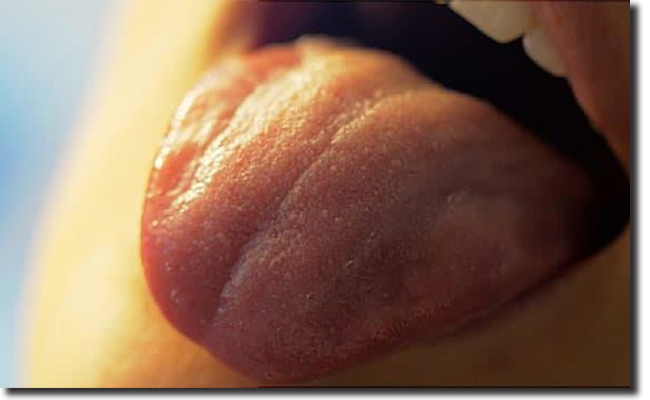
About four in 10 COVID patients have some sort of taste loss, according to a new study.
Many COVID-19 patients report losing their sense of taste as well as their sense of smell, but scientists have been skeptical because the two senses are closely related and it was relatively rare for people to lose their taste sense before the COVID pandemic, says the Monell Chemical Senses Center, a nonprofit research institute in Philadelphia.
But a new Monell Center analysis found that 37% -- or about four in every 10 -- of COVID-19 patients actually did lose their sense of taste and that “reports of taste loss are in fact genuine and distinguishable from smell loss.”
Taste dysfunction can be total taste loss, partial taste loss, and taste distortion. It’s an “underrated” symptom that could help doctors better treat COVID patients, the Monell Center said in a news release.
|
|
California became the first state to formally announce an "endemic" approach to the coronavirus on Thursday, unveiling a policy that focuses on prevention and quick reaction to new outbreaks, according to The Associated Press.
Gov. Gavin Newsom outlined a plan that shifts toward "normalcy" and away from mask mandates and business shutdowns. The idea is to quickly spot surges and variants, add health care workers, build a stockpile of tests, and combat misinformation about the virus.
"We are moving past the crisis phase into a phase where we will work to live with the virus," Newsom said during a news conference.
|
|
Insurer sends aggressive letter to contracted physicians, citing the act
A letter sent from one North Carolina insurer to its contracted in-network physicians laid bare the depth of the indirect consequences of the No Surprises Act. In other words, it came as a surprise.
In the letter from Blue Cross Blue Shield (BCBS) of North Carolina to Wake Emergency Physicians, PA, an independent physician group contracted with the insurer for more than 9 years, BCBS asked the group to accept 20% lower contracted rates for all services across the board, or leave the network.
In no uncertain terms, they gave their rationale behind this decision: the No Surprises Act.
|
|
- ASIPP Members Only Site Information - |
|
-
To log in for the first time you will need to click “forgot password” at the bottom of the login window.
- Check your email and then log in as directed.
-
If you have problems logging into your account, click here.
|
|
Pain Medicine Case Reports (PMCR) and Editor-in-Chief Alaa Abd-Elsayed, MD, PhD would like to invite you to submit case reports and case series to the PMCR journal. Your article will be published free of charge.
Open access journals are freely available online for immediate worldwide open access to the full text of published articles. There is no subscription fee for open access journals. Open access journals are no different from traditional subscription-based journals: they undergo the same peer-review and quality control as any other scholarly journal.
Interested in becoming a member of the PMCR Editorial Board?
Editorial board members are asked to review 2-6 manuscripts per year. Please submit your most up-to-date CV to sgold@asipp.org for consideration.
For more information or to submit your articles, click here.
|
|
| CASE REPORT |
Karen Bach, BS, Olufunke Dada, MD, and Nitin Goyal, MD
Abstract
BACKGROUND: The erector spinae plane (ESP) block is a relatively novel technique in the field of regional anesthesia and pain management. In the original 2016 case report by Forero et al, the ESP block demonstrated extensive neuropathic pain relief of thoracic origins. Although ESP blocks have proven to be a useful modality for managing perioperative, postoperative, and chronic refractory pain of the thoracoabdominal region, its use indication regarding pain therapy of the cervical region has not yet been clearly elucidated.
CASE REPORT: A 50-year-old woman with a history of intercostal neuralgia and central pain related to ependymoma and syrinx of the cervical spinal cord presented with exacerbation of chronic postsurgical pain located in the right thoracic region at approximately T8-T11 levels. Given that her pain was refractory to other therapeutic modalities, the patient elected to have an ultrasound-guided right-sided ESP block at the T8 level. Immediately relief was felt after the procedure and was sustained at a follow-up visit. The patient reported 90% improvement of her pain as well as 90% improvement of functionality on her right side. She was extremely satisfied with the results and reported a decreased pain level, at 0 to 1 out of 10.
CONCLUSION: Although the ESP block was initially described for thoracic pain control, our findings demonstrate that it may also be a beneficial therapeutic option in the management of pain from cervical origin. Our experience with the block showed immediate analgesic efficacy in our patient and provided significant symptomatic relief without the need for opioid rescue therapy. Further investigation is needed to determine its long-term efficacy and safety profile.
KEY WORDS: Cervical pain, erector spinae plane block, nerve block, pain, pain management, regional anesthesia
|
|
| PROSPECTIVE STUDY |
Robert Bolash, MD, Michael Creamer, DO, Richard Rauck, MD, Payam Vahedifar, MD, Aaron Calodney, MD, Ira Fox, MD, Cuneyt Ozaktay, MD, and Niek Vanquathem, BA
Abstract
Background: Novel externally powered spinal cord stimulation technology can be fully implanted when trialing the effectiveness of the therapy, since no percutaneous leads are needed, and the trial period lasted 30 days. Multiple tests of different stimulation modalities and parameters are possible, thus improving the chances that the therapy will lead to effective pain reduction.
Objectives: The objective of this study was to analyze the effectiveness of the Freedom Spinal Cord Stimulator System (Stimwave LLC, Pompano Beach, FL) for the treatment of failed back surgery syndrome due to postlaminectomy syndrome utilizing multiple waveforms.
Study design: This was a prospective, single cohort study. Patients were enrolled and implanted with up to 2 permanent, 8-contact electrode arrays with receiver, controlled regularly during 6 months of follow-up after a one month trial period. Pain and overall improvement were evaluated at 3 months and 6 months following an initial one-month implanted trial period.
Settings: A variety of frequency stimulation waveforms (tonic as well as subthreshold) at frequencies of 10 Hz to 1500 Hz* and 50 to 800 µs pulse width, were provided. (*Note: While 1500 Hz was utilized in the study, Stimwave Technologies is currently only permitted to provide spinal cord stimulation therapy at frequencies below 1500 Hz, therefore pulse rates used in this study are not commercially available on Stimwave Technologies' products).
Methods: Endpoints evaluated included the Visual Analog Scale (VAS) for pain intensity, Oswestry Disability Index (ODI) for functionality, Patient Global Impression of Change (PGIC) for overall health improvement, and quality of life as measured by the European Quality of Life 5 Dimension questionnaire (EQ-5D-5L).
Results: Thirty-nine patients completed the study. At 6 months, the responder rate (? 50% reduction VAS for back pain) was 33/39 = 85%. Mean VAS for back pain decreased 62%. The mean ODI decreased 46% from 54 to 29.2, indicating a reduction from severe to moderate disability. The median satisfaction as measured with the PGIC was 6 out of 7. The mean EQ-5D-5L utility score increased from 0.54 to 0.75. At the 6-months endpoint, 44% (17/39) of patients preferred tonic stimulation with a back pain per protocol responder rate of 82%; 41% (16/39) preferred surge with a responder rate of 56%; and 15% (6/39) preferred high density, with a responder rate of 83%. Fifteen patients reported 28 adverse events. Migration of the electrode array (n = 10) was the adverse event most reported. Two serious adverse events related to infection were reported.
Limitations: This study had several limitations. Trial failures were excluded from the analysis, there was a small sample size, and there was a lack of blinding due to the suprathreshold nature of tonic stimulation.
Conclusion: The study demonstrates that spinal cord stimulation with multiple stimulation patterns demonstrates clinical and functional efficacy when using an externally powered stimulation system.
Keywords: HF-EMC; chronic leg pain; externally powered spinal cord stimulation; lumbar postlaminectomy syndrome; neuromodulation; postlaminectomy syndrome; Chronic back pain.
|
|
| RETROSPECTIVE STUDY |
Eugene G. Lipov, MD, Ryan Jacobs, MD, Shauna Springer, PhD, Kenneth D. Candido, MD, and Nebojsa Nick Knezevic, MD, PhD
Abstract
Background: Post-traumatic stress disorder (PTSD) is a prevalent and debilitating condition in the United States. Success rates for evidence-based therapies are inconsistent, and many suffer in silence due to the stigmata associated with seeking traditional mental health care. This has led clinicians to explore new therapeutic options, with cervical sympathetic blockade (CSB), performed at the stellate and/or superior cervical ganglion levels, recently emerging as a promising treatment option. Rapid therapeutic onset, improved compliance, and high clinical efficacy rates have made this an attractive approach for both providers and patients. However, to date, CSB as a treatment of PTSD has primarily been used in male patients with military-related trauma.
Objective: To evaluate the efficacy of CSB as a treatment option for PTSD in both genders and multiple etiologies of psychological trauma.
Study design: Retrospective cohort study.
Setting: An established anesthesia pain clinic in Chicago, IL, USA.
Methods: Following retroactive IRB approval, 484 consecutive cases of patients diagnosed with PTSD and treated with CSB, performed by a single provider (December 2016 - February 2020) were analyzed. The primary outcome measurement was the PTSD Checklist Score version DSM IV (PCL-4). Patient demographic and clinical information collected included age, gender, type of trauma leading to PTSD, history of suicidal attempts, and psychiatric medication use.
Results: After exclusion of cases due to missing data points, 327 patients were included in the final statistical analysis, having completed both PCL-4 pre and post CSB, between 7- and 30-days post-intervention. The patient population included military men (n = 97), civilian men (n = 85), military women (n = 13) and civilian women (n = 132). We identified 21 types of self-reported trauma leading to PTSD. Average decrease in PCL score for men and women was 28.59 and 29.2, respectively. Statistical analysis of the male population with a military background showed a significantly greater change in corresponding PCL scores than civilians (PCL-M change = -31.83 vs PCL-C change = -24.89). Likewise, women who had a military background had a significantly greater reduction in PCL score than civilians (39.15 vs 28.23). Statistically significant improvements in PTSD symptoms were noted independent of the causative trauma type, gender, age greater than 20, previous suicide attempts, or use of prescription medications for PTSD. Among the 21 types of reported trauma, 19 types reached statistical significance.
Limitations: Limitations include the limited scope of observation giving exclusive focus on pre- and post-PCL data, the limited duration of observation, the self-reported nature of the patient-provided data, and the provision of treatment by a single physician.
Conclusion: CSB seems to be an effective treatment for PTSD symptoms irrespective of gender, trauma type, PTSD-related drug use, suicide attempt, or age.
Keywords: cervical sympathetic block; regional anesthesia; superior cervical ganglion block; treatment-refractory post-traumatic stress disorder; treatment-resistant PTSD; Stellate ganglion block.
|
|
Since this malpractice insurance program officially launched in November 2018, ASIPP has signed up hundreds of providers with an average savings of 30%. This is professional liability insurance tailored to our specialty and will stand up for us and defend our practices.
Norcal Mutual is A-Rated by AM best and is licensed in all 50 states. To read a few important points to keep in mind about the program, including discounts, administrative defense, cyber coverage, aggressive claims handling, and complimentary award-winning risk management CME activities, click here.
|
|
ASIPP® has formed a partnership with Henry Schein and PedsPal, a national GPO that has a successful history of negotiating better prices on medical supplies and creating value-added services for independent physicians. Working with MedAssets, PedsPal provides excellent pricing on products like contrast media that alleviate some of the financial pressures you experience today.
|
|
ASIPP® is now offering our members the benefit of a unique revenue cycle management/ billing service.
We have received a tremendous amount of interest in the ASIPP® billing and coding program.
Click here to learn more about the negotiated rate for practices and more!
|
|
|
up-to-date news related to you, your practice, and your patients!
|
|
|
|
|
|
|