|
Visual 1st Perspectives
May 24, 2023
| |
|
Our Visual 1st Spotlight takeaways:
The latest AI tech announcements – what do they mean for the photo & video industry?
| |
|
Generative AI supports numerous use cases throughout the photo & video workflow, while creating both opportunities and disruptions along the way: from the obvious one – image creation – to image enhancement, editing, sharing, and fueling ecommerce and printing.
In other words: the significance of generative AI far exceeds that of “just” generating images from scratch.
While the dust is not even close to having settled, and before we zoom in on the implications for the artistic creation of images from text prompts, our main takeaway is that the biggest opportunities for generative AI center on use cases that require scale and speed at their core.
A few examples our presenters mentioned:
- Generative AI enables easy creation of infinite versions of a single image, which could enable fine-tuned customization and even personalization of marketing and ecommerce materials.
- Generative AI will become vital for volume photographers, for whom time and efficiency are crucial.
- Generative AI, along with other forms of AI, are essential to eliminating a broad range of tedious “cleanup” steps involved in video editing.
- Generative AI takes speedy ideation to a whole new level by accelerating the generation of “out of the box” images. Instead of creative professionals sketching out or prototyping y versions, generative AI will allow them to generate x times y versions.
- Generative AI will also speed up production for creators by learning their artistic style and preferences.
| |
|
The Latest AI Tech Announcements
What do they mean
for the
photo & video industry?
Fireside chat:
Boris Eldagsen,
Photomedia Artist,
Prompt Whispering
Panelists:
Michael Osterrieder, CEO & Co-Founder, vAIsual
Julia Enthoven, CEO & Co-Founder, Kapwing
Javier Ideami, CEO Ideami &
Co-Founder The Geniverse
Keith Barraclough, CTO & Head of Product, Zenfolio
| |
|
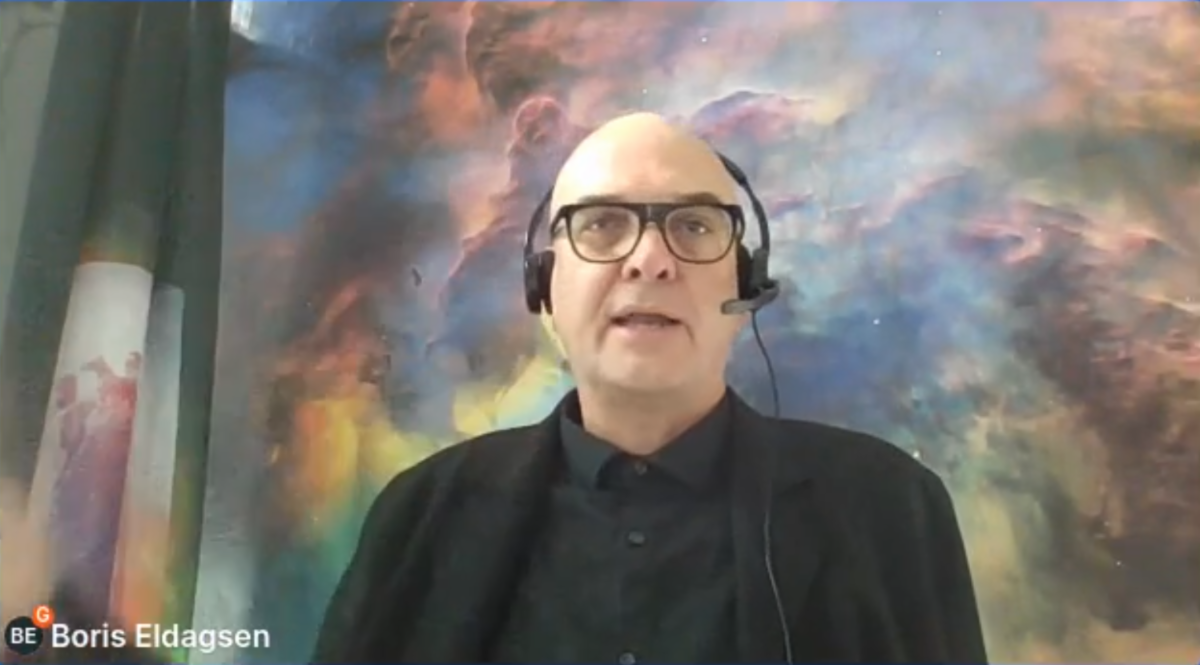
Our fireside chat presenter Boris Eldagsen shared valuable insides regarding how his image capture, creation and editing process has drastically been upended by generative AI. When creating his much-discussed Sony World Photography Award winning image, THE ELECTRICIAN, Boris exclusively used DALL-E’s text prompts, plus its inpainting and outpainting features. He did not generate the image by tapping into the look and feel of existing photos, nor make any use of Photoshop. In fact, Boris no longer uses Photoshop at all, as he appreciates the experimental creativity that generative AI provides.
As an intriguing sidenote, Boris also mentioned that the potential liability arising from mimicking other creators’/photographers’ photo styles with image prompts could conceivably be circumvented by having ChatGPT generate an image-to-text prompt, which could in turn be used to generate a new image with the desired style.
|  | |
Given the incredible speed at which generative AI is improving, would Boris use the same tool, DALL-E 2, if he needed to create this image again now? His answer was a resounding “no.” Open AI, the company behind DALL-E, has not released any updates in the last 12 months, as the company has invested all its efforts on Chat GPT and related technologies. In the meantime, Midjourney has released 3 new versions and is currently the gold standard for photorealistic generative AI image creation.
Generative AI being a completely new way to create images, should the results be described as “AI photography”? No, says Boris. AI image creation is a completely new discipline – call it promptography – and should not be mixed with photography. That’s what the organizers behind the Sony World Photography Award and many other awards, but also photography museums and trade associations, don’t understand. It’s also the reason why Boris stirred the debate by means of submitting his AI-generated image to SWPA in the first place. And stir the debate he has – not just in trade publications, but also in mass media all over the world!
| 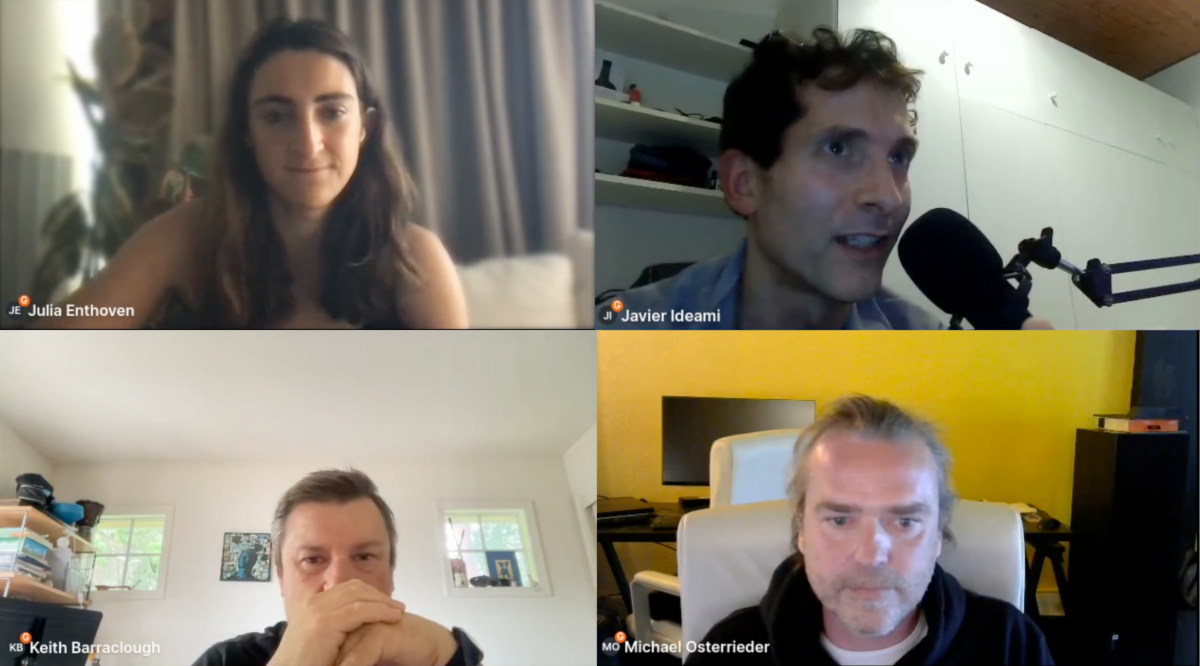 | |
Last but not least, here’s a snapshot of what our panelists mentioned as the biggest game changers among the various generative AI tech announcements:
-
Video transcription (Julia Enthoven): while not as brand new as some of the other announcements, the latest generation of video transcription technology makes it possible to accurately, quickly and cost-effectively transcribe into text the words spoken in a video – and thus enables video creators to benefit from the latest generative AI text-to-text, text-to-image, and text-to-video innovations.
-
Multimodal generative AI (Michael Osterrieder): multimodal generative AI will enable neural networks to incorporate and process input from multiple different data types (such as image, text, speech, numerical data, various sensory data, or even things like emotion) and jointly process these – similarly to the human brain. The result? Content creation at a whole new level of accuracy and relevance.
-
NeRF enhancements (Javier Ideami): recently announced new AI models, such as Google’s ZipNeRF, make NeRF much faster and more photo realistic. NeRFs (neural radiance fields) are an advanced machine learning technique that generates 3D representations of objects or scenes simply from 2D images. NeRFs enable users to view a scene from multiple angles and navigate through these scenes. NeRFs can have a big creative impact on games, VR and film making.
-
AI encapsulated in SaaS-based API frameworks. (Keith Barraclough): generative AI innovations are now starting to be offered by means of API frameworks and within programming languages (such as Microsoft Guidance) as part of robust SaaS platforms – a must for any 24-7 SaaS provider.
| |
|
DragGan. Generative AI-based image warping. The subject in your photo wasn’t smiling? No problem, in the future this will be super easy to change, according to a much-quoted Siggraph research paper this week. Researchers have devised DragGAN, a point-based AI image manipulation method. Drop a point on an image and warp the image from there. Unlike traditional warping methods, DragGAN uses AI to generate brand-new pixels in response to your input. And yes, warping is useful for more than adding smiles: make that lioness look the other way, rotate an image as if it’s 3D – you get the gist.
Adobe. Generative Fill. Adobe keeps making determined steps towards embracing generative AI – one step at a time. As our industry friend Paul Melcher succinctly stated, “putting into practice the now-famous adage: ‘AI will not replace you. A person using AI will.’ Well, in this case, it's a software rather than a person...”
The latest step: Adobe announces that Photoshop will have a new "generative fill" tool that can be used to, for instance, add or remove objects, or change backgrounds. Users can prompt the AI tool by typing in a different kind of background they wish to see, or by telling it to remove unwanted objects or add elements not present in the original image.
The new tool has similarities with DALL-E’s outpainting feature, which Boris Eldagsen described in our Spotlight (see also above).
Microsoft. Cryptographically signing AI art. Microsoft will watermark and cryptographically sign images AI-generated in Bing Image Creator and Microsoft Designer by using the C2PA standard (discussed at last year's Visual 1st). The provenance of these images will be disclosed in the images’ metadata.
So, if everybody supports C2PA, next time investors won’t have to freak out when they see a photo of an explosion at the Pentagon – they can simply check the metadata to see if it was AI-generated. But we’re not quite there yet…
Google. Generative AI for ecommerce. As mentioned at our Spotlight, generative AI can become a big enabler of more finite and faster creation of visuals for marketing and ecommerce use cases. No surprise: Google just announced Product Studio, a new tool using generative AI that allows Google Shopping merchants to quickly edit and customize their product images.
| |
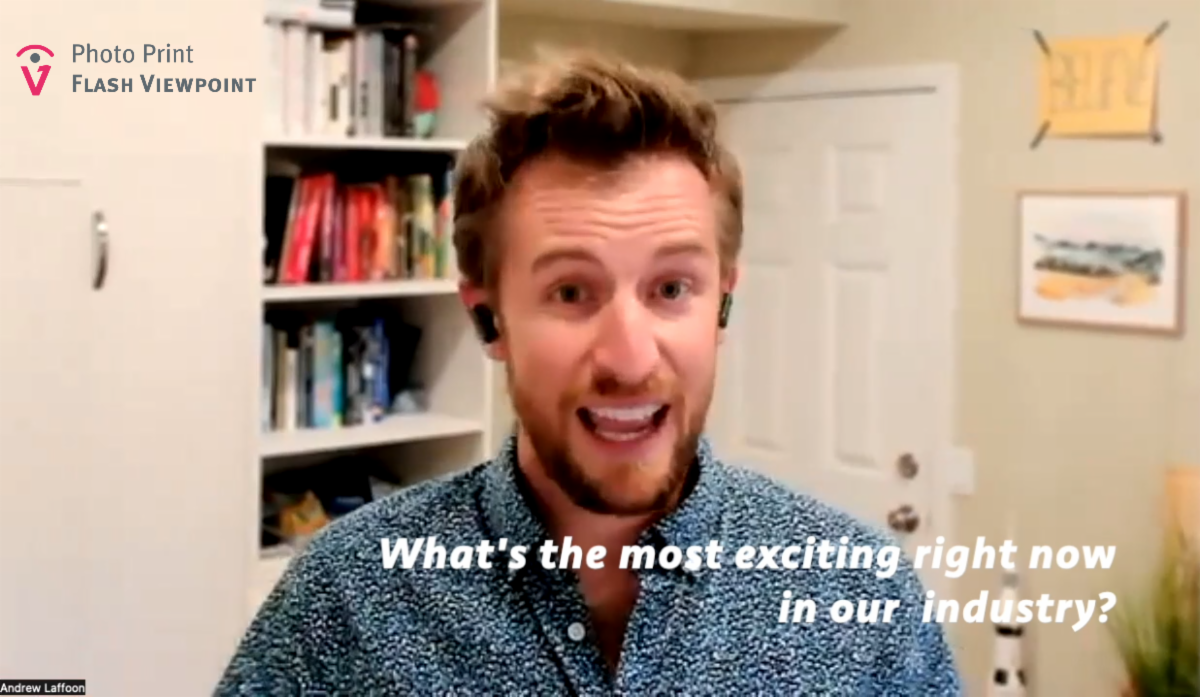
Check out our inaugural Visual 1st Flash Viewpoint, starting with Andrew Laffoon, CEO & Co- founder of Mixbook: | |
2 questions, 3-minute video:
- What’s the most exciting right now in our industry?
- If you had a magic wand, what’s the biggest problem for our industry you’d like to see solved?
| |
|
Shutterstock & Giphy. Pro content meets conversational content. Shutterstock acquires Giphy from Meta for $53M. Giphy’s vast library of GIFs and stickers draws more than 1.3 billion search queries on a daily basis and powers more than 15 billion daily media impressions. These impressions are distributed via Giphy’s more than 14,000 API/SDK integrations as well as its own website and app.
Meta acquired Giphy in 2020 reportedly for $400M, but the deal has since been challenged by Britain's Competition and Markets Authority.
A steal for Shutterstock? That’s what the market thought, causing Shutterstock’s stock to rise pre-market 4% right after the announcement.
Picsart. Going micro. What’s next for increasing user engagement? Picsart’s bet is micro communities, named Spaces, dedicated to specific topics and interests, such as “Cats,” “Generative AI,” “K-pop Fans” and “Light Effect Edits.” In early testing, Picsart reportedly saw Spaces users generate 15x more content, as well as 20x more post engagement across the company’s platform.
Bird Buddy. Smart Hummingbird Feeder. Who says cameras are a dying breed? It's a matter of being smart. Want to feed your backyard’s hummingbird, while taking up-close photos and getting help to recognize whatever hummingbird species is visiting your wonderful yard? The company behind the original Bird Buddy AI-powered smart bird feeder is at again with a model specifically designed for hummingbirds.
First launched in 2020, the startup today has around 100,000 active Bird Buddy users who are using the company’s original Smart Feeder and AI-powered mobile app to engage with nature and learn more about their local bird populations.
Stability AI. Rediscovering open source. Stability AI, the AI startup behind the text-to-image model Stable Diffusion, announces the release of StableStudio, an open source version of DreamStudio, Stability AI’s commercial AI-powered design suite.
Best,
Hans Hartman
| Visual 1st Sponsors to date: | | | | |