It is February and that means Black History Month!
We are delighted to share recent media coverage of African American pioneers in aviation, the Tuskegee Airmen, and our Chicago "DODO" Chapter.
The Chicago "DODO" Chapter of the Tuskegee Airmen is committed to keeping the heroism and legacy of the Tuskegee Airmen alive. This month we feature the deep roots in Chicago, as well as the story of Julian H. Johnson, a Chicago native and Tuskegee Airmen.
|
President
Chicago "DODO" Chapter
Tuskegee Airmen
P.S. In case you missed it, we are now accepting applications for the Educational Assistance Program (EAP). Applications must be postmarked by April 25, 2022. Download the 2022 EAP Application here.
|
|
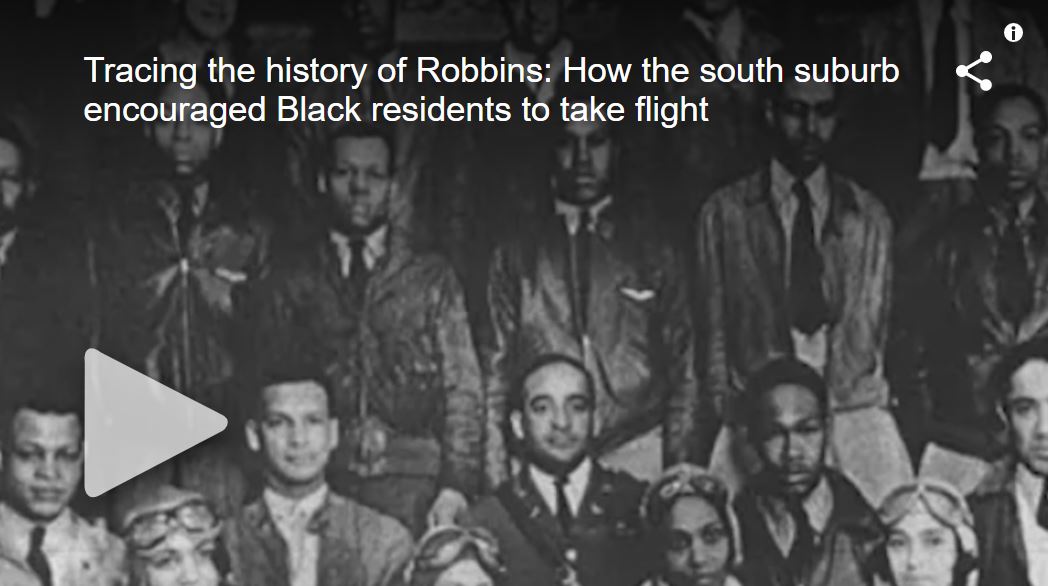
WGN-TV: Tracing the history of Robbins: How the south suburb encouraged Black residents to take flight |
|
In a recent WGN-TV News Cover Story, Gaynor Hall and photojournalist Vincent Tagle interviewed Tyrone Haymore, Co-founder and Executive Director of the Robbins History Museum, which has the proud role of being the keeper of the town’s rich past.
According to Mr. Haymore, "the history of the Chicago suburb of Robbins, IL and the role it has played in encouraging Black Americans to take flight is a Black History little known fact."
The Robbins Airport, built in 1931, was the first Black-owned and operated airport in the country and it helped to plant the seeds for many of the pilots who would go on to become known as the legendary Tuskegee Airmen.
“Here’s a group of pilots who wanted to fight for their country and the Department of Defense tried to deny them that right,” Ken Rapier, president of the Chicago “DODO” Chapter of the Tuskegee Airmen, Inc., said. “They did go into combat and they proved to be the best fighter pilot escort group that there was during World War II.”
|
|
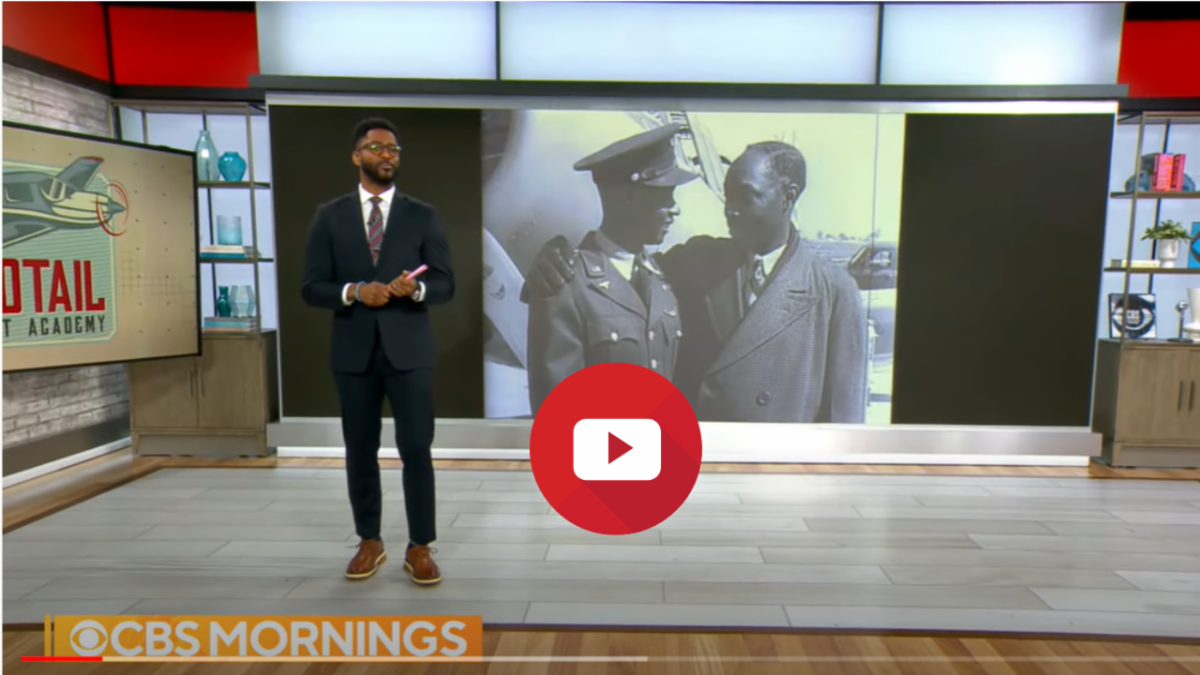
CBS Mornings: Flight school with ties to legendary Tuskegee Airmen trains next generation of Black pilots |
|
RedTail Flight Academy is training Black men and women for careers in aviation. CBS News correspondent Michael George shows how the Tuskegee Airmen, the first Black military pilots who fought in World War II, inspired the program.
|
|
Did You Know?
The Tuskegee Airmen Began in Illinois
|
|
On March 22, 1941, nine months before the United States officially entered World War II, the 99th Pursuit Squadron — the first unit of the Tuskegee Airmen — was activated, not in Tuskegee, Ala., but at an Army Air Corps training facility in Illinois known as Chanute Field (Rantoul).
A First Start at Chanute Field in Rantoul, IL
Flight Operations personnel had to fight prejudice from leaders who thought African Americans weren’t smart enough to handle the mechanical tasks needed to keep the planes operational — much less to fly them. Six aviation cadets as well as a large number of technical support personnel were trained at the Rantoul base. They ranged from aircraft mechanics to machinists, welders, radio operators and armorers. By far the largest group was the aircraft mechanic trainees, there were 162 of them.
|
|
Julian H. Johnson
Tuskegee Airman, Podiatrist & Entrepreneur
|
|
|
|
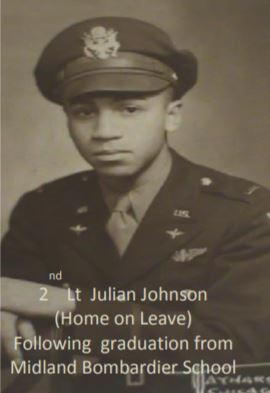
Julian H. Johnson was born to parents Julian S. and Evangeline E. Johnson on December 8, 1924, in Chicago, Illinois.
Julian graduated from Tilden Technical high school in 1942 and began working at National Starch Products as a Lab Assistant while attending the Illinois Institute of Technology at night, with a focus squarely on his studies and preparing for his career.
But as the war waged on in Europe and the Pacific, military service and Uncle Sam’s plans soon took precedence over his own.
|
|
|
|
In the spring of 1943 he received a nice, personalized notice from the local draft board for an all-expenses paid opportunity to travel and see the world.
In April 1943, with his invitation in hand, Julian entered the services and was assigned to the U.S. Army’s Coastal Artillery Corps. In May he shipped out to Camp Stewart’s anti-aircraft artillery training center located about 40 miles southwest of Savannah, Georgia.
At the suggestion of one of the junior officers in his chain of command, Julian applied and was accepted into the Air Corps Cadet School. He then went on to the Tuskegee Institute and the Bombardier training program.
|
|
|
|
|
|
|