A Season to Pause and Give Thanks
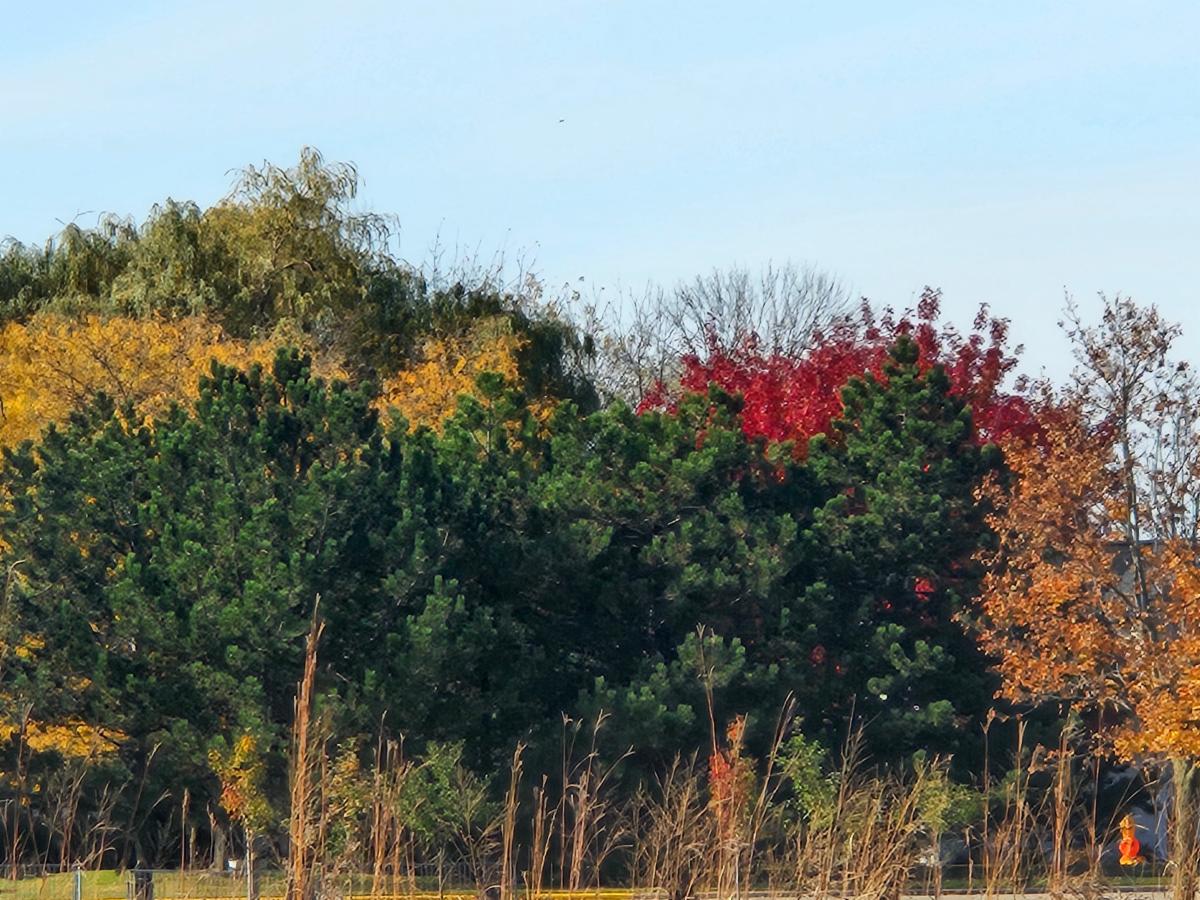
November invites us to slow down. While the unseasonably warm weather may make it feel otherwise, the shortening days remind us that fall is here. As our gardens settle into a quieter season, we can begin to settle into a different rhythm, too.
At the Brown County Seed Library, we’re thankful for everyone who has been part of this growing season. Our supporters, community partners, educators, and volunteers make it possible to share seeds, knowledge, and encouragement throughout our community. Thank you for the many ways you contribute and for making this work so rewarding.
As we move toward winter, we hope you’ll find time to rest, enjoy the fruits of your efforts, and appreciate the connections that gardening brings. There is still work to do—and opportunities to gather—but there is also room to pause. We’re grateful to share both with you.
Submitted by Melissa, N.E.W. Master Gardener
| |
Seeds, Service and Community
Thank you to UW–Green Bay for including the Brown County Seed Library in this year’s Day of Service! Volunteers packed almost 900 envelopes of native seeds that will be available for fall and winter sowing. We appreciate their time and care in helping our community grow more native plants to support pollinators and other wildlife.
Now it’s your turn to join in! Our next seed packing event is November 21. Come connect with fellow gardeners and help prepare seeds for our community. All ages are welcome!
Location: Brown County Central Library, lower-level meeting rooms
515 Pine St., Green Bay, WI 54301
Please register for the session you would like to attend:
Session 1: 10 a.m.–12:30 p.m.
Session 2: 1–3:30 p.m.
Every envelope packed helps make another garden possible. We hope to see you there!
Submitted by Melissa, N.E.W. Master Gardener
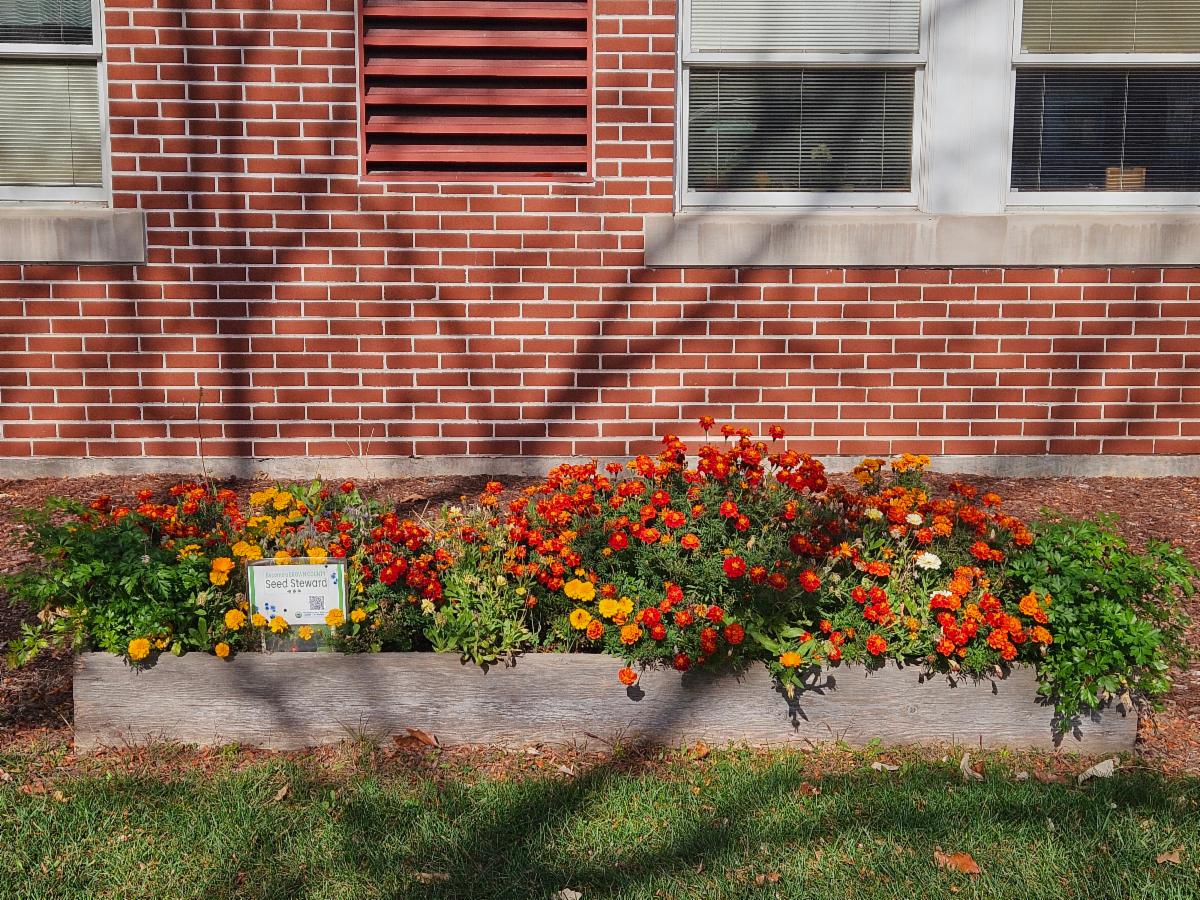
| This is a seed saving garden at McAuliffe School. We will be harvesting marigold seeds from here this month. |
Before You Plan, Pause and Reflect
As the garden winds down, it’s tempting to jump into seed catalogs and plans for next year. But before looking ahead, take a little time to reflect on this year’s growing season. A few notes now can help you remember what worked, understand what didn’t, and make thoughtful choices for next year.
Ask yourself three questions:
- What did I do really well?
Think beyond the harvest. Maybe you improved your soil, tried something new, welcomed more pollinators, or simply spent more time enjoying the garden.
Consider weather, pests, plant health, timing, or the time and energy you had available. What felt difficult or didn’t go as expected?
- What changes could make next year better?
Choose a few manageable adjustments. That might mean planting less, moving a crop to a sunnier spot, adding mulch, or growing more of what you love to eat.
Write down your thoughts while the season is still fresh in your mind. A dedicated garden journal gives you a place to collect observations, record plans, and revisit ideas each year. Over time, it can help you spot patterns and see which changes made a difference.
You don’t need to solve every challenge right now—just notice, learn, and give yourself credit for the work you’ve done.
Submitted by Melissa, N.E.W. Master Gardener
|
From Garden Weeds to Wild Food
As you reflect on this year’s garden, consider this: What if, instead of battling some of those pesky weeds, you ate them instead? Learning to recognize edible plants can change how we see what’s growing around us—and Robin Greenfield has quite a story to share!
Robin spent a year foraging all of his own food and medicine. Now he’s coming to Green Bay to share what he learned about finding nourishment from nature.
Join Inspired North and New Leaf Foods on November 6, from 5:30–9 p.m. at The Tarlton Theatre for an evening that may inspire you to look at your garden and its wild neighbors a little differently.
The Brown County Seed Library will be there with our portable seed library, alongside other community groups. Stop by, pick up some seeds, and connect with others interested in growing a healthier, more resilient community.
Learn more and register
Submitted by Melissa, N.E.W. Master Gardener
|
Make the Right Cut:
Pruning Fruit & Nut Trees
Wondering when and how to start when pruning your fruit and nut trees? Join arborist Andy DiMezza on November 14, from 1–2:30 p.m. at Brown County Central Library to learn about tools and techniques that support healthy, productive trees.
After an indoor presentation, head outside for a pruning demonstration on the small fruit trees in the library’s Children’s Edible Garden. You’ll also find helpful handouts, recipes from Rooted In, and information about the local Food Forest initiative.
Dress for the weather!
Find workshop details here.
Want to learn more? The book reviews below highlight resources to help you build your pruning knowledge and confidence.
Submitted by Melissa, N.E.W. Master Gardener
| |
Pruning Answer Book
by Lewis Hull and Penelope O’Sullivan
format: book and ebook
The Pruning Answer Book is a pocket-sized guide that makes it easy for you to carry in your pruning tool bucket. Chapters are organized in a Question and Answer style, written in simple language to sometimes include scientific explanations of the “why” which can eliminate confusion when tasks are new. Complete with info graphics and illustrations, before-afters, and suggestions for when is best to call upon the experts rather than trying to DIY in our landscape. Please remember, sometimes the experts are located in your area UW Extension Office and within the Master Gardener Team in your area!
| |
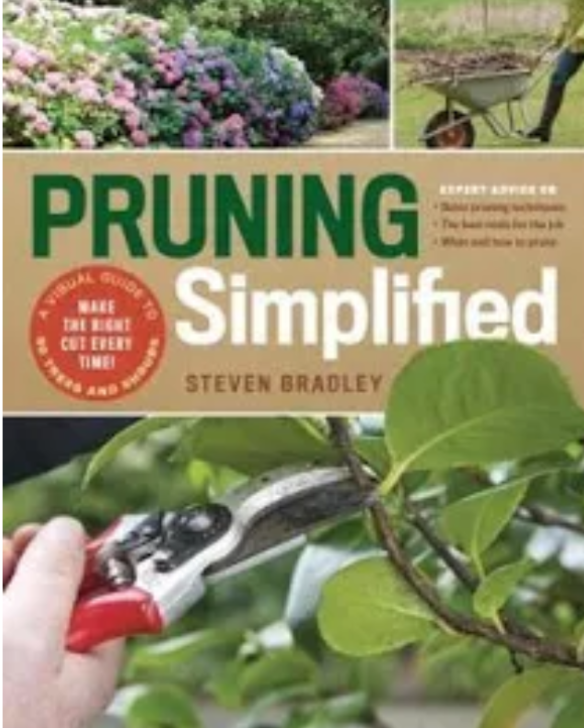
Pruning Simplified: A visual guide to 50 trees and shrubs
by Steven Bradley,
format: book and ebook
If you are looking for a short and sweet visual guide to pruning then Pruning Simplified is the text for you.
The book opens with essential instructions behind the benefits of pruning, equipment needed, and basic techniques. The main part of the text is written as a directory of plants so gardeners can look up their species. Each entry contains its benefits from pruning, pruning tips, when to prune the species, and which tools are best to use. Followed by detailed instructions and helpful, up-close illustrations to further ensure a plant receives its most proper care. Pruning Simplified is an accessible resource for new and experienced gardeners alike.
| |
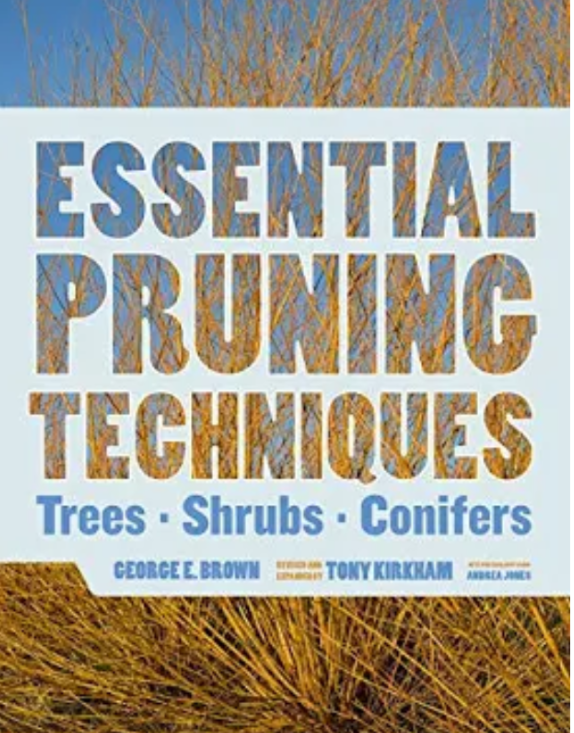
Essential Pruning Techniques: Trees, Shrubs, and Conifers
by George E Brown and Tony Kirkham
format: book
Essential Pruning Techniques, filled with stunning photography, is practically a coffee table book and detailed guide all in one!
It begins with general principles of pruning to include proper tools and tool maintenance, fundamentals of pruning cuts. Photos illustrate and enhance the instructions in the text. The main section of the book is organized alphabetically by latin name. Entries include details of the plant from their habits and attributes which deepen understanding of the pruning program specific to its species. Readers will likely find this text to be user-friendly when looking for specialized instruction and for browsing in anticipation of tasks that gardeners take on during the season’s changes.
Submitted by Jennifer, N.E.W. Master Gardener and Brown County Librarian
| | |
Calendar of Local Garden Related Events:
November 3, 1 - 2 pm (free)
Spooky plants for the spooky season
Virtual, University of Minnesota
November 5, 5:30pm - 7:30pm ($)
Green Thumb Gardening Fall 2026 Series: Made in the Shade: Shade Perennials
Virtual, UW Extension
Nov 6, 5:30pm - 9pm (free, donation appreciated)
Foraging for Freedom: An Evening with Robin Greenfield
Tarlton Theatre, 405 W Walnut St, Green Bay
November 7, 11:00am – noon (free)
Fantastic Fungi
Brown County East Branch Library, 2253 Main Street, Green Bay
November 9-11 ($)
Friends of the Library's BIG Book Sale
Brown County Central Library, 515 Pine St, Green Bay
November 10, noon - 1pm (free)
Fact or Fiction? Garden Myths Meet Research-Based Science
Virtual, University of Minnesota
November 10, 1pm - 2pm (free)
Growing honeyberries in Minnesota
Virtual, University of Minnesota
November 11, 1:30 – 2:30pm (free)
Ask Your Gardening Question: LIVE
Virtual, UW Extension
November 12, 5:30 – 7:30pm ($)
Green Thumb Gardening Fall 2026 Series:
Strawberries, Raspberries, and Blueberries
Virtual, UW Extension
November 14, 1pm - 2:30pm (free)
Pruning Workshop: Fruit & Nut Trees
Brown County Central Library, 515 Pine St, Green Bay
November 17, 1pm -2pm (free)
Amplify your garden: Add wildlife habitat
Virtual, University of Minnesota
November 18, 6pm - 7pm (free)
The Habitat Check-Up with Wildr Places
Virtual, Wild Ones
November 18, 6:30 – 8:30pm (free)
2026 PDDC Plant Disease Talks - Confessions of a Black Thumb
Virtual, UW Extension
November 19, 5:30 – 7:30pm ($)
Green Thumb Gardening Fall 2026 Series: Adapting Gardening to Weather Extremes: Trends, Adaptations, and Shrinking Your Garden Carbon Footprint
Virtual, UW Extension
November 21, 10am - 3:30pm (free)
Seed Packing for the BCSL
Brown County Central Library, 515 Pine St, Green Bay
November 24, 1pm - 2pm (free)
Growing herbs: Beyond the container
Virtual, University of Minnesota
December 8, 1 - 2 pm (free)
Backyard composting
Virtual, University of Minnesota
December 9, 6:30 – 7:30pm (free)
Ask Your Gardening Question: LIVE
Virtual, UW Extension
December 16, 6:30 – 8:30pm (free)
2026 PDDC Plant Disease Talks -Plant Disease Holiday Gift List
Virtual, UW Extension
| |
Hatch Chili Cheese Ball Pumpkin Appetizer
Ingredients
- 2 (8-ounce) blocks cream cheese, room temperature
- 1¾ cups finely shredded yellow cheddar cheese , divided
-
1 (4-ounce) can Hatch Diced Green Chiles, mild or hot, drained
- Kitchen twine or 4 large (clean) rubber bands
- 1 red bell pepper
- Gluten-free crackers
- Crudités
Instructions
- Combine cream cheese, 1 cup shredded cheddar, and chilies in a medium mixing bowl, and mix until thoroughly combined. Pour the rest of the shredded cheddar cheese into a shallow bowl or onto a plate. Form the cheese into a ball, roll in the shredded cheese until fully coated, and wrap tightly in plastic wrap.
- Wrap twine or place rubber bands around the cheeseball 4 times at intervals to create indentations as in a pumpkin.
- Refrigerate until firm, about 2 hours. Remove twine and plastic wrap. Cut the stem from the bell pepper and insert in the top of the pumpkin cheeseball. Slice the pepper and serve with the cheeseball along with crackers and other crudités.
Submitted by Michael, N.E.W. Master Gardener Associate Member
| |
|
Support the BCSL!
We are entirely supported by grants, donations and volunteers! If you are interested, there are many ways to support the BCSL.
*You can become a Seed Steward and support the library by growing out seeds from our core list to donate. We will accept seed donations by anyone who would like to donate, seeds can be dropped off at the STEM center or at the Central library.
*You can volunteer to sort and pack seeds. Opportunities will be posted on the New Leaf Foods Calendar of Events and included in our newsletters.
*You can make a monetary donation through our Fiscal Agent, New Leaf Foods. Click here to donate.
*You can visit our Amazon Wish List, which has basic packing supplies that we utilize for preparing our seeds for distribution. Click here to access the wishlist.
| | This newsletter is brought to you by: | | |
With assistance from AI technology
Disclaimer:
Although brand names of products are mentioned in this newsletter, NEWMG and BCL do not endorse any particular brands. These mentions reflect individual experiences and should not be interpreted as endorsements or recommendations.
| | | | |