Strong Families. Strong Futures. |
|
Greetings to our VFN Family and Friends.
Inclusion is a connected, caring, community. Inclusion is the climate and culture that supports and promotes a setting where people can feel comfortable and confident to be themselves and learn or work or relate in a way that suits them and enables them to perform well and interact as actively engaged citizens. Inclusion ensures that everyone feels valued and, importantly, adds value. Inclusion and inclusive practices improve outcomes for students with disabilities and special health needs. Inclusion lifts and strengthens families, individual and collective voices, and communities.
What practices can we implement across the educational system? Students with disabilities and special health needs are regular education students first – they are everyone’s students. Create a school climate that celebrates diversity. Design educational activities that can be differentiated to meet the needs of all students. Ensure accommodations and modifications. Get to know each learners’ interests and passions. Schedule services strategically – don’t remove students from social events. Give students opportunities even when the data or literature suggests the student may not be successful, yet they are very interested in the subject. Include curricular resources that feature children and youth with disabilities in a positive light – intentionally incorporate diversity into the curriculum. Effectively communicate and collaborate with families – they are experts on their children and are equitable partners in program development and implementation.
The question of fairness is something that concerns many teachers and other school professionals. It is a common question of both preservice and inservice teachers. Richard Lavoie, a professional who works with teachers and students with learning disabilities, suggests that the definition of “fairness” is quite different from what most people believe. Most people believe that "fairness means that everyone gets the same”; whereas in reality "fairness means that everyone gets what he or she needs." Lavoie suggests that students, parents, and other professionals may need help in realizing this difference. Lavoie suggests talking to students and explaining that if another student needed extra help or time that you, as a teacher, would provide that for him/her/them because that is what is fair – making sure everyone gets what they need to be successful and learn. Therefore, part of realizing that you are being fair to all your students while still meeting the needs of a few of your students is accepting this alternative definition of fairness, applying it to your students, and helping to explain it to them. Inclusive teaching can mean not providing the same thing to each student because inclusive teaching strives to serve the needs of all students and support their engagement.
At Vermont Family Network, we are committed to advancing inclusive communities. We’d love to learn more about best practices you’ve experienced so we can continue sharing and promoting what works in Vermont!
From the heart,
Jacqui
|
|
A summer job is a rite of passage and a step toward independence and maturity. Researchers at Stamford University have found that a summer job for teens can help boost academic performance in the classroom. And working jobs over the course of multiple summers can help students even more by fostering soft skills like time management, perseverance, and self-confidence. But studies show that only 15 percent of youth with significant disabilities work at any point in the summer months, compared to the 60-70 percent of youth without disabilities who have summer jobs. In response, HireAbility Vermont has developed the Summer Career Exploration Program (SCEP) to provide summer work experience and training for high school youth with disabilities. Watch the VFN-hosted workshop on SCEP, read our Transition Toolkit for Youth with Disabilities or contact our helpline at 802-876-5315 or info@vtfn.org if you have concerns or questions about your high school student with a disability.
|
|
VFN’s Family Faculty program engages students in diverse and rich conversations about family-centered care. Future medical and education professionals learn from family members about how they successfully partner with their child’s care team. Last year 90 family members reached 881 graduate and undergraduate medical, nursing, health sciences and education students. If you are interested in joining our Family Faculty program and are ready to share your family story, please contact us to learn more! VFN provides family members with a stipend for your time and sharing your family story and perspectives.
|
|
Special Education
Parent Involvement Survey
|
|
Families whose children are on IEPs receive parent involvement surveys in the spring each year. Why do you receive these? Children with disabilities receive education services under the Individuals with Disabilities Education Act (IDEA). This is a federal law and under this law, every state must report specific information to the federal Department of Education. The State Performance Plan (SPP) includes 17 indicators of which parental involvement (indicator 8) in the special education process is one. If you have questions about your child’s IEP or how to build a more collaborative partnership with your child’s school, contact the VFN helpline at 802-876-5315 or info@vtfn.org.
|
|
VFN’s Parent Match Program has been busy connecting referred parents to trained Support Parents, which is a privilege for us, as we know how valuable this peer support can be. Parent Matches provide a unique opportunity for Support Parents to share with referred parents: resources, strategies, and an empathetic, listening ear. One parent recently shared, “I have felt so supported and understood by the parent I was connected with. I am so grateful for this wonderful program.”
If you are interested in becoming a trained Support Parent, please complete this survey application.
|
|
News From the Puppets -
Puppeteer in Training
|
|
Hello Friends!
On April 26th, Puppets in Education went to Coxsackie Elementary School in Coxsackie, NY, for a day of Kindness & Stress programming. It was a long trip that included an overnight stay. But that wasn’t what made the trip more special or different than what we usually do for our New York shows.
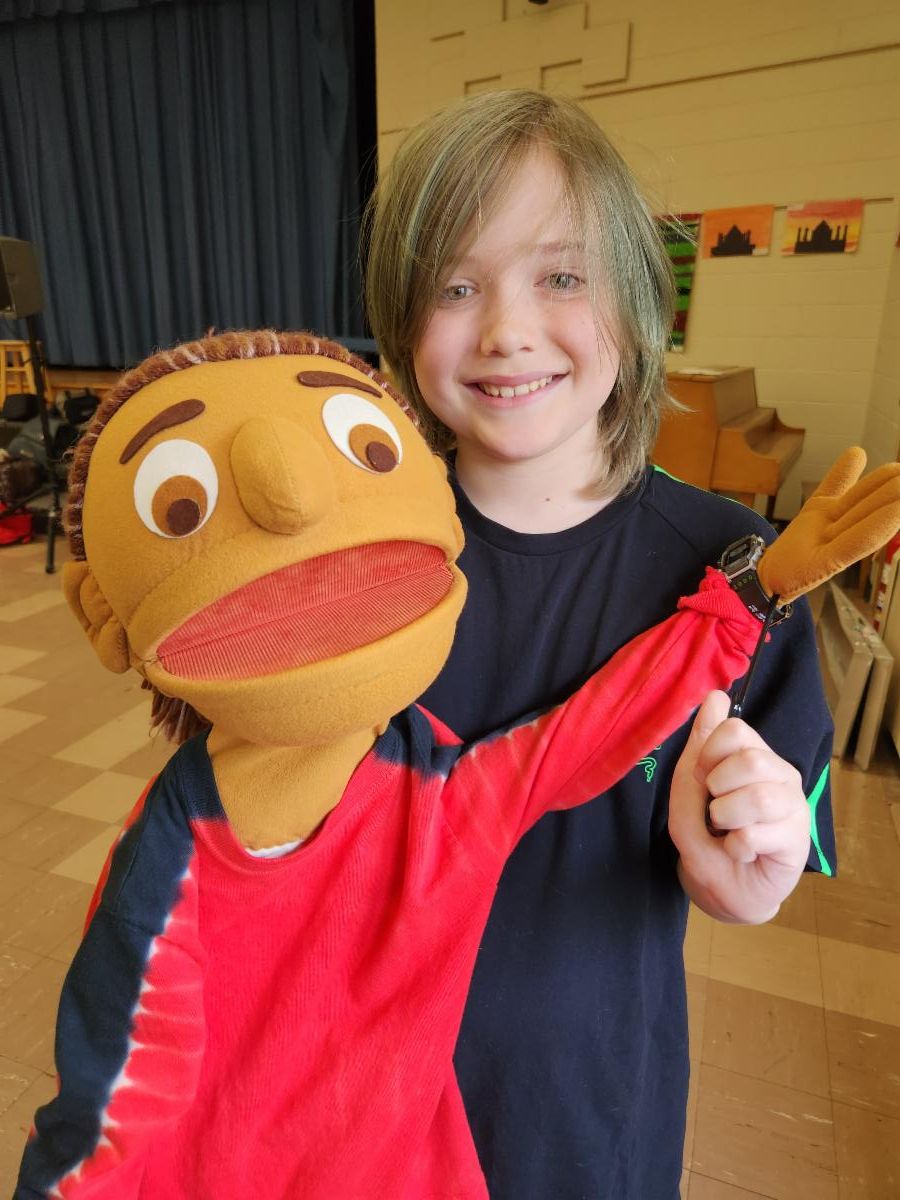
What made the trip special and different was our friend and puppeteer in training, Zarek.
Zarek is eleven and has been around the puppets his entire life. His mom is Sarah Vogelsang-Card, who has been working with Puppets in Education for fourteen years and is currently the program manager.
Zarek has attended many of our shows over the years, and as he’s gotten older, he has started helping out. He’s been a puppet wrangler (and cuddler!) and helped with handing out stickers and setting up tech. At the start of the pandemic, the Vogelsang-Card family recorded a special video of our Anxiety show, and Zarek was the featured MC!
It was great having Zarek at our Coxsackie show on the 26th. He helped us out a lot by handing out evaluations and stickers to all the teachers, and then collecting and sorting the evals at the end of the show. He even participated in the shows by holding up our Anxiety and Kindness Tips for the kids to see.
Zarek will be joining us for another day of puppet shows at his old school of Brookside Elementary on May 10th. We look forward to having him with us, and to the day when he joins us onstage with a puppet!
|
|
VFN is excited to announce that we have added a new position to complement our work with the New England Regional Genetics Network. Ashley Michaud joined VFN in April as Family Support Consultant- Genetics Navigator. To date, Ashley has focused on making important connections within our genetics community and after completing an intensive training in May, Ashley will be available to support families and professionals around navigating the complex and often confusing world of genetics. We are excited about the professional and lived experience that Ashley brings to VFN.
Please reach out if you have questions or concerns about your child’s genetic diagnosis or the process of genetic testing. 802-876-5315 or info@vtfn.org.
|
|
It’s Getting Ticky Out There!
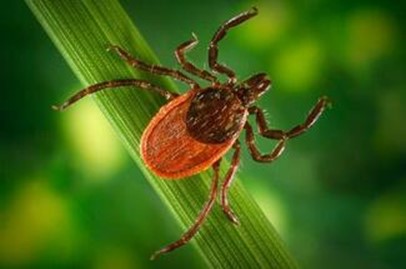
May to August is the height of tick season in Vermont, even though they are present year-round. Of the 15 species of ticks, only six are known to bite humans and can transmit diseases. However, over 99% of all tick-borne diseases reported to the Vermont Department of Health are caused by only one tiny tick: the black-legged tick.
An adult black-legged tick is the size of a sesame seed, a nymph is the size of a poppy seed. The good news is most people who receive a timely diagnosis and begin treatment early in the course of their illness fully recover.
Here are some tips to be Tick Smart:
- Avoid areas where ticks live: tall grasses, leaf litter & bushy areas. Use EPA-registered tick repellents and cover up.
- Check your entire body every time after working, playing or recreating outside. Black-legged ticks are tiny!
- Remove the tick as soon as you can: use tweezers and pull straight up, do not twist. It is OK if the mouth parts remain in the skin. Dispose of the tick by placing it in alcohol, a sealed bag or flushing it. Never crush a tick with your fingers. Clean your hands and the bite area with rubbing alcohol or soap and water.
-
Watch for symptoms, tell your provider if you get sick.
|
|
We are currently seeking applicants for the following positions:
A part-time Family Support Consultant - Mental Health (Outside of Chittenden County) to provide family centered information, referrals, and assistance to families of children with special health needs, individuals, and professionals individually over the phone and in person, and through trainings and workshops. The Mental Health specialist supports families whose children are experiencing mental health or emotional behavioral issues.
Two per diem Assistant Puppeteers for the Puppets in Education program. This position runs from August 2023-June 2024. Hours will be dependent on presentation schedule, possible 8-16 hours per week. The puppeteers will deliver educational puppet programs on an array of essential topics statewide and beyond. Some overnight travel will be required. We will train the right person in the style of tabletop/hand and rod puppetry.
|
|
Upcoming Events - Register today! |
|
Free Workshops
Join us for three VFN/Agency of Education Virtual Town Hall Sessions where we will discuss the July 1, 2023 Special Education Rule changes. Each session will cover a different area and will be held Wednesdays at 10:00 a.m.
- May 17 - "Rule Implementation"
- May 24 - "Special Education Evaluation/Eligibility Changes"
- May 31 - "Specific Learning Disability Eligibility Changes"
Participants will register once and can use the same Zoom link for any of the three sessions they would like to attend.
Presenters: Representatives from the VT Agency of Education and VFN
Come learn about the Youth Advocacy Council, the leadership and advocacy opportunities it helps create for youth and young adults with disabilities in Vermont. This workshop will cover the history of the council since it was formed in 2018, membership opportunities for youth and young adults ages 15-25, and an overview of the work the council does each year.
Presenters: Sefakor Komabu-Pomeyie - Independent Living Coordinator at VCIL, Kara Haynes - Transition Program Associate Manager at HireAbility VT, and Members of the Youth Advocacy Council
This workshop will begin with a brief introduction to trauma/trauma responsive care. During the majority of the presentation we will focus on defining resilience, understanding the current trends and statistics, and how do we build/increase resilience in children and youth. The presentation will also cover care of self for the adults who care for or work with youth.
Presenter: Kheya Ganguly - Director of Trauma Prevention and Resilience Development at the Vermont Department of Mental Health
This workshop is for individuals with disabilities, family members and anyone that supports transitions. We will explore how mapping helps with navigating transitions. We will go over features of maps and transitions in general and then apply mapping to the context of transitions. There are many types of maps and many types of transitions. Let's explore how to develop and use maps as tools for our transitions.
Presenter: Jayson Capobianco - Family Resources Consultant & Postsecondary Transition Consultant for the Vermont Interdisciplinary Team (VT I-Team)
If you are unable to attend, you can still register and we’ll send you a recording of the workshop which you can watch on your own time.
In case you missed our last series of workshops, you can find a full list on our VFN website. Stay tuned as we add more workshops to our fall schedule!
|
|
VFN Workshop Topics/Speakers Survey
We want to hear your ideas for our upcoming online workshops. What topics interest you? Are there presenters you would recommend?
Let us know your thoughts.
|
|
Contact Us. We Will Listen! |
|
Helping Vermont Families thrive for more than 30 years |
|
|
|
Office
600 Blair Park Rd, Ste 240,
Williston, VT 05495
|
|
|
|
|
|
|
|