|
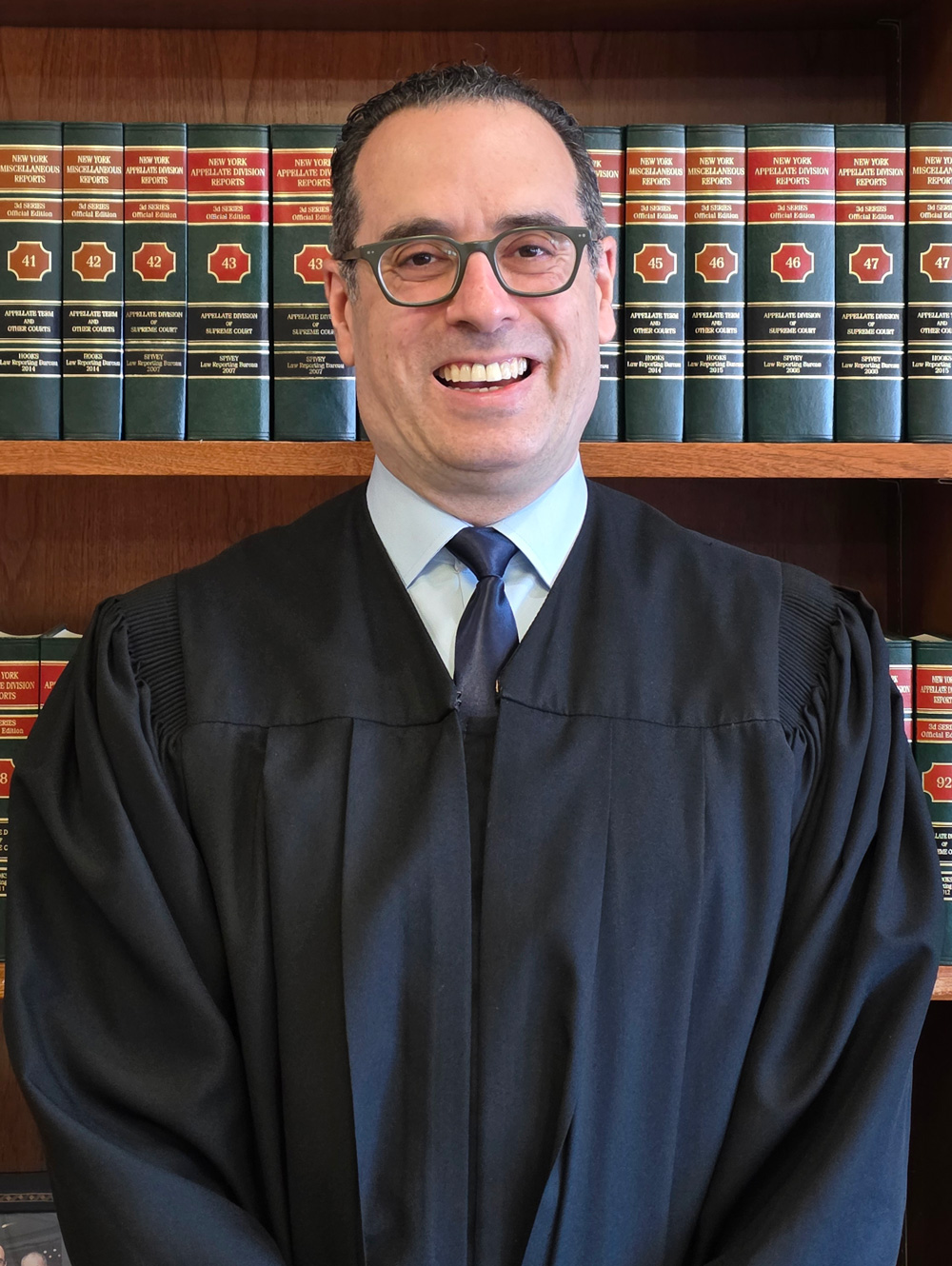
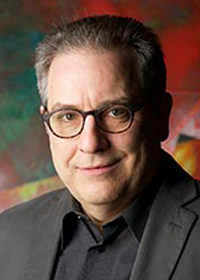
From humble beginnings to overseeing one of the largest and busiest court systems in the world, Adam Silvera ’94 serves as the deputy chief administrative judge for the New York City Courts. And he credits his time at Queens College with helping him get there.
Silvera supervises day-to-day operations of all of New York City’s trial courts, which include the Supreme, Civil, Criminal, Family, and Housing courts. It is one of the busiest and largest operations in the country—and Silvera is at the helm of all of it.
“I supervise, manage, run, oversee, all the trial level courts in New York City to make sure the lights are running and make sure that all the courthouses have the necessary means to administer justice,” said Silvera.
That includes managing court budgets, staffing, facilities management, and backlog reduction initiatives across the five boroughs. With such a long list of responsibilities, Silvera faces many challenges, but the large backlog of New York City’s cases is one of his most daunting.
“In the Civil Branch alone, in each county, there could be 40,000 to 50,000 active cases at any given point in time,” Silvera explained. “Our goal is to move cases efficiently, productively, and in a manner where we don't sacrifice speed with justice.”
One way that Silvera is helping to address the bottleneck of cases is through Alternative Dispute Resolution (ADR). ADR uses processes such as mediation or arbitration to resolve legal conflicts outside of a traditional trial. This helps to reduce attorney fees and lower the backlog of cases.
“It’s a big initiative, state- and citywide, because not every case can go to trial,” said Silvera. “The more hands on deck, the more volunteer mediators, the more we engage in mediation, the results show how we can get cases in and out of court.”
In addition to managing one of the largest court systems in the country, Silvera is still hearing cases as a judge two to three mornings a week.
“At the end of the day, I need to see what's happening in the courtroom,” he explained. “It's also an opportunity for attorneys to take advantage that I'm there—that if there are issues, I can be of general service to improve the efficiency of our court.”
How does he manage this incredible workload and responsibility? Silvera credits his staff for making it possible.
“We have really talented judicial and non-judicial personnel that make the job better,” Silvera explained. “We have talented public servants that come to work every day, ensuring that our doors stay open and that justice is served for the people that need to access it.”
Pursuing the American Dream at Queens College
Silvera grew up with modest beginnings on the Lower East Side of Manhattan. His father, a Holocaust survivor from Tunisia, worked as an orthopedic shoemaker; his mother, born in America of Eastern European Jewish descent, was a homemaker. With a diverse family background, Silvera was able to learn four different languages (English, French, Hebrew, and Portuguese), a skill he credits with helping him in his career today.
He chose to attend Queens College because his older brother was already attending Queens and loved his experience. Additionally, the affordable tuition made Queens College appealing for a family with a fixed income.
At Queens College, Silvera took advantage of the school’s liberal arts background. He majored in political science, minored in history and urban studies, and took several French courses. He was also active in student government and served as an academic senator.
Silvera found the professors at Queens College were instrumental to his success.
“I have fond memories of my professors,” Silvera recalled. “We had some of the best and brightest professors, adjuncts, and lecturers that were so attentive to student needs.”
Among the professors he was most fond of were Rodney Benson and Ronald Lawson in urban studies, Harriet Davis-Kram in history, Anne Dobbs in French, and Andrew Hacker in political science.
“No one was better than Andrew Hacker,” Silvera noted.
He also loved the diversity of Queens College and became close with so many different types of people from both his community and other backgrounds.
“One of the reasons why I enjoyed Queens was because I knew there was a strong Jewish presence, and I wanted to be amongst people of my own community, and it was so welcoming. But what was also great was that I met so many people that weren't in my community. It was just great exposure to so many different ethnic, racial, and religious groups. Everyone got along from all different ethnic groups. It was great to be a part of that.”
A Path to Public Service
Silvera was able to get his first job after college through connections he made at QC. Shortly after graduation, he worked in Governor Mario Cuomo’s office as a constituent aide, thanks to a QC adjunct professor who worked in Cuomo’s office and recommended Silvera for the position.
Silvera stayed involved in local government even after Cuomo left office, also serving as a district leader and remaining active in the Democratic Party. Then in 1998, Silvera decided on a career change and enrolled at Brooklyn Law School. After graduation, he became a personal injury attorney.
As to why he decided to change careers, Silvera joked, “I grew up with a Jewish mother. My choices were either to be a doctor or lawyer.”
While his mother may have had some influence on his career path, Silvera states the biggest reason why he went to law school was a desire to help people who are facing tough times.
“I enjoy helping people where something happened to them through no fault of their own, through the negligence of others, and being able to help them get on their way.”
Silvera went on to have a successful career as a lawyer at Paul B. Weitz and Associates for 12 years. But he felt a greater calling to become a judge, and in 2014, he joined the bench after being elected to the New York City Civil Court, where he was initially assigned to sit as a Family Court judge in Kings County.
“Appearing in court every day on my cases, I realized I would love to roll up my sleeves and resolve disputes,” Silvera explained. “The highest form of public service in the legal community is, no doubt, being a judge. I wanted to give back to the community because the community was so good to me."
Silvera found success as a judge and continued to take on greater levels of responsibility. In 2017, he was named an acting Supreme Court justice in New York County, handling family court matters and matrimonial cases. In 2018, he became justice of New York County’s Supreme Court Civil Term—and in January 2022, he became administrative judge of New York County’s Supreme Court Civil Term before being promoted to his current role overseeing all of New York City’s courts in 2024.
Paying it Forward
A Queens College success story, Silvera has some advice for current Queens College students to help them reach their goals. He recommends that students learn a different language, travel, and not be afraid to take a chance. He also suggests making the most of the resources available at Queens College.
“Reach out to your professors, go to their office hours, and have conversations with them to see if they’re open to career advice.”
He encourages students to not give up on their dreams, even if the obstacles seem overwhelming.
“The American dream still rings true today—it may be a little harder and take little bit longer. But go for it. Don't take no for an answer. There is still a path for a new generation that comes from modest means and immigrant backgrounds to succeed. Study hard and dream big.”
Silvera can speak from his own experience. He never could have envisioned his career path when he was a freshman at Queens College.
“I wouldn’t be where I am today without Queens College. I never thought that when I entered Powdermaker in August 1990, when my brother drove me to school, that I'd be where I am today.”
|