Drawing Insights from Students in an
Unsettling Moment
As the semester concludes, some weeks sooner than normal, the feeling of, “wow, we made it,” is palpable. So is the sense of fatigue. These past few weeks have been especially trying amidst a data story, common to many public regional universities and laid bare by the pandemic—namely an alignment challenge between our staffing levels and our student body size.
In this moment, I find motivation and insight in the voices of students and believe hearing them is the fuel for our future. Recently I was reading through comments by WP students on the National Survey of Student Engagement (a national survey completed just prior to the pandemic) and what they found most satisfying about our university. I saw windows into what they value about us, and opportunities to pursue new strategies for institutional and educational program distinction as we move through and past the pandemic stronger.
|
|
 |
The faculty and staff promote being kind to one another and freedom of speech on touchy subjects, which usually are avoided. For example, we talk about racism, sexism, labor laws, and sexuality through some of my lectures.
The most satisfying is when the professors respond to my academic work with great constructive criticism and help me improve my knowledge and learning abilities.
The fact that we are placed in a cluster makes me feel more included and together.
My most satisfying experience has been working in the hospital.
I feel grateful to come back to this University after 40+ years to finish my degree part time.
As a returning student who has a family and works full time, I would like to see more online courses for higher level classes. If they cannot be available online, then altering the nights they are offered from semester to semester. There have been times I have had to push off on a course because it would only fall on a specific day of the week for several semesters. My impression is that this school caters to first-time students, but the reality is you have many returning students, or students that also work full time.
The most satisfying thing has been the gems among the faculty that are willing to help students succeed outside the classroom. Between helping students find internships and funding participation in statewide events, I owe a lot to those who have given these kinds of opportunities.
|
|
|
|
In his book on the changing marketplace for higher education, Breakpoint, Jon McGee offers campus discussion questions for re-imagining the future, and I adapt a subset of them here for consideration:
- How are we understood as distinctive by the students we seek to enroll versus the other college choices they have?
- What characteristics of our programs and institution are actually distinctive, providing us comparative advantage? Of those, what are easily or not easily replicable by others?
- Is our student marketspace large enough? If not, what are our alternatives for new student marketspaces and that inform where we seek to build new distinction?
These questions have a mix of obvious and less obvious answers. But they are ones we must address. Within Academic Affairs, deans and chairs have been and will be actively engaged in immediate term conversation on what can be impactful for summer and fall enrollments, as well as retaining students at all levels. Colleagues in Marketing and Public Relations, Admissions, and Academic Development are important partners to this. President Helldobler will also be launching a University Strategic Planning process this spring, an exciting moment to bring effort together across the campus.
|
|
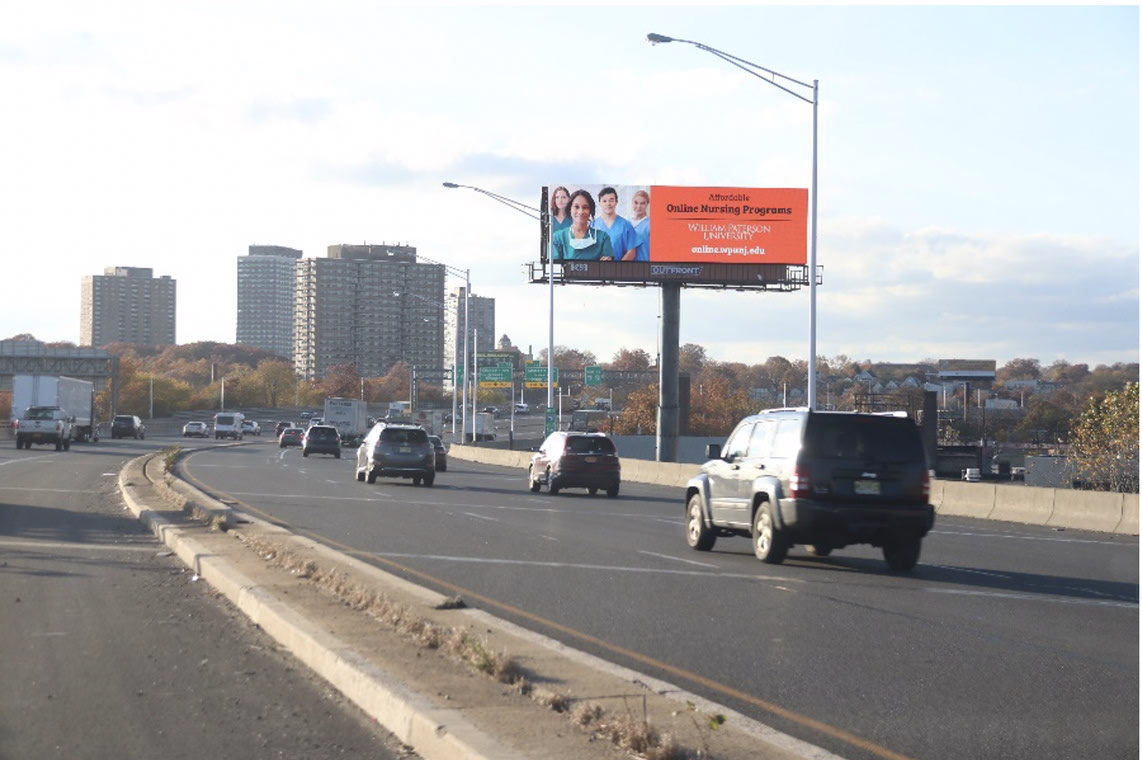
Student success, or what I like to refer to as dream achievement, is a team sport. Moments like these, however, can make us desire to get in the bunker and look inward. What we need to do is look outward and harness collective energy and talent. Last week our WP Online partner did something unusual among their many clients. They felt so good about WP’s growth potential that they purchased electronic billboards on I-95 and I-78 near Newark. Whereas nursing may be featured there now, others are planned. The orange and black that we all are is proud and towering.
|
|
Academic News
Department-level discussion, framed by the three questions above, is urged. Consider the learning outcomes you desire for students and the degree to which they continue to characterize what they need in the 21st century. Do any of them frame from a privileged view of what a higher education should be, or once was? Are our courses constructed to benefit what we want to teach, and when, versus what we need to teach, and when? How might the talent and skills reflected in a department provide value to the business, industry, non-profit, arts, government, education, and other sectors in new or clearer ways?
RTP engagement at the college and department levels is underway. The University document was approved by both the Faculty Senate and the administration and is now in the hands of deans and department chairs for internal conversation. Draft departmental bylaw revisions for college Chair’s Council discussion are to be completed by March 1. Final bylaw revisions are due to the Provost’s Office by May 15 from the deans.
The Middle States Self-Study pre-visit by our accreditation review team chair, Dr. William Fritz, president of the College of Staten Island, occurred on November 6. He found our self-study to be in good shape, offering some helpful insights for further strengthening it. What remains crucial is to ensure not only that we are assessing student learning outcomes, but that we are reflecting and acting on that assessment, and can document it. The official visit will be March 14-17, 2021.
The wheels of academic innovation continue. Some exciting new certificates have been approved as have new degree programs in Community and Social Justice, Ethics, and Leadership and Professional Studies. These, and others under development, will be important additions to our future.
Over the two-month break period, Academic Affairs is offering opportunities to reflect and recharge with colleagues in the areas of teaching and learning, diversity and inclusion, and advising and student success. Details can be found on the Provost’s Office website under Events.
|
|
Top three highest WP performance relative to public master’s universities on the NSSE:
Freshmen:
- Institutional emphasis on helping you manage your non-academic responsibilities (+10)
- Discussions with people of a race or ethnicity other than your own (+9)
- Discussed your academic performance with a faculty member (+8)
Seniors:
- Extent to which courses challenged you to do your best work (+5)
- Institutional emphasis on using learning support services (+4)
- Discussions with people of a race or ethnicity other than your own (+4)
|
|
|
“Nearly all colleges today must address three disruptive forces – demographic disruption, economic disruption, and values disruption.”
–Breakpoint: The Changing Marketplace for Higher Education
“In a tough job market, students are more likely to seek out short-term credentials such as mini-courses and badges. If they can’t get such programs at a college, they may turn to non-traditional providers.”
–The Post-Pandemic College (2020)
|
|
|
|
The Provost’s Office is Meg, Lissette, Claudia T., Claudia C., Jonathan, Kara, Sandy, and Josh. You can reach us at 973.720.2122 • provost@wpunj.edu
We may be working remotely, but we are accessible to you!
|
|
|
|
|
|
|