|
Project Baccara: A Look at What Was Learned at the Line Siting Committee Who makes Recommendations to the Arizona Corporation Commission Hearing
Takanock LLC is proposing to build a new data center powered by natural gas generators known as Project Baccara in the West Valley on a county island bordered by Glendale, Surprise, and Luke Air Force Base. Because of its location near Luke, the project will require a military compatibility study as well as approval from the Arizona Corporation Commission. I attended part of the recent Line Site Committee hearing, I listened carefully to the sworn testimony presented. Every individual who testified was under oath, and a court reporter documented the proceedings, creating a formal transcript for the public record. The resumes of those presenting before the Committee were exceptionally impressive, beginning with Takanock founder Ken Davies. Davies was the Director of renewable Energy with Microsoft when Microsoft built the first and currently only data center with natural gas generation in the US. Craig McKesson Chief Commercial Officer for Takanock, and previously with T5 Data Centers, and Jones Lang LaSalle.
Many citizens who oppose this project continue to ask, why not build this further in the desert. One of the most important takeaways from the hearing was why this specific location was chosen. For starters, the property is already zoned heavy industrial, and significant infrastructure is already in place. Massive fiber lines exist due to the site’s proximity to Microsoft, along with existing high-transmission power lines and the close location to Electrical District 7. In addition, the project cannot move forward without explicit approval from Maricopa County which will reflect a compatibility determination from Luke Air Force base. If Project Baccara is not built on this site, it is likely that another similar heavy-industrial project will eventually be proposed based on the zoning alone.
During the hearing, it was explained that all power generated on site will be sold into the wholesale market, after which the project will purchase electricity back from ED7. With the West Valley growing at such a rapid pace, the existing infrastructure alone will not be sufficient for APS to meet the region’s increasing energy demands. This project will add much-needed power to the system at no cost to the ratepayer. In fact, most rate increases approved for APS are driven by the need to build additional infrastructure to keep up with growing electricity demand, which this project helps to address.
For context, data centers exist throughout the country, but only one currently operates with an attached natural gas power plant—located in Cheyenne, Wyoming—and Ken Davies was part of the team that built it during his time at Microsoft. Many who oppose data centers often cite concerns about power consumption and water usage; however, Takanock and Project Baccara have directly addressed these issues through having the natural gas generator on site and using a closed loop water system.
Data centers are not only coming to Phoenix. Nationally, Northern Virginia leads the country with the most megawatts (MW) with 4,934 MW of data center capacity. Phoenix currently has 804 MW, with 1,004 MW under construction and an additional 3,684 MW planned. West Virginia has 1,071 MW under construction and 5,446 MW planned, while the Dallas–Fort Worth region has capacity figures similar to Phoenix. Other major regions at the forefront of data center development include Atlanta, Chicago, Northern California, and the Pacific Northwest.
Engineering details were also discussed. The turbines for Project Baccara have been purchased from Siemens, with delivery expected in December 2027. There will be 18 turbines total. The proposed construction start date is the third or fourth quarter of 2026. The data center itself will be cooled using air conditioning, while the turbines will require water though only on the hottest days of the year. Takanock is currently in discussions with existing industries in the area about potentially using recycled water to cool the turbines, which would further reduce the project’s overall water impact.
Public concerns about this project continue to focus on noise, water use, air quality, property values, and general safety. These concerns are understandable, and they deserve to be taken seriously. However, it is also important to acknowledge that this land is already zoned for heavy industrial use. This raises an important question: Will those who oppose Project Baccara accept any heavy-industrial project at this location? With the rapid growth occurring in the West Valley, additional energy generation will be required regardless. If this project does not move forward, it is very likely that another energy project will eventually be proposed for the same site.
Finally, it is worth noting that the Arizona Technology Council has come out strongly in support of Project Baccara. Their representative spoke publicly at the hearing about the growing data and energy demands in the West Valley and the importance of projects like this to support our modern, technology-dependent society.
At this time, after attending the hearing, reviewing the facts, and listening to sworn expert testimony, I continue to support Project Baccara. Data centers are a critical part of our national security, our economy, our infrastructure, and our daily lives. With strict state and county oversight of air quality, noise, and environmental standards, and with thoughtful planning and transparency, this project can move forward responsibly while helping meet the growing needs of the West Valley.
A Field Visit to a West Valley Data Center: What I Saw and Heard
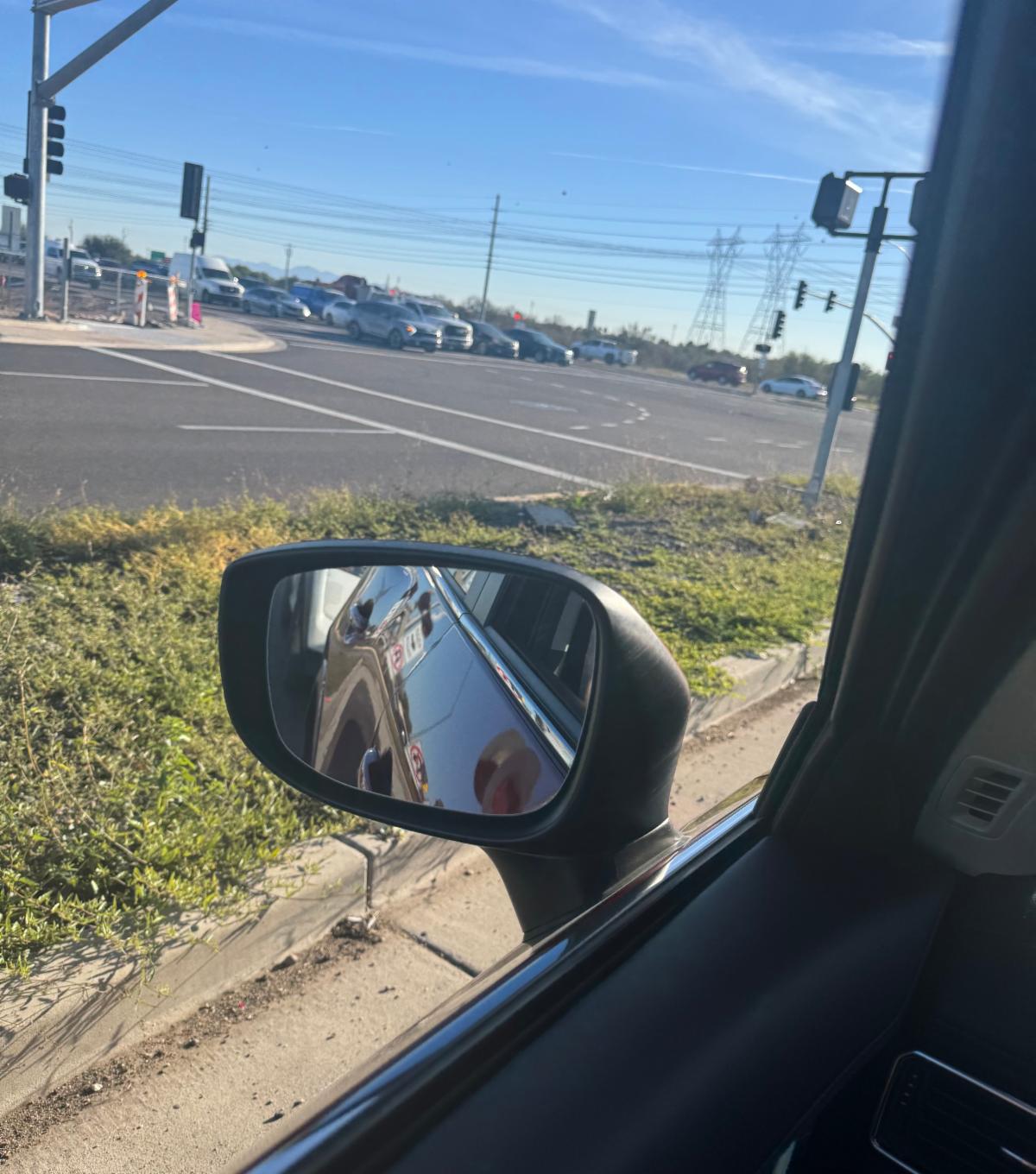
On December 3rd at approximately 10:30 a.m., I took a field trip to the existing data center located on Citrus Road in Goodyear to see firsthand what a fully operating facility is like in a real-world setting. Directly across the street, cattle were grazing and lying peacefully in the field, enjoying the cool morning breeze. It was a striking contrast—modern high-tech infrastructure on one side of the road and quiet agricultural life on the other.
When I stepped out of my car, I intentionally paused to listen closely for any sound coming from inside the fenced perimeter of the data center. I heard nothing from the facility itself—no constant hum, no mechanical noise, no cooling system sounds. The only noise present was regular ambient sound and the cows occasionally mooing across the road. I then drove around to the opposite side of the building. There, I could clearly hear construction equipment operating on the neighboring property, but again, there was no audible noise coming from the data center itself.
After my admittedly amateur sound test at the operating facility, I drove to the proposed site for Project Baccara. It must have been a busy training day for Luke Air Force Base, because jets were flying overhead performing repeated touch-and-go exercises every few minutes. The proposed project site is bordered by Peoria Avenue, 143rd Avenue, Olive Avenue, and Bullard Avenue. The surrounding area is already heavily industrial, with countless warehouses, rail lines running along Olive, and frequent freight activity. While there are still a few remaining farms, scattered homes outside of subdivisions, and citrus sales in the area, the overall character of this location is clearly shifting toward industrial use.
Just north of the property are the Copper Canyon Ranch and Rancho Gabriela subdivisions. These neighborhoods sit across the street and are enclosed behind a wall, separated from the industrial corridor. This is a growing industrial zone, and the presence of numerous diesel trucks servicing the surrounding warehouses is already a daily reality for the area.
I truly understand and respect the concerns being raised by nearby residents—concerns about noise, safety, air quality, and quality of life are always valid and deserve to be heard. However, standing on this site and observing the existing land use and surrounding development, it is also clear that this area has already transitioned into an industrial corridor. In many ways, the horse has already left the barn.
My visit to the Goodyear data center reinforced an important point: a properly designed and operated data center can exist quietly within a broader industrial area without creating the kind of continuous noise many fear. Real-world observation matters, and what I personally experienced was a facility that blended into its environment far more quietly than expected.
My field trip would not be complete without touring a gas generation station. So I made a point to visit an operating natural gas generation facility to better understand the real-world impacts. I went to the Agua Fria Generating Station on Northern Avenue, which houses five combustion turbine generators with a total capacity of 722 megawatts. I walked along two sides of the property and listened carefully for operational noise. The only sound I heard from within the facility was a forklift moving pallets. Otherwise, there was only normal ambient noise. In fact, the traffic on the street was noticeably louder than anything coming from the plant itself. There were also residential homes located directly across the street from the facility, illustrating how closely this type of infrastructure can safely and quietly coexist with nearby neighborhoods.
In conclusion, the Takanock Project Baccara represents a carefully planned and forward-looking investment in the future of the West Valley. As our region continues to grow at an unprecedented pace and our reliance on technology only increases, the need for reliable, locally generated power is undeniable. Based on what I have seen firsthand and learned through sworn testimony and site visits, this project is designed to responsibly meet that demand while operating within strict regulatory oversight. Project Baccara will help ensure that the West Valley can continue to support innovation, growth, and the ever-evolving technologies that shape our daily lives.
On December 4, 2025 the Line Site Committee voted 8 - 1 to approve Takanock Project Baccara. This recommendation will go before the Arizona Corporation Commission early next year. The project will finish the approval process with Luke Air Force Base for their final determination by early nest year as well. Then the project will move to the P&Z Committee and finally the Maricopa County Board of Supervisors probably sometime next year.
|