|
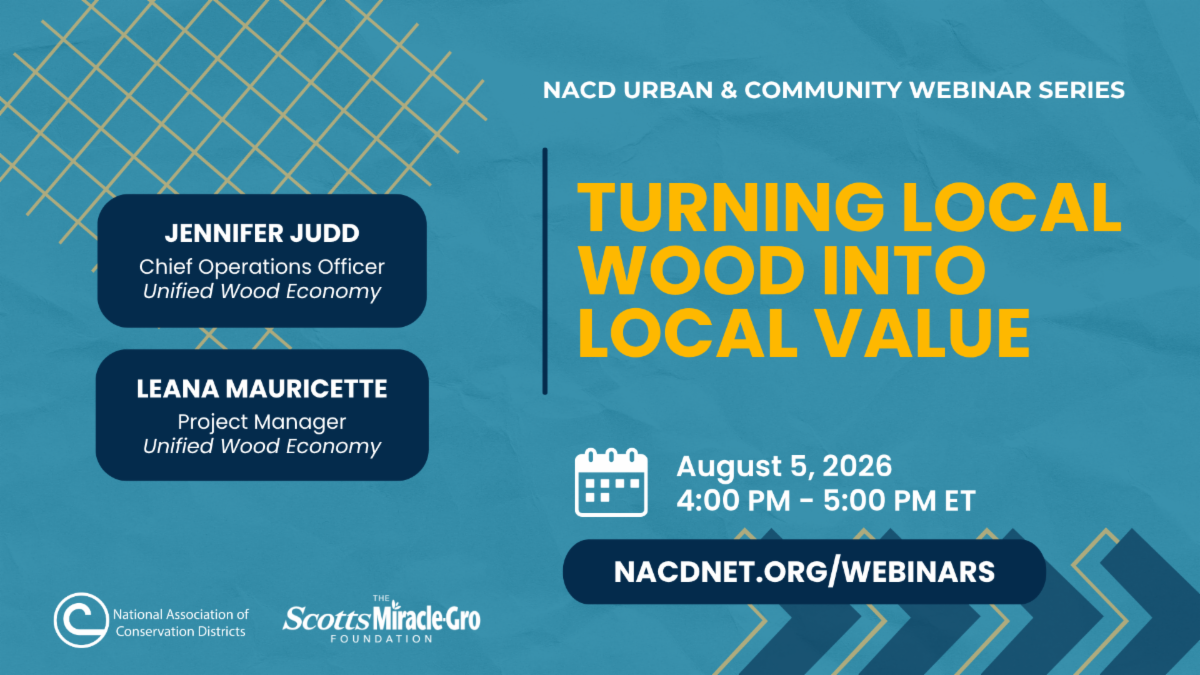
Join NACDs next U&C Webinar – Turning Local Wood into Local Value: A Playbook for Conservation Districts – on August 5 at 4:00 p.m. ET.
Every year, thousands of tons of urban and forest wood are undervalued as a resource. Conservation districts are uniquely positioned to change that. In this webinar, Unified Wood Economy’s Chief Operations Officer, Jennifer Judd, and Project Manager, Leana Mauricette, will present two regional wood utilization projects, from city centers to national forests, and introduce the Urban Wood Utilization Guide: A Municipal Playbook for establishing a wood utilization program in your community.
The webinar will cover how districts can get started, what funding pathways exist, and how to align this work with your existing conservation mission. Come ready to ask questions because the presenters will save time for a full discussion!
Learn more and register here.
| Q&A WITH RICH DUESTERHAUS | |
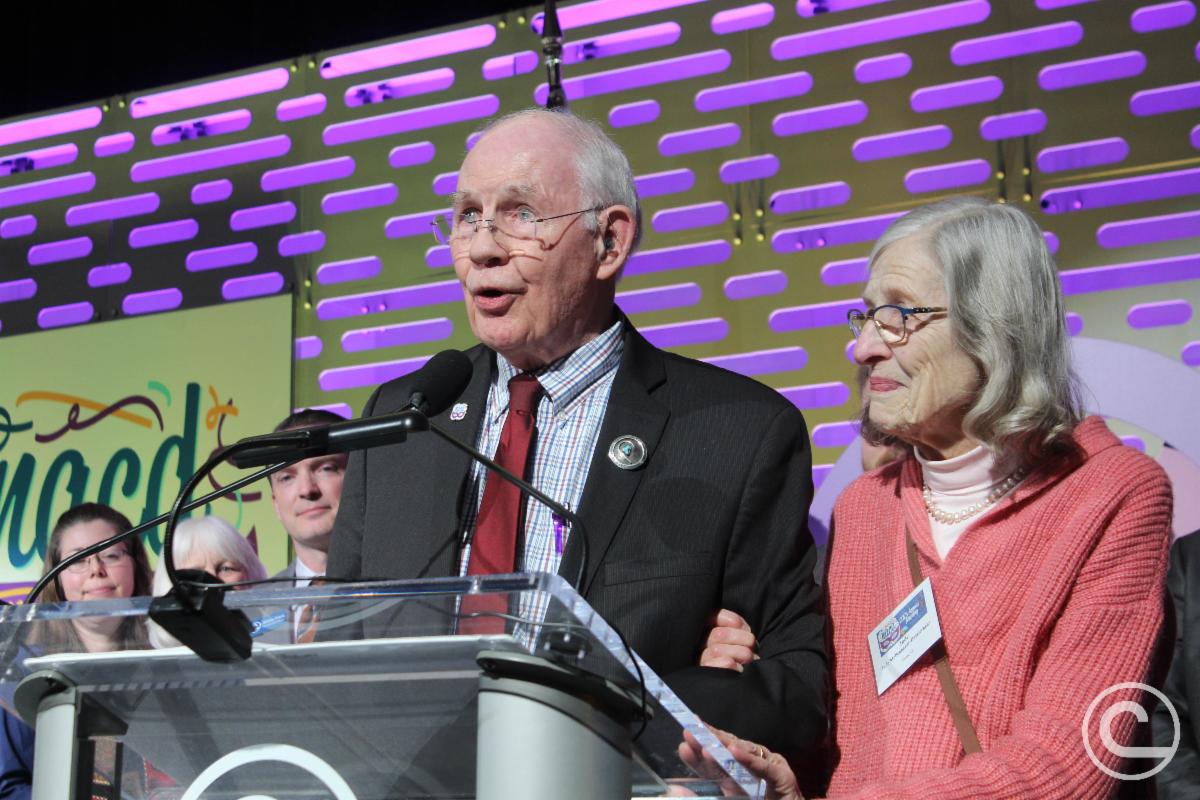
Rich Duesterhaus, NACD’s Senior Advisor, was seven years old when NACD was formed in 1946. Working on his family’s farms in Illinois and Missouri, he aspired to be a farmer. A summer internship with the Soil Conservation Service, now NRCS, changed that. Rich began to see a career path complimentary to agriculture in soil conservation.
Now, at 87, Rich has dedicated over six decades to a career in conservation. He held multiple roles with the Soil Conservation Service, including State Conservationist, Assistant, and Deputy Chief. Rich was also once the Executive Director of the National Conservation District Employees Association and President of the Soil and Water Conservation Society.
NACD sat down for an interview with this influential octogenarian to help celebrate NACD’s 80th anniversary.
What are some of the significant changes you’ve seen in conservation districts over the decades?
Staffing is one. Many districts did not have employees. This would have been around 1959-1960. Working for the Soil Conservation Service, we were asked to go to the districts to see if we could get them to hire a technician. We managed over time to get the districts to hire about 1,000 conservation technicians by the early 1970s. That was the beginning of getting districts involved in staffing for the technical side of things, and it mushroomed after that.
Urbanization is another. In the 1960s, the Soil Conservation Service also moved in a big way to urban conservation work. Some leaders saw how soil information could help people locate septic tanks and learn where not to build houses, things like that. They helped the soil scientists and other people see that there were interpretations that could be made from soil data that the Soil Conservation Service hadn't even thought about. There was a lot of good information not only for agriculture, but also important for urban uses of land.
What’s an important lesson you’ve learned?
How important relationships are. In every location I’ve worked in, I get more done by learning about people and what they're interested in. Not coming in saying “I’ve got the solutions for all your problems,” that’s not the approach that works, but facilitating and supporting peer-to-peer learning and relationship-building. I could say, “Well, you know, Sam has been doing this for three years. Talk to him before you decide to do it.” I think that peer-to-peer relationships are really, really important to conservation and what Hugh Hammond Bennett and the people in the USDA understood in 1937.
Read the full Q&A with Rich on NACD's blog.
| |
WHAT'S UP IN WASHINGTON?
GOVERNMENT AFFAIRS UPDATE
| |
Ahead of NACD’s Summer Meeting, here is a brief look at this summer's congressional activity and where key legislation stands as Congress returns from the July 4th recess.
The House passed its Farm Bill in April, and the Senate Agriculture Committee released a discussion draft in late June. The Committee is aiming to consider the bill for markup before Congress leaves for the August recess. Both versions retain historic investment in the Conservation Title and provide new programs to better address local conservation needs.
Congress continues to work on FY27 appropriations. The House passed its Agriculture appropriations bill in June, while the Senate Appropriations Committee has not yet considered its version. The House Appropriations Committee also approved the Interior-Environment bill in June, and that measure is awaiting consideration by the full House. The bill includes funding for the proposed U.S. Wildland Fire Service, reductions to Environmental Protection Agency funding, and changes to Forest Service programs.
| ALABAMA'S EMERGING LEADERS IN CONSERVATION INITIATIVE | |
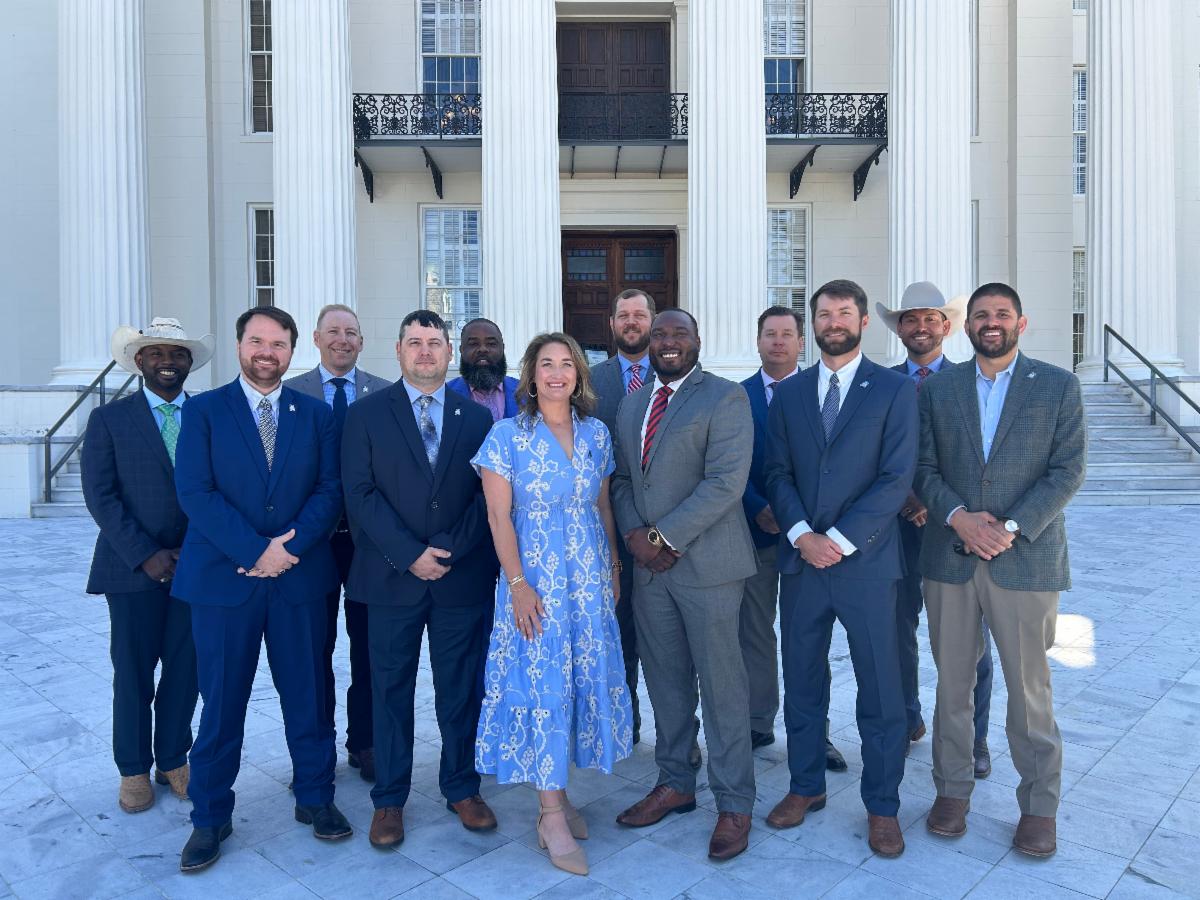
Recognizing that the future of conservation depends on strong local leadership, the Alabama Soil and Water Conservation Committee (SWCC) launched the Emerging Leaders in Conservation (ELC) Initiative in January of 2025 to prepare the next generation of conservation leaders. The two-year leadership development program equips participants with the knowledge, skills, and professional relationships needed to strengthen soil and water conservation districts (SWCDs), deepen collaboration among conservation partners, and ensure Alabama’s locally led conservation system continues to thrive for years to come.
As the initiative gained momentum, SWCC Chairman Charles Holmes underscored its importance, stating, “This program is extremely important to our organization. We need these younger generations to rise up and get involved for the sustainment of our mission. We all need each other here to continue the legacy of soil and water conservation. The candidates chosen for this program are so promising for this task. I am already proud of the work they are doing.”
| |
Cohort members gather quarterly for immersive training that extends well beyond the classroom. Through sessions on governance, public policy, strategic communication, media relations, business etiquette, and organizational leadership, they develop the practical skills needed to lead effective, sustainable districts and build stronger partnerships.
This fall, the inaugural class, consisting of nine SWCD Supervisors, two Advisors, and one District Administrative Coordinator, will graduate from the program. They will return to their communities with new ideas, stronger leadership abilities, expanded professional networks, and a deeper understanding of Alabama’s conservation delivery system.
Following the success of its inaugural class, SWCC is preparing to welcome a second cohort. Applications are open through August 14 to Alabama SWCD supervisors, advisors, district administrative coordinators, and Natural Resources Conservation Service (NRCS) employees with fewer than 10 years of experience in their current role.
These cohorts represent the future of Alabama’s Soil and Water Conservation Districts. Together, they ensure that the torch of conservation leadership is passed to a new generation of capable, committed leaders who are well-equipped to preserve and advance the legacy of voluntary, locally led conservation.
Read more on NACD's blog.
| | Watch Conservation Coffee on Habitat University | |
Missed the latest Conservation Coffee? Watch the recording to learn about how the Pheasants Forever/Quail Forever’s (PF/QF) Habitat University and Habitat University Pro can help your district and the land stewards you serve!
Both are free, skills-based habitat and conservation training resources. The Pro version is for conservation professionals—current and aspiring—committed to professional development and delivering conservation technical assistance. Habitat University offers flexible online learning, certificates, hands-on opportunities, and more to help you succeed in your habitat projects.
| Join Farmers for Soil Health Webinar | |
Join the Farmers for Soil Health (FSH) Webinar, "Cover Crops, Row Crops & Livestock, Oh My!" on July 21 at 10 a.m. ET.
Indiana producer Woody Nichols of Nichols Land and Livestock will share his experiences integrating row crops, cover crops, and livestock into a diversified farming operation. Participants will learn how conservation practices fit within his family's operation, the benefits and challenges they've encountered, and lessons learned while balancing productivity, profitability, and stewardship goals.
The discussion will also feature Hans Schmitz of the Indiana Agriculture Nutrient Alliance, who will share insights on conservation adoption, technical assistance resources, and opportunities for producers interested in implementing cover crops and other soil health practices.
Learn more and register here.
| Join NCDEA Virtual Training on Working with GIS | |
Discover how GIS can strengthen conservation district programs at the National Conservation District Employees
Association's (NCDEA) Virtual Training Series on July 22 at 9 a.m. PT.
Andrew Phay, of the Whatcom Conservation District in Washington, will provide an overview of GIS tools available to conservation districts, from free platforms such as Google Earth and QGIS to mid-level solutions like Avenza Maps and enterprise-level applications within Esri’s ArcGIS suite. Attendees will learn practical applications for each tool, gain insight into costs and capabilities, and explore how to select the right GIS solution based on your district’s goals, resources, and technical needs.
| |
Thank you to all districts that have already paid membership dues for FY26! We rely heavily on your contributions to support our advocacy, education, and partnership activities. If you have not contributed yet, you should soon receive an invoice in the mail to renew your membership for Fiscal Year 2026.
You’ll also find a copy of the Summer 2026 edition of The Resource! This edition has important government affairs updates, information about our upcoming summer meeting, and more. If you have any questions about your district's membership, how to pay your dues, or how to access all of your membership benefits, please reach out to us.
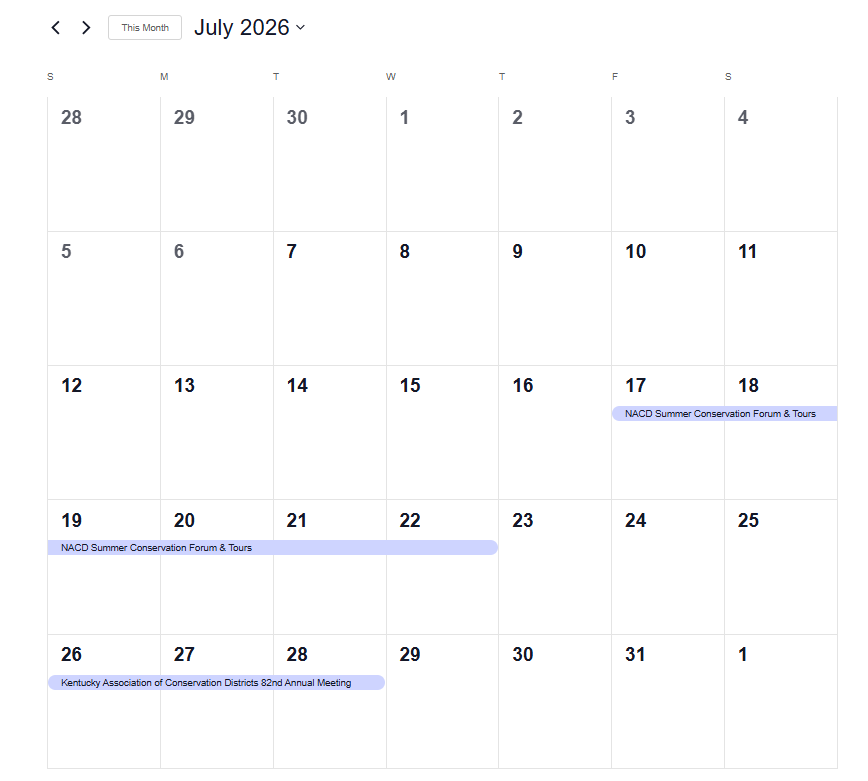
| Promote your conservation district or state association's tree sale, annual meeting, webinar, field day, or other events on NACD's Calendar of Events! | |