Sasakawa USA Newsletter July Highlights | |
|
Included in this issue of the newsletter:
- Message from Sasakawa USA's Chairman Satohiro Akimoto
July Activities
- Sasakawa USA Emerging Experts Delegation (SEED): 2023 SEED Women, Peace, and Security (WPS) Study Trip to Tokyo
- Sasakawa USA Emerging Experts Delegation (SEED): 2023 SEED Women, Peace, and Security (WPS) Pre-Departure Briefing with Ambassador James Zumwalt
- Rising Indo-Pacific Security Experts (RISE): RISE Event with Major General Hiroyuki Sugai
Publications
- US-Japan NEXT Alliance Initiative: Cyber Summary
- US-Japan NEXT Alliance Initiative: Japanese Translation of C2 Modernization Report
- US-Japan NEXT Alliance Initiative: The ASEAN-Japan Centre Can Be a Model for Washington's New 'ASEAN Center' (Mr. Baron)
- USJETAA: JETs on Japan Publication Series
- Japan Political Pulse: PM Kishida Passes on Snap Election for Now, Shifts Strategy amid Sagging Support (Dr. Akimoto)
Announcements
- Sasakawa Africa Association (SAA): SAA Opens Office in Washington
Featured Intern
| |
Message from Sasakawa USA's Chairman Satohiro Akimoto | |
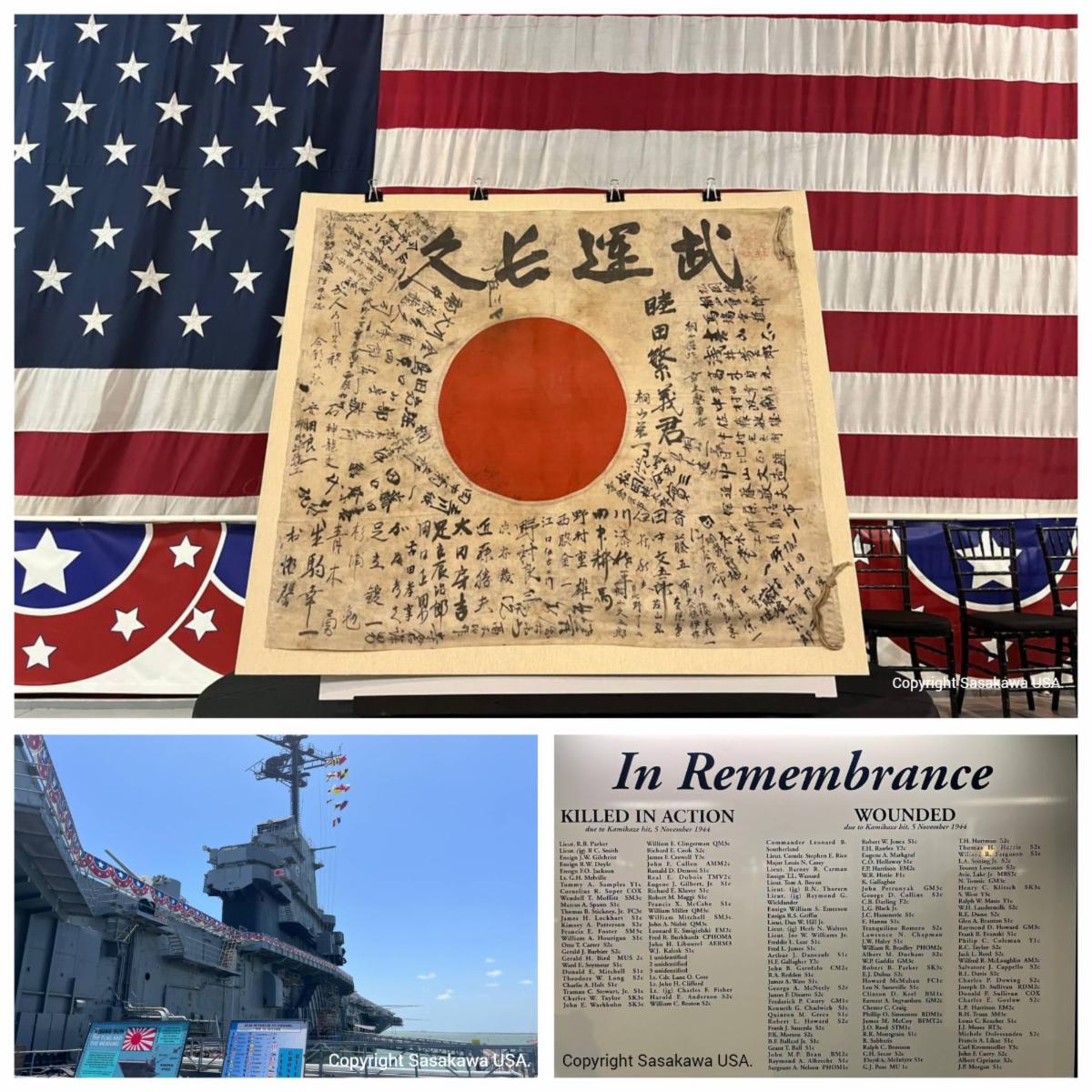 | |
I recently attended a Japanese national flag repatriation ceremony at the USS Lexington Museum in Corpus Christi, Texas. The flag belonged to Mr. Shigeyoshi Mutsuda, a Japanese soldier who was killed in action in Saipan during World War II. It was given to him by his family in 1943 prior to his departure for war from his village in Gifu prefecture. Mr. Mutsuda’s family never knew the flag survived in the U.S. seven decades after he perished on the Pacific island.
Mr. Mutsuda’s flag was one of many flags, known as Yosegaki Hinomaru, or Good Luck Flag, signed by family, friends, local community members, and co-workers, given to Japanese soldiers during World War II, wishing them good luck in the battlefield. The origin of Yosegaki Hinomaru is unknown but the practice of giving a Japanese national flag with signatures to soldiers became so widespread that practically every one of the over two million soldiers carried a personalized Japanese national flag. The practice of Yosegaki Hinomaru struck a chord with Japanese people and remains popular today. Japanese people create Yosegaki Hinomaru for major sporting events and recovery efforts from terrible natural disasters, such as the 2011 Tohoku Earthquake and Tsunami to show love, sympathy, encouragement, and unity.
In World War II, American soldiers took many Yosegaki Hinomaru from the battlefields as souvenirs and trophies after fierce encounters with Japanese soldiers. They probably did not know the meaning of the Yosegaki Hinomaru, but intuitively realized the uniqueness and symbolism in encounters with Japanese soldiers. The Obon Society, a U.S. 501(c)(3) organization dedicated to returning Yosegaki Hinomaru to bereaved families in Japan, estimates that more than 50,000 Yosegaki Hinomaru were brought to the U.S. by American soldiers as “the most highly desired souvenir.”
The Japanese Ministry of Health, Labour, and Welfare states 2.4 million soldiers died outside Japan, including Okinawa and Ioto Island (Iwo Jima). The ministry classifies roughly half of these soldiers, 1.12 million of them, missing in action. Due to the hot and humid topography of the battlefields on land and ocean, there are only limited chances, if any, to identify and bring human remains back home to Japan more than seven decades after the war. As a result, Yosegaki Hinomaru represents the remains of deceased soldiers to bereaved families, bringing them closure.
Mr. Mutsuda’s Yosegaki Hinomaru has been on display at the USS Lexington Museum for the last 29 years. It was donated to the museum in 1994, two years after the museum opened, but there is no record of how the museum came to possess the flag. When the museum was notified of the true identity of the Yosegaki Hinomaru, the museum quickly came to a decision to repatriate the flag back to Japan to be reunited with Mr. Mutsuda’s surviving family. Mr. Steve Banta, executive director of the USS Lexington Museum, said at the flag repatriation ceremony that there was no hesitation on the part of the museum to return the flag to its true home, where it belongs.
In accordance with the family’s wishes, Mr. Mutsuda’s Yosegaki Hinomaru was given back to the family on July 29 by Mr. and Mrs. Ziak, co-founders of the Obon Society, and Mr. Banta in a ceremony at Yasukuni Shrine, where Mr. Mutsuda’s wife, who passed away at age 102 in 2018, visited every year to “meet him” until she could no longer walk. It was a miraculous return of Mr. Mutsuda’s remains to the family after such a long time since he left his village in Gifu.
The returning of the Yosegaki Hinomaru to Mr. Mutsuda’s family brought a sense of closure and healing to the family and was made possible by a thoughtful decision of the USS Lexington Museum leadership. After all, the Lexington Museum commemorates heroic roles, which the USS Lexington played during World War II in defeating Japan in the context of “From Tarawa to Tokyo.” The museum is full of military equipment and artifacts used in the battle against the Japanese during the war. The USS Lexington also has a bitter memory of having 49 crew members killed and 132 injured by kamikaze attacks off the Philippine islands on November 5, 1944. The museum has a Japanese rising sun flag at the aft part of its structure to mark the location of the attack.
Almost eighty years since the end of World War II, the U.S. and Japan are the closest allies in the Indo-Pacific region. However, the alliance cannot be taken for granted and needs constant maintenance and management to strengthen it. The returning of Mr. Mutsuda’s Yosegaki Hinomaru to the family by the USS Lexington Museum, partnering with the Obon Society, is one such effort made jointly by the U.S. and Japan to reconcile and come to peace with the past and build trust and friendship at the grassroots level. There is a great deal of work still to do as many Yosegaki Hinomaru are in danger of being unidentified and lost as former American soldiers pass away and their families are unaware of the meaning behind these artifacts.
Top photo: Yosegaki Hinomaru, or Good Luck Flag, which belonged to Mr. Shigeyoshi Mutsuda, a Japanese soldier killed in action in Saipan during World War II.
Bottom left photo: The USS Lexington WWII ship and museum. Japan’s Rising Sun flag on the USS Lexington’s aft tower structure notes where the ship was struck by a kamikaze pilot on November 5, 1944.
Bottom right photo: List of American servicemembers aboard the USS Lexington killed in action or wounded from kamikaze attack during WWII. (Photos: Copyright Sasakawa USA. All rights reserved.)
| |
|
Sasakawa USA Emerging Experts Delegation (SEED):
2023 SEED Women, Peace, and Security (WPS) Study Trip to Tokyo
| |
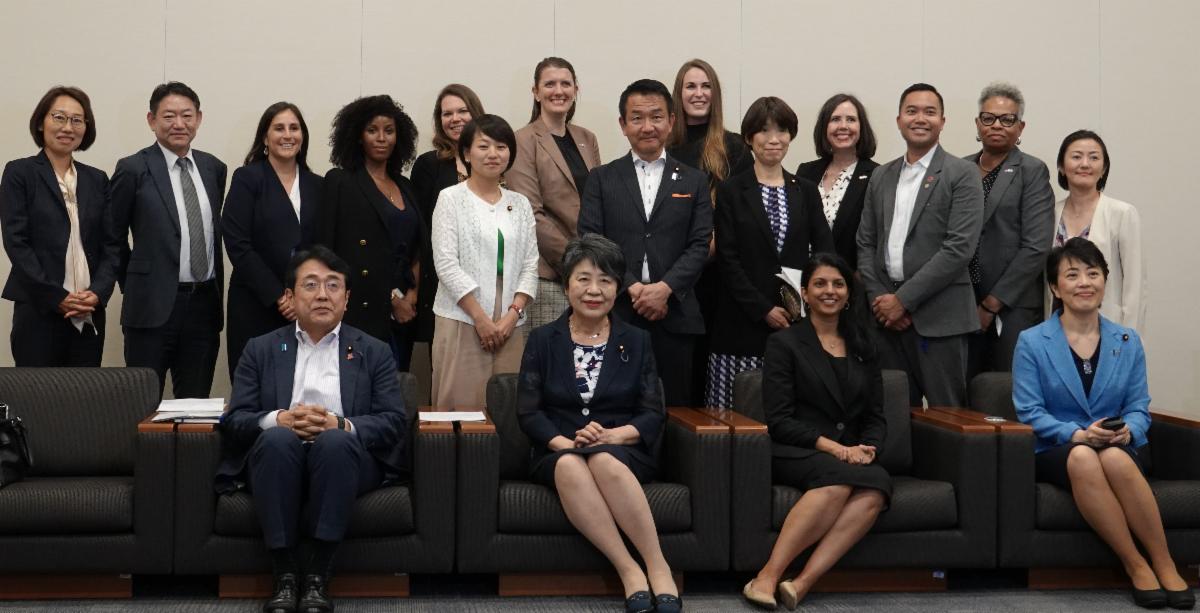 | |
From July 24-28, members of the 2023 Sasakawa USA Emerging Experts Delegation (SEED) program traveled to Tokyo to engage with Japanese experts from the Diet, academia, civil society, media, Japanese self-defense forces, government ministries, and cabinet offices to exchange insights on implementing the Women, Peace and Security (WPS) agenda in the U.S. and Japan, respectively, and to explore possibilities for U.S.-Japan cooperation on WPS. The study trip included meetings with members of Japan’s parliamentary network on WPS, representatives of the government bodies tasked with implementing the National Action Plan (NAP) on WPS (MOFA Gender Mainstreaming Bureau, MOD, JICA, and the Cabinet Office), and civil society experts serving on the Evaluation Committee to assess progress on NAP implementation. Following their return to the U.S., each of the eight SEED participants will produce an article summarizing the key takeaways from their engagements in Tokyo, which may include their perceptions of challenges and opportunities for advancing WPS in Japan and relevant points of comparison between their home organization’s work on WPS and the corresponding body in Japan. These SEED WPS articles will be published on Sasakawa USA’s website in the coming weeks.
Photo: The 2023 SEED WPS delegation with members of Japan's parliamentary WPS caucus.
(Back row, left to right): Ms. Maho Nakayama, Mr. Itsu Adachi, Ms. Monica Herrera, Dr. Jennifer Hawkins, Ms. Shanti Shoji, Hon. Takako Suzuki, Ms. Erin Cooper, Hon. Kiyoshi Odawara, Ms. Kayla McGill, Hon. Noriko Horiuchi, Dr. Jessica Smith, CDR Andre Agraviador, Dr. Carolyn Washington, Dr. Akiko Horiba. (Front row, left to right): Hon. Ryosei Akazawa, Hon. Yoko Kamikawa, Ms. Sahana Dharmapuri, and Hon. Haruko Arimura.
| |
Sasakawa USA Emerging Experts Delegation (SEED): 2023 SEED Women, Peace, and Security (WPS) Pre-Departure Briefing with Ambassador James Zumwalt | |
|
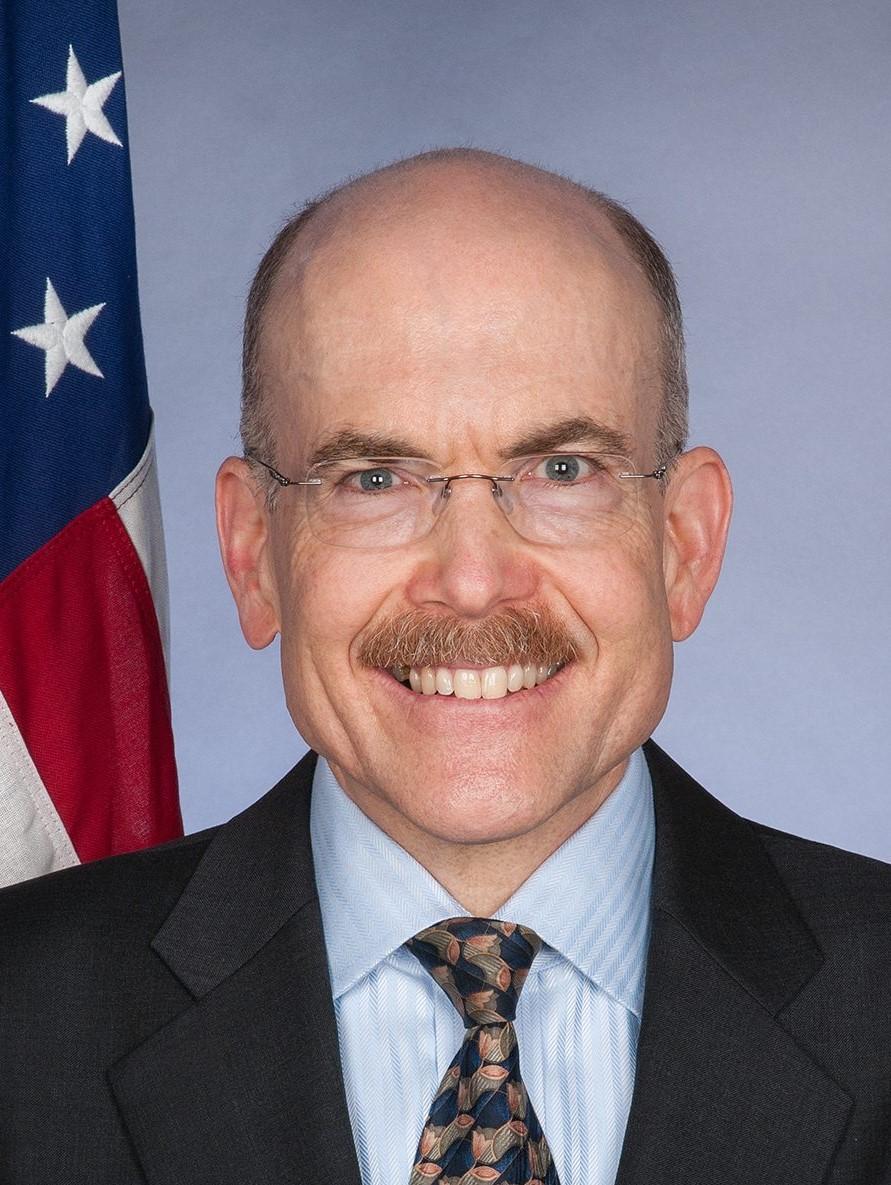
On July 6, Sasakawa USA hosted the second virtual pre-departure briefing for participants of the 2023 Sasakawa USA Emerging Experts Delegation on Women, Peace and Security (WPS). The session featured Ambassador James Zumwalt, who is a distinguished senior fellow (non-resident) at Sasakawa USA. In addition, he is chairman of the Japan-America Society of Washington, D.C. and former U.S. ambassador to the Republic of Senegal and the Republic of Guinea Bissau. Ambassador Zumwalt provided the delegates with a comprehensive overview of U.S.-Japan relations, covering the major milestones and shifts which occurred from World War II to the present day. His remarks provided valuable context for the SEED delegates to understand some of the historical, political, and sociological factors which contribute to the current environment in which the Women, Peace and Security agenda is being implemented in Japan.
Photo: Ambassador James Zumwalt
| |
Rising Indo-Pacific Security Experts (RISE): RISE Event with Major General Hiroyuki Sugai | |
|
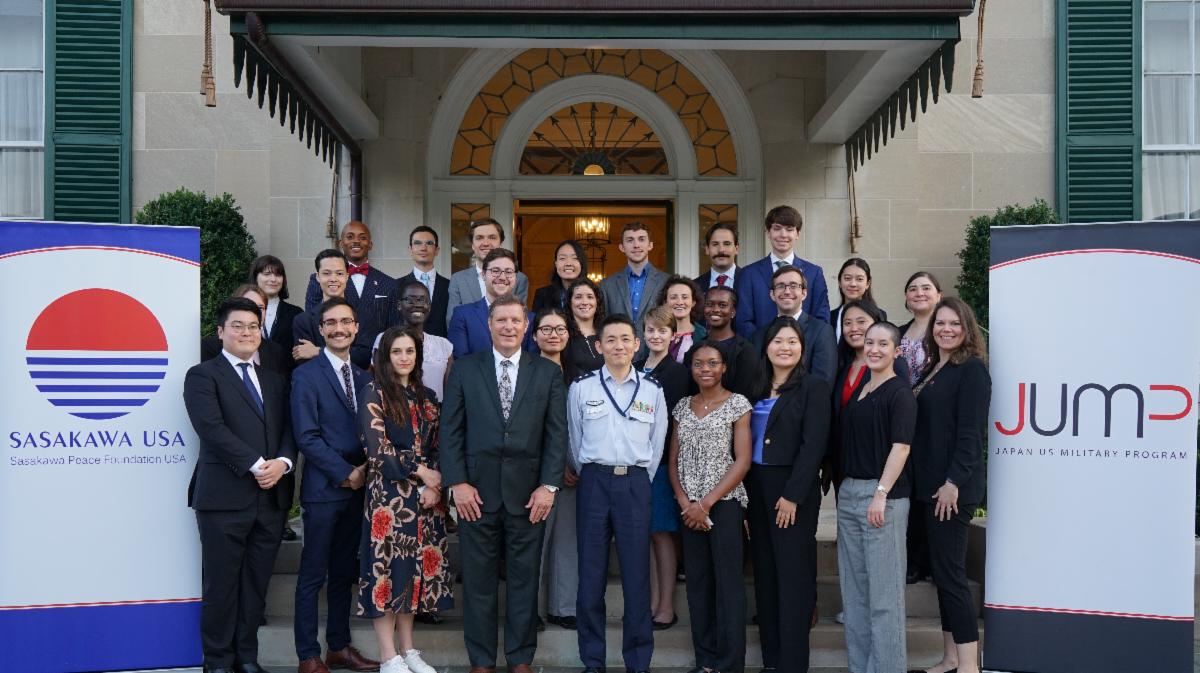
On July 12, Sasakawa USA welcomed Major General Hiroyuki Sugai, defense and air attaché at the Embassy of Japan in the United States of America, to discuss the advancements the U.S.-Japan security alliance has made during his three years in Washington, as well as what the two allies can do to further strengthen the alliance to effectively meet challenges and threats in the Indo-Pacific region. This event was held at the Old Ambassador’s Residence at the Embassy of Japan, with the support of the Defense Section of the Embassy of Japan.
As Major General Sugai prepares to return to Japan, he reflected on his unique career as the first non-pilot defense attaché in Washington, laying out what he has learned, along with the challenges that still need to be met to better strengthen the U.S.-Japan alliance. He concluded his speech by emphasizing the importance of doing the basics right and encouraging the younger generation’s potential. This conclusion was followed by an engaging discussion with members of Sasakawa USA’s Rising Indo-Pacific Security Experts (RISE) group, a network of young and emerging Indo-Pacific security experts, whose research and professional development Sasakawa USA strives to support through networking and dialogue in the Washington, D.C. area. The RISE event's discussion was moderated by Mr. Jim Schoff, senior director of the US-Japan NEXT Alliance Initiative at Sasakawa USA.
Photo: Mr. Jim Schoff (front row, center left) and Major General Hiroyuki Sugai (front row, center) with attendees of the RISE event discussion.
| |
US-Japan NEXT Alliance Initiative: Cyber Summary | |
|
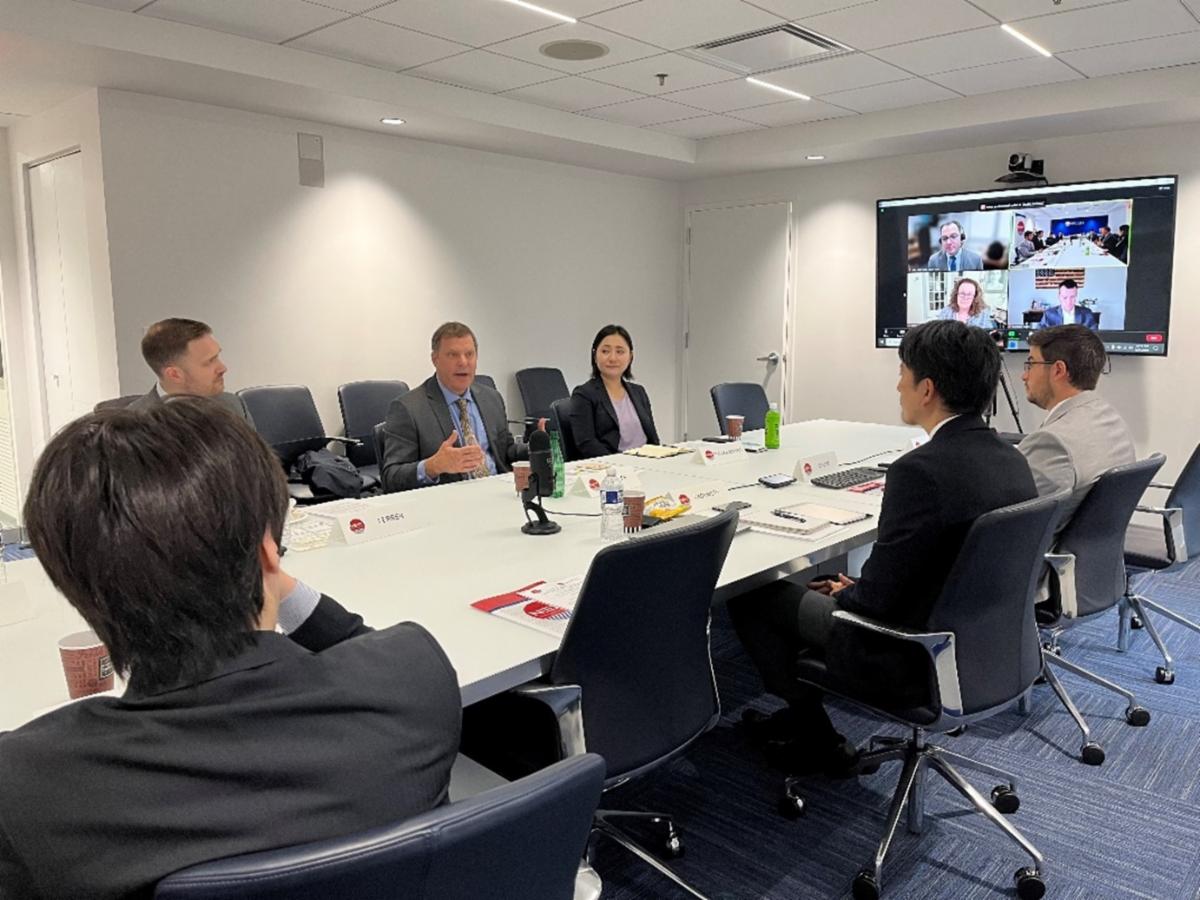
The NEXT Alliance Initiative published a summary of its third bilateral cybersecurity “Alliance Mapping” dialogue that took place on June 21. The hybrid roundtable on Japan’s pending cybersecurity reforms featured Mr. Taro Hashimoto of CSIS and NTT. The published summary recounts key elements of his presentation and subsequent discussion by participants. Topics included recent developments in national strategies, interagency coordination, active cyber defense, and bilateral information sharing. The summary is published on the NEXT Alliance Initiative’s Bilateral Events page. To read the summary, click here.
Photo: Mr. Jim Schoff (center) and discussion participants.
| |
US-Japan NEXT Alliance Initiative: Japanese Translation of C2 Modernization Report | |
|
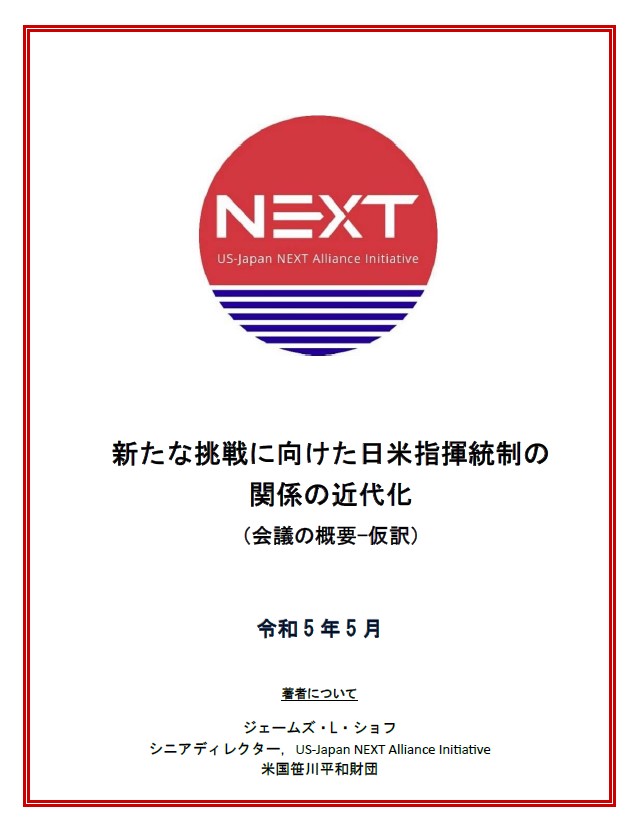
The NEXT Alliance Initiative published a Japanese language version of its summary of the NEXT Alliance Conference (NAC) Tokyo that took place from March 10-13, 2023. Senior Director Jim Schoff authored the summary entitled “Modernizing US-Japan Command & Control Relationships for New Challenges.” The report outlines major challenges and opportunities facing the allies as they begin bilateral discussions about possible new command and control (C2) arrangements, along with various options they could pursue to better align bilateral arrangements with national defense reforms and deter modern threats. The NAC is one of two offsite “retreats” convened each year by Sasakawa USA focused on a priority issue area for the NEXT Alliance Initiative. To read the NEXT Alliance Conference Tokyo summary in Japanese, click here. The summary is the seventh C2 related work published by the NEXT Alliance Initiative since 2022. To learn more about the C2 series, click here.
| |
US-Japan NEXT Alliance Initiative: The ASEAN-Japan Centre Can Be a Model for Washington's New 'ASEAN Center' (Mr. Baron) | |
|
The NEXT Alliance Initiative published Non-Resident Scholar Mr. Sam Baron’s article entitled, “The ASEAN-Japan Centre Can Be a Model for Washington’s New ‘ASEAN Center’” on July 19. Mr. Baron profiles the ASEAN-Japan Centre’s role in improving mutual relations, investment, trade, and tourism. He suggests that the U.S. should follow Japan’s lead and establish a new institution that would make practical contributions to U.S.-ASEAN relations and reaffirm the commitment of the United States to Southeast Asia. For the full article, click here. To read other papers Mr. Baron wrote on foreign policy for the NEXT Alliance Initiative, click here.
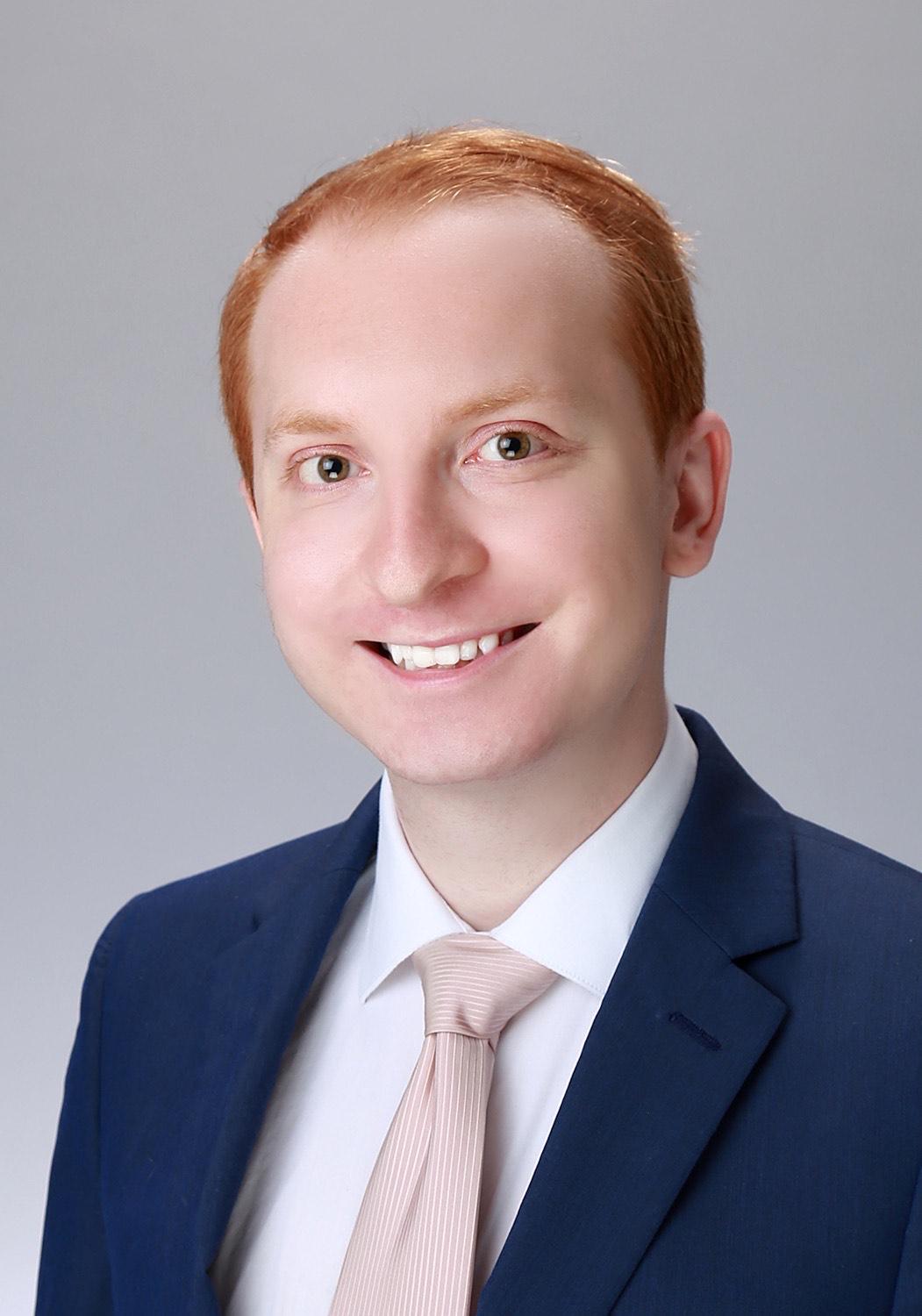
Photo: Mr. Sam Baron
| |
USJETAA: JETs on Japan Publication Series | |
 |  | As part of our partnership with the United States Japan Exchange & Teaching Programme Alumni Association (USJETAA), Sasakawa USA is excited to share some new additions to the JETs on Japan Forum publication series, which elevates the voices of JET alumni working across diverse sectors who can present nuanced and up-to-date insights on U.S.-Japan relations within their area of expertise. Two recent articles focus on the theme of virtual education, the first of which is entitled, “Online Education as a Component of U.S.-Japan Relations,” by Dustin Dye (Okayama, 2008-2011), transfer & agreement project manager at the University of Missouri-Kansas City. The second piece on this theme, “Translating JET Skills into International Virtual Learning Programs: Three Model Initiatives,” was written jointly by Jonathan Brewster (Shiga, 2007-2010), business recruitment manager with the Economic Development Partnership of North Carolina, and Anne Hooghart (Siga, 1989-1990), senior public relations specialist at the Consulate General of Japan in Detroit. The most recent addition to the JETs on Japan series, “Can Japanese Food Culture Help Save the Planet?” was written by Dylan Rhoads (Yamanashi, 1996-1999), who is currently program manager for strategic initiatives at Nintendo of America.
Until September 10, 2023, the JETs on Japan Forum will continue to solicit abstracts from JET alumni who can contribute meaningfully to the current discourse on U.S.-Japan relations, whether that be by exploring shared challenges and opportunities for cooperation between the U.S. and Japan, or by examining U.S.-Japan relations within a broader regional or global context. Information on how to pitch an abstract can be found on USJETAA’s website here.
| |
Japan Political Pulse: PM Kishida Passes on Snap Election for Now, Shifts Strategy amid Sagging Support (Dr. Akimoto) | |
|
In his recent article, “PM Kishida Passes on Snap Election for Now, Shifts Strategy amid Sagging Support,” Sasakawa USA Chairman and President Dr. Satohiro Akimoto examines what the prime minister’s next political move would be after declaring on June 15 that there would be no snap election anytime soon. While Prime Minister Kishida has a full political and diplomatic calendar, he may look for a Cabinet and LDP leadership reshuffle in early fall to revitalize the Cabinet and thus regain support from the general public, which has suffered from mismanagement of key domestic issues such as the My Number ID card system. Furthermore, Dr. Akimoto notes key names to keep an eye on in a Kishida Cabinet and LDP leadership reshuffle if that happens. You can read more of Dr. Akimoto’s article here. Japan Political Pulse (JPP) is a resource for American media, policymakers, academics, and the public with regular and reliable insight and analysis of the trends and state of Japanese politics.
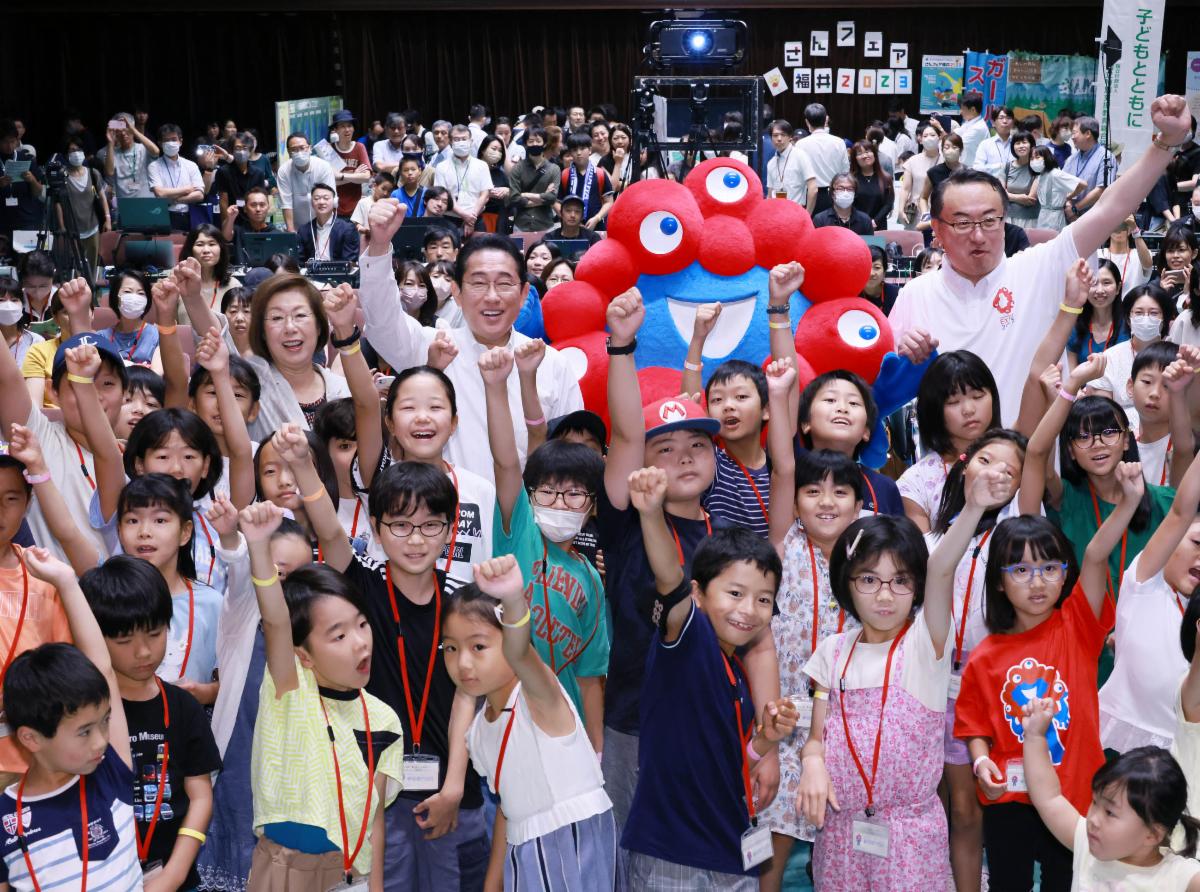
Photo: Prime Minister Fumio Kishida at a Children's Kasumigaseki Tour Day held in Tokyo on August 2, 2023. (Official Website of the Prime Minister of Japan and His Cabinet)
| |
Sasakawa Africa Association (SAA): SAA Opens Office in Washington | |
|
Sasakawa USA is pleased to announce that Sasakawa Africa Association (SAA) has a new presence in Washington, D.C., located within our building at 1819 L Street, NW. Established in 1986, SAA helps countries in Sub-Saharan Africa achieve food security, with offices in Ethiopia, Uganda, Nigeria, and Mali.
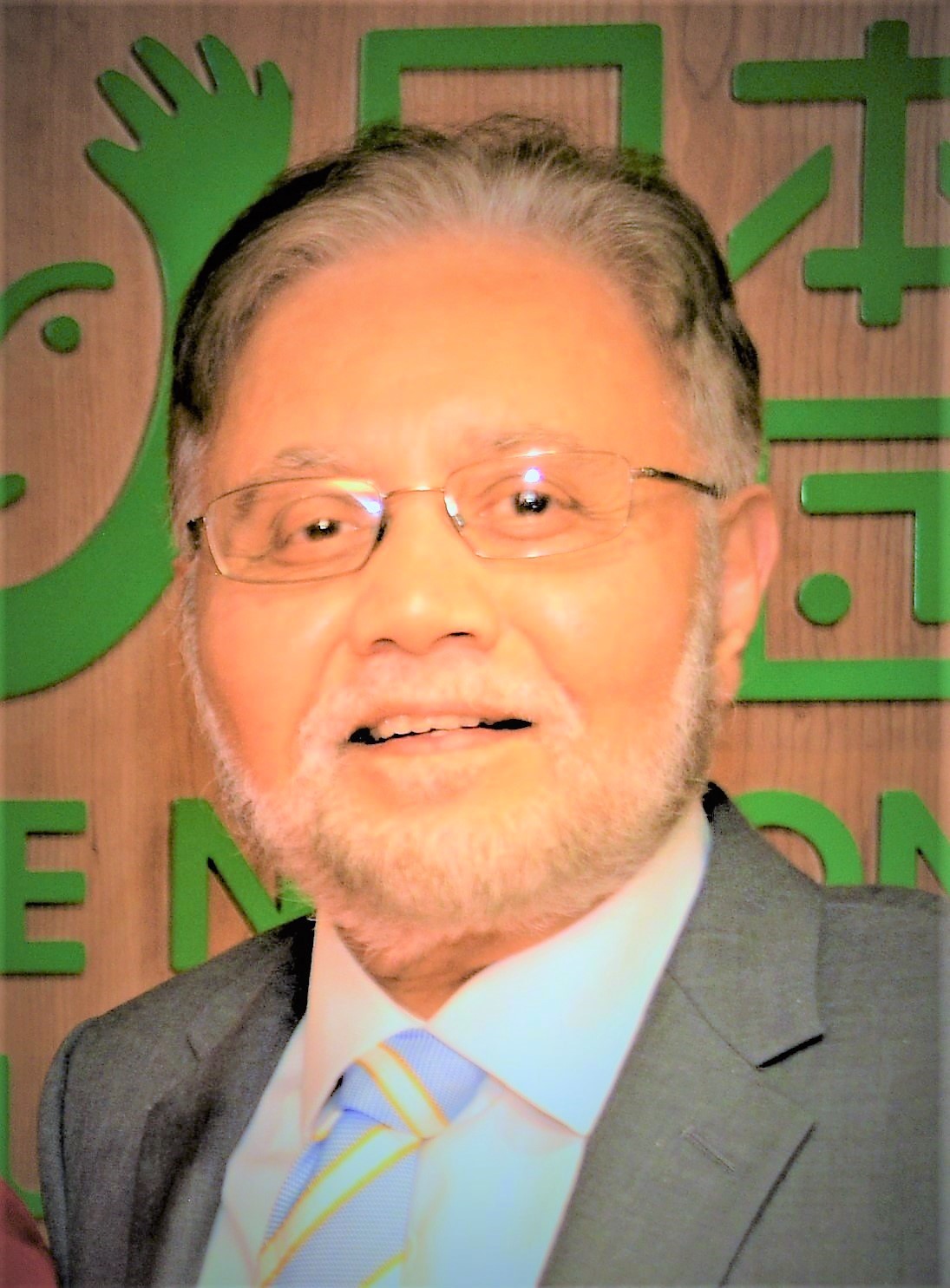
Dr. Amit Roy, chair of the SAA board since July 1, 2023, expressed his enthusiasm about the new liaison office stating, "By establishing a presence within Sasakawa USA’s building, Sasakawa Africa Association aims to foster collaborations, advocate for sustainable agriculture, and address pressing global challenges. This strategic location provides a dynamic platform for SAA to leverage partnerships and resources, promoting resilient food systems and inclusive growth throughout Africa.”
For more information about its initiatives, please visit Sasakawa Africa Association or contact info@saa-safe.org.
Photo: Dr. Amit Roy
| |
|
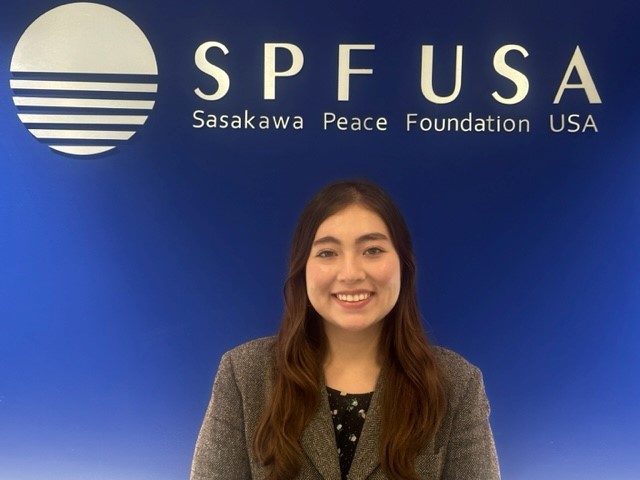
Hello, my name is Hanah Bloom, and I had the wonderful privilege of being the Summer 2023 NEXT Alliance Initiative Intern at Sasakawa USA. I am a rising senior at Miami University of Ohio, double majoring in political science and philosophy with a minor in Japanese. I fostered an interest in U.S.-Japan relations and the Asia-Pacific region through my campus’s Asian American Association, volunteering with the International Model United Nations Association, and studying as an exchange student at Kansai Gaidai University. I am also a heritage learner with a family proudly coming from Suminoe, Osaka.
While assisting Sasakawa USA Senior Director Jim Schoff and Associate Program Officer Erim Gulum, I researched U.S. cybersecurity operations, including efforts to assist global allies in strengthening cyber defense. I was happy to help make progress on NEXT’s cyber mapping tool for U.S.-Japan bilateral cooperation. I also assisted with compiling a history of the alliance’s command and control structure. Through this research, I enjoyed sifting through fascinating source materials at the Library of Congress, exercising my translation skills, and learning more about the evolution of security communications between the U.S. and Japan. I also enjoyed helping with the bimonthly Alliance Digest, where I honed my writing abilities and maintained a consistent pulse on U.S.-Japan issues.
The knowledge I acquired and the skills I developed with Jim and Erim are invaluable. I am incredibly grateful for such patient and professional colleagues who helped me make the most of my D.C. internship opportunity. It is hard to say yet exactly what I will do after graduation next year. I am looking at master's programs, research fellowships, and other opportunities that will allow me to continue security work. Undoubtedly, the NEXT team has supported my growth and provided me with meaningful guidance for my career goals. The entire Sasakawa USA family was always welcoming, kind, and encouraging in my work. I will miss the whole office dearly, and it was such an honor to work alongside them. Thank you so much for everything!
Photo: Ms. Hanah Bloom
| |
|
Sasakawa Peace Foundation USA
1819 L Street, NW
Suite 300
Washington DC 20036
202.296.6694
www.spfusa.org
| | | | |