Zero to Three shares a list of the top ten policy wins for young children in 2025, including state actions to support early learning, growth in paid family medical leave programs, and renewed focus on the critical importance of Head Start. | | |
“Ohio has a child care problem, but it isn't the one TikTokers, YouTubers, political opportunists and xenophobic racists want you to believe.
“Child care workers are underpaid, and child care is far too expensive for Ohio families.”
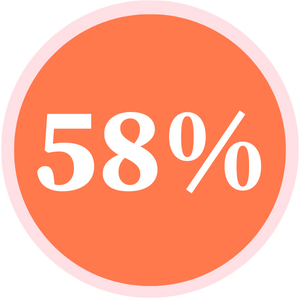
| | | | Action for Children’s 2025 Central Ohio Child Care Provider Survey Report found that a majority of providers surveyed expressed serious uncertainty about the future of their program: 58% reported feeling unsure if they would remain open in the next 12 months without additional public funding. This marks a 10% increase of central Ohio providers experiencing this type of uncertainty since the last survey in 2024. | | |
Child Care Funding
At the close of 2025, allegations that Minnesota child care providers were fraudulently accepting public funds prompted the Trump administration to freeze federal child care funding to states and impose new verification requirements — a move that the director of the National Child Care Association Cyndy Lenhoff cautions “will not fix fraud” but “only destabilize an already fragile system.” Also troubling is that the alleged fraud — prompted by a viral YouTube video whose claims have not been backed by evidence and which led to harassment and threats — appears to have federal policy officials doubling down on their plans to walk back federal regulations allowing states to pay providers based on child enrollment rather than attendance.
| This is not a sound way to make public policy decisions. No matter one’s views or affiliations, this sequence of events and its implications are alarming. A viral accusation video alleging local fraud (for a program that is already heavily audited and regulated) led to a 50-state funding freeze, requiring states to defend their spending, and a current $10 billion hold on funds to five states. Elliot Haspel wrote an excellent primer on the ins and outs of what happened and the likely consequences of new regulatory hurdles and payment delays to states, which threatens an already fragile sector and harms at-risk families and children the most. | | In Ohio, Gov. Mike DeWine reaffirmed that the state’s publicly funded child care program already operates with strict reporting requirements, auditing measures, and systems to prevent fraud, and spokespeople for the state’s Department of Children and Youth indicated they are not worried immediately about losing access to vital federal child care funds. As some state lawmakers called for the Auditor of State to further investigate, and copycat video activists locally are trying to discover fraud by showing up at child care centers, it has forced our policy leaders into the position of needing to spend great time and effort engaging in basic awareness and education with the media and the public. For example, as The Columbus Dispatch reported, “DeWine said Ohio limits who can enter licensed day cares to protect children. Viral videos showed people visiting and attempting to enter facilities, which prompted calls to Columbus police.” DeWine went on to explain, “We're careful with our kids in Ohio, and I think people should expect us to be and should demand that we do that. It shouldn't be a shock when you see something on social media and someone is going, ‘I can't get into this place. No one will let me in.’ Well, hell no. No one should let them in.” | | Our governor is right. Hell no should child care programs have to worry about internet sleuths outside their facility insinuating that financial crimes are occurring because they themselves cannot see or understand the maze of technical reporting requirements, rules, and parameters that govern publicly funded child care so that providers can serve children whose families live in poverty — and who have to go to work as a requirement for that child care subsidy. But also, hell no should policy leaders, providers, and advocates have to pivot so often to defend their existence at a time when the industry has reached what are historically untenable levels — in terms of affordability, access, and workforce challenges. | | |
Kindergarten Enrollment
Ohio lawmakers have changed a policy regarding school districts’ enrollment dates for kindergartners. Previously, districts were allowed to pass resolutions setting a cutoff date by which a child will turn five as either August 1 or September 30. HB 114 attempts to standardize that requirement across the state, such that children must be five years old by the first day of school — or else wait to enroll the following year. Districts set varying start dates, so the requirement will impact families and children differently depending on their district’s calendar. Signal Cleveland examines what the change might mean for children in Cleveland, estimating that around 5,000 fewer children will be eligible for kindergarten next school year, with reductions in school funding at an estimated $50 million due to the change. Note, this change also likely means that more children may need access to prekindergarten slots.
| | Groundwork Ohio is hosting information sessions about their Early Childhood Fellowship which provides training and preparation in early childhood advocacy. The first information session is scheduled for Tuesday, January 13, at noon. | | Crane is offering early childhood educators a free webinar series Making Every Moment Count, in partnership with the Ohio Department of Children and Youth. The professional development modules, each lasting only 30 minutes, offer research-based recommendations that can easily be integrated into classroom activities. The modules are presented live, with video available shortly afterward, and participants can receive OCCRRA credit. | | South Africa is growing its home-based provider network to meet child care needs. The leader of the country’s primary early education advocacy group met with home-providers and advocates in Texas to see how they can learn from practices in the U.S. and around the world. | | The Prenatal-to-3 policy center highlights state legislative actions in 2025 impacting children and families, including in the areas of health, early learning, and economic policy. | | A piece published by The Conversation urges caution around artificial intelligence (AI) in the classroom in the absence of research evidence about its impacts on student learning. The author, Dr. Niral Shah, reminds us that decades of research show that children’s learning and development is primarily a relational process. He writes, “I see the beneficial application of any new technology in the classroom — AI or otherwise — as a way to build upon the social fabric of human learning. At its best, it facilitates, rather than impedes, children’s development as people. As schools consider how and whether to use generative AI, the years of research on how children learn offer a way to move forward.” | | CityHealth, a policy center sponsored by the de Beaumont Foundation and Kaiser Permanente, publishes an annual assessment of policy improvements for 75 major cities in the United States. Both Columbus and Cleveland moved forward in their rankings from bronze to silver in 2025. Columbus was awarded silver in its efforts to offer high quality and accessible early education. | |
This edition was written by Jamie O’Leary and Janelle Williamson.
| | | | |