REMINDER: YOUR SUBMISSIONS ARE ENCOURAGED | | |
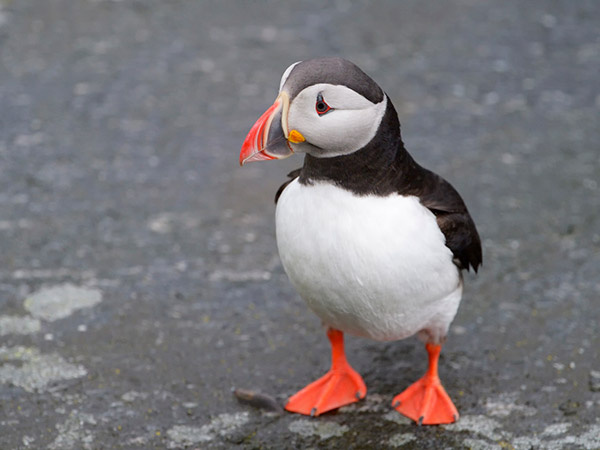
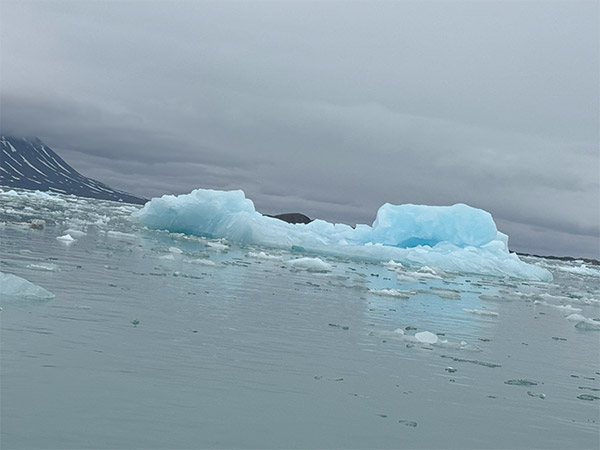
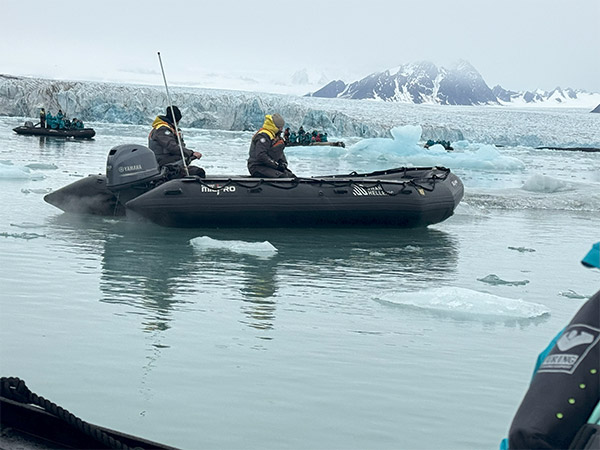
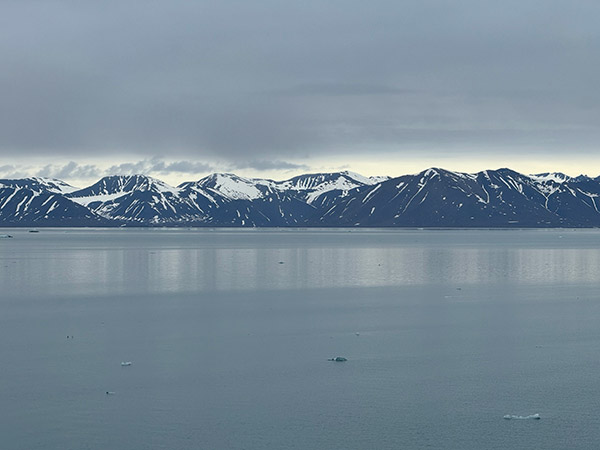
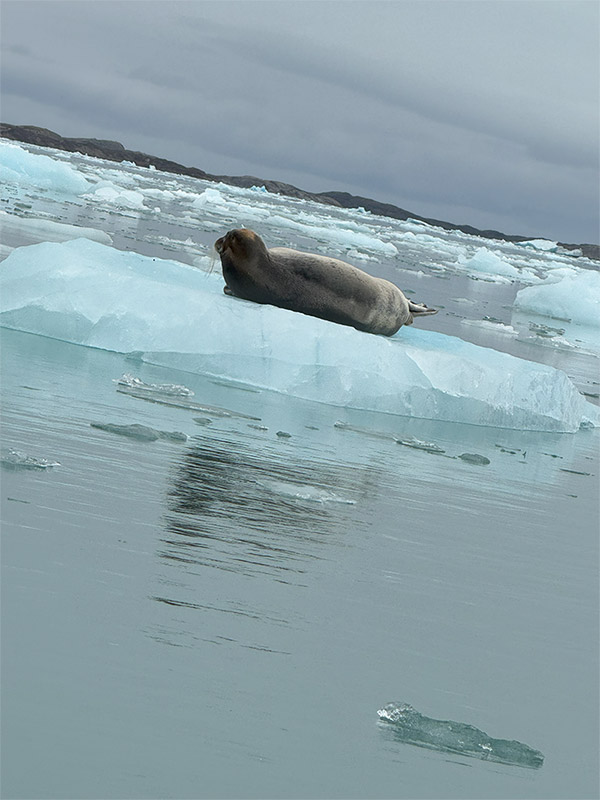
1. This week, I'm starting with a new installment of Where's Beth? I've headed north, all the way up to the Arctic Circle. Check out my photos from the Arctic Ocean in this first report from my cruise around Norway's Svalbard archipelago.
2. In Travel, I've been experiencing Jet Lag on this trip, so I'm including some advice from the CDC on how to avoid and deal with Jet Lag.
3. In Flock Friends, one of the first dancer's I featured in the Flock, the talented Diego Gonzales of the University of Arizona School of Dance has shared a photo from his post-graduation trip to Italy with the Flock.
4. In Gardens, I have with an inspirational story of a man who followed his passion for gardening and, over 27 years, transformed his property into one of the finest private gardens in Britain, simultaneously raising half a million pounds for charity.
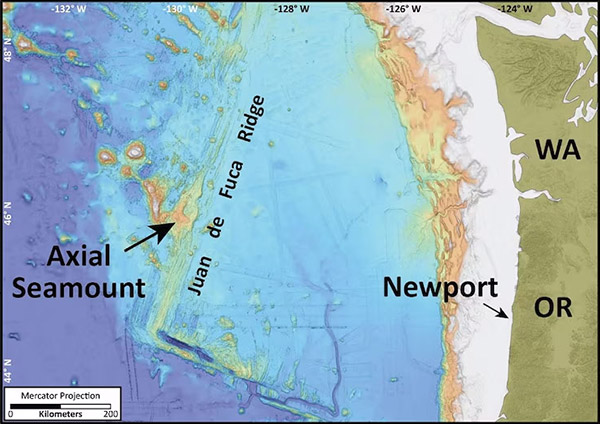
5. One of the Pacific Ocean's most active and studied volcanoes, Axial Seamount, sits on the ocean floor 300 miles west of the Oregon coast and is predicted to erupt again this year.
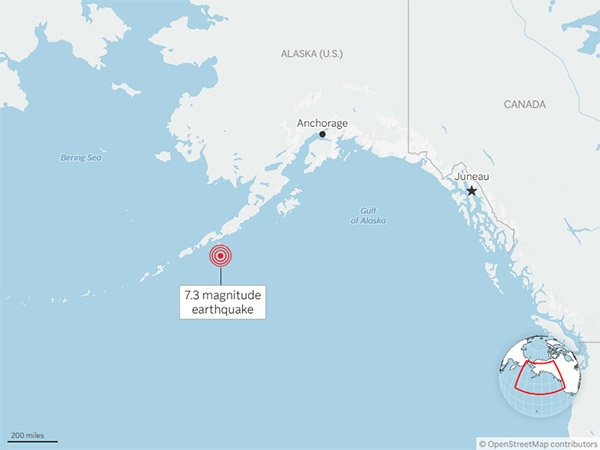
6. A 7.3 magnitude earthquake off the coast of Alaska's Aleutian island chain on Wednesday was felt 600 miles away in Anchorage and triggered tsunami warnings along the Alaska coast.
7. In light of Wednesday's earthquake, I'm including a video on Tsunami Preparedness from the National Weather Service that I first posted in the September 1, 2023, issue of the Flock as part of my series on natural disaster preparation.
8. This week, I'm featuring the sassy flapper Betty Boop in my series on classic cartoon characters.
9. I have some good news on the FLock's spiritual teacher, Dr. Hayward M. Fox's path to recovery after the accident he had earlier in the year.
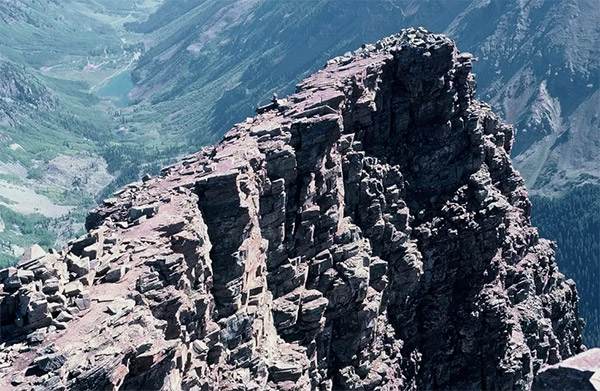
10. In Reaching High, a climber attempting to summit one of Colorado's fourteeners, North Maroon Bells Peak near Aspen, had to be rescued after falling and breaking his leg near the summit.
| | Now, to this week's Flock. | | 1. Where's Beth:? Going Way Up North | | As many of you know, I have been heading north into the Arctic Circle early this week. I'm on a ship circumnavigating Norway's Svalbard archipelago, a group of rugged glacier-covered islands rising out of the Arctic Ocean east of Greenland and halfway between mainland Norway and the North Pole. The islands are home to reindeer, Arctic foxes, polar bears, and seals. This part of Norway is so far North that it has been called the "Land of the Midnight Sun" because, due in part to the Earth's tilt, the Sun never truly sets and is visible 24 hours a day during the Summer months. | | One of the many small icebergs we have passed by. | | My home away from home is the Arctic vessel SH Vega, designed to break through icy waters with large chunks of glacial breakoff and sea ice that float like loose marbles in the Arctic sea. The ship is carrying approximately 150 travelers, including some fellow Americans and others from around the globe. I'm enjoying meeting new kind folks who have a love of exploration and travel. | | This morning's fun was a zodiac excursion. | We will be out in these cold northern waters for 13 days, so stay tuned. | | I don't usually suffer from Jet Lag, even with all of the traveling that I do. I don't think I've had it in years, but as you can see in this picture, I got it bad on this trip. Below is some advice from the CDC on how to avoid Jet Lag before you leave and while you're traveling. | | |
Jet lag is caused by a mismatch between a person’s normal daily rhythms and a new time zone. It is a temporary sleep problem that usually occurs when you travel across more than three time zones but can affect anyone who travels across multiple time zones. Jet lag can affect your mood, your ability to concentrate, and your physical and mental performance. Fortunately, you can take steps to minimize the effects of jet lag.
Before Travel
A few days before you travel, you can begin adjusting your body’s natural clock to the time zone at your destination. Depending on where you are traveling you may want to adjust your sleep patterns to get used to the time change:
- If traveling west, go to bed an hour or two later than usual
- If traveling east, go to bed an hour or two earlier than usual.
Consider scheduling travel to arrive at your destination at least 2 days before any important events, to give your body time to adjust.
Stomach aches and other stomach problems are a symptom of jet lag; eating smaller meals just before travel may help. If you struggle with jet lag, talk to your doctor about taking medicine or other sleep aids to help you sleep.
During Travel
If you are traveling to a time zone that is more than 3 hours different than your normal time zone you should follow the sleep and waking routines of your destination when you arrive. It might help to stay in well-lit areas at your destination during the day. Take any medicine or sleep aids as directed by your healthcare provider to help you sleep at night.
Other steps you can take to help you adjust to the new time and avoid jet lag symptoms:
- Eat small meals to avoid stomach aches or other problems.
- Avoid alcohol as it disrupts sleep.
- Use caffeine and exercise strategically, these may help you stay alert throughout the day, but you should avoid these in the evening.
- Drink plenty of water.
- If you are sleepy during the day, take short naps, no more than 15-20 minutes, to help you feel better during the day, yet still sleep at night.
A combination of these steps will help you overcome jet lag more quickly.
| |
3. Flock Friends: Diego Gonzales
| | I first posted about stand-out dancer Diego Gonzales three years ago when he was a sophomore at the University of Arizona, pursuing his BFA in dance, and again last year, catching up with Flock alums. Diego got that BFA has shared this photo from his post-graduation trip to Italy with the flock. He will soon return to the US and his career in Chicago with a fine dance company. Congratulations, Diego, I know you'll be a hit in Chicago! Please submit photos that you would like included in the Flock using this link. | | 4. Gardens: Man Spends 27 Years Transforming Home Garden | | John Massey has spent the last 27 years pursuing his passion for plants and gardening without a master plan; he has improvised year by year, transforming his property into a destination for garden lovers in the English countryside. | | Man Spends 27 Years Transforming Home Garden into Amazing 4-Season Oasis That's Raised Half-million for charity | | |
A self-taught gardener has spent 27 years transforming the land outside his bungalow into a spectacular four-season oasis considered one of the finest private gardens in Britain.
Stunning pictures show John Massey’s backyard bursting with glorious summer color, 36 miles west of Birmingham, England.
The 76-year-old has spent almost three decades devoted to his labor of love, planting 20,000 flowers, trees, and shrubs across his ten-acre property.
| | |
“The garden hasn’t really been planned, it’s just evolved over 27 years,” said the retired green-thumb. “I started by the house and just moved out—and just kept going and going. I absolutely love it all.
“We’re all plant nutters and it’s a full-time job looking after it. I usually get up at 7am and take the dogs out and I go around the garden until the last walk at night to check for snails and slugs—usually 10pm until 11pm.”
| |
5. Volcanoes: Volcano off Oregon Coast to Erupt this Year
| | There is an active volcano, named Axial Seamount, located on the ocean floor approximately 300 miles west of the Oregon coast, which scientists believe will erupt again in 2025. The 1,100-meter-tall shield volcano sits about one mile below the ocean's surface. Due to its depth and distance from the coast, the volcano poses no danger to life or property. Scientists have been studying the volcano for the past 30 years and now monitor it in real-time through a network of sensors and approximately 660 miles of underwater cables. This research has advanced scientists' ability to predict volcanic eruptions accurately. | | Mile-deep underwater volcano could erupt off West Coast this year, scientists say | | From: ABC News, By: Julia Jacobo, January 29, 2025 | | |
Scientists are predicting that a mile-deep volcano off the U.S. West Coast will erupt this year.
The Axial Seamount, an underwater volcano located about 300 miles off the coast of Oregon, is displaying behavior that indicates an eruption is imminent in 2025, William Chadwick, research associate at the Oregon State University, told ABC News.
The seamount is the most active submarine volcano in the northeast Pacific, and researchers have been monitoring it for the last 30 years, during which it has erupted three times, Chadwick said…
The volcano has been inflating "like a balloon" as molten rock accumulates within, the researchers have observed. Since each of the eruptions have occurred as the volcano reaches a certain level of inflation, volcanologists believe it will erupt within the year.
Scientists are able to monitor the volcano through monitoring instruments and cables that extend from the coast, including seismometers that provide information on the earthquakes occurring near the volcano, Chadwick said.
"And so we actually have real time data from Axial Seamount, which is pretty unusual," he said.
| | |
While the eruption poses no danger to humans, an accurate prediction could put researchers closer to accurately being able to forecast volcanic eruptions, according to researchers.
Volcano eruptions are generally hard to predict outside of a short-term time frame. But using the Axial Seamount and the underwater "natural" laboratory to learn how to forecast volcanic eruptions is much safer than doing so on land, where false alarms could send people into a panic, Chadwick said.
Continuing to monitor the Axial Seamount will give researchers invaluable data to be able to more accurately predict volcanic eruptions -- and further out, the researchers said.
| | 6. Natural Disasters: 7.3 Magnitude Earthquake Hits Alaska | | An Alaska tsunami warning had residents scrambling for high ground after 7.3 magnitude earthquake | | |
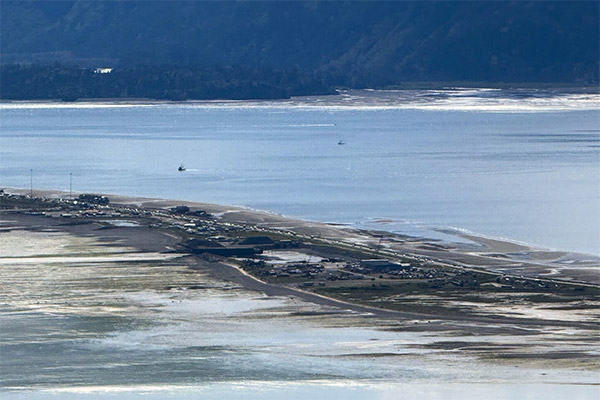
Communities along a 700-mile (1,127-km) stretch of Alaska’s southern coast ordered residents to higher ground after a powerful offshore earthquake Wednesday, but officials quickly downgraded and then canceled a tsunami warning for the region. There were no reports of significant damage.
The earthquake, with a preliminary magnitude of 7.3, struck at 12:37 p.m. local time south of Sand Point, a community of about 600 people on Popof Island, in the Aleutian chain, according to the Alaska Earthquake Center.
There were 40 aftershocks detected within the first three hours, the center said.
| | Cars leave Homer Spit on Wednesday, July 16, 2025, in Homer, Alaska (credit: Tim Hatfield via AP) | | |
The quake was felt as far away as Anchorage, almost 600 miles (966 km) to the northeast.
The National Tsunami Warning Center issued a warning for an area stretching from about 40 miles (64.4 km) southwest of Homer to Unimak Pass, a distance of about 700 miles (1,126 kilometers). Among the larger communities in the area was Kodiak, with a population of about 5,200. The warning was downgraded to an advisory about an hour later, and canceled just before 2:45 p.m.
The highest water level generated by the earthquake in Sand Point was not quite 2.5 inches (6.3 cm) above the tide, the center said.
“There’s no damage at the airport, doesn’t appear to be any damage at the harbor, no damage to speak of, really,” Sand Point Police Chief Benjamin Allen said.
There was some damage — in the form of broken bottles — at the Alaska Commercial general store in town. Manager Vickey McDonald said about half of the store’s alcohol aisle had crashed and shattered.
“I’ve got liquid smoke and barbecue sauce and pickles ... broken on the floor,” McDonald said. “It smells horrendous in here.”
| | 7. From the Flock Archives: Tsunami Preparedness | | This video on tsunami preparedness is part of a series of posts on preparing for natural disasters that I ran in the Flock in August and September 2023. Follow this link for a more detailed guide on how to prepare for tsunamis, including links to safety checklists from the American Red Cross. | | |
Tsunamis: Be Prepared and Stay Safe!
This fast draw video from NOAA explains how to prepare for and respond to a tsunami. If you live, work, or play on the coast, be prepared and stay safe!
| | Betty Boop first appeared in the animated short "Dizzy Dishes" from Fleischer Studios, created by Max & Dave Fleischer, where she was rendered as an anthropomorphic French poodle modeled after Jazz Age flappers. Within a year of her first appearance, she transformed into an entirely human female character, becoming the first female lead in animated cinema and the most popular character from Fleischer Studios. Betty Boop would go on to be featured in 90 theatrical cartoons, comic strips, and mass merchandising, and was also featured earlier this year in Boop! The Musical on Broadway. | |
The Evolution of Betty Boop
Film censorship sparked the beloved cartoon character’s mid-1930s makeover
| | |
In the 1930s, a major entertainment studio brought a German fairy tale about a beautiful princess, an evil queen, a magic mirror and seven dwarfs to the animated screen for the first time. It wasn’t the beloved adaptation you’re thinking of: The first animated “Snow-White” was actually produced by Fleischer Studios in 1933, four years before Walt Disney released his version. And Betty Boop, a charming, baby-faced flapper, was its star.
Created by brothers Max and Dave Fleischer in 1930, Betty—envisioned not as a cartoon version of any single performer, but rather as an archetype of Jazz Age culture—appeared in animated shorts throughout the Great Depression. She was an instant success. Publications compared her to such stars as Greta Garbo, calling her an “overnight hit” and “the most popular personage on the screen today.”
At a time when cartoons were largely opening acts before a featured movie, Betty’s stardom was an outlier. “She’s a big hit,” says Katia Perea, a cartoon scholar at City University New York, “and she’s a big hit in the same way that Felix the Cat is a big hit, where she was drawing audiences to the movie. … They would come for the Betty Boop cartoon.”
| | The enduring image of Betty is a flapper in a strapless minidress, with a garter peeking out above her knee and large hoop earrings in her ears. Beneath that iconic look, however, is a more complex story of aesthetic transformation, from what Heather Hendershot, a media historian at MIT, describes as a “flapper-secretary-adventurer” in the early 1930s to a “middle-class homemaker” by the end of the decade. Betty’s appearance continues to evolve today, with the character donning ripped jeans, joggers and sneakers, and overalls in merchandise and on social media. Her constantly shifting design offers an intriguing case study of how representations of women—including fictional ones—are shaped by censorship, the public’s response and changing conceptions of morality. | | Betty Boop: Snow White (1933) | |
9. Dr. Hayward M. Fox Ph.D.
| | I have a glorious update on Dr. Fox's journey of recovery after his April accident. I am so happy to hear this week that he is finally able to move about. I want to thank my readers for the prayers, thoughts, and positive energy you have sent his way these past months. I also want to remind you to try some of his guided meditations and visit his blog at Institute of Personal and Transpersonal Knowledge, I've posted his most recent entry below. | | 10. Reaching High: Maroon Bells Climber Rescued | | Earlier this month, I posted about Colorado's fourteeners and their appeal to hiking enthusiasts and "peak baggers." Reaching the summit of one of these peaks offers beautiful views, but also comes with inherent risks of injury associated with mountain climbing. This past weekend, a solo climber attempting to summit North Maroon Peak, one of Aspen's Maroon Bells, had to be rescued after falling and breaking his leg. Luckily, the climber was carrying a satellite communicator and was able to send an emergency SOS that included his location. | | Injured climber rescued from Maroon Bells fourteener in Colorado | From: The Denver Post, By: Lauren Penington, July 15, 2025 | | |
A 39-year-old climber was rescued Sunday from North Maroon Peak, a fourteener southwest of Aspen in the Maroon Bells-Snowmass Wilderness Area, sheriff’s officials said.
The climber, who has not been publicly identified, fell and broke a leg in steep and unstable terrain less than 200 feet from the mountain’s 14,022-foot summit, according to a news release from the Pitkin County Sheriff’s Office.
Mountain Rescue Aspen and the sheriff’s office responded to an emergency SOS sent by the climber at about 9:15 a.m. Sunday, sheriff’s officials said.
The climber used a two-way satellite messaging device to communicate with rescue teams, according to the news release.
| | Details to follow next week. | | These Flock regulars are always here for you: | | Don't Be Shy: Share Your Stories! | | I'm looking forward to sharing more of your personal stories - oral, written, or otherwise, as we enter our third year. I'd so love to present them to The Flock, hit a mailbox below to share your story. | | Subscriptions & Idea Submissions
Reminder: Your submissions are always welcomed. | | |
Feel free to forward this email to a friend. If this was forwarded to you and you would like to receive your very own Flock Newsletter, you can sign up here. If you have any questions or suggestions for future Flock resources, don't hesitate to contact me.
Your fan and friend,
Beth
| | | The information and materials contained or referenced in this newsletter are for informational purposes only and not intended to be a substitute for professional medical advice, diagnosis, or treatment. Always consult a physician or other qualified medical professional with any questions you may have regarding a medical condition or treatment and before beginning a new health care regimen. Do not disregard professional medical advice or delay seeking medical advice or care based on anything contained in this newsletter. | | | | |