|
The Santa Monica Bay National Estuary Program (SMBNEP) is one of the United States Environmental Protection Agency’s 28 National Estuary Programs dedicated to protecting and restoring water quality and the ecological integrity of estuaries of national significance across the country. SMBNEP is implemented by The Bay Foundation (TBF) and the Santa Monica Bay Restoration Commission (SMBRC).
Read on for just a few of SMBNEP's 2025 annual highlights! On behalf of SMBNEP, we thank you for your interest and support.
Discover the latest on our initiatives to protect and restore
Santa Monica Bay and its watershed.
| | |
Join TBF and LA Audubon at the Dockweiler Beach Dunes Saturday, April 4, 2026, from 9:00 a.m. to 11:45 a.m. Your participation will help increase biodiversity, and enhance coastal resilience. After the restoration, LA Audubon will host a short bird watch walk.
Can't make it on April 4th? TBF has dune restoration volunteer events across the Los Angeles coastline nearly every Saturday. Your support makes a difference. Please join us!
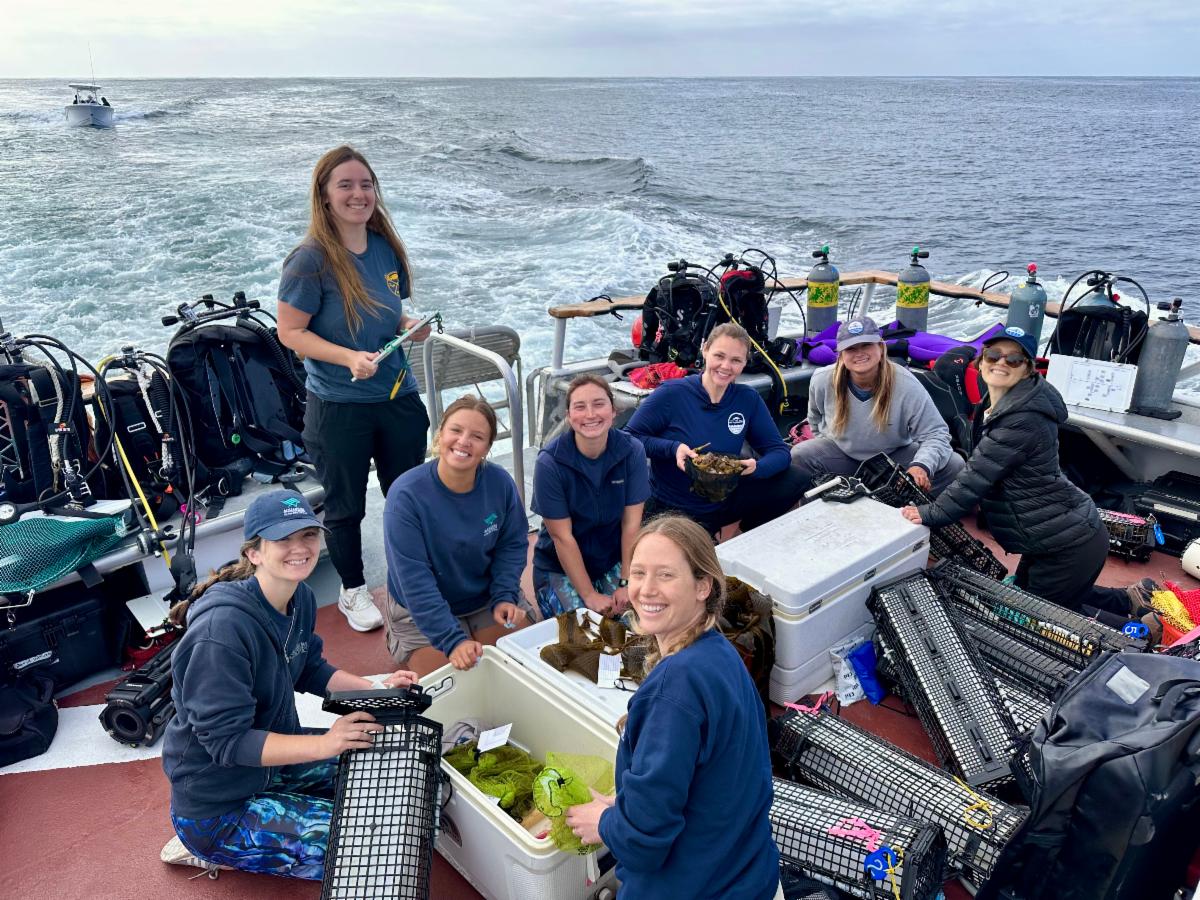
| | Volunteer scouts at the Santa Monica Beach Dunes | | Abalone Recovery: Scaling Efforts with PCOR | | TBF and partners prepping abalone for outplanting | | | |
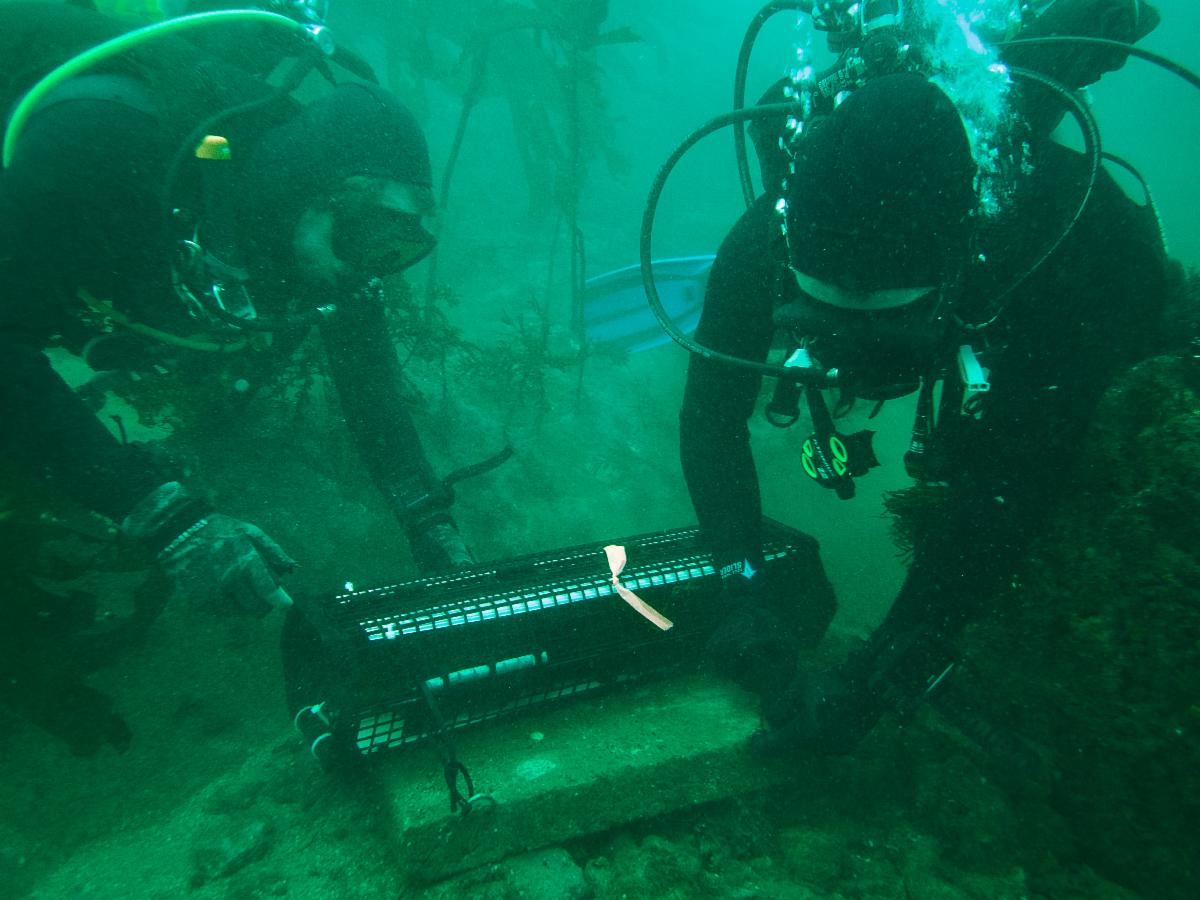
2025 marked a major milestone for abalone recovery. Since 2018, TBF, NOAA Fisheries, and partner organizations have established six abalone restoration sites along Southern California’s coast, from the Palos Verdes Peninsula to Point Loma, including the addition of two new sites in 2025! These sites will support the recovery of red and white abalone populations along the coast.
Additionally, in 2025, TBF and partners successfully outplanted (also known as released in the wild) 1,629 endangered white abalone at two of these new sites off Catalina Island, marking the first time restoration efforts have expanded to the Channel Islands. Expanding restoration across the region not only helps return native abalone species to their historic range but also enhances the long-term success of their recovery.
Our 2025 impact was supported by the Pacific Coast Ocean Restoration (PCOR) Initiative. TBF is proud to be a core partner in PCOR, a collaborative statewide effort focused on recovering and restoring degraded marine ecosystems and species across California. With support from PCOR, TBF will continue to coordinate abalone restoration throughout Southern California, with goals to outplant 10,000 red abalone and 17,500 white abalone at five sites by 2027.
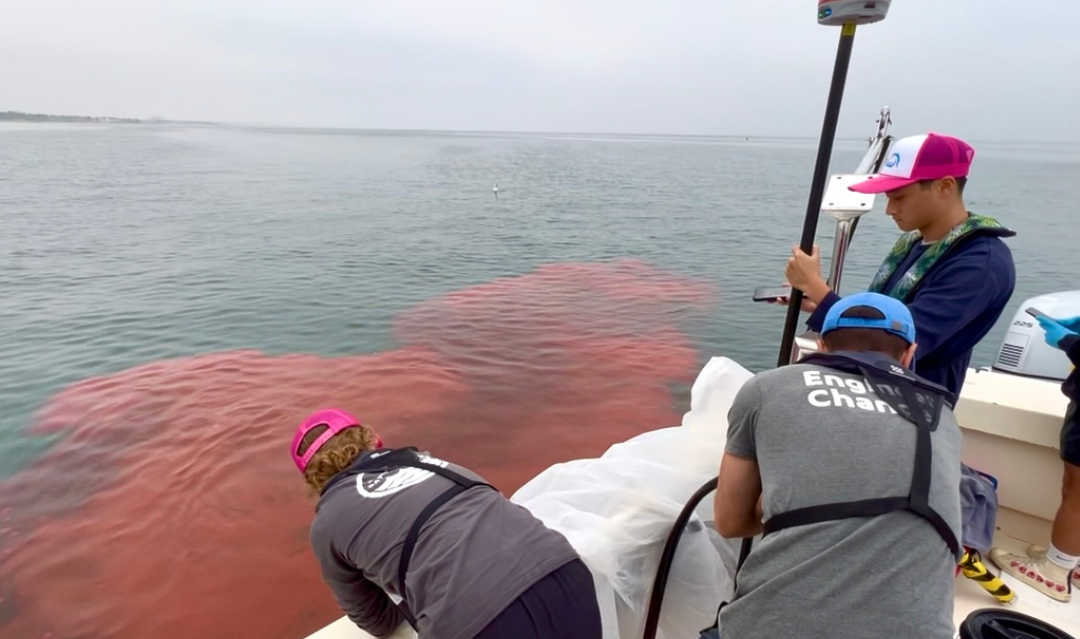
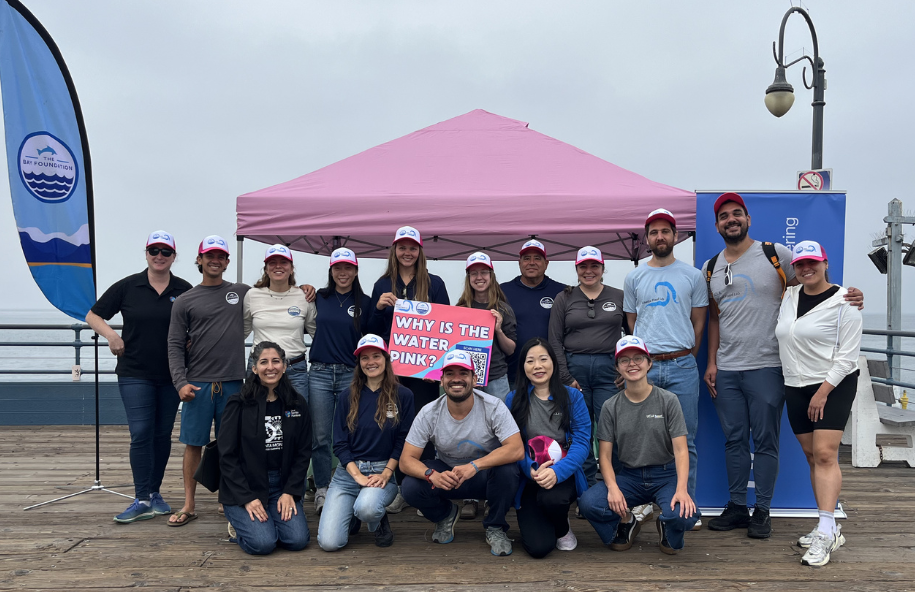
| | UCLA and TBF releasing the pink dye near the Santa Monica Breakwater | | TBF and UCLA at the Santa Monica Pier for the release | | |
In September 2025, beachgoers near the Santa Monica Pier may have noticed bright pink swirls in the water. Researchers from the UCLA Samueli School of Engineering and TBF released a non-toxic, fluorescent pink dye called rhodamine into the water near the Santa Monica Breakwater. This dye acts as a water tracer, allowing scientists to visually track how water moves, mixes, and circulates in the area. By following the dye's dispersion researchers can better understand how the breakwater influences waves and water circulation.
This collaborative research effort with UCLA Coastal Flood Lab, TBF, and the City of Santa Monica aims to understand how the historic breakwater, originally built in 1934, shapes coastal conditions today. Funded by TBF, the research will help inform future restoration, water quality improvements, and coastal resilience strategies that benefit Santa Monica Bay!
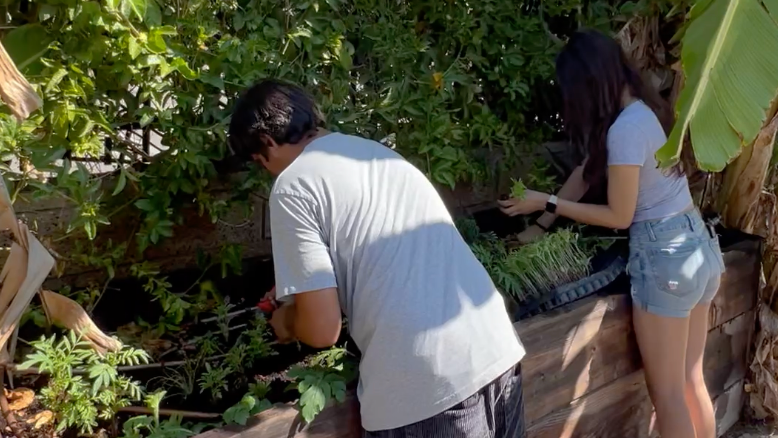
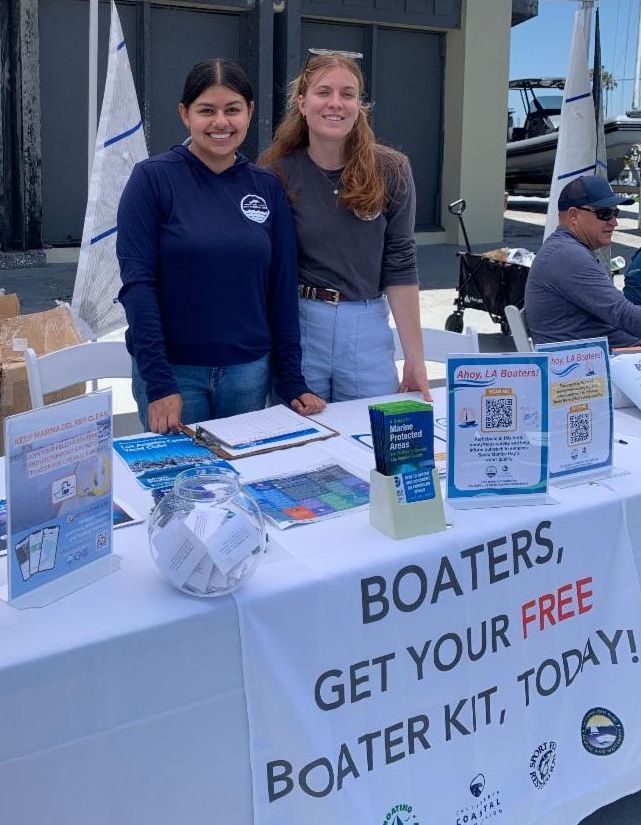
| | Table to Farm Advances Community Composting | | Students at Environmental Charter Middle School-Inglewood maintaining the community garden | | TBF and Environmental Charter Schools’ (ECS) Table to Farm, an educational community composting and gardening initiative, continued to enhance composting across three ECS campuses and maintain the ECS-Inglewood community garden. In 2025, over eight monthly ECS-I community garden volunteer events were hosted, thousands of pounds of food scraps were composted across three school composting systems (ECS-Inglewood, Gardena, Lawndale), and hundreds of individuals were engaged in composting and local food resilience. | | Charting a Course for Clean Boating | | TBF engaging boaters on stewardship in Marina Del Rey | | |
In collaboration with over 70 marinas across 14 Southern California harbors, TBF is helping lead the charge to reduce boat-based pollution and promote clean boating stewardship. In 2025, TBF supported recreational boaters in navigating clean coastal California waters through:
- Distributing over 2,900 California Boater Kits, a free pollution prevention kit for recreational boaters
-
Training 130 excited individuals to become environmental educators and distribute pollution prevention tools and information
-
Sharing information with and learning from Santa Monica Bay boaters about marine composting toilets
-
Conducting a community-based social marketing pilot in Oceanside, California, to encourage stationary pumpout use
| |
-
Monitoring over 70 sewage disposal facilities in Southern California, with 87% of facilities being operational and accessible at the time of surveying
-
Joining the Ocean Sewage Alliance to collaborate on ocean sewage pollution.
These efforts show TBF’s commitment to strengthening pollution prevention tools and infrastructure across the region and to exploring upstream pollution prevention solutions.
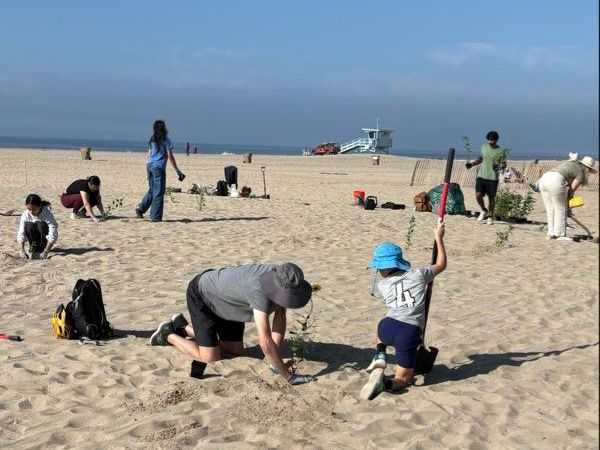
| | Building Dunes with Community | | Volunteers planting native coastal plants at the Santa Monica Beach Dunes | | |
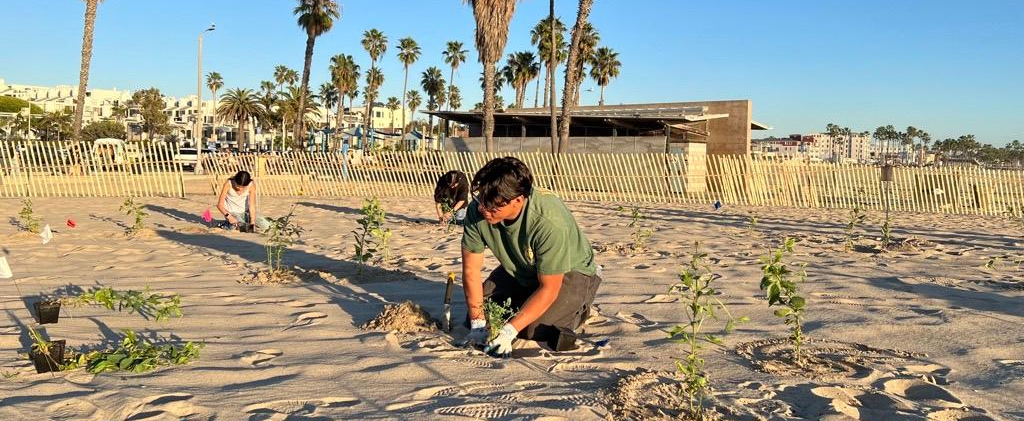
In 2025, coastal restoration brought community and conservation together across the Santa Monica Bay. TBF partnered with Surfrider Foundation, California Conservation Corps, Santa Monica Yoga, and Climate Action Santa Monica, alongside corporate teams from StorQuest, Apollo Global Management, and IMA Financial Group. More than 530 volunteers joined TBF at restoration sites throughout the year.
Together, we planted over 990 native plants, including coastal California poppy and dune buckwheat, the host plant for the endangered El Segundo blue butterfly. These plants will continue to grow, stabilizing dunes and strengthening habitat in Santa Monica and Manhattan Beach.
These coastal restoration efforts are also expanding biodiversity. Western snowy plovers were observed using sand verbena for shelter in Santa Monica, legless lizards were spotted in Manhattan Beach, and the endangered blue butterfly was spotted over the summer of 2025, with TBF hosting informational tours to celebrate it and help educate.
In 2026, TBF is expanding the Santa Monica Beach Dunes by 30 acres. Join TBF and be part of growing dunes, protecting wildlife, and building long-term coastal resilience.
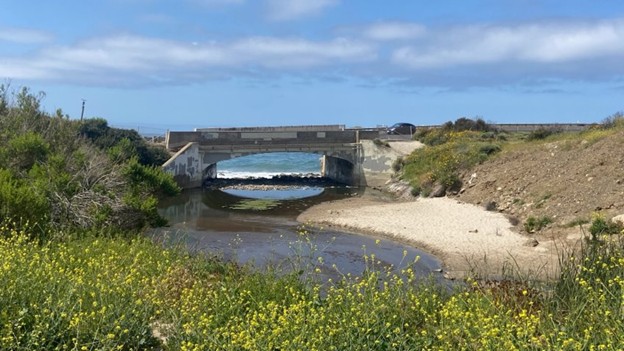
| | Are Santa Monica Bay’s Wetlands Doing Alright? | | Santa Monica Bay's once expansive coastal wetlands are a mere fraction of their former extent. This is concerning since wetlands provide essential habitat for a variety of species, including several protected birds and fish. Fortunately, restored wetlands, like Malibu Lagoon and Zuma Lagoon, are bouncing back thanks to restoration efforts, but all of Santa Monica Bay's wetlands remain vulnerable to the impacts of climate change. Learn more about the state of Santa Monica Bay’s wetlands by checking out the State of the Bay Chapter authored by the Southern California Coastal Water Research Project. The research was funded by the Commission’s Prop 50 grant program. | | National Estuary Program Tech Transfer 2025 | | |
TBF, representing SMBNEP, attended the Association of National Estuary Programs Tech Transfer in Mobile, Alabama, in November 2025. This conference serves as an opportunity for U.S. EPA National Estuary Programs across the country to gather, connect, and exchange technology, ideas, and success stories to help protect and restore the nation’s estuaries.
Thank you to Mobile Bay National Estuary for hosting this fantastic week, and cheers to all National Estuary Programs advancing this vital restoration work!
| |
The Guardian: ‘The forgotten forest’: how smashing 5.6m urchins saved a California kelp paradise
p
Pollution, warm oceans and hungry urchins devastated Pacific kelp. Now, thanks to divers with hammers, one of the world’s most successful rehabilitation projects has helped it rebound... In recent years, scientists have staged a comeback – mounting one of the largest and most successful kelp restoration projects in the world.
| |
Los Angeles Magazine: Santa Monica Pier Water Turning Pink for Testing
In collaboration with The Bay Foundation, UCLA scientists are dyeing the water near the Santa Monica pier pink...
The pink non-toxic dye will be released by the researchers in the coming weeks to learn more about how the beach’s breakwater affects water quality and the surrounding environment.
| |
Smithsonian: Underwater Forests Return to Life off the Coast of California, and That Might be Good News for the Entire Planet
p
Wondrous kelp beds harbor a complex ecosystem that’s teeming with life... Off the coast of Palos Verdes, marine biologist Tom Ford, CEO of The Bay Foundation, operates one of the world’s most impressive kelp restoration projects.
| | | | |