|
Greetings!
I hope you had the opportunity to take a welcome break at the end of the year; here at GCOOS we’re recharged and ready to jump into 2026.
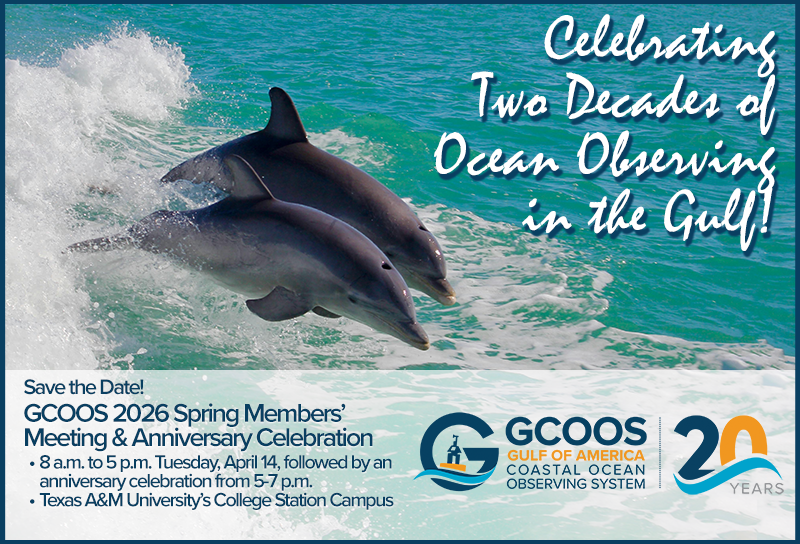
- We’ve set the date and location for our Spring Members’ Meeting and our Anniversary Celebration in April (details below). I’m hoping many of you will be able to join us in person to celebrate 20 years of ocean observing in the Gulf. This is as much your celebration as it is ours, as the network and partnerships that make up GCOOS wouldn’t be possible without you!
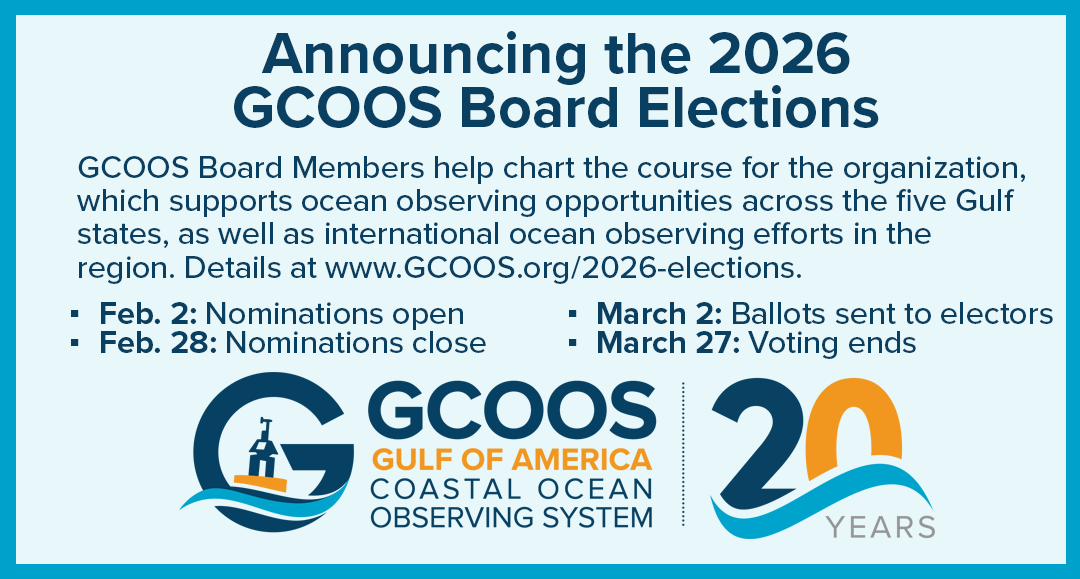
- We’ve set the schedule for the 2026 Board of Directors election. We will be opening nominations in February for the six open seats. The GCOOS Board provides vital support for the Gulf observing system and we hope you’ll consider running for a seat. Self-nominations are not only welcomed, but encouraged!
We’re also already starting to plan for Congressional outreach in 2026 related to FY 2027. To that end, we’re asking for your help. Please share with us how you use GCOOS applications or information available on the GCOOS data portal in your work. A sentence or two explaining how the availability of ocean data makes your research, business or other work possible will help us share the importance of GCOOS and of the nation’s overall IOOS system. We’re also seeking photos and videos of sensors, tools, platforms and people at work for the Gulf’s observing system. Please email me at Jorge.Brenner@GCOOS.org and Nadine Slimak, our communications lead, at Nadine@VettedCommunications.com to share your information any time throughout the year.
Until next month,
| | GCOOS Spring Members’ Meeting and Anniversary Celebration | | The GCOOS 2026 Spring Meeting will take place from 8 a.m. to 5 p.m. on Tuesday, April 14, in the University Club on Texas A&M University's College Station campus. The meeting will be followed by an anniversary celebration from 5-7 p.m. at the Rail Bar at the Texas A&M Hotel and Conference Center. We’re still finalizing the room block, meeting agenda and other details, so please watch this space for special emails about the events! | | |
Nominations for the GCOOS Board of Directors will open on Feb. 2. GCOOS Board members help chart the course for GCOOS, which supports ocean observing opportunities across the five Gulf states, as well as international ocean observing efforts in the region. (View current board list here.) Board representatives are elected by sector.
- Private Sector, one seat open: Businesses and industries privately owned, usually as a means of establishment for profit or nonprofit, rather than being owned by the government.
- Government Sector, two seats open: Individuals representing a federal or non-federal government entity.
- Academic Sector, one seat open: Researchers or faculty members affiliated with an academic institution.
- Outreach and Education Sector, two seats open: Representatives of any sector that are actively involved in ocean education and outreach.
Click here for details and application information.
| | Matt Howard Fellowship Applications | | |
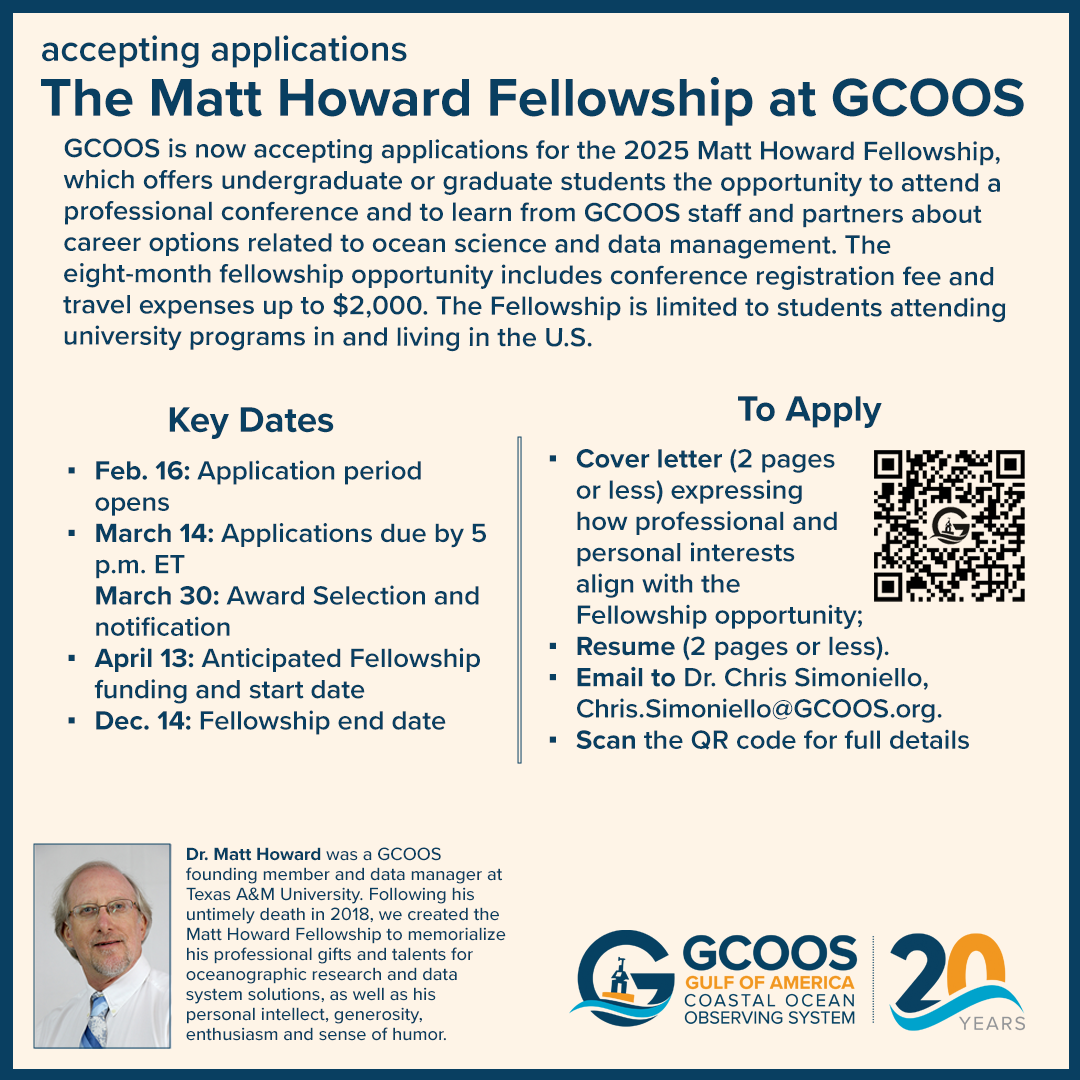
GCOOS will be accepting applications for the 2026 Matt Howard Fellowship from Feb. 16 to March 14. The Fellowship offers undergraduate or graduate students the opportunity to attend a professional conference and to learn from GCOOS staff and partners about career options related to ocean science and data management. The eight-month fellowship opportunity includes conference registration fee and travel expenses up to $2,000. The Fellowship is available only to students attending university programs in and living in the U.S.
| | Ocean Acidification Day of Action | |
The Coastal Acidification Networks (CANs) of the Mid-Atlantic, Gulf of America, Southeast and Caribbean hosted a webinar in recognition of the Ocean Acidification Day of Action on Thursday, Jan. 8, 2026. Dr. Aurea Rodríguez Santiago, Founder and Director, Taller Ecológico de Puerto Rico, and Dr. De’Marcus Robinson, Postdoctoral Fellow, Florida A&M University, and the CAN coordinators delivered presentations highlighting their work and the actions they are taking to better understand and address the impacts of ocean acidification (OA). The webinar concluded with a panel discussion and Q&A, creating space for dialogue on research, community engagement and collaborative actions to advance ocean acidification awareness and solutions. Did you miss it? Watch now!
-
Looking for other ocean acidification-related topics? Check out our webinar archives here.
- Have an idea for an OA-related webinar? Email GCAN@GCOOS.org
| | GCOOS Open Data Portals Create Learning Platform for Students | |
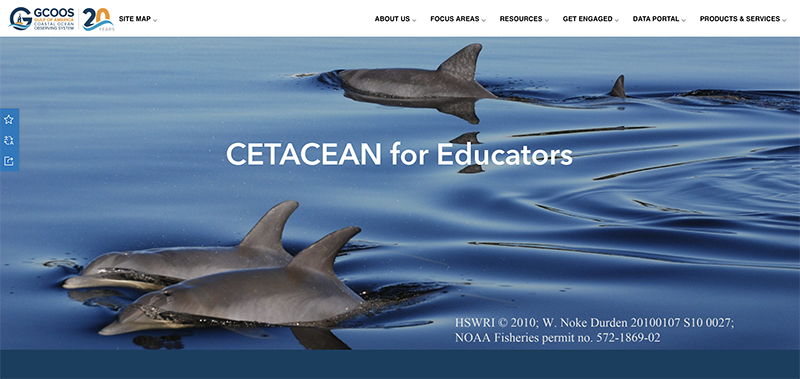
Part of the GCOOS mission is to make quality assured information about the coastal and open ocean waters of the Gulf easily accessible to benefit communities, ecosystems and the blue economy. So when we learned that high school students at Effingham College & Career Academy (ECCA) in Rincon, Georgia, used the CETACEAN portal to help hone their ArcGIS skills, we were thrilled!
GCOOS developed CETACEAN — the Compilation of Environmental Threats, and Animal Data for Cetacean Population Health Analysis — to help support restoration of dolphin and whale populations injured by the 2010 Deepwater Horizon oil spill. GCOOS also created standards-aligned supporting content so teachers could use the information in classrooms to help support science, technology, engineering and math education.
Scientific research students in John Cassell’s classroom used the public dataset to develop story maps about species that inhabit the Gulf. Highlights from this multi-day lesson included a student explaining the impacts of noise pollution on whales, a group exploring heat maps on sea turtle sightings, and spinner dolphins using Gulf currents. The students used these newly developed skills to create additional story maps exploring ecological impacts around Georgia. “Use of the CETACEAN curriculum and other data on the portal for class projects is such a cool example of how GCOOS is reaching multiple people across ages and disciplines,” said Megan Howson, GCOOS Marine Mammal Biologist and Data Scientist. Dr. Chris Simoniello, GCOOS Outreach and Education Manager added, “ECCA is an excellent example of how real-world, hands-on project-based learning is contributing to meaningful STEM education aligned with technical workforce needs. Kudos to Mr. Cassell and his students for the thoughtful usage of the available data."
| | Loop Current Research Featured on NPR Podcast | | |
Sea Change, a podcast produced by WWNO/WRKF for National Public Radio, recently featured research on the Gulf’s Loop Current funded by the Gulf Research Program. The episode focused on how currents connect us, how they operate as “thermostats” for the globe, and why, more than ever before, we need to understand them. Scientists featured in the episode are paleo oceanographer Dr. Audrey Morley from the University of Galway, oceanographer Dr. Amy Bower from the Woods Hole Oceanographic Institution, oceanographer and GCOOS member Dr. Steve DiMarco from Texas A&M, and oceanographer Dr. Scott Glenn from Rutgers University.
-
Find it where you get your favorite podcasts or click here listen now.
| | |
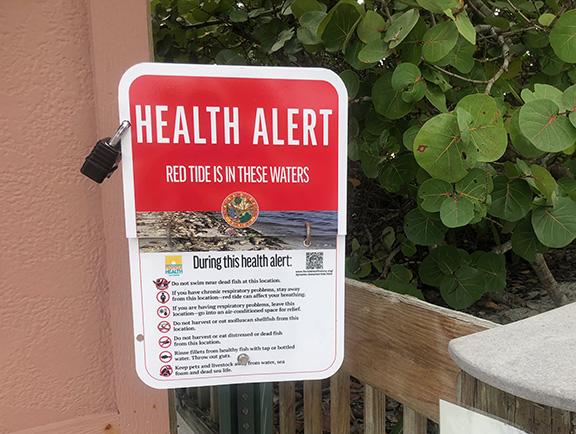
GCOOS Member the Sanibel-Captiva Conservation Foundation (SCCF) has teamed up with the Sarasota, Florida-based Roskamp Institute to study the health impacts of aerosolized toxins from Florida red tide caused by Karenia brevis. Roskamp is a nonprofit organization focused on finding causes and treatments for neuropsychiatric and neurodegenerative diseases, including Alzheimer's. This current research is exploring whether a common genetic factor — the apolipoprotein E (APOE) ε4 allele — makes certain individuals more vulnerable to effects like headaches, dizziness, confusion, fatigue, or memory problems. “Partnering with SCCF once again for this critical red tide study allows us to build on a strong foundation of research and community engagement,” said Laila Abdullah, Ph.D., a Roskamp scientist leading the study. “It is important to test participants both during blooms and outside of blooms so that we can see the differences.”
|
| UG2 Workshop Registration, Abstract Submission Open | | |
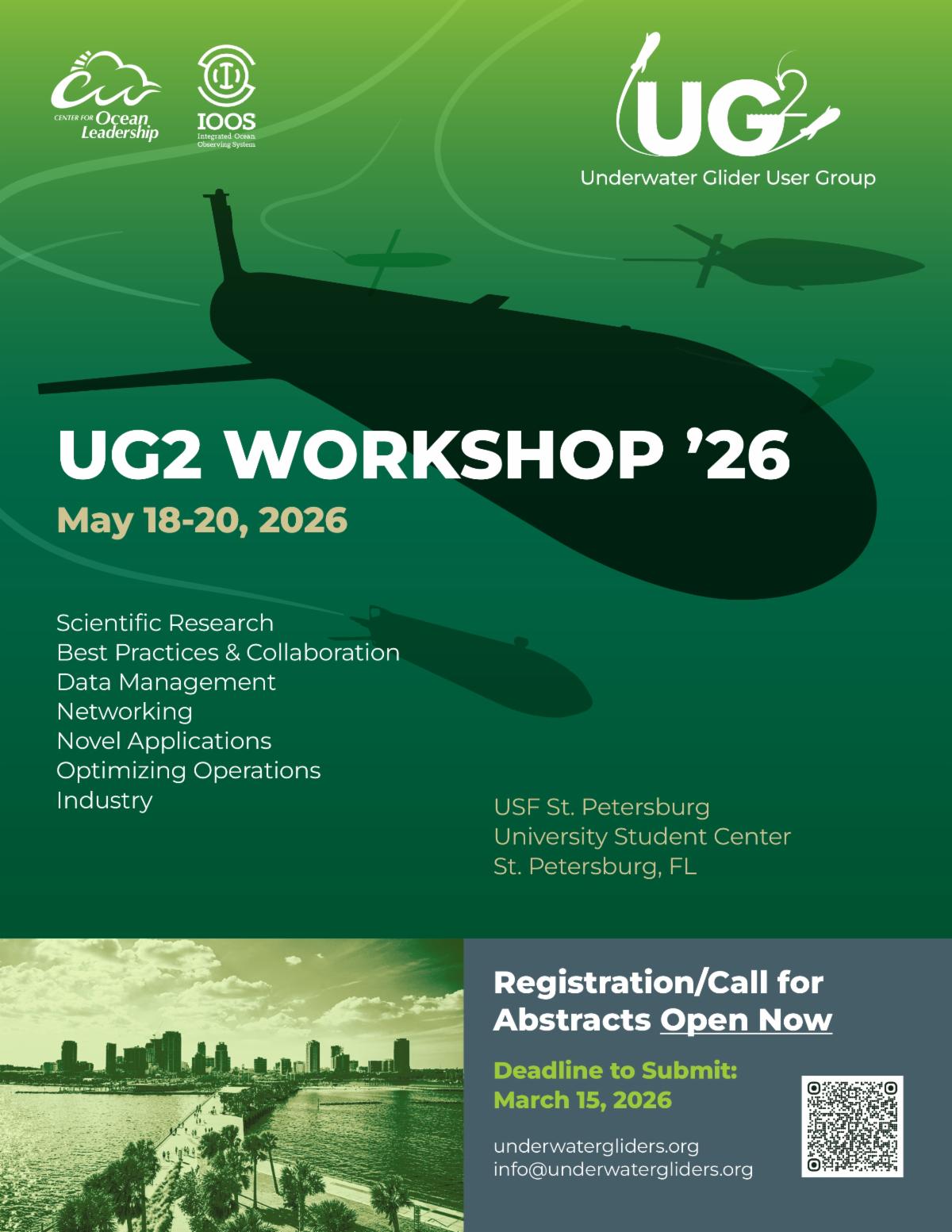
Registration and the call for abstracts have opened for the next workshop of the Underwater Glider User Group (UG2). The meeting will take place May 18-20 at the University of South Florida, St. Petersburg, Florida.
- Abstract submission deadline is March 15
-
Details & registration
-
Hotel: The hotel block is located at the Hilton St. Petersburg Bayfront, 333 1ST Street South, St. Petersburg, FL 33701. Rooms are limited. Click here
| | Radiowave Operators 2026 Workshop | | |
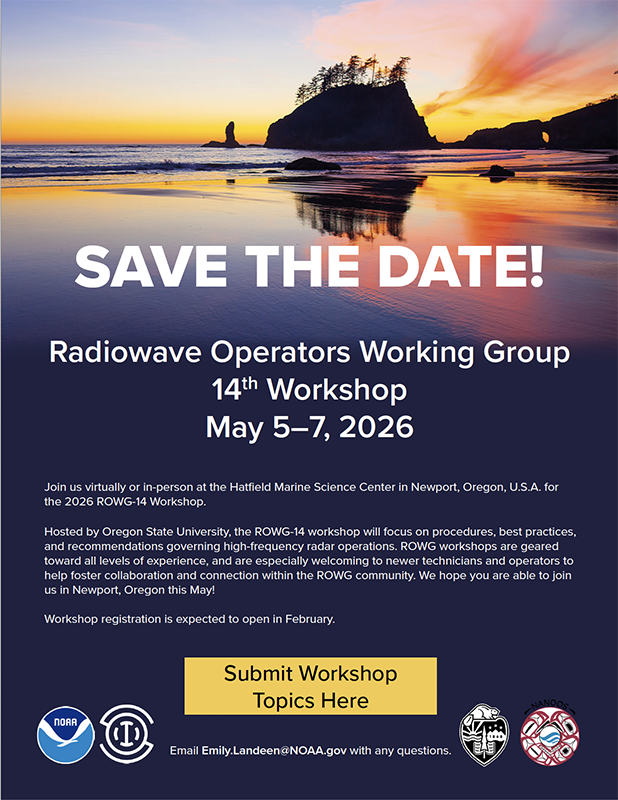
The Radiowave Operators Working Group (ROWG) Steering Committee has announced the date and location for the 14th workshop (ROWG-14): May 5-7 at the Hatfield Marine Science Center in Newport, Oregon, hosted by Oregon State University. Registration and the workshop are free. (Attendees cover their own travel, lodging, meals.)
-
The Committee is also accepting workshop ideas here.
- The hybrid, three-day event will enhance coastal HFR operators' knowledge and technical skill through:
- A "manufacturer’s day" where manufacturers highlight best practices for use of their sensors, new products, and brand-specific updates;
- Two-day workshop that will work to improve procedures that govern HFR operations (e.g., site logistics; processing to component vectors, total vector products and data management, etc.), and provide recommendations to users, developers, manufacturers, and program managers for HFR operations; and
- Networking opportunities to socialize and foster collaboration between new and experienced HFR operators.
Questions? Email Emily Landeen at Emily.Landeen@NOAA.gov.
| | |
U.S. Integrated Ocean Observing System (IOOS)
IOOS Seeks Google Summer of Code Ideas
| | |
IOOS is seeking project ideas for its application for the Google Summer of Code (CSoC), a global, online program focused on bringing new contributors into open-source software development. GSoC Contributors work with an open-source organization on a 12+ week programming project under the guidance of mentors.
To have the best chance of being accepted as a participant, IOOS is seeking quality projects ideas and mentors from its extended DMAC community to include in its application by the February deadline. Project ideas need to include basic background information (project description and purpose, expected skills, mentor names), and draft or early project ideas are welcome. If IOOS is accepted for the 2026 program, project ideas can be further refined or improved over the next month until the contributor application period begins in March. Stipends are available to contributors.
-
Click here for more information about being a GSoC mentor
-
Submit your project idea for GSoC 2026 by filling out this GitHub form
Special notes
- Non-IOOS affiliates are welcome as long as your software is open source and is used for oceanography or ocean data management.
- Multiple mentors can mentor a single contributor project, so teams of mentors are encouraged, however it is recommended that an individual mentor only mentor one project.
- Submitting multiple project ideas is encouraged. Ideas will be further refined in April during the project ranking phase and potential mentors will have to select a single project to put forward at that time.
Deadline/Questions
| | |
Gulf of America Alliance (GOAA)
Abstract Submission Opens for Tools Café
| |
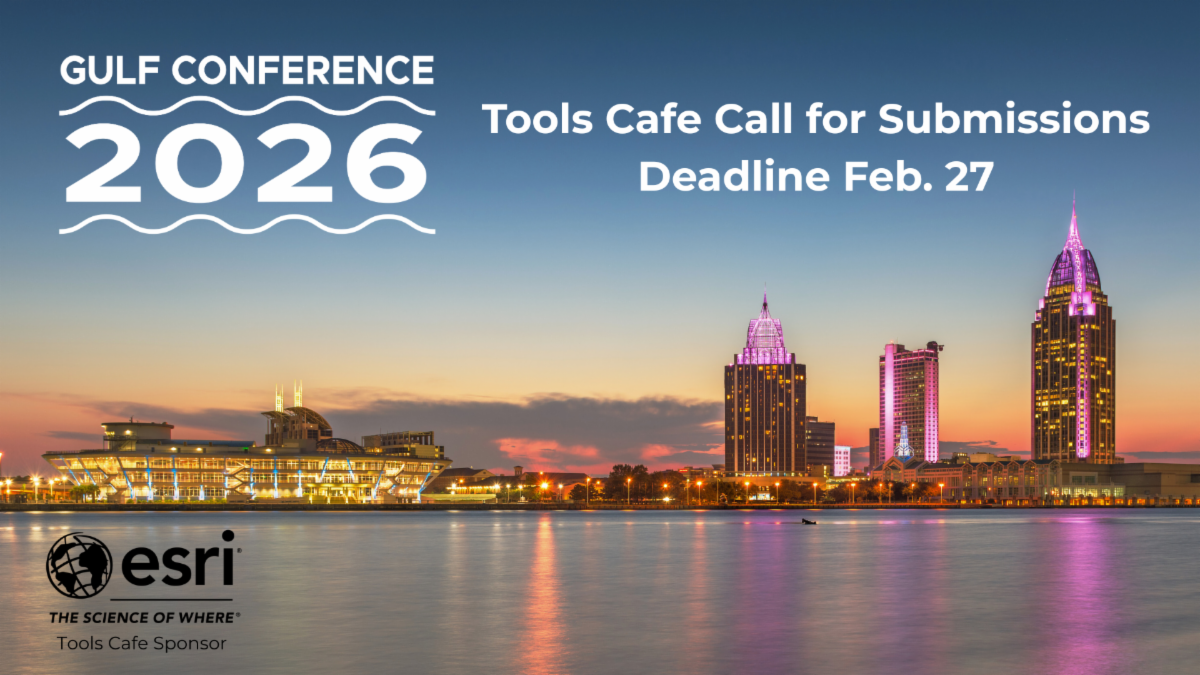
The GulfCon Program Committee has opened submissions for the 2026 Tools Café planned for Wednesday, May 6, during the 2026 Gulf Conference in Mobile, Alabama. The Tools Café is an opportunity for presenters to offer attendees a hands-on interactive experience to showcase their tools and explain how they work.
| Funding Opportunity to Support Gulf Biodiversity | |
GOAA is administering a new program funded by Shell that will benefit the integrity of the Gulf of America through coastal conservation, restoration, and management of species and habitats. Funding is available to implement projects that make a positive impact on biodiversity in the Gulf and meet actions in Governors' Action Plan IV.
Successful projects will demonstrate a measurable impact on species and/or critical habitat (e.g. sea turtle nesting beaches, wildlife foraging and resting areas, estuarine and marine areas). Up to $400,000 is available and the deadline to apply is Jan. 30, 2026.
| Webinar Series: Data & Monitoring Team's Gulf Mapping Network | |
GOAA’s Data & Monitoring Team Gulf Mapping Network is hosting a webinar series to coordinate and communicate essential mapping needs and information for the Gulf region. Upcoming webinars include:
- Jan. 21: Coastal Change Analysis Program for Regional Land Cover Updates
- March 18: Mapping Tools and Digital Elevation Models
- May 20: Making Data More Accessible — State Repositories
- July 15: Making Data More Accessible — Federal Repositories
-
Details & registration
| State of the Alliance Webinar | | |
GOAA will host is annual State of the Alliance webinar at 2 p.m. CT/3 p.m. ET Thursday, Jan. 22. Executive Director Laura Bowie will give an overview of the Alliance and a preview of what’s ahead in 2026.
| | New Communications Director | | |
GOAA has welcomed David Lee Simmons as its new Communications Coordinator. He brings years of experience as communications professional with work in governmental and non-profit spaces, most recently as the Director of Communications for the New Orleans Regional Transit Authority. He also served as Deputy Communications Director to New Orleans Mayor LaToya Cantrell. His environmental experience includes work as Communications Director for the Chattahoochee Riverkeeper in Atlanta, and on the LA SAFE coastal adaptation initiative with Foundation for Louisiana. He lives in New Orleans.
Welcome aboard!
| |
|
Central & Northern California Ocean Observing System (CeNCOOS)
Mobilizing Biological Data for Species Health
| | |
Like GCOOS, our IOOS colleagues at the CeNCOOS Regional Association are collaborating with the U.S. Marine Biodiversity Observation Network (MBON) to mobilize long-term biological and ecological time-series, making these critical datasets easier to discover and use through platforms like the Ocean Biodiversity Information System (OBIS). Thanks to a recent synergistic effort with the California Collaborative Fisheries Research Program (CCFRP), fisheries data are now openly available through the free, interactive CalOOS Data Portal.
-
Wondering which locations along the California coast have the highest Catch Per Unit Effort? Explore the data here
All MBON project teams are working to improve access to a wide range of marine life data to support research, management and a better understanding of U.S. coastal ecosystems.
-
Biological data for the Gulf processed as part of GCOOS MBON activities is available on our ERDDAP servers here.
- Mobilization of the raw MBON data that are available in the GCOOS ERDDAP to the Global Biodiversity Information Facility (GBIF) Integrated Publishing Toolkit (IPT) and eventually to the GIF Ocean Biodiversity Information System (OBIS) has begun (https://doi.org/10.15468/wecfwf). Coordinating closely with the NOAA IOOS office, additional GCOOS data are in the pipeline for publication to GBIF OBIS in 2026.
| | |
Gulf Research Program (GRP)
Applications Open: Science Policy Fellowship
| | |
The GRP has opened applications for its Science Policy Fellowship, which helps scientists hone skills by putting them to practice for the benefit of Gulf Coast communities and ecosystems. Fellows gain first-hand experience as they spend one year on the staff of federal, state, local, or non-governmental agencies in the Gulf region.
Energy Transition Grant
The GRP is offering Workforce Development for the Energy Transition grants to contribute to the development of a prepared workforce and to increase the scientific literacy of Gulf state residents. The 2026 cycle will support development of programs that will enable participants to acquire skills, knowledge and credentials to enter careers involved in the decommissioning of orphaned and abandoned oil and gas wells. Applicants must request between $100,000 and $750,000 for one-to-three-year projects that are sustainable, data-driven, industry-engaged and will provide education and training opportunities for participants without a bachelor’s degree and ready those participants to become part of the orphaned and abandoned well-decommissioning workforce.
| | |
-
GOAA Program: Coordinator (O&E)
-
Sarasota Bay Program: Science and Restoration Manager
-
University of West Florida: Associate Professor
-
The Nature Conservancy: Texas State Director
-
Hello.gov: Sr. Cloud and Data Engineer
- Mote Marine Laboratory
-
University of South Florida:Faculty Position in Aquatic Exotoxicology
Postdoctoral Positions:
-
Monterey Bay Aquarium Research Institute: Postdoctoral Fellowship
-
National Research Council: Research Associateship Programs Postdoctoral and Senior Research Awards
-
Mississippi State University: Postdoctoral Associate
-
Downeast Institute: Research Scientist
Fellowships:
-
National Academies of Science, Engineering and Mathematics: Early Career Fellowships
- Department of Defense: Visualization of Coastal Data, Coastal Vulnerability Assessment Fellow
| |
-
Gulf of America Alliance: Biodiversity Net Positive Impact
-
2026 US HAB CTI: Funding Opportunity
-
National Oceanic and Atmospheric Administration: Ernest F. Hollings Undergraduate Scholar
-
National Academies of Sciences, Engineering and Medicine, Gulf Research Program: Empowering K-8 Through Place Based Education
-
Gulf of Mexico Alliance: Increasing Participation in Clean and Resiient Marine Programs
-
The National Academies of Sciences, Engineering, and Medicine: Early Career Research Fellowship
| | 23-26: Marine Technology Society Buoy 2026, St. Petersburg, Florida | | 14: GCOOS Spring Meeting and 20th Anniversary Celebration, College Station, Texas | | 4-7: Gulf Conference 2026, Mobile, Alabama, Registation is now open | 5-7: Radiowave Operators Working Group Workshop, Hatfield Marine Science Center, Newport, Oregon. Hybrid event. Submit workshop ideas here. | | Dr. Jorge Brenner, Executive Director • Marcus Ogle, Associate Director • Dr. Uchenna Nwankwo, Oceanographer • Dr. Chris Simoniello, Outreach & Education Manager • Dr. Natalia López Figueroa, GCAN Coordinator and GCOOS 2025-26 Gulf Science Policy Fellow with the National Academies of Sciences, Engineering and Medicine • Felimon Gayanilo, Systems Architect, Co-Data Manager • Bob Currier, Product Developer, Co-Data Manager • Pallavi Tummeti, GIS Administrator and Developer • Tuomo Saari, Scientific Computing Specialist • Xiao Qi, Scientific Computing Specialist • Megan Howson, Marine Mammal Biologist and Data Scientist • Sandeep Jilla, Software Developer • Grant Craig, Project Manager and HABscope Volunteer Coordinator • Nadine Slimak, Public Relations & Content Marketing, Vetted Communications, LLC • Laura Caldwell, Program Assistant | | | | |