Bytes and Insights Logo

Learn21's Weekly EdTech Update

July 17, 2025

Ready, Set, Reboot: A Field Guide for Tech Teams Before the First Bell Rings

by Kevin Ghantous

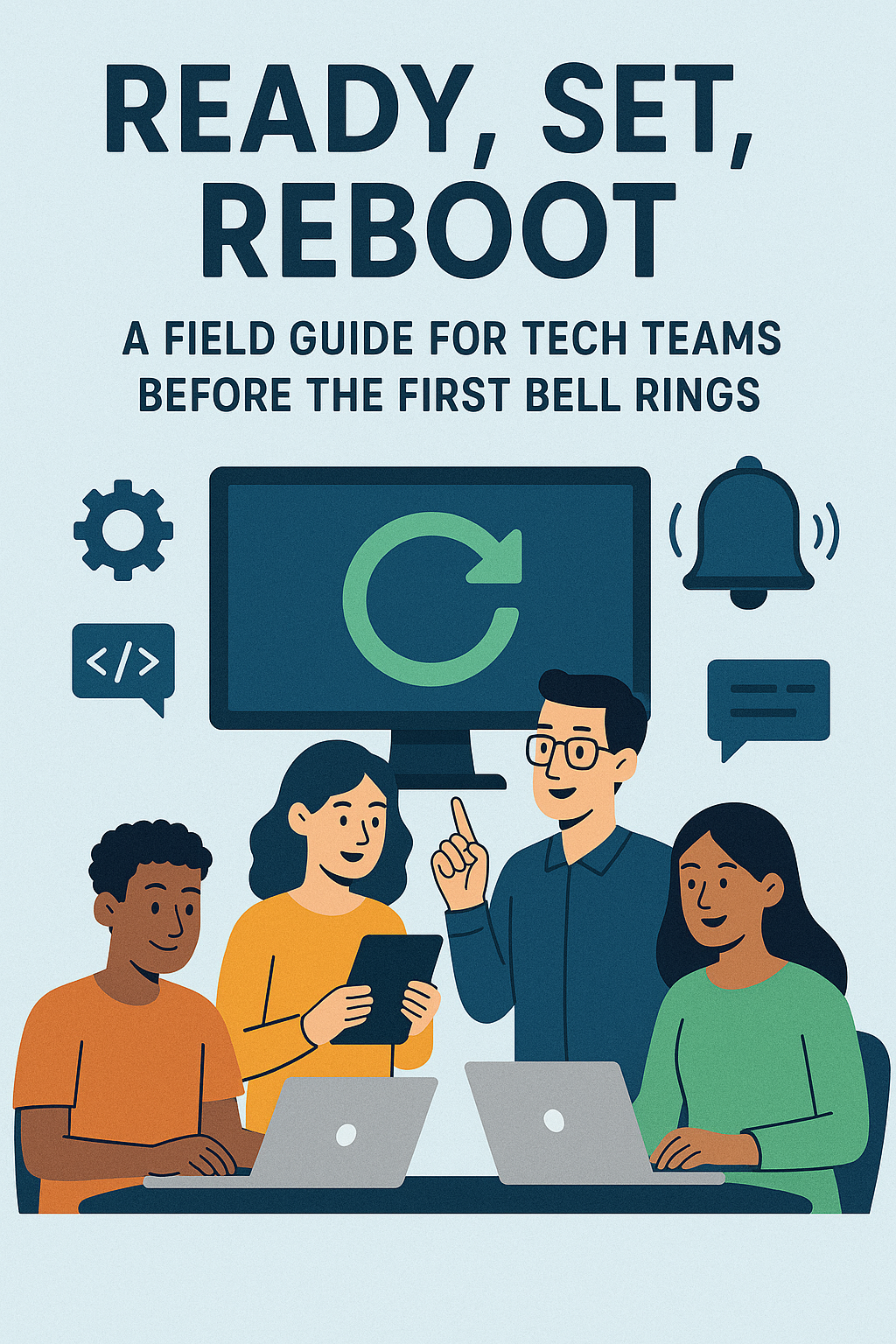
ready set reboot image

With the start of school just weeks away, it’s tempting to dive headfirst into the logistics: imaging devices, cleaning up accounts, checking on the Wi-Fi. But before you get buried in the operational checklist, it’s worth zooming out.


How you spend the last few weeks before students and staff arrive doesn’t just determine how smooth the first few days will go. It sets the tone for your team, your schools, and for your ability to evolve the work beyond putting out fires.


Here’s how to think about the next 3–5 weeks, and the months that follow, if your goal is not just readiness, but resilience.


What You Can Still Knock Out Before School Starts

1. Reflect on what worked while it’s still fresh

We often say we’ll reflect… and then we don’t. If you haven't already, take a beat to pause and look back. Gather your team (and maybe a few building admins) and ask: What got in our way last year? What saved us? What did we ignore that came back to bite us?


Doing this now, before the school year takes over, is more valuable than any future professional development session. CoSN recommends regular strategic reviews to keep alignment tight. Start there. Write it down. Use it to inform your roadmap, not just your to-do list.


Learn more from CoSN’s Essential Skills of the K-12 CTO.


2. Test your infrastructure before your users do

Once the network starts failing, no one wants to hear “we’re working on it.” They just want it fixed—yesterday. That’s why now is the time to be proactive. Use your device logs and bandwidth data from last spring to simulate what’s coming. Walk your buildings with a wireless scanner. Look at high-density zones like libraries, cafeterias, multi-purpose rooms and test like it’s the first day of school.


The majority of support tickets in K–12 are still tied to network issues. You won’t eliminate all of them. But a couple hours of testing now can prevent days of scrambling later.


3. Don’t just have a cybersecurity plan—prove it works

Cyber incidents in K–12 aren’t hypothetical anymore. If you’ve ever dealt with a phishing attack or ransomware scare, you know how fast it escalates, and how slow the response can be if no one knows the plan.

Update your incident response documentation. Make sure your contact list is current. Then sit down with your team and walk through a worst-case scenario. Think of it like a fire drill: no one loves it, but when it’s needed, you’re glad you practiced.


Learn more from K12 SIX State of the Sector Report.


4. Build your image like your year depends on it

This is where many tech teams lose hours (or days). Your base image shouldn’t be a collection of manual steps and best guesses. It should be a repeatable, tested, and secure process. Lock in your OS, patch levels, security baselines, and application sets now. Automate what you can. Make sure anyone on your team can deploy a device the same way every time.


It’s not just about efficiency, it’s about reducing the friction that creeps in all year long when machines are inconsistent or underconfigured.


5. Restore a backup just to be sure

No one thinks their backup will fail, until it does. And restoring isn’t just about having the data; it’s about knowing the process works under pressure.


Pick a mission-critical system like your SIS, shared drives, finance and run a restore to a test environment. Time it. Validate it. Document what broke. Backups are your last line of defense; treat them like they matter now, not later.


6. Refresh your helpdesk approach before the tickets flood in

A helpdesk without structure becomes chaos in disguise. Review your categories, priorities, and SLAs. Make sure your portal is up to date. Publish a few fresh knowledge base articles focused on common back-to-school requests. Push them out to staff before school starts.

ISTE lists responsive technical support as one of the essential conditions for effective tech integration in schools. If your helpdesk isn’t ready to scale in August, everything else you built risks going under.


Learn more from ISTE’s Essential Conditions.


7. Build a dashboard you’ll actually look at

You don’t need a fancy BI tool. Start simple: uptime, device compliance, ticket trends, bandwidth usage, resolution times. Something that gives you, and your superintendent. a pulse check.


If you’ve ever been asked, “How’s it going?” and found yourself scrambling for an answer, this is how you stop that from happening again.

Media Literacy Minute

Media Literacy Minute

Trust and Happiness Are Deeply Connected: Media Literacy Plays a Role

A recent study highlighted by The Psychiatrist reveals that countries with high levels of interpersonal and institutional trust also report higher levels of happiness. While this may seem intuitive, the researchers emphasize a critical insight: trust doesn’t just happen—it’s built. And one of the key tools to nurture trust is media literacy. As the authors explain, “Trust grows through honest relationships, transparent institutions, and better media literacy to counter disinformation.” The takeaway? Teaching individuals, especially students, how to evaluate information and recognize disinformation isn’t just about preventing harm. It’s foundational to building a healthy, happy society.


What Is Metaliteracy and Why Does It Matter?

In today’s digital world, simply evaluating sources isn’t enough. Metaliteracy prepares us to think critically, reflect on our own thinking, and ethically share content, especially on social media. It combines multiple literacies (media, digital, visual, critical, etc.) to help people navigate and participate in today’s complex information landscape. If we want to combat fake news, we don’t just need informed consumers, we need metaliterate creators. Read more here. 


5 AI Media Fails That Prove We Need Better Detection Tools

In another sharp piece from Tech Policy Press, five high-profile real-world examples of AI-generated media going wrong are dissected, from a deepfake Pope in a Balenciaga jacket to bogus quotes by public figures. The article argues that each incident demonstrates the urgent need for effective AI content detection tools, but also underscores the role of public education. Teaching people to critically evaluate digital media is essential as synthetic content becomes indistinguishable from the real thing.

Start Strong, Stay Strong: Tech Planning That Endures

by Kevin Ghantous

Some improvements can’t be rushed. They require iteration, pattern recognition, and a willingness to ask, “How could we do this better next time?” The start of the school year often feels like a sprint, but long-term success depends on what you build into your systems once the race has started. Here’s what to work into your rhythm as the year unfolds:


Quarterly Roadmap Reviews

Your tech plan isn’t a static document, it’s a living guide that should evolve with your district’s needs. Schedule quarterly check-ins to revisit goals, assess progress, and identify what’s no longer relevant.


Leadership priorities change. Budgets shift. New opportunities emerge. Use these reviews to realign with stakeholders and ensure your team isn’t working toward goals that no longer match the district’s direction. 


Bonus: These regular touchpoints keep you proactive and help surface budget or staffing needs before they become fire drills.


Security Micro-Lessons, Not One-Off PD

Cybersecurity isn’t a one-and-done checklist, it’s a culture. Instead of relying on once-a-year professional development, consider monthly micro-lessons: quick, digestible training moments built into staff meetings, newsletters, or morning announcements. Think phishing simulations, password hygiene reminders, or short videos on data privacy.


Small, consistent reminders build habits, and habits build resilient systems. This approach keeps security top of mind without overwhelming your staff.


Device Aging Reports With Action Plans

Don’t let device end-of-life sneak up on you. Start the year with a current inventory report, and track device age, condition, and frequency of repair.


A Chromebook that’s four years old may still power on, but it might not support the latest software or student needs. Use that data to develop a replacement roadmap, advocate for future funding, or adjust device assignments. When you combine reporting with action planning, you reduce surprises and strengthen your case during budget conversations.


Family Engagement That Doesn’t Feel Like an Afterthought

Technology works best when the whole community is confident using it. Plan quarterly “Tech Nights” that go beyond logins—showcase tools students use, offer hands-on support, and provide guidance on topics like digital citizenship or managing screen time. Don’t forget multilingual materials and interpreters where needed.


When families feel supported, they become partners in your ecosystem. This kind of engagement enhances trust, reduces support tickets, and improves student outcomes.


Feedback Loops for Your Helpdesk

If you’re not measuring the experience of your support system, you’re missing half the story. Automate a quick, one-question CSAT (Customer Satisfaction) survey when a ticket closes. Then take it further—review the responses. Spot patterns. Address training gaps. Celebrate wins.

Feedback isn’t the finish line. It’s the fuel for improvement. Use it to shape internal processes, inform future PD, or identify high-performing team members.


Final Thought

Back-to-school prep doesn’t end in August. It’s about laying a foundation that supports agility, resilience, and continuous improvement all year long.


This isn’t about checking boxes. It’s about designing systems that hold up under pressure and grow stronger over time. Start with the basics: test the backup, verify your image, double-check the network. Run the drill. Set the metrics. Keep iterating.


A little foresight now means fewer emergencies later—and more space to lead strategically instead of reacting constantly.


Need a sounding board? A checklist? Someone to talk through your plan? We’ve worked shoulder-to-shoulder with districts across the country—and we’re happy to do the same with you. Reach out at info@learn21.org.

Big Ideas

Big ideas image

Space Station Hitchhiker: Niallia tiangongensis

China’s Tiangong crew returned with a bacterium never recorded on Earth, genetically distinct from its nearest relative and seemingly fine-tuned for micro-gravity, radiation, and scarce nutrients. Scientists aren’t sure if it evolved aloft or hitched a ride from an uncharted niche on Earth, but its survival tricks could shape sanitation rules for long-haul missions and biotechnology back home. wired.com


Baboons March for Friendship, Not Fear 

GPS-tagged chacma baboons walk in regimented lines, but Swansea University found the order isn’t about shielding the weak or following leaders; it’s simply pals sticking together. The pattern is a “social spandrel,” a by-product of bonds, not an evolved survival tactic. The study nudges us to rethink other animal (and human) behaviors we’ve chalked up to strategy when they might just be the footprint of friendship. sciencedaily.com


ChatGPT Sneaks in a “Study Together” Mode

A handful of users now see a new button nestled beside Browse and DALL-E; flip it on and ChatGPT flips personas, peppering you with scaffolded questions, checking answers, and adapting follow-ups so you learn by doing instead of scrolling explanations. Early code-sleuths and testers spot hints of shared sessions and voice tutoring, signaling a future where classmates—or an always-awake AI mentor—can co-work in the same chat. No pricing or launch date yet, but the A/B test is visibly expanding across forums and X screenshots, suggesting OpenAI is gauging demand before a wider education push. Read more here. 

X Share on X
LinkedIn Share on LinkedIn

www.learn21.org

LinkedIn        X        YouTube        Instagram