-
Researchers co-led by Ludwig Oxford’s Bethan Psaila describe in Nature Genetics their exploration of the role of chromothripsis in blast-phase myeloproliferative neoplasms and identify DYRK1A as a prognostic biomarker and potential target for therapy.
-
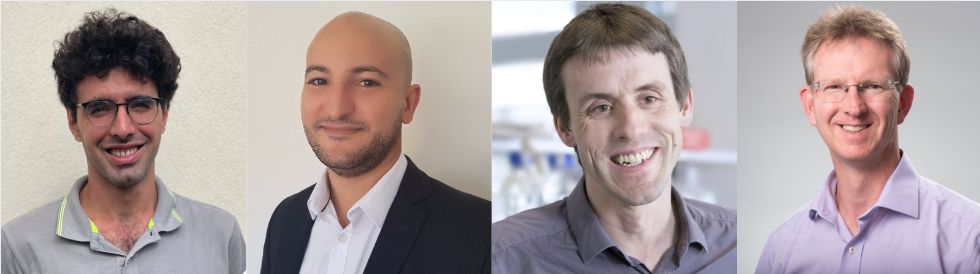
Researchers led by Ludwig Lausanne’s Giancarlo Croce, Rachid Lani, David Gfeller and Steven Dunn describe in Science Advances their use of a phage display experiment to train a machine learning predictor to identify T cell receptors that specifically target an NY-ESO-1 epitope.
-
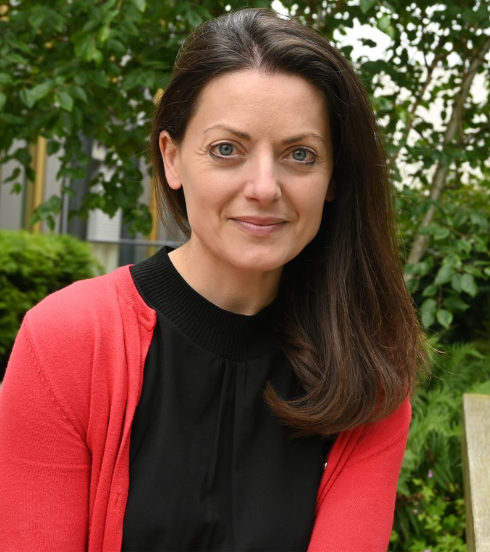
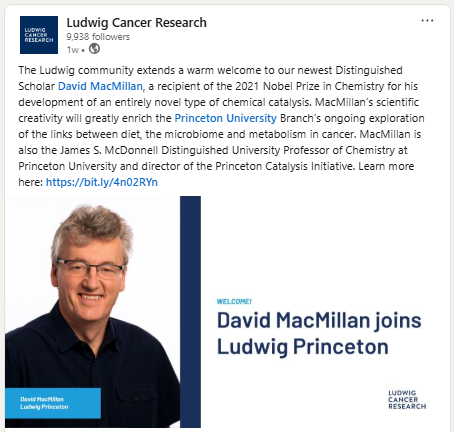
We extend a warm welcome to Nobel laureate David MacMillan, who has joined our community as a distinguished scholar at the Princeton Branch of the Ludwig Institute for Cancer Research.
| | |
Researchers led by Ludwig Harvard’s Rakesh Jain report here a computer model that mimics how cancer cells and the immune system interact. Jain and his colleagues used it to compare various treatment strategies employing mRNA vaccines on 1,600 virtual cancer patients with the aim of identifying optimal conditions for vaccine efficacy. They identify specific markers—such as immune cell levels and tumor structure—that can predict whether a patient will respond well to treatment. For example, the model found that an antigen presenting cell density above 500 cells/mm³ in lymph nodes correlates with a 55% increase in vaccine response rates, while a cytotoxic T cell fraction above 20% in tumors is associated with a 60% reduction in tumor volume. Their findings also show that reprogramming the tumor microenvironment and timing of treatment could significantly boost vaccine effectiveness. The model, they argue, could help improve the personalization of cancer treatment.
| |
| |  | The T cell receptor (TCR) recognizes central elements—or epitopes—within peptides derived from disease-associated antigens. Several computational predictors have been designed to predict TCRs capable of recognizing common cancer antigens, as the identification of such TCRs can aid the design of T cell immunotherapies. Such predictors, often powered by machine learning algorithms, can identify epitope-specific TCRs with reasonable accuracy if a large number of verified TCRs are available for a given epitope (~50 to 100 TCRs). But they are less reliable when applied to epitopes for which TCR data are scarce or absent, which is why robust predictions can be obtained for only a few dozen epitopes today. To address this challenge, researchers led by Ludwig Lausanne’s Giancarlo Croce, Rachid Lani, David Gfeller and Steven Dunn designed a phage display experiment to collect a large number of TCRs that recognize a well characterized epitope in the NY-ESO-1 cancer antigen (which was discovered and developed by the Ludwig Institute). Integrating these data into a machine learning predictor, they identified epitope-specific TCRs showing activity toward NY-ESO-1 alone and no detectable cross-reactivity with other epitopes. This approach, they note, may be generalized for TCR discovery.
| |
| | | Chromothripsis is a massive genomic rearrangement event caused by the shattering and haphazard reassembly of chromosomal segments. It is pervasive across solid tumors and associated with poor prognosis. Chromothripsis is known to contribute to 7% of acute myeloid leukemias (AMLs) that are unrelated to prior diagnoses of myeloproliferative neoplasms (MPNs), which are slow-growing blood cancers that can develop into AML. But its role in MPNs was not well understood. Researchers led by Ludwig Oxford’s Bethan Psaila and colleagues in the US and at the University of Oxford explored the phenomenon in a cohort of 64 patients in blast phase of MPN (BP-MPN), an aggressive manifestation of the cancer. They describe here a recurrent amplification of a region of chromosome 21q (chr. 21amp) in 25% of the cohort. A third of these are driven by chromothripsis and have a particularly aggressive and treatment-resistant phenotype. The findings define chr. 21amp as a prognostic biomarker in BP-MPN. The researchers also link chromothripsis to a therapeutic target: DYRK1A, a gene in the amplified region that encodes a serine-threonine kinase essential to BP-MPN proliferation.
| |
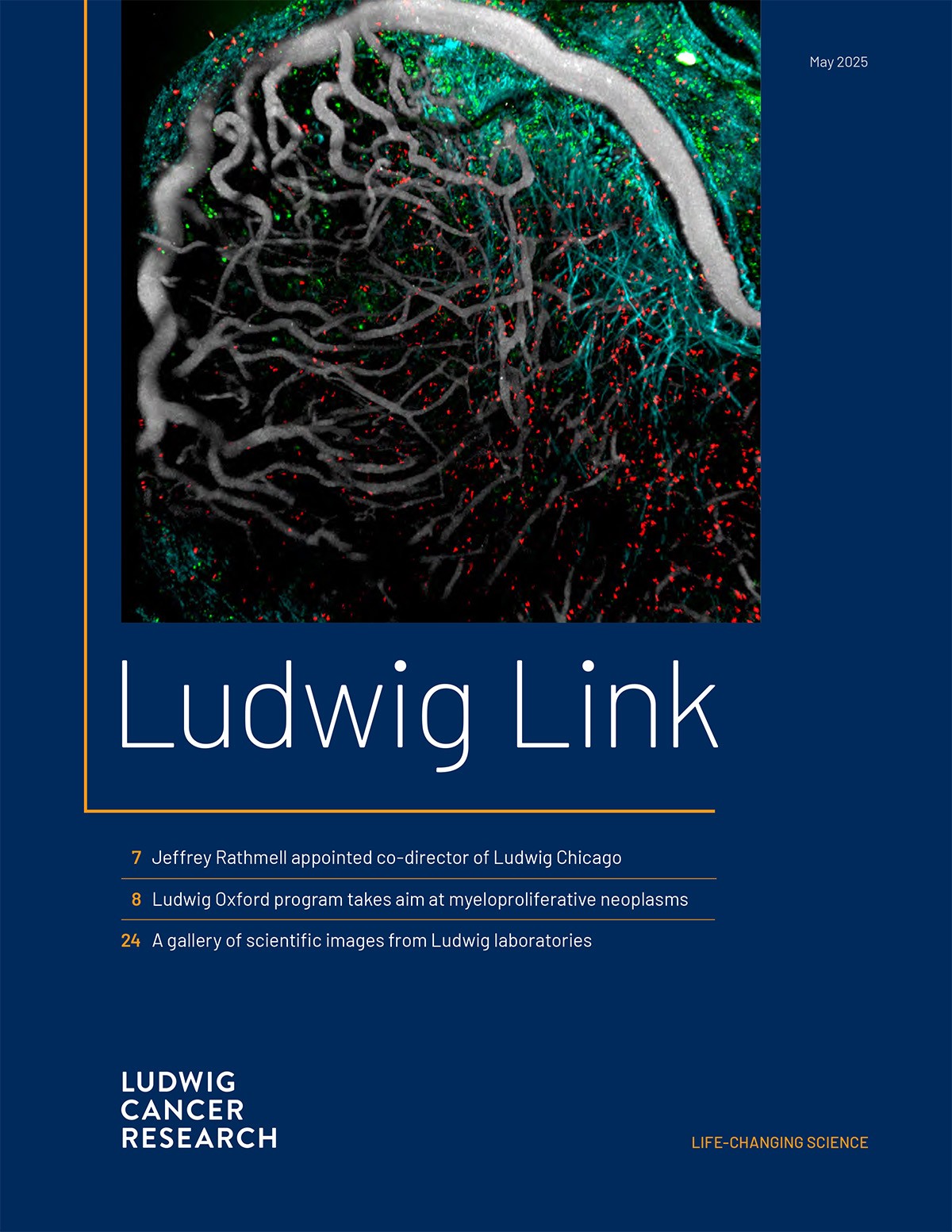
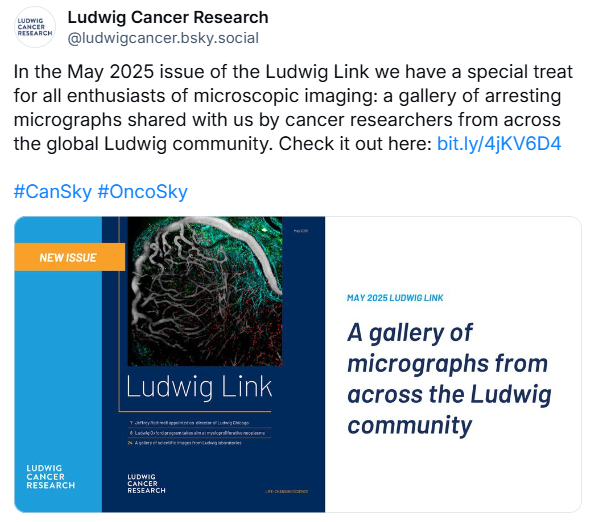
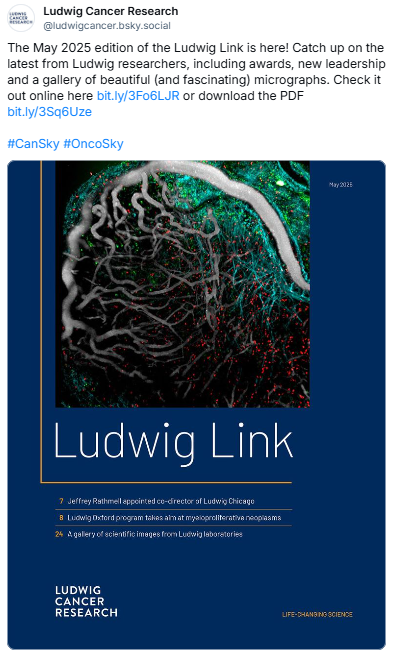
| | | It is with great pleasure that we share with you the latest issue of the Ludwig Link. We’re particularly excited to launch a new feature in this spring publication—a gallery of visually arresting and scientifically intriguing images shared with us by researchers from across the Ludwig community. Aside from that, our May issue has briefs on everything from the clinical validation of liquid biopsies to better manage stage II colon cancer treatment to the remarkable results of an early trial examining a CAR-T therapy for an intractable pediatric brain cancer. Other news in this issue covers the Ludwig Institute’s participation in the Weill Cancer Hub East—a $125 million research alliance at the interface of diet, metabolism and cancer immunotherapy. We also report on a Ludwig Oxford program exploring how myeloproliferative neoplasms evolve into aggressive leukemias, introduce you to the new co-director of Ludwig Chicago and ask you to join us in congratulating four Ludwig scientists honored for their outsized contributions to cancer research. You can read the magazine online or download a PDF here.
| | |
We extend a warm welcome to David MacMillan, who has joined our community as a distinguished scholar at the Princeton Branch of the Ludwig Institute for Cancer Research. MacMillan, who shared the 2021 Nobel Prize in Chemistry with Benjamin List for their independent development of an entirely novel type of chemical catalysis, is the James S. McDonnell Distinguished University Professor of Chemistry at Princeton University and director of the Princeton Catalysis Initiative, which he founded in 2017. MacMillan is not entirely new to the Princeton Branch. His laboratory has been collaborating with that of Ludwig Princeton Director Joshua Rabinowitz to map molecular interactions associated with the oncogenic signaling of the HER2 protein in malignant cells across different types of breast cancer. MacMillan is the third prominent scientist to be appointed by the Ludwig Institute’s Board of Directors as a distinguished scholar.
| | |
This blog recounts the history of a consequential collaboration between the Ludwig Institute, Cancer Research UK (CRUK) and the Institute for Cancer Research (ICR) that pioneered the development of PI3 kinase inhibitors and laid the groundwork for several such drugs now in routine use for cancer therapy. Led by the late Michael Waterfield, who directed the Institute’s former University College London Branch until it was transferred to Oxford in 2007, with Peter Parker of CRUK and ICR’s Paul Workman, the collaboration fleshed out the central role of oncogenic PI3 kinase signaling in multiple cancer types and developed important inhibitors against the enzyme. It also culminated in the launch in 2003 of the Ludwig Institute’s first spin-off biotech company, Piramed, which licensed some of its inhibitors to Genentech in 2005 and was, three years later, purchased by the drug giant Roche.
| | |
Radiotherapy (RT) exerts its therapeutic effects primarily by inducing DNA damage in tumor cells and modulating the tumor immune microenvironment (TIME). In this review, researchers led by Ludwig Chicago Co-director Ralph Weichselbaum discuss the dual roles of YTHDF proteins—which read N6-methyladenosine (m6A) on mRNA—in modulating both tumor-intrinsic and immune-mediated responses to RT. They summarize how YTHDF proteins influence DNA damage repair in tumor cells and their impact on the TIME, which collectively shape the antitumor efficacy of RT. They also cover recent advances in the development of YTHDF-targeting inhibitors and their potential to synergize with RT and immunotherapy.
| |
ICYMI: In case you missed it... | | Do you know of any news, studies or events that would be relevant to the Ludwig community? Please contact us! | | Ludwig Cancer Research | www.ludwigcancerresearch.org | |
Please note these clips are not intended to be a comprehensive overview of the news, but a compilation of Ludwig coverage, as well as topics and issues considered to be most relevant to our scientific community. Any views or opinions presented in the news clips are solely those of the cited news sources. When available, a link to the original study is provided. *Asterisk indicates a subscription or login may be required.
| | | | |