¡Versión en español a seguir! |
|
Supporting Families with Children
Who Have Special Needs
|
|
This month at QSLA, we focus on supporting families with children who have special needs and/or disabilities. |
|
We want to hear from you! Take our quick poll! |
|
|
Which virtual tool do you use most often? (Select one)
|
|
I’ve never used any of these tools
|
|
|
|
|
|
|
If you have suggestions or any examples of how you've used these virtual tools, we encourage you to complete this quick survey! We value your feedback and use it to create more relevant content for you!
Save the Date for our upcoming Padlet and Jamboard trainings in January 2023!
Did you miss our Canva webinar? We now have the Canva workshop on our YouTube channel! Please take a look at the video on the right for more information.
|
|
|
Welcoming Environment
Ensure Your Program Feels Inviting
|
|
Center for Inclusive Child Care Podcast |
|
The Center for Inclusive Child Care hosts a stellar podcast, "Inclusion Matters," where early childhood experts discuss a wide array of important topics for early childhood professionals. Here are 3 episodes for you, your colleagues, and the families you work with to explore!
|
|
This resource will support ECERS-R: Item 9 and FCCERS-R: Item 35- Provisions for Parents, PAS: Item 16- Family Communications, and BAS: Item 7- Provider Parent Communications. |
|
Family Partnerships
Work with Families to Build a Stronger Program
|
|
Communicating and Engaging with
Families about Developmental Concerns
|
|
Not sure how to navigate conversations with families about developmental concerns? Don't worry! Here we share invaluable resources from Help Me Grow to help you have informed and structured conversations with families in your early learning programs.
|
|
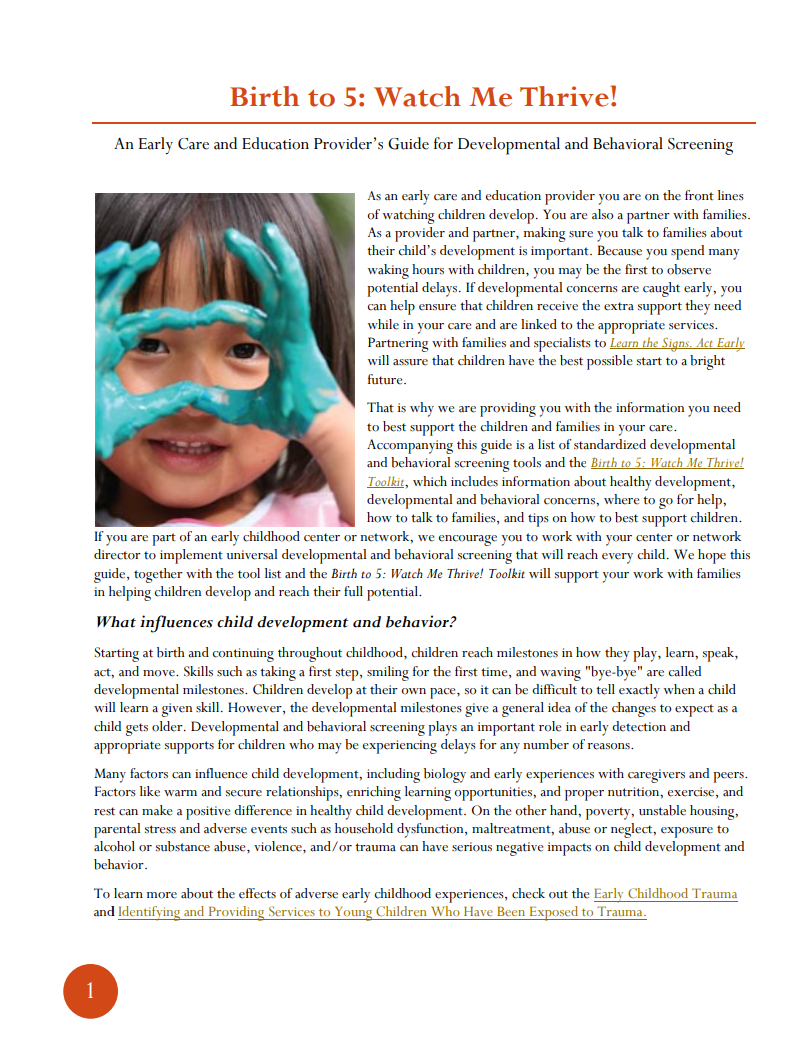
"Birth to 5: Watch Me Thrive!," an early care and education provider's guide for developmental and behavioral screening. This one-stop-shop resource will help you prepare for the major aspects of developmental screenings, including:
- What is developmental and behavior screening?
- The value of a team approach with families.
- When and how to talk to families about development and screening, including outlining what is involved, discussing screening results, and how to manage referrals.
- Selecting screening tools that work for you and your professional role.
"Tips for Talking with Parents about Developmental Concerns" is a handy document focusing on key practices for handling these sensitive conversations with families. The 2-page PDF offers tips and examples for everyday practices, specific conversations around concerns, and how to respond to families in different situations.
|
|
This resource will support ECERS-R: Item 38 and FCCERS-R: Item 35- Provisions for Parents, PAS: Item 16- Family Communications, and BAS: Item 7- Provider Parent Communications. |
|
Staff Development and Support
Enhance Your Family Engagement Knowledge and Skills
|
|
Community Resources for Children offers "Tools and Strategies for Supporting Children with Autism," a live bilingual training. Join autism expert, Emily Parker to learn about terminology, causes, facts, and myths of autism spectrum disorder. Discover simple tools that you can use to support children in your care, whether they have an autism diagnosis or not.
-
Time and date: Thursday, November 17th from 6:00 - 8:00PM (2 hours of Professional Development credit)
-
Presented by: Emily Parker NCOE, interpreted in Spanish by Sandra Gonzales-Pabon
|
|
Options for Learning offers "Inclusion and Children with Special Needs" - a live training focused on providing participants with a greater understanding of the importance of including children with disabilities in the early childhood environment. Participants will learn basic characteristics of various disabilities or conditions, along with strategies for making reasonable accommodations for all children and their families. (2 hrs of Professional Development credit)
-
Time: Tuesday, December 6th from 6:30 - 8:30PM
-
Zoom Link: Save this Zoom Link on your calendar!
|
|
Supporting families and children who have special needs or disabilities often requires learning and training. Take a look at these self-paced CECO trainings to expand your knowledge and skills!
-
Module 1 - Inclusion Works! Through Collaboration with Families and Service Providers: This module focuses on learning strategies that promote inclusion and a sense of belonging for all children.
-
Module 2 - Inclusion Works through Modifications and Adaptations: This module was developed to assist child care providers and special educators to learn strategies that promote inclusion and to develop an action plan to support inclusive early learning and care.
Time & Date: This is a self-paced course series consisting of 2 modules, each module is 1 hour long. Note: you will need to create a free account with CECO to access your certificate for this course. (2-hour PD credit)
|
|
In this 1-hour recorded webinar, you’ll learn how you can use Sesame Street Autism resources to build acceptance, inclusivity, awareness, and understanding among the children and families that you serve.
Goals:
- Discover resources that will grow your own understanding of autism.
- Learn how to use Sesame Street activities and content during daily routines to support and celebrate the uniqueness of every child, including those on the autism spectrum.
-
Note: Please note that in order to take the post webinar quiz and receive your certificate, you will need to watch the webinar video on the Sesame Street in Communities website and not on third party sites.
-
Tools for Families: Check out SSIC's printables, videos, and other activities as they can help families talk about Autism!
|
|
These trainings support ECERS-R: Item 43- Opportunities for Professional Growth, PAS: Item 3- Staff Development, FCCERS-R: Item 37- Opportunities for Professional Development, and BAS: Item 1-Qualifications and Professional Development |
|
Community Partnerships
Use Community Resources to Strengthen Program Quality
|
|
Department of Developmental Services |
|
|
|
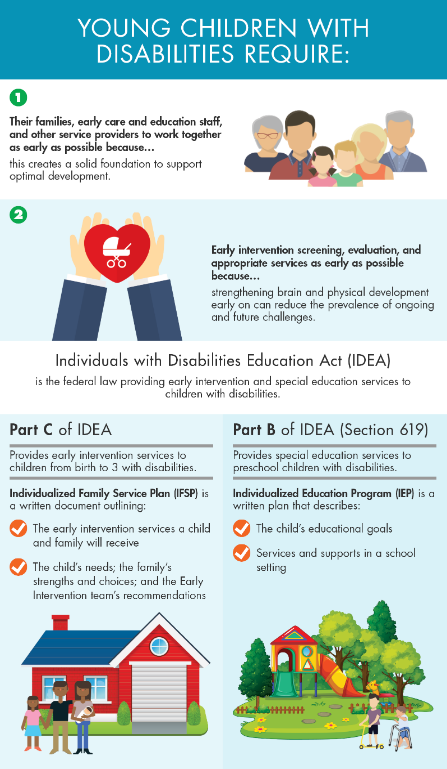
For more information regarding Early Start services and referrals,
please contact the Early Start Baby Line at
800–515-2229
|
|
Knowing and using these community resources will support PAS: Item 17- Family Support Involvement, BAS: Item 8-Community Resources, and NAEYC Accreditation: Standard 7-Families |
|
Additional Resources to Share with Families with Children who have Special Needs/Disabilities
|
|
Many of you have requested more information about children who have special needs & disabilities for several months. Here are more resources for your early learning program!
|
|
-
Regional Center Lookup Site - The Department of Developmental Services (DDS) coordinates and delivers services for Californians with developmental disabilities through regional centers, including assessments, eligibility for services, and support each person’s Individual Program Plan. Note: LA County has a different tab on this page.
-
Resources for Navigating Service Systems for Young Children: This PDF guide covers the services in California for individuals with developmental delays/disabilities, covering important processes and criteria for types of service centers and more.
-
Children at Risk for or with Special Needs: Connecting Children and Their Families to Early Identification and Intervention Services. This guide focuses on identification, interventions, and advocacy for families who have children at risk or with special needs.
|
|
Are you looking for support in another area?
|
|
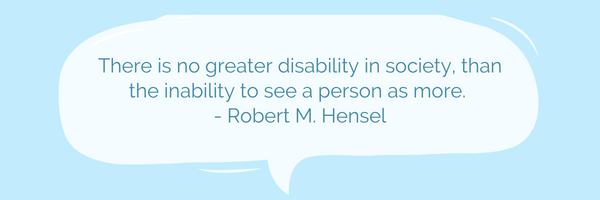
If you would like to share some inspiring words, click here! To see more provider perspectives, field related news, and early learning resources follow our social media accounts.
*These quotes have been edited for grammar and clarity.
|
|
Were you forwarded this email? Would you like to sign up to receive our Family Engagement Newsletters? Please click here to sign up!
|
|
|
|
|
|
|