September 16, 2026


Quote Of The Week

Laziness is nothing more than the habit of resting before you get tired.

– Jules Renard

Leading Off: What is Laziness?

Being busy is something that some of us are used to, and others find irritating. I started thinking about why that might be and I landed on 'laziness' as the distinguishing factor.


We are all lazy from time to time, and that's ok. But there must be a point where too much laziness is detrimental to your... Health? Future? Paycheck?


But what is laziness?


Maybe the simplest definition is having the ability to do something, but being unwilling to make the effort.


Read on to learn more.

I'd Stop Being Lazy,

But It Sounds Like Too Much Work

Years ago, when I was a teenager working in fast food, I learned something important about human behavior.


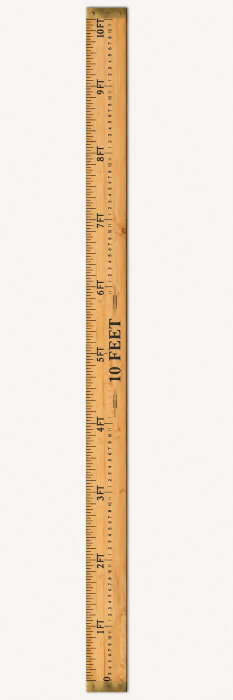
Some people apparently considered walking ten feet to a trash barrel an unreasonable burden. They would finish eating in their cars, roll down the window, and throw their trash into the parking lot. And who picked it up? The 17-year-old kid working at the restaurant. Me.


At the time, I probably didn't think of these customers as conducting an important sociological experiment. I just thought they were lazy. All these years later, I'm beginning to wonder if I was being too judgmental. Because I've discovered something.


We all have a little lazy in us. Some of us just hide it better than others.

I’ll Do It Tomorrow

Lazy people have an extraordinary belief in tomorrow. Tomorrow is apparently a magical place where we will have more energy, more enthusiasm, fewer distractions, and a burning desire to do all the things we don't want to do today.

  • I'll start exercising tomorrow.
  • I'll clean the garage tomorrow.
  •  I'll organize those files tomorrow.
  • I'll make that phone call tomorrow.
  • I'll start eating better tomorrow.


Tomorrow must be exhausted. We've assigned it an awful lot of work.


The interesting thing is that people who get things done aren't necessarily more motivated than everybody else.


They've simply figured out that waiting until you feel like doing something is not a particularly effective strategy.


I have never awakened in the morning thinking: “Today would be a wonderful day to organize a closet.” Perhaps you have. If so, we are very different people.

How Do You Know If You're Being Lazy?

This is trickier than it sounds.


Sometimes what we call laziness is really exhaustion. Sometimes we need a break. Sometimes we've been running too hard for too long and sitting in a chair doing absolutely nothing is not laziness. It's recovery.


And sometimes we're not lazy at all. We're procrastinating.


There is a difference. Procrastination is when you know you have to do something but decide to do fourteen completely unnecessary things first. Have you ever had something important to do and suddenly decided this would be an excellent time to clean out a drawer? That's not productivity. That's productive procrastination.


It allows us to avoid what we're supposed to be doing while still feeling morally superior because we accomplished something. “I never finished the report, but you should see my sock drawer.”


There is, however, one test I've found useful. Suppose you've been saying all day that you're too tired to do something. Then someone calls and says: “Want to go out to dinner?” If you are dressed and standing by the door seven minutes later, fatigue may not have been the entire problem.

Lazy People Are Great Negotiators

I also think lazy people possess an underappreciated skill. Negotiation. They negotiate with themselves constantly.


“I'll start at 10:00.” 10:00 arrives.

“10:30 makes more sense.”

At 10:30: “I should probably eat something first.”

After lunch: “There really isn't enough time left today to do this properly.”


And just like that, another exhausting day of avoiding work comes to an end.


The problem is that the person negotiating for you and the person negotiating against you have exactly the same information. And somehow the lazy one keeps winning.

The Ten-Foot Rule

Which brings me back to that restaurant parking lot. Those customers weren't being asked to hike the Appalachian Trail. The trash barrel was right there. Maybe ten feet away. But ten feet was apparently nine feet too many. I think we all have our own version of that ten-foot walk. There is something we know we should do. It isn't impossible. It may not even be particularly difficult.


We just don't want to do it. And the longer we wait, the larger it becomes in our imagination.

  • The email takes five minutes. We've avoided it for five days.
  • The appointment takes one phone call. We've been thinking about it for three weeks.
  • The room takes an hour to clean. We've spent four hours thinking about how messy it is.


Sometimes the amount of energy we spend avoiding a task exceeds the energy required to do it. That may be the ultimate definition of laziness.

How Do You Stop?

I don't think the answer is to announce: “Starting today, I am no longer going to be lazy.” That's a little like announcing you're never going to eat another French fry. Good luck with that.


A better approach is to make the first step so small that it becomes difficult to argue with yourself.

  • Don't clean the garage. Clean one corner.
  • Don't write the whole report. Write the first paragraph.
  • Don't exercise for an hour. Exercise for ten minutes.
  • Don't organize the entire office. Clear the desk.


Starting creates momentum. And momentum has a wonderful way of making the next step easier.


I've also learned that motivation is greatly overrated.


We tend to think the sequence is: Motivation → Action → Results.


But often it works the other way: Action → Progress → Motivation.


Start doing something. See a little progress. Suddenly you feel more like continuing.

There May Be Another Kind of Laziness

As I shared recently, I discovered that employees were emptying some of those outside barrels two or three times a day—and people weren't just putting restaurant trash in them. They had become a convenient neighborhood disposal system.


We eventually removed them and saved tens of thousands of dollars. Which taught me something else. Laziness isn't always sitting on the couch. Sometimes laziness is continuing to do something because that's the way we've always done it.


Thinking takes effort too. Questioning an old practice takes effort. Changing a routine takes effort. It's much easier to keep emptying the barrel.


Observe. Act. Stay With It.

So maybe defeating laziness starts with observation.


Observe when you begin negotiating with yourself. Listen for:

·        “I'll do it later.”

·        “I don't have enough time.”

·        “I'll start Monday.”

·        “I need to get organized first.”


Then act before you have time to develop a better excuse.

Take one step.

·        Send one email.

·        Make one call.

·        Write one paragraph.

·        Walk ten feet to the trash barrel.


Then stay with it.

Not perfectly. None of us is productive every minute of every day, nor should we be. There are days when sitting on the couch watching television is exactly the right thing to do.


The important question is whether you are resting because you need rest or avoiding something because you don't want to do it.


Deep down, I suspect we usually know the difference. And if you've made it all the way to the end of this weblog while avoiding something else you were supposed to be doing... I'm glad I could help.


Now go do it. Unless, of course, you were planning to start tomorrow.

Surprise Photo at the End:

Joe's Positive Post

Join the Smart Subscribers

If you are reading this on a social media platform, click below and you'll automatically receive a 'different' story every week on Wednesday.

The Roll Call of states and countries where readers reside: Arizona, California, Colorado, Connecticut, Delaware, Florida, Georgia, Hawaii, Illinois, Indiana, Iowa, Kansas, Kentucky, Louisiana, Maine, Massachusetts, Michigan, Mississippi, Missouri, Montana, Nevada, New Hampshire, New Jersey, New Mexico, New York, North Carolina, North Dakota, Ohio, Pennsylvania, Puerto Rico, Rhode Island, South Carolina, South Dakota, Tennessee, Texas, Vermont, Virginia, Washington and Washington DC, Wisconsin plus Canada, Conch Republic, Australia and the United Kingdom.

Ed Doherty

774-479-8831

www.ambroselanden.com

ed-doherty@outlook.com

Forgive any typos please.