e-Newsletter | October 27, 2023 | |
|
Stitches in Time - West Newbury’s Mysterious Wedding Dress Scrapbook
by Sierra Gitlin, Administrative Assistant
| |
|
Many of the artifacts, objects, and works of art at the Museum of Old Newbury were made to impress and communicated clear messages about wealth and status. Other objects are harder to read - their meaning is personal and their stories often elusive.
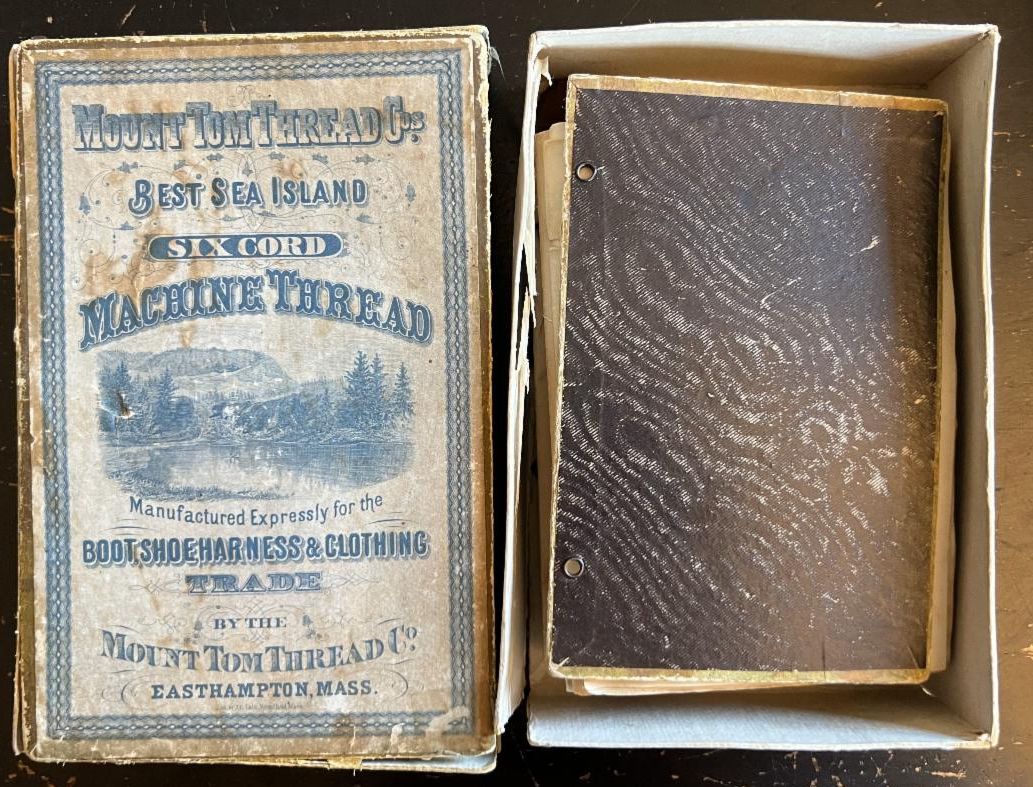
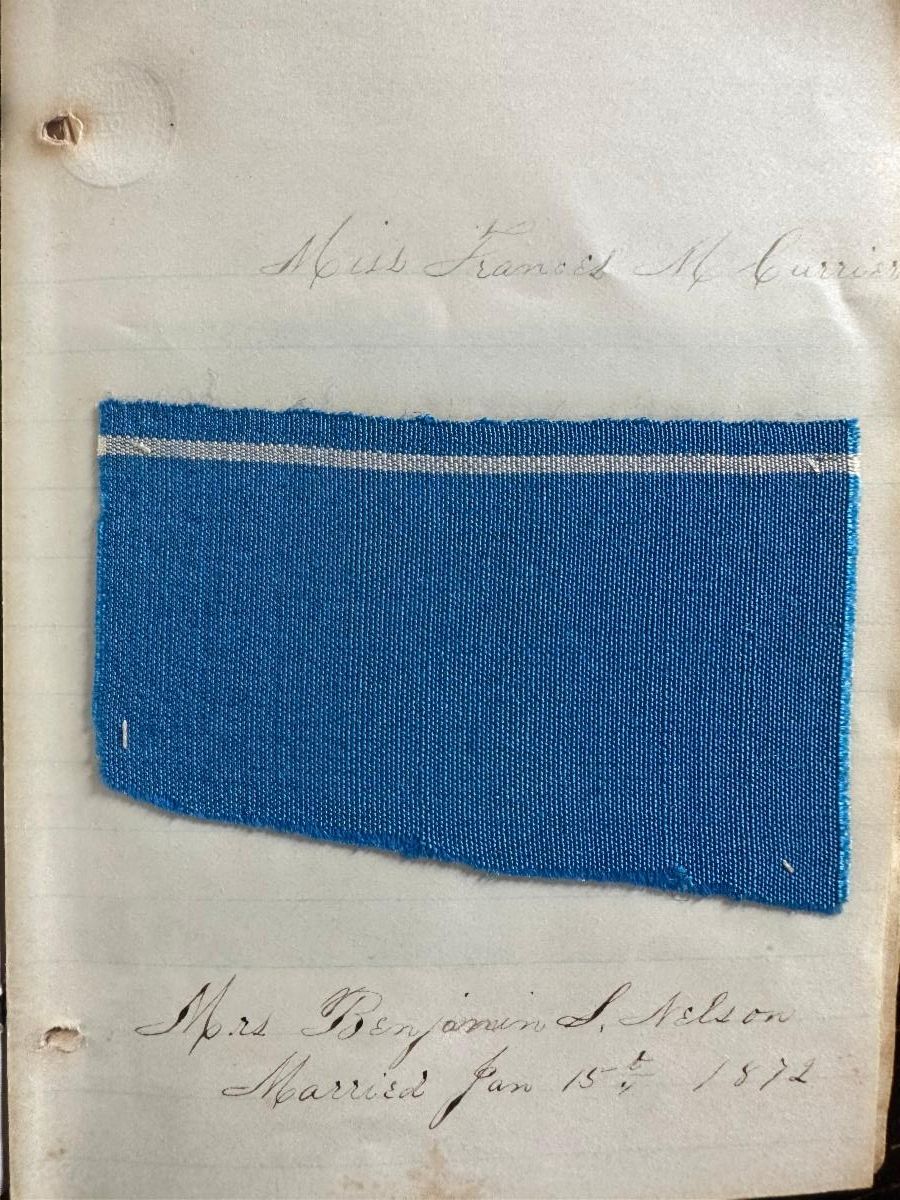
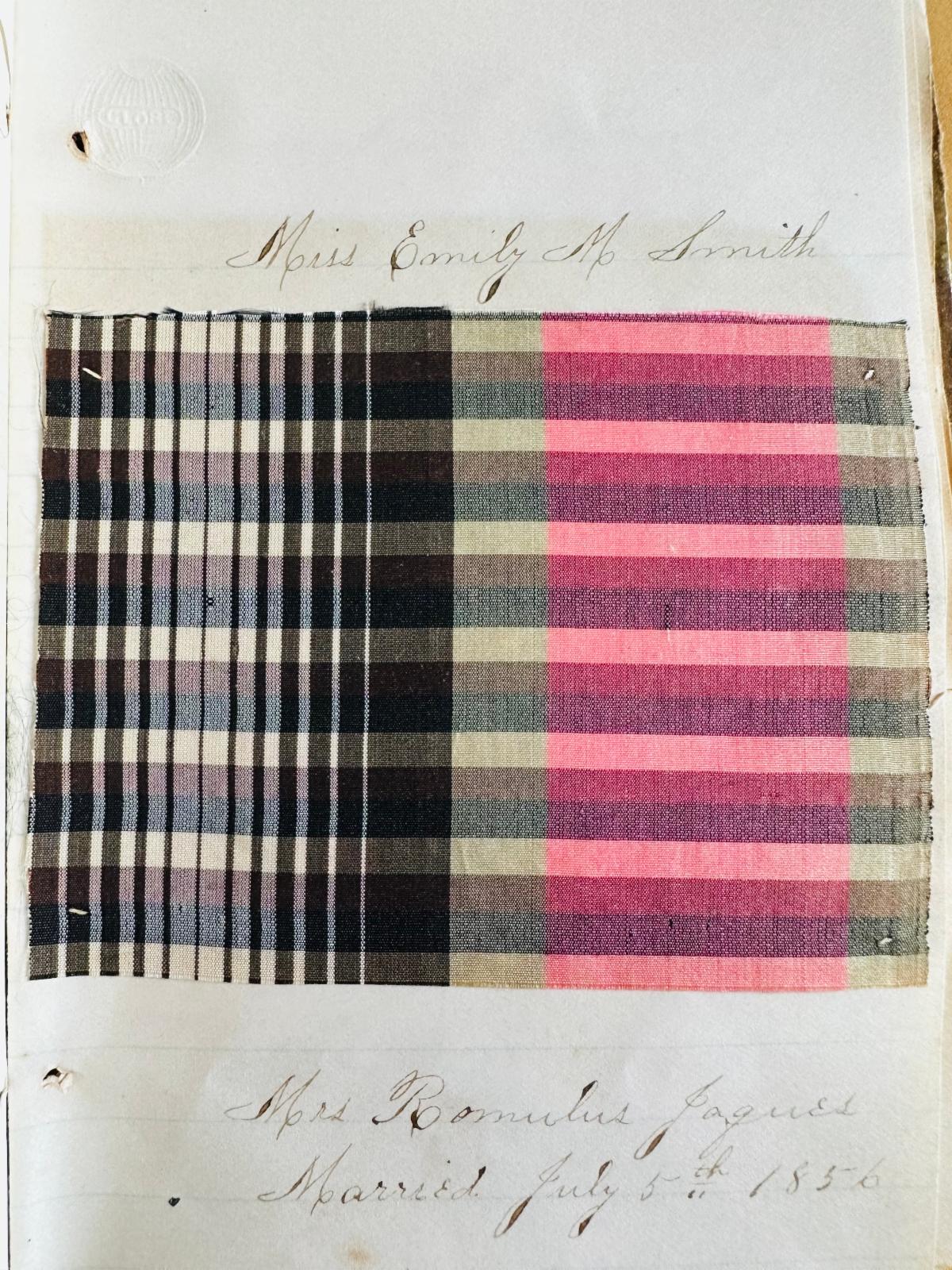
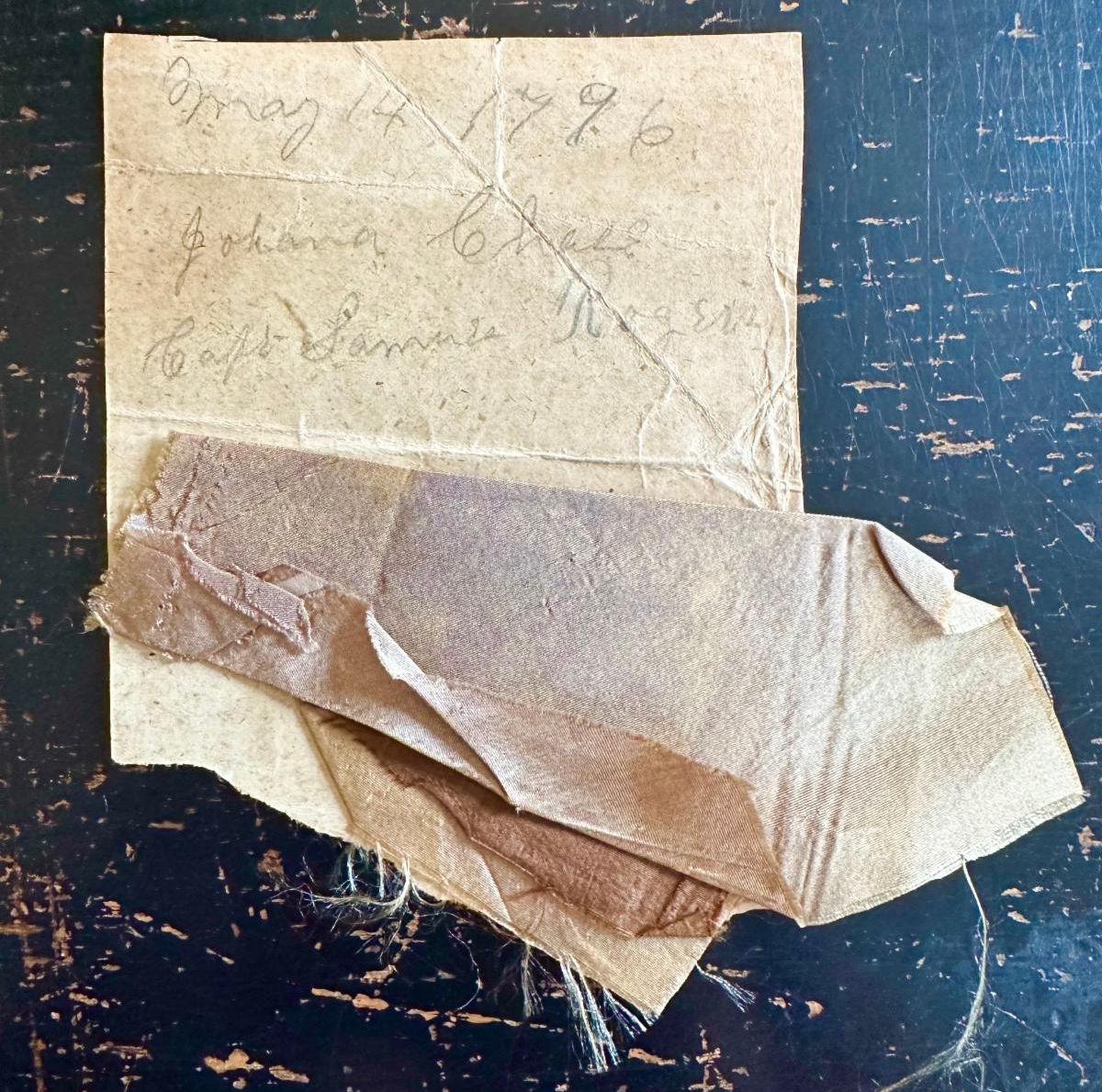
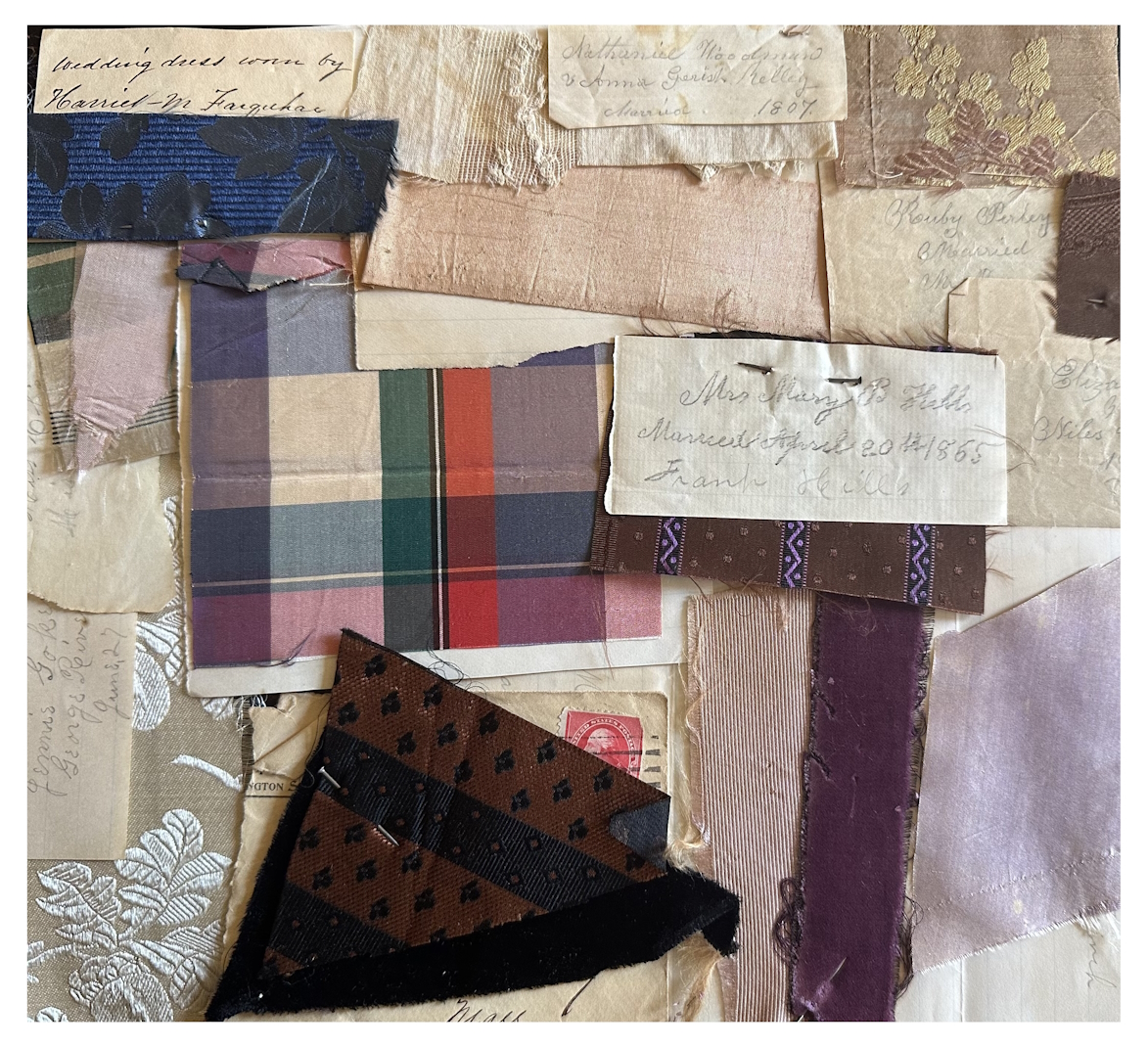
One such item showed up in the mail in September: a collection of close to 200 textile samples from local (mostly West Newbury) women’s wedding dresses, spanning well over a century between 1781 and 1916. Each small piece of fabric, some smaller than an inch square, ostensibly a scrap from the dressmaking process, is stitched to a slip of paper noting the maiden and married names of the bride and the date of the wedding. Many are fastened into a hand-made album bound with brown silk ribbon, but even more are loose, each stitched or pinned to a scrap of paper or a small envelope, inscribed with the couple’s information, likely intended for an album, but never having made it.
| |
Blue silk – Frances M. Currier married Benjamin S. Nelson January 15, 1872 | |
|
Plaid silk – Emily M. Smith married Romulus Jaques July 5, 1856
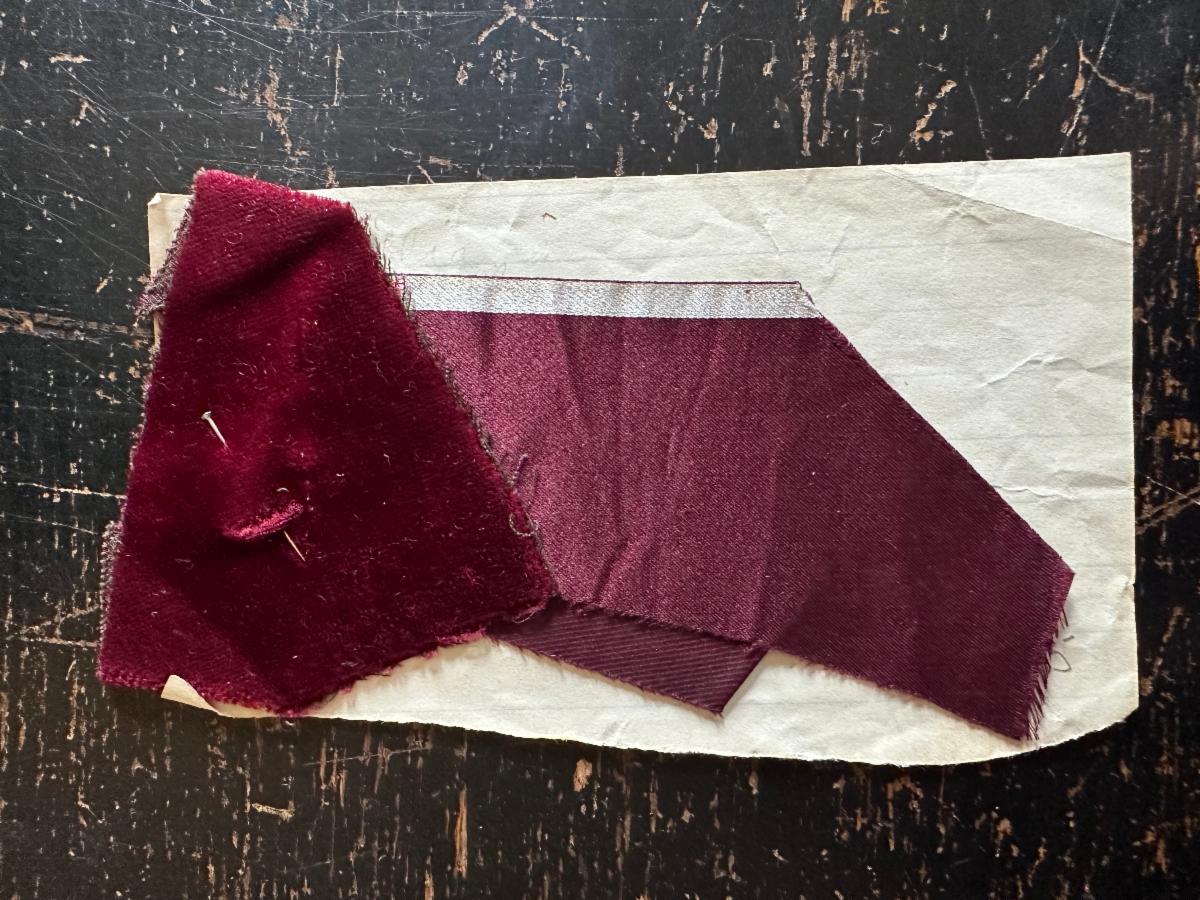
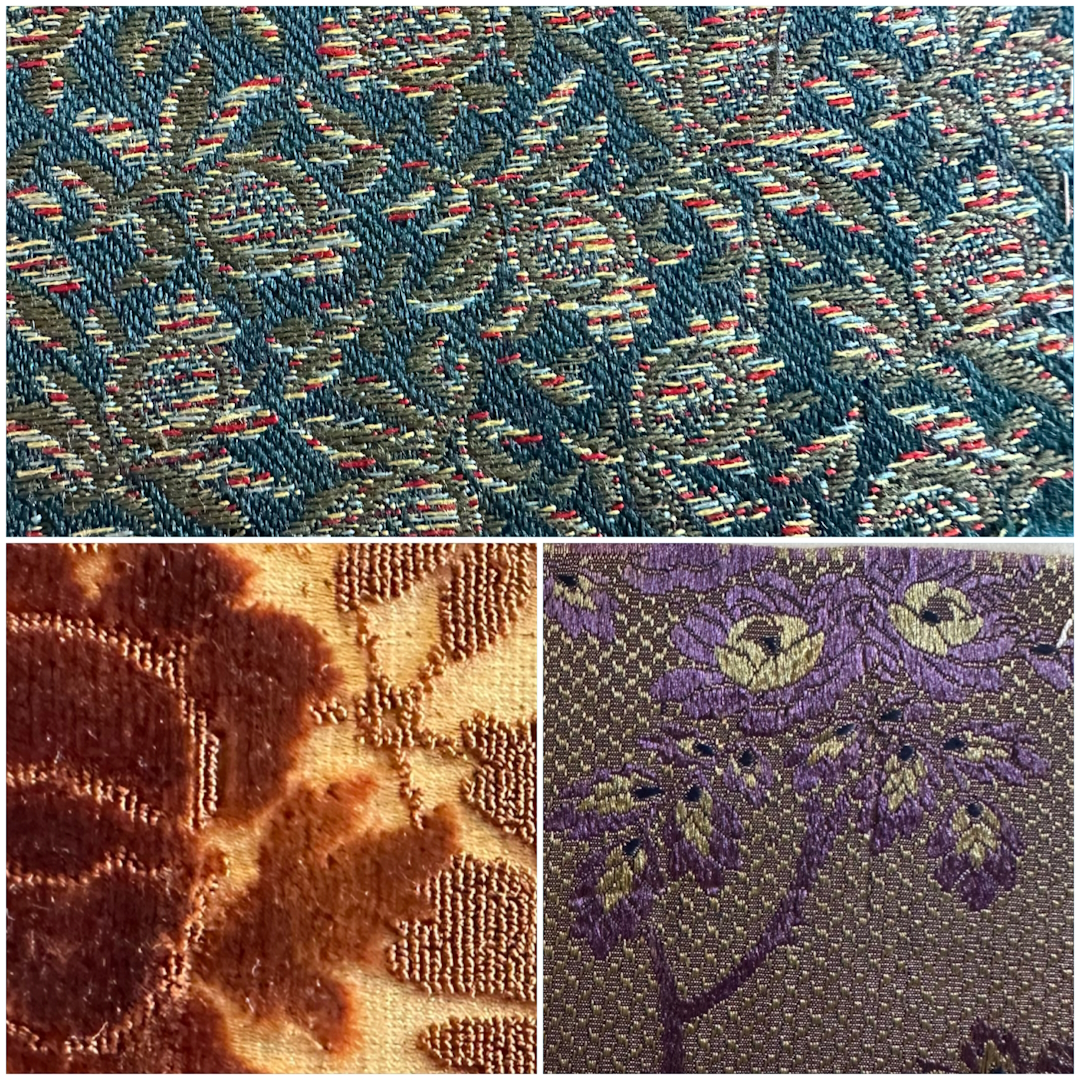
While a wedding dress in a color other than a shade of white is seldom seen today, that wasn’t the case until England’s Queen Victoria wore a white dress at her wedding to Prince Albert in 1840. She chose to have her dress made of white Honiton lace, not for aesthetic or symbolic reasons, but to boost the struggling factory where the fabric was made. Before that, brides simply wore their best dress, whatever color it happened to be. But after Victoria, the association with royalty elevated the white gown, and it wasn’t long before well-to-do brides began emulating the Queen. As their dresses were often worn again and again after the big day, the white wedding gown symbolized wealth more than purity, since the wearer had to be able to afford to have it cleaned often. White samples in this textile collection are rare. While the majority are from the 1850s, 60s, and 70s, the fashionable white wedding had apparently not yet made it to West Newbury. These samples range from mulberry velvet to green brocade and silk in every hue; there are prints and laces and bright plaids, pastels and earth tones and jewel tones, gold, silver, and even black.
| |
Mulberry velvet – c. 1885 | |
Varied examples of color and texture. | |
|
One of the oldest swatches, gold silk – Johana Chase married Captain Samuel Rogers May 14 1796
The donor of this fascinating collection, Sandy Katz, then living in Malden MA, acquired it in 1997 when she was a dealer in antique textiles and textile-related items. She ran a series of classes called “Textile Talks,” on all sorts of antique textile subjects, including how to identify old fabrics, dating clothing, and old laces. According to Katz, “one of the students called and said she had this album and was I interested.... of course I was! I loved the fact that it was local and had names and dates.” Sandy compiled those names and dates and did extensive research tracing many of couples’ genealogies and donated it along with the collection.
This brings us to the obvious question, who was the collector? Who was saving for posterity multiple generations of wedding dress scraps and keeping with such care the names and dates of the nuptials? Was it one person, collecting vintage scraps of their neighbors’ mothers’ and grandmothers’ dresses, or was the collection started, handed down, and continued over the course of multiple lives? Was it a seamstress? A genealogist? The samples in the bound album are not in chronological order, or any discernible order, leading us to believe they likely weren’t collected contemporaneously. While we can’t be certain, evidence points not to a seamstress or a genealogist, but to a naturalist and well-regarded photographer and taxidermist from West Newbury named Jessie Benton Jaques.
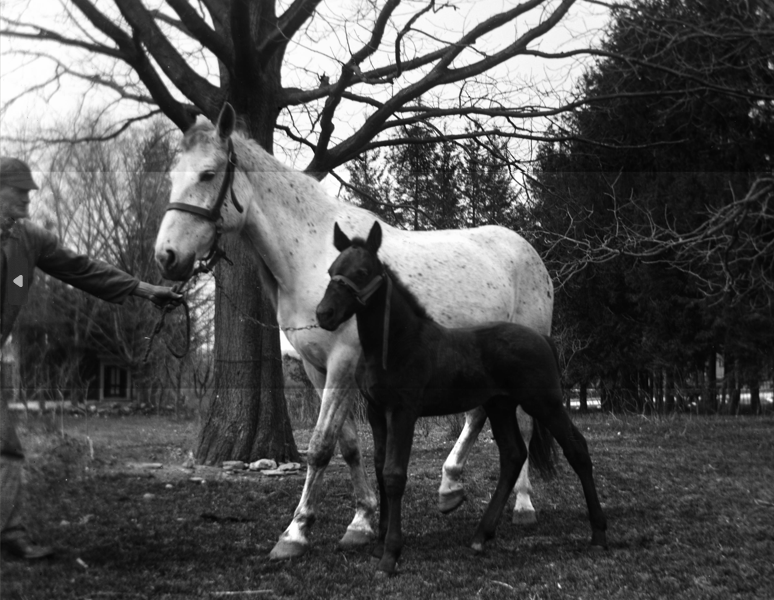
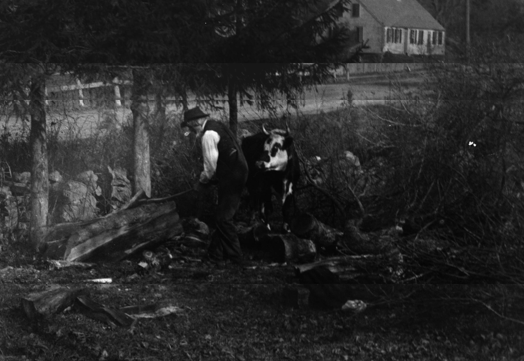
Born in 1856, Jessie Jaques lived her whole life in West Newbury, much of it at 87 Main St. in the family home where she lived both as a child and again after her mother Mary Ann Bartlett died in 1903. She took care of her father Alonzo Jaques, a noted abolitionist, newspaper columnist, staunch advocate for women’s suffrage, and friend of John Greenleaf Whittier, until Alonzo’s death in 1922 at the age of 101. She was active in the West Newbury Women’s Club and The Handy Workers. She was a well-known photographer who documented much of her hometown and its residents. Her photographs reveal a keen eye for the natural world and an awareness of the ephemeral moments that comprise our lives.
| |
Photo by Jessie Jaques, date unknown | |
Jessie’s photo of her father Alonzo chopping wood with a cow supervising | |
|
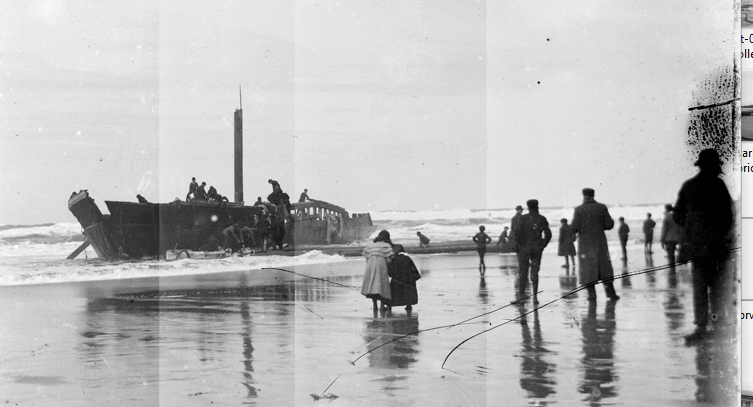
Photo of the wreck of the Jennie Carter by Jessie Jaques – Salisbury, 1894
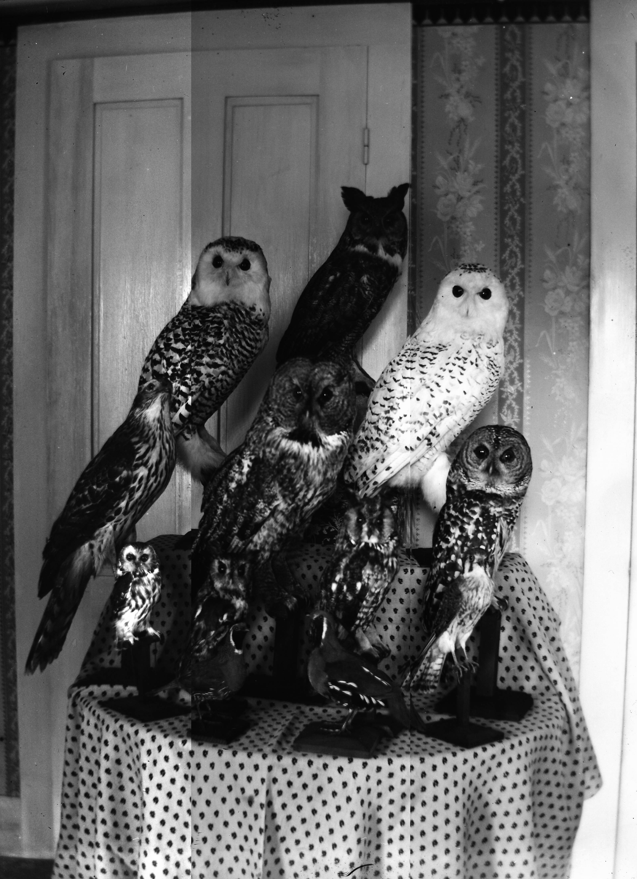
Jessie learned taxidermy from her father, who was known for his small stuffed mammals, while she specialized in avian subjects, once mounting an eagle with a 7-foot wingspan. In 1938, a year before her death, she donated an extensive collection of her stuffed West Newbury birds in a large wood and glass case to the Central School.
| |
|
Jessie’s photograph of her taxidermy – date unknown
Jessie herself never married. While we cannot be certain she was in fact the collector that amassed this collection of wedding dress scraps, it seems a tantalizingly plausible Victorian pastime for one so intent in her other hobbies on preserving time and place. The collection is full of the names of her West Newbury family and neighbors. Chase, Noyes, Bartlett, Little, Poore, and of course, Jaques. Her parents, grandparents, sister, aunt, and other relatives are all represented in the collection. According to Museum of Old Newbury resident costume historian Lois Valeo, this collection is a treasure because “it gives an unusual snapshot into style of the day and what women were doing. It’s a very charming and unique tangible record revealing lots of information about color, fashion trends, technology, and the spirit of the times.” Though this collection may always keep some secrets from us, it is a treasure trove of genealogical and material history information, opening a window into the stories of generations of West Newbury woman, not least its fascinating collector.
If you would like to see the collection, viewings are available by appointment for our members. If your West Newbury ancestors were married in this time frame, or if you have any insight into the origin of this collection, please email sierra@newburyhistory.org. We’d love to find a picture of one of the brides!
| |
|
Please save the dates:
-
December 2 & 3: Holidays at the Cushing House
-
December 3: Member Holiday Party (sign up coming soon)
-
December 9: Annual Garrison Lecture at Old South Church
-
December 21: Solstice in the Cemetery: Night Walk Through Oak Hill
Visit www.newburyhistory.org/calendar for details and to reserve your spots!
| |
|
The Towle Photos of Arthur Schuh
...by Kristen Fehlhaber, Associate Director
| |
|
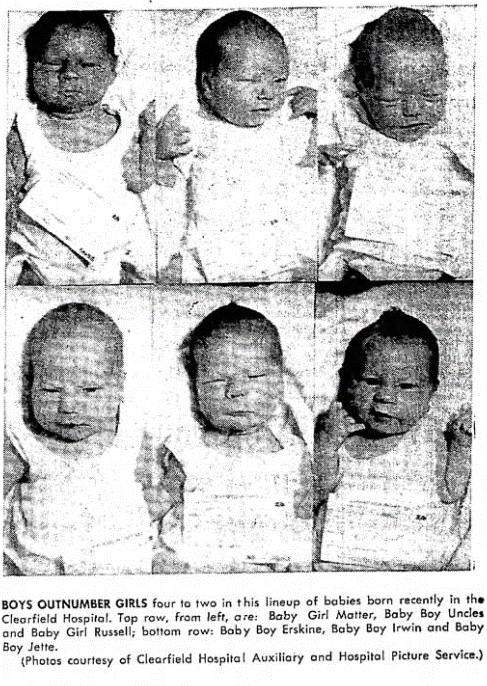
Arthur Schuh made his career photographing babies. Lots of them. Founded in the 1950s, Hospital Picture Services offered new parents a photo of their baby, taken in the hospital, and delivered to them in three days (women were in the hospital for a week at that time). Schuh was president of the company responsible for developing the camera technology that was installed in hundreds of hospitals across the country. Hospitals got a percentage of the sales, parents got a sharp photo of their newborn, and Hospital Picture Services grew.
| |
|
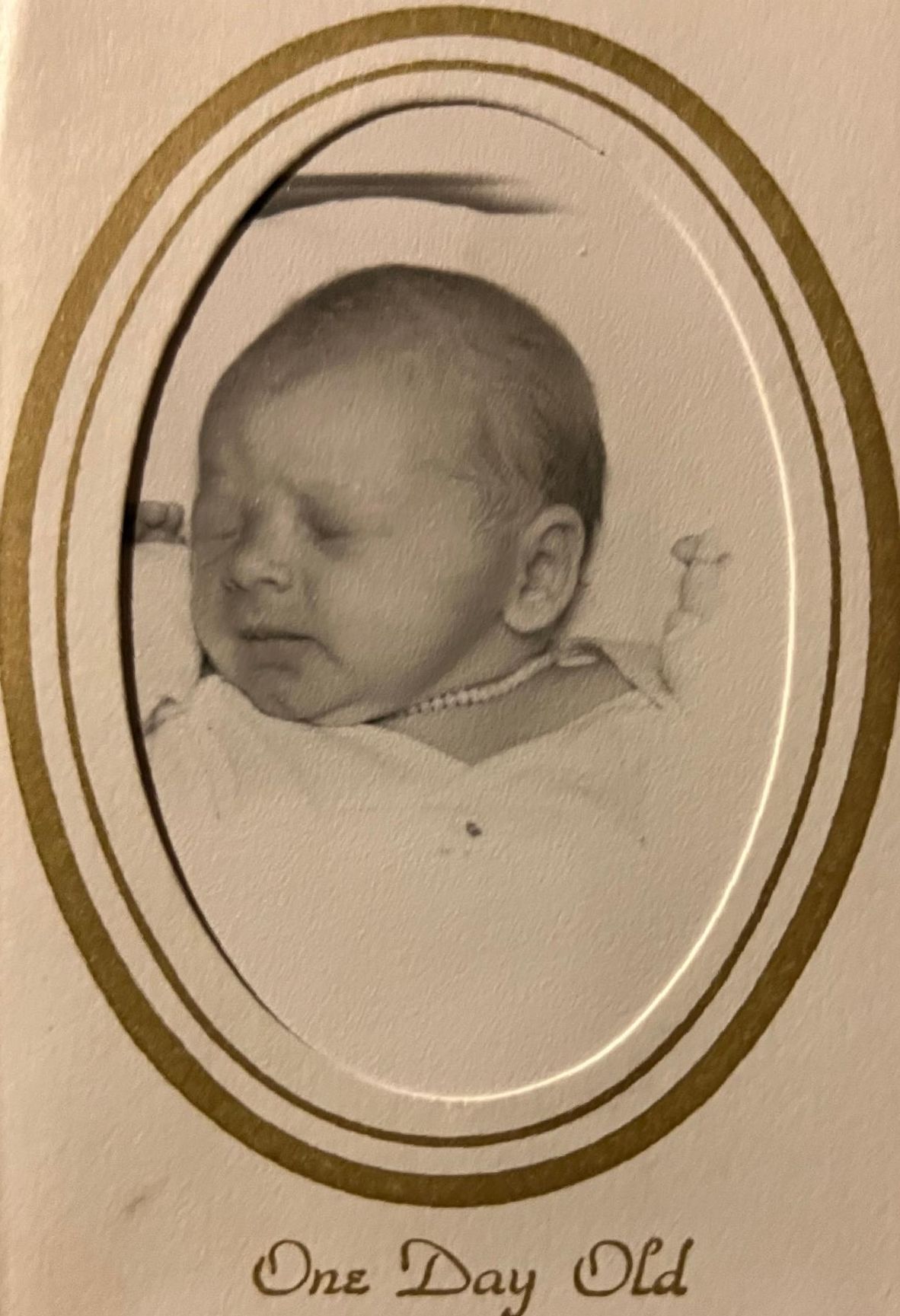
Newborn photos by Schuh's Hospital Picture Service were often featured in local newspapers. "One Day Old" image courtesy of the author.
What does this have to do with Old Newbury? Schuh, born in Quincy, MA, lived in this area for about 18 months, beginning in the late summer of 1940. Fresh out of Harvard Business School, he got a position at Towle Silver and lived as a boarder at both 4 High Road and 49 High Street. His passion for photography was already in place when he came to Newburyport.
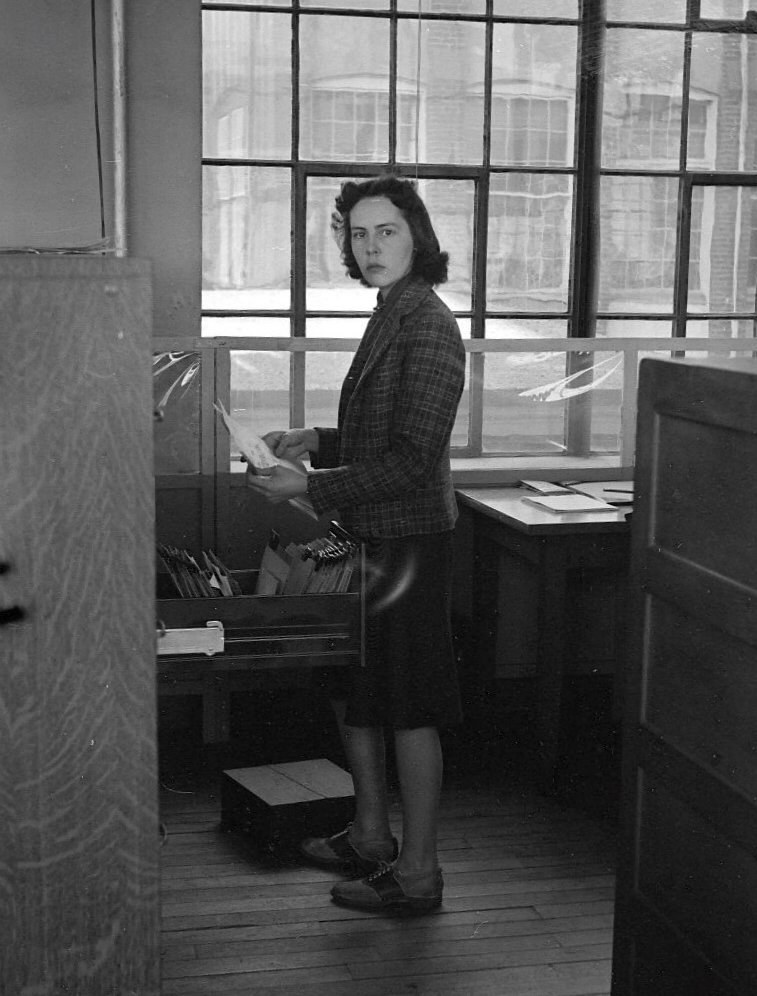
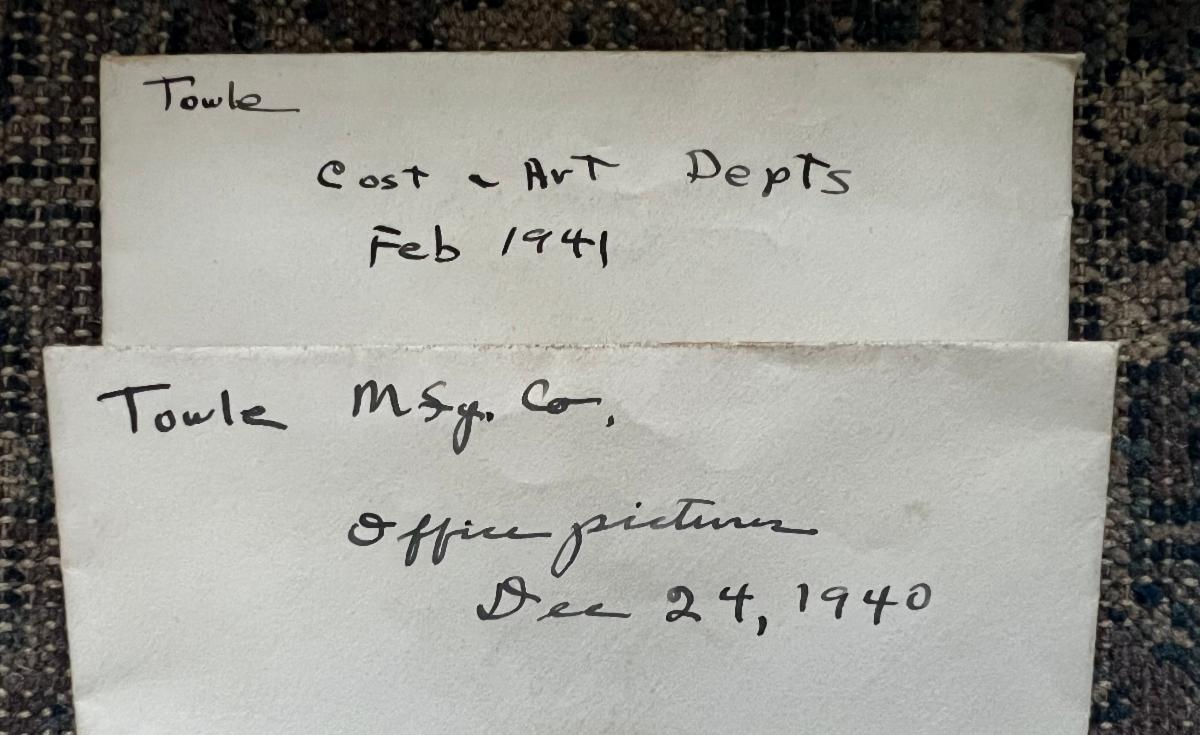
Soon after starting at Towle, Schuh began taking personal photos of his workplace. After he took the photos and made prints, he pasted them in an album and had the subjects sign their names next to the photos. It seems that Schuh gave away prints, too, as one such print was given to the museum years ago. For a researcher, the album is a goldmine; the photos not only have names, but signatures next to them.
Schuh’s daughter Joanne Smith donated this album, along with additional photos and negatives. Arthur Schuh seemed to spend his brief time here shooting portraits and weddings, as well as photographing historic homes in his neighborhood.
| |
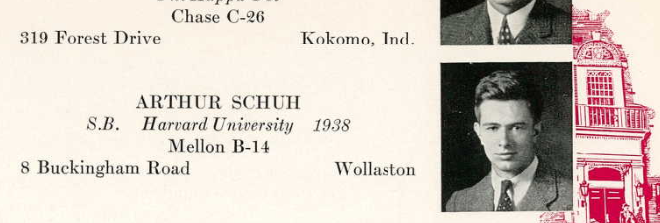
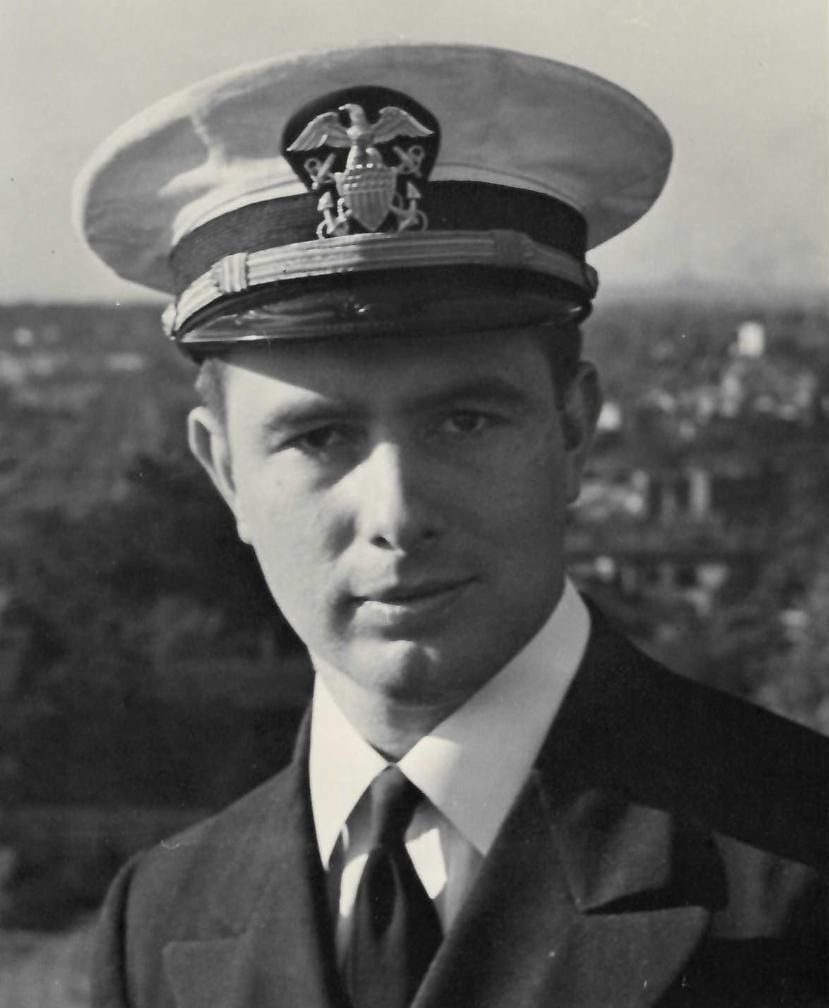
Schuh in his Harvard Business School Class Book of 1940. | |
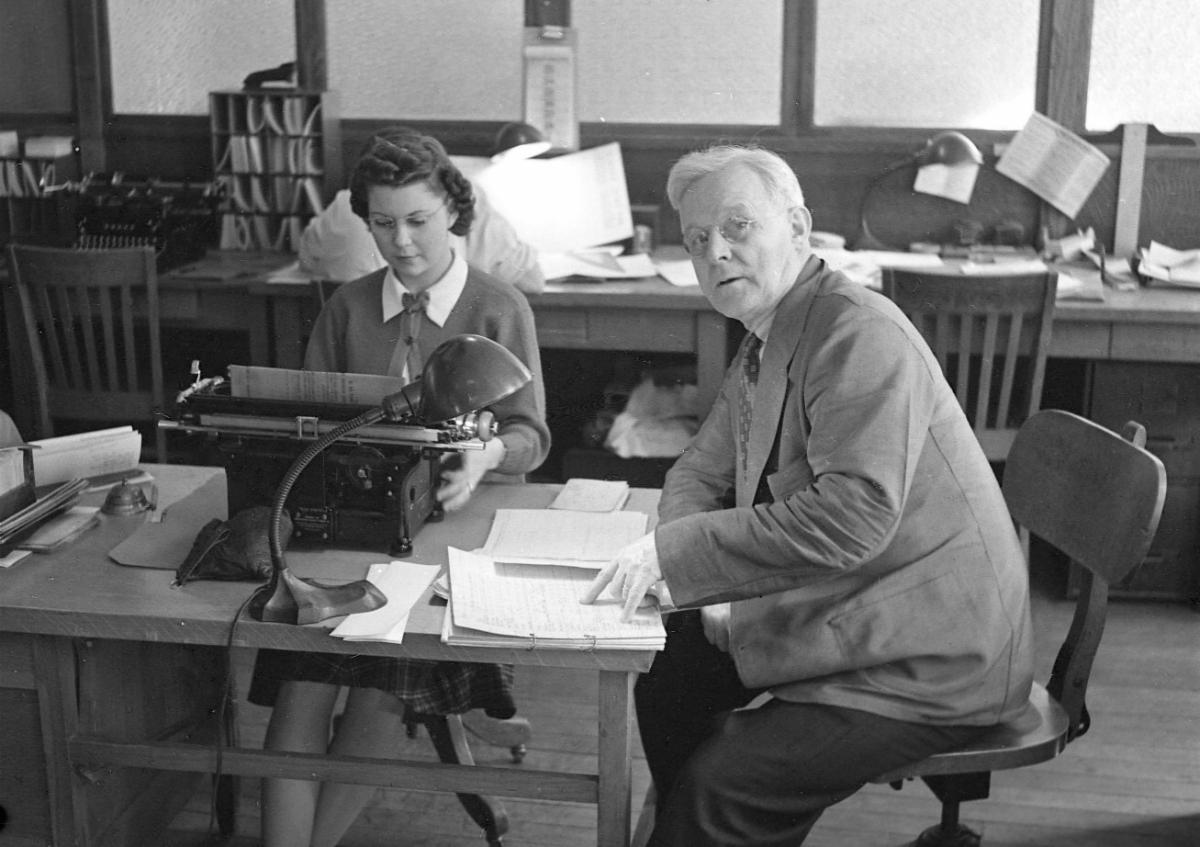
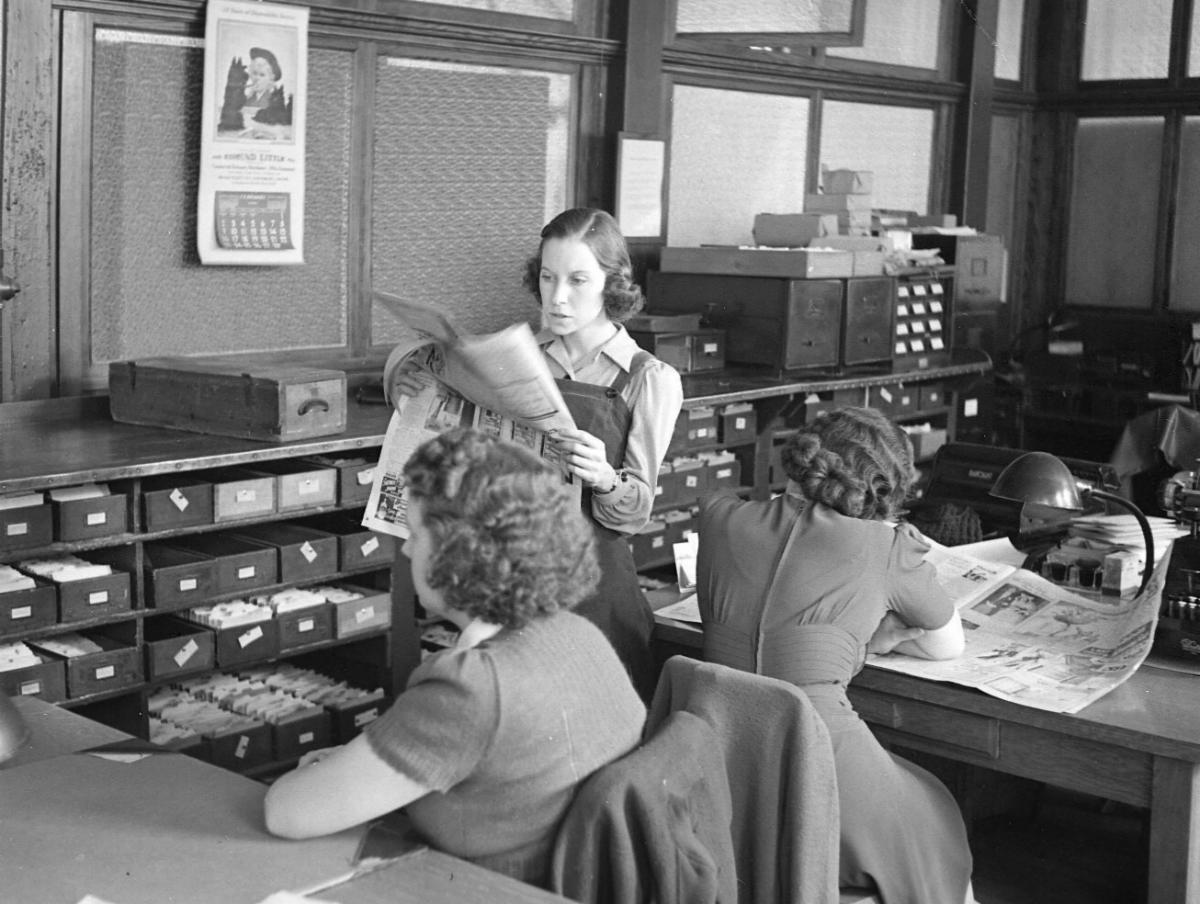
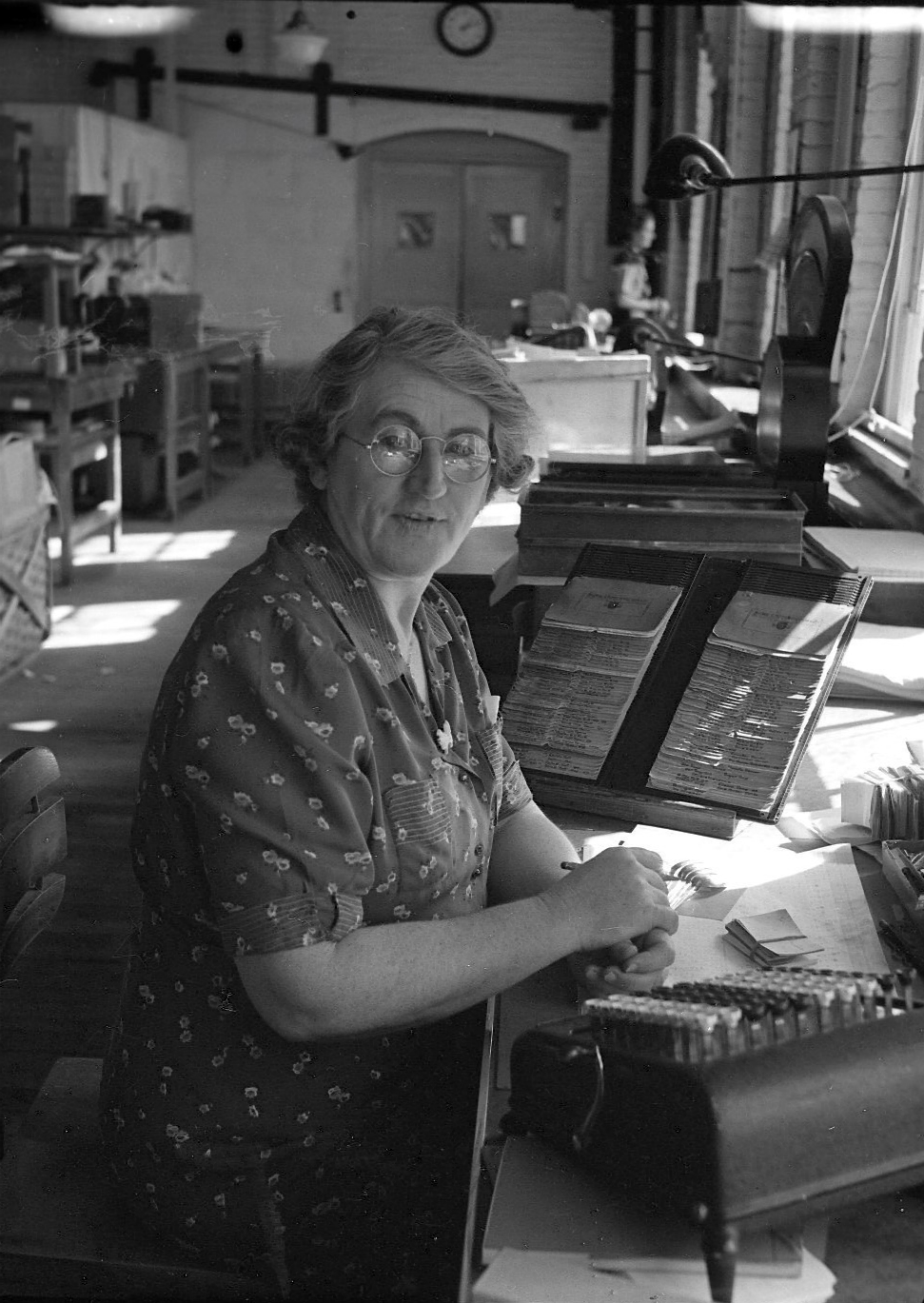
The Towle photos show a mix of younger and older workers, both men and women, many of them workers in the Cost & Art Departments. Roy Hardison is working with Vena Searway. In February, 1941, a headline grabbed the attention of Louise Searway. Freda Bryant is working with spoons. For another photo, he interrupts Jean Kennedy while filing (more on her later). | |
|
From the top: Vena Searway and Roy Hardison; Gertrude Gault and Louise Searway (reading the paper); Alfreda "Freda" Bryant; Jean Kennedy at the file cabinets.
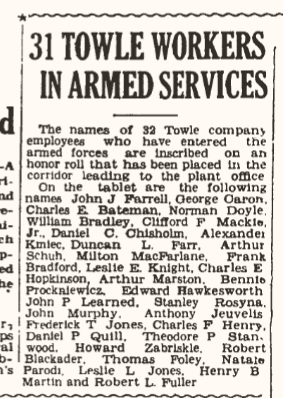
Schuh’s time in Newburyport would end abruptly in December 1941, when he received a commission as an ensign in the U.S. Naval Reserve. Many others at Towle would join the armed forces; his name would appear on a plaque of Towle employees in the war in late 1942.
| |
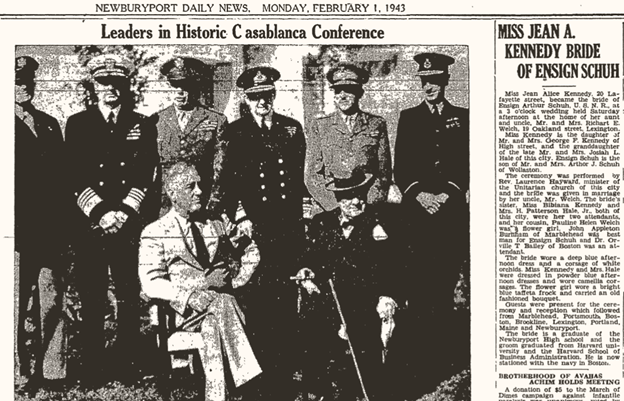
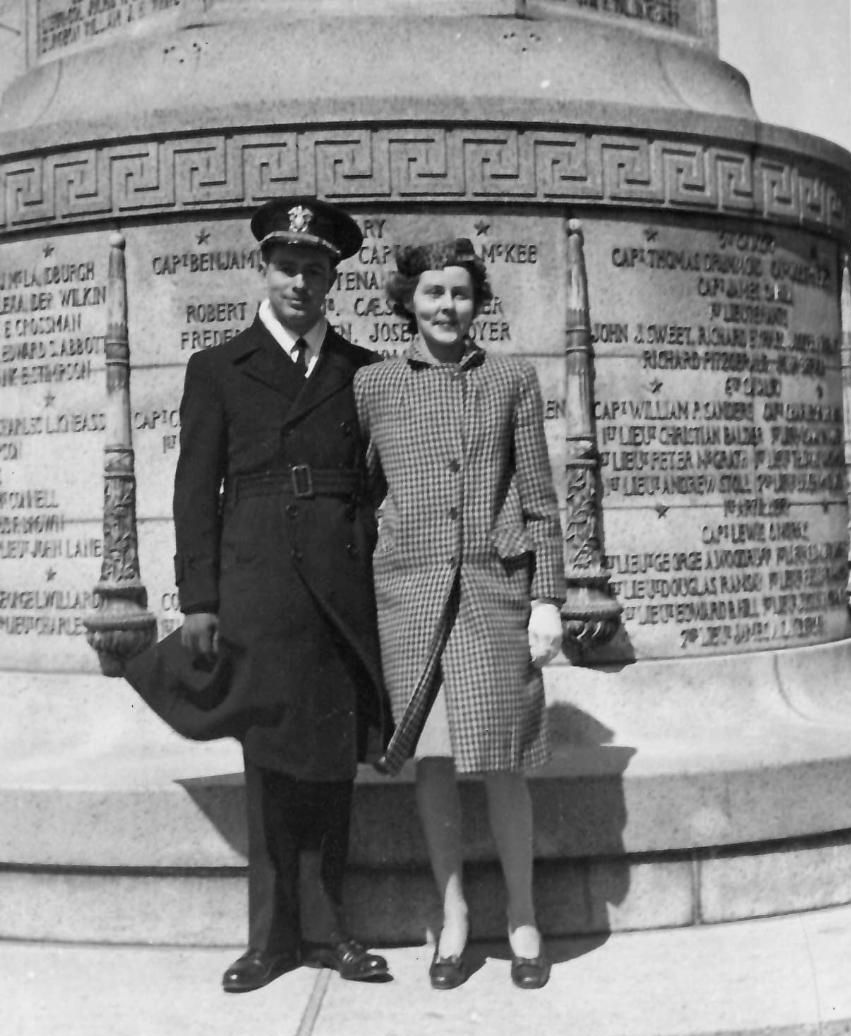
Schuh was back in town in 1943 to marry Jean Kennedy, the woman he photographed at the filing cabinet. They would soon head together to San Francisco, and he would go on to serve in the Philippines. They would never live in Newburyport again. | |
Above, marriage announced next to photo of Roosevelt and Churchill. Below, the newlyweds stopping at West Point on their way west. | |
|
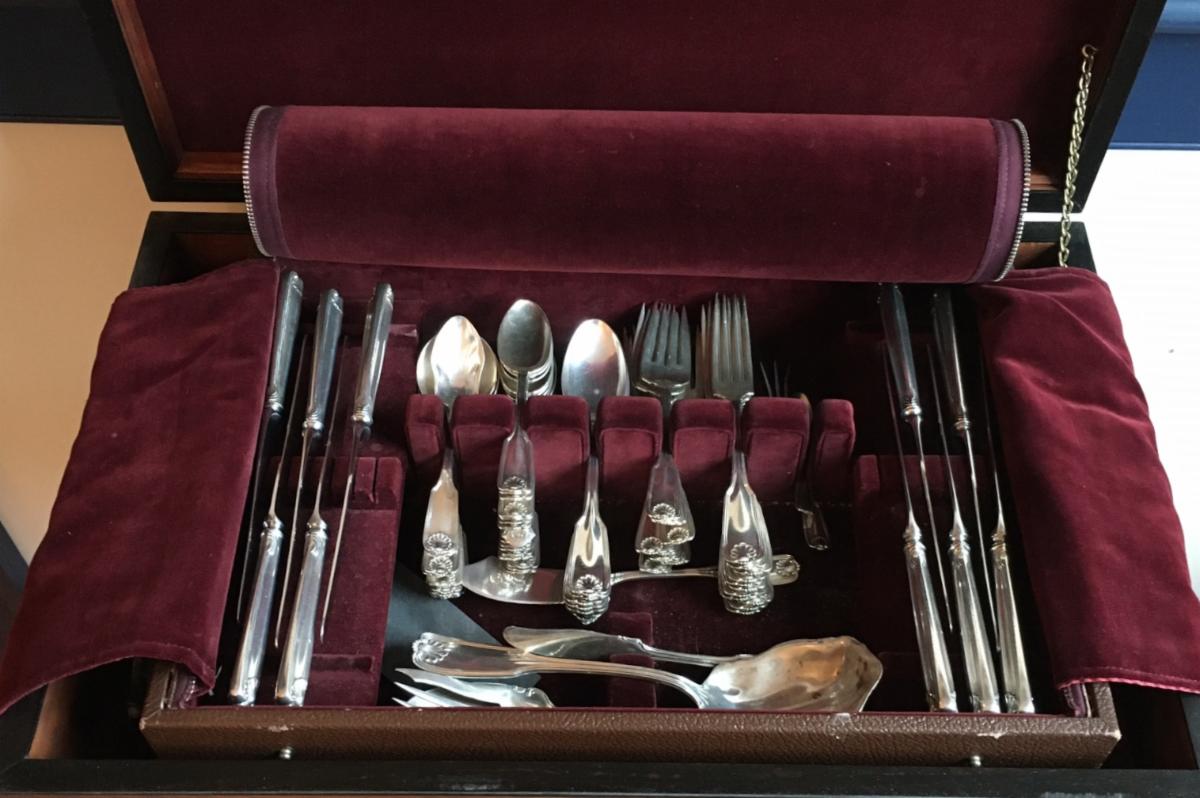
The couple received a set of Towle Silver (the Benjamin Franklin pattern) as a wedding gift from the company. It is still used by their daughter.
After the war, Schuh connected his passion for photography to his work life through his Hospital Picture Services. Kudos to the man who believed in the importance of capturing life’s moments and who believed in labeling everything!
| |
|
Below is a list of people in Schuh’s 1940-1941 Towle album. If there is someone whose photo you’d like to see, please reach out to the museum at info@newburyhistory.org.
Parmira Arata, Mildred Ballou, Roderick Brooks, Freda Bryant, Walter Bryant, Hallett A. Carey, James M. Carey, Barbara Chesley, Donny Chisholm, Jack Coffin, Bob Davenport, Roger F. DeMerritt, Esther T. Dodge, Elizabeth Dow, Edith Erickson, J.O. Evans, Duncan Farr, Jack Farrell, Helen Fennelly, Julie Foley, Barbara "Bobby" Gagnon, Charlotte Gale, Gertrude Gault, Martha B. Gremore, Roy P. Hardison, Ruth Hopkinson, June Hudson, Aram Kalashian, Peggy Kelleher, Gertrude M. Kelley, Jean Kennedy, Jerry King, Jack Learned, Gert Littlefield, Kay Lucey, Al Lunt, Evelyn L Melvin, Joe Morrow, Esther Noyes, Helen V. O'Brien, Sally Parsons, Thelma H. Plemmons, Betty Poland, Ross Pollard, Helen Poznek, Ethel Rand, Hazel Roberts, Louise Searway, Vena Searway, Camilla M Smith, Cato Smith, Evelyn Southwell, Robert J Stevens, Mary L. Taylor, Randolph L. Thurlow, Marion S. True, Hazel White, E. Whitney (female), Carmen Worcester
With thanks to Joanne Smith for her generous assistance with this story.
| |
Something Is Always Cooking... | |
|
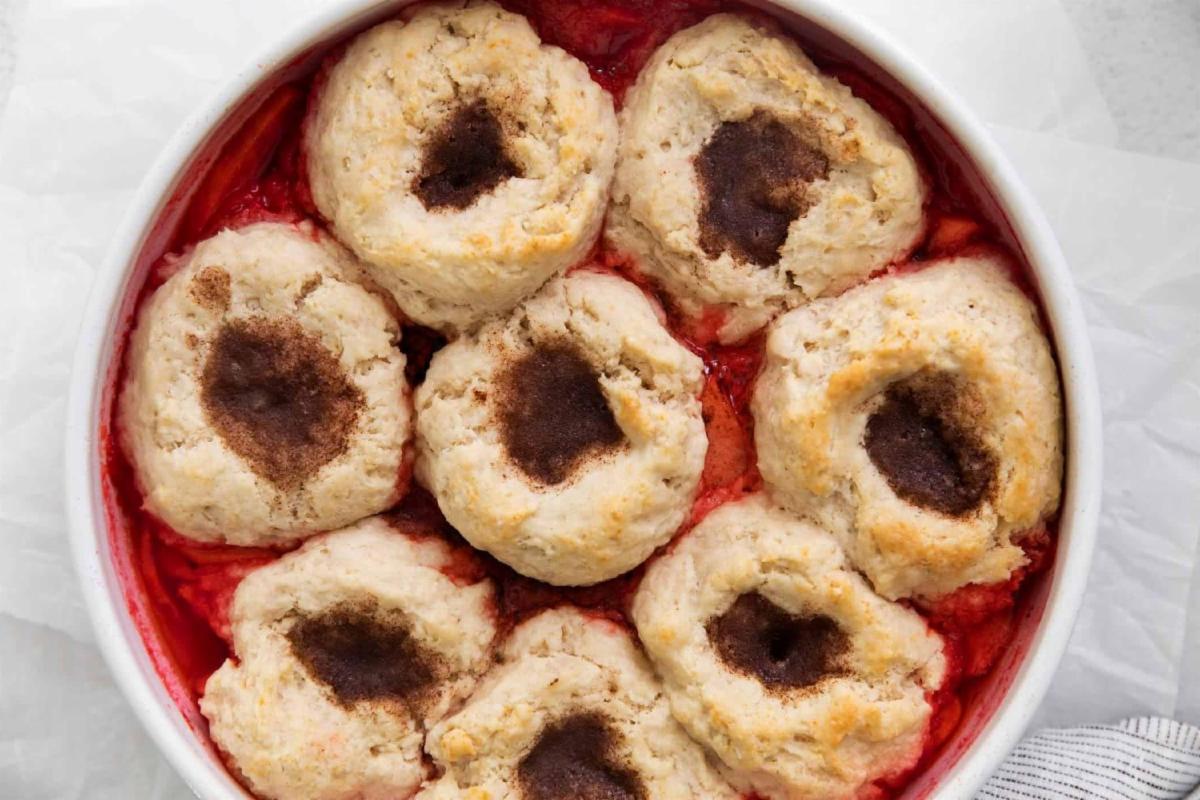
It is the rare recipe card in the collection of Emily Noyes Poore that pronounces a dish “Very Good”! These drop biscuits from her sister Louise’s 1960’s recipe, swim in a bright, tart cinnamon base and are everything we love about fall – and dessert. Use crisp apples right from the tree if you can – Mac and Cortland work beautifully. - Bethany Groff Dorau
Apple Cinnamon Puffs
1/3 cup sugar (modern recipes call for up to 1 full cup)
1 cup water
¼ cup Red Hots Candy or ½ tsp. red food coloring (and cinnamon schnaps if you’re feeling daring!)
Boil these ingredients to a syrup (about 5 minutes)
1.5 pounds firm tart apples, peeled and thinly sliced
Place apples in a greased, shallow pan or dish and pour cinnamon syrup over them.
Sift together:
1.5 cups all-purpose flour
2 teaspoon baking powder
1/2 teaspoon kosher salt
Cut into mixture:
1/4 cup shortening
Add and stir to make soft dough:
3/4 cup milk
Drop 10-12 spoonfuls of dough on top of apples
Make a dent in the top of each spoonful of dough. Melt 2 tbsp butter and mix with 2 tbsp sugar and ½ tsp cinnamon. Fill into the holes. Bake 25-30 minutes at 450 degrees and serve warm with cream or ice cream.
| |
|
Click the image to do the puzzle
Do the puzzle and spend a little more time with Jessie Jaques' collection of wedding dresses. They date from 1781 to 1916.
| | |
Museum e-Newsletter made possible through the
generosity of our sponsors:
| |
| | | |