|
Dear Colleagues,
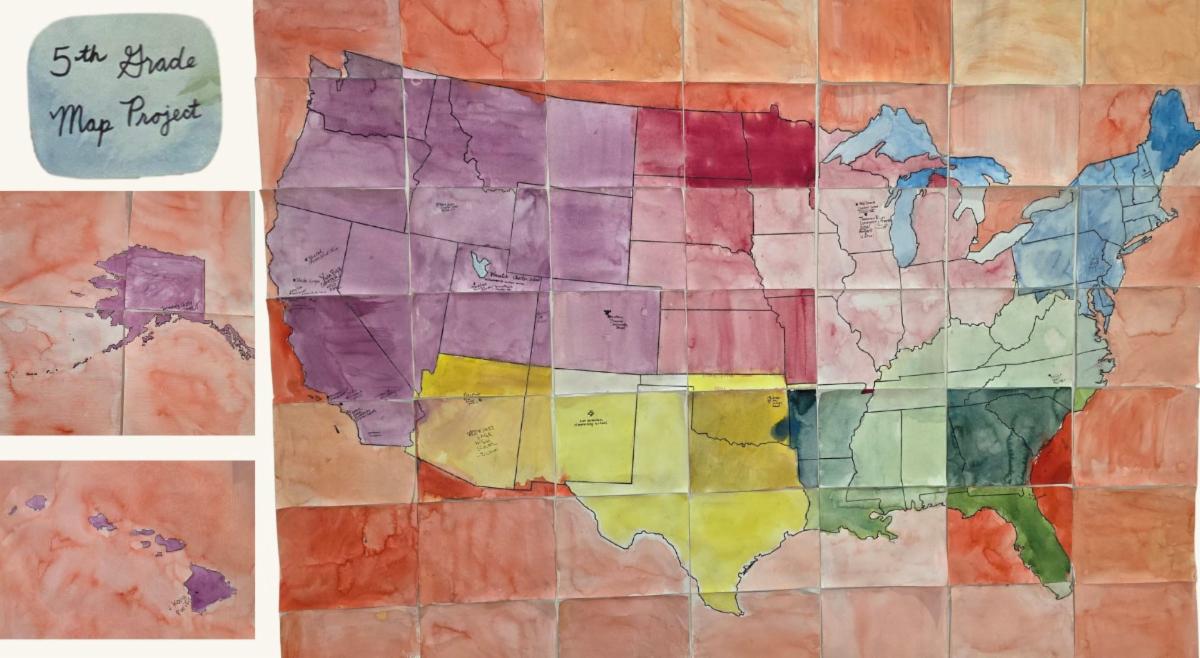
One of the true gifts of my job is that I get to travel and visit schools. I am slowly working my way through our member schools - quite a task as they are spread across 15 states, from Kona, Hawaii, to Fairbanks in Alaska, to Conway, New Hampshire, to Jacksonville, Florida. I have managed three of these four corners to date, and have traveled over or through diverse land and seascapes, marveling at the incredible contrasts of terrain, color, rocks, sea, lakes, and rivers.
As a child growing up in a remote part of the world, New Zealand, I had vague ideas of traveling one day, but had no concept of what that would actually look like. Distance was a very real factor in my childhood: people often traveled by ship, with Australia being the most common destination. There was still a colonial mentality - longer travel might mean going “home” to England or Scotland, despite the fact that home had actually been in New Zealand for a generation or four. The prevailing culture was decidedly British, which often created strange disconnects due to the reversal of seasons and utterly different landscapes. The Maori culture was, shamefully, not a dominant factor. Despite rapid changes in my youth and clear evidence of a shrinking world, a pioneer mindset still prevailed, creating practical thinking and problem solving. Many things could be fixed with a bit of #8 wire (the New Zealand equivalent in those days for duct tape, and a symbol of resourcefulness), a holdover from days when you didn’t know when the next supply ship would arrive with replacements.
In high school, I discovered and fell in love with geography - literally, earth writing. This was in part a testament to the powerful impact of a teacher: I can still see Mr. Ginniver and his maps as he enthusiastically brought the world alive in our classroom. Exotic place names; oceans; cities all out there waiting to be explored. He brought people into our classroom to share their cultures - the French rugby team was a memorable highlight! There were languages, accents, varieties of food and clothing, all out there. People had accents - it never occurred to me that I also had an accent, although it has stayed with me and I am asked to this day where I am from.
In today’s world, geography, location, and a sense of place seem more important than ever. In a fast changing, uncertain, and challenging time, the feeling of being at home on earth connects and sustains us. Our schools respond to and are influenced and formed by their unique surroundings and the gifts (and, at times, the challenges) of place. I was truly fortunate to be at Kona Pacific Charter School last week, a school that is strongly place-based and takes full advantage of its unique location and land. We are working on what a truly Hawaiian interpretation of Public Waldorf could look like. It is exciting. Next week, I will be in Florida, visiting the Seaside charter schools - three schools, each in a different location, sharing a core and adapting to students and their unique place. I will have an incredible opportunity to compare and contrast two of our four corners!
|