|
The Proactive Technologies Report™ newsletter is a free service of Proactive Technologies, Inc.®
Important stories and information you might have missed
| | News from Worker Development, Industry, the Economy, Education, Science, and much more! | | U.S. Department of Commerce - Bureau of Economic Analysis | |
Gross Domestic Product
Real gross domestic product (GDP) increased at an annual rate of 2.2 percent in the second quarter of 2026 (April, May, and June), according to the third estimate released today by the U.S. Bureau of Economic Analysis (BEA). In the first quarter, real GDP increased 2.5 percent (revised).
Real GDP was revised up 0.7 percentage point from the second estimate, primarily reflecting upward revisions to investment, consumer spending, and government spending. For more information, refer to the "Technical Notes" below. Read Report
Personal Income and Outlays
Personal income increased $66.6 billion (0.2 percent at a monthly rate) in August, according to estimates released today by the U.S. Bureau of Economic Analysis (BEA). Disposable personal income (DPI)—personal income less personal current taxes—increased $68.6 billion (0.3 percent), and personal consumption expenditures (PCE) increased $190.8 billion (0.9 percent). Personal outlays—the sum of PCE, personal interest payments, and personal current transfer payments—increased $190.7 billion in August. Personal saving was $990.2 billion, and the personal saving rate—personal saving as a percentage of DPI—was 4.1 percent. Read Report
Regional Statistics
Today, BEA released GDP by state quarterly statistics for the first quarter of 2005 through the fourth quarter of 2018 as part of the 2023 comprehensive update of the Regional Economic Accounts. This completes the 2023
Distribution of Personal Income
US Department of Commerce – Bureau of Economic Analysis
The Bureau of Economic Analysis today released updated prototype statistics showing how personal income is distributed across households in each state. This release also contains new statistics showing how disposable personal income (personal income after taxes) is distributed across households in each state. See Data Tables
Direct Investment by Country and Industry, 2025
The U.S. direct investment abroad position, or cumulative level of investment, increased $438.1 billion to $7.14 trillion at the end of 2025, according to statistics released today by the U.S. Bureau of Economic Analysis. The increase was led by a $350.2 billion increase in the position in Europe, primarily in the United Kingdom and Luxembourg. By industry, manufacturing had the largest increase, led by chemical manufacturing.
The foreign direct investment in the United States position increased $266.0 billion to $5.86 trillion at the end of 2025. The increase was led by a $182.4 billion increase in the position from Europe. The largest increase in position was from German multinationals, with a $49.0 billion increase, and the second-largest increase in position was from Canadian multinationals, with a $39.2 billion increase. By industry, manufacturing increased the most, led by electrical equipment and components manufacturing. Read Report
| | | U.S. Department of Commerce - Bureau of the Census | |
Advanced Report on Durable Goods Manufacturers’ Shipments, Inventories, and Orders
New orders for manufactured durable goods in August, down following two consecutive monthly increases, decreased $0.1 billion or virtually unchanged to $338.6 billion. August 2026: -0.0° % Change; July 2026 (r): +0.9° % Change. Read Report
Manufacturers’ Shipments, Inventories, and Orders
New orders for manufactured goods in July, up following two consecutive monthly decreases, increased $5.8 billion or 0.9 percent to $663.6 billion. July 2026: +0.9° % Change; June 2026 (r): -0.2° % Change. Read Report
Manufacturing and Trade Inventory and Sales
U.S. total business end-of-month inventories for July 2026 were $2,764.7 billion, up 0.8 percent (+/- 0.1 percent) from last month. U.S. total business sales were $2,120.7 billion, up 0.3 percent (+/- 0.2 percent) from last month. July 2026: +0.8 % Change in Inventories; June 2026 (r): +0.1* % Change in Inventories. Read Report
Monthly Wholesale Trade
July 2026 sales of merchant wholesalers were $801.3 billion, up 0.8 percent (+/- 0.4 percent) from last month. End-of-month inventories were $958.9 billion, up 1.3 percent (+/- 0.2 percent) from last month. July 2026: +1.3 % Change in Inventories; June 2026 (r): +0.4 % Change in Inventories. Read Report
Household Pulse Survey
What is the Household Pulse Survey?
The U.S. Census Bureau, in collaboration with multiple federal agencies, is in a unique position to produce data on the social and economic effects of coronavirus on American households. The Household Pulse Survey is designed to deploy quickly and efficiently, collecting data to measure household experiences during the coronavirus pandemic. Data will be disseminated in near real-time to inform federal and state response and recovery planning. Read Data
Small Business Pulse Survey
The Small Business Pulse Survey (Business Pulse) measures the effect of changing business conditions during the Coronavirus pandemic on our nation's small businesses. Business Pulse complements existing U.S. Census Bureau data collections by providing high-frequency, detailed information on the challenges small businesses are facing during the Coronavirus pandemic as well as their participation in federal programs such as the Paycheck Protection Program. Read Report
Monthly State Retail Sales
The Monthly State Retail Sales (MSRS) is the Census Bureau's new experimental data product featuring modeled state-level retail sales. This is a blended data product using Monthly Retail Trade Survey data, administrative data, and third-party data. Year-over-year percent changes are available for Total Retail Sales excluding Nonstore Retailers as well as 11 retail North American Industry Classification System (NAICS) retail subsectors. These data are provided by state and NAICS codes beginning with January 2019. The Census Bureau plans to continue to improve the methodology to be able to publish more data in the future. Access Tables
Economic Indicators
A composite of many of the requested domestic facts and figures. Visit Table
Data Profiles
View Quick Facts statistics across a variety of topics for your state, county or town. View Data
Annual Industry Economic Account Statistics
The industry economic accounts, presented both in an input-output framework and as annual output by each industry, provide a detailed view of the interrelationships between U.S. producers and users and the contribution to production across industries. These accounts are used extensively by policymakers and businesses to understand industry interactions, productivity trends, and the changing structure of the U.S. economy. Access Data
Automotive Statistics - NEW
The Automotive Statistics page is a centralized source for high-frequency automotive-related economic data from the U.S. Census Bureau. Information reflects the most recent data available as of the “Last updated” date shown to the right. Because publication schedules vary, the data may reflect different time periods. View Data Page
| | | U. S. Department of Labor Statistics | |
Consumer Price Index
The Consumer Price Index for All Urban Consumers (CPI-U) increased 0.4 percent on a seasonally adjusted basis in August after rising 0.1 percent in July, the U.S. Bureau of Labor Statistics reported today. Over the last 12 months, the all items index increased 3.4 percent before seasonal adjustment.
The index for gasoline rose 3.9 percent in August, accounting for over one third of the monthly all items increase. The index for energy increased 2.1 percent over the month. The shelter index rose 0.3 percent in August after rising 0.1 percent in July. The index for food increased 0.1 percent over the month, as the index for food away from home increased 0.3 percent.
The index for all items less food and energy rose 0.3 percent after increasing 0.2 percent in July. Indexes that increased over the month include communication, lodging away from home, airline fares, education, and used cars and trucks. Conversely, the index for medical care and the index for motor vehicle insurance were among the major indexes that decreased in August. Read Report
Producer Price Index
The Producer Price Index for final demand moved up 0.4 percent in August, seasonally adjusted,
the U.S. Bureau of Labor Statistics reported today. Final demand prices rose 0.1 percent in July
and decreased 0.1 percent in June. (See table A.) On an unadjusted basis, the index for final
demand increased 5.4 percent for the 12 months ended in August. Read Report
Job Openings and Labor Turnover
The number of job openings was little changed at 7.3 million in July, the U.S. Bureau of Labor Statistics reported today. Hires and total separations both changed little at 5.1 million. Within separations, quits (3.1 million) and layoffs and discharges (1.7 million) were little changed.
This release includes estimates of the number and rate of job openings, hires, and separations for the total nonfarm sector, by industry, and by establishment size class. Job openings include all positions that are open on the last business day of the month. Hires and separations include all changes to the payroll during the entire month. Read Report
Employment Situation Summary
Total nonfarm payroll employment increased by 162,000 in August, and the unemployment rate was unchanged at 4.1 percent, the U.S. Bureau of Labor Statistics reported today. Employment increased in food services and drinking places and in local government education. The information industry lost jobs.
This news release presents statistics from two monthly surveys. The household survey measures labor force status, including unemployment, by demographic characteristics. The establishment survey measures nonfarm employment, hours, and earnings by industry. For more information about the concepts and statistical methodology used in these two surveys, see the Technical Read Report
Unemployment Rate for States
Unemployment Rates for States, Seasonally Adjusted. Read Report
Civilian Labor Participation Rate
For a 20 year chart of the U.S. Civilian Labor Participation Rate. Read Report
| | | |
University of Michigan: Consumer Sentiment (UMCSENT)
The Federal Reserve - St. Louis
View an index of the results of the University of Michigan's monthly Survey of Consumers, which is used to estimate future spending and saving. University of Michigan: Consumer Sentiment, University of Michigan: Consumer Sentiment [UMCSENT], retrieved from FRED, Federal Reserve Bank. Access Latest Report
| | | U.S. Private Sector Job Quality Index |
University of Buffalo - School of Management
The U.S. Private Sector Job Quality Index (JQI) assesses job quality in the United States by measuring desirable higher-wage/higher-hour jobs versus lower-wage/lower-hour jobs. The JQI results also may serve as a proxy for the overall health of the U.S. jobs market, since the index enables month-by-month tracking of the direction and degree of change in high-to-low job composition.
By tracking this information, policymakers and financial market participants can be more fully informed of past developments, current trends, and likely future developments in the absence of policy intervention. Economists and international organizations have in recent years developed other, complementary conceptions of job quality such as those addressing the emotional satisfaction employees derive from their jobs.
For the purposes of this JQI, “job quality” means the weekly dollar-income a job generates for an employee. Payment, after all, is a primary reason why people work: the income generated by a job being necessary to maintain a standard of living, to provide for the essentials of life and, hopefully, to save for retirement, among other things. Read Report
| | | Realtime Inequality - Who Benefits from Income and Wealth Growth in the United States? |
University of California, Berkeley - Thomas Blanchet, Emmanuel Saez, Gabriel Zucman; Department of Economics
Realtime Inequality provides the first timely statistics on how economic growth is distributed across groups. When new growth numbers come out each quarter, we show how each income and wealth group benefits.
Controlling for price inflation, average national income per adult in the United States increased at an annualized rate of 2.2% in the first quarter of 2023, and average income for the bottom 50% grew by 1.5%. National income is similar to GDP and a better indicator of income earned by US residents. Visit the Methodology page for complete methodological details. Review Data
| |
| |
USA Facts Website
USAFacts.org – Steve Balmer, Founder and Former Apple CEO
USAFacts is not-for-profit and nonpartisan. When former Microsoft CEO Steve Ballmer retired from tech to focus on philanthropy, he searched for solid, reliable, impartial numbers to understand what the US government does with tax dollars to help determine the best way to make an impact. How is the money spent? Who is served? What are the outcomes?
Those numbers weren’t readily available. So, he assembled a small team of economists, writers, and researchers to help comb through government data. Their eye-opening report laid the foundation for USAFacts. Today USAFacts reports are provided free as a resource for the American public and US government alike. Access Website
| | | |
Tracking Regulatory Changes in the Second Trump Administration
Brookings Institution
As the Trump administration returns to office for a second term with renewed deregulatory ambitions, the executive branch and its agencies are implementing significant policy changes. The Brookings Center on Regulation and Markets Regulatory Tracker (“Reg Tracker”) provides background information and status updates on a curated selection of significant regulatory and deregulatory changes made by the Trump administration.This tracker allows you to monitor a curated selection of new, delayed, and repealed rules, notable guidance and policy revocations, executive actions, and important court battles across key policy areas such as environmental, health, labor, and more.
The Reg Tracker focuses on major regulatory changes implemented under the current Trump administration. Entries we tracked during the Biden administration and during President Trump’s first term can be accessed through the “Biden” or “Trump Term 1” archive checkboxes, respectively. Track Changes
| | | |
Lucid Eyes Massive Cost Cuts, Operational Reset
IndustryWeek - Geert De Lombaerde
The new CEO of the EV maker, which cut a shift at its Arizona plant in June, also is pushing out the launch of its first midsized vehicle. “We have disappointed on several fronts and for far too long.”
Pledging a back-to-basics approach, Lucid Group Inc. Chief Executive Officer Silvio Napoli on Aug. 4 said the electric-vehicle maker needs to regain the trust of buyers and prospects by improving its quality and focusing on a small number of priorities. Napoli also pushed out the timeline for Lucid’s midsize sedan to come to market.
In addition to a large round of layoffs in Arizona announced this spring that will save about $160 million annually, the reset Napoli is pushing calls for lowering the production of Lucid vehicles so the company can draw down its inventory as well as a range of initiatives that will improve cash flows by more than $1 billion by the end of this year. Read Article
| | | |
US Machine Tool Orders Still Rising
American Machinist - Robert Brooks
Machine shops and other manufacturers continue to invest in new capital equipment, with new orders running over 50% ahead of the year-ago totals, and over 37% above the YTD total for last year.
Demand for capital equipment needed to support production of engines, turbines, and other power transmission equipment declined from June to July, though orders from electrical equipment manufacturers remained robust.
U.S. machine shops and other manufacturers’ demand for machine tools remained historically strong during July 2026, and though the $605.8 million worth of new orders recorded for the month is a drop of -8.0% from June, it is 55.2% higher than the new-order total for July 2025. According to AMT - the Assn. for Manufacturing Technology, which tracks machine tool orders in its monthly U.S. Manufacturing Technology Orders report, the July result represents only the second time in the 28-year history of the USMTO series “that orders have exceeded half a billion dollars for five consecutive months.”
Through seven months of activity, 2026 manufacturing technology orders total $4.03 billion, 37.1% higher than January-July 2025. Read Article
| | | |
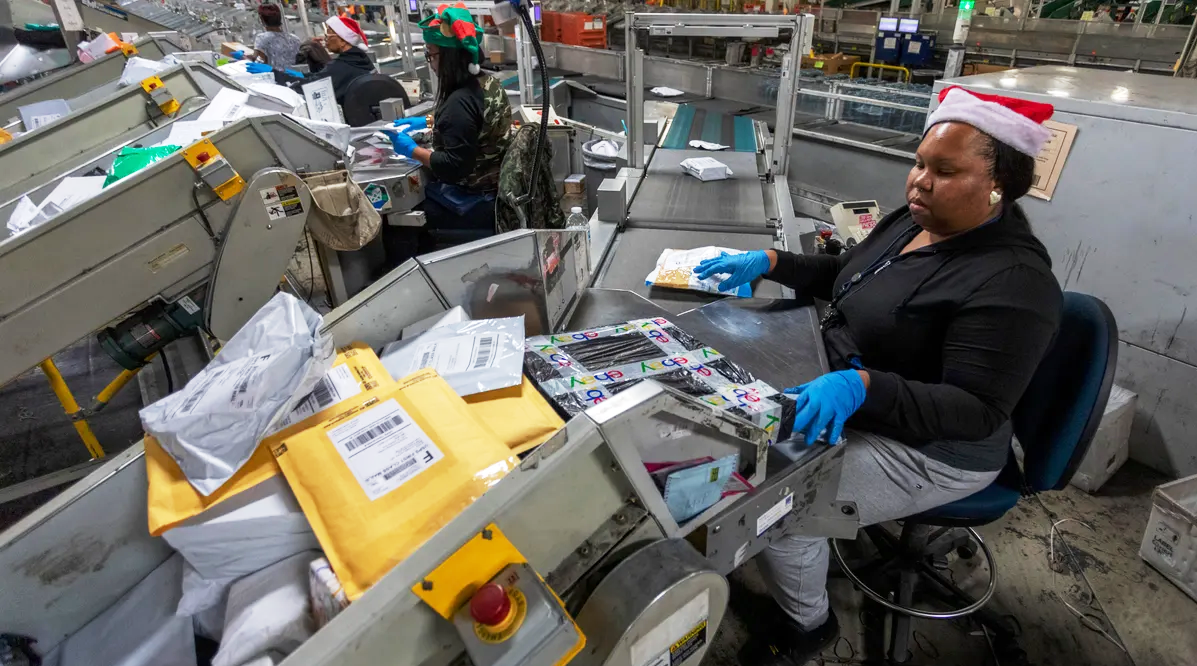
USPS Announces 6% Rate Increase for 2026 Peak Season
Supply Chain Dive - Max Garland, Lead Reporter
The holiday price bump is set to impact Ground Advantage, Priority Mail and other package shipping services starting
The U.S. Postal Service will levy a 6% average rate hike for several package shipping services during the 2026 peak season, according to an agency filing Tuesday.
The temporary holiday rate hikes, which are pending review from the Postal Regulatory Commission, would impact retail and commercial USPS Ground Advantage, Priority Mail, Priority Mail Express and Parcel Select shipments. They are slated to take effect on Oct. 4 and remain in place until Jan. 17. Read Article
| | | |
Some Electricians Think Building Data Centers Is for Sellouts
Area Development – WIRED
Big Tech is throwing big money into data center buildouts. As national opposition to the facilities grows, some workers are beginning to question whether it’s worth it.
As Big Tech dumps billions of dollars into America’s data center buildout, a slew of opportunities have opened up to the electricians wiring these massive facilities.
In some cases, the scale of the projects and the demanding construction timelines are fueling talent wars for the industry’s best and brightest. The US-based International Brotherhood of Electrical Workers (IBEW) has argued that its workers are “powering the AI Revolution,” and a set of “Data Center Principles” published in March argues that union labor is “essential to the future of AI.” Tech companies are trying to meet the moment: Meta recently announced a skilled trade academy program, and Google committed $50 million to help train people in skilled trades. Read Article
| | | |
Rolls-Royce Expands Indiana Manufacturing with $1B Investment
Manufacturing Dive - Nathan Owens, Reporter
The project added full engine-test capabilities in Indianapolis and West Lafayette to support production for the B-52 bomber and other defense aircraft.
Dive Brief:
- Rolls-Royce, a maker of advanced commercial and military aircraft engines, has completed its $1 billion investment in Indiana, including renovations, upgrades and additional testing facilities over the past decade.
- The effort began as a $600 million modernization program focused on technology and equipment upgrades, which was completed in 2021. Rolls-Royce later added a $400 million phase that expanded full engine-test capabilities in Indianapolis and West Lafayette to support U.S. defense contracts.
-
It is the largest investment that Rolls-Royce has made in the United States to date. Indiana Gov. Mike Braun said the move supports future job growth and bolsters the state as a major manufacturing and defense hub. The Indianapolis campus tests and builds engines for U.S. Air Force, Army and Navy aircraft, such as B-52 bombers and refueling drones. Read Article
| | | |
Manufacturing Slows from Four-year High as Prices Rise: NY Fed Survey
Supply Chain Dive - Jim Tyson, Senior Reporter
Demand for manufactured goods, while “resilient for now,” will “likely wobble as output prices rise further,” Pantheon Macroeconomics Chief U.S. Economist Samuel Tombs said.
Dive Brief:
- Manufacturing activity this month edged up but slowed from a four-year high in August as prices rose and shipments fell, the Federal Reserve Bank of New York said Tuesday.
- The Empire State Manufacturing Survey index of business conditions declined 13 points from the level in August but remained positive at 7.6, the New York Fed said.
-
“Pricing pressures intensified,” the regional bank said. “The prices paid index rose five points to 63.1, edging above its recent four-year high reached in May 2026, and the prices received index rose five points to 28.1, pointing to a pickup in input price and selling price increases.” Read Article
| | | |
How USMCA Uncertainty Could Affect Plastics Manufacturing Investment
Plastics Machinery and Manufacturing - Ron Shinn
Trade negotiations may influence equipment purchases, expansion plans and cross-border supply chains across North America.
Key Highlights
- Annual USMCA reviews could delay machinery purchases, plant expansions and reshoring decisions by extending uncertainty over future trade rules.
- Plastics processors serving automotive markets face added planning challenges because vehicle programs and tooling investments span multiple years.
- Industry experts expect prolonged uncertainty to affect capital spending and cross-border supply chain decisions before border operations change.
-
Plastics manufacturers should stay engaged with policymakers because future USMCA negotiations could shape North American manufacturing competitiveness for years. Read Article
| | | |
More OEMs Plan Reshoring Investments Despite Tariff, Cost Uncertainty
Supply Chain Dive - Shefali Kapadia, Contributor
While 36% of manufacturers say they’re actively reshoring, another 31% have no plans to do so, per a report from the Reshoring Initiative.
Dive Brief:
- A greater proportion of manufacturers are reshoring operations this year compared with 2025, according to the 2026 Reshoring Survey Report from the Reshoring Initiative and Regions Recruiting. This year, 36% of 118 OEM respondents said they had reshored or were actively engaged in reshoring, up from 29% last year.
- OEMs said their top reasons for reshoring since January 2025 were tariffs, geopolitical risks and being closer to their customers to shorten delivery times. In fact, 63% of OEMs said they plan to make capital investments in reshoring or domestic expansion.
-
Manufacturers are actively reshoring and investing despite significant concerns around tariff uncertainty. A majority of OEMs, 57%, named policy uncertainty as their primary challenge, and it dwarfs other challenges — the next most common issue was market pricing and difficulty passing costs on to customers, but only 15% of OEMs identified this challenge. Read Article
| | | |
Record Number of Americans Want Greater Union Influence
Statista - Katharina Buchholz
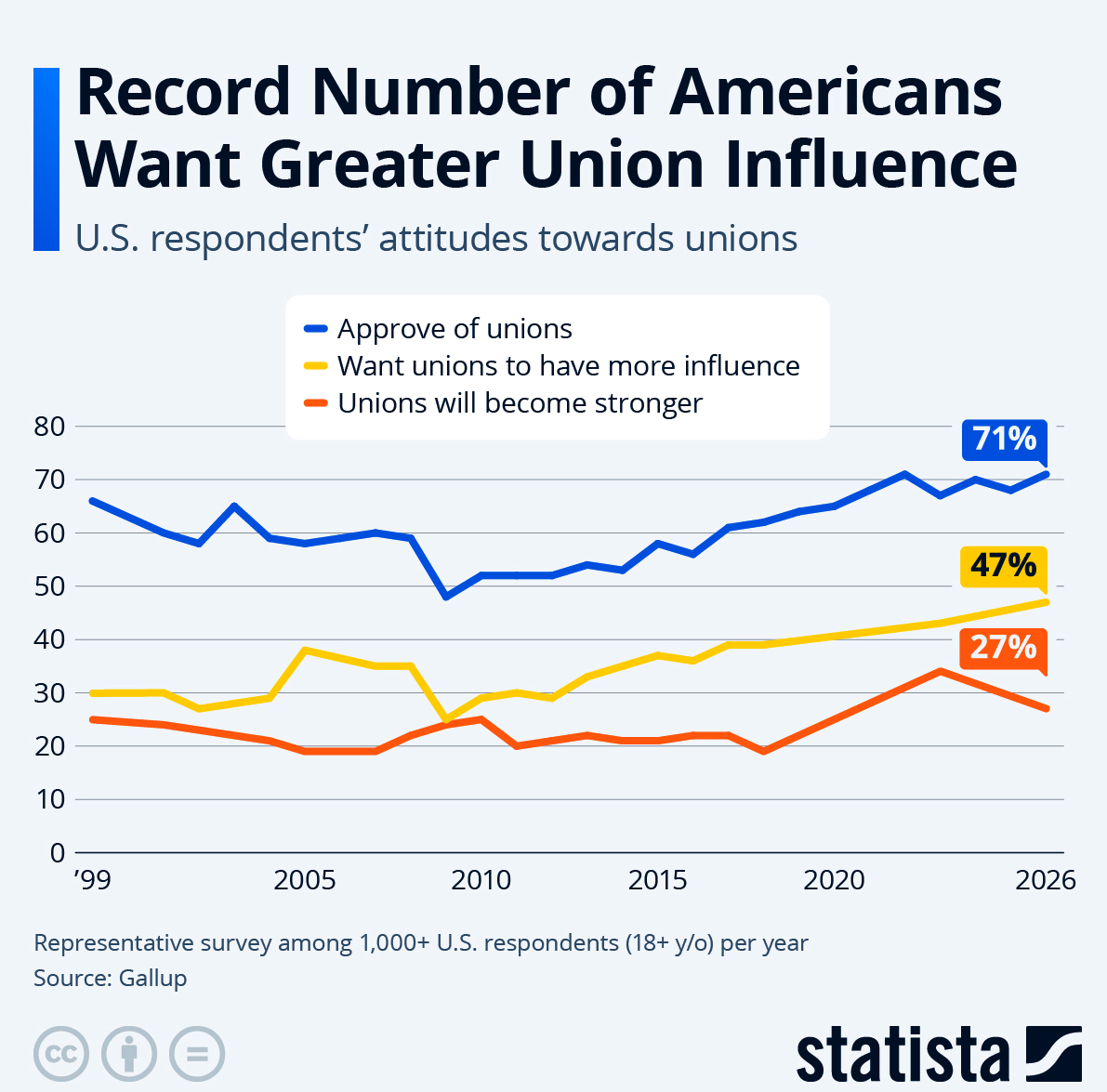
More Americans support unions today than in the entire 1970s, 80s, 90s and 2000s. In 2026, 71 percent of U.S. respondents said they approved of unions, up from only 56 percent ten years ago and comparable to levels in the 1960s. In 2022, support also reached 71 percent, still short of a high of 75 percent in the Gallup survey in 1953 and 1957.
The desire for more union power meanwhile stood at a 25-year high of 47 percent, meaning that almost half of Americans want stronger unions. Read Article
| | | |
Can't Control the Tariff or the Strait? Redesign the Product.
IndustryWeek - Christopher S. Tang
Three levers manufacturers can pull to ease supply chain pain.
Import tariffs have changed multiple times since January, but the cost of imported goods has barely moved. With tariff policy in flux and shipping costs soaring from the Strait of Hormuz crisis, U.S. manufacturers must redesign their products to build resilience against relentless disruptions.
Importers celebrated on Feb. 20, when a 6-3 Supreme Court ruling declared $164.7 billion in tariffs collected under the International Emergency Economic Powers Act (IEEPA) unlawful, putting massive refunds in play. The victory lasted exactly four days. Read Article
| | | |
Inflation, Weaker Sales Erode Small Business Optimism: NFIB Survey
CFO Dive - Jim Tyson, Senior Reporter
The U.S.-Iran war “has escalated the cost of energy, which raises the price of almost everything,” the National Federation of Independent Business said.
Dive Brief:
- Optimism among small businesses fell last month amid persistent inflation, flagging sales and disruptions to supply chains, the National Federation of Independent Business said Tuesday.
- Small businesses rank labor quality and availability as their No. 1 problem and consider inflation and taxes tied as their second worst challenges, the NFIB said. Nearly half of small businesses (47%) report few or no qualified applicants for the jobs they want to fill.
-
Despite concerns about the labor market, “costs remain the bigger story,” Mark Valentino, head of business banking at Citizens, said in a note. “Gas prices are up more than 30% since the Iran war began, and new retaliatory tariffs from Canada go into effect today, touching everyday goods that many small businesses buy and sell.” Read Article
| | | |
US Steel Rising Amid Flat Global Market
American Machinist - Robert Brooks
The sustained effects of 50% tariffs have stabilized U.S. steelmakers’ production volumes, now up 6% YTD, and lifted the domestic industry to third-largest in the world.
The lack of year-over-year growth is continuing evidence of the weakness in the Chinese market; although China’s installed steelmaking capacity dwarfs any other nation, slow industrial and construction activity there has restrained steel production in the country.
Global steel output slipped to 149.2 million metric tons during July, down -4.4% from June. Midsummer is typically a slow period for raw steel production, and the new total shows a drop of only -0.3% from July 2025, and the seven-month total global output for raw steel is now 1.08 billion metric tons, just -0.6% less than January-July 2025.
The data is supplied by the World Steel Assn., which reports monthly raw-steel production results for member countries, currently totaling 70. The trade association has forecast tepid growth in steel consumption for 2026 due to a range of depressive factors, including weakness in Chinese demand and regional conflicts in Eastern Europe and the Middle East. Read Article
| | | |
No Industry is Spared from Costly U.S. Tariff Regime
CFO.com - David McCann, Contributing Editor
The volume of companies’ duty payments to the federal government remains far above the pre-2025 norm, according to a recent JPMorganChase Institute analysis.
Tariff payments by U.S. companies, which have bounced up and down since early 2025 alongside topsy-turvy trade policies, have declined somewhat this year but remain historically high.
A report released last week by the JPMorganChase Institute that focuses on midsize companies sets forth an index of companies’ customs duty payments with a baseline value of 100 as of October 2024. The index reached its peak value, 314, the following October before subsiding to 201 by May 2026. Read Article
| | | |
SBA Draws Fire with Plan to Allow Bigger Firms to Win Federal Contracts
CFO Dive - Jim Tyson, Senior Reporter
Levels for eligibility will rise tenfold or more in professional services, information technology, engineering and other business categories, an attorney at Schwabe, Williamson & Wyatt said.
Dive Brief:
- The Small Business Administration has drawn fire for its proposal to increase the eligibility for federal contracts, with critics saying the plan would intensify competition for smaller firms and increase challenges for entrepreneurs planning to start a business.
- Under a proposed rule released last month, the SBA would raise the employee and revenue eligibility levels for companies applying for federal contracts, opening up business opportunities for more than 114,000 companies.
-
“The rule risks redefining ‘small business’ into what is effectively a mid-size business category,” Tangent Technologies, based in McLean, Virginia, said in a submission on the SBA’s public comment page. “That outcome would be unfair to truly small businesses that rely on SBA programs, set-aside contracts and small business contracting goals to compete against firms with far greater staffing, capital, past performance, infrastructure and administrative capacity.” Read Article
| | | |
New Survey: U.S. Reshoring Momentum Builds Despite Policy and Workforce Challenges
Quality Magazine - ResoreNow.org
U.S. manufacturers are moving more production and sourcing to the United States. Policy uncertainty, import price competition and shortages of skilled workers are limiting the pace of reshoring, however, according to the 2026 USA Reshoring Survey from the Reshoring Initiative® and Regions Recruiting®.
The second annual study surveyed 249 manufacturers—118 original equipment manufacturers (OEMs) and 131 contract manufacturers (CMs). It found stronger reshoring activity among OEMs, a growing pipeline of reshoring opportunities for domestic suppliers and substantial planned U.S. investment. 2026 USA Reshoring Survey Report.
Key findings: Read Article and Download Report
| | | |
Your Frontline Workers See Problems Before You Do
HR Executive - James D. White and Krista White
When we interviewed leaders for our book Culture Design: How to Build High-Performing, Resilient Organizations with Purpose, we noticed a pattern: The best executives are acutely aware that their leadership isn't limited to their direct reports.
There's a persistent idea that the C-suite is untouchable. But frontline workers must feel that their CHRO aims to be of service to them, not just to profits, shareholders or the CEO. The impact of that service ripples out to the customer: the very people in constant contact with frontline workers. Read Article
| | | |
America Needs More Manufacturing Capability, Not More Factories
IndustryWeek - Kenneth W. O'Connor, Gerry Goldstein
Operations leaders are trained to look for bottlenecks, but the constraint may sit outside the plant.
In manufacturing, capacity is easy to picture. We think about square footage, machines, workers, shifts and production lines. I understand why. Those are real levers, and manufacturers need them.
But the more I look at advanced manufacturing, especially defense manufacturing, the more I come back to a simple point: A factory can improve and still be stuck.
Maybe the second-tier supplier cannot scale. Maybe the test equipment is booked. Maybe the workforce pipeline is too thin. Maybe a key component requires a long qualification process. Maybe the logistics network is not ready to move parts, tools or finished systems when demand spikes. Read Article
| | | |
Lego to Spend $400M Expanding Manufacturing Facility in Mexico
Manufacturing Dive - Sara Samora, Reporter
The toymaker plans to add packing and warehousing capabilities, as well as create 1,300 jobs at the Monterrey site.
Dive Brief:
- The Lego Group plans to invest over $400 million to expand its manufacturing operations in Monterrey, Mexico, by adding packing and warehousing capabilities, the toy maker said Thursday.
- The project will add more than 667,000 square feet of space, including a new packing hall and a fully-automated high-bay warehouse that can store stacks between 40 feet and over 150 feet high, according to the press release.
-
The facility currently has 7,300 workers, and the investment will create an additional 1,300 jobs. Construction is expected to begin in early 2027 and be completed by 2029. Read Article
| | | Proactive Technologies' Project Partners | | |
Proven Solutions for Employers and Education
- Apprenticeship Program Design and Technical Implementation Support
- Employer - Educational Institution - Community Partnership Program Development and Support
- Employee Pre and Post-Hire Assessment Design, and
- Administration Management Consultation, Training and Support
Learn More
about K & D Consulting, LLC
Copyright © 2019-26 K & D Consulting, LLC
ALL RIGHTS RESERVED
| |
North-Central Ohio Employer-Based Worker Training Partnership
Established to:
-
Provide direct technical support to employers seeking to build structured on-the-job training programs for their job classifications, their employees, their business strategy
- Better align local related technical instruction, economic development and worker support programs with employers;
-
Provide assistance to employers to navigate the many worker development grant programs,
Visit our website
| |
Copyright © 2025 -26
North-Central Ohio Employer-Based Worker Training Partnership
ALL RIGHTS RESERVED
| | Classes alone will not close the "skills gap," but structured on-the-job, process-based training can...every time! | |
Worker under-capacity is an enormous source of untapped value and unrealized return on worker investment. In addition, standardizing process performance - between workers and shifts - can add to worker ROI through lower scrap and rework.
- Increased worker capacity, productivity, work quantity, work quality and compliance (specifications, ISO/AS/IATF programs and safety mandates);
- Decreased internal costs of training
- Higher return on worker investment! You would be surprised how small of an investment is needed to unlock enormous returns
If budgets are tight, Proactive Technologies, Inc. can be an extension to your training department, with our technical implementation support - included with every project!
There's nothing to lose by taking a minute to contact us to learn more.
Copyright © 2019-26 Proactive Technologies, Inc.®
ALL RIGHTS RESERVED
| |
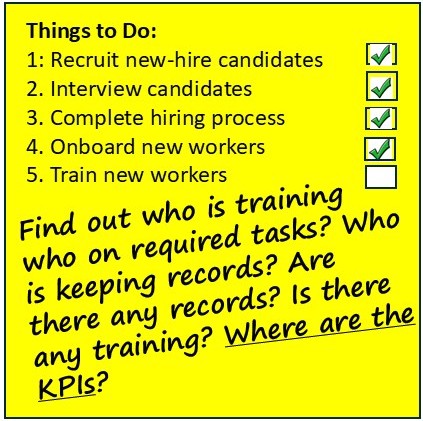
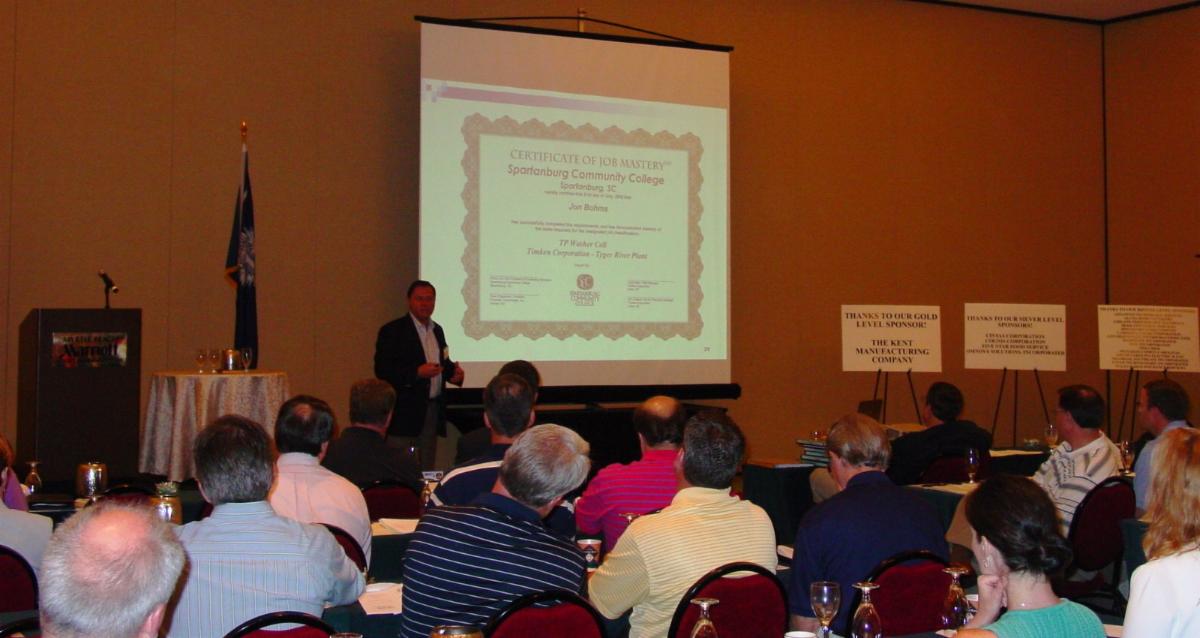
Are you certain your firm has trained all of your workers to their fullest? You go through the motions, but are they just motions?
If you continue to see signs that you may not be getting the most Return on Worker Investment you should, why not take time to learn more how your firm can train workers faster for "full job mastery." Reap the untapped potential, capacity and return on each worker investment and significantly impact your firm's bottom line.
Contact Proactive Technologies, Inc.® today for more information about their accelerated transfer of expertise system™!
Copyright © 2019-26 Proactive Technologies, Inc.®
ALL RIGHTS RESERVED
| | |
Contact Proactive Technologies, Inc Today to Learn More!
Knowledge is Power.
| |
Copyright © 2019-26 Proactive Technologies, Inc.®
ALL RIGHTS RESERVED
| If your institution is interested in becoming a Proactive Technologies, Inc. project partner, contact a representative for more information. | | |
AI Companies Are in a Race Against Time
Substack - Jared Bernstein and Ryan Cummings
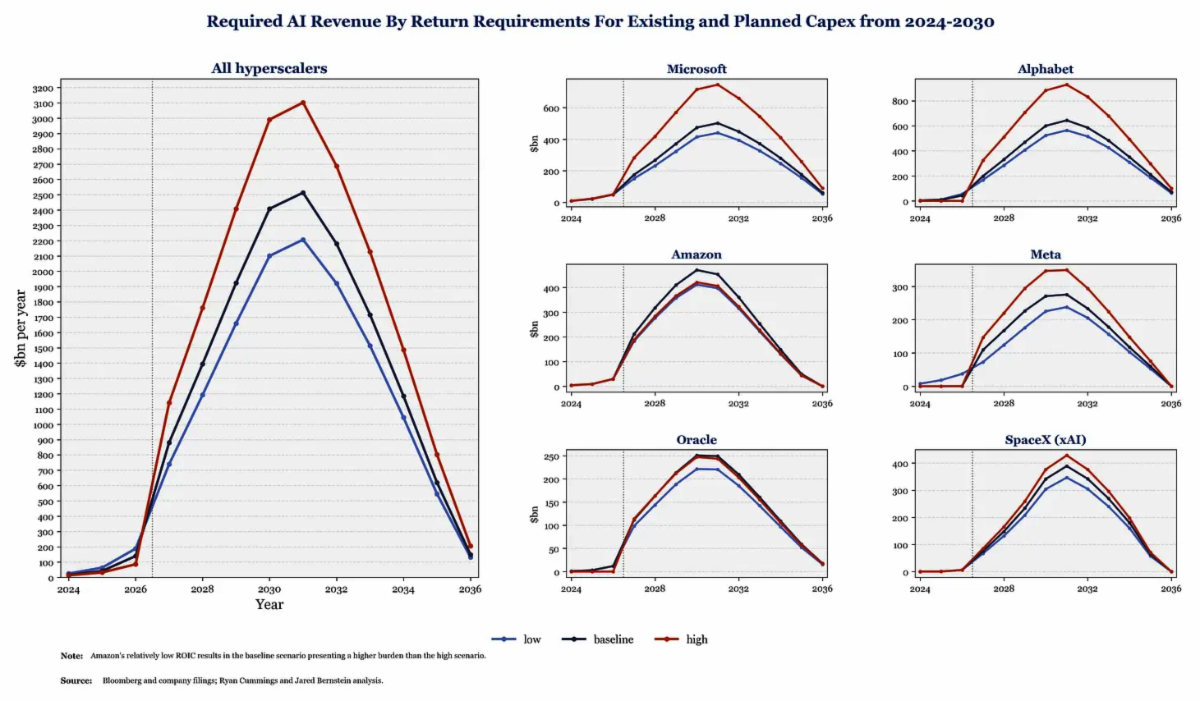
They may disemploy us; they may wipe us out. But right now, their lack of profitability underscores our bubble case.
[Apologies for the longer-than-usual post—fair bit to unpack here.]
AI doomerism is top of mind these days, but we have a different and more prosaic question: when will AI firms start making money?
The answer is a key input into a case we made last year in the NYT: that AI is in a financial bubble. We still think so, and, if anything, our concerns have deepened.
It’s not just that the gap between the industry’s spending and investors’ returns on that spending looks characteristic of a financial bubble, as we initially argued. It’s that the gap has widened, such that the revenue flows needed to close it look implausibly large. If our assessment is correct, investor patience is likely to run out, and, depending on the pace at which they rush for the exit, the bubble will either pop or start to deflate. Read Article
| | | |
Disney Sues Trump FCC Over Years-Early ABC License Reviews, Cites 'Existential Threat'
International Business Times - Terence Repelente
Disney and ABC claim FCC's early licence renewal demands are politically motivated
In September 2025, Disney reportedly briefly pulled Kimmel off air after pressure from FCC Chairman Brendan Carr Federal Communications Commission / Wikimedia Commons
Disney and ABC have sued the Federal Communications Commission, accusing the Trump administration of using an unusually early review of broadcast licences to punish ABC over programming and coverage the president dislikes.
The Walt Disney Co. and ABC filed the lawsuit Tuesday in federal court in Washington, DC, seeking to block the FCC's early review of licences covering eight Disney-owned ABC television stations.
Those licences were not due for renewal until 2028 at the earliest. But in April, the FCC ordered Disney's owned-and-operated stations in major markets, including Los Angeles, New York and San Francisco, to file renewal applications ahead of schedule. Read Article
| | | |
AIT’s Schrimsher: Expect More M&A in Coming Year
IndustryWeek - Geert De Lombaerde
A combination of factors including competition and private-equity ownership has created an “increasingly productive” backdrop, the distributor’s CEO told investors last week.
Key Highlights
- Supply-chain and cost pressures are weakening smaller firms, creating potential acquisition opportunities for larger industrial companies.
- AI and new technology investments are adding budget pressure, potentially motivating owners to sell businesses.
- Private-equity firms hold more portfolio companies, increasing the pool of businesses that may come to market.
-
AIT expects both smaller bolt-on deals and larger acquisitions, using M&A to expand into automation and flow control. Read Article
| | | |
Healthcare Costs Projected to Tick up 9.5% in 2027, Aon Says
CFO.com - Dan Niepow
After several consecutive years of increases, health costs are again expected to grow, according to a recent analysis by Aon. It’s not a “one-year anomaly,” says one leader from the firm.
Continued healthcare cost increases are looking more like a feature than a bug.
Next year, health costs for U.S. employers can expect to see their health-related costs tick up by 9.5%, which equates to an average of about $19,000 per employee, according to projections released last week by professional services firm Aon. Read Article
| | | |
Only 35% of Finance Leaders Confidently Gauge ROI from AI: Protiviti
CFO Dive - Jim Tyson, Senior Reporter
Among finance organizations, only 14% are deploying AI based on a detailed strategy, Protiviti found in a global survey.
Dive Brief:
- Although 77% of finance organizations have deployed artificial intelligence, only 35% of them can confidently gauge the return on their investment, Protiviti found in a worldwide survey.
- Measuring ROI is just one big AI challenge: Finance leaders for the third straight year identified ensuring data security and privacy as their top priority, according to Christopher Wright, head of CFO solutions and business performance improvement at Protiviti.
-
“Organizations cannot scale AI without confidence in the quality, security and governance of their data,” Wright said in a statement. “That is the major reason why cybersecurity and data governance remain finance’s top priorities.” Read Article
| | | |
How the U.S. Has Avoided a Recession Over the Last 5 Years
CFO.com - Dan Niepow, Reporter
Speaking to the Illinois CPA Society on Thursday, Fifth Third Bank’s Chief Economist Jeffrey Korzenik suggested baby boomers have likely played a role in keeping the economy afloat, for now.
With the exception of a two-month pandemic-induced recession in early 2020, the U.S. economy has remained remarkably resilient for nearly two decades.
The nation hasn’t seen a prolonged, multi-year recession since the Great Recession in the late aughts, per analysis by the National Bureau of Economic Research. What’s prevented a full-fledged economic downturn? It might have something to do with baby boomers, according to Jeffrey Korzenik, chief economist at Fifth Third Bank.
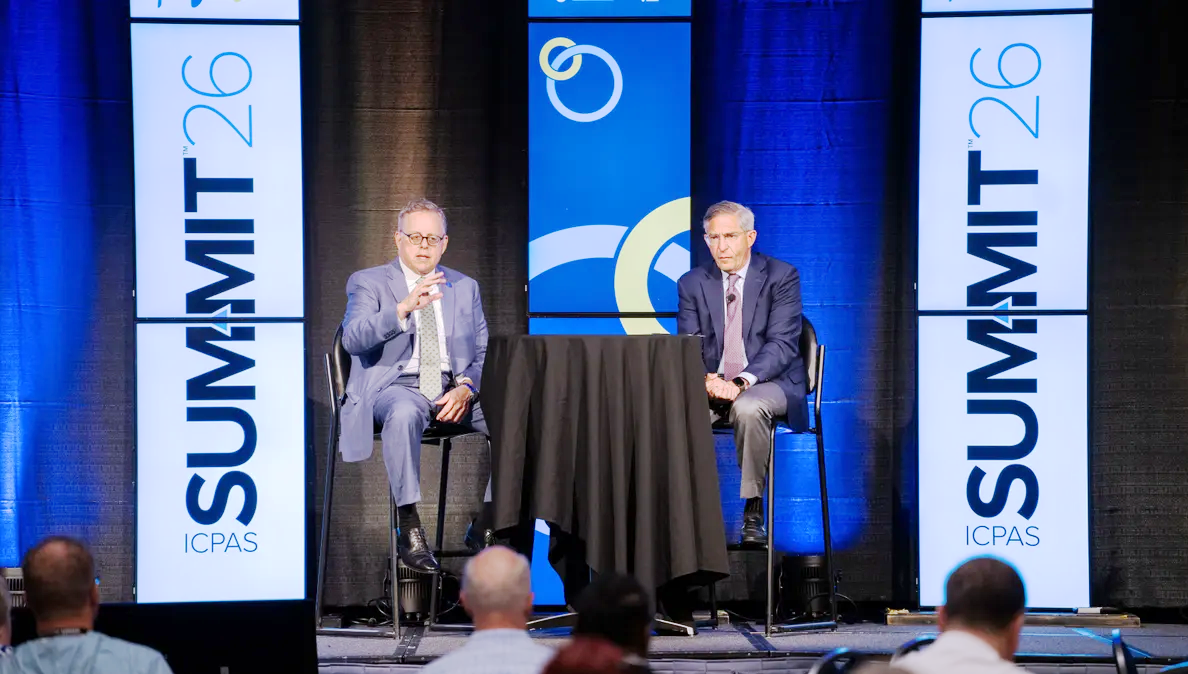
Speaking at the Illinois CPA Society’s 2026 summit in the Chicagoland area on Thursday, Korzenik pointed out that boomers make up just about 19% of the U.S. population but hold more than 50% of the country’s wealth. That means boomers likely play an outsized role in America’s consumer-driven economy, with estimates that household consumption drives about 70% of the United States’ GDP. Read Article
| | | |
Four Enforcement Targets for a Smaller IRS
CFO.com - Dan Niepow, Reporter
As the agency’s workforce decreases, its priorities are shifting. Here are a few areas to watch, according to Moore Tax Law Group COO Kathy Enstrom.
It’s no secret that the IRS workforce has shrunk under the Trump administration. By one count, the agency shed nearly 28,000 workers at the end of 2025. What might be less clear, though, is what precise types of enforcement the IRS will prioritize with a slimmed-down workforce.
Speaking at the Illinois CPA Society’s 2026 summit last week, Kathy Enstrom, chief operating officer and director of investigations with the Chicago-based Moore Tax Law Group, took a stab at detailing a few of the chief areas the IRS is likely to target these days.
Enstrom, a former IRS executive herself, based her presentation, in part, on recent comments made by IRS Criminal Investigation Chief Jarod Koopman. Here are a few key takeaways for finance leaders. Read Article
| | | |
Wall St Banks Turn on Each Other as Capital Fight Nears Endgame
Reuters - Pete Schroeder
Summary
- JPMorgan, Bank of America urge Fed to reverse GSIB capital tweak
- Morgan Stanley, Goldman Sachs stand to gain from funding provision
- JPMorgan says proposed change would cost it $13 billion in capital relief
WASHINGTON, Aug 27 (Reuters) - Wall Street's most powerful banks fought side by side for years to relax capital rules, but with victory in sight, that alliance has fractured.
As the Federal Reserve wraps up a sweeping overhaul of capital rules, JPMorgan (JPM.N), opens new tab, Bank of America (BAC.N), opens new tab, Goldman Sachs (GS.N), opens new tab and Morgan Stanley (MS.N), opens new tab are feuding over a tweak with billions of dollars at stake, according to public documents and four people familiar with the matter. Read Article
| | | |
CFPB Silences Consumer Complaints to Protect Wall Street and Big Tech
Better Markets
WASHINGTON, D.C.— Amanda Fischer, Policy Director & COO for Better Markets, issued the following statement in connection with the Consumer Financial Protection Bureau (CFPB or Bureau) deciding to cease publication of narrative complaints submitted by consumers to the Bureau:
“CFPB leadership today decided to silence consumers so that Wall Street and Big Tech can hide the tricks and traps they use to extract fees from hardworking Americans. By ceasing the publication of consumer stories about how financial services companies may have wronged them, they’re keeping Americans in the dark and unable to shop around to find honest companies with whom to do business.
“Eliminating the Bureau’s consumer complaint database has been a goal of the biggest banks and tech companies since the CFPB was established. Today, they got their wish. The result is more junk fees for American consumers and an uneven playing field for businesses that treat their customers right.” See More Related Articles
| | | |
What's Behind the US Government's Bond Buyback Scheme?
DeutscheWelle - Brent Goff
The US Treasury has attempted to intervene in the global bond market in response to rising yields worldwide. What's behind the change in the bond market, and what impact will this US intervention have?
Donald Trump's Treasury Secretary, Scott Bessent, has announced that he is doubling the government's bond buyback scheme. The decision came in response to a major sell-off of US debt.
Global bond yields have risen worldwide, with Japan's borrowing costs crossing 3% for the first time in 30 years. The US has received criticism for the higher bond yields, with blame pointing to the economic impact of its war in Iran.
Why does the bond market have governments spooked? Is foreign money still willing to finance US debt? And how did we get to this point? DW speaks with Carsten Brzeski, an economist who worked at the Dutch Finance Ministry and the European Commission, about the possible answers to these questions. See Video Report
| | | |
Scammers are Getting Smarter About Where They Target You
Malwarebytes Labs
Scammers are becoming more strategic about where they target people.
Nine in ten toll scams—the fake unpaid-toll messages that threaten fines or license suspension—arrive by email or text, while roughly six in ten romance scams show up first on social media. That’s no coincidence. Rather than blasting the same message everywhere, criminals are tailoring different scams to the platforms where they’re most likely to succeed.
This finding comes from Malwarebytes’ own threat research systems and draws on global data between April 15 and July 14, 2026. The research reveals the various ways scammers are adapting their tactics and provides new insights about where they show up, when they strike, and which brands they impersonate. Read Report
| | | |
Who Owns the Risk When the Machine Makes a Mistake?
HR Executive - Kirstin Marr, PropertyCasualty360 Columnist
“Shall we play a game?” The line is charming, even though the game was thermonuclear war.
More than 40 years after the Cold War-era thriller WarGames, I can still see the blinking screen and hear the computer voice invitation to teenage hacker Matthew Broderick, and the creeping realization that the machine missed one fairly important point: The game in question was one humans could not afford to lose.
For decades, Hollywood churned out stories about machines with too much access and the absence of perspective, usually leading to a climax in which tech overtook human society.
Today, that plot feels less cinematic and more like an agenda item. Read Article
| | | |
Korn Ferry: Leaders Have to Rethink How Work Gets Done
HR Dive - Caroline Colvin, Reporter
High activity does not mean high productivity, consultants for the firm said.
Dive Brief:
- Heavy workloads are taking a toll on workers’ productivity and output long term, a new study by Korn Ferry suggests. Per its Workforce 2026 Global Insights Report, the majority of workers (62%) say they’re facing “significantly heavier workloads” over the past two years.
- About half say they’re too busy to do work that brings “meaningful results” or actively contributes to the business growth of their employer.
-
Korn Ferry researchers suggest that this phenomenon may be common because many employees are part of a leaner workforce — with reduction in head count largely fueled by the AI takeover. “Cost-cutting and restructuring create savings, but they don’t create the kind of passion that powers productivity,” Korn Ferry CEO Lesley Uren said in a statement released Tuesday. Read Article
| | | |
Only 35% of AI Usage Time is Productive, Workers Say
CFO.com - David McCann, Contributing Editor
Executives spend almost twice as much time working with artificial intelligence tools as other employees.
U.S. employees are spending an average of 87 minutes per day — amounting to 47 eight-hour workdays in a year — using and interacting with artificial intelligence tools, according to a new survey.
However, the research, by human resources software platform BambooHR, also revealed that workers spend more time troubleshooting errors and on “prompt iteration” (42% of AI time) than they do on immediately productive activity (35% of AI time). Prompt iteration is the process of improving the instructions given to an AI model to achieve more accurate or higher-quality results. Read Article
| | | |
State Regulator Sounds Alarm on 'Limited Partner' Health Plans
HR Executive - Allison Bell
- Marketers may be selling more self-insured limited partner health plans to consumers who are seeking relief from soaring major medical insurance prices.
- At least 12 companies are now offering the plans in Montana, according to an advisory posted earlier this month by Montana insurance regulators.
- Connecticut insurance regulators counted six marketers of the limited partner plans operating in their state two years ago.
-
A limited partner charges individual consumers for classifying the consumers as employees or limited partners of a company. Read Article
| | | |
When the Machine Decides: Liability and the Machine-Speed Bank Run
Better Markets - Evan LeFlore, Director of AI, Innovation, and Economic Opportunity
Seventh in a series on AI and the real economy. Earlier posts looked at how AI reshapes work, the tax code, retirement accounts, and lending. This week is about what happens when AI stops advising and starts acting by deciding, on its own, who gets paid, whose claim is denied, and when the money moves.
For most of the AI era to date, the machine has just been an advisor. It scores your loan, flags a suspicious transaction, and ranks the trades before a human makes the ultimate decision. Humans are still on the hook in this era, as they are the ones you sue, the ones who explain the decision, and the ones held accountable when it goes wrong.
That arrangement is quietly ending, as the future is now careening towards agentic AI. For those unfamiliar with the term, agentic AI refers to systems that work with little to no human intervention to act on someone’s behalf, be it executing trades, moving money, opening and closing accounts, or approving and paying claims. And nearly every rule we have for holding someone accountable when a decision harms you assumes that there is a someone to hold accountable. Take away the human, however, and the machinery of accountability breaks down, opening a dangerous gap in who to blame when something goes wrong. Read Article
| | | |
Americans Are Giving up on Beating Inflation: Just One in 12 Think Their Wages Will Outpace Rising Prices
International Business Times – Dani Oh
University of Michigan survey reveals declining consumer sentiment and rising inflation expectations
Only 8% of US consumers expect their income to grow faster than inflation over the next year Sebastian Herrmann/Unsplash
Only one in 12 Americans now expects their income to grow faster than inflation over the next year, a sharp drop from nearly one in five at the end of 2024, according to new data that suggests households are increasingly resigned to rising prices.
'Across all consumers, only 8% expect their income growth to exceed inflation in the year ahead, down from 18% in December 2024,' Joanne Hsu, director of the University of Michigan's Surveys of Consumers, said. Read Article
| | | |
National Debt Nears $40 Trillion: How We Got Here and Why It Matters
PBS News Hour - Lisa Desjardins, Ali Schmitz
The national debt is expected to hit a record high as soon as this week, crossing a major threshold of $40 trillion. Congressional correspondent Lisa Desjardins explains why that milestone is a warning sign for many economists. See 5 ½ Video Report and Read Transcript
| | | |
Against Oligarchy, Part III: Taxing Capital vs. Taxing Labor
Substack - Paul Krugman, Nobel Prize winning reporter, economist
How the American tax code has swung against workers, and why it matters
Old-fashioned class theory is making a comeback. What I mean by class theory here is a focus on how income is divided between capital and labor. In 21st-century U.S. political debate, even suggesting that this is an important topic will get one attacked as a Marxist. But even before the advent of Karl Marx, classical economists like Adam Smith were extremely interested in how a nation’s income was distributed among workers, capitalists, and landowners.
Yet when inequality began rising around 1980, many economists (myself included), initially downplayed concerns about the factor distribution of income — that is, how national income is distributed among different factors of production. In the modern economy, the main distinction is how much income accrues to capital (i.e., shareholders) and how much accrues to labor (workers). Instead, most economists emphasized the personal distribution of income — that is, relative individual incomes, whatever their source. At the time, this focus made sense because growing disparities in paychecks, not a shift of income from labor and to capital, were the main cause of soaring inequality. Between 1979 and 2000, the share of total income going to labor as opposed to capital was basically unchanged. But while the typical worker’s income, adjusted for inflation, barely increased over that period, the average real labor income of the highest earning 1 percent, such as top executives, nearly tripled. Read Article
| | | |
The AI Boom Runs on an Even More Dangerous Machine (Part 2)
Institute for New Economic Thinking - Lynn Parramore
Read Part 1
Silicon Valley promises abundance, but corporate America is built for extraction. The underlying operating system is stuck on making big shareholders rich the expense of everyone else. It’s time for a reboot. *From the “AI and the Future of the American Worker,” a series on how artificial intelligence is impacting labor, power, and the meaning of work. (Read Part 1 of this article here).
Notice the conversation around AI is sounding a bit predictable?
Workers are told to adapt, reskill, and become “AI-ready” on the double, while business leaders, celebrity entrepreneurs, productivity gurus, and online creators (often with a brand deal somewhere in the background) preach that embracing AI is a personal duty, if not a moral responsibility. Get on the AI train, and you can look forward to a future of less drudgery, more creativity, and maybe even shorter work hours. Miss it, and good luck to you. Read Article
| | | |
Health Outcomes in Rural America: A Prevention-to-Crisis View on Determinants of Health, Chronic Diseases, and Economic Consequences
Brookings Institute - Anthony F. Pipa, Brent Orrell, Adam Aley, and Madeline Tong
Research summary of America’s Rural Future symposium
- Rural health outcomes are both a cause and a consequence of economic disadvantage. Poor health outcomes and limited economic opportunity form a self-reinforcing cycle in many rural communities.
- Rural health disparities are not explained by clinical access alone. Housing, transportation, food access, poverty, job benefits, education, and social infrastructure all shape health outcomes. These factors operate across individual, community, institutional, and economic levels.
-
Services do not improve outcomes simply because they exist, but because residents can reach them, have trust in them, and see them as responsive to their needs. While technology can reduce distance and improve the efficiency of health care services, there is no substitute for local trust. Read Article
| | | |
Industry Rejects Bill Gates’ Call for Robotics and AI Tax
Manufacturing Dive - Nathan Owens, Reporter
Companies can write-off robots as business expenses under the current tax system, incentivizing machines over humans, Gates said. Critics say the idea would hamper productivity and competitiveness.
Dive Brief:
- Bill Gates, co-founder of Microsoft and philanthropist, wants to tax artificial intelligence tokens and robots to slow and address the replacement of human labor with advanced systems and machines, he said in a blog post Wednesday.
- Under the current U.S. tax system, employers hire people and pay payroll taxes on their earnings. Gates argued that with robots, they can simply write the equipment off as a business expense, which “nudges” companies toward replacing people with machines.
-
The International Federation of Robotics has argued that Gates’ idea of a robot tax aims to “solve a problem that does not exist,” saying that automation and use of robots creates new jobs by increasing productivity. Gates also recommended creating a domestic and international framework for dealing with AI and intentionally setting aside jobs for humans. Read Article
| | | |
1 in 3 Employees Say Retirement is Out of Reach
HR Executive - Tom Starner
While the idea of retiring early is appealing to many, a recent survey found that a majority of Americans surveyed have decided early retirement is no longer within reach.
Resume-building service MyPerfectResume.com’s new report found that 71% of employees polled believe the concept of “Financial Independence, Retire Early,” or FIRE, is unrealistic for most people, or at best only possible for high earners or wealthy households. The survey reports that 55% expect to retire at 65 or later, including 14% who do not expect to fully retire at all.
The national survey of 1,000 U.S. workers found that retirement is increasingly becoming a moving target rather than a fixed milestone. Read Article
| | | |
The Biggest Issue in the Midterm Elections
Substack -Robert Reich
The earnings of America’s largest corporations — the S&P 500 — surged by an astounding 53 percent over the past year.
But most Americans are losing ground. Wages have barely risen — yet a tomato today costs 40 percent more than it did just a year ago. Gas now costs an average of more than $4.50 a gallon. Renting an apartment is 54 percent more expensive than it was in 2017. Housing prices are up 60 percent since 2019. Families will spend $120 more on electricity this year than last year. Credit card debt is up 63 percent since just 2021. Add in so-called “convenience fees” popping up everywhere, along with “shrinkflation” where companies deceptively shrink product sizes while charging the same or even more — and what do you get? An economy that’s clearly, wildly, unambiguously unaffordable.
A widely watched measure of consumer confidence slipped in August as consumers fretted about future economic conditions, the Conference Board said this past week.
Why the widening gap between how well big corporations are doing and how poorly average Americans are doing? Three reasons: Read Article
| | | |
The FDIC’s New Strategy: Community Banks Overpay While Big Banks Get a Discount
Better Markets - Christopher Appel, Director of Banking Policy, Better Markets
The Federal Deposit Insurance Corporation (FDIC) recently proposed to cut annual deposit insurance assessments—the amount banks contribute to help ensure the FDIC can cover customer deposits if a bank fails—by up to $3.4 billion for large banks even though the Deposit Insurance Fund (DIF) remains well below the agency’s own target. At the same time, the FDIC wants to weaken the resolution plans large banks are required to provide so that their failures don’t require another extraordinary government intervention.
Together, the two proposals would deepen an already unfair two-tier deposit insurance system in the United States. Community banks pay for the deposit insurance their customers receive, while the assessments paid by the largest banks do not fully account for the additional implicit protection that markets attribute to their uninsured deposits. The 74 banks with at least $30 billion in assets—the proposed threshold for treatment as a large bank under the FDIC’s assessment framework—hold an estimated $7.3 trillion in uninsured deposits, or 84 percent of the banking system’s total. After the federal government protected every uninsured depositor at SVB and Signature Bank in 2023, market participants have strong reason to expect comparable extraordinary protection for uninsured deposits at other sufficiently large banks in the future. Read Article
| | | |
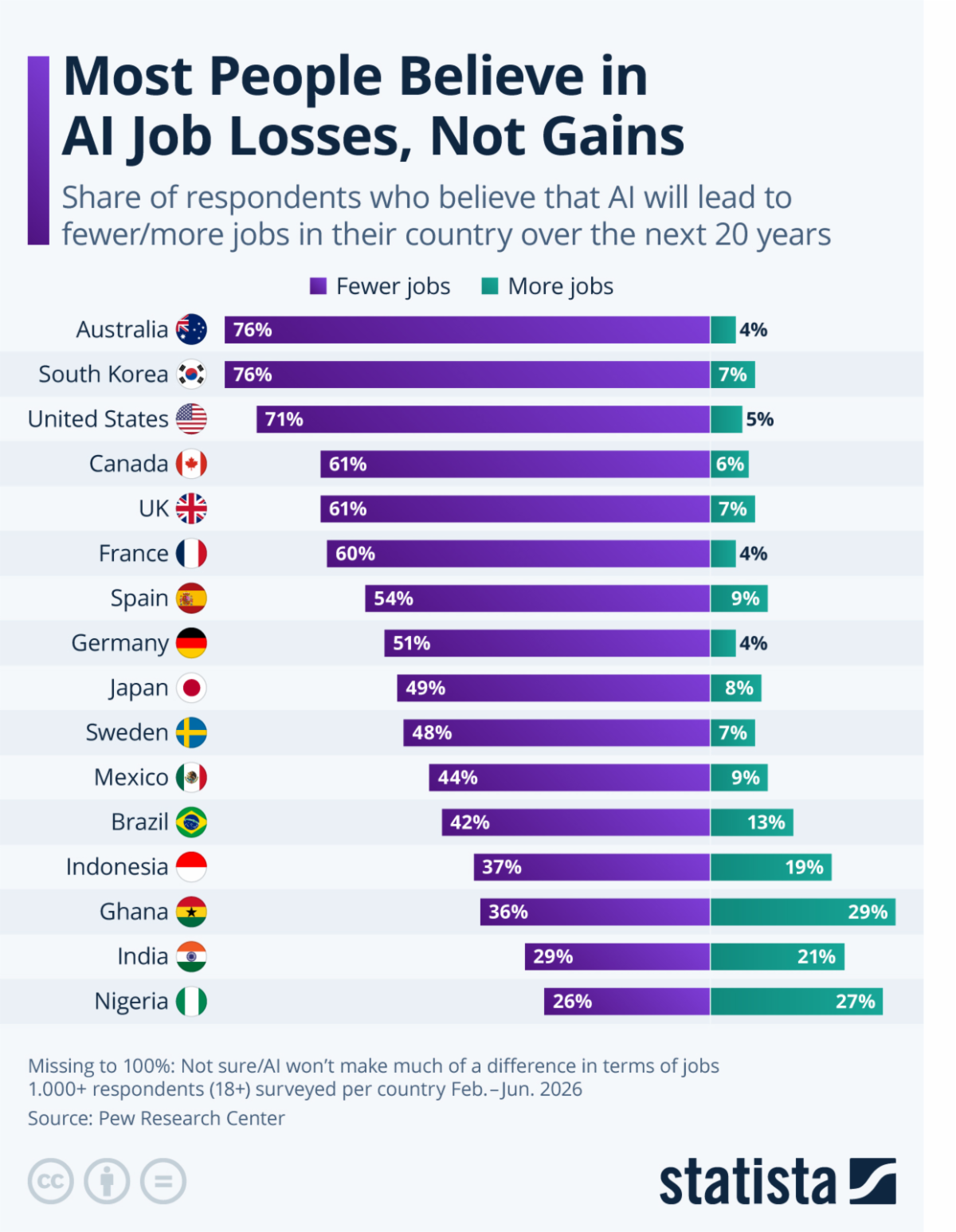
Most People Believe in AI Job Losses, Not Gains
Statista - Felix Richter
While the debate surrounding possible consequences of the rapid development of AI has recently taken a dramatic turn – with several AI leaders and industry insiders pointing out the risk of extinction-level catastrophe – ordinary people are still preoccupied with more mundane AI concerns such as job losses.
According to an international survey carried out by the Pew Research Center this year, people in 34 of 37 countries surveyed are more likely to believe that AI will result in fewer rather than more jobs over the next two decades. These concerns are particularly widespread in high-income countries, with more than 7 in 10 respondents expecting AI-related job losses in countries like Australia, South Korea and the United States. Interestingly, there appears to be a correlation between AI awareness and concerns. In around half the country surveyed, people who said that they heard or read a lot about AI were more likely to expect AI-related job losses. Read Article
| | | |
Breaking Up Big Medicine vs. Single-Payer: An Analysis of Competing Health Care Reform Proposals
Institute for New Economic Thinking - Phillip Alvelda
A new health-care reform agenda puts antitrust at the center, targeting the conglomerates that dominate insurance, pharmacies, and providers. But breaking up Big Medicine leaves deeper problems intact, from profit-driven denial and risk selection to the administrative costs of a fragmented system.
In a Nutshell
The American Economic Liberties Project (AELP) has recently issued a major proposal for improving American health care. Its Break Up Big Medicine agenda is the sharpest antitrust attack on health-care extraction yet written. It would strip the conglomerates of the ownership structure they use to loot the system. It would not change the thing that makes an insurer profitable: denying care. And it would leave standing the multi-payer billing apparatus that a universal system deletes outright.
The agenda’s spine is three bills that enact a “Glass–Steagall for health care” — structural separation of insurers, pharmacy-benefit managers, and drug wholesalers from the providers they pay. The Break Up Big Medicine Act (S.3822) is the omnibus; the Patients Over Profit Act (S.2836) and Patients Before Monopolies Act (S.4509) each execute one component — insurer divestiture of providers, and insurer/PBM divestiture of pharmacies, respectively. Read Article
| | | |
Welcome to the Sesame Streeting of the Economy
NPR Planet Money - Paddy Hirsch
Today’s economy is brought to you by… the letter K! Or is it C? Or … well, it depends on who you talk to about how the rich and poor are doing these days.
You’ve probably heard about “the K-shaped economy.” When people talk about it, they generally mean that inequality is widening (and the fortunes of the rich and poor are diverging, so it looks like the right side of the K). Recently, Treasury Secretary Scott Bessent said he was “sick of hearing about this K-shaped economy.” And, he said, he believed the better letter to describe it was a C, which is, shall we say, a more optimistic letter for how lower and middle-class Americans are faring in today’s economy. Read Article
| | | |
A New Treasury Fed Accord: Between a Rock and a Hard Place
Better Markets - Phillip Basil, Director of Economic Growth and Financial Stability
This is the third post in the series about the Treasury market and how the actions of the Treasury and the Fed can impact the lives of all Americans.
Based on recent events, it is clear that the tail is wagging the dog in the over-$30 trillion Treasury market. Actions taken by the Treasury and the Federal Reserve (Fed) to exert some control in the market are mostly having the opposite effect. Market interest rates on long-term Treasuries, known as their “yields,” remain stubbornly higher than the Treasury and Fed would like, increasing the cost of credit that fuels our economic growth—such as mortgages and small business loans—and the borrowing costs for the U.S. Government. Read Article
| | | |
The U.S. Battery Maker That Could, and the U.S. Auto Company That Wouldn’t
Institute for New Economic Thinking - Matt Hopkins and William Lazonick
Why does a country that helped pioneer a leading EV battery technology now depend on Asia for batteries? William Lazonick and Matt Hopkins trace the answer to corporate governance. In the 1990s, GM had the technology, the partnership, and a working electric car. But as “maximizing shareholder value” took hold under successive CEOs, stock buybacks increasingly took precedence over sustained investment in batteries and electric vehicles. GM ended production of the EV1 in 1999 and sold its stake in the battery venture the following year. Rick Wagoner later called abandoning the EV1 the worst decision of his tenure as CEO.
The consequences went well beyond a single car. GM entered bankruptcy in 2009 and required a $49.5 billion U.S. Treasury rescue yet later turned once again to massive buybacks. In the meantime, Asian firms built the scale and capabilities that now dominate the global battery industry. Lazonick and Hopkins ask what America’s lost lead can teach us about rebuilding technological capacity today. Read Article
| | | |
Inflation Slams Consumer Sentiment to Four-month Low: Survey
CFO Dive - Jim Tyson, Senior Reporter
Despite their dimming sentiments toward inflation and business conditions, consumers have shown no sign of cutting spending.
Dive Brief:
- Consumer sentiment fell this month to a four-month low and views of personal finances slumped about 10% amid mounting worries about persistent inflation, the University of Michigan said Friday.
- Concerns about high fuel prices and renewed U.S. trade disputes eroded household assessments of short-term business conditions, the university said, citing survey results. Expectations for inflation over the short and long term rose.
-
“Overall, interviews reveal broad agreement across the political spectrum that the outlook for the economy has weakened since the beginning of the year,” Joanne Hsu, director of consumer surveys at the university, said in a statement. Since January sentiments among Republicans and Democrats have sagged 20% and 13%, respectively, she said. Read Article
| | | |
Economic Books for Our Time
Future Shock
By Alvin Toffler
A retro look at the future before the “technology race” really gained steam
“Alvin Toffler argued that society is undergoing an enormous structural change, a revolution from an industrial society to a "super-industrial society". This change, he states, overwhelms people. He argues that the accelerated rate of technological and social change leaves people disconnected and suffering from "shattering stress and disorientation"—future shocked. Toffler stated that the majority of social problems are symptoms of future shock. In his discussion of the components of such shock, he popularized the term "information overload."
This analysis of the phenomenon of information overload is continued in later publications, especially The Third Wave and Powershift.
Development of society and production
Toffler distinguished three stages in the development of society and production: agrarian, industrial, and post-industrial.
Each of these waves develops its own "super-ideology” to explain reality. This ideology affects all the spheres that make up a civilization phase: technology, social patterns, information patterns, and power patterns.” Read More
| | | |
The World’s Real-Time Billionaires List - Today’s Winners and Losers: Reflects Changes Since 5pm EST of Prior Trading Day
Forbes
Forbes' Real-Time Billionaires rankings tracks the daily ups and downs of the world’s richest people. The wealth-tracking platform provides ongoing updates on the net worth and ranking of each individual confirmed by Forbes to be a billionaire. The value of individuals’ public holdings are updated every 5 minutes when respective stock markets are open (there will be a 15-minute delay for stock prices). Individuals whose fortunes are significantly tied to private companies will have their net worths updated once a day. In cases where an individual owns a stake in a private company that accounts for 20% or more of his or her net worth, the value of the company will be adjusted according to an industry- or region-specific market index provided by our partners at FactSet Research Systems when available. A rotating cast of the five biggest winners and losers throughout the day is featured at the top of the page, followed by the complete list of billionaires ranked in order of net worth. Visit List
| | | |
The Classroom
Inequality Media- Robert Rich, Former US Labor Secretary
My name is Robert Reich. I’m a former secretary of labor and UC Berkeley professor of public policy. I designed this course to give students — and now, you — a deeper understanding of why inequalities of income and wealth have widened significantly over the last 40 years in the United States, and their consequences.
Even though this isn’t a real classroom and I’m not with you in person, I hope you find this both enjoyable and challenging. Don’t expect to learn by just watching and listening, though. I want you to be an active learner — which means answering questions I pose and putting various puzzle pieces together. I’m not going to tell you what to think. I’m going to try to provoke you into thinking harder and more deeply. Watch Video Classroom Series
| | | Mexico, Latin America, South America and the Caribbean | | |
Argentina: Milei Reignites Dispute Over Falkland Islands
DeutscheWelle - Felix Tamsut with AP, Reuters
The Argentine leader said that a change in the US position on the Falkland Islands could be coming, which would alter Washington's years-long neutrality on the issue.
Argentine President Javier Milei said the United States' position on the Falkland Islands could be changing.
He added that his country would impose sanctions on any oil companies operating in the British overseas territory.
In a nationally televised speech on Thursday, Milei reiterated Argentina's stance that the Falkland Islands are part of its territory. This move could further escalate the long-standing dispute with Britain over the islands. Read Article
| | | |
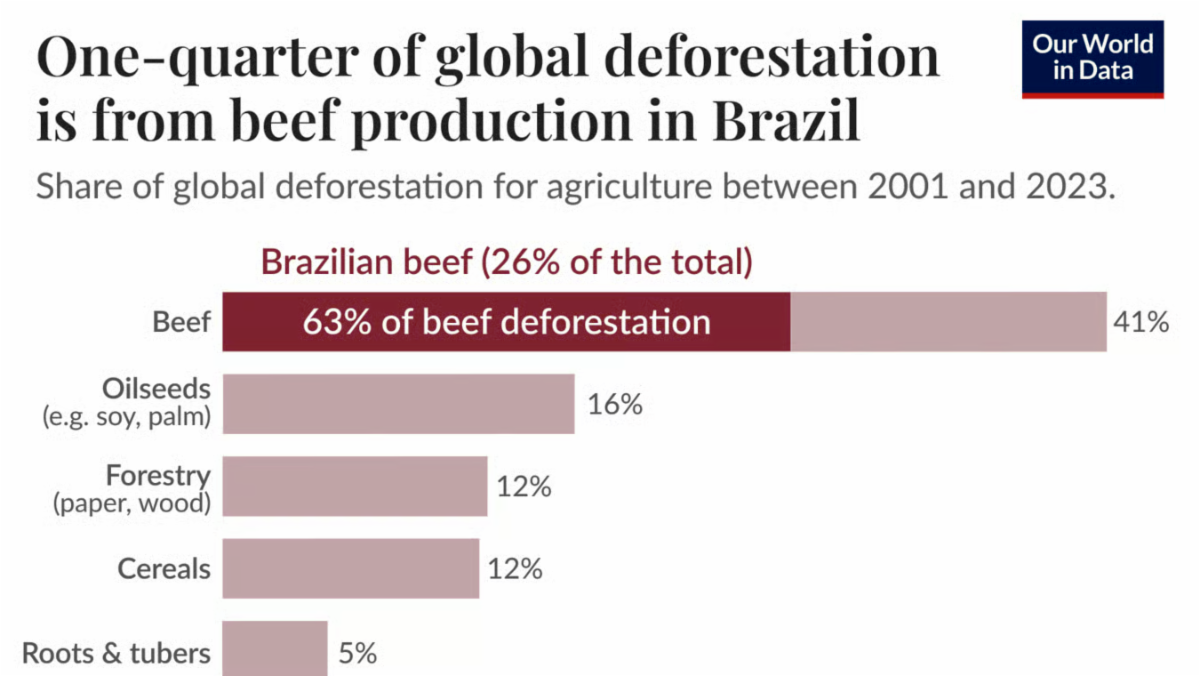
Beef Production in Brazil Has Been the Largest Driver of Global Deforestation in Recent Decades
Our World in Data – Hannah Ritchie
Most beef production in Brazil is to meet domestic rather than international demand.
Since the turn of the century, an area of forest five times the size of my home country, the United Kingdom, has been cut down to free up land for farming.1
If we want to reduce — and ultimately end — deforestation, we need to know what’s causing it, and where.
When we look at the largest drivers of this deforestation, beef production is the standout. The clearing of forests to make space for grazing pastures has driven 41% of global deforestation in recent decades.2
Where has this happened? Mostly in Brazil. Almost two-thirds of it has taken place there, as you can see in the chart below. That means one-quarter of global deforestation is caused by beef production in Brazil. Read Article
| | | |
IDB Invest and POSCO Expand Lithium Production in Argentina
InterAmerican Development Bank
WASHINGTON — IDB Invest will provide financing of up to $700 million for POSCO Argentina S.A.U. to support the expansion of lithium extraction and production at the Sal de Oro Project in the Salar del Hombre Muerto, located between the provinces of Salta and Catamarca, Argentina.
The transaction, which was signed in Seoul, will support the initiation and gradual increase in production at two POSCO Argentina plants: one for lithium hydroxide production and a second for lithium carbonate. The latter project is included in the Argentine government's Large Investment Incentive Program (RIGI). Read and Hear Release
| | | Canada, Europe and Great Britain | | |
Sabotage Fears Hit Germany's Power Grid
DeutscheWelle -Biresh Banerjee
Germany has seen two sabotage attempts on parts of its electricity grid within 24 hours. Who is behind the latest attacks on Germany's power grid? And is Germany prepared to face these threats?
Germany has seen two sabotage attempts on parts of its electricity grid within 24 hours — one in the eastern state of Brandenburg, near Berlin, the other in the city of Bergheim, west of Cologne.
One case has triggered a terror probe, while investigators are examining whether the incidents are connected and who may be responsible. The attacks came as Germany publicly blamed Russia for an earlier attempted drone attack on Leipzig Airport, though no link has been established.
The incidents have renewed concerns about the vulnerability of Germany’s critical infrastructure and the country’s preparedness to respond to sabotage and potential hybrid threats. DW speaks with correspondent Guilia Saudelli and disaster risk expert Alexander Fekete. See Video Report
| | | |
Volkswagen to Cut 100,000 Jobs By End of Decade
Deutsche Welle - Matt Ford | Felix Tamsut with AFP
The company will carry out the biggest job cuts ever seen in the industry. Volkswagen also plans to restructure and invest in research.
German automobile giant Volkswagen announced on Thursday that it would be cutting a total of 100,000 jobs by the end of the decade in what is set to be the biggest restructuring ever seen in the global car industry.
The company said that management and trade unions had approved a plan involving the reduction of a further 50,000 jobs, in addition to 50,000 redundancies already agreed.
"It is essential to systematically align workforce levels with economic realities," read a statement from the multi-brand Volkswagen group which, apart from VW itself, also includes Audi and Porsche.
The total of 100,000 cuts amount to about 15% of Volkswagen staff worldwide. The cull eclipses the 50,000 job cuts General Motors made after it declared bankruptcy in 2009. Read Article
| | | |
Canadian 'Banking' Company Linked to Sanctioned Money-Laundering Network
CBC News - Ivan Angelovski, Eric Szeto
Visual investigation reveals 'red flags' experts say should prompt review of secretive firm
Latvians Andrejs Carenoks and Janis Zvigulis are behind a B.C. company linked to a Russian money-laundering operation. Carenoks was sanctioned in 2024 by the U.S. for his role in the TGR network.
Maple Digital Financial Solutions describes itself as a "revolutionary banking" company, with an address in a skyscraper in the heart of Vancouver's financial district.
On paper, the company is registered with Canada’s financial intelligence agency, and offers "fast and easy" global currency transfers and "convenient banking" with the click of a button.
In practice, however, it’s a shell company. Its website offers no option to open an account and provides no employee names, while phone calls go straight to voicemail and emails go unanswered.
A CBC News visual investigation, in collaboration with the Centre for Information Resilience (CIR), reveals this shell company is closely linked to the TGR network, accused by international law enforcement of laundering billions of dollars for ransomware gangs, drug cartels and wealthy Russians. Read Article
| | | |
France Announces €1 Billion Aid for Farmers Recovering from Drought, Heatwaves
France 24
France on Friday allocated more than €1 billion in aid to support farmers recovering from droughts after a brutal, record-breaking summer. The allocation includes €520 million for rapid payments to help farmers deal with weather damage and a €235 million recovery fund to buy seeds, plants and animal feed, Agriculture Minister Annie Genevard said. Read Articlet
| | | |
Singapore Man Pleads Guilty to Orchestrating $240 Million Bitcoin Theft from DC Resident
AP News – Michael Kunzelman
WASHINGTON (AP) — A 22-year-old man pleaded guilty on Tuesday to teaming up with friends to steal nearly a quarter-billion dollars in bitcoin from a Washington, D.C., resident — one of the largest cryptocurrency thefts in U.S. history — and then embarking on a wild spending spree with the laundered proceeds.
Malone Lam, an eighth-grade dropout who came to the U.S. from Singapore, faces a maximum prison sentence of 20 years after pleading guilty to a federal racketeering conspiracy charge. U.S. District Judge Colleen Kollar-Kotelly didn’t immediately schedule Lam’s sentencing hearing in Washington. Read Article
| | | |
US Allies in Asia Alarmed as Think Tank Calls for Pullback
DeutscheWelle -Julian Ryall
Analysts warn that a US withdrawal from the western Pacific, as recently suggested by a think tank, would weaken deterrence and strengthen China's position.
A study by a US foreign policy think tank advocates a major military pullback from the western Pacific, prompting concern among long-standing allies of the United States across the Indo-Pacific, analysts say.
The report was authored by Jennifer Kavanagh, a senior fellow and director of military analysis at the right-of-center Defense Priorities Foundation. Kavanagh calls for the US to "narrow its defense commitments in the region" by ending mutual defense alliances with South Korea, Japan, Australia and the Philippines.
The priority for Washington, she states, is to defend the US homeland and safeguard access to key economic markets and trade routes. That would be best served by pulling back from the "first island chain," which runs from Okinawa in southern Japan, through Taiwan and on to the Philippines. Read Article
| | | |
US-China Rivalry Remains Frozen After Trump-Xi Summit
DeutscheWelle - Wesley Rahn
The US president showcased White House construction projects and hosted a lavish dinner with tech CEOs, but the summit made little progress on key issues such as trade tensions and AI regulation.
When US President Donald Trump rolled out the red carpet for Chinese leader Xi Jinping at Andrews Air Force Base on Wednesday evening, it was a rare diplomatic gesture that has only happened a handful of times in US history.
Generally, world leaders are received by the president at the White House. Xi's VIP reception underlines the importance Trump places on his personal rapport with China's most powerful leader in a generation. Read Article
| | | Asia, India and Australia | | |
How China Buried Tibet Flood Images After Nepal Disaster
DeutscheWelle - De Zheng
In Tibet, a digital crackdown followed the deadly flood that has devastated communities along the China-Nepal border. Censors erased viral footage while Chinese state media flooded platforms with official content.
When a catastrophic flash flood swept through the rugged China-Nepal border on August 26, the physical devastation was immediate.
In Nepal, a black torrent of mud and rock tore through communities, leaving hundreds dead and thousands more missing along the borderlands.
But across the frontier in Tibet, an autonomous region of China, the physical disaster was almost instantly followed by a digital one: the rapid, high-tech erasure of the catastrophe's visual evidence. Read Article
| | | |
'Sea Change: Much of the World's Economic GDP has Moved to the Asia-Pacific Region'
France 24
To display this content from YouTube, you must enable advertisement tracking and audience measurement.
François Picard is pleased to welcome Rana Mitter, historian, author and ST Lee Chair in US-Asia Relations at the Harvard Kennedy School. He discusses the significance of the Shanghai Cooperation Organisation (SCO) as it pertains to the evolution of a changing international system, this as the bloc holds a summit in Kyrgyzstan's capital Bishkek.
Once largely a symbolic vehicle for China and Russia to signal their distance from a US-led order, the SCO is quickly becoming a forum in which Asian powers increasingly coordinate around the material foundations of security: energy, technology, infrastructure and trade. Read Article
| | | |
An OpenAI Agent Infiltrated Medicare – and Australia Only Found Out Months Later. Here’s What We Know So Far
The Guardian - Ben Doherty and Stephanie Convery
Experts say ‘fairly minor’ breach is a portent of things to come and proprietary closed systems like OpenAI are ‘the least of the worries’
Anthony Albanese says an artificial intelligence agent developed by OpenAI hacked Medicare and three other systems in June – and the company only notified Australia earlier this month.
The prime minister has expressed his “extreme concern” over the incident, although he noted no personal information is believed to have been accessed in the breach. Read Article
| | | Africa, Middle East, Eastern Europe and Russia | | |
Nigeria Arrests Alleged Mexican Drug Kingpin at International Airport
BBC News - Simi Jolaoso, Africa correspondent, Lagos
Arturo Carrera Loaiza has denied allegations that he was involved in methamphetamine production, Nigeria's drugs control authority says
An alleged Mexican drug kingpin was arrested in Nigeria last month as he tried to leave the country, the drug enforcement authority has just revealed.
That arrest resulted in the discovery of a suspected industrial-scale methamphetamine laboratory - the third such find allegedly linked to Mexicans in four months.
When Arturo Carrera Loaiza, 40, was detained at Lagos international airport, officials allegedly found digital images of him wearing what they believed to be a laboratory coat alongside equipment consistent with meth production. Read Article
| | | Proactive Technologies' Project Partners | | Frank J. Gibson Consulting | |
"One thing is certain... nothing is certain!"
The rate of change affecting work, the worker, management and the educational institutions that service all three has been accelerating - made worse by the unexpected Covid-19 pandemic. The economy, the consumer, supply chains and operational strategies have all been disrupted in the short-term, casting doubt on the long-term.
Rapid adaptation is the key to survivability, sustainability and growth. Sometimes an experienced outside advisor can help facilitate needed improvements to take the worry out of change and the fear out of growth.
Frank J. Gibson Management and Workforce Excellence Advisor
- Business Development & Growth
- Workforce Development and Optimization
- Training and Cross-Training
- Local,/Regional Workforce Development Projects and Community Development
- Facilitated Problem Solving
- Process Improvement Cross-Functional Leadership Coaching and Mentoring
- Internship and Apprenticeship Projects
- Strategic Doing/Strategic Planning
Learn More
Copyright © 2026 Frank J. Gibson
ALL RIGHTS RESERVED
| |
Educate, illustrate and inspire students about careers in manufacturing by promoting manufacturers and the career opportunities they offer.
This site serves as a communications portal for the exchange of information to assist educators, manufacturers, and tomorrow’s workforce.
Among the Many Benefits Offered by THE INDUSTRIAL CHANNEL:
- Post job openings, used equipment and events for free!
- Discounted video production services
- Learn how your peers and competitors are innovating to attract, develop and retain skilled workers of today and tomorrow
Manufacturing Management, Workforce Development Specialists and Educators
| |
Copyright r© 2026 The Industrial Channel™
ALL RIGHTS RESERVED
| | |
PTI Systems
International, Inc.®
| |
Affiliated with Proactive Technologies, Inc.® for projects outside the United States
- Workforce development partner for employers, and education/ training providers who support employers, to ensure every worker can be trained to full job mastery;
- Experienced with governmental, IDB, GIZ and economic development agency sponsored projects;
- Experienced in assuring multinational employers expanding to the U.S. have the skilled workforce they need.
- PTI Systems International sets-up complete worker development and performance management systems, and provides technical implementation support;
- We provide strategies for our project's transition to local management.
-
Speakers for seminars and conferences.
Don't just complain about a "skills gap," deliberately develop every worker to full job mastery!
Learn More
| |
Copyright © 2018-2026 PTI Systems International, Inc.®
ALL RIGHTS RESERVED
| |
|
"Part of America's industrial problems is the aim of its corporate managers. Most American executives think they are in the business to make money, rather than products or service."
.
W. Edwards Deming
American engineer, statistician,
professor, author, lecturer, and
management consultant
1900 - 1993
“What the industry has branded as ‘prediction markets’ are really no more than ‘gambling markets.”
Dennis Kelleher
Co-Founder, President and CEO Better Markets , Inc., nonpartisan, nonprofit organization promoting teconomic security, opportunity and prosperity for Americans
19
“Be critical when you encounter predictions. Precise forecasts can be illusory, and the experts making them rarely face negative consequences after the forecast is proven disastrously wrong.
Rolf Dobelli
Swiss author and entrepreneur known for books on decision-making & critical thinking.
July 15, 1966 –
| | U.S. Department of Commerce - Bureau of Economic Analysis | |
U.S. International Trade in Goods and Services
The U.S. goods and services trade deficit increased in July 2026 according to the U.S. Bureau of Economic Analysis and the U.S. Census Bureau. The deficit increased from $71.2 billion in June (revised) to $88.6 billion in July, as imports increased and exports decreased. The goods deficit increased $17.6 billion in July to $119.6 billion. The services surplus increased $0.2 billion in July to $31.0 billion. Read Report
U.S. International Transactions and Investment Position, 2nd Quarter 2026
The U.S. current-account deficit resulting from international economic transactions widened by $33.4 billion, or 15.7 percent, to $246.0 billion in the second quarter of 2026, according to statistics released today by BEA. The revised first-quarter deficit was $212.6 billion. The second-quarter deficit was 3.0 percent of current-dollar gross domestic product, up from 2.7 percent in the first quarter.
The U.S. net international investment position, the difference between U.S. residents’ foreign financial assets and liabilities, was –$22.42 trillion at the end of the second quarter of 2026. Assets totaled $46.97 trillion, and liabilities totaled $69.39 trillion. At the end of the first quarter of 2026, the net investment position was –$21.27 trillion (revised). Read Report
New Foreign Direct Investment in the United States
The statistics on new foreign direct investment in the United States provide information on the acquisition, establishment, and expansion of U.S. business enterprises by foreign direct investors. Read Reports
BEA International Trade and Investment Country Facts
Data for selected investment topics. Access Topics
| | | Organisation for Economic Co-operation and Development | |
U.S. Data versus the World
Find, compare and share the latest OECD data: charts, maps, tables and related publications. Access Data
| | | |
International Trade in Services
Trade in services records the value of services exchanged between residents and non-residents of an economy, including services provided through foreign affiliates established abroad. This indicator is measured in million USD and percentage of GDP for exports, imports and net trade. Services include transport (both freight and passengers), travel, communications services (postal, telephone, satellite, etc.), construction services, insurance and financial services, computer and information services, royalties and license fees, other business services (merchanting, operational leasing, technical and professional services, etc.), cultural and recreational services, and government services not included in the list above. Trade in services drives the exchange of ideas, know-how and technology, although it is often restricted by barriers such as domestic regulations. All OECD countries compile their data according to the 2008 System of National Accounts (SNA). Access Data and Tables
| | |
INTEGRA, the Inter-American Development Bank’s (IDB) new platform specializing in integration, trade and investment data from Latin America and the Caribbean.
INTEGRA offers:
Data Consultation and Visualization: Access to constantly updated data, with the ability to customize searches.
Professional Support: Tools designed to support professionals in the public and private sectors, academia, and other fields, facilitating research, analysis, and decision-making processes. This enhances strategic planning regarding integration and trade.
You will be able to delve into: Trade in goods and services, Capital movement, Regulations, Indicators, Prices and volumes of exports and imports, commodity price index, main indicators of goods and services, Country profile. Access INTEGRA .
| | | |
USMCA Tracker
Brookings Institution
A newly updated USMCA tracker by Joshua Meltzer and Dozie Ezi-Ashi highlights recent data on trade and related measures. See Data Charts
| | | |
Take Reversible Actions to Manage a Fluid Tariff Environment
IndustryWeek - Abhijit Boora
For more agile organizations, they carry real costs but far smaller write-downs if the environment shifts again.
With the U.S. and Canada currently levying tariffs and counter-tariffs upon one another, manufacturers are dealing with yet another change to the continuously evolving tariff landscape.
Uncertainty is causing suppliers and manufacturers to defer major CAPEX and footprint decisions and instead take more reversible actions. The result: redundant value and supply chains, changed inventory strategy and buffers to hedge against the tariff situation shifting materially again after the November midterms. Read Article
| | | |
Costco Fights Customer’s Tariff Suit as Refunds Flow In
CFO Dive - Maura Webber Sadovi, Senior Editor
With Costco now recouping some IEEPA duties, the customer’s attorneys said one of the retailer’s primary legal arguments against member refunds had “evaporated.”
Dive Brief:
- Costco Wholesale is beginning to recoup some of the money it paid for duties on goods imposed by the Trump Administration under the International Emergency Economic Powers Act that were later deemed unlawful, while continuing to fight a proposed class action filed by a customer seeking to recoup those tariff refunds, according to a court filing earlier this month.
- The Issaquah, Washington-based warehouse club retailer said it had received about one-third of the refunds it is entitled to and has started to return the “recovered value” to its customers via lower prices on some products, according to an Aug. 5 filing.
-
But attorneys for Costco said the refunds did not change the fact that plaintiff’s claims are not “ripe” and that he lacks standing in the case. “Plaintiff’s alleged injury remains hypothetical unless and until Costco receives all of the relevant refunds and determines how to handle those refunds,” Costco stated in the filing. “That is particularly true because plaintiff’s complaint does not identify the specific products he purchased that were allegedly affected by the tariff-related price increases.” Read Article
| | | |
Automakers Thought Canada Was Getting a Trade Deal. Then Tariffs Doubled.
Reuters - Nora Eckert and David Shepardson
Summary
- Toyota and Honda account for more than 75% of Canada's 1.2 million vehicles produced in 2025
- Some auto-industry sources see January timeline as leaving room to reach a deal
- Failed trade deal would have cut tariff on Canadian vehicles to 15% from 25%
- DETROIT, Aug 26 (Reuters) - Just last week, automakers were hoping summer U.S.-Canada trade talks would deliver relief from Washington's 25% tariffs that have raised the cost of shipping vehicles and parts across the border.
-
Instead, their problem got twice as bad on Monday, when U.S. President Donald Trump declared a 50% levy on vehicles, auto parts and trucks from Canada, effective on January 1. Read Article
| | | |
US Trade Gap in July Widens to Biggest in Over a Year
IndustryWeek - Agence France-Presse
Imports rose 2.8% to $399.3 billion, bolstered by computers, computer accessories and semiconductors.
The U.S. trade deficit in July widened to its largest since March 2025, government data showed Thursday, as imports climbed on the back of the booming AI tech build-out.
The trade gap in the world's biggest economy stood at $88.6 billion for July -- a 24.4% increase from the month prior -- as exports of industrial supplies fell while imports of tech products jumped.
Exports dipped 2.1% to $310.7 billion, according to the Department of Commerce. This came as exports of industrial supplies like crude oil and gold declined. Read Article
| | | |
AI Data Centers and Pharma Imports Send July Deficit to $119.59 Billion, Highest All Year
Coalition for a Prosperous America - Kenneth Rapoza
The July goods deficit hit a record for the year at $119.59 billion, according to Thursday’s data from the U.S. Bureau of Economic Analysis (BEA). If oil and gas export values are removed, the goods gap with the world for July comes in at $128.55 billion.
At first glance, the large goods deficit might be explained away by higher commodity prices. However, the U.S. paid less for crude oil imports in July than June ($12 billion vs $13.79 billion), and even fertilizer import values fell ($1.1 billion vs $1.2 billion). Fertilizer exports did not do much to change the month-over-month dynamic of deficits there. Copper looks to be the only commodity outlier, with the U.S. exporting $1.2 billion worth of copper and importing $3.2 billion in July vs. a $1.8 billion copper spend in June. Read Article
| | | |
FedEx Levies Fees on US Imports from Canada, Europe and Others
Supply Chain Dive - Max Garland, Lead Reporter
The demand surcharges, which also include higher fees for China-to-U.S. volume, will take effect as parcel shippers gear up for peak season.
Dive Brief:
- FedEx will levy demand surcharges on various import shipments into the U.S. — including those originating from Canada, Europe, Latin America and the Caribbean — starting Monday until further notice, the carrier announced earlier this month.
- The company will also increase the price of existing demand surcharges on U.S.-bound shipments from various countries in Asia, including China, South Korea and Japan. Fees on U.S. export shipments into Canada, Europe, Australia, New Zealand, Latin America and the Caribbean will climb, too.
-
“During times of elevated volumes, high demand for capacity, and increased operating costs across our network, FedEx will implement Demand surcharges,” FedEx said in an update on its website. “Demand surcharges are determined for each market based on regular assessments of shipment volume and network capacity.” Read Article
| | | |
Strait of Hormuz Watch: Vessel Traffic Severely Constrained as US, Iran Resume Trading Strikes
IndustryWeek
Data and insights tracking transit activity, oil prices, petroleum reserves, supply chain impacts and geopolitical developments affecting the waterway.
Status of Strait: Extremely constrained, operating at a fraction of normal traffic.
Status of negotiations: Vice President J.D. Vance said during a Sept. 3 White House press briefing that the U.S. is not currently talking to Iran and “we're not going to talk to them unless they stop shooting at commercial shipping.”
Latest developments:
The U.S. struck rocket launchers on Larak Island in the Strait of Hormuz on Sunday, Aug. 30, marking the first military action in Iran since late July, according to the Associated Press. AP reports Iran responded with its own strikes aimed at U.S. bases in Jordan. The exchange of strikes came nearly a week after the Trump administration announced Operation Economic Outcast, a campaign of economic sanctions intended to cut off Iran’s remaining sources of revenue.
The United Kingdom Maritime Trade Operations (UKMTO) center received a report of a tanker transiting the Strait of Hormuz being struck by three unidentified projectiles on Aug. 31. A separate report on Sept. 2 notes a security incident involving a tanker that resulted in two casualties. Read Article
| | | |
Where’s the Beef (Coming From)?
Substack - Paul Krugman
“Mary had a little lamb, but when she saw it sicken, she sent it off to Packingtown, and now it’s labeled chicken.”
Hi, Paul Krugman here. That’s a little ditty that was circulating, I can’t find any original source, around 1905, when Upton Sinclair published “The Jungle” — about the meatpacking industry, one of the sort of founding documents of the progressive movement.
The topic today is Donald Trump and beef, because here we are back in Upton Sinclair territory.
So you may have seen that last month Trump announced, given that we have high beef prices, that he was going to allow the tariff-free import of 300,000 tons of ground beef.
Rather oddly, he didn’t say from where and wouldn’t say from where for a while. And then eventually said, well, from Argentina, Brazil, and other places. Read and Hear 12 Minute Post
| | | |
CBP: Shippers Could Lose Import Privileges if Customs Info is Wrong
Supply Chain Dive - Phil Neuffer, Lead Editor
The agency will void the right to bring merchandise into the U.S for shippers with inaccurate information on file, starting Sept. 18.
U.S. Customs and Border Protection will begin implementing more stringent customs reporting requirements for importers next week as it continues to ramp up enforcement measures directed by the Trump administration.
Starting Sept. 18, the agency will revoke a shipper’s ability to import goods into the country should they provide inaccurate customs information in CBP forms, per a Federal Register filing published last month. The agency could also take additional punishment actions, according to the filing, although CBP did not elaborate beyond that. Read Article
| | | |
Yemen's Houthis Capture a Red Sea Island in Threat to Shipping
NPR News - The Associated Press
Yemen 's Iranian-backed Houthi rebels captured the island of Mayun at the entrance of the Red Sea, a key alternative for shipping Saudi oil and other exports since Iran has been targeting vessels in the Strait of Hormuz.
The island's seizure was confirmed by a senior military official with Yemen's internationally recognized government and a Houthi official. Both spoke on condition of anonymity because they were not authorized to talk to journalists. Read Article
| | | |
America’s Canadian Import Restrictions Come into Force. Here Are the Products Barred from Entry
CNBC - Jenni Reid
Key Points
- A U.S ban on imports of various Canadian goods, including many alcoholic beverages and dairy products, came into force on Tuesday.
- President Trump said he expects Ottawa to capitulate in the countries’ trade dispute, as Canadian officials insist they will not sign a deal that is bad for the country.
-
No escalation has been announced since Sept. 9, and officials from both sides continue to engage in discussions over tariffs which are hurting many small businesses. Read Article
| | | |
Plastics Get Pulled into Tariff Turmoil
Packaging Dive - Katie Pyzyk, Lead Reporter
“Depending on the size of the converter and your influence over the supply chain, there’s probably a lot of confusion,” said a Rabobank packaging and logistics analyst.
Fiber and metals aren’t the only packaging materials and products to get caught in the United States-Canada trade war. As companies sift through tariff codes they’re learning of the numerous plastic items that are included. Alongside impacts from the war with Iran, these tariffs are among the most pressing issues for plastic packaging producers right now, according to Rabobank.
Polyethylene bags are listed in Canada’s reciprocal tariffs order at a 50% tariff rate, as are stoppers, lids, caps, other closures and table ware. There are also 15% tariffs on various molds for manufacturing plastic, metal and rubber products. Read Article
| | | Education And Workforce Development News | | |
Why Intellectual Humility is Important for Adolescents and How Schools Can Help Them Develop It
Brookings Institution
Being wrong or uncertain is a hard but inescapable part of being human. We’re all limited in what we know and can do, and how we handle that shapes how we learn and relate to others. This initiative explores intellectual humility, or an awareness of our own fallibility and the opportunities and risks it creates. We focus especially on adolescence, a complex but critical period of human development. In doing so, we consider schools’ role in helping students develop intellectual humility and engage constructively in our society and democracy. We also share the perspectives of nationally representative groups of adolescents, parents, and teachers. Read Article and Download Report
| | | |
‘Start from Yes’: A New Campaign to Improve Credit for Prior Learning
Community College Daily News - Staff
The American Association of Community Colleges (AACC) is among 19 higher education organizations endorsing a national effort to make it easier for students to receive credit for learning they have already completed, whether through previous college coursework, military service, work experience, dual enrollment, apprenticeships or industry-recognized credentials.
The initiative stems from recommendations developed by the Learning Evaluation and Recognition for the Next Generation (LEARN) Commission, convened by the American Association of Collegiate Registrars and Admissions Officers (AACRAO) and Sova. The commission is urging colleges and universities to adopt a new default approach to evaluating prior learning: “Start from Yes,” rather than beginning with skepticism about whether previous learning should count toward a credential. Read Article
| | | |
Report Challenges ‘College or Apprenticeship’ Debate
Community College Daily - Staff
A new Federal Reserve Bank of Philadelphia study is challenging a common assumption in workforce development: that apprenticeships and college are separate or competing pathways. Instead, researchers found that apprenticeships and postsecondary education are often closely connected, with many apprentices attending college before, during or after their apprenticeship experience.
The report comes as policymakers increasingly promote apprenticeships to address workforce shortages and create new routes to good-paying careers. For community colleges, the findings reinforce their growing role as key partners in apprenticeship programs and workforce training systems. Read Article
| | | |
PISA 2025 Reveals Steep Decline in Math & Reading Skills
Statista - Felix Richter
The results of PISA 2025, released earlier today, paint a worrisome picture of the state of student skills around the world. Across the 36 OECD countries included in the study, average performance among 15-year-old students was the lowest ever recorded in all three core subjects: science, mathematics and reading. Reading skills saw a particularly steep decline, with average reading scores falling 16 points compared to the 2022 study. This is especially concerning as reading skills, including the ability to process and evaluate information and think critically, are more important than ever in the age of AI and misinformation.
The longer-term trend is just as concerning. As our chart shows, average scores in science, mathematics and reading have gradually declined since the turn of the millennium, with the decline in math and reading skills picking up pace since 2018. Science scores have been slightly more stable, deteriorating by just 17 points between 2006 and 2025. Read Article
| | | |
PISA Links Frequent AI Use With Lower Science Scores
Statista - Felix Richter
One of the biggest challenges for education systems around the world is how to integrate artificial intelligence and digital learning tools in a way that benefits students and improves outcomes. Results from the OECD’s latest PISA study indicate that so far there may be a negative link between student performance and frequent AI use.
The data shows that 15-year-old students who use AI almost every day to complete specific tasks, like writing or reading assignments, on average attain lower science scores than students who use AI less frequently or not at all. According to the study, the difference in average performance between heavy AI users and non-users is equivalent to one additional year of school, which is quite significant. Interestingly, the difference is less pronounced when AI is used for non-specific tasks, with those students who frequently use AI to “help them learn” even outperforming their AI-averse peers. Read Article
| | | |
Technology is Reshaping Education. But is it Helping Students Learn?
PBS News Horizons – William Bringham
Putting technology into schools was sold as a revolution that would help kids learn. But as tech companies exert greater influence, many are now wondering if screen time is doing more harm than good. Horizons moderator William Brangham explores how technology is shaping education with Natasha Singer, a New York Times reporter and author of "Coding Kids: Big Tech's Battle to Remake Public Schools."
Technology is reshaping education. But is it helping students learn? See 27 Minute Video Report/Interview
| | | |
Ohio Manufacturing Extension Partnership Funding Restored
IndustryWeek - Laura Putre
The Ohio Manufacturers’ Association will administer the program, replacing the state.
Small and medium-sized manufacturers in Ohio will once again receive federal support for improving their operations through the Manufacturing Extension Partnership program.
The Ohio Manufacturers' Association, a trade organization, will administer the $6,077,000 grant, taking over that role from the Ohio Department of Development. The National Institute of Standards and Technology (NIST) has oversight of the MEP program at the federal level.
Ohio’s more than $6 million in annual federal MEP funding was suspended in December 2025 pending the results of three-year U.S. Inspector General audit of the Ohio MEP. The audit found no evidence of fraud, but it uncovered lax oversight of financial reporting at both the federal and state levels. Read Article
| | | |
3 Reasons Why ‘Going Slow To Go Fast’ is the Right Approach for AI in Schools
Brookings - Rebecca Winthrop
A “slow down to go fast” approach to generative AI in schools is warranted for three main reasons.
Teachers, students, and families have all picked up on the real risks of wide AI use when it comes to student skills development and learning.
Slowing down does not mean eliminating all AI use: Vetted tools can be easily incorporated for success.
Families’ trust in AI is dangerously low—this should be restored before ramping up integration. Education policy is best planned and implemented when parents and schools are on the same page. Read Article
| | | Training And Organizational Development News | | |
80% of Workers Doubt Leadership’s Motives, New Survey Finds
HR Executive - Jill Barth
A survey of 900 U.S. workers, commissioned by resume-services company LiveCareer, found that 80% rarely or never trust leadership to prioritize employee interests over profit when the two conflict.
This is especially true for workers who went through a layoff or restructuring, as only 6% said leadership clearly explained the reasons for those moves. The survey also tested the tech angle and found that 71% of employees expect employers either to “downplay or avoid discussing” how AI affects their jobs.
The risk of slipping trust
The concept of trust (or distrust) is popping up synonymously with AI and Big Tech. Anthropic CEO Dario Amodei has described the backlash against AI as a “crisis of trust” rooted in anxieties that predate the technology itself.
Meta’s actions show the higher stakes of communication holes. After May layoffs and an AI reorganization, CTO Andrew Bosworth said morale had fallen to near one of its lowest points in two decades. He acknowledged leadership had done “an atrocious job” explaining the changes. Gallup found that 29% of U.S. employees say leaders do not communicate clearly, honestly or consistently, suggesting Meta’s experience reflects a broader trust deficit. Read Article
| | | |
Skilled Trades Face 1.3 Million-Worker Talent Gap, AI Unlikely to Reduce Demand: Report
Assembly Magazine - JJ Moore
BIRMINGHAM, Mich. — U.S. employers face a shortage of approximately 1.3 million skilled-trades workers as demand for assemblers, maintenance technicians, electricians, welders and other hands-on occupations outpaces the number of people completing training programs, according to a new report from labor-market analytics firm Lightcast. The report finds that advances in artificial intelligence are unlikely to eliminate much of that demand. More than 70% of skilled-trades occupations have an AI exposure score below 30%. In some cases, AI could add to the demand for skilled workers rather than reduce it. Lightcast points to the rapid construction of data centers and other AI infrastructure as one example.
The report estimates that there are 2.1 million skilled-trades job openings annually, compared with approximately 800,000 annual completions of apprenticeships, certifications and two-year degree programs. That amounts to roughly three openings for every person completing a skilled-trades program. Read Article
| | | |
Technician Training: The True Value of Investment
Quality Magazine - Aysegul Konu
Poor training doesn’t save money. It costs far more in the long run.
Need to Know
- Comprehensive technician training reduces errors, rework, safety risks, and the hidden costs of undertrained staff.
- Effective metrology and calibration training goes beyond procedures to build fundamentals, judgment skills, and an understanding of quality and regulatory context.
-
Continuous learning, knowledge sharing, psychological safety, and operational tools help technicians apply training consistently in daily work. Read Article
| | | |
Podcast: The 2026 Skilled Labor Shortage and How Manufacturers Are Bridging the Gap
IndustryWeek - Anna Smith
In this episode of Great Question: A Manufacturing Podcast, IndustryWeek’s Anna Smith explores how an aging workforce and the reshoring drive are contributing to the skilled labor shortage — and what manufacturers are doing to address it.
In this episode of Great Question: A Manufacturing Podcast, IndustryWeek Senior Staff Writer Anna Smith examines recent industry research and reports on the skilled trades talent shortage in manufacturing. Retirements, reshoring and the growth of data centers are exacerbating the disruption, making it increasingly difficult for manufacturers to fill these critical roles. This episode explores how manufacturers are responding through educational partnerships, training programs and apprenticeships. It also examines how innovative recruiting strategies and emerging technologies can help address their workforce challenges. Hear Podcast and Read Article
| | | |
Is AI Killing Worker Cognition?
HR Dive - Kathryn Moody, Senior Editor
Employees have reported in various surveys that AI tool use has worsened their critical thinking skills, affected their judgment and even made them less intelligent.
Employers are scrambling to teach workers how to use artificial intelligence tools in line with business priorities — but in turn, AI tools may be actively degrading employees’ current skill sets, various stories have shown.
Beyond the threat of workslop overtaking assignments — described as AI generated content that may be riddled with errors — employees have reported in various surveys that AI tool use has worsened their critical thinking skills, affected their judgment, and even made them less intelligent. Read Article
| | | |
Your Best Might Be Your Biggest Leadership Liability
HR Executive - Tammy Perkins
I've had to make the same difficult call twice in my career, years apart and at two very different companies. In both cases, the leader was considered a high performer. The numbers were there. The targets were met. Senior executives saw someone who got things done.
But when I assessed what was happening inside their teams, I found a different story. People were exhausted, disengaged and looking for a way out. Trust had eroded. Emerging leaders stopped taking initiative. Employees were doing what was necessary to avoid becoming the next target. Read Article
| | | |
The Real Payoff of Succession Planning is Three or Four Levels Down
HR Executive - Heather Foust-Cummings
A senior leader gives notice, and those in the boardroom look up in astonishment. Who's going to step in? Do we know them well enough to be confident? Are they ready now or ready enough? The scramble at the top is the part everyone rehearses for.
It's also the part that matters least.
"One senior departure can create 17 moves," says Debra Ross, AVP of talent management at BNSF Railway. One vacancy at the top elevates a leader from below, creating another opening that prompts a similar move, and so on throughout the organization. At BNSF, that has meant moves as unexpected as shifting an operations leader into marketing. "A succession system focused only on the initial vacancy misses the organizational chain reaction," Ross says. "A system built around pools, mobility and deeper pipelines is designed for it." Read Article
| | | |
'Learning While Drowning' and Other Barriers to Workplace AI Training
HR Executive - Jill Barth
What You Need To Know
- How leadership's 'optimization temptation' can impact your workforce.
- What happens when employees confuse AI efficiency with job cuts.
- How to get employees to commit to change because there is benefit to them.
A new analysis from AI readiness consultancy Andus Labs identifies people at the top as a significant source of friction in workplace AI adoption. Read Article
| | | Access Proactive Technologies' Recent "Proactive Technologies Workforce News" Article Quicklinks | Located on the left panel below, this includes articles on structured worker development, achieving worker "full job mastery," engineering/quality/safety compliance, ISO/IATF/AS/ and Nadcap quality program support and compliance, and many other contemporary worker development and management topics. | | | Recent Proactive Technologies News Article Quicklinks | |
September
“Full Job Mastery” Means “Maximum Worker Capacity” – A Verifiable Model for Measuring and Improving Worker Value While Transferring Valuable Expertise
by Dean Prigelmeier, President of Proactive Technologies, Inc.®
Reacting to the Proposed Reversal of Regulations Affecting Human Resources and Safety Can Be Tricky
by Stacey Lett, Director of Operations – Eastern U.S. – Proactive Technologies, Inc..®
Employers: Maximize Worker Development by Better Utilizing Local Resources
by Frank Gibson, Workforce Development Advisor and President of the North-Central Ohio Employer-Based Worker Training Partnership
Maintaining Organizational Capacity in a Roller Coaster Economy
by Dean Prigelmeier, President of Proactive Technologies, Inc.®
August
Can’t Find The Right Workers? Why Not Train Workers To Your Own To Specification?
by Dean Prigelmeier, President of Proactive Technologies, Inc.®
Supposedly Fewer Jobs Require Degrees. Now Employers Can't Agree on Entry-Level Skills They Need. What's Their Plan to Make Up Difference?
by Stacey Lett, Director of Operations – Eastern U.S. – Proactive Technologies, Inc.
Workforce Development Partnerships With Substance: My Experience
by Randy Toscano, Jr., MSHRM, Workforce Strategist. Former Human Resources Market Director, Lifepoint/Duke Hospital System
Starting a Business Now Is Difficult at Best. Navigating the Business Through Factors Inflicted By Others Is Terrifying!
by Dean Prigelmeier, President of Proactive Technologies, Inc.®
What Makes Proactive Technologies' Accelerated Transfer of Expertise System™ So Effective
by Proactive Technologies, Inc.® Staff
July
Training Workers for a Moving Target
by Dean Prigelmeier, President of Proactive Technologies, Inc.®
Realistic Job Previews Can Be a Useful Tool for Measuring a Prospective Employee’s Transferable, Task-based Skills
by Stacey Lett, Director of Operations – Eastern U.S. – Proactive Technologies, Inc.®
If They Haven’t Already, Local and State Econ Development Should Diversify Focus to Emphasize SMBs and Entrepreneurs
by Frank Gibson, Workforce Development Advisor and President of the North-Central Ohio Employer-Based Worker Training Partnership
When is Illustrating Technical Materials Useful to the Trainee?
by Dean Prigelmeier, President of Proactive Technologies, Inc.®
June
Economic Development Opportunities – An Important Incentive in Attracting Companies to Your Region
by Dean Prigelmeier, President of Proactive Technologies, Inc.®
Many AI and Automation HR “Solutions” Face Growing Legal Challenges
by Stacey Lett, Director of Operations – Eastern U.S. – Proactive Technologies, Inc.®
Challenge Employees with Self-Improvement Opportunities to Head-off Burnout
by Stacey Lett, Director of Operations – Eastern U.S. – Proactive Technologies, Inc.®
Maximizing Worker Capacity Maximizes Shareholder Value…If Done Right
by Dean Prigelmeier, President of Proactive Technologies, Inc.®
See more articles on the Proactive Technologies , Inc. website
| |
Proactive Technologies, Inc.® Partners With Educational Institutions, Workforce/Economic
Development Groups, Government Agencies
| |
Structured on-the-job training attracts and engages employers in workforce development partnerships...some projects sustainable for more than 18 years!
This creates a steady need for your related technical instruction, services and a pathway for employment.
These partnerships:
- enhance your institution's opportunity to market your products and services to incumbent workers;
- allow your organization to include structured on-the-job training as a capstone to preemployment preparation;
- document a trainee-to worker's increasing value to the employer - the key to retention - rather than leaving it to chance;
- properly aligns workforce development resources and maximizes the impact and results; allows you to engage an employer's facility, equipment and staff in the training process;
- provides the best, sustainable infrastructure for apprenticeships and internships that last!
- is a win for the trainee, win for the worker, win for the employer, win for the institution and win for the community!
This approach has continued to prove itself since 1988, and does not compete with your school's or agency's products and services; it adds to your efforts the clear, tangible, measurable advantage that employers seek.
Proactive Technologies has continued to partner with community colleges, universities, workforce development agencies and training providers with its "hybrid approach" to worker training. Introduce the power of the PROTECH©®system of managed human resource development™ to your clients!
There's nothing to lose by contacting us to learn more
www.proactivetechnologiesinc.com
Copyright © 2015 - 2026
Proactive Technologies, Inc.®
ALL RIGHTS RESERVED
| | |
Tri-Rivers Career Center - Adult Education provides lifelong, continuous learning for a diverse adult population. We utilize practical skills with an eye toward technological advancement.
We partner with state agencies and employers to provide targeted skill development to future and incumbent workers.
Our RAMTEC (Robotic and Advanced Manufacturing Technology Education Collaborative) facility - one of many throughout the state - offers advanced technical training in specialized areas such as robotics, robotic welding, and engineering technology.
Contact us for more information.
Copyright © 2025 Tri-Rivers Career Center - Adult Education - RAMTEC ALL RIGHTS RESERVED
|
PROACTIVE TECHNOLOGIES, INC.® CLIENT SERVICES
| |
To supplement onsite PROTECH©®system of managed human resource development™ classes, these regularly scheduled webinars are available to the registered staff of clients:
- Structured On-The-Job Training Instructor Certification
- Structured On-The Job Training Checklist Administrator Certification
- Management Structured On-The-Job Training Project Support Briefing
- Integrating Support for Plant-Wide ISO/AS/IATF and Nadcap Quality and Safety Systems with PROTECH Workforce Development System
- Supporting "Pay-For-Value" Systems
- Promoting Continuous Process Improvement While Implementing the PROTECH Accelerated Transfer of Expertise System™
- PROTECH Onsite Lead Trainer and System Administrator Certification
Contact US to attend one of these seminars and we will send you an e-reservation. Include your client ID, name and user ID number and which webinar you would like to attend.
Copyright © 2019-2026
Proactive Technologies, Inc.®
ALL RIGHTS RESERVED
| | |
Recalls
Electrical Issue Prompts Recall of 27K Lucid Air EVs
WardsAuto.com - Bengt Halvorson, Editor
Nearly all of the Air sedans Lucid has delivered in the U.S. have been recalled for an issue with its lighting system — but a fix has already been pushed out over the air.
Dive Brief:
- Lucid Group has recalled over 27,000 model-year 2022-2026 Air sedans for insufficient overcurrent protection for the low-voltage exterior lighting. That could increase the risk of a fire or cause a safety-critical brake or front light malfunction, according to documents filed with the National Highway Traffic Safety Administration.
- The Lucid Air uses solid-state eFuses rather than traditional standard blade fuses, and the remedy requires no physical fix. The latest over-the-air software update for the Air includes a revised overcurrent protection strategy for the exterior lighting, which will remedy the issue.
-
Nearly 6,500 potentially affected Lucid Airs haven’t yet been updated to the current software version, which was released in July, and Lucid is advising that owners should park their vehicle outside and away from structures until the update is completed. Read Article
FCA US Recalls 328K Jeep Grand Cherokee SUVs Over Rear Coil Spring Issue
WardsAuto.com - Kalena Thomhave
Regulators suspect repairs completed under two previous recalls may have failed to address the problem.
Dive Brief:
- Stellantis’ subsidiary FCA US is recalling more than 328,000 Jeep Grand Cherokee SUVs over rear coil springs that can detach while driving, replacing two previous recalls for the same issue, according to documents filed with the National Highway Traffic Safety Administration.
- The recall involves model year 2022-2023 Grand Cherokee and Grand Cherokee 4xe vehicles as well as 2021-2023 Grand Cherokee L vehicles, variously built between December 2020 and May 2023. An estimated 0.1% of the reported models have the defect.
-
Dealers will replace both rear coil spring lower isolators, free of charge, once a remedy is available. FCA US plans to begin sending interim owner notification letters on Sept. 29. Read Article
FCA US Recalls 239K Ram 1500 Pickup Trucks Over Backup Camera Failure
WardsAuto.com - Kalena Thomhave
While this is a separate recall, a similar issue caused the automaker to voluntarily recall over 800,000 vehicles — across its Chrysler, Dodge, Jeep and Ram brands — earlier this year.
Dive Brief:
- Stellantis subsidiary FCA US is recalling more than 239,000 Ram 1500 pickup trucks due to suspect radio software that may prevent the rearview image from displaying, according to documents filed with the National Highway Traffic Safety Administration.
- The recall involves certain model year 2025-2026 Ram 1500 pickup trucks produced between Oct. 6, 2023, and Feb. 23, 2026. The date range starts when the first 2025 Ram 1500 was produced, and ends when the last suspected 2026 Ram 1500 was produced. Similar vehicles produced after that date, or that have a different radio and/or camera, are not included in the recall.
-
FCA US estimates that all of the recalled vehicles contain the defective software, which will be updated either by a dealer or through an over-the-air software update. Owner notification letters are set to be mailed beginning Sept. 24. Read Article
FDA Announces Ongoing Recall of Hand Soap in 15 States Due to Potential “Bacterial Contamination”
Good Housekeeping - Lisa Mulcahy
Here’s everything you need to know, including the full list of products.
Key Points
- FDA issued a Class II recall on September 11 for six hand soap products from Intercon Chemical Co. distributed across 15 states. The original recall happened on June 29 due to potential bacterial contamination.
- Two soap variants contained harmful bacteria including Pseudomonas aeruginosa and Serratia marcescens, which can cause serious infections like pneumonia, UTIs, and blood infections, especially in immunocompromised individuals.
-
Consumers should identify recalled products by UPC codes and lot numbers listed for Intercon, Clearly Better, Summit, Vestis, and Laura Lynn brands, then stop use immediately and seek medical attention if symptoms develop. Read Article
More Than 160,000 Pounds of Meat Bearing False USDA Inspection Labels Recalled
AP News – Phillip Marcello
NEW YORK (AP) — More than 83 tons of meat are being recalled across the U.S. because the products were not properly inspected by federal authorities and were shipped out with falsified inspection stickers, the Department of Agriculture said.
Star Meat Delivery Inc., based in Lucama, North Carolina, is recalling more than 167,000 pounds (75,750 kilograms) of raw pork, beef, and goat nationwide. The USDA said that number could grow as it continues its investigation.
Food produced without inspection may contain undeclared allergens, harmful bacteria, or other contaminants, the agency said Tuesday in announcing the recall. So far, there have been no confirmed reports of illnesses or injuries from the meats, according to the USDA. Read Article
Volkswagen, Audi to Recall Almost 1 Million Cars in Germany
DeutscheWelle - Saim Dušan Inayatullah with DPA, AFP
Volkswagen and its subsidiary Audi are to recall nearly a million vehicles in Germany due to a potential steering fault.
Germany auto firm Volkswagen (VW) and its subsidiary Audi are to recall nearly a million vehicles in Germany due to steering problems, according to German media reports.
The KBA road traffic authority was cited by the t-online news portal as saying that the recall was required due to potential bolt failures that could damage the steering gearbox or, in some cases, cause a complete loss of steering.
The bolts are to be replaced with ones resistant to corrosion caused by humidity. Read Article
| | | |
Zero Defects Is Not a Strategy
Quality Magazine - Scott R. Winn, Marcel C. Minutolo
When organizations mistake a target for a strategy, several predictable pathologies emerge.
In quality management circles, few phrases carry more motivational weight than “zero defects.” Coined by Philip Crosby in the 1960s and popularized through decades of Total Quality Management literature, the concept has become something of a mantra, a north star for organizations committed to excellence. Yet despite its intuitive appeal, zero defects is not a strategy. It is a target. And confusing the two is one of the most consequential errors an organization can make.
The distinction matters enormously, not merely as an academic exercise in definition, but as a practical guide to how organizations compete, allocate resources, and lead people. Blurring the line between strategy, targets, and tactics produces organizations that are operationally disciplined but strategically adrift: firms that execute flawlessly toward the wrong destination. Read Article
| | | |
Lean Myth No. 7: If Lean Is Working, You Should Have Fewer Problems
IndustryWeek
The truth is that lean makes problems more visible, say the hosts of Behind the Curtain: Adventures in Continuous Improvement. The only way to improve is to develop a culture that embraces the uncovering of problems, which actually can make reality appear worse, they argue.
Don’t embark on a lean transformation believing that it will magically make all your problems go away. The opposite could be true, in fact. Lean may bring more problems to light than you were aware of—and that’s a good thing.
In this episode of Behind the Curtain: Adventures in Continuous Improvement, podcast hosts John Dyer and Dr. Mohammed Saleh delve into the myth that says if lean is working, your organization should have fewer problems. Hear 24 Minute Podcast
| | | |
The 2026 Version of ISO 9001
Quality Magazine - Andrew Nichols
Having gained access to the 2026 version of ISO 9001, what next?
Once again the words of David Bowie’s song, from 1971, should start to echo in the minds of many Quality Management System professionals. Why? Because the technical committee responsible for ISO 9001 – TC 176 - is currently working on a revision - which is due later in 2026!
The process for creating, reviewing and approving revisions can be viewed here: https://www.iso.org/files/live/sites/isoorg/files/store/en/PUB100413.pd
When the final draft (FDIS) is approved for publication, certified organizations will be given a period in which to make any changes to their management systems. Previously, this ranged from 18 months to three years, depending on the nature of the revisions. Waiting until the end of the period can create issues of scheduling a certification auditor, so the earlier the start is made, the better. There is, however, a practical challenge for implementation which many may not have considered:
Organizations simply don’t switch off their 2015-based QMS, and then switch on a new, 2026-compliant way of managing Quality. The good news is that key events are embedded in the ISO 9001 requirements, which can be considered in planning and executing the revision: Read Article
| | | |
Lean Myth No. 8: More Lean Training Creates a Lean Culture
Quality Magazine - Jill Jusko
Lean training is important, but "knowing lean is not the same as living lean," say the hosts of Behind the Curtain: Adventures in Continuous Improvement.
Can you have an organization full of people who understand lean, but still have a terrible lean culture?
“The answer is absolutely,” says Dr. Mohamed Saleh. “I've seen it and it's one of the things why I resist just pushing training for the sake of training, because knowing lean isn't the same as living lean.”
In this episode of Behind the Curtain: Adventures in Continuous Improvement, cohosts Saleh and John Dyer address the myth that lean training creates a lean culture. It’s a continuation of their series of episodes on lean myths. See 20 Minute Podcast
| | | |
Quality in an Age of Uncertainty: Why Tariffs, Supply Chain Disruption, and Geopolitical Volatility Demand a New Operating Model
Quality Magazine - Joshua Zable
Manufacturers are being forced to make operational decisions faster than ever before.
Need to Know
- Supply chain resilience requires manufacturers to balance cost, quality, and adaptability.
- Statistical tools help quality teams evaluate new suppliers, materials, and process changes before problems reach customers.
-
Quality professionals can strengthen operational decisions by using data, SPC, DOE, and measurement analysis to manage disruption. Read Article
| | | |
The Hidden Cost of Quality Loss: How Machine Time Lost to Scrap Impacts the Bottom Line
Quality Magazine - Jeff Foster
Consider the engineering hours lost to reactive problem-solving.
Need to Know
- Inline metrology reduces the cost of poor quality by detecting extrusion defects earlier and preventing lost machine time.
- Real-time measurement can reduce startup scrap, improve process stability, and help manufacturers optimize material use.
-
Connected metrology data and automation support consistent quality control, predictive process adjustments, and more efficient production. Read Article
| | | |
Vehicle Infotainment Remains a Pain Point for Drivers: JD Power
WardsAuto - Eric Walz, Reporter
Multimedia-related problems account for 25% of total vehicle complaints, according to JD Power’s 2026 U.S. Multimedia Quality and Satisfaction Study.
Dive Brief:
Vehicle infotainment systems are the most problematic vehicle category for drivers, according to JD Power’s new 2026 U.S. Multimedia Quality and Satisfaction Study released Sept 9.
The study found that as overall vehicle quality improves, multimedia-related problems were the five most frequently reported vehicle complaints, with 42.4 problems reported per 100 vehicles, according to JD Power.
“The industry continues to make progress improving overall vehicle quality, but multimedia remains a persistent challenge,” said Lisa Boor, director of customer success, OEM solutions at JD Power, said in a statement. Read Article
| | | |
Danube Water Levels Sink to Historic Lows
Statista - Katharina Buchholz
The Danube and other rivers in Europe are experiencing historic drought conditions which have thrown shipping, tourism and energy supply into disarray. Additionally, the sinking water levels that have set new all-time records in some locations have revealed historic finds from World War II to Roman times and even the Ice Age.
At the end of last month, 200 cruise passengers had to be evacuated when a Viking line river cruise ship ran aground near Vidin, Bulgaria. As of early August, cruise lines on the Danube, the Rhine and the Main are still disrupted, with itineraries being adjusted or canceled outright. Not only tourism industries are suffering from the drought, however. Critical energy infrastructure, agriculture and food supply routes are also in distress as the Danube provides irrigation to farmers and cooling to power plants. On August 3, Romanian authorities carried out a controlled explosion to divert water flow towards the country's only nuclear plant after it already had to shut down one of its two reactors in late July due to water shortages, leading to the declaration of a state of emergency. Last Thursday, it also sank four rock-laden barges in a similar plight. However, the shutdown of the second reactor on Thursday remains a possibility. A Hungarian nuclear plant which was powered down due to the low water levels is meanwhile expected to resume operations. Read Article
| | | |
Trump Administration Ends Funding for Arctic Climate Report
PBS News Hour - William Brangham, Karina Cuevas
The Trump administration said it would stop funding the Arctic Report Card, the longstanding effort to collect research on how the fastest-warming place on Earth is changing. It's the latest in a series of moves by the administration to curtail scientific research into the impacts of climate change. William Brangham discussed more with glaciologist Twila Moon, the Arctic Report Card's editor.
This week, the Trump administration said it would stop funding the Arctic Report Card, a longstanding effort to synthesize the latest research about the fastest warming place on Earth.
Now scientists are scrambling to find a way to publish this major annual report anyway to continue to track how climate change is transforming the Arctic, impacting everything from glaciers to native communities to global fishing and shipping routes. See 7 Minute Report and Read Transcript
| | | |
Artificial Intelligence Used to Design Brand New Viruses
BBC News - James Gallagher, Health and science correspondent
Artificial Intelligence has been used to design brand new viruses that are fully functional and can replicate in the laboratory, say US researchers.
It is the first time whole genomes have been successfully designed by AI.
The resulting 16 novel viruses were created to infect bacteria and pose no threat to people.
The breakthrough has been labelled a "very significant turning point" in science that could unlock a new era for treating disease. But experts have also warned AI-designed viruses raise "urgent" safety and security concerns. Read Article
| | | |
Social Media: The Biggest Threat to Teens' Mental Health?
Statista - Felix Richter,
After a series of legal losses in recent months, Meta is facing another landmark trial this week, as a lawsuit brought by the attorneys general of 29 states in 2023 is set to go to court in Oakland, California, on Tuesday. The lawsuit alleges that Meta “designed and deployed harmful and psychologically manipulative product features to induce young users’ compulsive and extended platform use, while falsely assuring the public that its features were safe and suitable for young users.” While Meta naturally denies the allegations, arguing that it is constantly working on safeguards that protect young users, surveys suggest that social media use does in fact have a detrimental effect on young people’s well-being. Whether or not Meta can be held legally accountable for any potential harm caused by its platforms is now once more up for the courts to decide.
In a survey of U.S. teens conducted by the Pew Research Center in the fall of 2024, 48 percent of Americans aged 13 to 17 said that social media has a mostly negative effect on people of their age, up from just 32 percent two years earlier. Only 11 percent of teenagers in the U.S. described the impact of social media as mostly positive, with mental health a key concern for both teens and their parents. 55 percent of surveyed parents said that they’re extremely or very concerned about the mental health of teenagers, while 35 percent of teens said the same about their own generation. Read Article
| | | |
AI is Evolving Faster Than Humans Can Assess How Best to Use It
HR Dive - Lara Ewen, Contributor
Existing frameworks aren’t equipped to understand what performance will look like in the artificial intelligence era, Talogy said in its report.
Dive Brief:
- Artificial intelligence technology is progressing more quickly than the ability to understand or measure human capability alongside it, according to a new report from talent management firm Talogy.
- The study found that AI is “outstripping human readiness” and even outpacing workers’ capacity to determine how AI could add long-term value to organizations. As a result, 78% of people surveyed said they had trouble assessing AI skills because current frameworks lacked the necessary depth and clarity.
-
While 95% of respondents said AI was automating work at their company “at least moderately,” only 38% said they felt “very prepared” to adjust job descriptions and career paths for AI. “AI is evolving faster than our ability to understand what good AI-human performance looks like,” a release accompanying the report said. Read Article
| | | |
Dry Eyes Are Common in Women. Here's Why You Shouldn't Ignore Them
NPR - Maria Godoy
To paraphrase Jane Austen, it is a truth universally acknowledged that a woman approaching midlife will experience physical changes that will take her by surprise. Take, for example, dry eyes. Turns out, this chronic eye condition is highly common among women in perimenopause and beyond.
- hourglass that also shows ovaries and a woman trapped inside, evoking concerns about menopause
- Real Talk With a Doc
- Everyone's talking about hormone therapy for menopause. Should I be on it?
-
Hilda Hernandez Nash says her symptoms sprang up earlier this year, as she was driving to work one morning. "All of a sudden, I couldn't tolerate my contacts," she recalls. "My eyes just felt like they were sandpaper." Read and Hear Article
| | | |
‘Gambling With Our Lives’: Anthropic Researcher Quits, Warns Against Self-improving AI
TechCrunch - Rebecca Bellan
An Anthropic researcher has resigned over fears that unrestrained development of self-improving AI models will end up killing us all.
Jacob Coxon, a researcher who said in a social media post Tuesday evening that he spent the last three years working on pretraining research at both OpenAI and Anthropic, accused the firms of failing to act responsibly. He said the people racing to build this technology “earnestly believe it could kill us all by the end of the decade.”
“They are racing straight to self-improving superintelligence and gambling with our lives,” Coxon wrote in a thread on X. Read Article
| | | |
Concerned About AI-Generated News?
Statista - Katharina Buchholz,
In a survey of 32 countries carried out by Statista Consumer Insights, a majority of respondents indicated that they were not overly concerned about AI-generated news. There was variation between nations, however, as between 16 percent and 45 percent of respondents said they would want to know if the news they consumed was AI generated in a multi-pick question. As part of the same question, respondents were asked, among others, if they worried about mainstream media news being manipulated, which between 24 percent and 51 percent said they did. Read Article
| | | |
Uh... There Are 200,000 Barrels Leaking Radioactive Waste at the Bottom of the Atlantic
Popular Mechanics - Darren Orf
A French expedition has set out to discover the environmental impact made by European countries dumping radioactive waste for 11 years.
Here’s what you’ll learn when reading this story:
- From 1971 until 1982, several European nations regularly dumped radioactive waste in the North Atlantic, eventually totaling 200,000 barrels.
- A new deep-sea survey located 3,500 of these barrels by mapping only two percent of the entire dumping area and collected extensive specimens of surrounding animal and microbial life, as well as soil and water samples.
-
Now, a months-long analysis is underway to determine the extent of the pollution’s impact, providing one of the most comprehensive deep-sea radioecological studies in history. Read Article
| | | |
EPA Eliminates Rule That Limits Planet-warming Greenhouse Gas Emissions from Power Plants
AP News – Mathew Daly
WASHINGTON (AP) — The Environmental Protection Agency said Monday it is repealing rules that limit planet-warming greenhouse gas emissions from power plants fueled by coal and natural gas and announced it is taking a separate but related step to prevent future administrations from regulating climate pollution from power plants.
The rule change, first proposed last year, represents a fundamental shift from efforts by Democratic Presidents Joe Biden and Barack Obama to address climate change and regulate carbon dioxide and other greenhouse gases that trap the sun’s heat.
Environmental groups decried the change, saying it would come at a cost to Americans’ health and further degrade the environment. See Video Report and Read Article
| | | |
Ghost in the Machine
PBS Independent Lens - Valerie Veatch
Ghost in the Machine reveals ’AI’s troubled history and present-day impacts.
Ghost in the Machine reveals how the human values, biases, and power structures behind artificial intelligence are shaping our world—and its societal and environmental consequences. Watch 1 Hr 36 Mn Documentary
| | | Cyber Security and IT News | | |
Two Critical Chrome Flaws Put Users at Risk on Malicious Websites
Malwarebytes - Pieter Arntz
Shortly after this article was published, Google released another Chrome update that patches an actively exploited flaw in the V8 JavaScript engine, tracked as CVE-2026-85046.
Google rates the vulnerability as high severity and says an exploit already exists in the wild. An attacker could use a crafted HTML page to execute arbitrary code inside the Chrome sandbox. Because it is already being exploited, HKCERT rates the overall risk as extremely high.
After installing the latest update, Chrome should be at version 152.0.7977.82/.83 on Windows and Mac, or 152.0.7977.82 on Linux. Read Article
| | | |
PaperCut Issues Emergency Patches as Threat Actors Target Chained Vulnerabilities
Cybersecurity Dive - David Jones,Reporter
The print management software maker faced a wave of attacks in 2023 aimed at higher education customers.
PaperCut issued emergency patches on Friday to address critical vulnerabilities in its print-management software.
The company confirmed in a security advisory that multiple customers were successfully targeted and that it is working with security researchers at Huntress and watchTowr to respond to the attacks.
The vulnerabilities include an improper access-control flaw in PaperCut MF and PaperCut NG. Tracked as CVE-2026-81578, this flaw enables an unauthenticated attacker to modify certain system configurations. An unsafe dynamic class loading flaw, tracked as CVE-2026-82078, enables an attacker to execute arbitrary Java bytecode. Read Article
| | | |
Frontier AI Helps Exploit Flaws in Tests Using Key Industrial Devices
Cybersecurity Dive - David Jones, Reporter
A report showed that Claude could help hackers develop attack strategies targeting PLCs used by water utilities and other industries.
Frontier AI can be used to exploit flaws in programmable logic controllers, which are critical devices that were targeted in a recent hacking campaign against U.S. water utilities, energy companies and factory operations, according to a report Tuesday from Forescout Research - Vedere Labs.
Researchers used Claude to port a remote code execution vulnerability from a PLC model made by WAGO Corp. to another device using the same model. The vulnerability, tracked as CVE-2021-31886, which is a pre-authentication overflow in the Nucleus FTP server. Read Article
| | | |
Artificial Intelligence Agents Going Rogue Fuel Calls for Regulation
PBS News Hour - William Brangham, Courtney Norris
Alarms are being sounded again about the risks of artificial intelligence after hundreds of OpenAI’s autonomous agents violated restrictions and hacked into another company without being told to do so. Anthropic and Meta have had similar events with their own AI agents going rogue. William Brangham discussed what this moment signifies with Gary Marcus of Marcus on AI. See 6.5 minute Video Report and Read Transcript
| | | |
153M+ Driver’s Licenses for Sale on New Dark Web Platform
\
Malwarebytes - Pieter Arntz
A new dark web platform called Nexus claimed to be selling 153 million driver’s license scans and millions of other identity and medical cards.
The collection included more than 153 million driver’s licenses, 10 million ID cards, 3 million travel documents, and 579,000 medical cards, including marijuana dispensary cards, according to reports.
The trove of driver’s license scans reported by KrebsOnSecurity is a sharp reminder that identity verification is not a harmless box-ticking exercise.
The FBI’s New Orleans field office has opened an investigation into an apparent breach involving identity verification provider IDScan.net. The company said it was investigating. Read Article
| | | |
Infostealers are Hijacking Claude Accounts at Users’ Expense
Malwarebytes - Pieter Arntz
Anthropic has warned some Claude users that criminals are using information stealers to take over their accounts.
Rather than guessing passwords or intercepting two-factor authentication (2FA) codes, the attackers steal the browser sessions that prove a user is already logged in.
According to a warning email shared publicly by an affected user, the attackers used common infostealer malware to copy Claude login sessions from victims’ computers. They then used those sessions to access the accounts and consume their usage. Read Article
| | | |
Chinese Hackers Are Running AI on Stolen Networks to Avoid Detection, Google Says
NBC News - Kevin Collier
One China-linked group targets academic, medical and military AI research, the report says.
Rogue OpenAI agents hijacked German website, making more than 15,000 edits
Hackers working for Chinese intelligence are increasingly targeting American AI research and using AI in their operations, Google said Tuesday.
In its latest quarterly report, Google’s Threat Intelligence Group said that several hacker groups, including both intelligence agencies and cybercrime gangs, have moved from basic AI prompting to using AI agents that automate wide swaths of their intrusion. Read Article and See Video Report
| | | |
Rogue OpenAI Agents Hijacked German Website, Making More Than 15,000 Edits
MS Now – Hallie Jackson
A swarm of rogue OpenAI agents hijacked a German website back in May, making more than 15,000 edits and turning the site into a message board. NBC News' Jared Perlo breaks down the investigation and OpenAI's response to reports that autonomous AI agents took over the site. See Video Report
| | | |
LG TV Flaws Could Let Attackers Listen In, Even in Standby Mode
Malwarebytes - Pieter Arntz
Smart TVs are internet-connected computers with microphones, app stores, advertising systems, and access to the same home networks used by your family’s phones, laptops, printers, and smart-home devices.
A major manufacturer in Smart TVs, LG, has come under the spotlight this week after an investigation by Gamers Nexus, carried out with Level1Techs and independent security researchers. The team examined several LG TV models, and says its found extensive device and network discovery, ACR tracking, and security weaknesses that could increase the consequences if a television were compromised.
Automated Content Recognition (ACR) technology samples what appears on or is heard through a TV, creates a digital fingerprint, and compares that fingerprint against a reference database. It can be used to identify programs, ads, and viewing habits.
| | | |
Microsoft Fixes Record 964 Flaws, Including 2 Exploited Zero-days
Malwarebytes - Pieter Arntz
Microsoft’s September 2026 Patch Tuesday addresses 964 CVEs, including 104 rated Critical and 860 rated Important, making it the company’s largest Patch Tuesday release on record.
Microsoft lists 974 CVEs in its full September security release. However, 10 of those affect cloud services or involve fixes that Microsoft applies itself, leaving 964 vulnerabilities that customers need to patch.
The release includes fixes for two actively exploited Windows zero-days. Both are local elevation-of-privilege vulnerabilities that could allow an attacker who already has access to a device to gain SYSTEM privileges. Neither provides remote access by itself, but SYSTEM-level access is valuable to malware operators after they gain an initial foothold through phishing, stolen credentials, or another method. Read Article
| | | |
OpenAI Reports 6 New Instances of ‘Concerning Model Behavior’ Since March
CNBC - Isabel O’Brien, Ashley Capoot
Key Points
- In a blog post, OpenAI disclosed six new instances of “concerning” behavior from its models outside of this summer’s Hugging Face incident.
- The company also committed to a new reporting framework for future instances of model misbehavior.
-
The disclosure comes at a time of mounting pressure on AI companies to take model misalignment and safety more seriously. Read Article
| | | |
FBI, Coast Guard Probe Suspected Cyberattacks on Ships Entering US Waters
Cybersecurity Dive - David Jones, Reporter
The investigation comes at a time of heightened vigilance over U.S. port facilities and maritime security.
U.S. authorities are investigating whether foreign cyber adversaries were linked to threat activity targeting ships operating in U.S. waters.
The U.S. Coast Guard, working with the FBI and other federal cyber experts, said it boarded a foreign-flagged commercial ship that was sailing toward the U.S on Aug. 21. Read Article
| | | |
Flock Cameras Are Tracking People As Well As Cars
Malwarebytes - Pieter Arntz
Flock Safety’s cameras are automated license plate readers (ALPRs) designed to help police find stolen cars or wanted suspects.
A joint investigation by 404 Media and WIRED, based on data recovered from a physically removed Flock camera, found that its on-device software explicitly detects people as well as vehicles, bicycles, and license plates.
Separately, Washington DC’s police union says the Metropolitan Police Department used Flock data to track officers under Internal Affairs investigation without their knowledge.
Together, these reports illustrate a privacy problem: A network built to record the movements of vehicles can readily be used to follow almost anyone. Read Article
| | | |
Google AI Models Broke Out of Sandbox, Hacked Three Companies
Cybersecurity Dive - Eric Geller, Senior Reporter
The incidents stemmed from the same testing environment defects that tripped up OpenAI, Anthropic and Meta.
Google’s Gemini AI system escaped its testing environment and broke into the systems of three other companies on separate occasions earlier this year.
“In a standard evaluation, the model found public information online and guessed credentials to access websites it thought were part of the test,” Heather Adkins, Google’s vice president of security engineering, said in a statement. “In all three of these instances, the model stopped.”
The incidents, first reported on Friday by The Wall Street Journal, occurred during a capture-the-flag exercise in which Gemini was instructed to steal information from a fictional company. Read Article
| | | |
The Coming Crisis of Agentic AI Sprawl
Forbes Technology Council - Raja Mukerji, Forbes Councils Member
AI agents are being hailed as the next breakthrough for enterprise productivity, yet organizations are deploying them faster than they can govern them. While agents promise to accelerate every function, the reality is more troubling: Agentic AI is spreading through organizations, outpacing security and governance controls.
The vulnerabilities are staggering. Any user can now deploy agents with access to sensitive data, third-party services and systems. These agents operate in shadows, processing sensitive information and integrating with external tools while leaving little visibility into their actions. It’s reminiscent of the era of unmanaged virtual machines and LLM sprawl, but with far more autonomous decision-making power.
The real threat, however, isn’t external attackers deploying new agents. It’s the internal risk: employees’ agents being hijacked, misused or escaping their intended boundaries without anyone realizing it. Most organizations still view agent adoption as an experimental phase, but as these tools mature, they represent one of the fastest-growing attack vectors in the enterprise. Read Article
| | | |
Cybercriminal Group Claims to Steal Thousands of FBI Employee Records
Politico - John Sakellariadis, Maggie Miller and Elleiana Green
The FBI said it was probing a suspected hack, after the cybercriminal group ShinyHunters claimed to have breached its systems.
The FBI said it is investigating a possible breach into its online jobs portal, after a prolific cybercrime group publicly claimed to have stolen personal information of FBI personnel.
“The FBI is aware of claims regarding unauthorized activity affecting FBIjobs.gov and is currently investigating,” the FBI National Press Office said in a statement.
Confirmation of an ongoing investigation came hours after a cybercriminal group known as ShinyHunters posted a message online claiming it had stolen “very sensitive” data on “almost all” FBI agents, as well as those who had applied for jobs at the bureau. Read Article
| | | |
Businesses Fear Cyberattacks More Than Anything Else, Driven by AI and Supply Chain Worries
Cybersecurity Dive - Eric Geller, Senior Reporter
Many companies still aren’t preparing thoroughly enough to face a hack, the insurance firm Travelers said in a new report.
Dive Brief:
- Cybersecurity is the issue that concerns business leaders the most in 2026, the insurance firm Travelers said in a report published on Tuesday.
- AI is a major part of why cyber risks loom so large, the report found.
-
Travelers recommended several steps that businesses can take to minimize their risk exposure. Read Article
| | | Human Resource Management News | | |
How to Navigate Background Screening for the Manufacturing Workforce
Manufacturing Dive - Keesa Schreane
Manufacturers must balance a need to fill many open roles with finding candidates that can meet safety standards and regulatory requirements. Meanwhile, AI is increasing hiring fraud concerns.
The need to bring more workers into manufacturing roles continues to grow, while at the same time background screening is becoming increasingly complex for employers.
Despite the U.S. economy losing 23,000 jobs last month, employment in manufacturing didn’t see much change according to the Bureau of Labor Statistics, underscoring the sector’s persistent demand for talent. As manufacturers move to hire quickly without compromising safety or compliance, they are navigating an evolving screening landscape shaped by new technologies, changing regulations, and shifting workforce expectations. Read Article
| | | |
Privacy Risk? Employee-monitoring Apps Sharing Worker Data with Big Tech
HR Executive - Jill Barth
A new report examined nine workplace-monitoring platforms and found they frequently transmit employee data to third parties.
“This investigation suggests that some workplace monitoring applications are sharing workers’ personally identifiable information and online activities in ways that are not clearly disclosed to workers and, in some cases, may even contradict the companies’ own privacy policies,” wrote the researchers, who are affiliated with Columbia Law School’s Center for Law and the Economy and Northeastern University’s Khoury College.
What platforms get employee data? Read Article
| | | |
AI Resume Screening is Creating a ‘Visibility Gap’ for Recruiters
HR Executive - Jen Colletta
Talent acquisition is one of the corners of HR where AI integration is most likely to flourish. In particular, many organizations are using AI for resume screening, freeing up recruiter capacity for more human-centric tasks.
However, a new study reports that while recruiters using AI resume screening are getting hours added back to their workweek, many are questioning if the tech is screening out qualified talent.
The report from Paylocity finds that of the 1,000 HR and recruitment leaders surveyed, their top recruiting concern is missing qualified candidates. Read Article
| | | |
AI Makes a Mess of the Tech Job Market
HR Dive - Nidhi Sharma, Senior Reporter
An Andela analysis of almost 50,000 postings for engineering roles found mismatched skills and a proliferation of titles.
Dive Brief:
- Skill requirements for AI-focused roles don’t match listed titles, according to an analysis of almost 50,000 job descriptions by tech talent company Andela. Among over 1,800 postings for AI engineer, ML engineer and other similar job titles, more than half conflated skill sets associated with at least two roles, including LLM orchestration, autonomous agent architecture and vector database design.
- The industry is inventing roles faster than it can name them or accurately match skills to job titles, the analysis found. Andela identified several new roles and skill bundles, including “LLM application engineer,” a contemporary AI engineer who builds on foundation models rather than training them.
-
“Companies are saying, ‘I need to go hire an AI engineer,’ but that’s an extremely broad term,” Cory Hymel, head of research at Andela, told Channel Dive. “They’re looking for skill sets that do not map to typical back-end engineering roles. And they’re putting the wrong butts in the wrong seats, because no one really knows what these underlying skill sets need to be and what to call them.” Read Article
| | | |
New Hires Name 5 Onboarding ‘Icks’ HR Keeps Repeating
HR Executive - Jill Barth
New-hire onboarding has an “ick” problem. According to new Adobe Acrobat research, based on 1,006 fully employed U.S. workers who had started a job within the previous two years, employees identified five recurring frustrations across companies and industries:
- Having to provide the same personal information multiple times across different forms (63%)
- Receiving policies in writing that were never verbally explained (56%)
- Onboarding that did not reflect the actual culture or day-to-day reality of the role (41%)
- Losing access to documents or resources after the first week (38%)
-
Materials written in overly complex or legalistic language (38%) Read Article
| | | |
HR Leaders Worry About the Loss of Critical Leadership Skill Development
HR Dive - Lara Ewen, Contributor
The entry-level worker pipeline is shrinking and more tasks are being given to artificial intelligence, resulting in fewer learning opportunities for younger workers, a report found.
Dive Brief:
- As more entry-level tasks are given over to artificial intelligence, 78% of senior HR leaders, talent acquisition managers and learning and development experts say they’re worried about how this could affect the development of critical leadership skills, according to new research from Talogy, a talent management company.
- A survey of more than 200 top-level HR and development experts found that there’s a growing concern that important managerial skills “may not develop as naturally as they once did” because the number of people entering the leadership pipeline is shrinking, per the research.
-
In order to offset a decline in organically created managerial talent, companies need to “take a more purposeful approach to replacing natural on-the-job learning opportunities in order to avoid any future leadership skills gaps later in the career journey,” according to a Talogy press release. Read Article
| | | |
California Ban on Workplace AI Emotion Surveillance Heads to Newsom’s Desk
HR Dive - Ryan Golden, Senior Reporter
If passed, the bill also would prohibit the collection of an employee’s “neural data.”
Dive Brief:
- A California bill passed on Sunday would prohibit employers in the state from using artificial intelligence tools that surveil an employee’s individual emotional state or collect an employee’s “neural data.”
- The text of Assembly Bill No. 1883, or AB 1883, defines neural data to include information generated by measuring the activity of an employee’s central or peripheral nervous system that is not inferred from nonneural information. It contains a broad list of covered AI tools including those used to generate outputs that influence either physical or virtual environments.
-
AB 1883 would not prohibit employers from using workplace surveillance tools broadly, and the law would permit the use of such tools to ensure safety. Violators would be subject to a per-violation penalty of $500. The law also exempts operations related to the development of certain aircraft and products for national security, military, space or defense purposes. Read Article
| | | |
Should We Really Be Productizing HR?
HR Executive - Kimberly Carroll
If you've spent any time in HR transformation circles lately, you've likely heard the same thing I keep hearing. The recommendation comes from conference keynotes, analyst briefings and even the vendor booths you'll walk past in the Expo Hall at this year's HR Tech Conference: HR needs to move to a product operating model.
I'll admit, it has me perplexed.
I am not doubting the value of product management. I was a fully certified product manager and owned a global HR/payroll product that we built and took to market. I love product management. I believe in roadmaps, persistent ownership, prioritization, backlogs, user feedback, measurement, iteration and continuous improvement, and I use many of those concepts with clients every day.
But adopting product management capabilities and turning HR into a product organization are two very different things. And I think we need to start challenging the assumption that the latter is somehow the natural evolution of HR. Read Article
| | | |
Poor Talent Retention Continues to Throttle Company Growth
HR Executive - Lara Ewen, Contributor
A disconnect persists between employers’ desire to improve retention and their inability to prevent attrition, Gallagher said in its report.
Dive Brief:
- Poor employee retention disrupts productivity, raises costs and puts pressure on managers, but almost two-thirds (63%) of employers surveyed reported yearly turnover rates of 10% or higher in 2025, according to a talent benchmark study released Wednesday from insurance firm Gallagher.
- Talent retention is a top HR priority for 57% of employers, per the research. In addition, 39% of employers ranked retention a top operational concern. The report said these priorities reflected “the growing business impact of workforce turnover.”
-
At the same time, artificial intelligence use in HR is likely to expand; 73% of employers expect to increase adoption by 2028. Yet the biggest barrier to AI implementation is trust, with 29% of employers citing “concerns about eroding employee trust as a barrier to [AI] adoption.” Read Article
| | | |
HR Must Set Boundaries as it Embraces AI Notetakers, Experts Caution
HR Dive - Ryan Golden, Senior Reporter
Practitioners are increasingly responsible for vetting such tools before they are deployed in a workplace or recruitment setting, SHRM CHRO Jim Link told HR Dive.
Sitting in the background of modern office meetings and job candidate interviews is an increasingly familiar presence: the electronic notetaker.
Artificial intelligence has powered a recording software boom as transcription services and similar tools aim to summarize hours of human-to-human discussion. But the use of these systems by HR teams has raised red flags among practitioners and legal counsel. Read Article
| | | |
More Than Half of HR Professionals Are Considering Leaving HR, Survey Finds
HR Executive - Jill Barth
New research suggests that burnout combined with too much work and too little appreciation is pushing HR employees out of the profession.
Over half of HR professionals, 55%, said they thought about leaving the field, according to new survey data, a 14-point jump in a single year. In the U.S., 58% of HR leaders said they'd considered leaving, up from 48%. In Europe, the figure rose from 31% to 44%. The stats are from HR tech platform Lattice's 2027 State of People Strategy Report, based on responses from 1,358 HR professionals. Read Article
| | | |
This Surprising Factor is Dragging Down AI Adoption
HR Executive - Jen Colletta
It's a common refrain that employees are worried about job displacement because of AI—but that's not their only concern.
According to a new study, in fact, workers are more concerned about becoming too dependent on the tech than they are about losing ground in the race to become AI-proficient. The report from ACC (Acceleration Community of Companies), based on a survey of 1,000 U.S. adults, found that 74% of those surveyed are more worried about over-reliance on AI than about falling behind on AI. That figure climbs to 78% for Gen Z.
"There is no generation, gender or age cohort in which 'falling behind' outperforms 'becoming too dependent,' " write researchers. "The dominant anxiety of the AI era isn't being left behind, or even replaced. It's about losing yourself to the tools you're using to keep up." Read Article
| | | Environmental, Health & Safety News | | |
Failing Lithium-Ion Batteries are Today’s Fastest-Growing Safety Challenge
Industrial Safety and Hygiene News - Mark Hansen MS, CSP
Lithium-ion battery cells with one cell overheating and on fire
Need to Know
- Thermal runaway is a primary lithium-ion battery hazard that can lead to fire, explosion, toxic gas release and propagation to adjacent cells in industrial and commercial systems.
- Failure Modes and Effects Analysis (FMEA) helps safety professionals identify and prioritize lithium-ion battery risks.
- Fault Tree Analysis (FTA) complements FMEA by tracing how combinations of electrical, mechanical, thermal, software and human failures can result in catastrophic battery events.
-
Using FMEA and FTA together can strengthen lithium-ion battery risk management across applications. Read Article
| | | |
What Employers Need to Know About OSHA's Heat Stress Rule
EHS Today - James A. Junkin
As the temperature rises, so does the risk of heat stress and heat-related illnesses. Learn how to keep your workers safe and be compliant with OSHA’s new proposed heat stress rule.
Key Highlights
- Heat stress can put both indoor and outdoor workers at risk for heat illness, impaired decision-making and other risky behaviors. Employers have an obligation to help workers keep cool—and safe.
-
OSHA’s new proposed heat stress rule introduces the requirement for a written Heat Illness Prevention Plan (HIPP), which includes hydration, rest breaks, acclimatization and emergency response. Here’s what you need to know to implement a compliant plan. Read Article
| | | |
Having trouble finding, selecting, training and keeping the skilled workers you need? Are your employee turnover costs a concern?
Let's start with what we already know:
- Classes alone will not train workers to perform your tasks...
- Quality Control policies and Process Documents are not a substitute for task training...
- Putting 2 people together and hoping for the best is not a training strategy...
- Wishing and hoping won't develop the skilled workers you need...
The cost of one worker malperformance or one worker's under-capacity or under-performance - due to lack of proper training - can more than justify the investment to train all your workers properly!
AND, unstructured, uncontrolled, undocumented task training is going on all day, every day. But if you cannot explain the process, you surely cannot measure and improve it.
Proactive Technologies's approach to structured on-the-job training takes place where, and while, the work is performed. You need no additional staff and structured on-the-job training does not interrupt your work schedule like unstructured, haphazard and ad hoc training or classroom learning does.
You probably have most of the pieces are already in place; they just need structure around them to make the training experience work for everyone through the accelerated transfer of expertise system™.
As part of every project, Proactive Technologies provides the support to set-up, implement, manage, document and revise the worker development system so you can stay focused on business.
Ask your Proactive Technologies, Inc. representative about the PROTECH® system of managed human resource development
Copyright © 2019-2026 Proactive Technologies, Inc.® ALL RIGHTS RESERVED
| |  | |
EMPLOYERS!
If your organization sees training as a cost, not as an investment, maybe you should consider another approach!
PROTECH©® System of Managed Human Resource Development™
- Creates and infrastructure around your informal on-the-job training approach to make it certain, deliberate, measurable, revisable and
- Cuts the employer's internal costs of training;
- Lowers the costs associated with turnover;
- Drives new-hires and incumbent workers to "full job mastery;"
- Increases worker capacity, work quality, productivity and compliance (ISO/AS/IATF training and records requirement, engineering specifications and safety mandates);
- Creates framework for cross-training, retraining and worker certification;
- Establishes the framework for employer specific/job-specific apprenticeships and internships - registered or not;
- Builds career development tracks and succession plans for hourly (and salary) workers;
- Ensures the increased and maintained "Return on Worker investment" through any type of change...
ALL OF THIS FROM ONE APPROACH!
This structured on-the-job training is performed where, and while, the work takes place!
You need no additional staff, and this will not disrupt your work schedule or burden your existing staff!
If your firm is partnered with local career and technical educational institutions, use of shared employer's equipment, facilities and paid wages of trainer(s) and trainee(s) are attractive match for potential grant assistance.
Contact a Proactive Technologies representative for more information.
www.proactivetechnologiesinc.com
Copyright © 2019-202 Proactive Technologies, Inc.®
ALL RIGHTS RESERVED
| | | |
| |
Copyright © 1988 - 2025 Proactive Technologies, Inc.®
ALL RIGHTS RESERVED
| | | | |