|
February Highlights:
In this month's newsletter, learn how case conferencing strengthens our community, explore trainings, webinars, and meetings to get involved in homelessness solutions, see progress on homelessness solutions across the region (including how our Continuum of Care secured $40.5 million for our region), and access new resources and funding opportunities.
| |
|
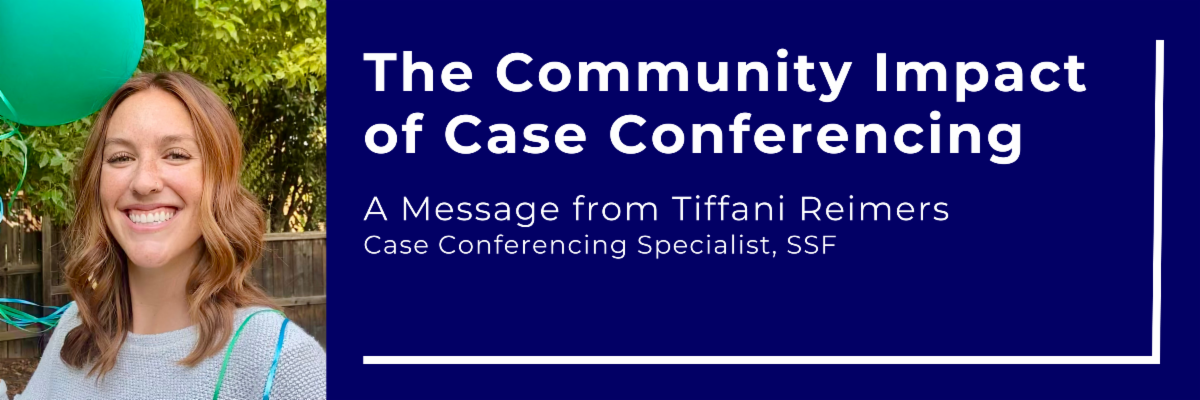
Over the last year, I’ve had the privilege of collaborating directly with service providers to transition people experiencing homelessness into housing in Sacramento. One of the most valuable tools we use is a process called case conferencing. This approach focuses on a particular set of vulnerable clients who have long histories of homelessness and need the support of specialized resources and permanent housing. Facilitated by our team at Sacramento Steps Forward, case conferencing groups challenge both individual and systemic barriers, while also challenging providers to show up with creativity and accountability.
Each of our providers commits to working through some of their toughest client cases with us in twelve-week cycles. At the end of each cycle, many people will have moved into permanent housing or enrolled with a short-term program designed to move them to permanent housing within six months.
The success of this approach has been remarkable. From February to December 2024, we discussed 560 households and 253 (45%) of them achieved positive housing outcomes. Of these, 176 (31%) were housed or waiting to move in, and 77 (14%) enrolled with programs to quickly access shelter, such as Rapid Rehousing or the Landlord Engagement and Assistance Program.
These outcomes are due in large part to partners who bring diverse and complementary knowledge and experience. Service providers now join case conferencing from a myriad of programs across Sacramento—including Shelter and Navigation Centers, Street Outreach, County Behavioral Health, Primary Care Clinics, Substance Use Treatment Programs, CalAIM Community Supports and Enhanced Care Management, Supportive Services for Veteran Families, and Veterans Affairs.
The approach also recognizes that housing is only one piece of a complex puzzle for many clients. For example, it’s common for people experiencing homelessness to need support for other aspects of their lives, especially their health. Among those supported in 2024 by case conferencing, 107 households (19%) were connected to ongoing mental health programs and primary care providers.
In addition to directly assisting people experiencing homelessness in our community, case conferencing must benefit the service providers who participate. Despite working from loud, chaotic shelters or calling from cars during outreach, these frontline staff attended more than 200 meetings in 2024. Our 75% average attendance rate indicates that case conferencing is, among other things, a useful and important part of resolving homelessness.
This year offers opportunities to bridge the many systems in our community and to continue delivering coordinated, compassionate care. Included in our 2025 efforts are two new case conferencing groups. One focuses on people who frequently use the emergency departments at four major hospitals (Kaiser Permanente, UC Davis, Sutter Health, and Dignity Health), and the other supports justice-involved clients. We are eager to see the benefits of this approach help more of our neighbors become housed and supported in the year ahead.
With deep appreciation,
Tiffani Reimers
| | | | |
|
Continuum of Care January Meetings
Discover more about the CoC and its committees by joining one or more of the upcoming public meetings. Information on the meeting date, time, format, and agenda is under each committee's "Meeting Details" tab.
| | |
|
CAS Assessor Training Series
Our 2025 training series for Coordinated Access System (CAS) Assessors will help grow your capacity to serve clients with top-level social work skills, best practice resources, and and the latest tools. This training is required for new CAS Assessors, but all assessors are welcome to attend.
Register for the February sessions below
| | |
|
Frontline Learning Collaborative Meeting
Mark your calendars for the next Frontline Learning Collaborative session on Thursday, February 27 from 10:00 a.m. to 12:00 p.m. at the Rose Family Creative Empowerment Center. The featured speaker is from Sacramento County In-Home Supportive Services. This is a great opportunity for frontline staff to connect, learn, and grow together.
Join the FLC Email List
| | |
|
Webinar: Interim Strategies for Responding to Unsheltered Homelessness
Join the National Alliance to End Homelessness on Wednesday, February 12, at 12:00 p.m. PST for a webinar focused on interim strategies for addressing unsheltered homelessness. As communities develop long-term plans to scale permanent housing and services, this session will explore key elements and considerations to incorporate into immediate responses, based on recently released guidance.
Register Here
| |
Updates & Progress Points | | |
|
Sacramento Continuum of Care Secures $40.5 Million from HUD for Local Housing and Homelessness Programs
In addition to sustaining vital community resources, this funding will support two new Permanent Supportive Housing programs: “Step Up on Second Sacramento” with 110 beds across 50 units and “440 Arden Way” with 47 beds across 31 units.
Learn more about what this funding means for our region.
| | |
|
Creating Housing Stability: Progress in Coordinated Access System Housing Projects
Sacramento Steps Forward leads housing initiatives that provide affordable housing and establish long-term, sustainable solutions for the local community. These efforts—part of our Regionally Coordinated Access Plan and Coordinated Access System—address housing disparities, promote economic mobility, and strengthen neighborhood stability through strategic partnerships and resource coordination.
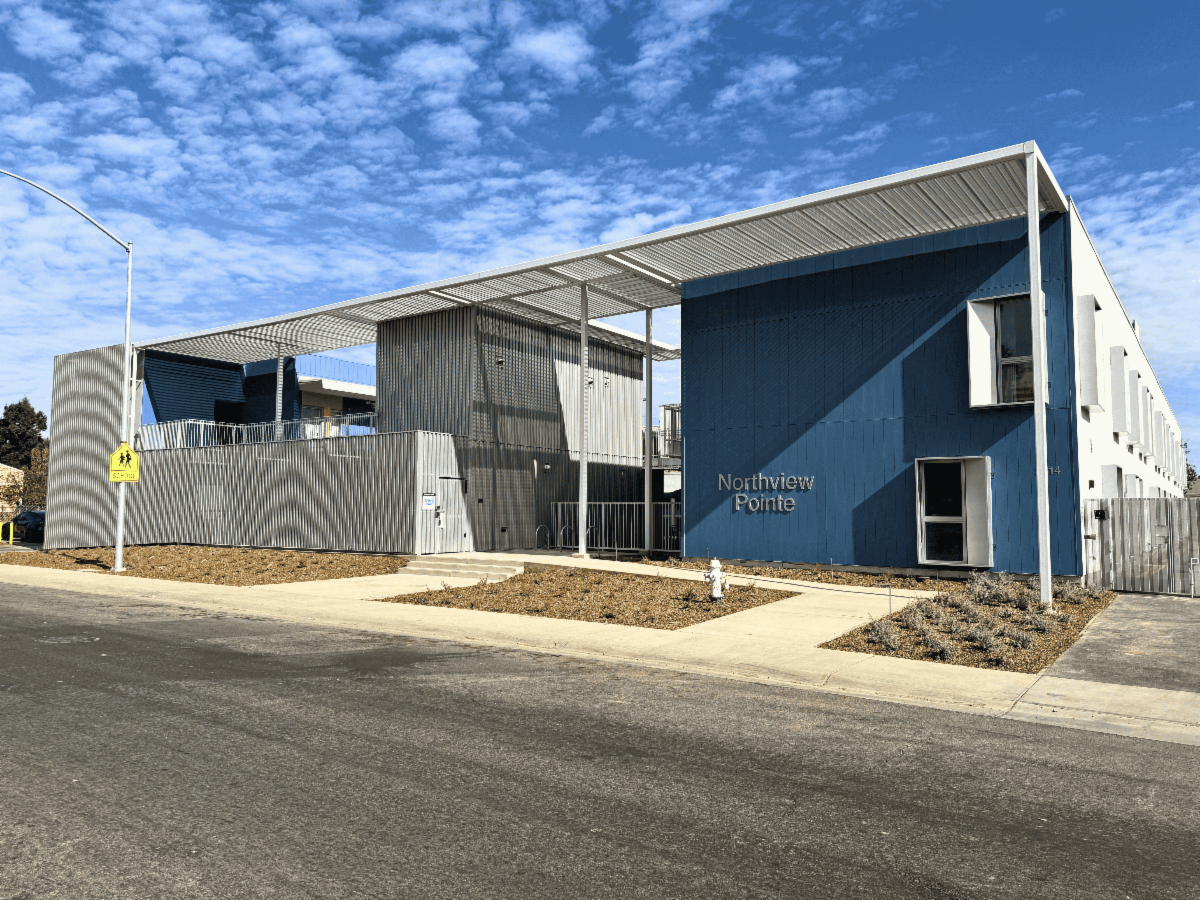
Northview Pointe Apartments: As of December 2024, the property has reached full occupancy, providing stable homes for 66 households through one-year leases supported by the SHRA Project-Based Voucher program. Families also receive ongoing case management from Hope Cooperative to support their transition and long-term stability.
39th and Broadway Apartments: In December 2024, twelve senior households secured stable housing in private one-bedroom apartments with one-year leases supported by SHRA Project-Based Vouchers. Lutheran Social Services provides ongoing case management to ensure residents have the resources and support needed to thrive.
Powell’s Landing: Powell’s Landing, with 69 studio apartments, serves individuals experiencing homelessness, including dedicated units for those needing behavioral health services through Hope Cooperative and El Hogar SEWP. With SSF’s referral process complete, SHRA and the John Stewart Company are processing applications to bring these individuals closer to stability and support.
Hope Landing: Hope Landing offers 122 units for seniors aged 55 and older experiencing homelessness, in partnership with Hope Cooperative, El Hogar SEWP, and Adult Protective Services. With SSF’s referral process complete, SHRA and the John Stewart Company are reviewing applications to secure permanent homes for those in need.
| | |
|
Housing Solutions Taking Shape Across Sacramento
Sacramento County and the City of Sacramento are making significant strides in addressing homelessness and expanding housing opportunities through the following key initiatives:
Stockton Blvd Safe Stay Community – Now open, this is the largest Safe Stay site in Sacramento County, offering 175 individual sleeping cabins, comprehensive services, and a path to permanent housing. This site is the result of a strong partnership between state and local entities, supporting individuals transitioning from nearby encampments. See the full facility by watching the County's video here.
$2.5 Million for Permanent Housing – Sacramento County has approved $2.5 million for a permanent supportive housing project at Auburn Oaks, providing 88 units for older adults at risk of homelessness, with support services and case management.
Streets to Housing Pilot Program – One key outcome of the Regionally Coordinated Action Plan is the City of Sacramento’s new $5.85 million program. Using a housing-first approach, the program helps 100 encampment households transition to permanent housing, providing rental assistance, case management, and stabilization services to ensure long-term housing stability.
| | |
|
A New Space to Stay Up-to-Date with Federal Funding and Policy Changes
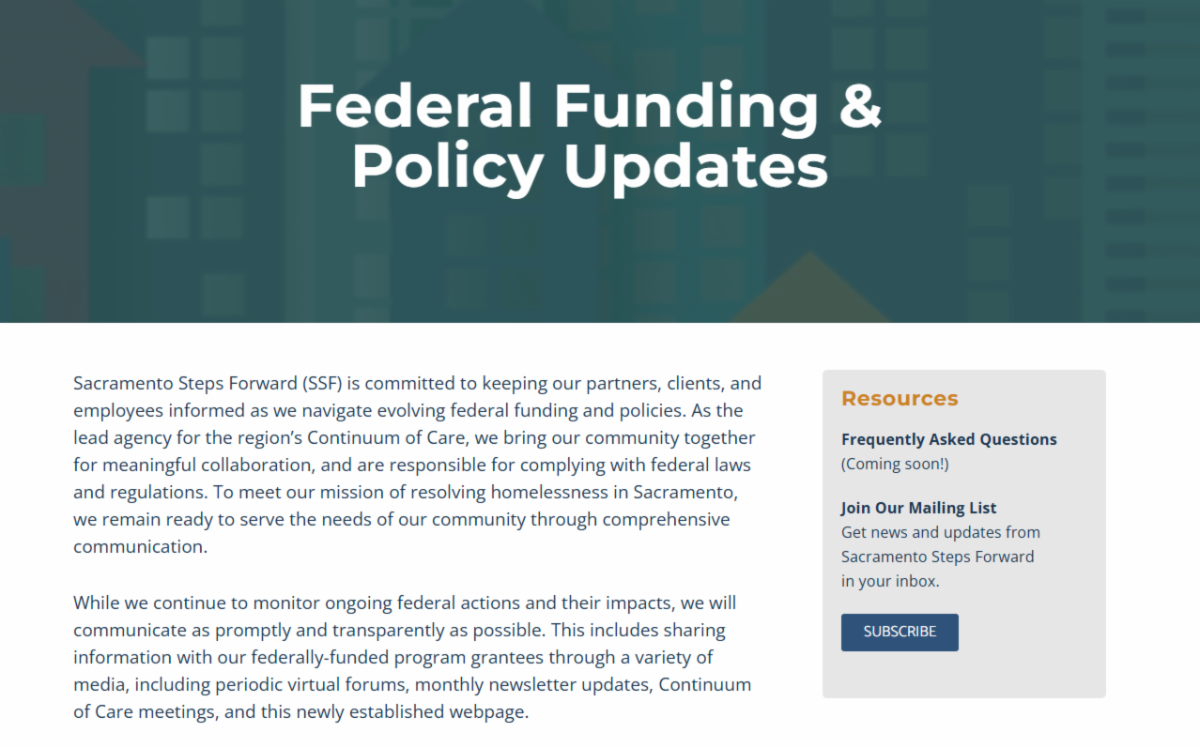
As federal funding and policy changes continue to evolve, it’s crucial that our community and service providers stay informed and prepared. Recent developments, including a now-paused temporary freeze on federal financial assistance, have raised concerns about potential disruptions. To help navigate these changes, SSF has created a webpage that will serve as a central resource for updates on federal actions, their impacts on services, and efforts to mitigate disruptions. This platform ensures that you have access to timely and relevant information as we collectively address these challenges.
Explore the Webpage
| | |
|
Recognizing Black History Month & Addressing Disparities in Homelessness
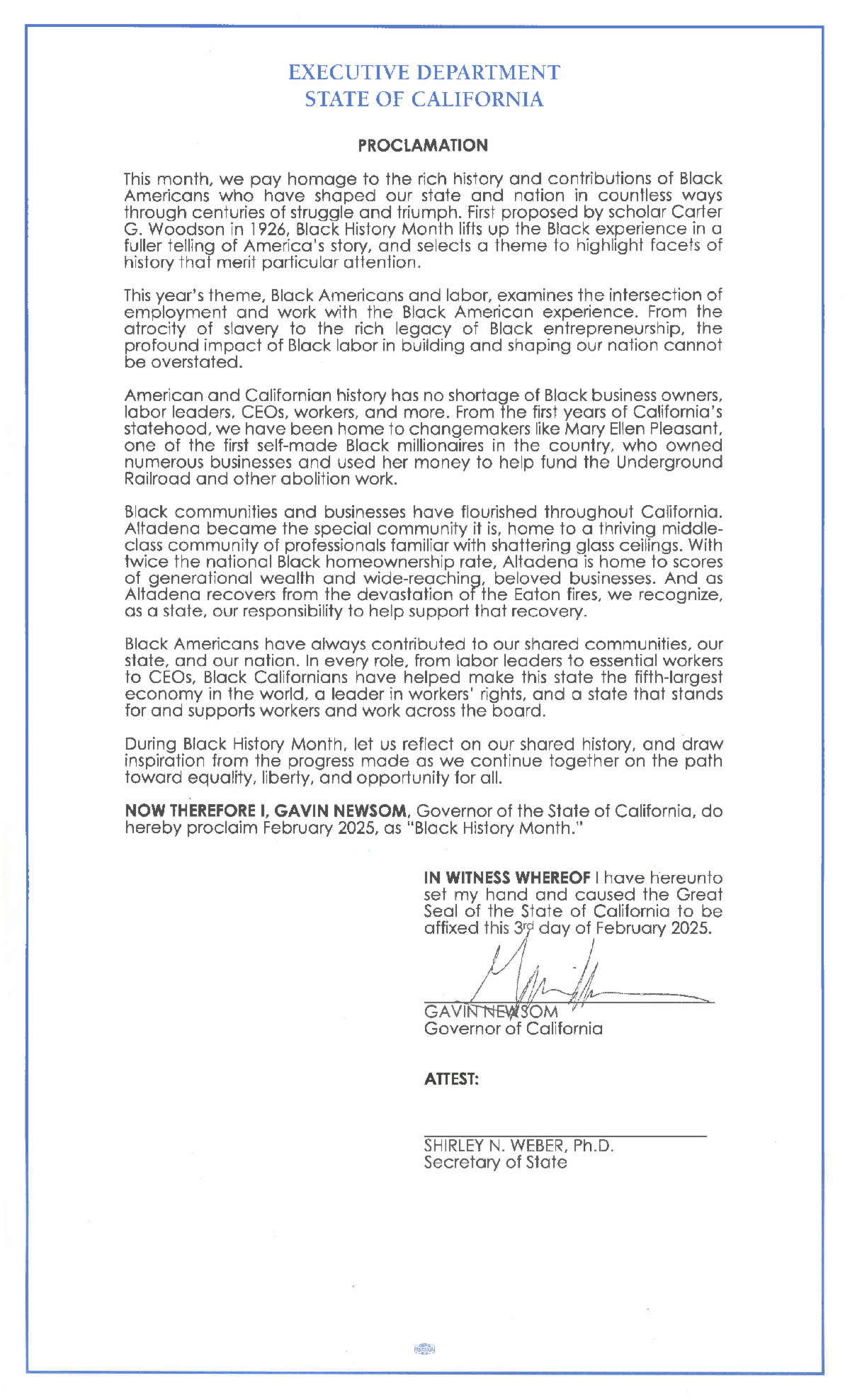
Governor Newsom’s proclamation of Black History Month affirms the importance of continuing to recognize and honor the contributions of Black Americans, including their role in shaping labor and economic systems. This observance is a persistent reminder of the systemic inequities that continue today.
Our 2024 Point-in-Time Count found that homelessness in Sacramento was 3–4 times higher among Black residents and 5–6 times higher among American Indian/Alaskan Native residents. Addressing these disparities requires collective action. Join us at the next Racial Equity and Quality Committee meeting to be part of the conversation.
| | |
|
Research Explainer: Permanent Supportive Housing and California Homelessness
A new explainer from the Terner Center for Housing Innovation presents data on homelessness in California, how the state has made significant investments in PSH, and research-backed strategies to overcome key challenges and make real progress on chronic homelessness.
Access the Explainer
| |
Request for Proposals: City of Sacramento Shelter Operations
The City of Sacramento currently has three open grant opportunities for local shelter operations:
Meadowview Navigation Center Operator: Operating the Meadowview Navigation Center, including related supportive services and rehousing efforts. Stable exits to permanent housing will be the primary objective and on-site case management will begin immediately to connect program participants to stable income, public benefits, and community based supportive services.
Emergency Bridge Housing Shelter & Services Provider: Operating Emergency Bridge Housing, including related supportive services, and rehousing efforts. Stable exits to permanent housing will be the primary objective and on-site case management will begin immediately to connect program participants to stable income, public benefits, and community based supportive services.
X Street Navigation Center Operator: Operating the X Street Navigation Center (The Center) located at 2970 X Street, including related supportive services and rehousing efforts. Stable exits to permanent housing will be the primary objective and onsite case management will begin immediately to connect program participants to stable income, public benefits, and community based supportive services.
Applications are due February 14 5:00 p.m.
| | |
Workforce Innovations Grant from the National Alliance to End Homelessness
The National Alliance to End Homelessness (Alliance) is offering a new opportunity to encourage small-scale innovations. The Alliance is requesting proposals for a funding opportunity that will award a one-time grant of up to $50,000 to continue an existing project or start a new one. Eligible activities include any that support the recruitment, promotion/advancement, and retention of high-quality homeless services staff,
Apply by March 28, 2025
| | |
Join the Sacramento Steps Forward Team!
Sacramento Steps Forward currently has one opening for the Budget Analyst position.
If you or someone you know may be interested, please use the link below to learn more, share information, and/or apply.
Learn More and Apply
| | | | | |