Celebrate Braille Literacy Month
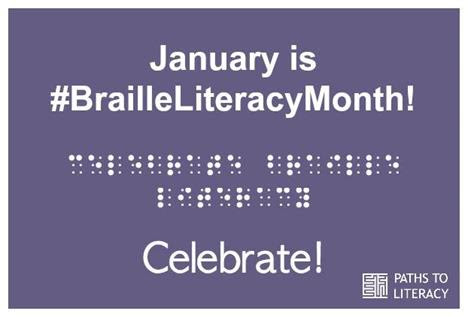
January is Braille Literacy Month in honor of Louis Braille, who invented the tactile code that allows people who are blind or visually impaired the ability to read and write. To celebrate Braille Literacy Month, we found five fun facts!

  • Even though Louis Braille published his first braille book in 1829, a universal English code for braille wasn’t formalized until 1932.
  • Braille is a tactile code, not a language. In fact, many languages including English and Spanish can be written and read in braille.
  • A braille cell is made up of six raised dots that can be arranged in 63 possible combinations.
  • Every letter, number, punctuation, and symbol can be written in braille (including musical notes)!
  • Braille wasn’t the first raised letters system. Before braille was designed, other written communication systems included bent wire letters, wood letters, and a series of pricks.
Eight Tips on Building Literacy
If your child has been diagnosed with a visual impairment, you may be wondering, “How can I best support my child’s early reading skills?” For all children, sighted or not, literacy begins long before they understand that letters form words, words form sentences, and sentences group together to tell stories. HERE are eight tips from Perkins School for the Blind on introducing books and reading to your child.
Make a Story Box
Ever wonder how to make a book more engaging to a child who is blind or visually impaired? The illustrations or the words on the page may not be accessible or hold their interest. 

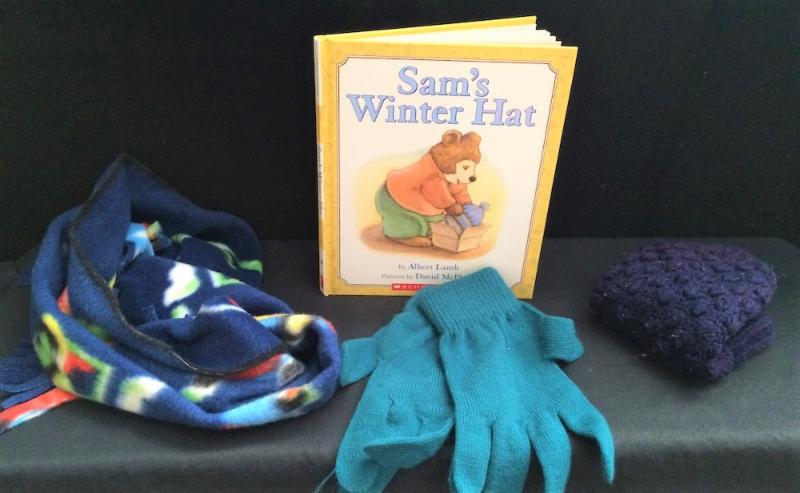
Try reading with a story box instead. It is a collection of items in a box or bag that correspond to the items described in a story. As you read the story aloud with your child, you introduce and play with the objects in the story, using all your senses. It’s a fun, sensory, and interactive way for children with blindness or visual impairments to experience a story – and they’re easy to make and read together! 

Hands-on learning is important for children with visual impairments because it will help them take in information, build concepts, and understand their world. In fact, it is important for all children, and you may find that siblings love using story boxes as well! To make your own story box, click HERE. 
Order Free Braille Books
Several organizations that support children with blindness and visual impairments are encouraging literacy by offering subscriptions to FREE braille books. Click on these links to sign up.
Our Favorite Tactile Toys for Learning Braille
For children with blindness, touch is a critical sense for learning. Encouraging tactile skills is also a first step toward building early literacy and learning braille in school. 

Look for toys that encourage fine motor skills or have braille on them, like blocks, an alphabet board, or magnetic letters. The chips on the Smart Snack Counting Cookies are raised like braille dots so your child can touch and count the number of chips. You can introduce the idea of a braille cell with an empty 6-count egg carton or muffin tin and have your child put balls, pom poms, or candies in each compartment. Make a game out of counting the items in each “cell.” For more sensory toy ideas click HERE.
Give Braille Valentine's Day Cards
Braille Valentine’s Day cards are the perfect way to promote braille with your friends and family. This year’s set of cards are out of this world! On the back of the card is a "braille decoder" to help friends and family read the message in braille. Order HERE while supplies last.
A Shared Vision is a 501(c)(3) nonprofit and the leading provider of in-home and community early intervention vision services in Colorado. We inspire and empower families to nurture the development of their very young children who are blind or visually impaired so that all children may discover their brightest future.
Share this email: