|
This month marks the 80th anniversary of NACD. The association was formed on July 25, 1946, and this year we’ve been exploring the theme, Deep Roots, Bold Horizons. We’re celebrating the history of conservation districts, partners, and the association while moving confidently forward.
Since the early days, a conservation plan has been a foundation for effective conservation implementation. To reflect on our deep roots, we’re taking a look at America’s first conservation plan and conservation planning today.
| |
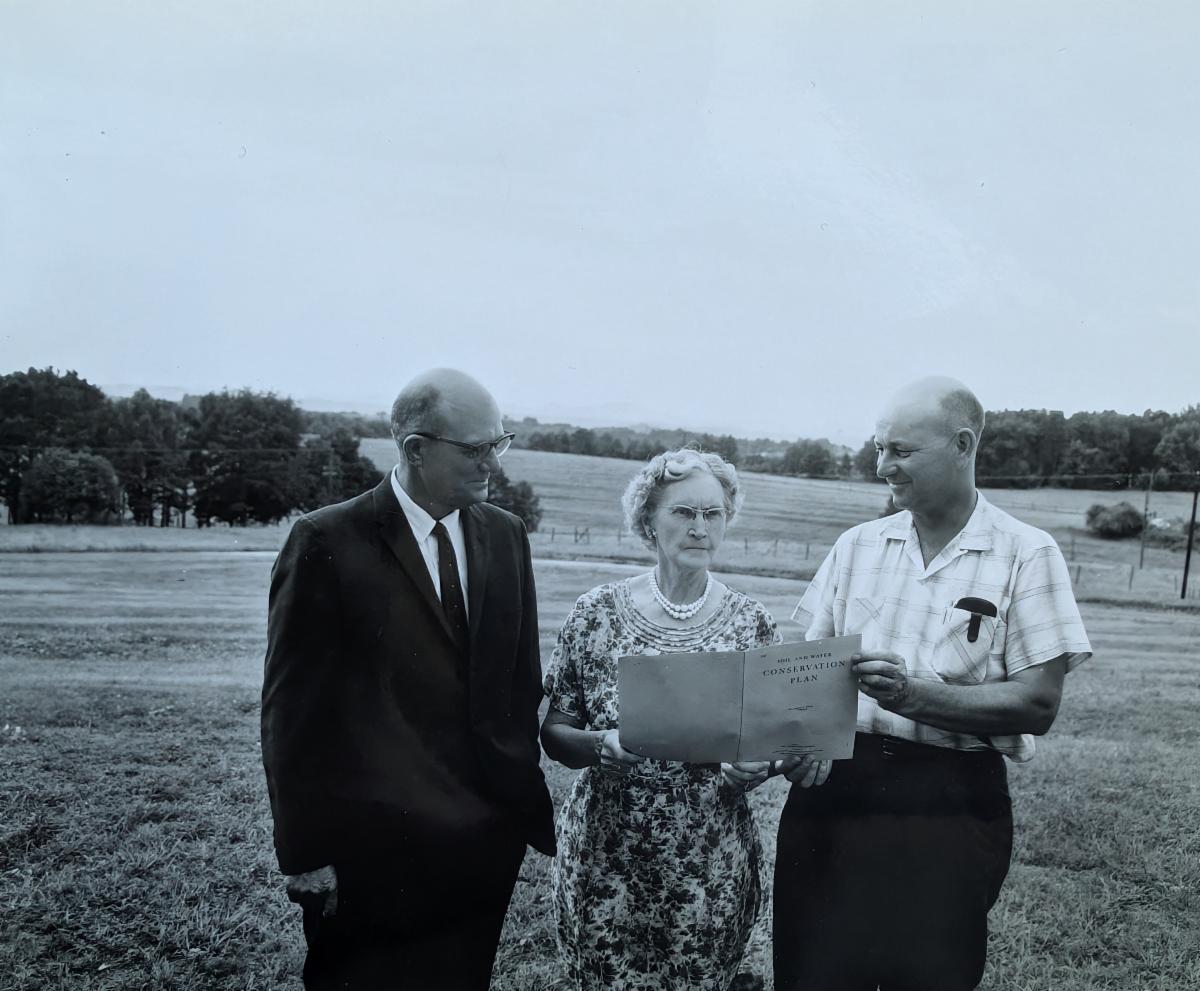
The Oconee Soil and Water Conservation District in South Carolina carries the distinction of being the home of America’s very first conservation plan. There, the development of the first conservation plan was completed on February 4, 1938, for the farm of Ploma Adams. Adams was an Oconee County landowner whose 330-acre farm was located in the foothills of the Blue Ridge Mountains in the state’s northwest corner.
Assisted by the Soil Conservation Service (SCS), now NRCS, and the local conservation district at the time, the Upper Savannah Soil Conservation District, Adams’ first-in-the-nation plan helped pave the way for the development of conservation plans across the country and the voluntary conservation programs we know today.
Guided by the plan, Adams implemented conservation practices like cover crops, crop rotation, and terracing on her land to combat erosion and restore and protect soil health. Informed by the strong example of land stewardship she saw in her youth, she volunteered her property to serve as a testing ground.
“I would say that my background prepared me, or, was the reason that I knew the soil conservation program was what this farm needed,” wrote Adams in her local newspaper in 1963. “I grew up on a farm where every acre was personally watched over and cared for. There were no furrows plowed up and down hill. No ground was ever allowed to be plowed ‘wet.’ The terraces were a model for farmers.”
Like today’s plans, Adams’ plan struck a balance, with goals that are still fundamental to land stewards. Her plan addressed natural resource concerns still common today—like soil erosion and water quantity and quality—while enhancing productivity, profitability, resilience, and wildlife habitat.
"When I first started in 1983, we’d come back to the office and get our black and white photos and draw what we agreed with the farmer he was going to do,” recalled Sam Ward, Watershed Project Manager with the Horry Soil and Water Conservation District on South Carolina’s coast. “We’d put a plan together and have two or three pieces of paper in it, one was a map and the farmer would work off of that. Today we come back to the office with GPS points. Technology has made things more precise."
Adams’ partnership with what was then SCS and her local conservation district to develop the plan and serve as a model to others was key to the growth of America’s voluntary, locally led conservation delivery model.
Read more on NACD's blog.
| A FULL CIRCLE MOMENT: REUNITING WITH A PIECE OF DISTRICT HISTORY | |
From the Georgia Association
of Conservation Districts
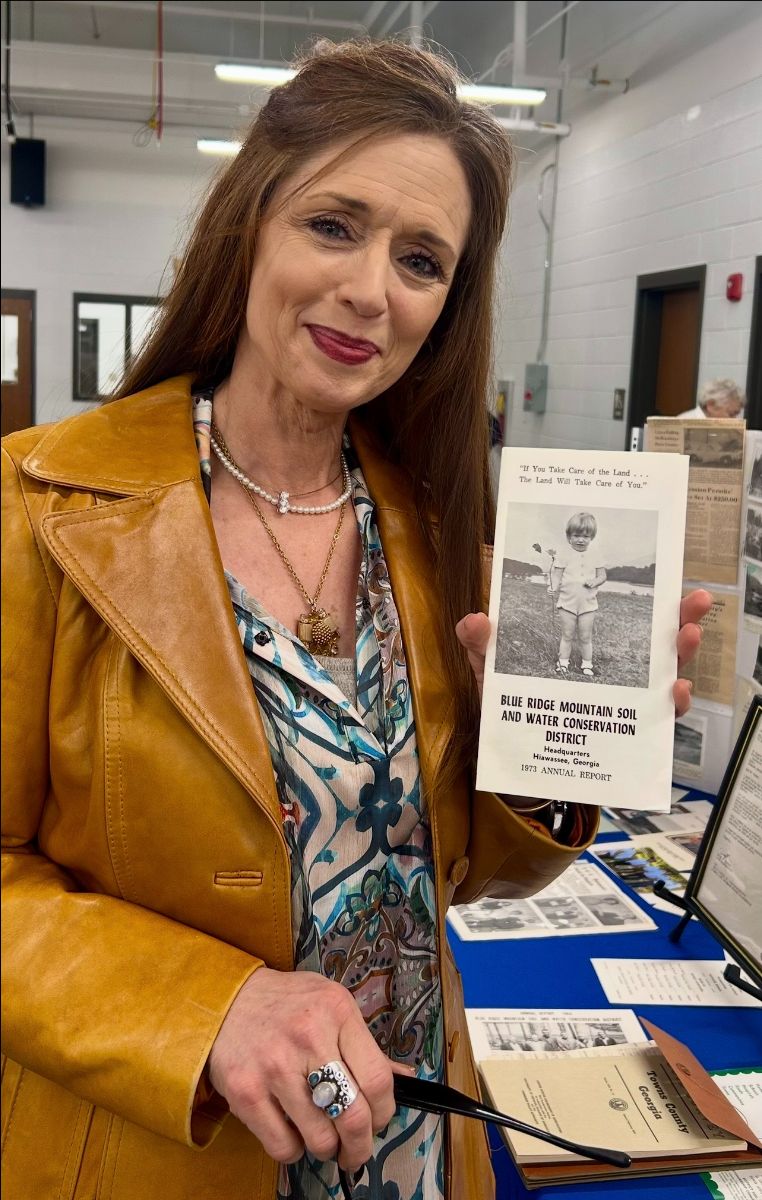
During the Blue Ridge Mountain Conservation District banquet in March, guests enjoyed a special display featuring historical photos, reports, and memorabilia from years past. Among the collection was the 1973 Blue Ridge Mountain SWCD Annual Report — and it held a surprising discovery.
Jennifer Holloway recognized the little girl featured on the cover as herself.
More than 50 years later, she recreated the moment by posing with the original report in hand, making for a truly meaningful connection to the District’s history and legacy.
Moments like these remind us how deeply conservation, community, and family roots are woven together across generations.
| WHAT'S UP IN WASHINGTON? GOVERNMENT AFFAIRS UPDATE | |
The House has recently passed a continuing resolution that would fund the federal government through December 4 and approved a budget resolution directing committees to develop a reconciliation package that includes agricultural bridge assistance. Both measures await further action. The Senate remains in session for two more weeks and continues to work on appropriations, markups on a Farm Bill, and addressing funding requests.
With members of Congress heading home for August recess, NACD encourages conservation districts to schedule meetings, invite lawmakers to tour local projects, and share examples of how federal conservation programs benefit producers and communities.
Funding Opportunities
As part of the Feral Swine Eradication and Control Pilot Program, USDA is making $35 million available for partners to address feral swine threat and impact. These invasive species cause more than $3.4 billion in damage each year, and funding is being provided for technical assistance, on-farm trapping efforts, and related services. Partners in the following states are eligible: Alabama, Arkansas, California, Florida, Georgia, Hawaii, Louisiana, Mississippi, Missouri, North Carolina, Oklahoma, South Carolina, Tennessee, and Texas. The deadline to apply is September 21.
USDA also announced $3 million for the development of wetland mitigation banks through the Wetland Mitigation Banking Program. City and county governments, organizations, tribal governments, and other entities are eligible to apply. The deadline to apply is September 8. According to the USDA press release, “priority will be given to banks in states with significant numbers of individual wetlands, wetland acres, and conservation compliance requests. Based on NRCS data, these states are Georgia, Illinois, Indiana, Iowa, Michigan, Minnesota, Nebraska, Ohio, Pennsylvania, South Dakota, and Wisconsin.”
The U.S. Fish and Wildlife released a Notice of Funding Opportunity for FY27 North American Wetlands Conservation Act US Standard Grants. These grants are intended to fund long-term protection, restoration, and/or the enhancement of wetlands and associated upland habitat for wetland-associated migratory birds. The deadline for applications is September 25.
| NCF-ENVIROTHON HOSTS COMPETITION IN MISSISSIPPI | |
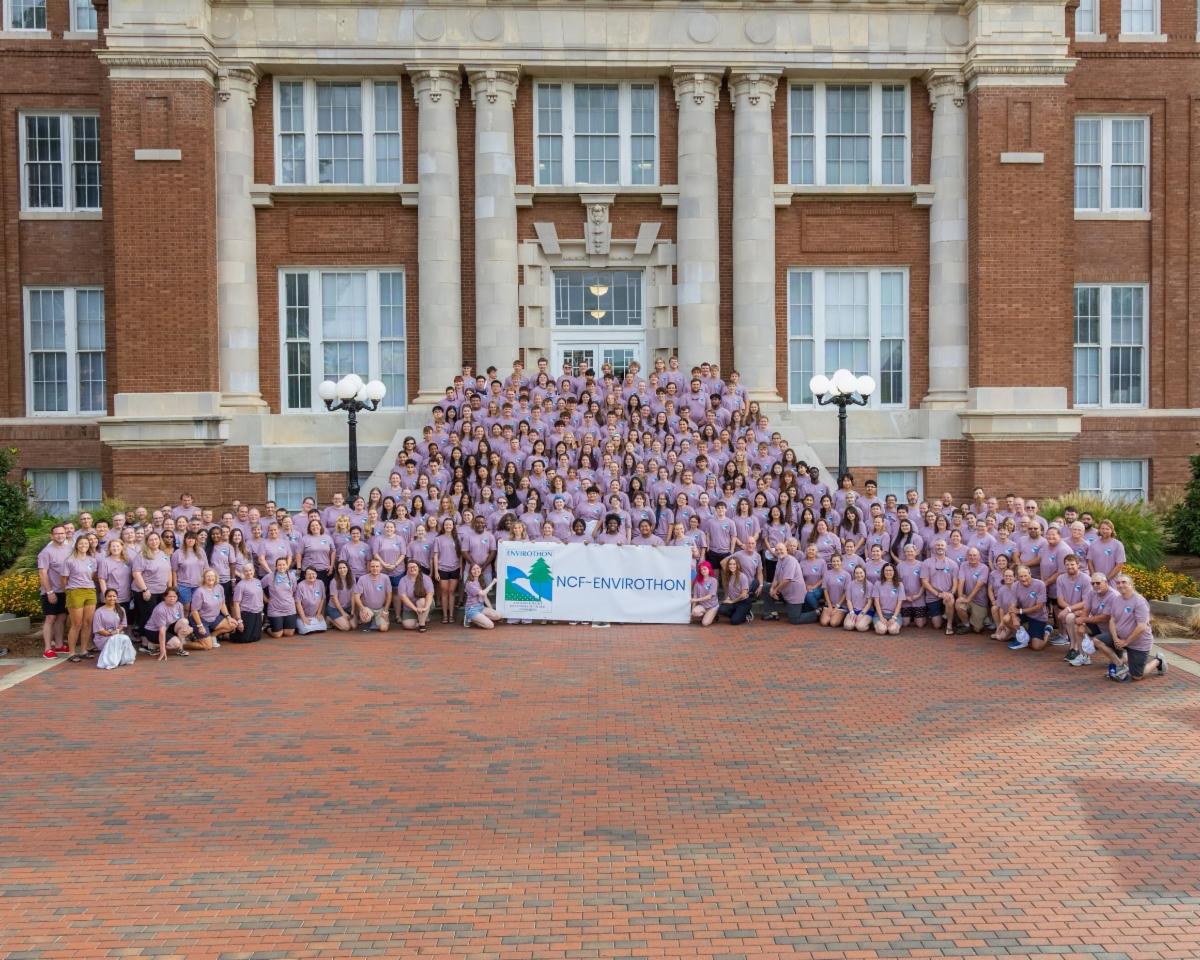
Last week brought more than 300 high school students, teachers, mentors, and chaperones to Starkville, Mississippi, for the National Conservation Foundation (NCF)-Envirothon competition. These students represented 43 teams from across the U.S. and Canada.
The theme of this year’s competition, “Non-point Source Pollution: It Begins at Home,” allowed students to explore their role in reducing non-point pollution at a personal and community level. Months of studying, teamwork, and hard work came together as teams competed in a series of skills tests in five key subject areas: soils and land use, aquatic ecology, forestry, wildlife, and current issues.
“The NCF-Envirothon is about much more than a competition. It’s an opportunity for students to apply science to real-world challenges, develop leadership and teamwork skills, and discover how they can make a difference in their communities and beyond. We are incredibly proud of every student who participated this year and grateful to the partners, volunteers, and supporters who help make this life-changing experience possible,” said Jeremy Peters, NCF Executive Director.
Congratulations to the first place team from New York, and to all that placed at the 2026 competition. Over $50,000 in scholarships and awards were presented to the winning teams. These teams showed outstanding understanding and skill throughout the competition. See the list of all winners on the Envirothon website.
The 2027 NCF-Envirothon will be hosted at Mount St. Mary’s University in Emmitsburg, Maryland, from July 25-31. The theme of next year’s competition will be "Soil Health Management: Agricultural Principles and Stewardship." Stay tuned for updates, announcements, and information on how to get involved with Envirothon for the next competition season!
| | ICYMI: NACD CEO Announces Resignation | |
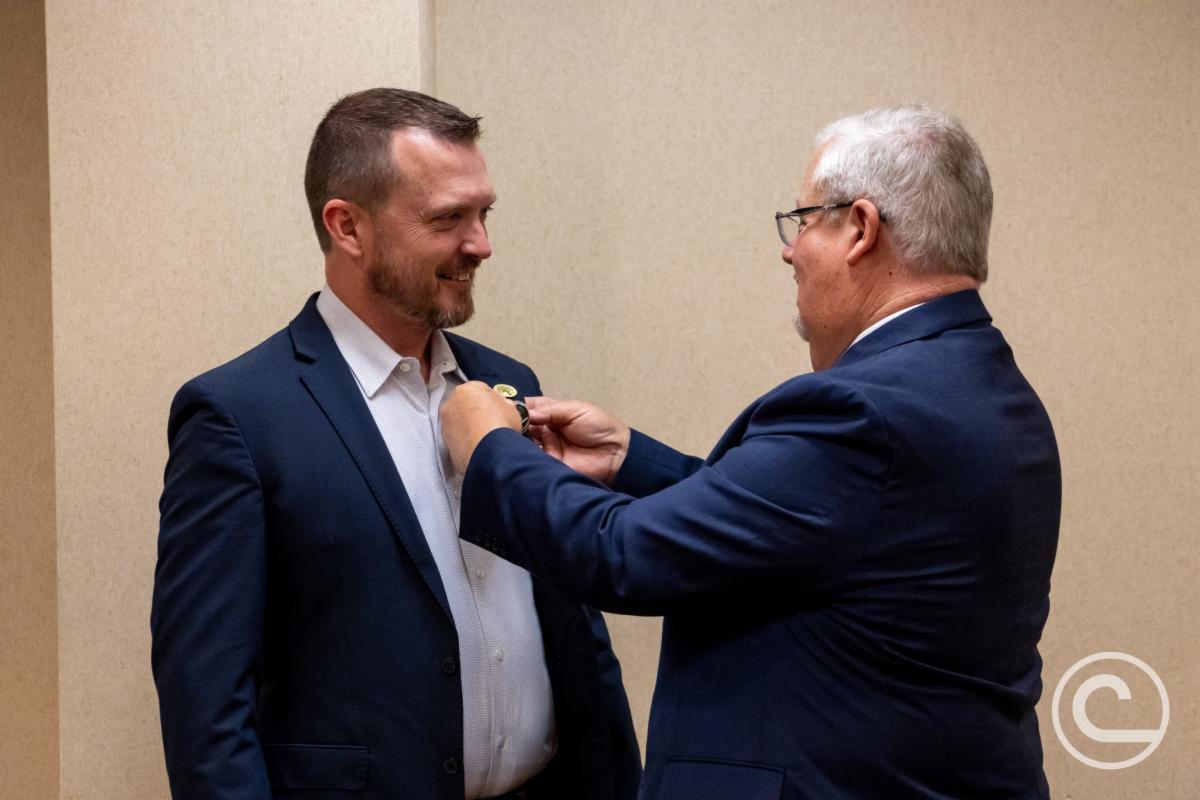
Last week in Grand Rapids, NACD CEO Jeremy Peters announced to the Board of Directors his intent to resign from the position, effective September 30, 2026.
“It has been an honor and a privilege to serve the nation’s 3,000 conservation districts as NACD’s CEO for the last 11 years,” said Peters.
Peters will serve as CEO until September 30 and will consult for NACD through December 31. A national executive search will be launched by NACD later in 2026.
Read more about the leadership transition in NACD's press release.
| |
Join NACD U&C Webinar on Wood as a Resource | |
Join NACD's next U&C Webinar – Turning Local Wood into Local Value: A Playbook for Conservation Districts – on August 5 at 4:00 p.m. ET.
Every year, thousands of tons of urban and forest wood are undervalued as a resource. Conservation districts are uniquely positioned to change that.
The webinar will cover how districts can get started, what funding pathways exist, and how to align this work with your existing conservation mission.
Learn more and register here.
| Read About the History of NACD | |
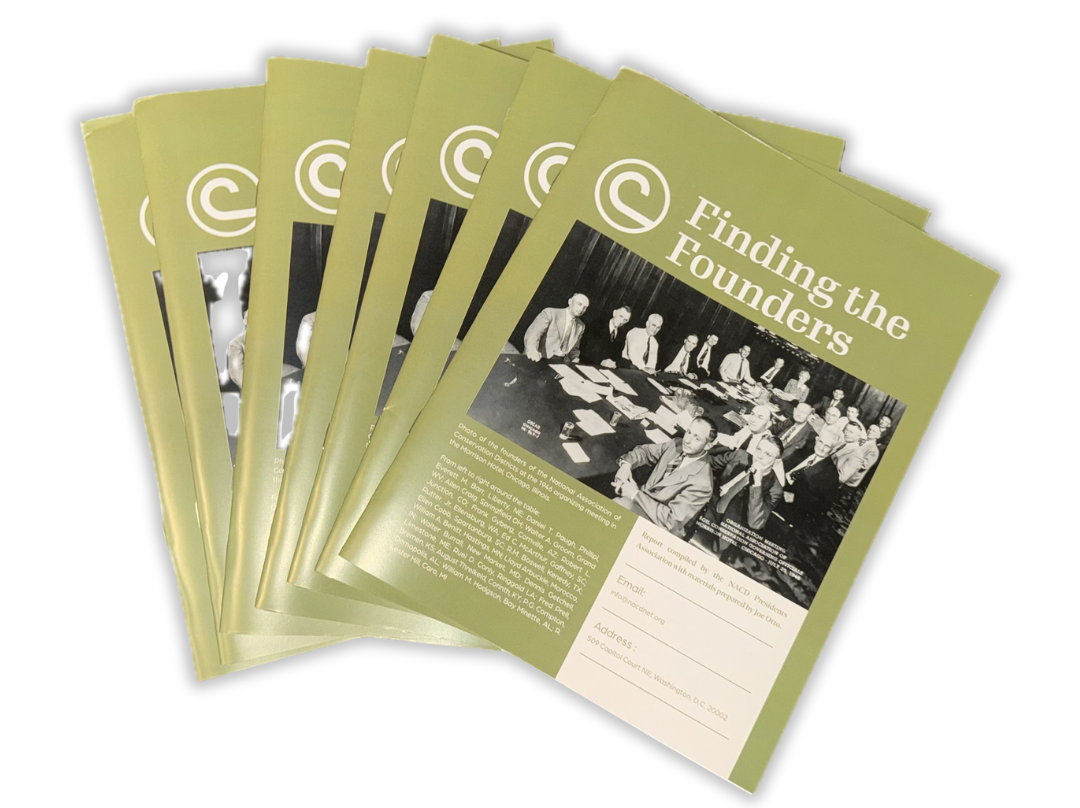
To celebrate NACD’s 80th anniversary this year, the
NACD Presidents Association debuted their new publication, Finding the Founders, allowing readers to travel back in time to meet the conservation leaders present at NACD’s first meeting in Chicago on July 25, 1946. This short booklet shares information on the individuals at the forefront of the locally led conservation movement all those years ago.
The Presidents Association has also arranged for a limited reprint of the book, “Land, Water and People: A History of the National Association of Soil Conservation Districts from the Beginning Until
1961.” This publication chronicles the formation and early years of NACD. Copies will be available for sale at NACD's Annual Meeting.
| Attend Webinar on Drainage Water Management | |
Join the Agricultural Drainage Management Coalition (ADMC) for an interactive webinar on August 6 at 1:00 p.m. CT, exploring how Drainage Water Management (DWM) can create new opportunities for farmers, contractors, and the agricultural industry.
Hear firsthand from an experienced drainage contractor, a farmer and crop advisor using the practice, a drainage engineer with expertise in design and financial assistance programs, and a leading university researcher. Whether you're interested in expanding your drainage services, improving on-farm water management, or learning how DWM works in the real world, this webinar will provide practical insights, lessons learned, and resources to help you take the next step.
Register here.
| |
For those of you that joined us at the Summer Meeting in Grand Rapids, it was a pleasure to spend some time with you!
Read a recap of the meeting in our latest press release or revist last week's eResource edition. If you want to take a look at the photos we captured at the meeting, click here to view our Flickr album.
Don’t forget to make plans to travel to Las Vegas this winter for NACD’s 81st Annual Meeting! We look forward to seeing you there.
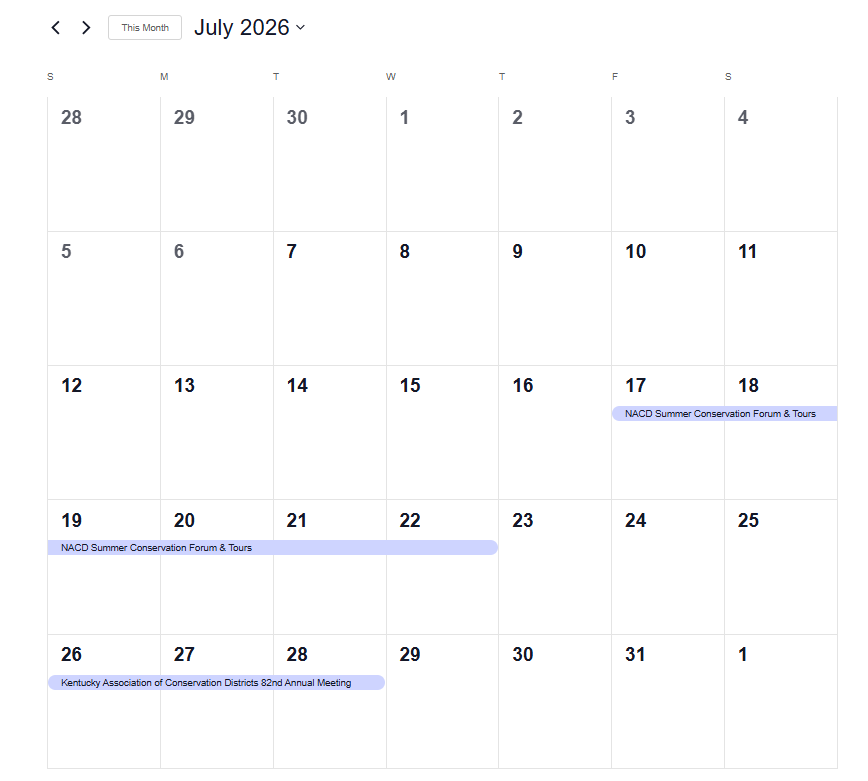
| Promote your conservation district or state association's tree sale, annual meeting, webinar, field day, or other events on NACD's Calendar of Events! | |