News From Los Alamos County
April 14, 2023
|
|
Inside this newsletter, you will find...
The Epidemiology Corner - COVID-19 Update, NMDOH Enters a New Phase, White House Launches New Program, Free COVID Testing to Fade, School Attendance Impacts, Learning About Long COVID, Weekly Survey, COVID-19 data, and more.
|
|
|
|
COVID-19 Update:
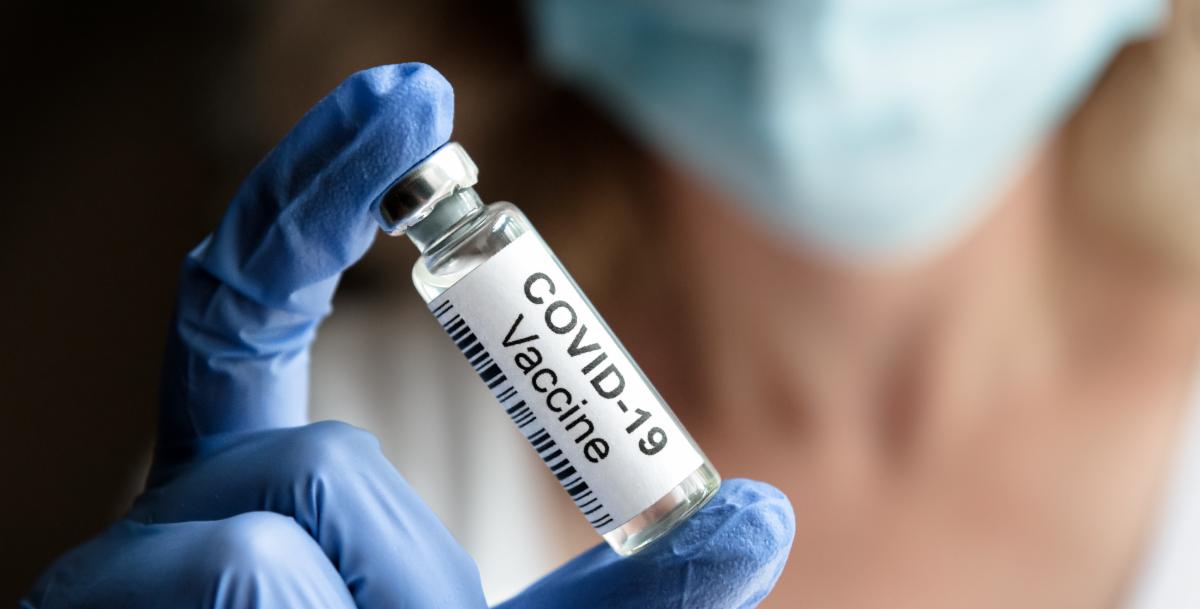
National Pandemic Trends Continue to Improve - New XBB Variants Emerge - FDA Plans Spring Booster For Some...
|
|
COVID-19 Update: Two XBB Variants with Apparent Growth Advantage Newly Emerge in US
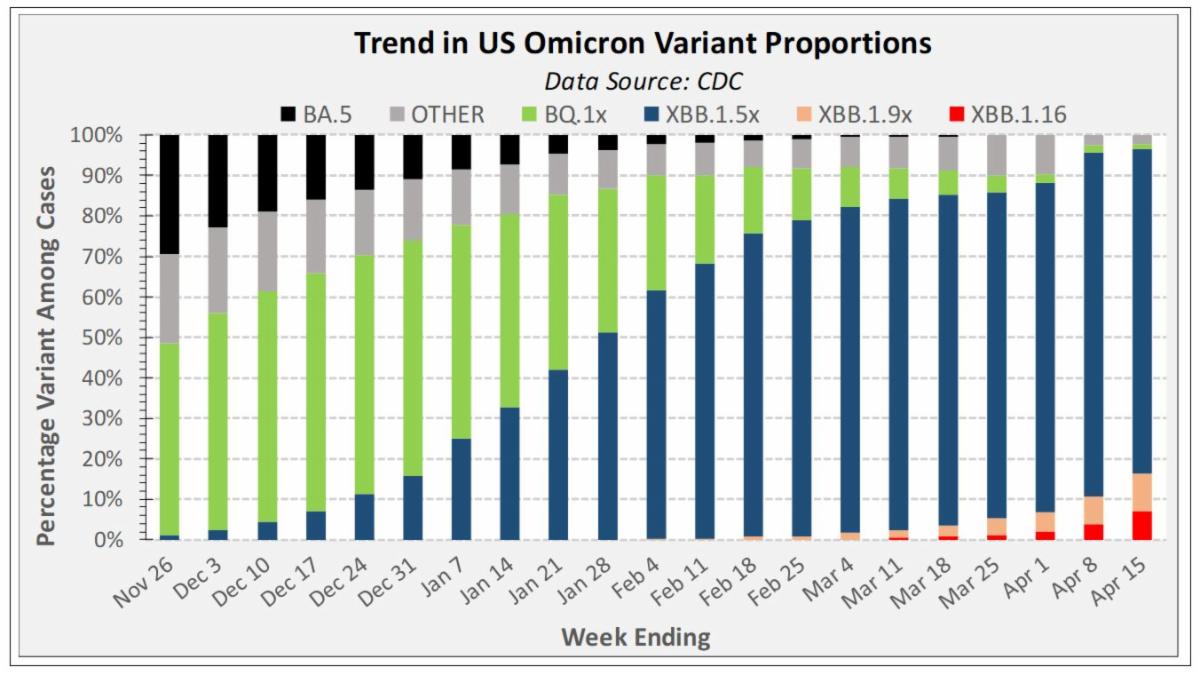
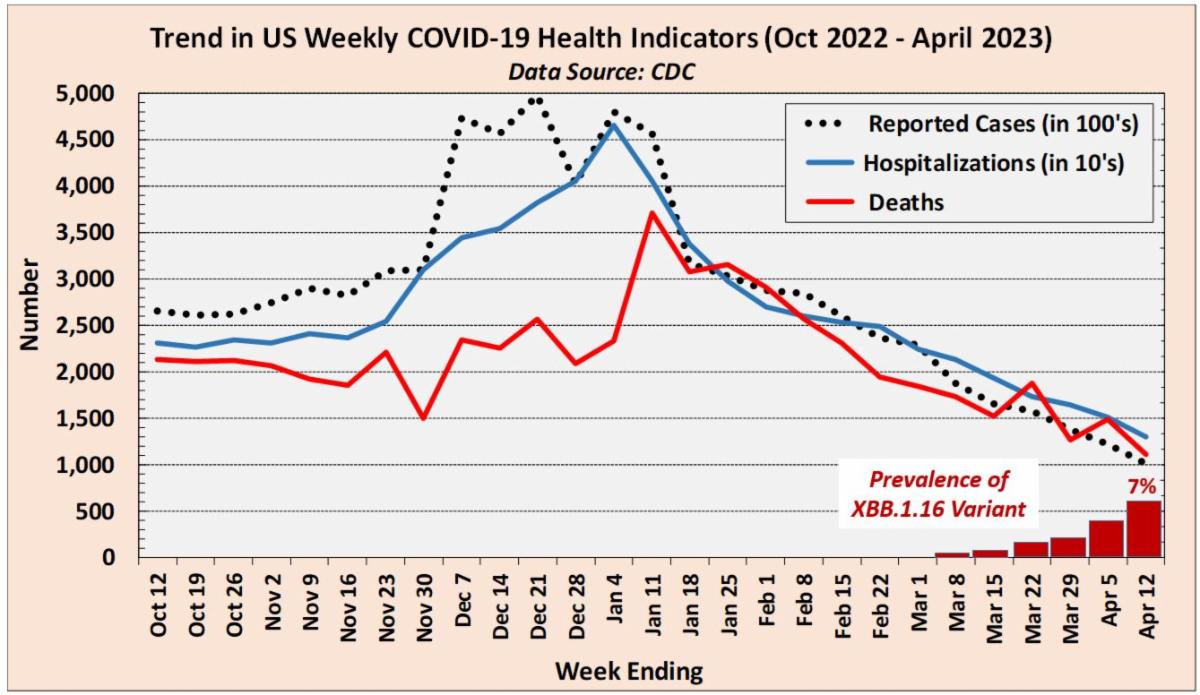
Predominance of the Omicron XBB.1.5x variant group continues to slowly wane from a peak 87% prevalence during the week ending April 1. CDC has begun tracking the newly ascendant XBB.1.9x (1.9.1 /1.9.2) and XBB.1.16 variants, which appear to have a 10%-20% growth advantage over recent prior variants. National prevalence of XBB.1.9x is now estimated at 9%, which represents a 30% increase from the prior week ending April 5, and a near doubling in prevalence over the past 4 weeks. CDC is also tracking the XBB.1.16 variant, which has nearly doubled in just the past two weeks. Current national prevalence is estimated at 7%, however, strong regional variation exists. Highest prevalence for XBB.1.16 is in the South Central Region (New Mexico, Texas, Louisiana, Oklahoma, and Arkansas), where it now accounts for roughly 21% of cases. See Variant Proportions The recent ascendance of the XBB.1.9x and XBB.1.16 variants in the US has occurred coincident with continuing declines in COVID-19 deaths and hospitalization, suggesting no greater clinical severity over prior variants. The World Health Organization (WHO) has expressed particular concern over XBB.1.16, as it is causing a large surge in reported cases in India. See XBB.1.16 Anecdotal clinical reports also suggest that children and youth may preferentially be effected with new XBB.1.16 symptoms, especially conjunctivitis (red and itchy eyes). See New Variant For the week ending April 12, an average of 1,300 Americans were hospitalized per day for COVID-19 and 190 died each day from the disease. Various news media have reported that the US Food and Drug Administration (FDA) is planning on a springtime second bivalent booster shot for seniors and the immunocompromised, however, no official announcement has yet been made. See Booster
|
|
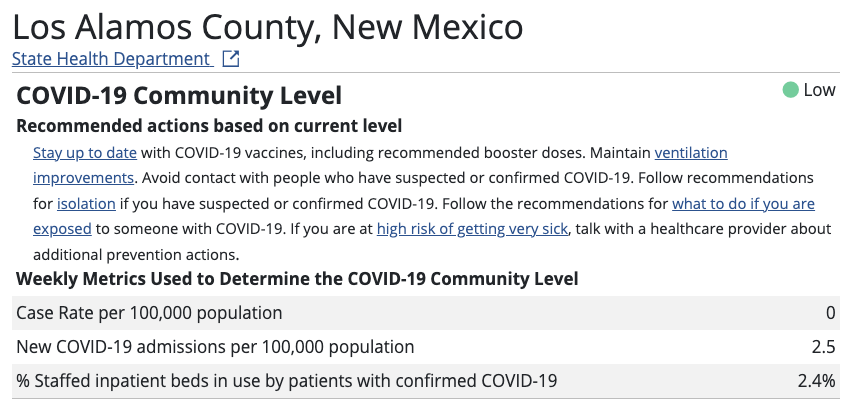
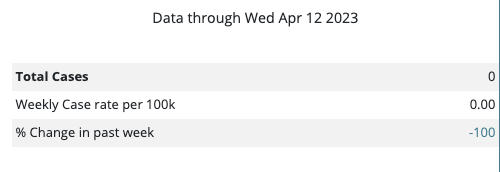
CDC Community Level Risk Remains at LOW for the County - No Reported Cases in Week Ending April 12
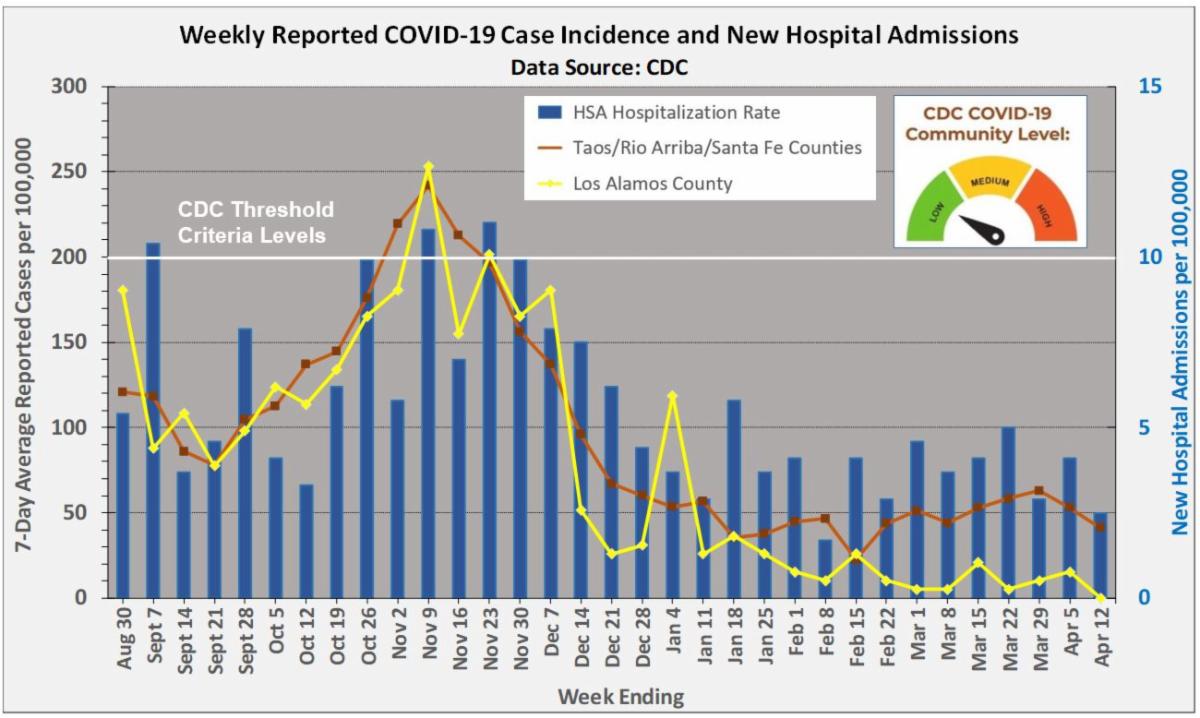
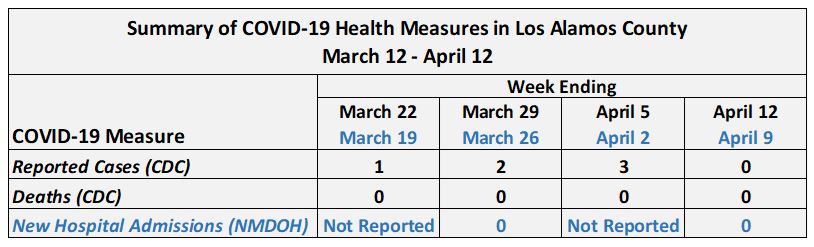
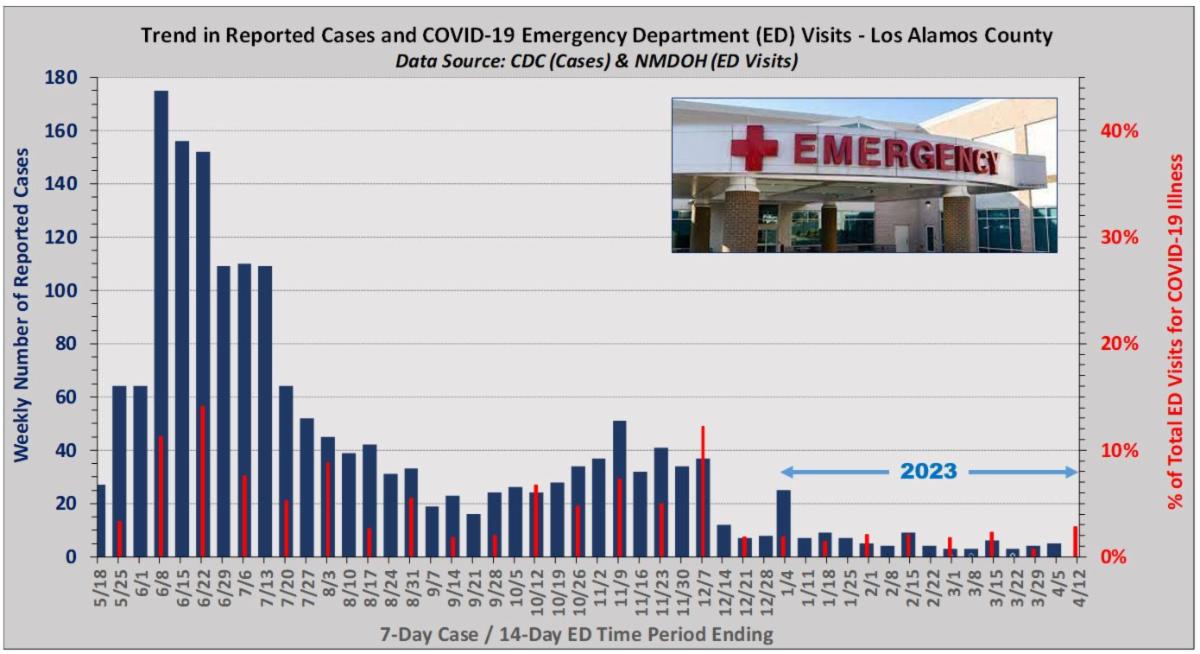
For the week ending April 12, the CDC Community Level remained at LOW for Los Alamos County, as it did for the three other counties (Taos, Rio Arriba, Santa Fe) which collectively comprise the regional Health Services Area (HSA) over which CDC hospitalization metrics are calculated. There were 3 reported cases in the county for the week ending April 5, but no reported cases for the most recent week ending April 12. Per capita reported incidence for the county remains notably lower that in the three neighboring HSA counties. COVID-19 hospitalization rates in the HSA remained relatively stable during early April, continuing the low level trend established earlier in the year, but also indicating ongoing transmission and progression to severe disease within the population. No new hospital admissions among county residents were reported by NMDOH for the most recent week ending April 9.
|
|
Emergency Department Visits for COVID-Like Illness Remain at Stable Low Level
NMDOH reports the percentage of emergency department (ED) visits in county residents for COVID-like illness was 2.8% for the two-week period ending April 12. This represents a four-fold increase from the 0.7% level seen during the prior two-week period ending March 29, and is indicative of continual low level virus transmission in the county, despite the apparent absence of officially reported cases. Statewide, the percentage of ED visits for both COVID-like and flu-like illness remained stable at about 3%. See Trends Beginning April 11, NMDOH data on county-level COVID-19 ED and hospitalization metrics will be published monthly, on every third Tuesday of the month. See https://cv.nmhealth.org/epidemiology-reports/
|
|
COVID-19 Virus Levels in County Wastewater Continue Indicating Community Transmission
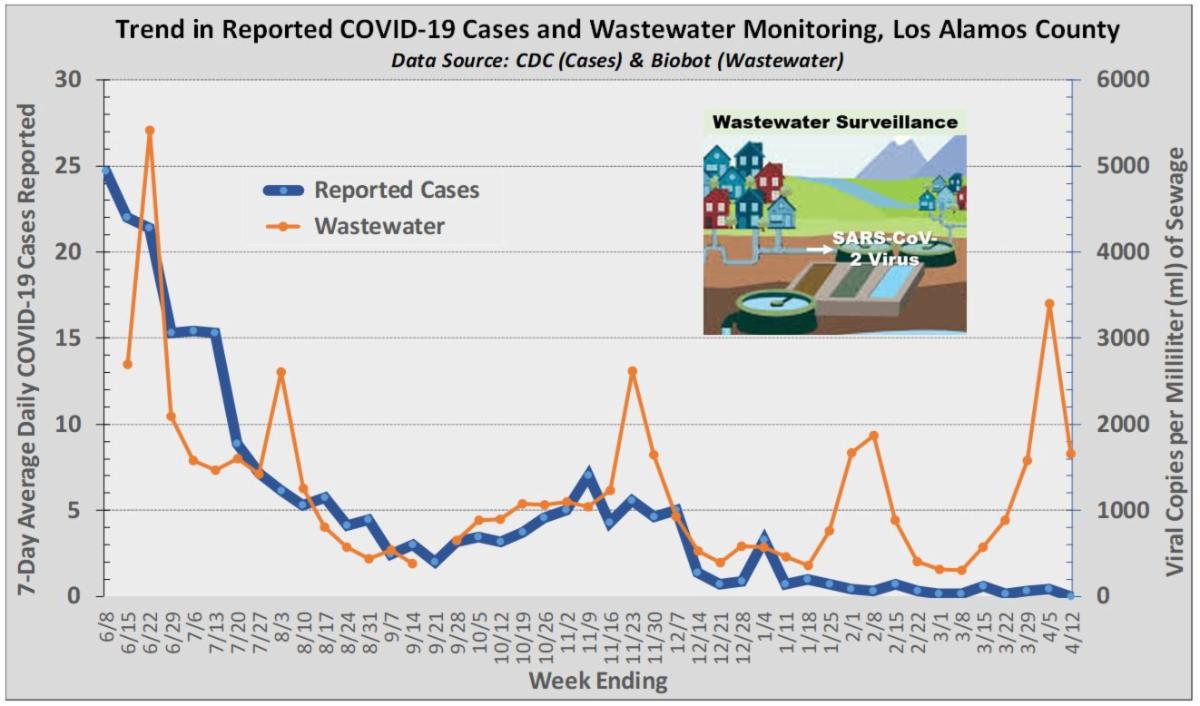
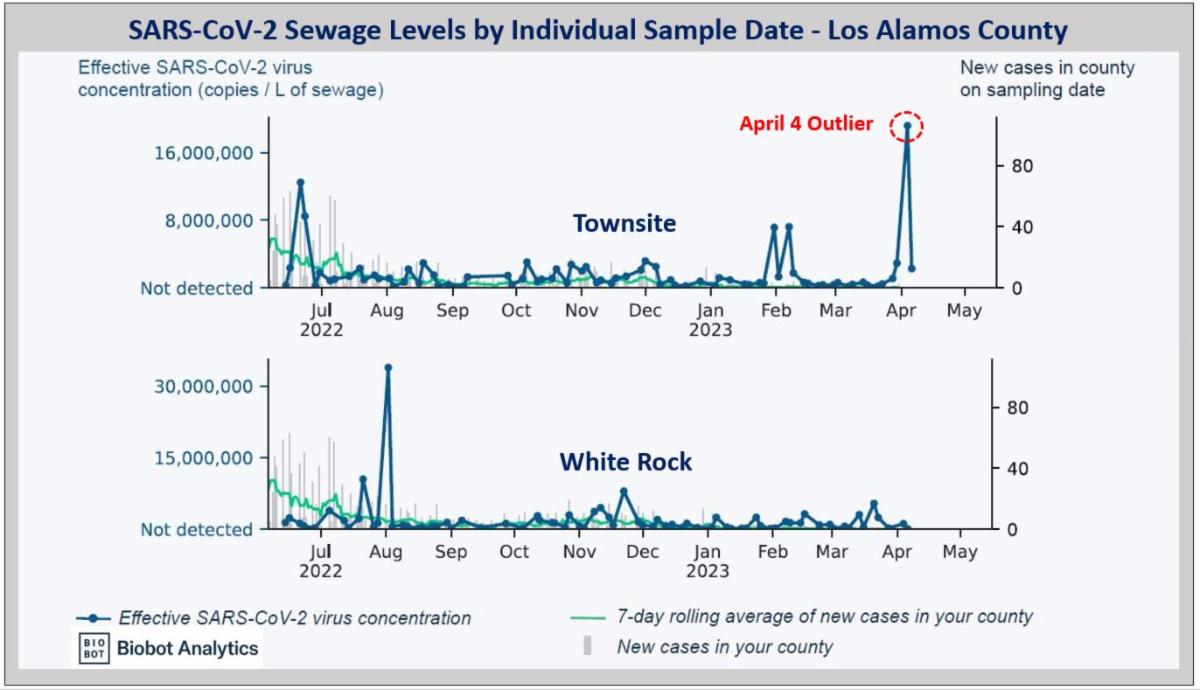
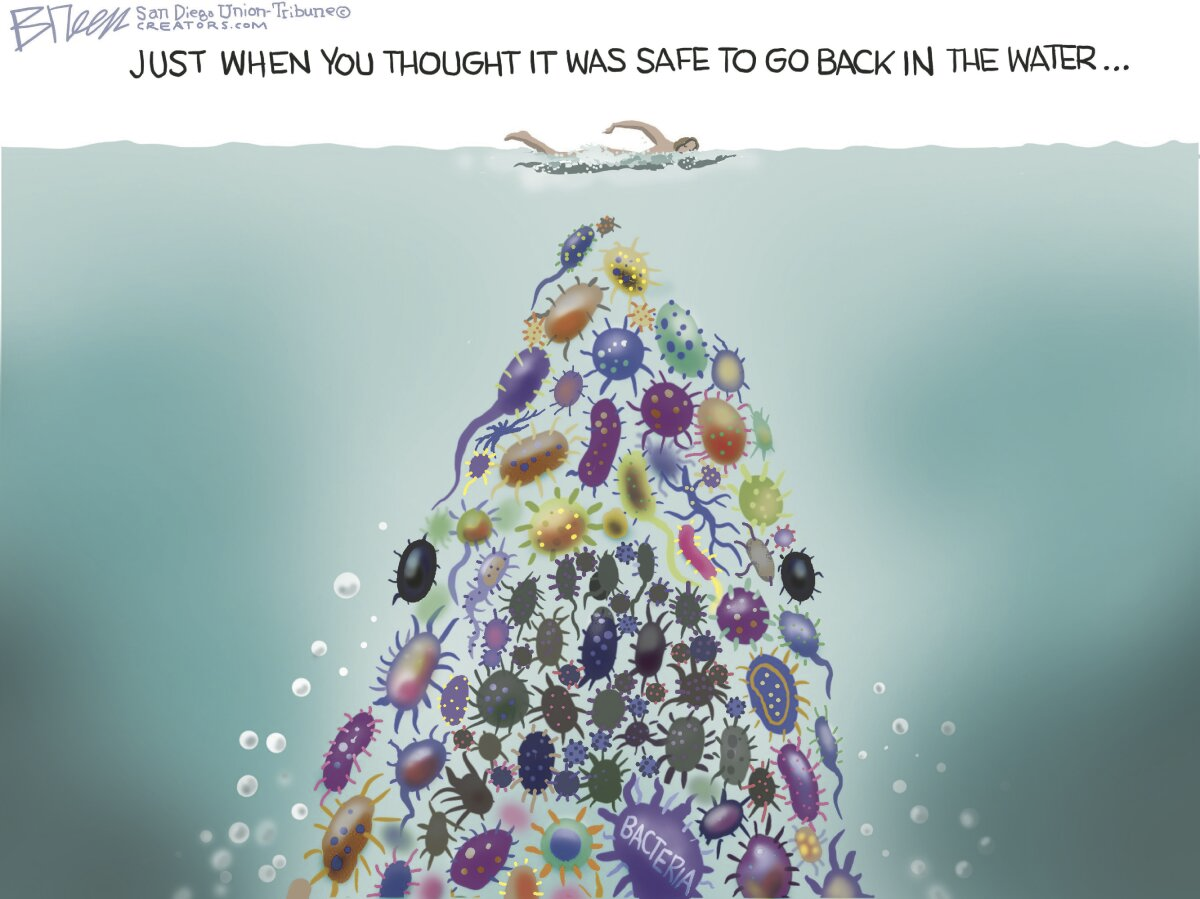
Data reported by the Biobot contractor through the week of April 12 indicates a continued presence of SARS-CoV-2 virus in county wastewater at levels consistent with on-going community transmission. A spike in county-wide viral levels reported for the week of April 5 was due to a single outlier reading from the April 4 sample collected at the Townsite wastewater treatment facility. The subsequent sample data point for April 6 quickly returned to near-term trend. The cause of the data outlier cannot be determined, and may involve solely random fluctuation in a small service population, or perhaps an acute excursion due to an actual higher viral load. A similar single-sample spike occurred at the White Rock treatment facility in August 2022. Biobot reports that Omicron XBB variants accounted for virtually all virus detected in county wastewater during the most recent genomic sequencing week of March 27. See https://biobot.io/data/
|
|
Daily PCR Testing in County Returns to Very Low-Level Trend Established in Early 2023
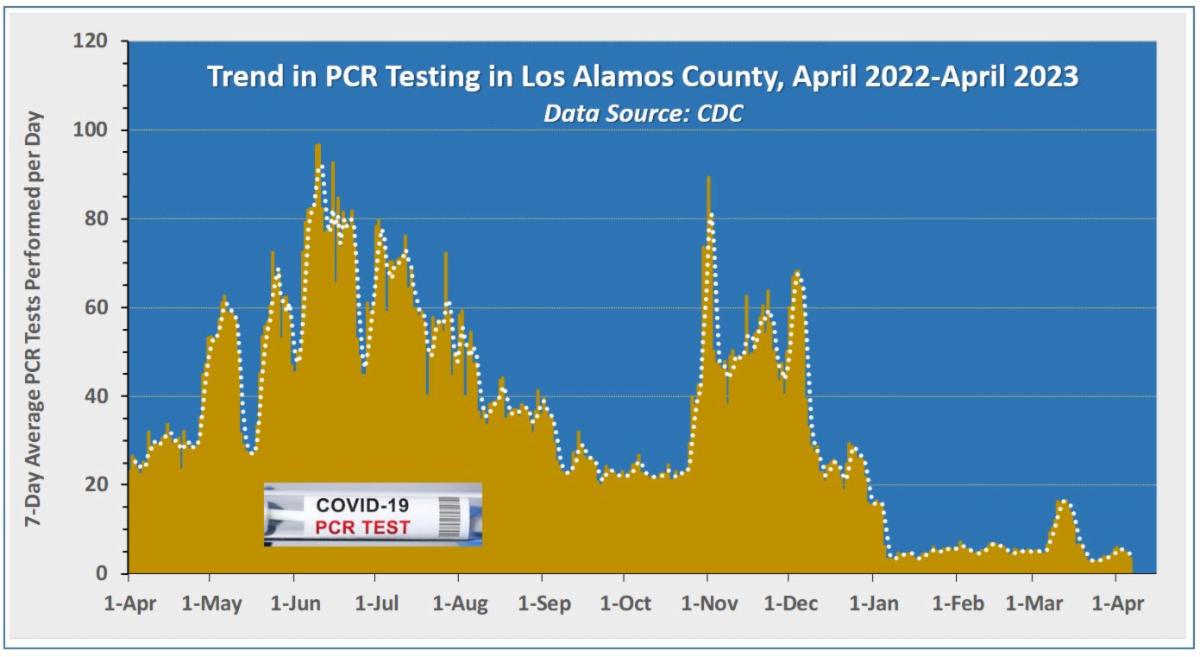
Daily PCR testing in the county returned to trend following a brief upward excursion around the second week of March. This appears to have been due to a one-day spike in testing. For the week ending April 6, PCR testing averaged about 3-4 tests per day among county residents. The weekly per capita testing rate in the county for the week ending April 6 was 129 per 100,000, which is about 3-times lower than the comparable New Mexico state rate of 411 per 100,000.
|
|
Department of Health moves into new phase of COVID-19 response
Changes are coming to the way the New Mexico Department of Health (DOH) is addressing COVID-19. Starting today, epidemiological reports covering COVID-19 will change from bi-weekly to monthly. In addition, the COVID-19 Data Dashboard will be discontinued and archived on May 11.
“These changes reflect the new phase of COVID-19 that we are in today,” said DOH Deputy Secretary Laura Parajon. “We will continue to actively monitor trends related to COVID-19, but with fewer COVID-19 tests being taken and inconsistent reporting of home COVID-19 tests, the day-to-day numbers are not as meaningful as they once were.”
NM Notify, New Mexico’s COVID-19 Exposure Alert system, also will be shut down on May 11. The system was supported by the Association of Public Health Laboratories in partnership with Google, Apple and Microsoft. The national resources that made this system possible are no longer going to be available after May 11.
During the pandemic the majority of New Mexicans activated the NM Notify app on their phone. More than 1.5 million notifications were sent to users who may have had sufficient exposure to COVID-19 to become infected.
“We are proud of how well New Mexicans picked up and used this technology to reduce the spread of COVID-19,” said Daniel Sosin, a medical epidemiologist with the NM Department of Health. “NM Notify was an important tool early in the pandemic and 54% of New Mexicans with smartphones activated the app. We will need this tool in the future, and we will be ready to use it even more effectively.”
Users of NM Notify will be automatically notified when the application is no longer operational. They will not need to do anything at that time.
|
|
White House to launch $5 billion program to improve COVID vaccines
News brief April 11, 2023
The Biden administration is launching a $5 billion plan to speed the development of new COVID-19 vaccines and treatments, the Washington Post reported yesterday, citing top federal health officials. Called "Project Next Gen," the effort follows on the heels of "Operation Warp Speed," a Trump-era program that streamlined the development of COVID vaccines.
For vaccines, the goals include versions that can induce mucosal immunity, which could cut transmission risk, and a universal coronavirus vaccine that could help protect against SARS-CoV-2 variants or new coronavirus threats.
Several scientists are pushing for better coronavirus vaccines. In February, a group led by the Center for Infectious Disease Research and Policy (CIDRAP), which publishes CIDRAP News, published a roadmap for advancing better coronavirus vaccines.
Biden signs bill ending national emergency
In other developments, President Joe Biden yesterday signed a bill to end the national emergency for COVID, which was first declared in March 2020, according to NBC News.
The Republican-led measure passed the House and Senate in January and March, respectively. Biden had signaled that he would end both the national emergency and a separate public health emergency on May 11 in an effort to wind down certain pandemic programs in an orderly fashion but said he wouldn't veto legislation.
The two actions have given the government more regulatory power and flexibility in its pandemic response. Examples of programs impacted by the national emergency are mortgage forbearance and Veterans Administration homecare visit evaluations for caregivers. Meanwhile, the public health emergency, for example, affects Medicare rules for keeping vulnerable people covered during the pandemic and has Southwest-border policy implications.
|
|
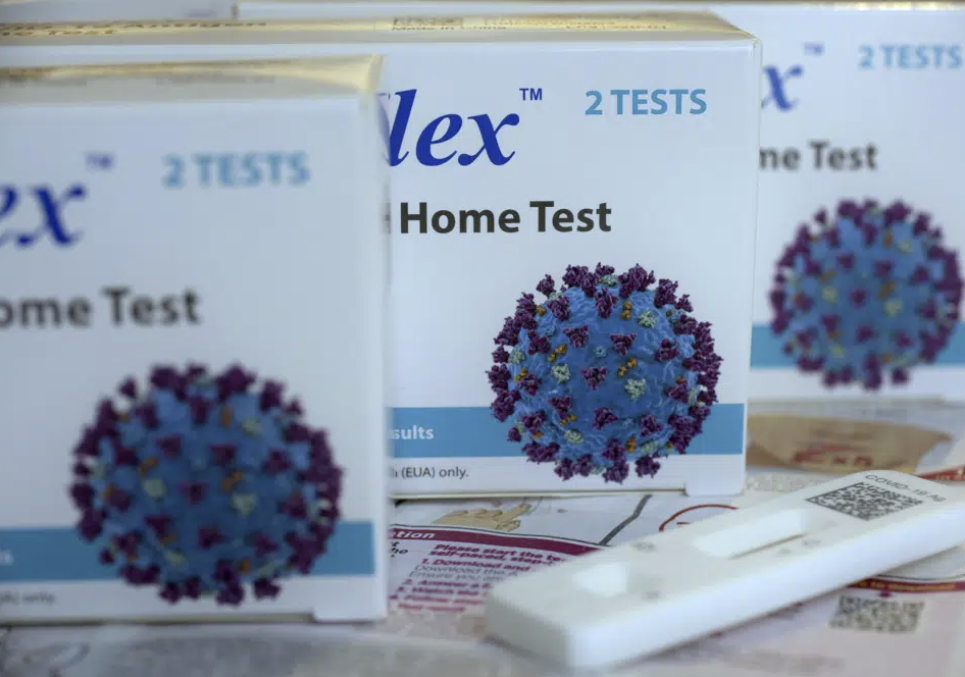
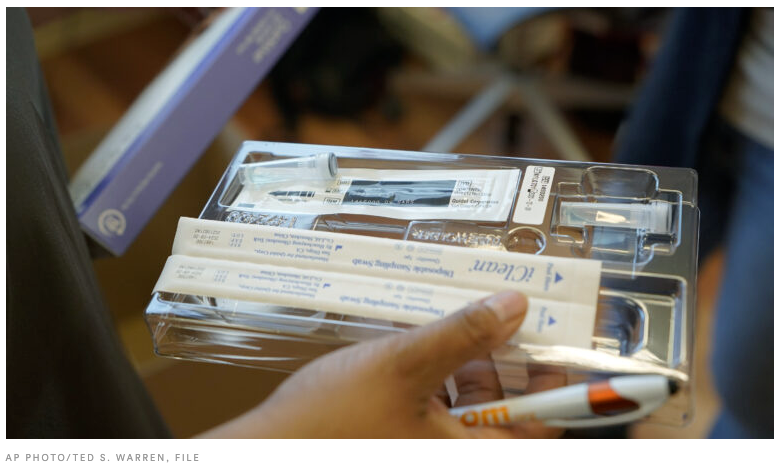
Free COVID testing will fade with US health emergency in May
When the COVID-19 public health emergency ends in the U.S. next month, you’ll still have access to a multitude of tests but with one big difference: Who pays for them.
For the first time, you may have to pick up some or all of the costs, depending on insurance coverage and whether the tests are done at home or in a doctor’s office.
But there’s still time to get some free tests before the May 11 change, and there could still be free ones available afterward. Some state and local governments may continue to distribute free home tests through clinics, libraries and community centers. And the federal government, for now, is still sending free tests through the U.S. Postal Service to households that haven’t already received two shipments.
And don’t discount those old tests you haven’t used. The expiration date on the package may have been extended. The Food and Drug Administration’s website provides a list to check and see which tests are still good.
Here’s a look at what the end of the government’s emergency declaration on May 11 means for testing:
AT-HOME TESTS
The biggest changes will be for over-the-counter tests, which account for the vast majority of screening in the U.S. today.
Since early 2021, the federal government has required all private insurers to cover up to eight COVID-19 tests per month. That requirement will soon go away. Coverage is also scheduled to lapse for tens of millions of seniors in the federal government’s Medicare program, though some members of Congress are pushing to extend the benefit.
While some private insurers may continue to cover all or some home tests, there will be no longer be a nationwide rule. A two-pack of tests typically costs between $20 and $24.
One exception will be for those enrolled in the government Medicaid program for low-income individuals and families, who will continue to receive free tests until September 2024.
IN-OFFICE TESTS
Americans can also expect to pay more for any COVID-19 tests performed at a hospital, clinic or doctor’s office.
Insurers have been barred from charging copays, or any other cost-sharing fees related to COVID-19 testing. That requirement also ends next month.
While insurers will still cover basic testing costs, some people could face new fees for a portion of the test’s price or for the services of the health professional performing it. Lab tests have typically ranged between $70 and $100 and some of that could be passed along to patients.
COVID-19 vaccines and drugs will remain free because they are not paid for through insurance, but by the federal government. One concern is that uncertainty around testing costs could lead to delays in treatment. Current treatments for high-risk patients, like Paxlovid, generally need to be taken within the first few days of symptoms to be effective.
TESTING CAPACITY
The U.S. struggled to build up its test manufacturing capacity during the first two years of the pandemic, with demand waning after each surge. Experts worry that the country could again be caught flat-footed after the federal government stops purchasing tests in bulk.
Only after the U.S. government said it would buy 1 billion tests did production stabilize, reaching a peak of 900 million monthly tests in February 2022.
As of September, manufacturers were still producing over 400 million tests per month, far exceeding U.S. testing levels, according to Duke researchers.
Companies including Abbott Labs say they will be able to ramp up test production as needed. But the company declined to discuss specific production targets or how they will be impacted by the end of the health emergency.
Congress has shown little willingness to buy more tests and the Biden administration did not propose new spending in its latest budget.
TESTING TECHNOLOGY
The hundreds of different COVID-19 tests authorized by the Food and Drug Administration over the last three years will remain available after May 11. That’s because the FDA OK’d those products under a separate emergency measure that isn’t affected by the end of the national declaration.
Still, FDA officials have been encouraging test makers to apply for full regulatory approval, which will allow their products to stay on the market indefinitely. Last month, the FDA formally approved the first rapid COVID test.
|
|
What people on Medicare can expect once the Covid-19 public health emergency ends
People with Medicare will pay more for some Covid-19 tests and treatments after the public health emergency ends, according to the agency that oversees the program.
The Biden administration will end the federal Covid-19 public health emergency declaration on May 11, bringing an end to some of the free services that lawmakers had guaranteed patients in various Covid-19 relief laws.
Seniors will no longer get free over-the-counter Covid-19 tests, and they will eventually have to pay for Covid-19 treatments like Pfizer’s Paxlovid antiviral. At least at first, however, the antivirals will continue to be free because current doses in circulation were provided by the U.S. government. When the products transition to the commercial market in the summer or early fall, there may be some cost-sharing, the agency said.
Some products and services will still be free, however. Medicare covers recommended vaccines for free, and lab tests and antigen tests ordered by a physician or other health care provider will still be free, a CMS spokesperson said.
Right now there are no authorized monoclonal antibody treatments that are effective against currently circulating Covid-19 variants, but if new ones are authorized, they will still be covered for free for patients through the end of December, the spokesperson said.
The future costs for patients who get insurance through their employers are less certain, however.
STAT reached out to the insurance lobbying group AHIP and UnitedHealth Group, Kaiser Permanente, Aetna, HCSC, Cigna, Centene, Elevance, and Humana, and none of them had any information to offer to patients about what they can expect to pay for Covid-19 tests and treatments.
Patients with private insurance could have to pay for either over-the-counter Covid-19 tests, or those conducted in doctors’ offices. Payment for Covid-19 treatments could move on a similar trajectory to Medicare, as the medicines are offered in the normal commercial channel instead of being purchased by the government. Insurers usually cover vaccines without cost-sharing as preventative services.
The Medicaid program will also see several changes — while vaccines will still be covered for free, cost protections on Covid-19 testing and treatment services will end in 2024. A Medicaid pathway that allowed states to cover testing, vaccinations, and treatments for uninsured patients using federal funds will end in May.
To view the full article, click Medicare
|
|
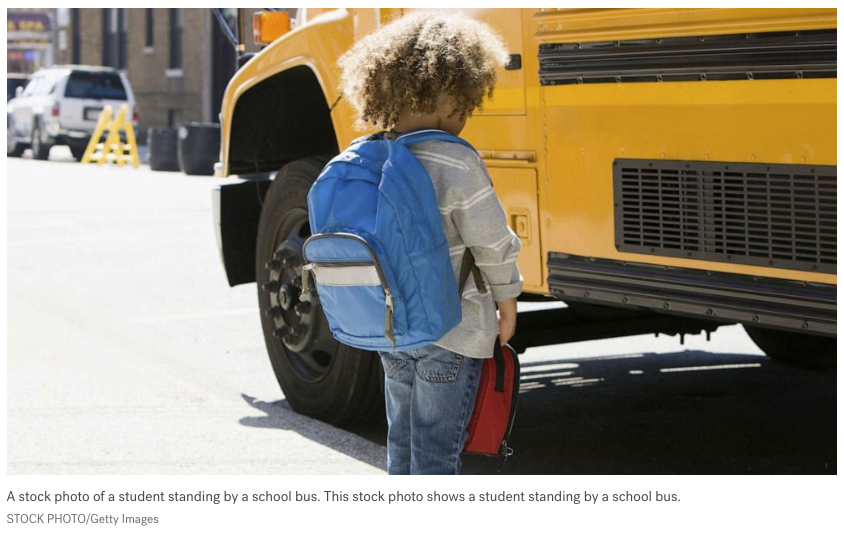
Students are chronically absent across the country. COVID seems to have made it worse.
Experts say solutions have to include the community and hands-on involvement.
From kindergarteners to high school seniors, chronic absenteeism persists around the country, fueled in part by disruptions from the spread of COVID-19 in the last three years, government data shows. In some places, repeated absences are getting much worse.
"There's a lot of different factors that contribute to absenteeism in a normal year and they're all put on steroids with the pandemic," said one expert, FutureEd Associate Director Phyllis Jordan.
The National Center for Education Statistics (NCES) found that chronic absenteeism -- defined as missing at least 10% of the school year -- has increased from the impact of the COVID-19 pandemic, including a nearly 40% spike between the 2021 and 2022 school years. (NCES did not specify its absences to include quarantining.)
Chronic absenteeism also was not tracked by NCES prior to the pandemic. But outside analysis also points to a notable increase from before COVID-19.
According to a report released this year by researchers from the Universities of Tennessee and California and Attendance Works, a nonprofit focused on addressing absenteeism, one in six students were chronically absent in the 2018-2019 school year.
Now, however, the report indicates chronic absenteeism has doubled to nearly one in three students.
"The pandemic really, really, broke down connections and relationships between kids and schools," said Hedy Chang, the CEO of Attendance Works.
By the numbers
In 2021, the School Pulse Panel was initiated by the Biden administration: In order to determine who had been struggling with pandemic-era challenges since 2020 school closures, the Department of Education and Institute of Education Sciences (IES) collected information to better understand the impact of the virus on students and educators.
The survey collected information from a national sample of elementary, middle, high and combined-grade public schools, focused on region, locale, minority and poverty levels. It did not report out estimates by individual grades or race/ethnicity.
The School Pulse Panel asked how chronic absenteeism had changed at school, and the majority of schools with 75% or more minority enrollment indicated that chronic student absenteeism had increased "a lot" as compared to before the pandemic. (NCES did not provide boundaries for "a lot." The schools' responses were up to their interpretation, a spokesperson said.)
Roughly six in 10 city schools saw chronic absenteeism increase "a lot" compared to before the pandemic. More than half of West Coast schools also said chronic absenteeism increased "a lot" between pre-pandemic levels and 2022.
In California, the country's largest state and home to its second-largest public school district, the number of students who were chronically absent more than doubled between 2018-2019 and 2022, according to Chang.
On the other side of the country, in Washington, D.C., chronic absenteeism saw a 17% increase between the 2021 and 2022 school years, according to data released by D.C.'s Office of the State Superintendent of Education (OSSE).
How family struggles interfere with stable schooling
Experts suggested to ABC News that there are many factors fueling the increase in absences, from the broader chaos and confusion touched off by the pandemic to more specific concerns about fighting and bullying, among other challenges.
Chang's organization places absenteeism into four buckets: barriers, aversions, disengagement and misconceptions. Barriers, including lack of transportation or unstable housing, come from the students' community. Aversions are barriers, like bullying, that push students out of school. Disengagement happens when school activities or personnel have difficulty reaching or "pulling" students in.
Misconceptions suggest some families believe excused absences "matter" less because unexcused absences come with consequences, Chang explained. But there are other kinds of misconceptions about schooling.
Efforts to improve attendance
Absenteeism can concern districts of all sizes. A portion of David Schilling's northern Vermont high school students were chronically absent during the pandemic, too, he said.
"Kids would disappear, definitely, for days at a time," Schilling told ABC News, adding, "So what it seemed to me was not only did we have to do something about getting kids back into the building, but we had to make the building a place where they wanted to be."
The former principal stepped down as head of Danville School -- a PK-12 institution with under 400 students -- to implement an attendance improvement blueprint that matched the learning needs of his students called Danville Works, which includes experiential programs such as work-based internships, community-based classes and outdoor learning labs.
The programs, open to all students, include a few chronically absent kids who missed 12-30% of school last year. So far this year, according to Schilling, some of those kids have perfect attendance.
"Let's try to actually listen to what they want school to be and see what happens," Schilling said. "That's the magic for me. It was just listening to them."
This year, in D.C., OSSE says it is tackling its absenteeism problem differently. The district's 60-40 rule considers a student present if they attend at least 60% of the school day. Superintendent Dr. Christina Grant hopes these adopted changes encourage kids to attend school even if they are late.
Community building
However, experts like Chang believe schools aren't the only ones responsible for showing up for students. She stressed that community relationships can also improve attendance.
"It's going to take the whole community to solve poverty and food deserts and transportation issues," she said.
|
|
Long COVID-19 is Sticking Around. What’s Causing it?
Knowing the causes of long COVID would likely make both diagnosing and treating long COVID significantly easier.
At least 65 million people across the world are suffering from long COVID. At this stage in the pandemic, health officials have mostly shifted their attention away from preventing coronavirus infections, instead focusing on stopping hospitalizations and deaths. The strategy means that people will continue to get infected and reinfected with the coronavirus as long as it is circulating.
It also means that long COVID isn’t going away anytime soon.
A U.S. government survey found that more than 6% of all adults were experiencing at least one symptom of long COVID as of mid-March. That jumps to nearly 15% when considering adults who have experienced the condition at any point in the pandemic.
If those numbers were extended to the real world, it would mean that more than 15 million adult Americans are currently experiencing symptoms of long COVID and more than 38 million have had symptoms of it at some point during the pandemic.
What Is Long COVID?
Symptoms of long COVID are wide-ranging – including shortness of breath, fatigue, fever, headaches, “brain fog” and other neurological problems – which has made the condition both difficult to diagnose and to treat.
U.S. health officials broadly define long COVID as “signs, symptoms, and conditions that continue or develop after initial COVID-19 or SARS-CoV-2 infection” that “are present four weeks or more after the initial phase of infection; may be multisystemic; and may present with a relapsing – remitting pattern and progression or worsening over time, with the possibility of severe and life-threatening events even months or years after infection.”
What’s Causing Long COVID?
The causes of long COVID remain unknown, though notable progress on the subject has been made.
There are some leading theories. One is that at least some of the virus lingers in the body post-infection. These so-called “viral reservoirs” could hide in tissue and later cause problems.
Studies have shown that the virus can linger in various parts of the human body, but research is underway to see if it can be directly tied to the symptoms of long COVID.
Another theory is that COVID-19 could reactivate other viruses that were dormant in people’s bodies, bringing new symptoms with it. Additionally, the coronavirus triggers inflammation in the body that for whatever reason persists in some people, causing an array of health problems.
There is also a lingering question surrounding tiny blood clots that have been found in people after COVID-19 infection. It’s already been proven that those who had COVID-19 are at higher risk of developing blood clots, but the persistence of these clots – called microclots – could be complicating the passage of oxygen through the body.
Who Is Most Likely to Get Long COVID?
Long COVID can arise after mild or even asymptomatic cases of COVID-19, but the risk for the condition is higher for those who had more severe disease.
The condition is more likely among patients who were hospitalized during their COVID-19 infection, according to a recent study.
Other factors like older age, increased body mass index, smoking and being female also increases the risk of long COVID, the research found.
Health issues like asthma, diabetes, coronary heart disease, anxiety and depression were associated with a higher risk of the condition.
Do Vaccines or Paxlovid Prevent Long COVID?
Those who have been vaccinated against COVID-19 or who took Paxlovid during their infection were less likely to get long COVID, research has found.
A recently published study found that vaccination reduced the risk of long COVID by nearly half.
Another study published in March found that the use of Paxlovid within five days of testing positive for the coronavirus reduced the risk of long COVID among people with at least one risk factor for severe disease. The findings held true regardless of vaccination status and history of prior infection.
But the study’s findings are limited to people who are at risk for severe COVID-19, so the results may not apply to the general population.
Paxlovid is authorized for use to treat mild-to-moderate COVID-19 in people who are at high risk for progression to severe COVID-19, including hospitalization or death. That includes adults and children as young as 12 who have an underlying medical condition like heart disease, diabetes, obesity, cancer or immune disorders.
Still, experts warn that people can get long COVID despite vaccination status or taking Paxlovid, so the measures aren’t guarantees against getting the condition.
|
|
CDC COVID Data Tracker - April 17, 2023
To get today's break down of positive case data, demographics information, vaccine status and more for Los Alamos County or other counties across the United States, click HERE
|
|
NMDOH Epidemiology Reports
As part of the COVID-19 pandemic response, NMDOH collects and analyzes statewide data for COVID-19 positive cases, hospitalizations, and deaths. The reports reflect these critical data and are updated monthly - click HERE
|
|
|
Do you still find the CDC and NMDOH data above valuable?
|
|
|
|
We are listening to you!
Your feedback is helping to shape future newsletters, inform decisions regarding services, and make Los Alamos County healthier and safer. Make sure to participate each week to be heard!
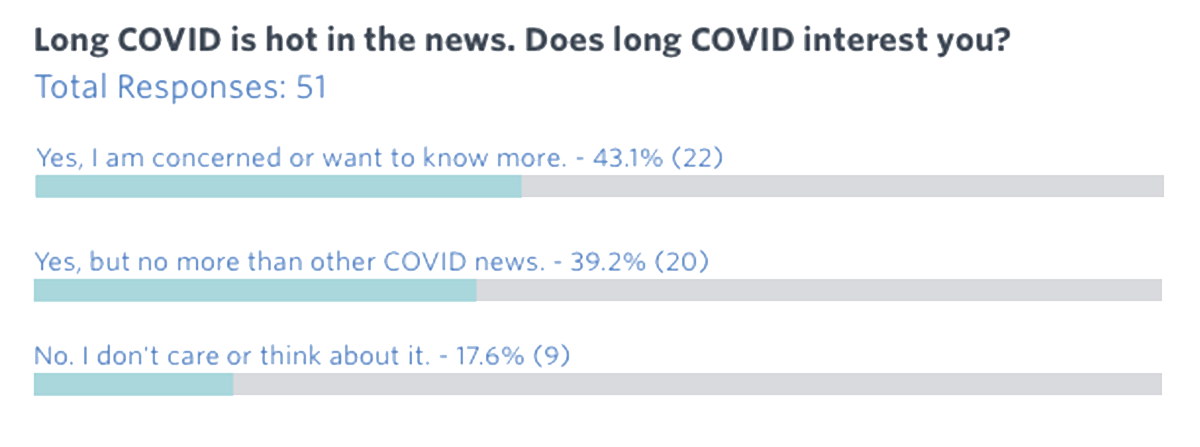
Check out the responses to our last survey:
|
|
Remember, we appreciate your questions! We always try to respond in a timely manner, and if appropriate, we will include those Q&As in future newsletters.
|
|
Have a question? Email us. |
|
Los Alamos Vaccine & Booster Information |
|
Los Alamos County COVID Vaccine/Booster Resources
Visit the County COVID Page for more information regarding vaccinations/boosters:
|
|
Los Alamos Treatment Information |
|
Los Alamos County COVID Treatment Resources
Visit the County COVID Page for information regarding treatments, click below:
|
|
Los Alamos Testing Information |
|
Los Alamos County COVID Testing Resources
Visit the County COVID Page for information regarding testing, click below:
|
|
Click below to email us your feedback and questions! |
|
|
|
|
|
|