Environmental Interpretive Center May 7, 2025 | | |
In this issue:
- Upcoming EIC Programs
- Summer Opportunities
- Tales From the Trails: Serendipitous Stopover
- Greenways: A Quantifiable Gem
- Meet Some New Faces!
| |
Spring Migration Bird Walks!
Saturday Morning from 9-11 AM
May 10, 17, & 24
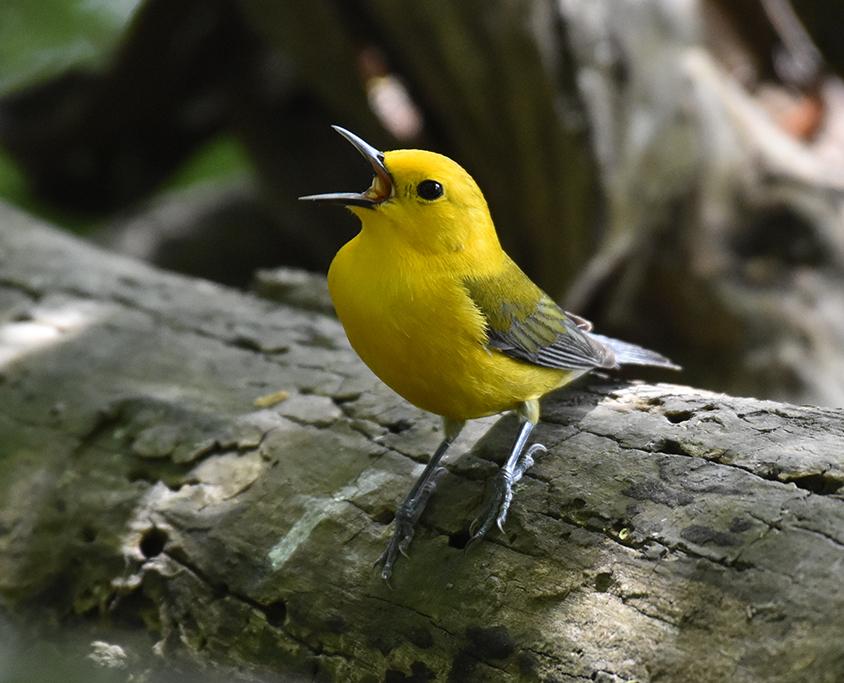
Celebrate spring with Rick Simek and fellow bird enthusiasts to "catch the wave" of warblers and other spring migrants! Local photographer, Geoffrey Clarke snapped this Prothonotary Warbler in the Environmental Study Area. Maybe you'll see some spectacular signs of spring...
Please register for this program.
| | | | |
Spring Ephemeral Wildflower Walk
Saturday, May 10
12:00-1:30 p.m.
They're called ephemeral for a reason! Early spring wildflowers have to "get the job done" early before the tree leaves blot out the sun. This performance is a limited engagement--don't miss the "floor show" in the forest understory. Please register for this program.
| | |
Evening Spring Walk!
Friday, May 23
8:00-9:30 p.m.
Join us to experience spring on an evening walk with your EIC friends. Wear sturdy shoes and dress for whatever the 2025 "spring" weather serves up.
Please register for this program.
| | |
"Mushrooms are Awesome, and You Should Love Them!"
Thursday, May 8, EIC Room 119
7:30-9:00 p.m.
In a "straight from the heart" talk, EIC Naturalist Mike Solomon will discuss some of the adaptations of fungi that particularly interest him, explain a bit about their role in the environment “trading” nutrients around, share some basic mushroom ID tips, and offer a couple of book recommendations. If weather allows, those who are interested can take a short walk to look for mushrooms in the Environmental Study Area.
| | |
Photography in Nature Walks
Join like-minded enthusiasts to capture nature in pictures. These guided walks will take place on the 4th Thursday of the month from 2:30-3:30, May 22, June 26, July 24, Aug. 28. Please register for this program.
| | |
Serendipitous Stopover
On a recent mid-April evening, at dusk, I was waiting at the Old Field
in the Environmental Study Area (ESA). I wanted to see if the male American
Woodcock I had previously observed doing its aerial courtship flight would still be there--but I heard a very different call than the “peent” of the woodcock.
| | |
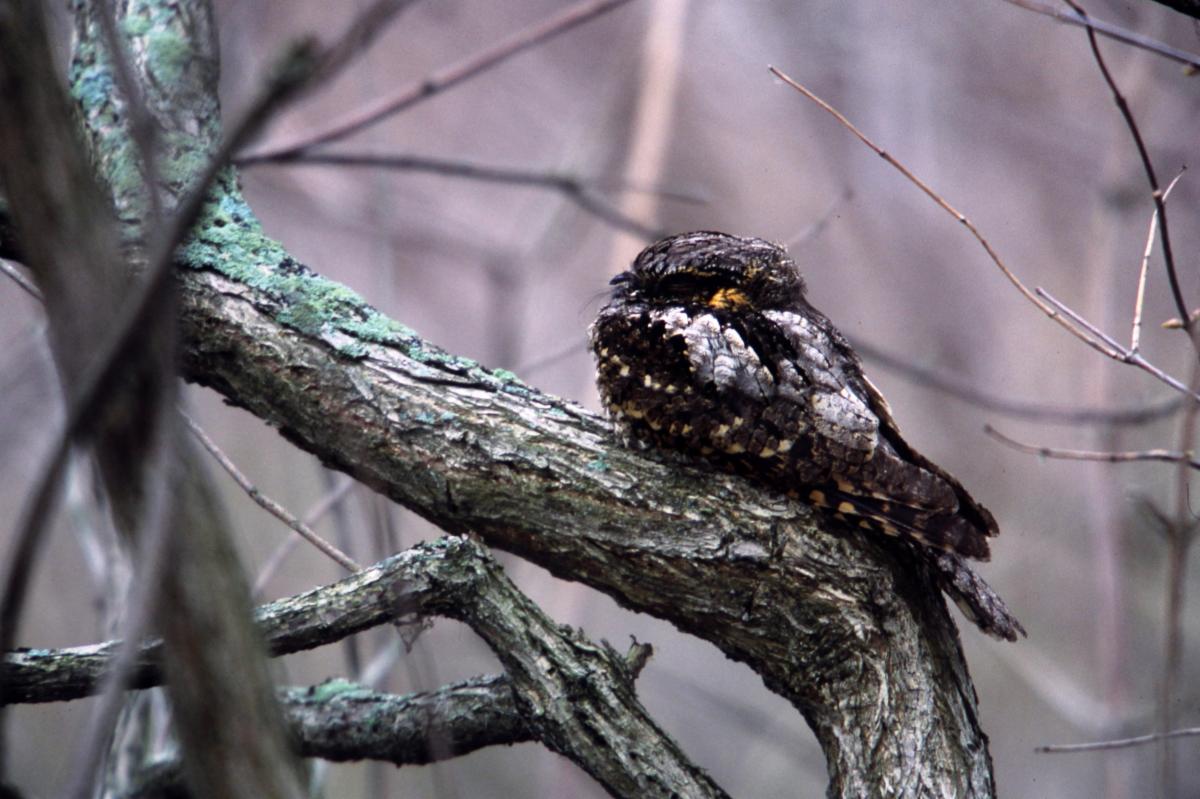
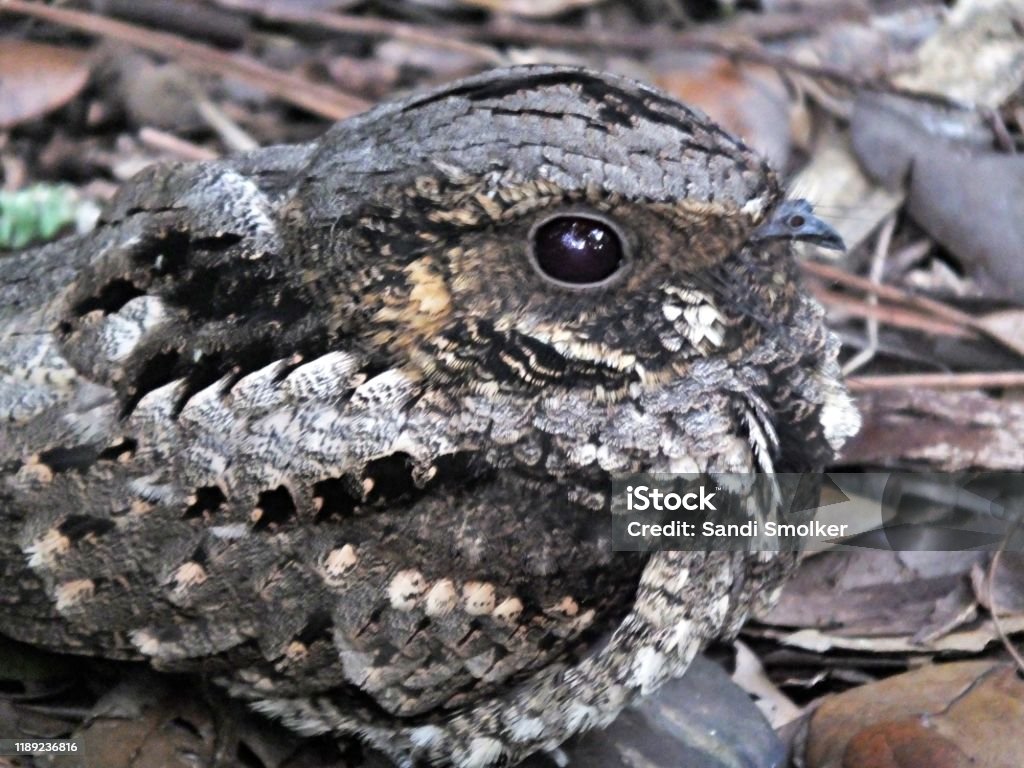
Much more boisterous, with a richness of tone, it immediately informed me of the bird’s identity through a repetitive series of notes: “whip-poor-will, whip-poor-will…” An Eastern Whip-poor-will had
stopped over in the ESA during its northbound migration flight.
(Photo by Jim Simek)
| | | On that first evening of its four-day stay in the ESA, the bird’s calls were intermittent, coming from different points within hearing range; some from a fair distance and others close by. On its last night of vocalizing, it stayed in one spot and called incessantly, as whip-poor-wills do on their breeding territories. It was still calling as I walked away after listening for about a half hour. I did not hear it the next evening or any time after. | | |
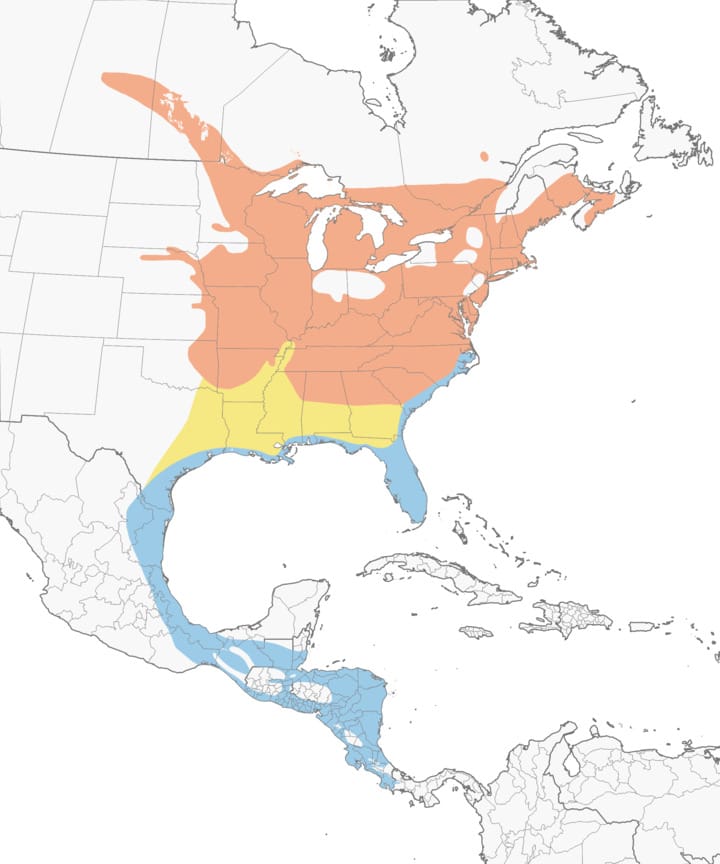
The range maps document that whip-poor-wills do nest in Michigan (as shown in the peach color, left), and upon reflection, it seems clear to me that, given the suitability of the habitat in the ESA for whip-poor-wills to nest, the bird had been giving its best attempt at establishing a territory and attracting a mate. Any nesting of the species would have been a first for the ESA.
The Michigan Natural Features Inventory (MNFI) currently lists the Eastern Whip-poor-will as having a Threatened breeding population status in Michigan. Even though the bird I had been listening to was not successful in its courtship/territorial communication, I find it heartening that the ESA provided a critical migration stopover resource for that individual bird. Considering how vigorous the bird was calling on its last evening in the ESA, it had clearly found the insects it needed to fuel all that vibrant energy.
| | |
I have also heard whip-poor-wills calling in the ESA in past years. It is evident that it is a regular migration stopover for the species.
(Photo by Sandi Smolker)
As the Environmental Interpretive Center continues its habitat management efforts in the ESA, we will keep whip-poor-wills in mind, doing what we can to further the species’ conservation.
-Rick Simek
| | | |
Editor's note: To volunteer as a habitat steward, please contact Rick Simek and join the committed group of volunteers for Stewardship Saturdays. This year-round, ongoing effort helps to improve and sustain the ecological health of the habitats in the Environmental Study Area. That includes addressing the many threats posed by invasive plants and re-establishing native plant life.
Stewardship Saturdays will take place from 1:00 pm to 4:00 pm on the third Saturday of the month.
| |
A Quantifiable Gem!
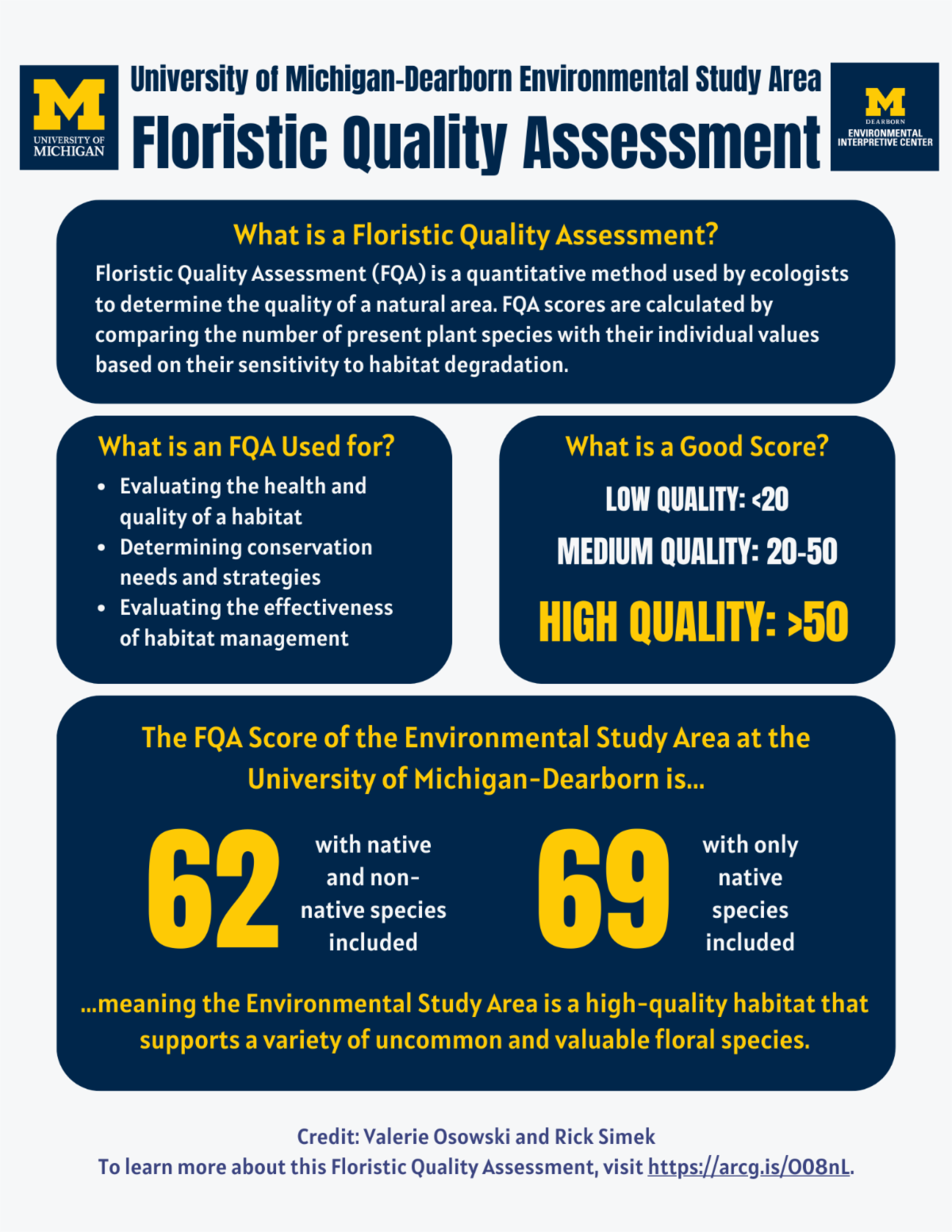
The Environmental Study Area (ESA) on the University of Michigan-Dearborn campus is considered by many to be a natural gem in the metropolitan Detroit area. However, the beauty that can be seen along the walking trails didn’t completely occur on its own, but rather as a result of decades of habitat management by Natural Areas Manager Rick Simek, along with the help of countless volunteers. To show the effect of these efforts, I performed a Floristic Quality Assessment (FQA), which is a simple method used by ecologists to quantify the quality of a natural area based on the present plant species.
| | |
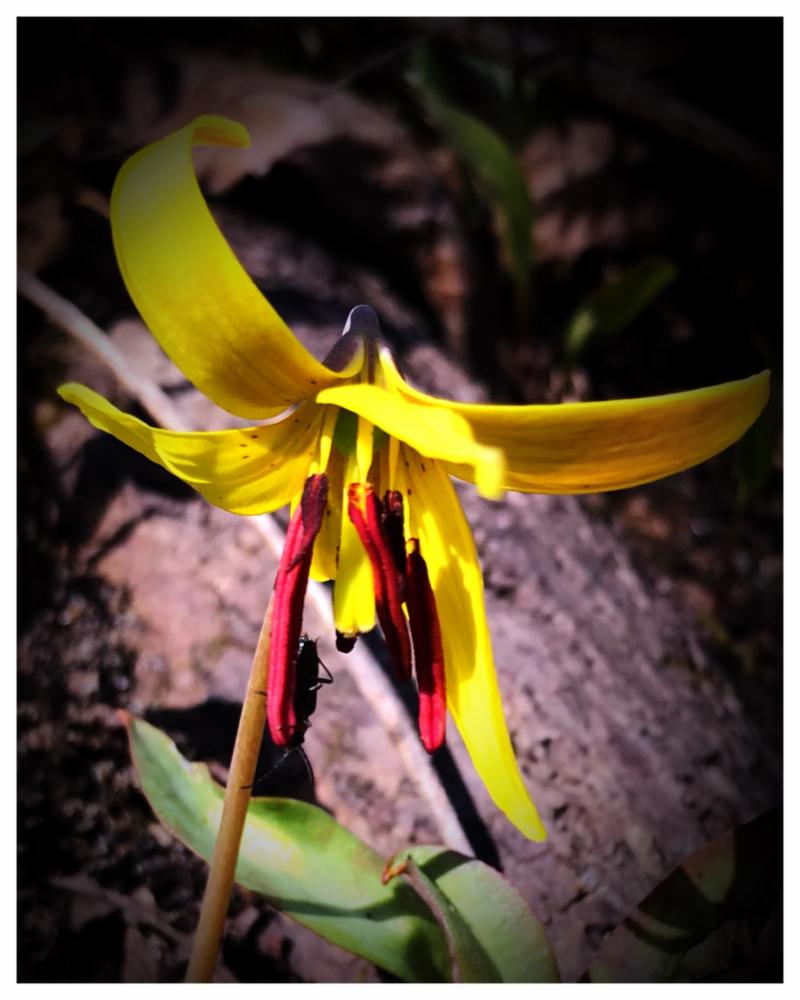
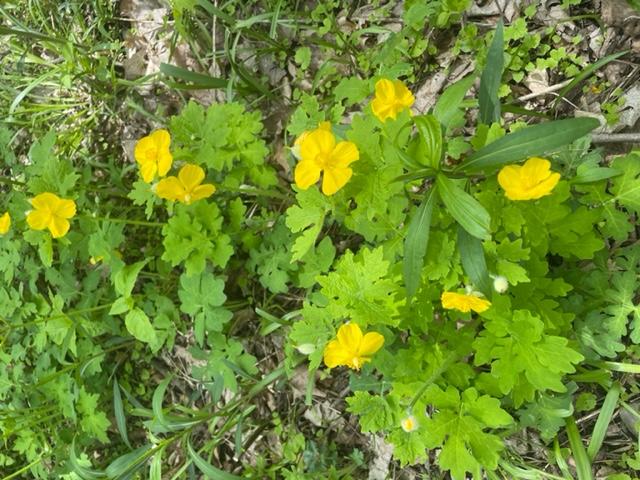
A FQA only requires two numbers: the total number of species being assessed and their average Coefficient of Conservatism. The coefficient, also known as a c-value, is a number between 0-10 that is assigned to a species by experts in a given region. The number represents the species’ ability to withstand environmental disturbance, with 10 indicating the most sensitive–and typically uncommon–species, such as the Wood Poppy pictured left. Non-native and invasive species are automatically assigned a c-value of 0 and can either be included in the assessment or eluded entirely.
(Wood Poppy photo by Rick Simek)
When I calculated the FQA for the ESA, both with and without non-native and invasive species included, the assessment determined that the natural area is a high quality habitat. This result reinforces the fact that the ESA is a gem in the highly urbanized metro-Detroit. In addition, this assessment proves that the continued habitat management of the area is both effective and necessary.
If you would like to learn more about this assessment, please read the accompanying storymap.
-Valerie Osowski, EIC Staff Naturalist
| |
Meet Some New Student Faces!
| | Christina Fijal is Coordinating the Children's Gardening Program. She became acquainted with the EIC as a homeschooler and is now a UM-Dearborn Junior in Environmental Studies. | | Isabel Stepaniak will assist with the Children's Gardening Program. She has just completed her Freshman year and we look forward to having her on staff for a while. | | Joseph Guiseubel is this year's Cooper Family Intern. He is a graduate student in the Master of Science in Environmental Science. Joseph is the Community Organic Garden Assistant Coordinator. | | Talia List is our Summer Undergraduate Research Experience (SURE) intern. She will be working with EIC Director Jacob Napieralski recording, mapping, and comparing temperature variation in the Environmental Study Area related to canopy cover. | |
Venturing outdoors and encountering nature is good for your health. Our trails are accessible, so please visit our Environmental Study Area. Stay engaged in learning activities and check out our Remote Learning Activities & Resources page for ideas to create a “Neighborhood Nature Journal” and “Family Nature Walk” activities!
We also hope to see you in person at our upcoming programs!
| | |
Please remember...
The EIC Environmental Study Area is open daily from sunrise to sunset. We would like to remind nature-goers that fishing on site is prohibited and to leave bikes and dogs at home because they cause disruption and stress to the EIC wildlife.
| |
| | | |