Multitudes Summer 2026 Quarterly


Dear Friends,


As we welcome school year 2026-2027, I want to thank you again for your partnership and your commitment to early readers. Education continues to evolve, and together we have an extraordinary opportunity to build systems that identify students’ strengths and needs earlier, equip educators with meaningful data, and help every child reach their full potential.


This year, California schools will implement an updated kindergarten screening timeline. At Multitudes, we are here to support districts through this transition with the tools, guidance, and collaboration needed to make implementation seamless and successful.


I’m also pleased to share an important milestone in our evolution. What began as a science-based platform for early literacy is growing into a more comprehensive system that will include mathematics and additional research-based measures of language and growth. In addition, this fall, Multitudes users will have the opportunity to help shape the future of assessment and early intervention by testing our newest progress monitoring tools. Our vision is to provide educators with a unified platform that supports the whole child, offering a clearer picture of student learning and enabling earlier, more informed instruction and intervention.


Partnership remains at the heart of everything we do. Thank you for being part of the Multitudes community. We are looking forward to everything we will accomplish together this year!


With gratitude and optimism,


Francesca Pei, COO Multitudes


Platform Update

The new school year brings exciting updates to the Multitudes platform, many of them inspired by the feedback and insights we've received from schools, districts, and educators like you. We are introducing the following new features and enhancements designed to make screening and reporting even easier, turning data into meaningful next steps.


Here's what's new for 2026–27:


  • Practice with Training Mode – Build confidence before screening students by practicing with simulated students in our new Training Mode, located directly in your Multitudes account. Previously provided separate training login credentials will no longer be supported.


  • Smarter Screener Language Selection – Based on feedback from educators seeking clearer guidance for multilingual learners, Multitudes will now help test administrators select the most appropriate screening language using a student's language of instruction and primary or home language (when known).


  • New Spanish Oral Language Assessment – A new assessment will be available for students whose primary language is Spanish and who are learning in English, to provide more targeted assessment options for multilingual learners. For these students, this assessment is designed to be used in addition to the English Universal Screener.


  • Enhanced Class & Student Results – We've redesigned the Class and Student Results pages to make it easier to review performance, identify trends, and plan next instructional steps.


  • Updated Parent Results Reports – In response to requests from schools and districts, Parent and Guardian Results Reports feature a refreshed design and are now available to print in both English and Spanish. Additional companion translation documents are also available to help communicate results with multilingual families.


  • Expanded PDF and CSV Data Exporting – Designed for more efficient exporting, uploading, and printing.


  • More Instructional Resources – Our instructional resource library has been expanded with downloadable lessons for every literacy domain, complete with linked materials that are ready to print and use with students.


Thank you for your valuable feedback. We're proud to continue supporting your work throughout the 2026–27 school year.


Strengthening Your Practice


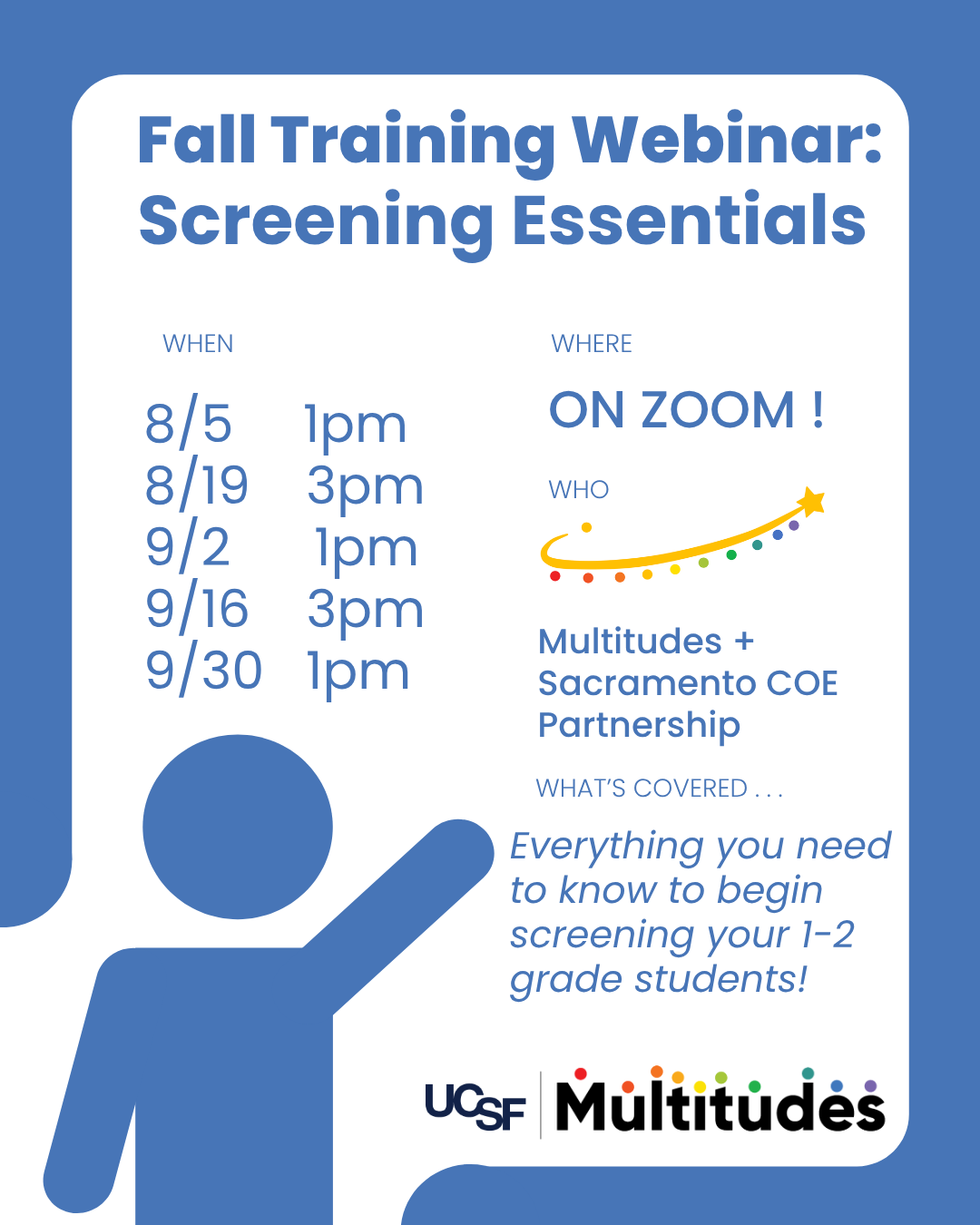
Register for a webinar below:


FAQ From the Field

Daniel Silberstein is an Educational Specialist with the Diagnostic Center of Northern California (DCN-CDE) and a former Director of Oakland Unified School District's Reading Clinic. With over 20 years in special education and literacy intervention, and through his work with the California Dyslexia Initiative, he shares knowledge and practice guidance for educators. Watch this space!

____________________________________________________


Q: We are planning for the 2026–27 school year. When should site administrators schedule the fall Multitudes screening window, and are there required waiting periods before we can begin?


Good question! For the 2026–27 school year, the fall screening timeline depends on the student's grade level and updated requirements in California Education Code Section 53008.


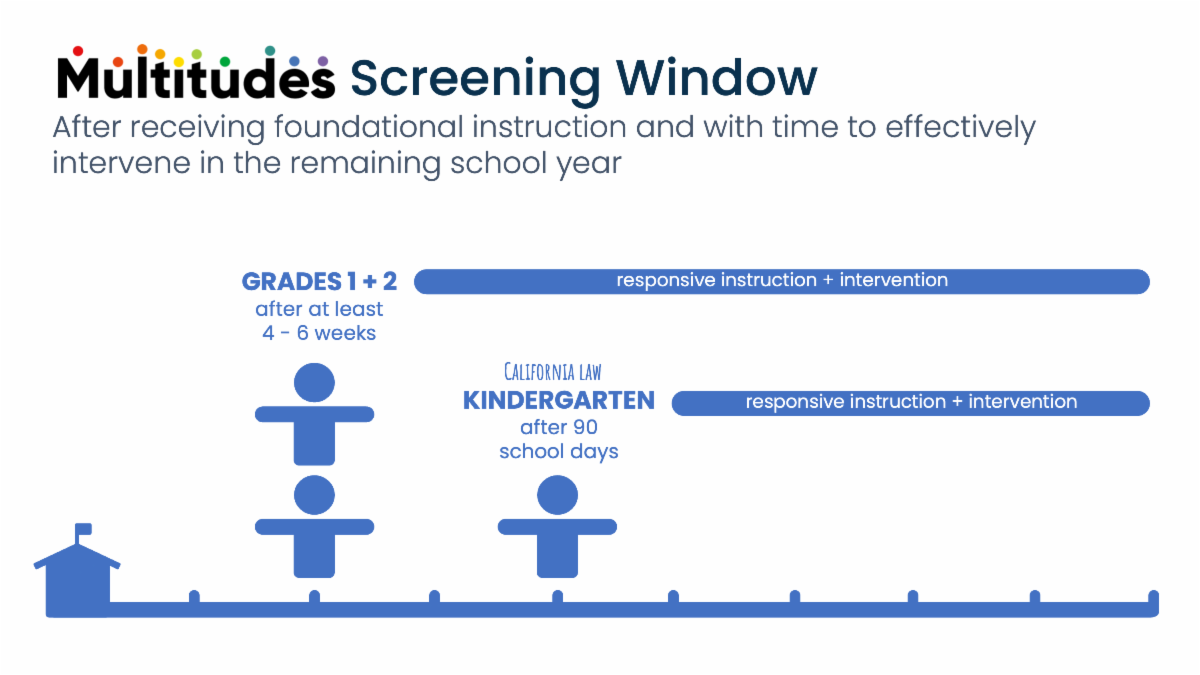
For kindergarten: Beginning in the school year 2026-2027, California law requires that screening for risk of reading difficulties not be administered to kindergarten students before the 91st school day of the school year.


This requirement applies specifically to the annual reading difficulties risk screening required under California Education Code Section 53008 and does not restrict local educational agencies (LEAs) from administering other types of assessment before or after the 91st school day, as appropriate.


The law also requires LEAs to consider whether students have received sufficient instruction in foundational reading skills to support a valid risk assessment.


Grades 1 and 2: Although California law does not specify a comparable waiting period for students in grades 1 and 2, it is recommended that the Multitudes screening be scheduled after students have received at least 4 to 6 weeks of instruction in foundational reading skills to help ensure a valid result.


Regardless of grade level, Multitudes screenings should be scheduled at times when students are most likely to perform their best—often earlier in the morning, rather than immediately before or after lunch. It is also important to plan your screening calendar with family communication in mind, ensuring enough time to notify families before screening begins and to share screening results and strategies for students in grades 1 and 2 during the first marking period.

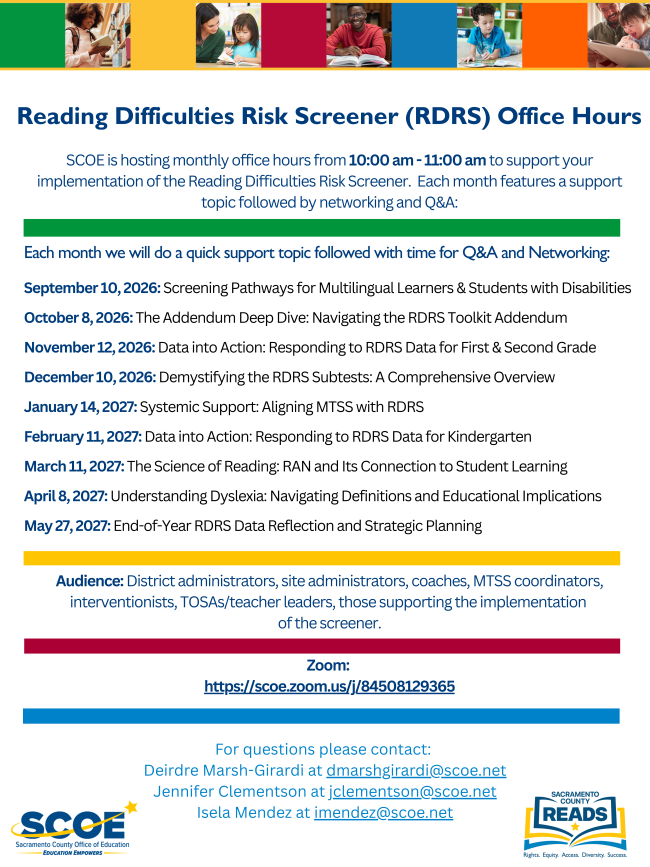
The Multitudes universal screener is designed to be given once a year. Please reach out to your Multitudes school success team rep with implementation questions or attend monthly office hours co-hosted by the Sacramento County Office of Education and featuring Multitudes staff. See below for topics and dates beginning this fall.

Multitudes + SCOE Partnership

From the Field


Multitudes is committed to ensuring that early literacy screening is fair, accurate, and culturally affirming for California's multilingual learners. As part of that commitment, we are expanding our work to include Mandarin and Cantonese language and literacy measures.


This spring, we partnered with San Francisco Unified School District (SFUSD) to pilot these new measures with 170 Mandarin- and Cantonese-speaking kindergarten and first-grade students. Mandarin is the second-most-commonly spoken language among California's English learners, and the San Francisco Bay Area is home to one of the nation's largest Cantonese-speaking communities. Collaborating with SFUSD allowed us to develop and refine measures for the classrooms they serve.


The measures were developed with input from experts in multilingual language and reading development, educators, and community partners so that students' results reflect their reading development—not simply their English language proficiency. Because Chinese and English rely on fundamentally different writing systems and linguistic skills, creating these assessments requires far more than translation.


"Our reading assessments should reflect the diverse ways children learn and use language, said UCSF behavioral neurologist Dr. Boon Lead Tee. "Tailored bilingual screening can identify reading difficulties earlier, recognize linguistic strengths, and guide timely support, advancing a more accurate and inclusive education system."


Reflecting on her experience in San Francisco classrooms this spring, UCSF Clinical Research Coordinator Stephanie Chen said, "The children's excitement about using their heritage language at school—and their eagerness to play more reading games—was unforgettable. Their enthusiasm and the dedication of the educators who welcomed us into their classrooms have been a constant reminder of why this work is so important."


We are deeply grateful to our partners at SFUSD for welcoming us into their schools and sharing their insights. The team is now analyzing pilot data, refining the measures, and developing additional tasks for the next phase of research this fall.


If your school is interested in participating in the Multitudes Mandarin and Cantonese pilot study this fall, please contact the study coordinator, Dr. Rachel Eggleston, at Rachel.Eggleston@ucsf.edu.


Research Opportunity


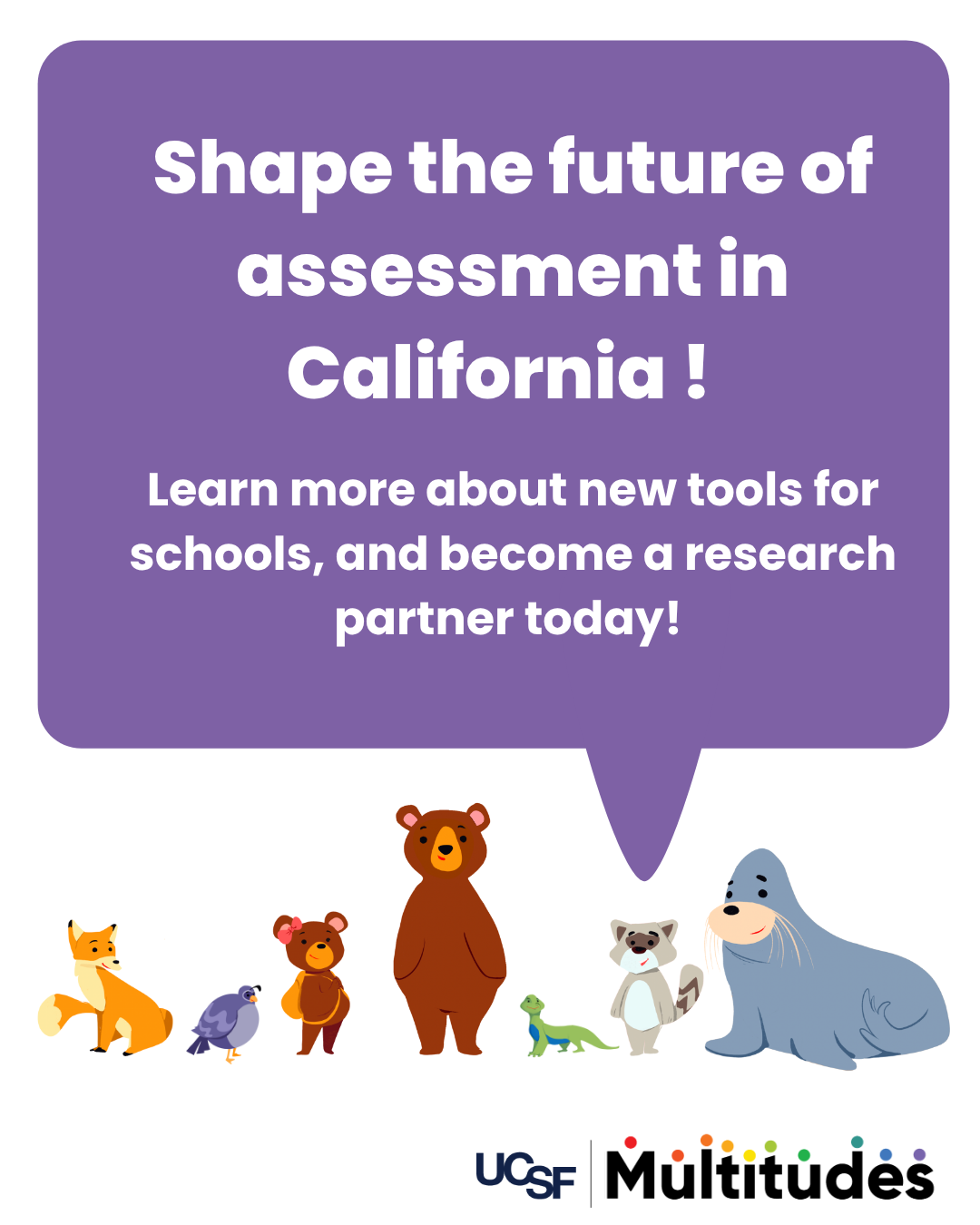
Multitudes is expanding in 2027-2028 to include progress-monitoring tools, so that educators can track students' reading growth throughout the year!


For the 2026-2027 school year, we're inviting schools to participate in the final validation of these new measures before their statewide release.


Early participants will receive a complimentary professional development session on using screening and progress monitoring data to inform instruction and decision-making. Please register your interest in this research opportunity at the link below.


Resource Spotlight


Getting Started with Multitudes?


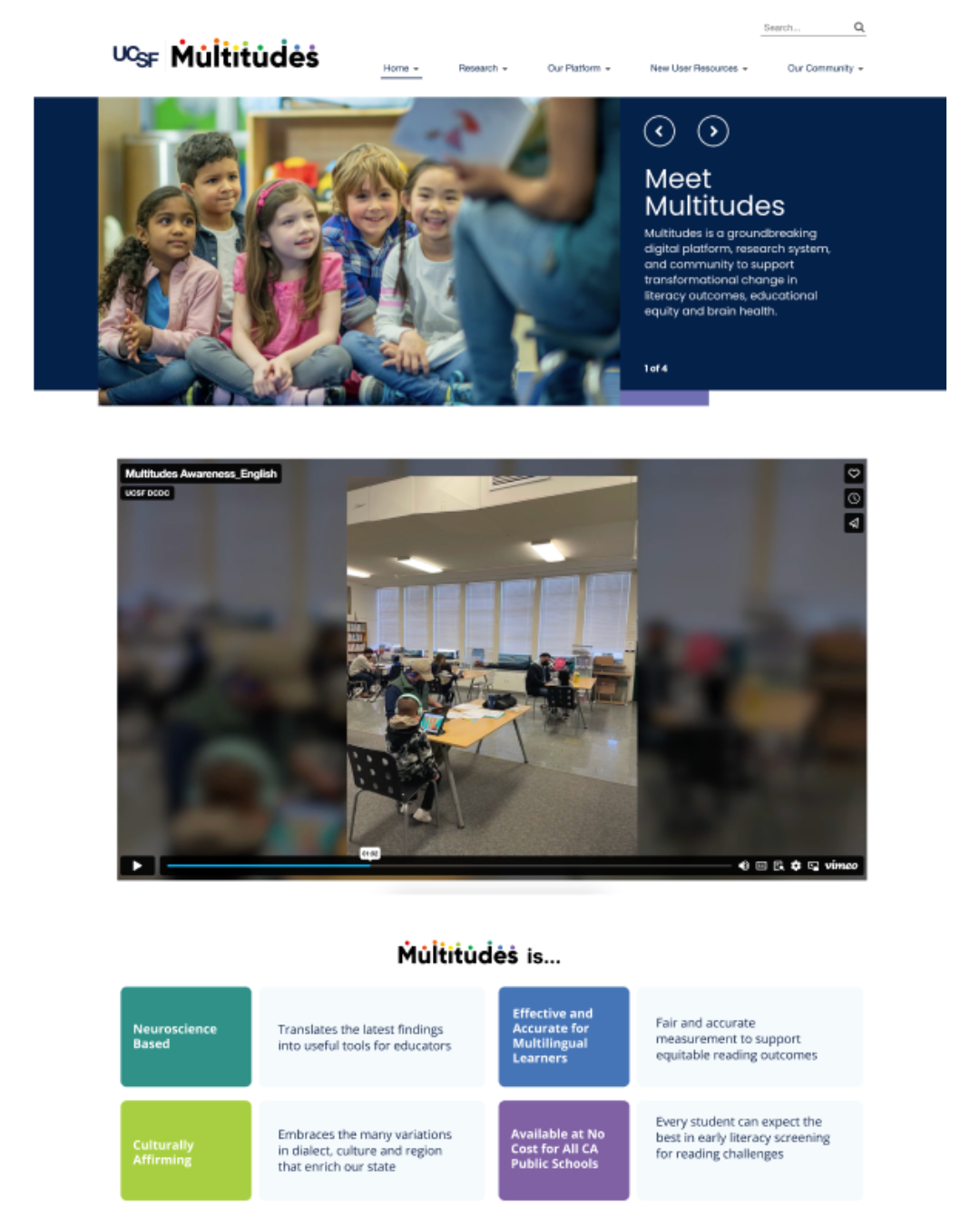
Did you know that Multitudes has a library of training videos and webinar recordings to help you and your team become familiar with the Multitudes platform? Whether you are a new adopter or need a refresher, please ask your school success specialist for details. Check out a few of these resources below.

Training Webinars


Request recordings of previous webinars, such as "Why Choose Multitudes" or Multitudes "Screening Essentials", from the School Success Team.

Task Demo Videos


Demo videos of Multitudes tasks introduce concepts and administration guidance for each of the Multitudes measures. In Spanish and English.

Just for Kids..


Everyone needs help to learn and grow. This video explains learning differences and introduces children to the friendly characters who guide our assessments.


Recent Publications


What role do visual processing differences play in reading development?


We’re pleased to share a new publication in Current Biology, by our colleague Mahalakshmi Ramamurthy, PhD, and members of our team, based on the Multitudes research sample. This work holds promise for the next generation of screening tools and more precise interventions.


Read More


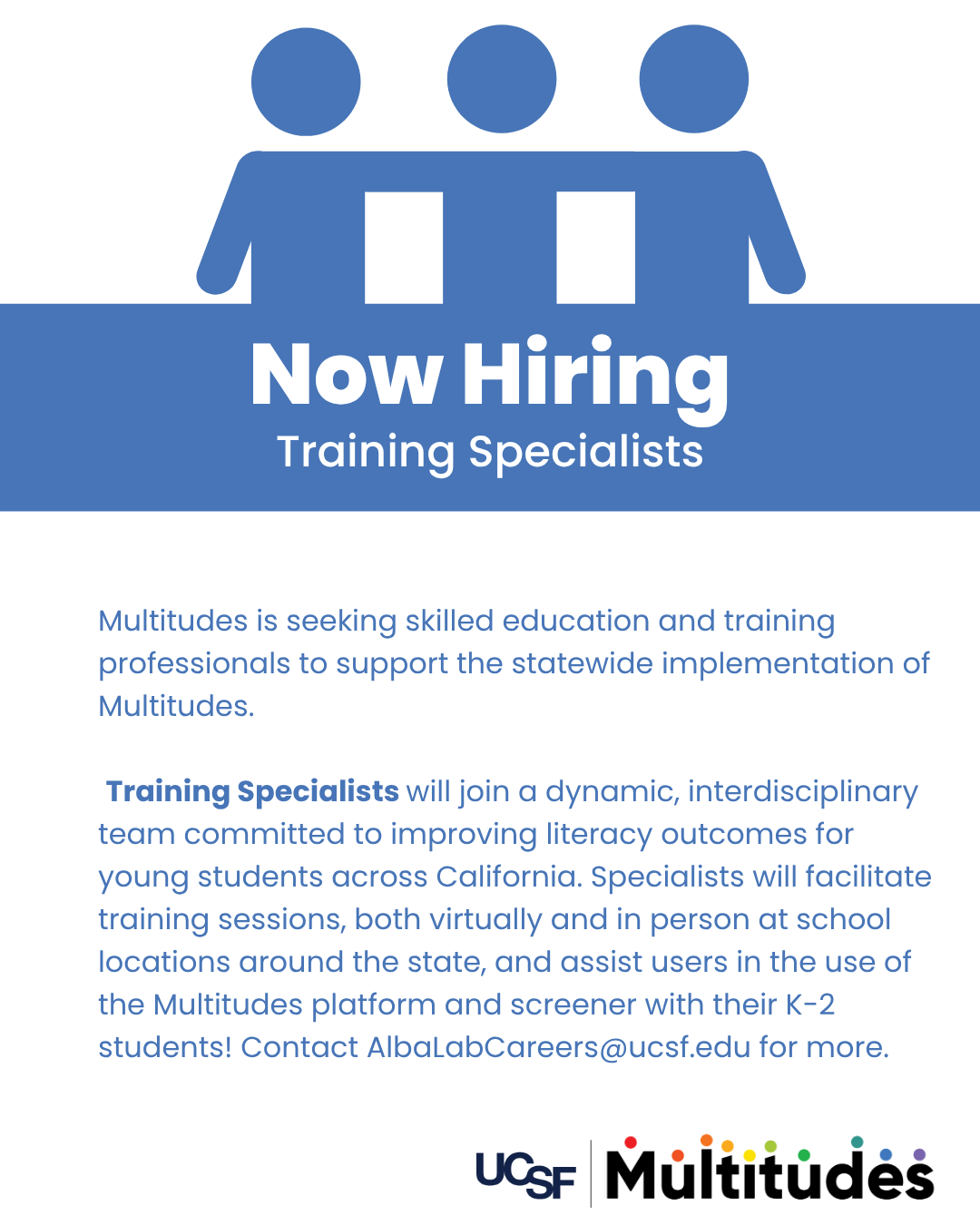
Job Opportunities with Multitudes


Staying Connected


Facebook  Instagram  LinkedIn