From the Station Director |
|
The NH Agricultural Experiment Station is supported by a federal–state partnership that provides resources to conduct innovative research that's inspired by challenges in the Granite State's agricultural, food, forestry and natural resources sectors and leads to new knowledge that benefits New Hampshire and far beyond. An important responsibility in sustaining this strong partnership is for the Station to help inform and be informed by public officials who are elected to represent the diverse communities across New Hampshire. |
|
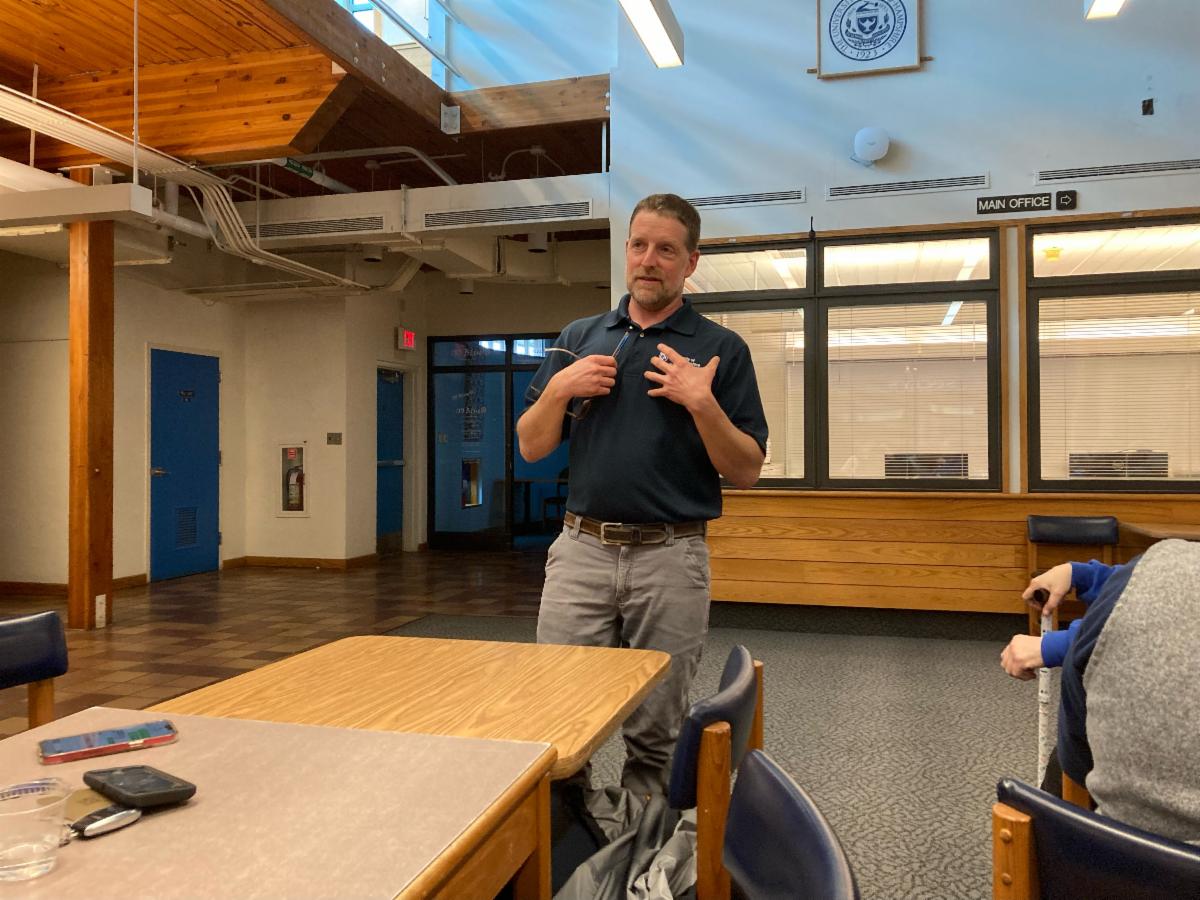
Steve Eisenhaure, COLSA Land Use Coordinator, presenting about how UNH woodlands sites across the state are used for research, teaching, and Extension.
|
|
Over the past month, we have had several opportunities to meet and interact with policy makers at the state and federal levels. In early April, members of NH House Environment and Agriculture (E&A) Committee visited the Macfarlane Research Greenhouses open house. Last week, the NHAES, UNH College of Life Sciences and Agriculture, and UNH Extension hosted the E&A Committee again to highlight the ongoing research, teaching, and extension efforts supporting the state's agricultural and forestry fields. Also last week, we were able to interact with many other members of the NH Legislature at the annual UNH Day at the State House. And in mid-April, the NHAES was part of Farm Bill listening session hosted by Congresswoman Ann McLane Kuster, where a diverse set of NH stakeholders were able to voice successes and challenges in their industries.
It was a busy month, but in every interaction, it was clear that our elected officials shared and supported the NHAES goal to strengthen and elevate our state through excellence in research and knowledge creation and dissemination.
Have a wonderful start of summer and thank you for supporting our efforts to improve the lives of our state and region!
|
|
Director, NH Agricultural Experiment Station
|
|
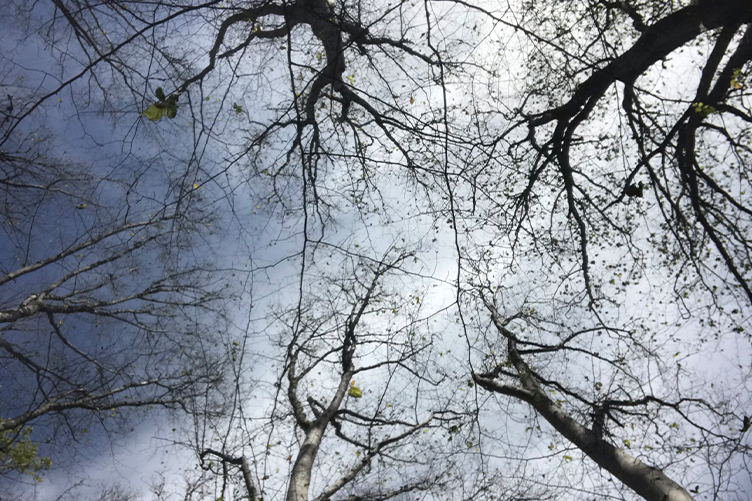
Jeff Garnas, an associate professor of forest ecosystem health in the natural resources and the environment department at UNH, is initiating a comprehensive study of patterns of both beech leaf disease (BLD)- and beech bark disease (BBD)-induced mortality trees in eastern forests, thanks in part to a recent grant from the U.S. Forest Service’s Forest Health Monitoring program. Garnas, who has studied BBD for over a decade, will be joined in the research by Cameron McIntire ’18PhD, a plant pathologist with the U.S. Forest Service and an alum of the UNH College of Life Sciences and Agriculture, as well as by researchers from the U.S. Forest Service, UNH Extension, Cleveland Metroparks, and other state forestry agencies. Read about the possible impacts of BLD.
|
|
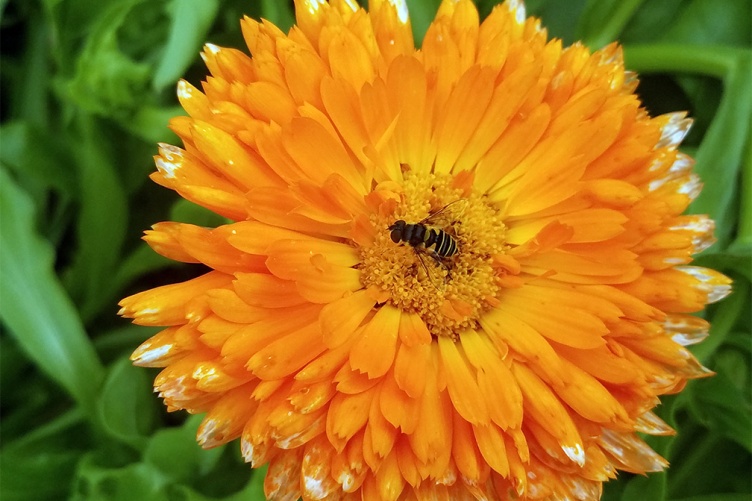
A team of NHAES scientists that includes UNH faculty and alumni recently published research examining the role of annual insectary plants—which are flowering plants grown to attract, feed and shelter beneficial insects—in serving as habitats for syrphid flies. Also known as hover or flower flies, syrphids appear as a mix of a housefly and honeybee—typically with black and white or yellow bands across their bodies—and derive their name from their behavior of hovering over flowers and other plants. And while adult syrphids prefer nectar and pollen for a meal, many species of syrphid larva will consume large numbers of common pests, such as aphids. Read about which flowering plants attract syrphids best.
|
|
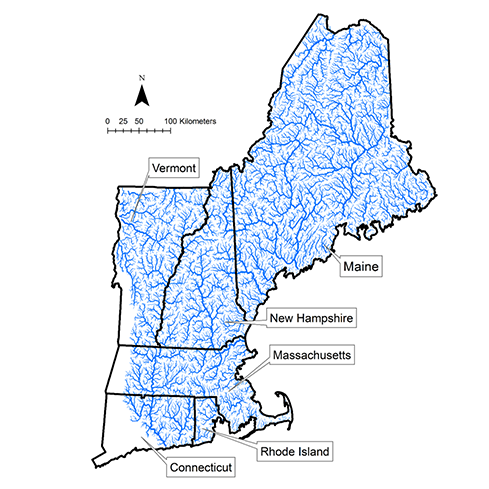
Station scientist Wilfred Wollheim recently collaborated on a study that paired water quality scenarios with interactive maps, finding that households value water quality improvements outside their local areas and/or in iconic locations. This finding suggests that historic policymaking around water quality improvements doesn’t accurately account for the entire scope of locations at which households would support water quality improvements. Discover how this study could inform future water quality policymaking.
|
|
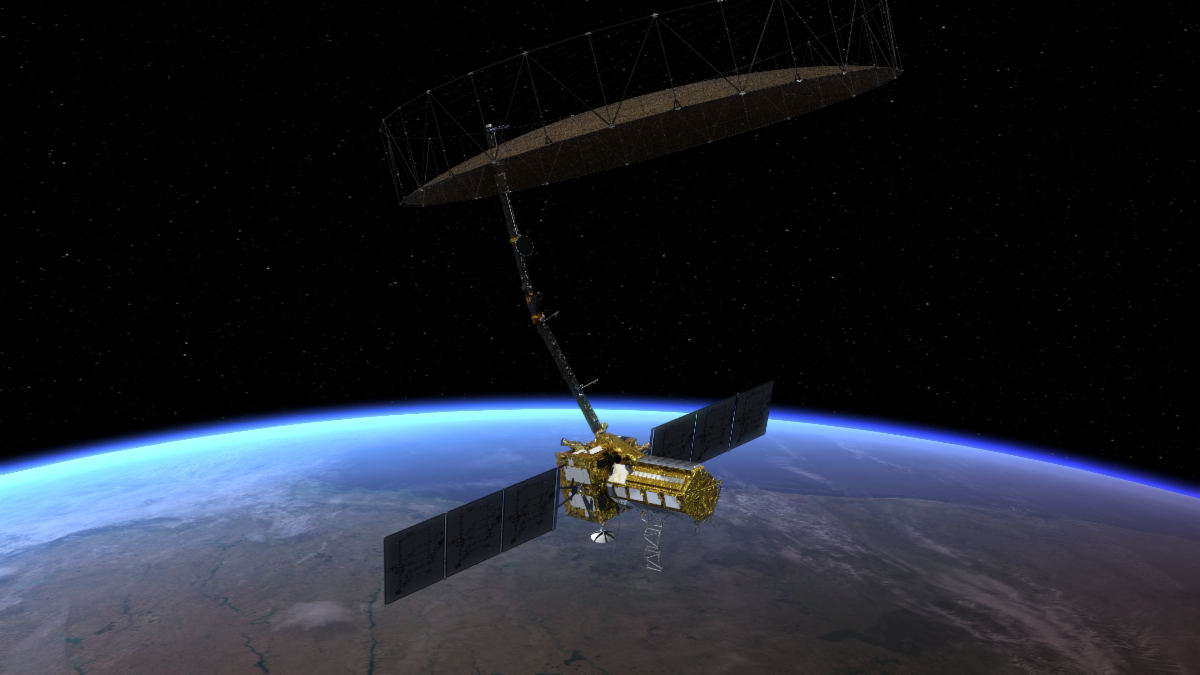
Upcoming spaceborne synthetic-aperture radar (SAR) missions—like the NASA-ISRO Synthetic Aperture Radar (NISAR) mission— promise frequent monitoring of the Earth’s surface, with high-resolution images regardless of cloud cover and other weather conditions that affect conventional satellite imagery. This emerging technology and data can offer an important new mapping tool of forest biomass and other attributes used in informing land management. However, common methods of analyzing SAR data may not lead to accurate estimates of forest characteristics. A study included in INSPIRED Forestry further investigates using SAR for accurately determining forest characteristics. Read about statistical models that could help provide greater estimates from SAR data.
|
|
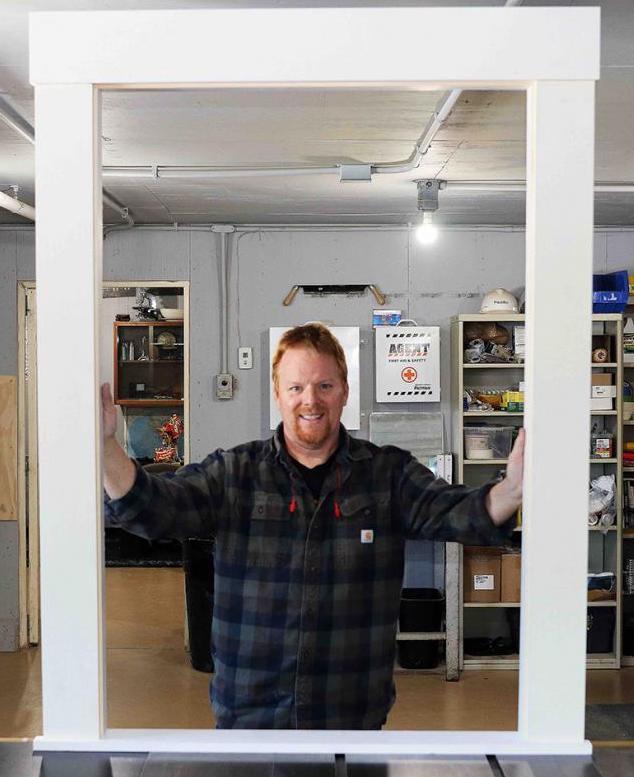
COLSA and NHAES finish carpenter Curtis Johnson got his start working in construction and carpentry in the New Hampshire seacoast area. The Rochester native began learning his trade while at Spaulding High School. After graduating, he immediately joined a framing crew. A short time later, he purchased his first apartment building and began buying, fixing up and managing apartments in the area. Read more about Curtis.
|
|
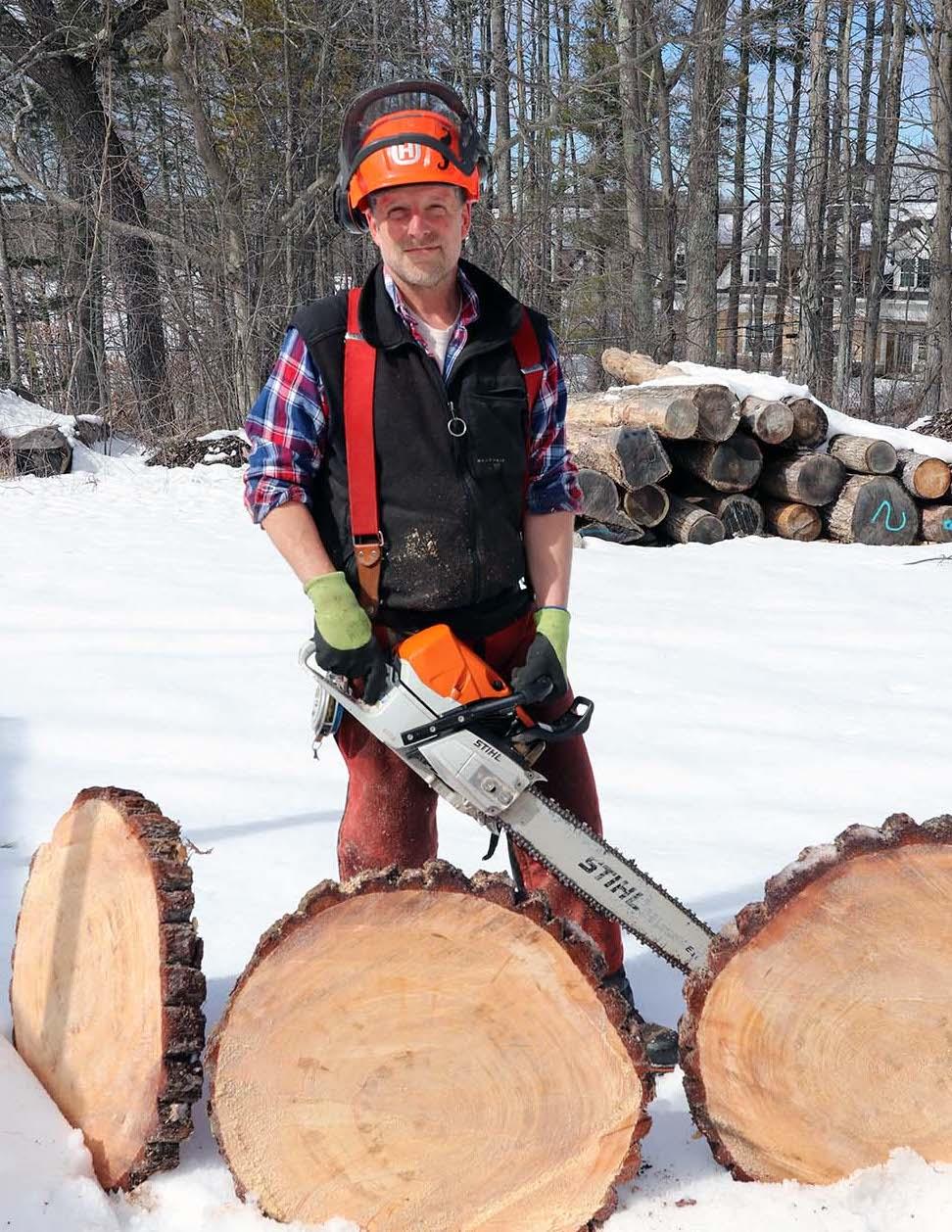
UNH woodlands manager/land-use coordinator Steve Eisenhaure started out studying a very different field from forestry. He initially earned a bachelor’s degree in business administration from the Paul T. College of Business and Economics (at the time known as the Whittemore School of Business and Economics). He later returned to UNH, earning a forestry technology degree from the Thompson School of Applied Science and a master’s degree in Forest Management from COLSA. Read more about Steve.
|
|
More Station News & Notes |
|
Butternut Farm of Farmington, N.H., is teaming up with the New England Apple Association, other New Hampshire cider houses, local vendors and food trucks for its first ever Spring Cider Social, and the New Hampshire Agricultural Experiment Station will be there!
The event will take place Saturday, May 13, from 11 a.m. – 4 p.m. Tickets are now available! If you attend, make sure to swing by the NHAES booth and say!
|
|
Follow NHAES on social media: |
|
|
|
|
|
|