Facebook          Instagram

What Advocates Working in the Frontlines

Need to Know About Strangulation


Dear Friends, 


In this E-News, we are so excited to share some highlights from our recent webinar What Advocates Working in the Frontlines Need to Know About Strangulation. This webinar focused on advocates working in a variety of settings, including shelters, courtrooms, domestic violence response teams, and/or hotlines. The training serves as an excellent introduction to what advocates need to know when responding to cases involving non-fatal strangulation and provides valuable insights and resources for supporting survivors.


We had Michelle Morgan, the Executive Vice President and Director of the Family Justice Center, One Safe Place Fort Worth; Joyce Bilyeu, the CEO of Sacramento Regional Family Justice Center; and Sonya Desai, the Director of Guilford County Family Justice Center join us. We also had our very own, Catherine Johnson, Gael Strack and Casey Gwinn share their insights, knowledge, and expertise with attendees.


Our incredible team covered a wide range of important topics, including:

  • Introduction of the role of advocates
  • Overview of lethality and rage of stranglers
  • Overview of the law and medical terminology, anatomy, physiology, signs and symptoms & health consequences
  • Conducting client intakes, what to look for during the process, and the key questions to ask
  • Safety planning, shared practical tips for working with victims, and provided a variety of valuable resources
  • Working with high-risk victims, including what professionals should know and how to respond effectively
  • Science of Hope

After receiving strong attendance and positive feedback for this webinar, we have decided to convert this webinar into a course on our website. In case you missed the live session, or would like to send your team to watch, it is now available on our website at no cost! Attendees who enroll in the course will have access to all the resources discussed throughout the presentation and will earn a certificate of attendance after completion.


As always, we extend our heartfelt thanks to all those supporting survivors of violent crimes. Your actions, small and large, matter.


Always with Great Hope, 

Catherine, Casey, Gael, Joe, Jess, Fernanda and Jahlyssa 

Checkout the Course!

Popular Resources

The Advocacy Toolkit


The Advocacy Toolkit is designed to provide comprehensive support and resources for those who have experienced non-fatal strangulation or suffocation. Recognizing the unique challenges in identifying and addressing this serious form of violence, our toolkit offers valuable information, practical tips, and essential resources


Click here to learn more!

Other Resources

(Please click the title to access the resources)

Did you know that the Training Institute on Strangulation Prevention is a program of Alliance for HOPE International (the Alliance)? The Family Justice Center Alliance, DomesticShelters.org, Camp HOPE America, the Justice Project, and the National VOICES Survivor Network, alongside the Training Institute on Strangulation Prevention, create communities of safety, hope, and healing for survivors and the professionals who serve them.

Upcoming Events From 
The Training Institute on Strangulation Prevention

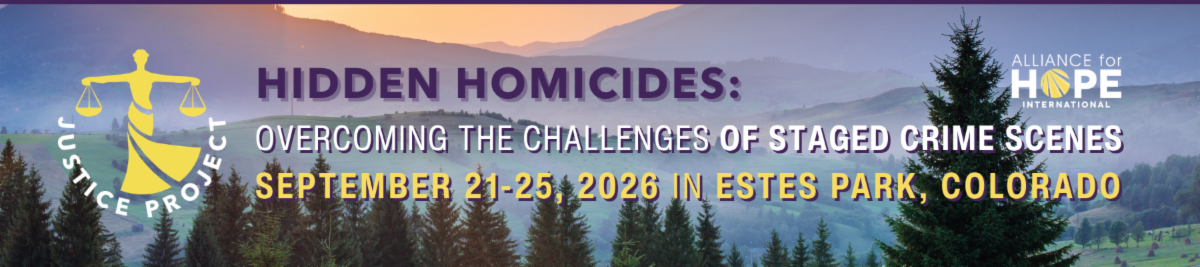
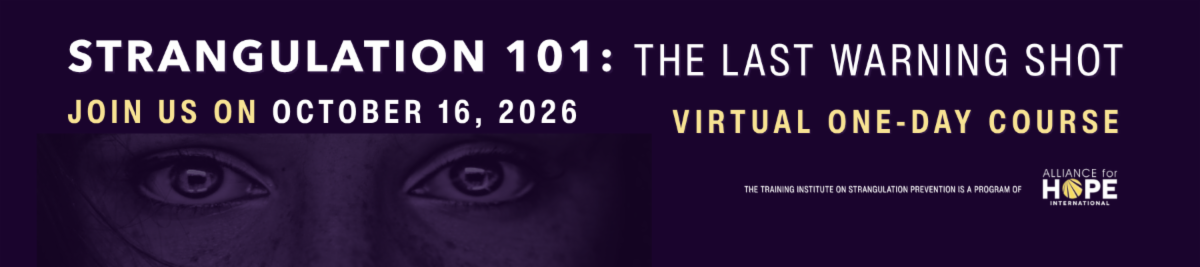
Click on the images below to learn more or click the button at the bottom of this section to see all upcoming Institute training and events.


Alliance for HOPE International is one of the leading social change and advocacy organizations in the U.S. and internationally, creating innovative, collaborative, and hope-centered solutions to support survivors of domestic and sexual violence, child abuse, elder abuse, and human trafficking.


This project is supported all or in part by Grant No.15JOVW-23-GK-05151-MUMU awarded by the Office on Violence Against Women, U.S. Department of Justice. The opinions, findings, conclusions, and recommendations expressed in this publication/program/exhibition are those of the author(s) and do not necessarily reflect the views of the Department of Justice, Office on Violence Against Women.