Rail Workers Weekly News Digest
Number 21 - May 26th, 2020
|
|
Below is a series of articles compiled over the previous week.
They are of interest to railroad workers.
|
|
Article 1 -
PASSENGER RAIL NEWS
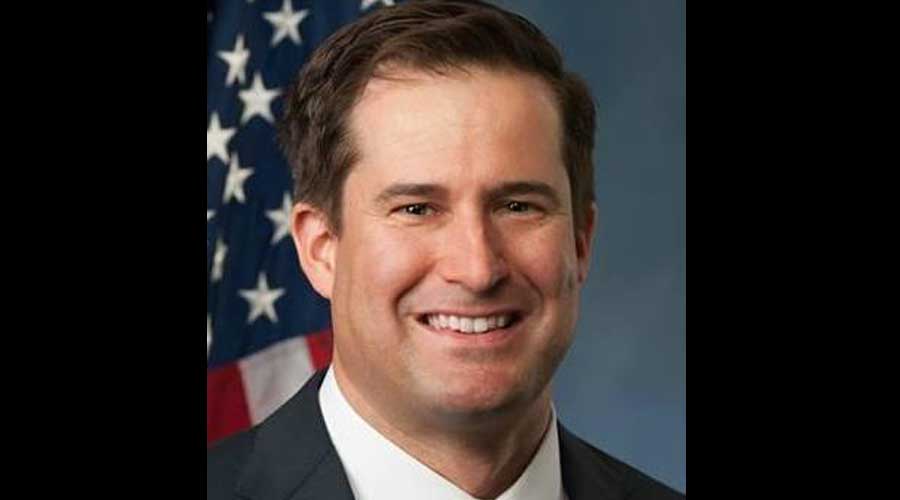
U.S. Rep. Moulton proposes national high-speed rail network
(Editor's Note: In face of the decimation of Class One freight rail jobs in recent years, our hope may lie in the revival of passenger trains in North America. Globally, passenger rail employs millions. Here is just one promising development. See the red button links below for more good news.)
U.S. Rep. Seth Moulton (D-Mass.) this week rolled out a national plan that calls for spending $205 billion to build a national high-speed rail network.
Construction of a high-speed rail network would help get the economy back on track, create competition in transportation and give U.S. residents cleaner, faster and more reliable commutes, Moulton said in a press release.
The plan calls for building a national system by:
- investing $41 billion in high-speed and higher-speed rail through grants administered by the Federal Railroad Administration over five years, with incentives of $38 billion or more in nonfederal funding;
- expanding metrics used by states and cities for transportation planning to include wider economic benefits for more informed investments;
- creating funding flexibility and transit-oriented development incentives for nonfederal partners, including state and local transportation agencies and private partners; and
- developing performance-based safety regulations and standards for high-speed rail to reduce project costs and expedite development.
If passed by Congress, the plan would create more than 2.6 million direct jobs over five years and make high-speed rail a competitive option against road and air travel — two modes that Congress heavily subsidizes, he said.
|
|
Article 2 -
P
ANDEMIC NEWS
As 1918 Shows, Railroads Have Been Through This Before
In 1918, the world was dealing with a deadly coronavirus pandemic, the “Spanish Flu.” Longtime Trains Editor and Publisher Kevin P. Keefe, now retired and a columnist for Classic Trains, sent me his April 2, 2020 “Mileposts” blog, in which he extensively references Railway Age. It is reposted here with permission, with some added photos. “It’s great to have a 170-year-old magazine around!” he said in his note to me. Actually, it’s 164, but who’s counting? Thanks for the shout-out, Kevin. – William C. Vantuono.
All the worrisome news on the coronavirus front seems unprecedented, and railroads aren’t getting a pass. Railroaders are still out there on the job, delivering freight and hauling passengers, but they are performing in an increasingly difficult environment.
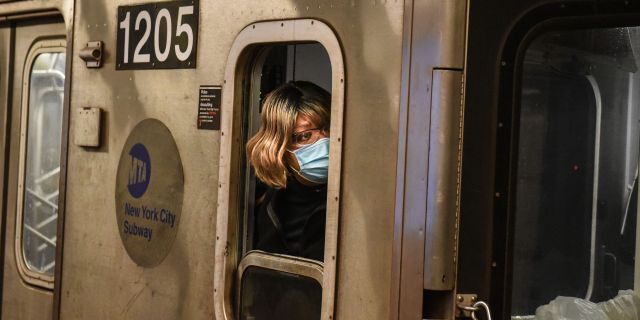
That’s most visible on the passenger and transit side, where empty trains and draconian schedule reductions have rendered busy main lines eerily quiet. Here in Milwaukee, we’re down to two daily trains between here and Chicago, down from the customary seven, and that’s nothing compared to what’s happening to Amtrak and transit service in the Northeast and in California.
Service interruptions are less apparent on the freight side, but the so-called pandemic curve looks like it will catch up there, too. Last week, several industry analysts said they foresee 2020 carloadings declining by anywhere from 6% to 12%. Meanwhile, today’s railroaders—who should be seen as warriors as much as the truckers often featured in the news—face their own workplace risks.
Daunting as this is, it wouldn’t be accurate to call it unprecedented. Railroads faced this once before, and in an arguably more dire historical moment: the 1918 Spanish influenza epidemic, which, according to Centers for Disease Control data, infected an estimated 500 million people worldwide and killed an estimated 50 million, 675,000 in the U.S. alone.
|
|
Recent Pandemic Developments
|
|
Article 3 -
LEGISLATIVE NEWS
Essential Workers Bill of Rights
(Editor's Note: As most readers are probably aware, rail workers are considered ESSENTIAL. We are porough to stand shoulder-to-shoulder with the 60 million workers who likewise fall into this category. RWU is currently promulgating a Resolution in Support of Essential Workers. See the DRAFT Here. If you would like to comment on it, click Here.)
This crisis needs to open our eyes to the value of workers who are often invisible, and we need to give them the pay and benefits they deserve. Here’s what we’re fighting for:
- Health and safety protections including PPE.
- Robust premium compensation retroactive to the beginning of this crisis.
- Provide protections for collective bargaining agreements.
- Institute truly universal paid sick leave and family and medical leave.
- Protect whistleblowers who call attention to unsafe conditions.
- End to worker misclassification.
- Full health insurance for all frontline workers.
- Support child care.
- Give workers a seat at the table when coordinating government response.
- Hold corporations accountable for meeting their responsibilities.
From the beginning, our workers should have had these benefits. Now, we have a chance to rectify that and provide them with the support they’ve earned. Sign your name now to become a citizen co-sponsor.
|
|
Article 4 -
RAIL SAFETY NEWS
NTSB: Hazards Not Properly Assessed in LIRR Rail Fatality
The
National Transportation Safety Board
issued the final report for its investigation of the June, 10, 2017, Queens Village, N.Y., railroad accident in which a railroad roadway worker was struck and killed by a train.
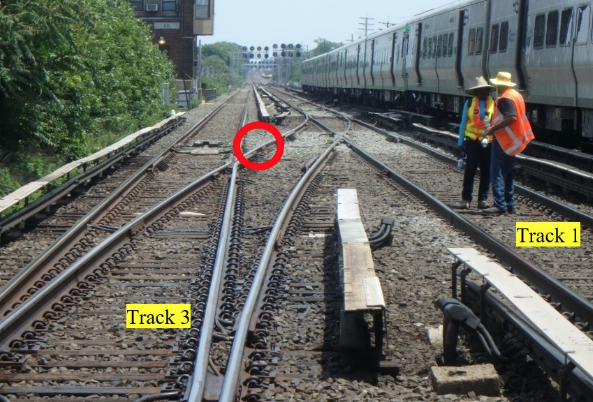
The accident occurred when a Long Island Rail Road train, on track three in multiple track territory, approached a five-member crew of roadway workers in the Queens Interlocking. The foreman and two roadway workers were conducting a walking inspection and making repairs on track one. The watchman accompanied the group. The fifth roadway worker was clear of the tracks. The watchman noticed the train approaching on track three, sounded a handheld horn, called out to the other workers and raised a paddle as a visual signal to the LIRR’s locomotive engineer to sound the train’s horn. When the engineer sounded the horn, three of the roadway workers remained on track one, but the foreman stepped into the path of the traveling train on track three and was struck and killed. The train was traveling about 78 mph when the locomotive engineer applied the emergency brakes just before impact.
The NTSB noted in its
report
that the train approach warning method was particularly dangerous for the crew working on the Queens Village Interlocking. Several factors, such as the multiple tracks at the interlocking, trains operating at high speeds in both directions, and the crew having limited areas to clear trains, combined with the additional train traffic due to the Belmont Stakes, increased the risk of the work crew being struck by a train. The watchmen on duty at the time should have given the workers timely warning of approaching trains and all workers should have cleared to the tracks before the train’s arrival, the NTSB concluded.
|
|
Article 5 -
LABOR SOLIDARITY
How Amazon Workers Are Organizing for the Long Haul
Amazon logistics workers have won much attention for organizing during the pandemic. Around the country workers have signed petitions demanding protections, and in New York, Michigan, Illinois, and Washington, some have even struck and walked out.
These actions have generated support from our tech coworkers in Amazon's Seattle headquarters, politicians, and the wider public. Given Amazon’s centrality in our economy, this marks a crucial moment for the wider labor movement.
As the dust now settles and the company seeks to revoke temporary gains such as a $2 wage increase and unlimited unpaid time off, it is important to work out a long-term strategy for building power.
Worker-organizers especially experience the benefits of the spotlight but also the consequences. Already we've seen disconnects between the amount of organization workers have in the workplace and how their actions are portrayed in news coverage. This discrepancy can expose workers to discipline before having the strength in our workplaces to fight back.
|
|
Article 6 -
PTC NEWS
FRA: PTC at 98%
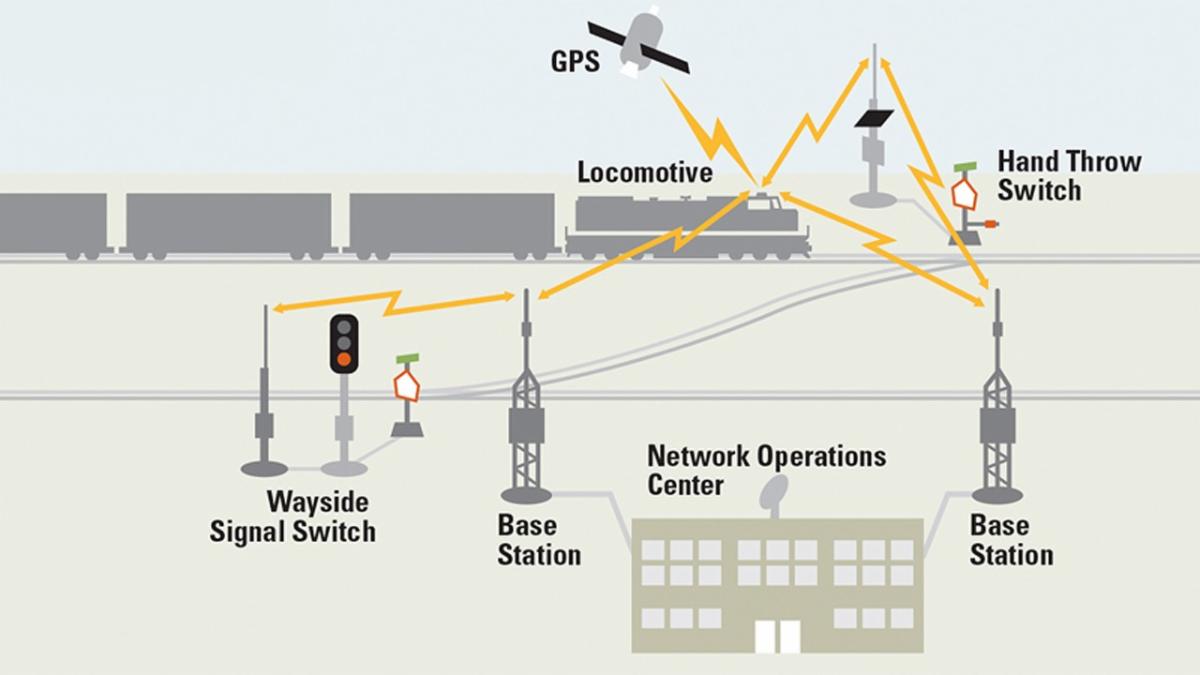
The Federal Railroad Administration (FRA) first-quarter 2020 update on railroads’ self-reported progress on fully implementing Positive Train Control (PTC) by the Dec. 31, 2020 deadline shows that, as of March 31, 2020, the job is 98% complete. Nearly all railroads subject to the statutory mandate are operating their systems in revenue service or in advanced field testing, known as revenue service demonstration (RSD), with PTC technology remaining to be activated on only approximately 1,100 required route-miles.
As of March 31, 2020, PTC systems were in RSD or in operation on 56,541 of the nearly 58,000 route-miles subject to the mandate. Specifically, PTC systems were governing operations on all PTC-mandated main lines owned or controlled by Class I freight railroads and other freight host railroads subject to the mandate.
While most commuter railroads’ PTC systems are in RSD on their entire mandated networks, 63.2% of cumulative required route-miles were PTC-governed, an 8.5% increase since 4Q2019. In addition, interoperability has reportedly been achieved in 48.5% of the 229 applicable host-tenant railroad relationship, a 10% increase since 4Q 2019.
|
|
Article 7 -
RAIL EMPLOYMENT NEWS
Class I Employment Level Declined in April
(Editor's Note: This is a dramatic drop in employment levels, especially in Train & Engine service. As many as 1-out-of-5 rail workers in T&E are now in furlough status. The 1-2-3 punch of PSR, economic downturn, and now pandemic is decimating rail labor.)
C
lass Is employed 124,430 employees as of mid-April, down 2.69 percent from March and down 13.72 percent from April 2019 levels, according to
Surface Transportation Board
data.
Four employment categories logged month-to-month decreases. They were transportation (train and engine), down 6.07 percent to 48,658 employees; maintenance of equipment and stores, down 1.6 percent to 21,709; transportation (other than train and engine), down 1.3 percent to 5,237; and professional and administrative, down 1.01 percent to 10,638.
Two employment categories showed increases compared with March employment levels: Executives, officials and staff assistants rose 1.35 percent to 10,638 people; and maintenance of way and structures climbed 0.44 percent to 30,518.
Year over year, all categories logged decreases. They were:
transportation (train and engine), down 20.41 percent
; maintenance of equipment and stores, down 17.31 percent; transportation (other than train and engine), down 6.31 percent; professional and administrative, down 6.2 percent; maintenance of way and structures, down 4.84 percent; and executives, officials and staff assistants, down 2.04 percent.
|
|
Article 8 -
HEALTH CARE NEWS
COBRA Isn't Enough!
House Democrats unveiled their new relief bill today. While many important provisions for local aid and cash relief are included, the bill's solution to the health insurance crisis is sorely lacking: rather than expand public health insurance, Democrats want to subsidize private insurance through COBRA, which would still leave millions uninsured through this crisis.
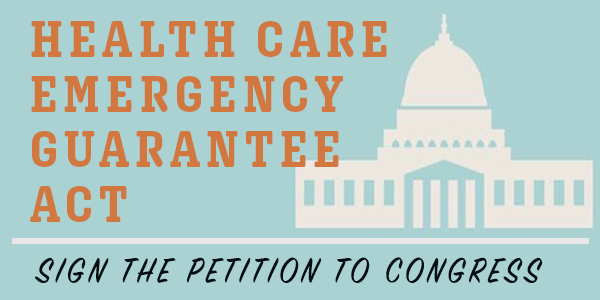
As an alternative, we're rallying behind the Healthcare Emergency Guarantee Act, which will greatly expand Medicare during the COVID-19 crisis. Please sign the petition asking Congress to pass this bill:
The Healthcare Emergency Guarantee Act would authorize Medicare to:
- fully cover the cost of all medically-necessary health care for the uninsured
- fully cover out-of-pocket health care expenses for those with insurance
This would continue until an approved vaccine for COVID-19 is widely available to the public.
|
|
|
|
|
|
|