Welcome to the University of Oklahoma Carceral Studies Consortium Newsletter. The Carceral Studies Consortium strives to build a community for intellectual exploration that includes faculty, staff, graduate students, community members, practitioners, and organizers.
Carceral Studies is concerned with the independent function and nexus of the political and social systems that organize, shape, sustain, and entrench practices of punishment, surveillance, incarceration, and harm.
|
|
OU Carceral Studies Consortium Hosts "Grey Matter" Film Screening and Panel about Incarceration, Restorative Writing in Oklahoma
The University of Oklahoma Carceral Studies Consortium is pleased to host a special screening of Grey Matter: A Documentary Exploring Female Incarceration in Prison, followed by a panel discussion and special reading of poetry and essays written by people incarcerated in Oklahoma. The panel will include Poetic Justice founder and CNN Hero Ellen Stackable and OU faculty members Timothy Bradford, Nick LoLordo, Catherine Mintler, Connie Chapple, and David McLeod.
|
|
|
Fall 2021 Microgrants: Call for Proposals
This fall, the Carceral Studies Consortium is offering a small number of micro-grants of up to $500 to OU faculty, staff and students to support the development of research, pedagogy, and community engagement projects relating to carceral studies. The Consortium encourages applications for projects that engage the community and/or support social or policy outcomes. Applications are due Monday, October 18, 2021. To view a list of past recipients, click here. |
|
|
National Institute of Justice Releases FY 2021 W.E.B. Du Bois Research Program on Reducing Racial and Ethnic Disparities in the Justice System
The National Institute of Justice’s W.E.B. Du Bois program seeks “to fund research that uncovers ways to reduce empirical racial and ethnic inequalities at the criminal and juvenile levels of the justice system. Funding categories include proposal options for researchers that are early in their career at a minimum of $250,000 grants and advanced scholars/mentors with a minimum of $500,000 grants.
|
|
|
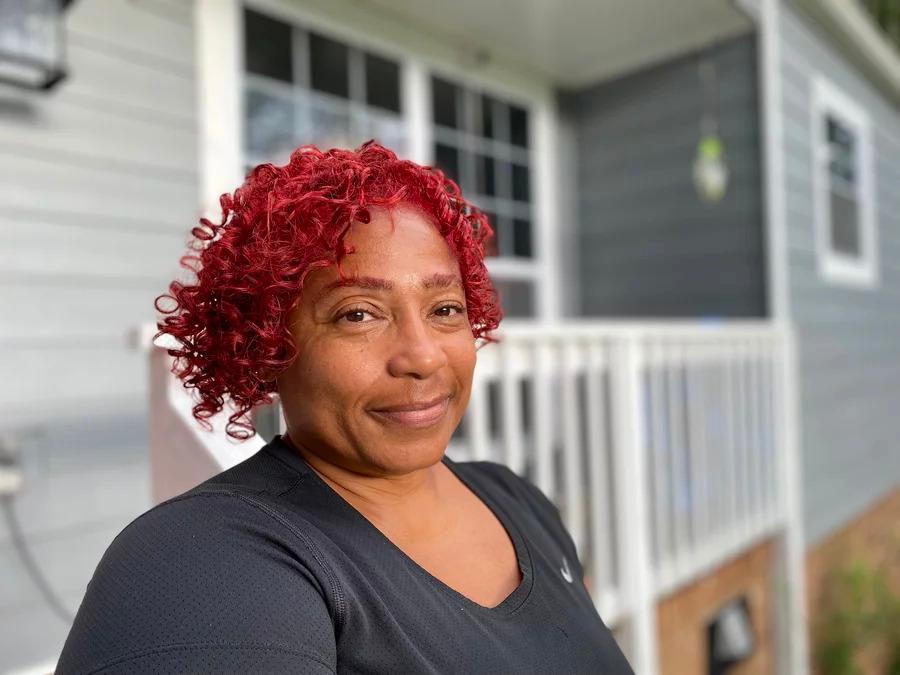
According to Solitary Watch and The Marshall Project, non-profit organizations focused on the criminal legal system, the number of incarcerated individuals in solitary confinement in the U.S. increased from just under 100,000 to 300,000 at the height of the pandemic as prisons attempted to quarantine possible COVID outbreaks. This increased use of solitary confinement alarms Katja Ridderbusch because of long-lasting adverse health effects. Pamela Winn, a formerly incarcerated person, explains that she is “haunted by the memory of her 6-by-9-foot prison cell, where she spent eight months in solitary confinement.” As a result of her time in solitary confinement, Winn says she feels “safest when I’m by myself” and that her “socializing skills are just not there anymore.” Craig Haney, a professor at the University of California-Santa Cruz, argues Winn’s reaction represents a “common paradox of solitary confinement,” where “instead of craving the company of others after release from social isolation, many former prisoners want just the opposite.” Ridderbusch finds that solitary confinement also often leads to hypersensitivity of senses (light, sound, smell, or touch), depression, and heart damage. Individuals and organizations are organizing in response to the use of prison isolation, such as Winn’s non-profit, RestoreHER, that “advocates to end the mass incarceration of women of color, and pregnant people in particular. She also helped enact laws in Georgia and North Carolina that bar the shackling of pregnant women.”
|
|
Steve Gelsi / MarketWatch |
|
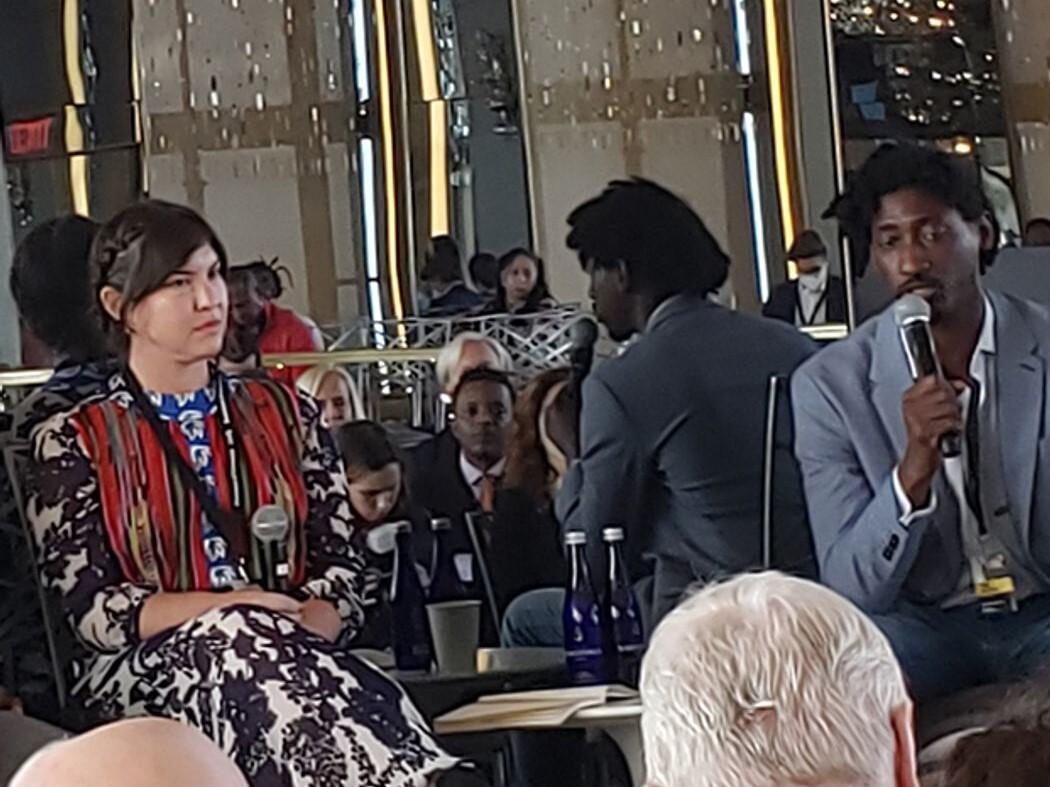
A recent event in New York brought together nearly 300 advocates, financiers and prospective cannabis business founders to network and discuss the future of cannabis sales in the state. As more states legalize the use of cannabis, states such as California and New York have proposed granting cannabis business licenses to those who were incarcerated for charges related to the substance. Ruben Lindo, a proponent of providing formerly incarcerated individuals with marijuana business licenses, stated that “people who have already been in the industry deserve more than a carved-out allocation of permits” as the movement is “about giving the rightful ownership of an industry to [the] people who bore the brunt of incarceration” for drug offenses. In this way, speakers at the event believed a business permit was only useful if formerly incarcerated individuals received the support and the accessibility to start-up capital for their venture. This task is further complicated as the Wall Street Journal reports that banks will not loan money on the grounds that cannabis is still not federally legalized. Therefore, Black entrepreneurs are dependent on venture capitalists and angel investors such as the Jay-Z fund that has pledged $10 million to minority-owned dispensaries. However, Steve Gelsi also noted that the speakers were mindful of the issues in other states, such as the continued competition between legal and illegal marijuana sales in California due to “high state taxes that make regulated pot less competitive.” With these barriers and obstacles in mind, entrepreneurs are preparing for the Office of Cannabis Management in New York plans to “move ahead with licensing and regulatory activity to set up legal cannabis sales . . . by 2023.”
|
|
Aaron Nesheim / New York Times |
|
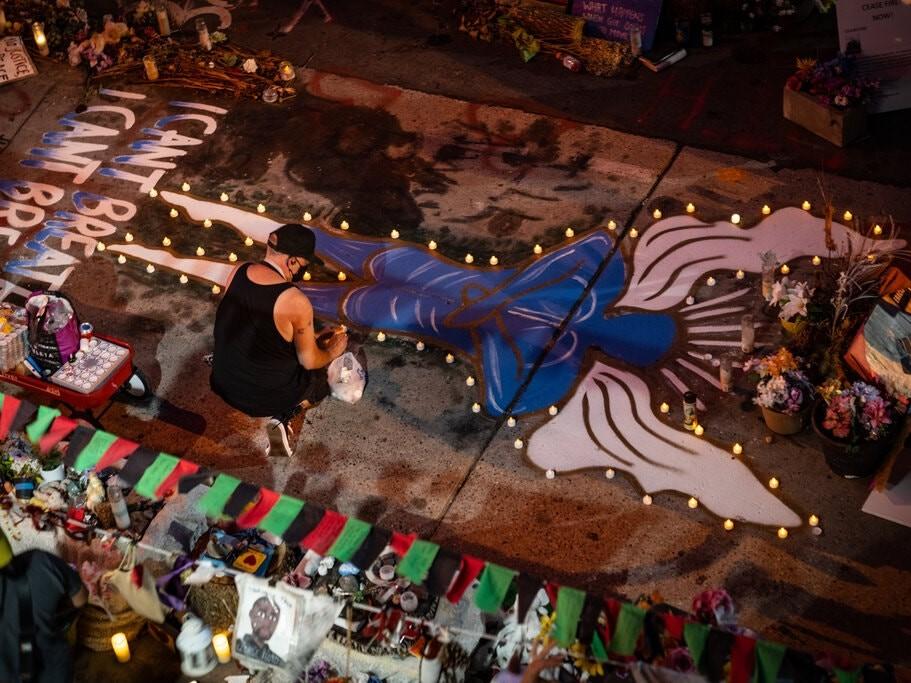
Researchers at the University of Washington published a study that “identified a startling discrepancy: about 55 percent of fatal encounters with the police between 1980 and 2018 were listed as another cause of death.” Oklahoma had the highest rate of police killings, throughout the U.S., “Black Americans were 3.5 times as likely to be killed by the police as white Americans.” In this period, over half of the time, police officers killed people, the reports listed other causes of death, such as underlying health conditions or drug use. During this period of the rise of “mass incarceration,” a total of “nearly 31,000 Americans were killed by the police, with more than 17,000 of them going unaccounted for in the official statistics.” These cases were unaccounted for due to a combination of pressures from police organizations to obscure data coupled with a lack of information given to medical examiners and coroners. The researchers discovered this discrepancy by comparing data from the National Vital Statistics System with three organizations that independently track police homicides by utilizing media accounts and public records requests. Taken together, Edwin G. Lindo of the University of Washington believes “when we don’t have good data we can’t actually make good policy decisions, and I don’t know if that’s an accident for it to be so greatly underreported.”
|
|
Al Seib / Los Angeles Times |
|
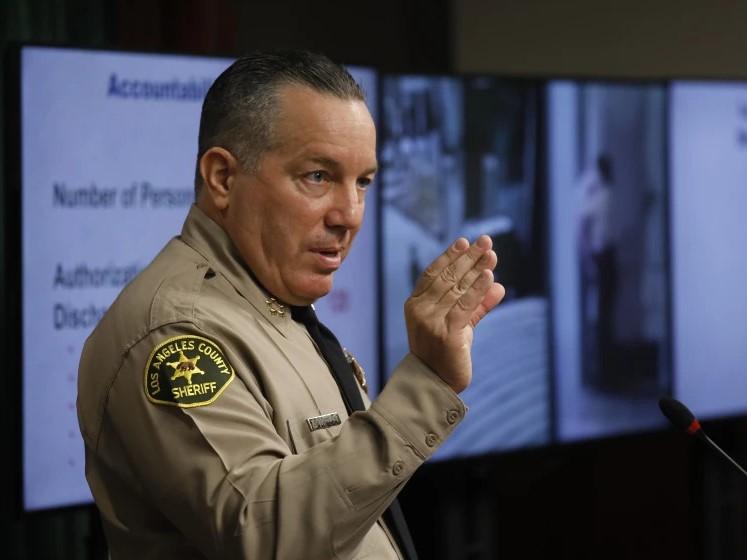
L.A. County Sheriff Alex Villanueva reportedly created a task force of nine officers to investigate, harass, and intimidate his personal enemies. Sean Kennedy, a law professor at Loyola and member of the Civilian Oversight Commission that oversees the sheriff, criticized the sheriff’s use of the task force by claiming their “highly publicized criminal investigations have never resulted in charges being filed, suggesting an ulterior motive.” Indeed, according to Alene Tchekmedyian, Villanueva has used his task force to launch investigations into the county’s district attorney, the L.A. County inspector, the watchdog for the sheriff’s department, and even the non-profit crisis intervention organization Peace Over Violence, but has failed to produce any official charges. Villanueva denies these claims: “the sole responsibility of the Sheriff’s Department is to investigate allegations of criminal conduct as they are discovered, regardless of how inconvenient it may be to the subject of the investigation.” Unfortunately for the sheriff, even the department’s union put out a statement of concern for how “the department is using some unconventional tactics to conduct internal investigations,” in direct response Villanueva’s rehire of a deputy because he was “way too important” to Villanueva’s plans to retain his position. Although no official charges have been filed against the sheriff, the number of critics continues to grow.
|
|
Please share recent research you would like to see featured, including your own!
Send it to carceralstudies@ou.edu
|
|
ABSTRACT: A punitive legacy of the responses to school shootings in the United States is the expansion of exclusionary discipline. Black girls have disproportionately experienced this form of punishment as compared to white girls and non-Black girls of color. A small, but growing, body of research has examined the patterns and causes of this disparity. Current studies have made suggestions for possible solutions to address this disparity, but these recommendations are not readily accessible in a single location. A catalogue of these ideas could provide a useful foundation for policy development and evaluation. The present research note seeks to generate this resource by conducting a systematic review to identify and categorize recommendations aimed at reducing the discipline disparity experienced by Black girls. Based on this review, four categories emerged that center around: (1) culturally competent school programs, (2) enhanced teacher training, (3) spaces at school for empowering Black girls, and (4) trauma-informed student policies. This research note discusses these categories of recommendations using an intersectional framework and concludes with a summary of next steps to guide future research and policy work to address the disproportionate use of exclusionary discipline against Black girls.
|
|
ABSTRACT: Over the period of mass criminalization, social scientists have developed rigorous theories concerning the perspectives and struggles of people and communities subject to criminal legal control. While this scholarship has long noted differences across racial groups, it has yet to fully examine how racism and criminalization interrelate in the making of criminalized people’s perspectives and their visions for transforming the legal system. This article engages with Du Boisian sociology to advance a theory of subjectivity that is attuned to the way criminalization reproduces the subjective racial order and that aims to uncover subaltern strategies and visions for transforming the structure of the law and broader society. Through a critical review of interpretive scholarship across the social sciences and an original analysis of interviews with a diverse sample of criminal defendants conducted in the early years of the Black Lives Matter movement, I illustrate how a Du Boisian approach coheres existing theories of criminalized subjectivities, clarifies the place of White supremacy and racism, and provides a theory of legal change rooted in ordinary people’s experiences and needs. I introduce the concept of legal envisioning, defined as a social process whereby criminalized people and communities imagine and build alternative futures within and beyond the current legal system. Du Boisian sociology, I conclude, provides the methodological and theoretical tools necessary to systematically assess legal envisioning’s content and to explain its contradictions, solidarities, and possibilities in overlooked yet potentially emancipatory ways.
|
|
ABSTRACT: A series of deaths of Black Americans at the hands of the police sparked mass protests, received extensive media coverage, and fueled a new civil rights movement in the years leading up to the 2016 presidential election. Both major party nominees campaigned on issues of race and policing in different ways. Drawing on colorblind racism theories and the history of law-and-order politics, we explore how views of race relations and the police were associated with voting behavior. We ask, on the one hand, whether people were engaged with the civil rights issues raised by Black Lives Matter and, on the other hand, whether Trump’s expressions of support for the police functioned as a racial “dog whistle” to mobilize a particular set of voters. Using the 2016 American National Election Studies (ANES) Time Series Study, we find that concern about biased policing and support for the civil rights movement seeking to address it were associated with increased turnout among Democrats and more votes for Clinton. In addition, consistent with a dog whistle effect, claims of supporting the police were connected to votes for Trump mainly among those with high levels of racial resentment. We conclude by discussing the symbolic role of police in American society and politics.
|
|
ABSTRACT: Dramatic increases in criminal justice contact in the United States have rendered prison and jail incarceration common for US men and their loved ones, with possible implications for women's health. This review provides the most expansive critical discussion of research on family member incarceration and women's health in five stages. First, we provide new estimates showing how common family member incarceration is for US women by race/ethnicity and level of education. Second, we discuss the precursors to family member incarceration. Third, we discuss mechanisms through which family member incarceration may have no effect on women's health, a positive effect on women's health, and a negative effect on women's health. Fourth, we review existing research on how family member incarceration is associated with women's health. Fifth, we continue our discussion of the limitations of existing research and provide some recommendations for future research.
|
|
Join the Consortium for "Prison Lands,"
a Film/Discussion Series
The OU Carceral Studies Consortium is pleased to host its Fall 2021 documentary series, in partnership with the WGS Center for Social Justice and Poetic Justice, on the theme "Prison Lands." Each screening will be followed by a group discussion facilitated by scholars. Films remaining in the series include The Facility (Weds., Nov. 3, 6pm), Grey Matter (Thurs., Nov. 4, 7pm), and The Prison in Twelve Landscapes (Weds., Dec. 1, 6pm). Please pre-register at the link below.
|
|
|
Call for Papers: 2022 Conference - "Perspectives on Carcerality" hosted by DePaul Philosophy Graduate Students
DePaul University at the University of Illinois, Chicago invites papers for their virtual and in-person graduate student conference. The conference, titled Perspectives on Carcerality, Surveillance, Policing, and Abolition, “aims to explore critical approaches to these technologies as well as the practices of subversion that allow us to both imagine and create a post-carceral society.” Interested parties can submit abstracts and panel proposals to depaulgradcon2022@gmail.com. The deadline for submissions is November 28th, 2021.
|
|
|
OU PolicyMap Trial
OU Libraries is currently offering a trial subscription to the program PolicyMap until November 23, 2021. PolicyMap enables users to interact with data and mapping tools with indicators that include demographics, jobs, housing, crime, quality of life, education, socioeconomic factors, and much more. Some data sources include the Census Bureau, Department of Homeland Security, and Center for Disease Control Behavioral Risk Factor Surveillance Survey. If you would like to see OU subscribe to this program, it is important to try it out and respond to the feedback survey as soon as possible.
|
|
|
2021-2022 Carceral Studies Consortium Student Work Prize
The Carceral Studies Consortium is inviting original student essays or creative works developed as part of any course in any discipline during the 2021-2022 academic year that engages the topic of Carceral Studies, broadly conceived. Submissions are not limited to essays, but may be in any creative or scholarly format, including but not limited to art in any medium, story maps, and more.
|
|
|
ABOUT
The Consortium Newsletter will offer a roundup of a few selected articles that reflect today’s news, organizing, and thinking related to the carceral state. We understand that freedom work is built on education and engagement. Education requires an understanding of contemporary issues informed by their historical context. We hope that these curated articles will help you analyze the issues that we face and understand the community that we strive to construct.
Join the conversation!
We encourage feedback, suggestions, and article suggestions. Please reach out to carceralstudies@ou.edu with any ideas, thoughts, or recommendations.
If anyone you know is interested in receiving this newsletter and other information from the Carceral Studies Consortium, please forward them this email and they may click this link to subscribe.
|
|
Land Acknowledgment
The University of Oklahoma is on the traditional lands of the Caddo Nation and the Wichita & Affiliated Tribes. This land was also once part of the Muscogee Creek and Seminole nations. It also served as a hunting ground, trade exchange point, and migration route for the Apache, Cheyenne, Comanche, Kiowa, and Osage nations. Today, 39 federally-recognized Tribal nations dwell in what is now the State of Oklahoma as a result of settler colonial policies designed to confine and forcefully assimilate Indigenous peoples.
|
|
The University of Oklahoma is an equal opportunity institution. ou.edu/eoo |
|
|
|
|
|
|