|
Fall 2026
Milwaukee ECO Newsletter
| | |
Message from the Director
As I walked along the breakwater of Lake Michigan with my daughter, someone wrote, "Warning: Prolonged viewing of lake may produce feelings of peace. If condition persists, hug someone." With the amount of bad news constantly coming through our social media feeds, it's important to spend time in nature to stay centered, focused, and connected. Our job at ECO is to elevate and protect our natural ecosystems because they are essential to a healthy and vibrant City and our own well-being. We support real, human relationships in our community because that's the purpose of city life and key to sustained progress.
Nationally we have real reason to worry about issues ranging from hyperscale data centers to wars in the Middle east and Venezuela over oil that all lead to rising energy bills. In Milwaukee, however, we remain committed to a better way: our Climate and Equity Plan. We are doing what's in our power to build local clean energy projects powered by the sun. Clean energy projects reduce our dependence on gas and coal which contributes to global warming and the associated risks of floods and wildfires. We create jobs and environmentally sustainable home improvements, especially in economically disadvantaged communities. I'm grateful to work for the City of Milwaukee where elected leaders care about the environment, long-term economic sustainability, and peace. I and urge State and federal officials to adopt that approach, too.
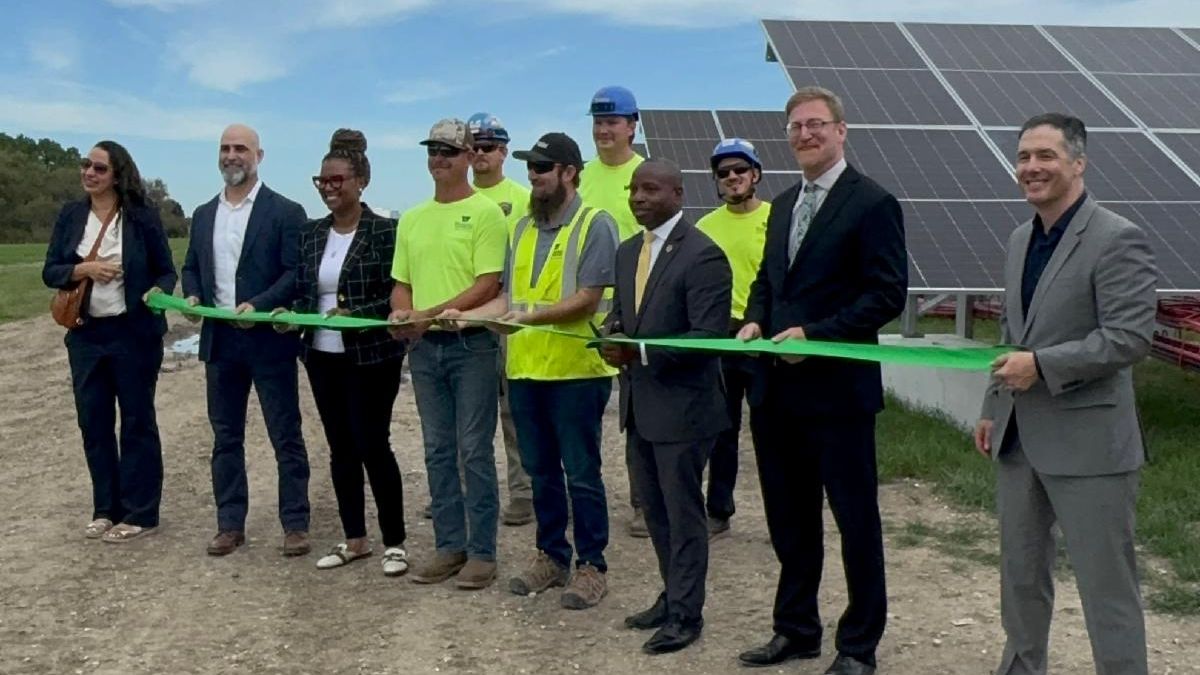
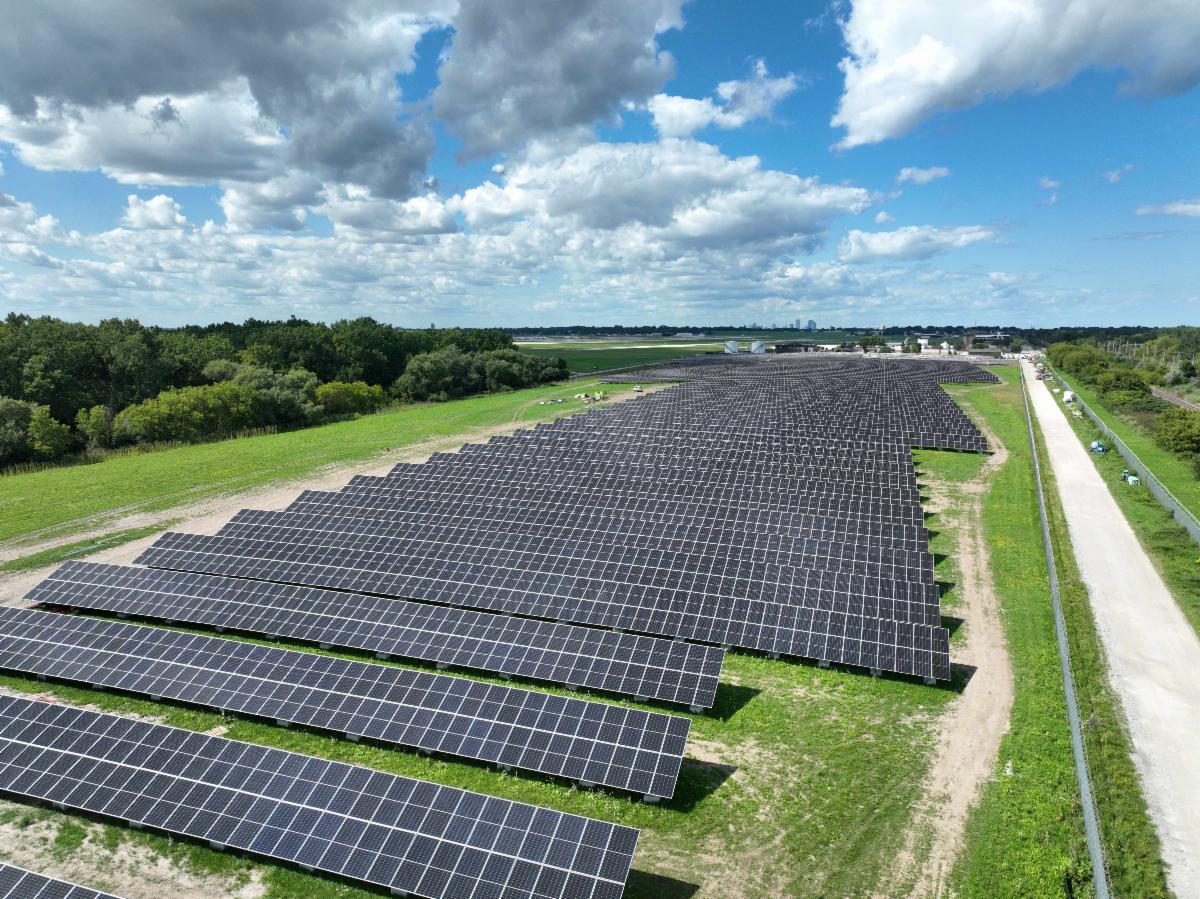
On September 10th, Mayor Cavalier Johnson and Alderman Scott Spiker cut the ribbon on the largest solar energy project in Milwaukee's history. We added 4.6 Megawatts (MW) of solar to the landfill at 1600 E College Avenue, just southeast of General Mitchell Airport Combined other major solar projects facilitated by ECO, 80 City of Milwaukee buildings are now powered by 100% renewable electricity, including all of our public libraries, fire stations, health clinics, and police stations.
In August, the US Green Building Council (USGBC) certified the City of Milwaukee as LEED Gold. LEED stands for Leadership in Energy and Environmental Design and is perhaps the world's most recognized third-party verification of sustainability practices. This validates Milwaukee's commitment to environmental sustainability across City government and valuable partners like the Milwaukee Metropolitan Sewerage District and community-based organizations.
Please take a few minutes to check out the great work of ECO staff to deliver big scale change in the City while also bringing sustainability to homes and neighborhoods. Then, take some time this week to spend some time in a Milwaukee Park, HarborFest, or the lakefront. Enjoy nature, hug a loved one, and practice new habits that can make your home, neighborhood, city, and world more affordable, healthy, and sustainable.
Erick Shambarger
Director of Environmental Sustainability
| | |
The City of Milwaukee is LEED Certified Gold!
In early August 2026, the City of Milwaukee achieved Gold-level certification in the U.S. Green Building Council’s LEED for Cities program. The LEED for Cities program scores sustainability at the community scale, and includes social, economic, and environmental performance indicators. The Environmental Collaboration Office (ECO) led the City’s efforts to pursue this certification and collaborated with departments including the Departments of City Development, Health, and Public Works, as well as community partners including the Milwaukee Metropolitan Sewerage District and Milwaukee County Transit System to complete the rigorous application process. Some of the notable Actions that earned the City of Milwaukee points include the following:
- Advancing Climate resilience by addressing flooding and extreme heat.
- Watershed restoration for the Kinnickinnic and Menomonee Rivers, in partnership with the Milwaukee Metropolitan Sewerage District.
- Developing neighborhood plans oriented around transit
- Vision Zero and improved transportation safety, including 50 miles of protected bike lanes.
- Shared mobility programs including Bublr bikes and dockless electric scooters
- Having adopted and achieving goals in the City’s Green Infrastructure Plan
- Milwaukee's Climate and Equity Plan goal of reducing greenhouse gas emissions 45% by 2030.
- Major progress converting streetlights to LEDs, greatly reducing energy use and greenhouse gas emissions.
-
ECO programs to benchmark energy use in City buildings and programs to help homeowners including Me2 and Grow Solar
- Resource recovery efforts including Milwaukee's residential building deconstruction program, accessible drop-off centers, and strong waste reduction awareness and education programs from City partners including Plastic-Free MKE, Milwaukee Recycles, and the annual river clean-up hosted by Milwaukee Riverkeeper.
- Equitable access to Social Infrastructure, including parks, schools, and police and fire stations.
- The City of Milwaukee Health Department earned Milwaukee points for conducting Community Health Assessments, the results of which led to MKE Elevate, a Community Health Improvement Plan
- Milwaukee earned points for the Fresh Food Access Fund, a grant program to support healthy food initiatives in underserved communities with limited food choices.
- Advancing environmental justice by replacing lead service lines and expanding the Milwaukee Health Department's lead paint hazard reduction program.
- Housing and transportation affordability, with 93.4% of Milwaukee residents spending less than 45% of their household income on housing and transportation combined.
- The Department of City Development wrote a “Housing Element” plan, a comprehensive housing plan to address the City’s evolving housing needs, including encouraging the conversion of unutilized commercial and office buildings to residential and mixed uses, and encouraging Neighborhood-Scale Housing.
- Workforce development efforts including Employ Milwaukee’s Skills to Build Program and the City of Milwaukee’s Residents Preference Program to employ unemployed and underemployed City residents in large City construction projects.
We celebrate this accomplishment with all City of Milwaukee departments, as well as the many community partners involved in helping earn the City of Milwaukee LEED for Cities Gold-level certification!
| |
80 City Buildings Powered by Clean Energy
Milwaukee is serious about renewable energy! Most of the electricity we use when we flip the switch at our homes and businesses comes from utility power plants that burn coal and natural gas to produce the power. Burning too much coal and gas around the world, and gasoline and diesel in cars, jets, and ships leads to greenhouse gas emissions that are changing the earth's atmosphere in dangerous ways. So we are committed to meeting an increasing amount of the power needs for local government operations from solar and wind energy.
This month, we completed the largest solar energy project in Milwaukee's history. The project, pictured above, sits southeast of General Mitchell Airport on a City-owned landfill that could not be developed for other uses. In 2021, we worked with We Energies to build 2.25 megawatts of solar on the north end of the site. We have now tripled the size of the original system. We have added another 4.6 megawatts of solar, bringing the total system size here to 6.85 megawatts. This was a true collaboration between the City, We Energies, Sunvest Solar, and Westphal & Company and provided jobs for City residents through the Residents Preference Program.
Earlier this year, we completed rooftop solar projects at our Department of Public Works field headquarters, and Milwaukee’s Third District Police station. We are also helping homeowners install solar on their roofs through the Grow Solar Group Buy program. But meeting our 2030 Climate and Equity Plan goals requires much larger renewable energy projects. We Energies is the electric utility that serves the City of Milwaukee and all of Southeastern Wisconsin. They build the region’s major energy infrastructure. And they are regulated by the Wisconsin Public Service Commission to do that in a responsible way. We therefore partnered with them to build this and other large solar installations to power municipal operations.
The landfill solar project, combined with a similarly sized project built last year in Caledonia, rooftop solar projects, and the Port of Milwaukee's wind turbine mean that the City now gets 47% of the electricity needed for municipal operations (excluding the Water Works) from local renewable energy systems that are dedicated to fully powering 80 municipal buildings. See the projects and our dashboard at Renewable Energy in City Operations.
| | |
We Updated the Healthy Homes Guide!
Did you know most people spend over 90% of their time indoors?
The ECO Healthy Home Guide offers a variety of information and resources you can use to make your home a healthier, more affordable and environmentally-friendly place to live. Familiarize yourself with the 12 Elements of a Healthy Home and the actions you can take to reduce your home’s environmental health hazards. Discover local programs and practices that can protect your family and our community from the impacts of climate change.
Our updated Spanish version is in progress. If you have questions or are interested in printing copies of the ECO Healthy Home Guide for distribution, please contact Mia at mrudol@milwaukee.gov.
ECO also offers a variety of other printable resources and toolkits to make your neighborhood or organization more sustainable.
| |
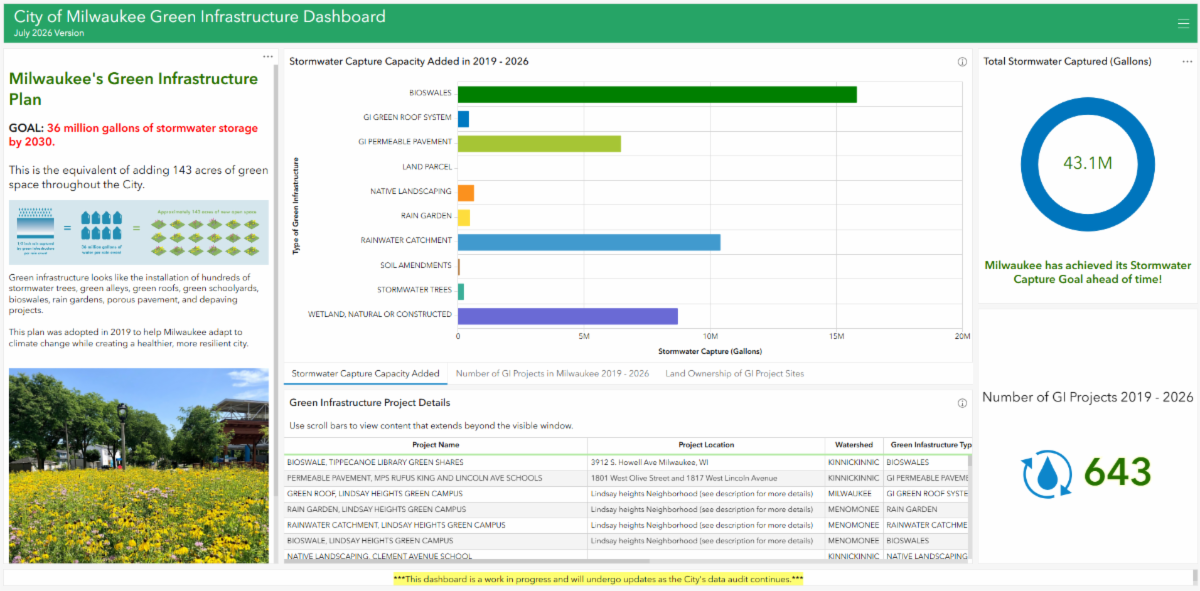
Green Infrastructure (GI) Dashboard Launched
ECO is excited to share a new and improved Green Infrastructure Dashboard! The updated dashboard provides an interactive way to explore and track City of Milwaukee’s green infrastructure data since the adoption of the Green Infrastructure Plan in 2019 until 2026, with enhanced visuals and improved usability. This dashboard is the result of a collaborative effort by ECO, DPW, and ITMD, which shows that the City of Milwaukee has met and surpassed its Green Infrastructure Plan stormwater capture goal by 7 million gallons, 4 years ahead of time!
While the dashboard is now available, it remains a work in progress and will continue to evolve as the full GI data audit is completed by MMSD and the City. Check back regularly at milwaukee.gov/eco/WCC/GI for updates and new features (GI Map) as additional data becomes available.
| | |
Efficient Buildings Benchmarking Program Deadline is Approaching Fast
Year two of the City of Milwaukee Efficient Buildings Benchmarking Program is underway. Commercial buildings that are 50,000 square feet and larger, as well as City of Milwaukee and Milwaukee Public School buildings that are 10,000 square feet and larger are required to track and report their 2025 energy use to the City of Milwaukee through the free ENERGY STAR Portfolio Manager tool by September 30th, 2026.
Last year, 54% of buildings covered by the law complied with the benchmarking ordinance, and our goal is to achieve at least 60% compliance this year. Buildings that did benchmark their energy use gained insights into how they could save money on their energy bills. The benchmarking law is one of the Big Ideas in the City of Milwaukee’s Climate and Equity Plan aimed at reducing greenhouse gas (GHG) emissions, because studies show that when owners begin tracking energy use in their buildings, they begin making changes and improvements to reduce that energy use at least 2.4% per year for the first three years. However, several other cities with such benchmarking policies in place report commercial building energy use reductions of more than 10%, which also leads to lower utility bills for building owners. ECO has established a Help Desk and Resource Center to help building owners get started with benchmarking energy use in their buildings, providing assistance via email, phone, webinars, tutorial videos, and office hours. Once building owners have submitted their benchmarking reports, they will receive a scorecard with additional tips and resources to make their buildings more energy efficient. In addition, for most building types, a more customized energy reduction assessment using the Building Efficiency Targeting Tool for Energy Retrofits (BETTER tool) is available to building owners and managers free of cost through the benchmarking program. In short, ECO is here to help building owners see and better manage their energy bills for both financial and envirnomental savings.
| | |
Milwaukee Joins the international Swimmable Cities Alliance
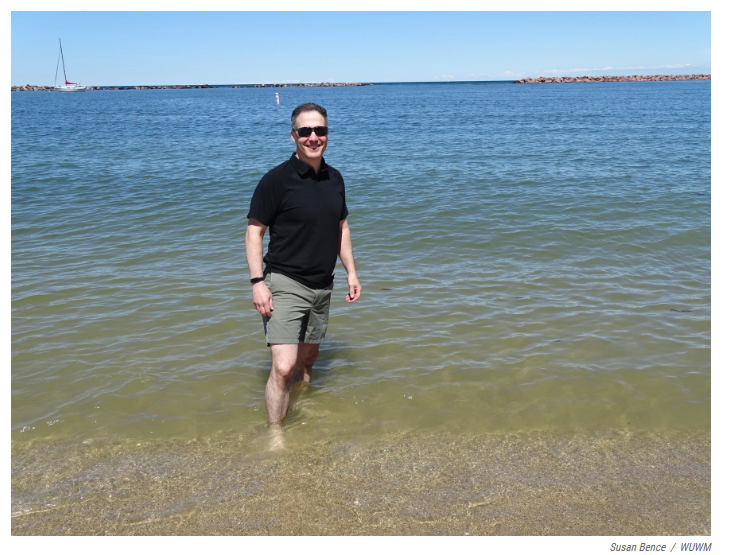
In June day, Mayor Cavalier Johnson announced that the City of Milwaukee and Milwaukee County Parks recently joined the Swimmable Cities Alliance, a global movement working to restore clean, safe, healthy, and accessible urban waterways for communities around the world.
The City has spent the past several years working to clean up its waterways, restore ecosystems, and create new recreational opportunities within the Milwaukee River Basin and across our shores of Lake Michigan. Joining this global alliance is another step forward for the community.
Through this alliance, the City will have access to a global network of more than 230 organization across 100 cities and towns and nearly 40 countries from which we can learn and collaborate to accelerate our mission. Hear Susan Bence's WUWM story.
| |
Forest Pre-Apprenticeship Graduates Class
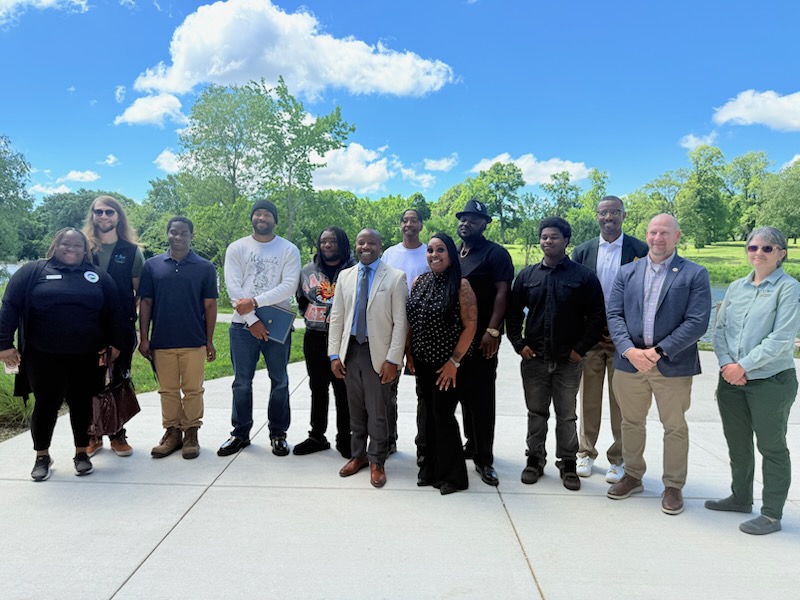
ECO recently celebrated the graduation of eight participants from the State Certified Arborist Pre-Apprenticeship Program, marking the successful completion of an intensive 11-week workforce training program designed to prepare participants for careers in arboriculture. Through a combination of classroom instruction, hands-on field experience, and industry mentorship, graduates earned multiple industry-recognized credentials, including OSHA 10 and OSHA 30 certifications, forklift and skid steer operator certifications, CPR, AED, and First Aid certifications, and completed Introduction to Arboriculture instruction through Gateway Technical College. The program serves as a direct pathway into registered apprenticeships and other family-supporting careers in Wisconsin’s urban forestry workforce.
The Arborist Pre-Apprenticeship Program is the result of a partnership among the City of Milwaukee, Milwaukee Community Service Corps, the Wisconsin Department of Workforce Development, Employ Milwaukee, Gateway Technical College, Milwaukee County Parks, and local employer partners. Together, these organizations are expanding access to green careers while building the skilled workforce needed to maintain and grow Milwaukee’s urban forest. By connecting residents with high-demand career opportunities and helping employers develop a strong talent pipeline, the program supports both environmental stewardship and long-term economic opportunity for Milwaukee communities.
| |
EV Charging Updates
ECO is working collaboratively with numerous City agencies to make electric vehicles more common in Milwaukee. First, ECO worked with the Milwaukee Fire Department and Department of Neighborhood Services to develop a new website to help homeowners and business understand permitting requirements for electric vehicle chargers and safe charging practices.
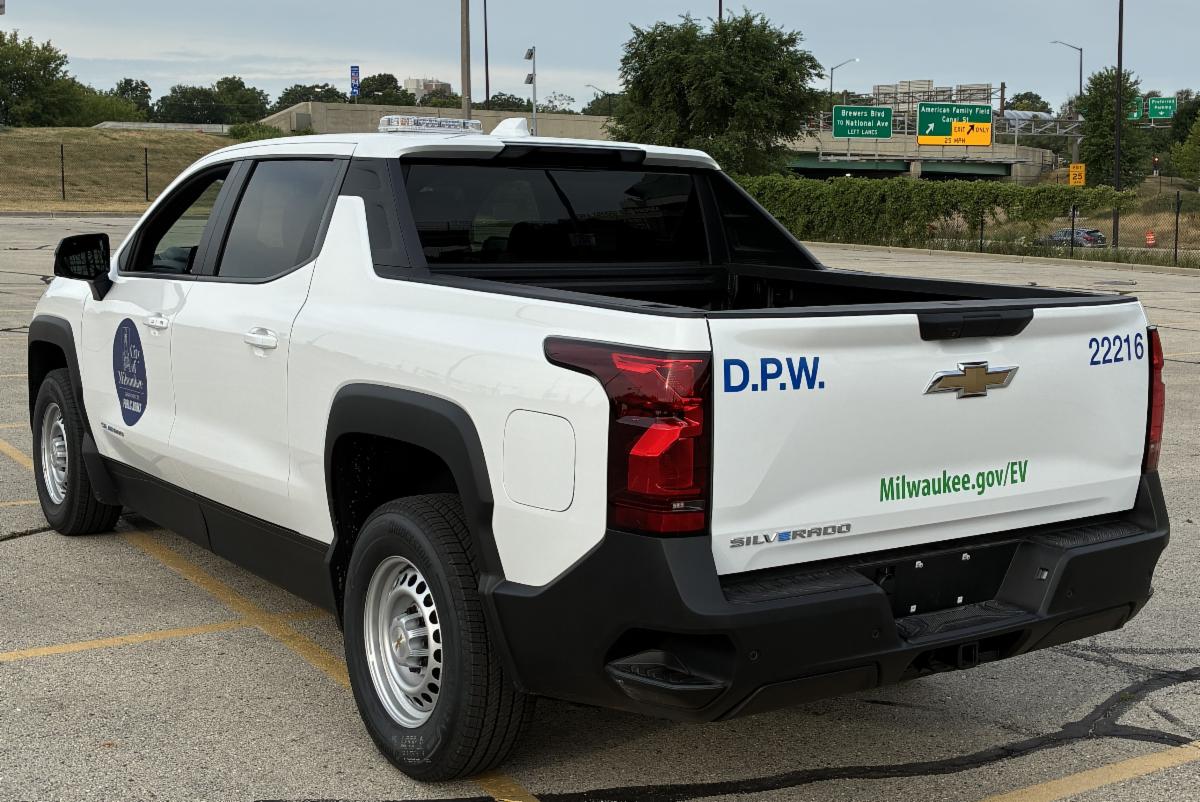
Second, ECO and DPW have installed six new charging spots at the DPW Field Headquarters to help the City lead by example and support the transition of the City’s passenger vehicle fleet from gasoline to electric. As vehicles need to be replaced, Milwaukee purchases hybrids or electric vehicles (like the Chevy Silverado EV, pictured above) when it is cost effective and practical to do so.
And third, ECO has secured property owner and Public Works Committee approval for 26 new sites to for public EV charging under a federal grant. Now ECO’s asking the public to provide input on where Phase 3 EV chargers should go. Below is information on the next public listening session. No registration is required.
| | |
Support Lake-Friendly Businesses
As a proud coalition member of Plastic-Free MKE – a local movement aimed at eliminating unnecessary, single-use plastics across our community - ECO supports our local Lake Friendly Businesses and so should you!
A Lake Friendly Business supports the health of our community and environment by actively phasing out unnecessary single-use plastics using the following guidelines:
1. Eliminating all single-use plastic items present on dining tables and replacing them with reusable alternatives.
2. Replacing foam to-go containers with a sustainable alternative.
3. Posting information in the back of house to encourage employees to recycle properly.
4. Following Milwaukee’s straw law ordinance.
5. Using an alternative to replace plastic bags.
Many of our Lake Friendly Businesses are incorporating even more healthy, environmentally-friendly practices like composting, donating excess food, installing cigarette butt receptacles, and more.
Stop by our newest Lake Friendly Businesses to share your gratitude and support: Kinship Café, Braise, Flour Girl & Flame, Outpost Café, My Soul Brew Kombucha, Mosaic Catering, Purple Door Ice Cream, Swan Song and Kuumba Juice & Coffee.
| |
| |
Harbor Fest
Harbor View Plaza -
600 E Greenfield Ave
Sunday, September 27
11am - 3pm
This year, Harbor Fest dives deeper than ever before. The 10th anniversary theme — What Lies Beneath — invites you to explore the hidden wonders of Milwaukee's waterways: the science, the creatures, the culture, and the community thriving just below the surface.
Learn more here.
| | | |
| |
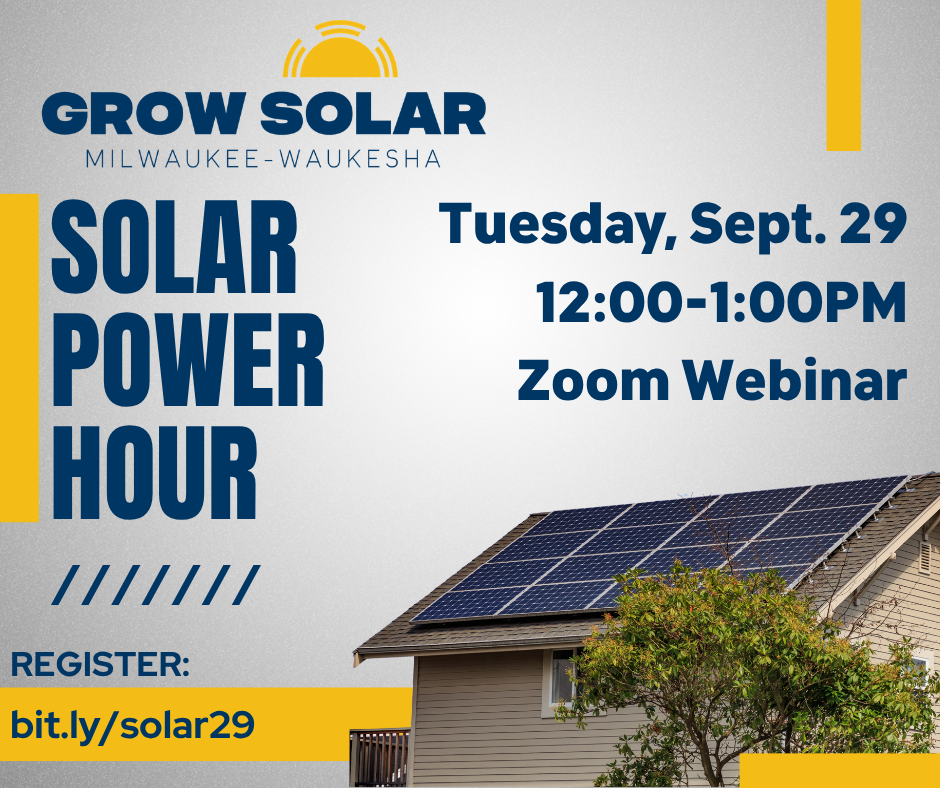
Grow Solar Virtual Power Hour
Zoom
Tuesday, September 29
12-1pm
2026 Grow Solar Milwaukee Waukesha helps property owners, non-profits and businesses make solar more affordable and accessible with this Greater Milwaukee group buy program.
Register Here.
| | | |
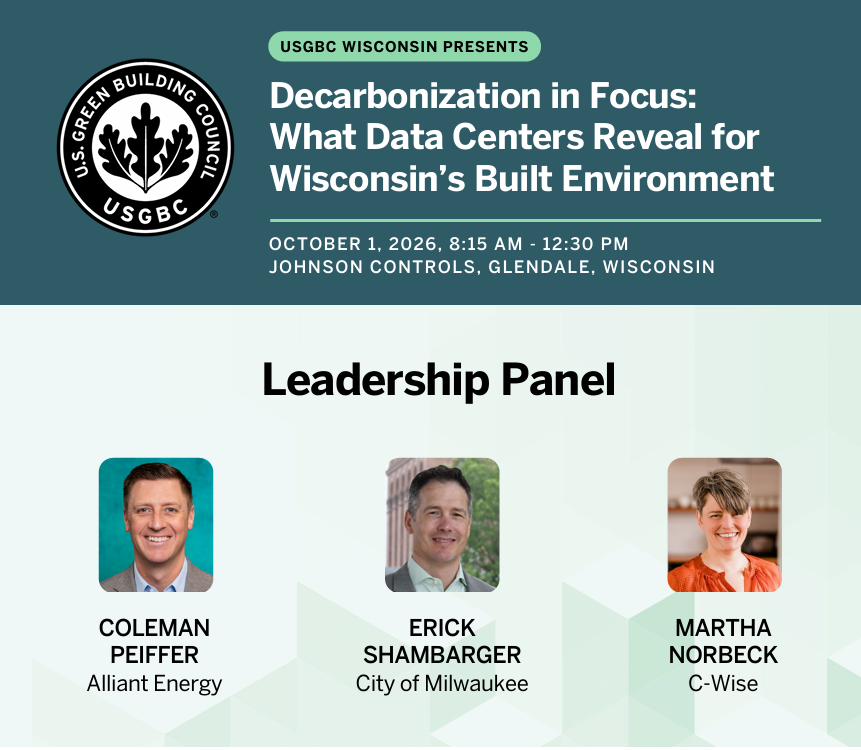
What Data Centers Reveal for Wisconsin's Built Environment
Johnson Controls, Glendale WI
October 1, 2026
8:15-12:30PM
Register Here.
|
Forward Together Wisconsin Annual Convening
UWM School of Continuing Education Conference Center
161 W Wisconsin Ave, Milwaukee, WI
Thursday, Oct 8, 2026, 10:45 AM
Register Here.
| |
| |
Lake Friendly Business Networking Event
UW-Milwaukee's School of Freshwater Sciences - 600 E Greenfield Ave
Thursday, October 15
11:30am - 1pm
Coordinated by the Environmental Collaboration Office (ECO), this will be the final networking event of 2026. We'll be joined by Plastic-Free America to learn about their subsidy program for switching to reusables.
This event is focused on resources for food-service businesses, but all are welcome.
Light snacks and beverages provided. Networking begins at 11:30am; program and discussion begin at noon.
Register Here.
| | | |
| |
EV Charging Station Virtual Listening Session
Zablocki Milwaukee Public Library -
3501 W Oklahoma Ave
Tuesday, November 17
6-7pm
Give the City your opinion on the best places to put electric vehicle charging stations! These meetings will discuss ECO’s $15m federal grant to install public electric vehicle (EV) charging stations throughout Milwaukee. We will answer questions about the project and allow public feedback in person or through Engage.Milwaukee.gov/EV. This meeting will: - explain the best places to put EV charging stations- how to make location suggestions - provide real-time brainstorming, input collection, and answer your questions. Reasonable accommodations provided for persons with disabilities upon request. Call 414-286-3475 or email ADACoordinator@milwaukee.gov.
| | | |
|
ECO Staff Spotlight: Zachary Allen
Zach oversees purchasing, budgeting, and other financial accounting within the ECO, assists with grants, procures contracts, and serves as the department Payroll and Human Resources representative. He also supports federal reporting and the Milwaukee Energy Efficiency (Me2) program. Zach has recently been assisting the City’s IT department with financial accounting in the buildup to the release of a new City financial management system. Zach grew up in Southwest Michigan and moved to Milwaukee in 2013 to complete his Bachelor's degree in Economics from Marquette University and Certificate of Project Management from the University of Wisconsin-Milwaukee. He lives with his wife in Riverwest and is an avid Packers and Brewers fan. They just adopted two kittens!
Zach’s sustainability story: "I was born and raised near the east coast of Lake Michigan. As a child, I spent my weekends fishing with my dad on various lakes and rivers along West Michigan’s coast; many of which feed into Lake Michigan. I crossed the pond and have spent my entire adult life in Milwaukee. Lake Michigan & the other Great Lakes are one of the most important waterways on our planet. As stewards, we have a responsibility to keep them clean and swimmable. There are many small steps we can take, like avoiding the use of pesticides and being mindful of the chemicals we are releasing into the environment. More generally, I take pride in the Lake and advocate for its conservation."
| | Follow us on Social Media | | ECO posts daily news, resources, and events on social media. Follow us on the below social media channels using the handle @ecocitymke: | | |
City of Milwaukee
Department of Administration
Environmental Collaboration Office
200 E. Wells St., Room #603
Milwaukee, WI 53202
| | |
sustainability@milwaukee.gov
milwaukee.gov/eco
| | | | |