| | |
Connecting
Aug. 27, 2026
Click here for the sound of the Teletype
| | |
Colleagues,
Good Thursday morning on this Aug. 27, 2026,
We’re saddened to bring news of the death of our colleague Sal Veder.
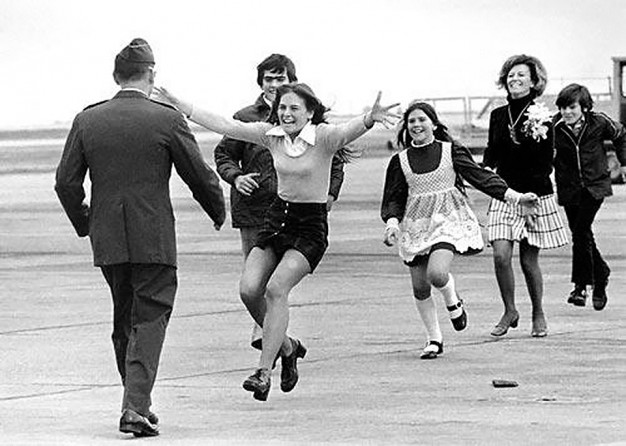
The Pulitzer Prize-winning AP photographer is best known for his picture of a U.S. Air Force lieutenant colonel joyfully reuniting with his family after five years in a prisoner of war camp in Vietnam.
Veder died Aug. 22 in his sleep, just eight days short of his 100th birthday, at his home in El Dorado County, California, outside of Sacramento.
With his wire obituary is a touching remembrance by his longtime friend, retired AP photographer Eric Risberg, who said, “I will miss the photographer, the mentor and the journalist. But most of all, I will miss the man who, from the moment we met, seemed to believe that his first responsibility was to make sure everyone else was okay. That was Sal.”
If you have a favorite memory of working with Sal, who was Connecting’s oldest subscriber, please send it along.
Andy Lippman Evite – An Evite has been sent to those indicating interest in attending the Celebration of Life for Andy Lippman. A luncheon will be held Thursday, Oct. 15, in Pasadena, Calif., at Mijares Mexican Restaurant. The cost is $50 per person for a full Mexican buffet (tax and gratuity included). If you did not receive the Evite but would like to attend, or would like to know how to make a charitable contribution in Andy's name, please drop me a note. My email - stevenspl@live.com
Here’s to a great day – be safe, stay healthy, live it to your fullest.
Paul
Sal Veder, Pulitzer Prize-winning AP photographer who shot iconic ‘Burst of Joy,’ dies at age 99
| |
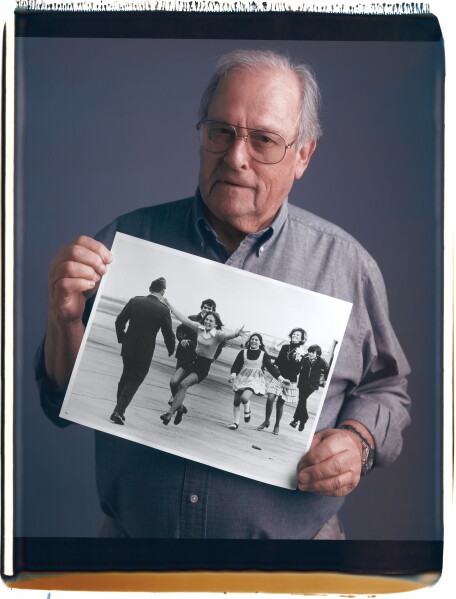
FILE PHOTO: In this photo provided by Lynn Mantoani, Slava 'Sal' Veder holds his Pulitzer Prize-winning photo, "Burst of Joy," at Left Space Studio, Jan. 13, 2008, in San Francisco. Photo by Timothy Mantoani/Lynn Mantoani via AP
By KATHLEEN RONAYNE and JANIE HAR
SACRAMENTO, Calif. (AP) — Pulitzer Prize-winning photographer Slava ‘Sal’ Veder, best known for his picture of a U.S. Air Force lieutenant colonel joyfully reuniting with his family after five years in a prisoner of war camp in Vietnam, died Aug. 22. He was 99.
Veder’s family on Wednesday confirmed that the retired Associated Press photojournalist died in his sleep, just eight days shy of his 100th birthday, at his home in El Dorado County, California, outside of Sacramento.
The San Francisco Bay Area native was 46 years old in March 1973 when he was sent to Travis Air Force Base for the arrival of Lt. Col. Robert L. Stirm and other war prisoners returning from Vietnam. Veder was in a crowded bullpen jockeying for pictures with dozens of other photographers when, out of the corner of his eye, he spotted Stirm’s four children begin to gallop toward their father.
“You could tell, even at a distance, what they were feeling. It was all over them, their faces, the way they all broke into a run. There was a surge of emotion from the crowd, too,” Veder said in a 2015 interview with The Guardian.
Using a makeshift darkroom set up in a women’s bathroom on base, Veder cranked out six images, including “Burst of Joy,” which won the 1974 Pulitzer in feature photography. Veder noted that in the photograph, Stirm has his back to the camera, rendering him an everyman soldier returning to the undeniable joy and excitement on the faces of his children.
| |
The photo became a symbol of the end of U.S. involvement in the Vietnam War. But for Stirm, it represented heartbreak as he had been handed a “Dear John” letter from his wife, Loretta, by a chaplain upon his release and the couple divorced a year later. Stirm died in 2025.
Slava J. Veder was born Aug. 30, 1926, in Berkeley, California, to Ivan and Anka Veder, who had left Russia and taken the names John and Ann when they settled in the U.S. He was their only child.
He worked as a sports writer and news editor at several publications and, in 1961, he was hired as a staff photographer by The Associated Press at its Sacramento bureau. Later, he transferred to the San Francisco office, which is where he was based when he took the prize-winning photograph.
“He was a newsman at heart, it wasn’t just a career for him. It was really his passion,” said his daughter, Kathleen Daly. “The AP really was the home for him because they could appreciate what he had to offer.”
Daly, friends and former colleagues remembered Veder as a kind and humble person who loved to ice skate and sail. He mentored younger photographers and always took time to ask the people around him how they were doing that day.
“He was the first Pulitzer Prize winner I ever met, like holy smokes,” said Brad Mangin, a freelance sports photographer in the San Francisco Bay Area. “He was just the sweetest man.”
Eric Risberg, a retired AP photographer who worked in San Francisco, said Veder was a great mentor and teacher.
“He really, really emphasized the marriage between pictures and words. He encouraged me to dive deeper, and get more into what’s really the story?” Risberg said.
Among his many assignments, Veder took photographs of the late Ronald Reagan when he was California governor, university campus protests against the war in Vietnam, the bank robbery trial of newspaper heiress Patty Hearst, and the assassinations of San Francisco Mayor George Moscone and Supervisor Harvey Milk by disgruntled former city supervisor Dan White in 1978.
| |
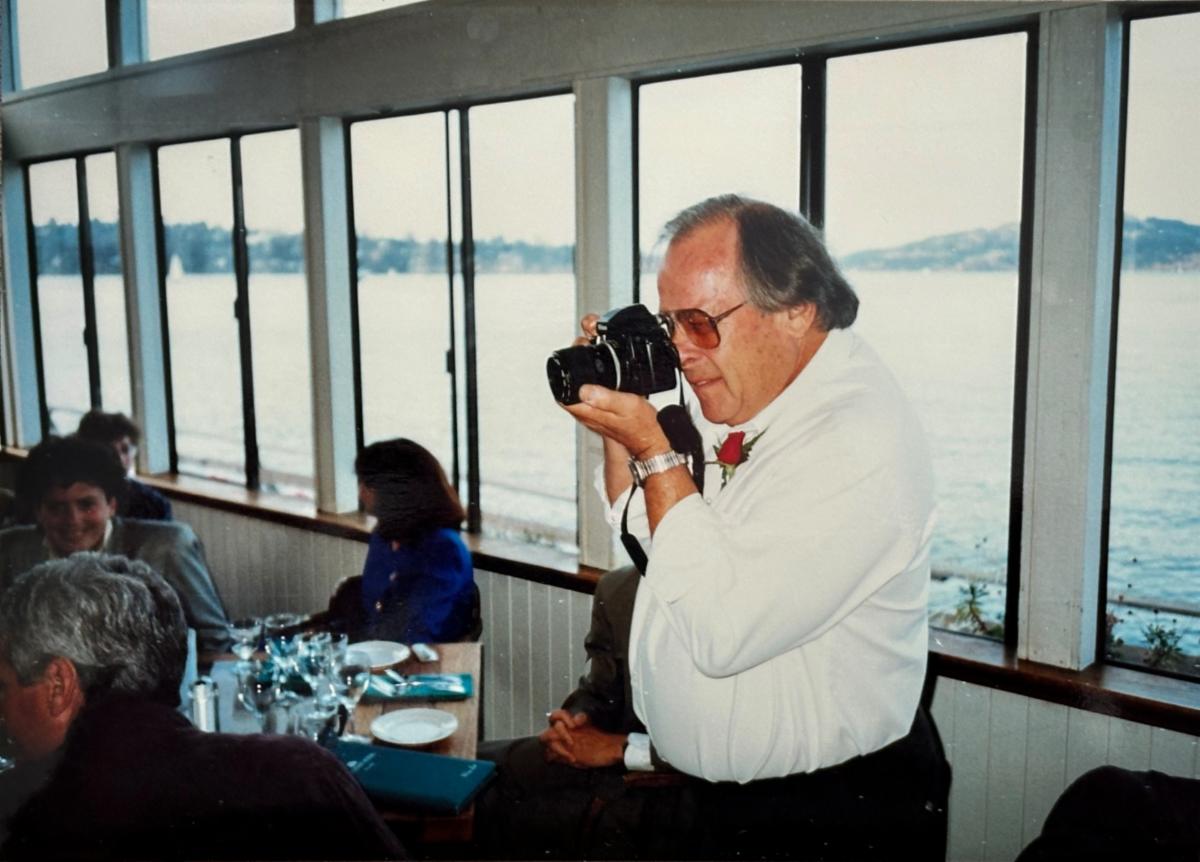
Sal Veder photographs his own retirement party in 1993 at the Valhalla restaurant in Sausalito, Calif. Photo by Eric Risberg
Veder, who raised five children with his wife, retired from AP in 1993 to the small community of Camino, in El Dorado County.
He is survived by three children, eight grandchildren and 12 great-grandchildren.
___
Har, a former AP journalist, contributed reporting previously for this story. AP reporters Randy Herschaft in New York and Olga R. Rodriguez in San Francisco contributed to this report.
Click here for link to this story.
Memories of Sal
| |
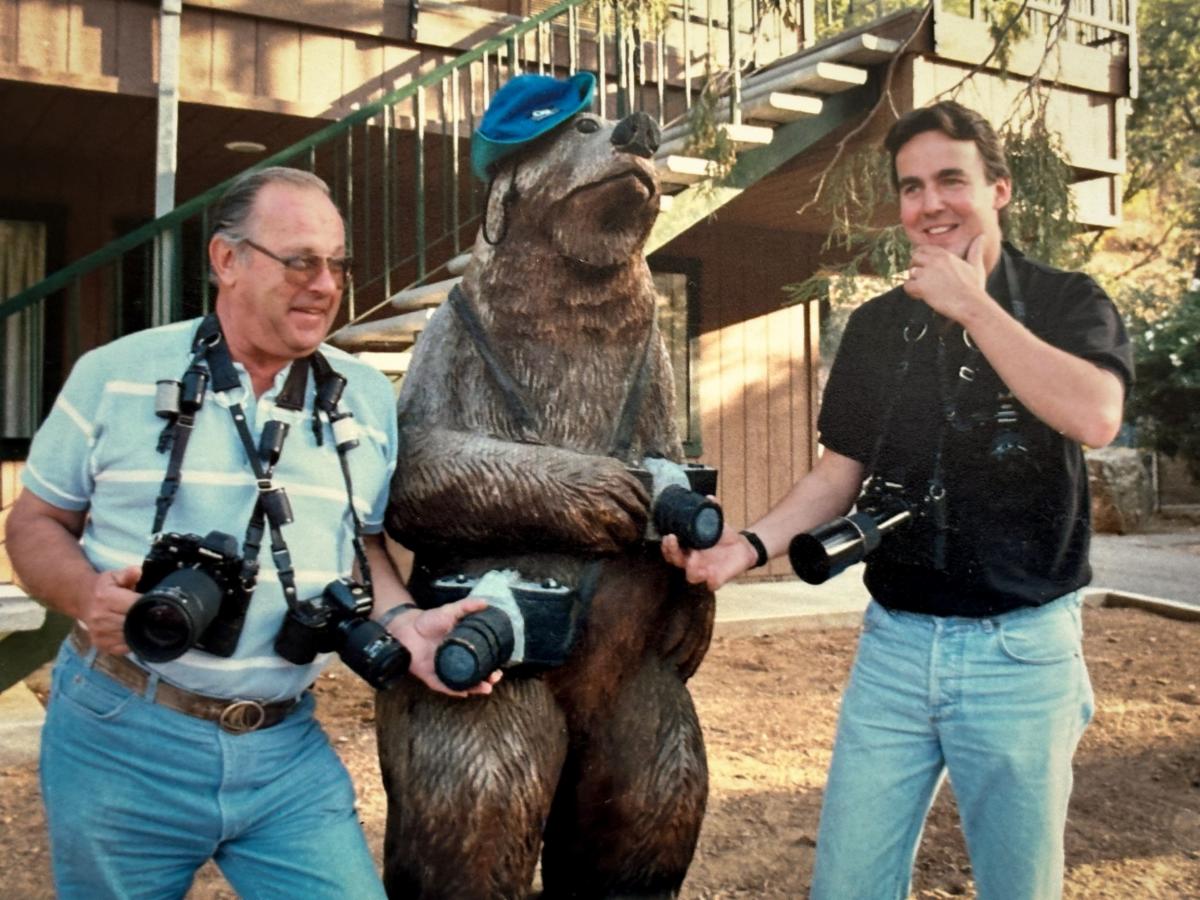
Sal Veder and Eric Risberg on assignment together in Yosemite National Park when they were there for paraplegic Mark Wellman's climb up Half Dome in 1991. Photo by Nel Veder.
Eric Risberg - Sal and I first met in 1980, when he was sent to Portland to cover the eruption of Mount St. Helens. Sal introduced himself right away, and the first thing he wanted to know was how he could help and whether anyone needed anything. That simple gesture was very much Sal.
He was not only a coworker, mentor and friend for almost half a century; he also was like a second father to me. His loss is especially difficult after losing my own father earlier this year.
If you didn't know Sal, you might never have guessed that he was a Pulitzer Prize-winning photographer. He rarely mentioned it and would usually talk about it only if someone asked. And even then, he often made a point of giving credit to the other photographer who was working with him the day he made his famous picture in 1973 at Travis Air Force Base - Sacramento staff photographer Walt Zeboski.
I will always be grateful for the way Sal treated me when I was just starting out in the San Francisco bureau in the early 1980s. I was in my early 20s and had little experience compared with Sal. He showed me great kindness and took me under his wing. I did everything I could to learn from him.
Sal taught me a great deal about film editing and, perhaps more important, about the marriage between words and pictures. Before becoming a photographer, he had worked as a writer and editor, and that background gave him a wonderful understanding of how photography and journalism worked together.
But the lessons Sal taught me went far beyond photography.
I will always remember the first Thanksgiving I spent in the Bay Area. Sal asked me if I had somewhere to go. When he learned that I didn't, he insisted that I come to his home and spend Thanksgiving with him and his family. It remains one of the most memorable Thanksgivings I've ever had. I was touched that he cared enough to make sure I wasn't alone.
We worked together for about 10 years before Sal transferred back to the Sacramento bureau, where he had begun working for The Associated Press in 1961. One of the things I enjoyed most was watching him mentor and help so many other people. It was inspiring to see how freely he shared his knowledge and experience. Many of those he helped went on to distinguished careers.
Sal set a standard that I have always tried to emulate.
Thirty-five years ago, when my wife and I were married, Sal insisted on photographing our wedding. We were honored that he wanted to do it, and the photographs are among the many things that keep his memory alive for us.
Sal also had a wonderful philosophy about life: work hard, get the job done, but then take the time to enjoy a good meal and a beverage in the company of others. His favorite drink was a dry gin martini, particularly a Tanqueray martini. I suspect my own appreciation of martinis began with Sal.
One of my favorite memories of Sal came near the end of his career, when he was sent to cover the 7.2-magnitude Cape Mendocino earthquake in 1992. Sal was the last photographer to arrive at the scene, but when he got there, he brought food for all the other staffers and immediately wanted to make sure everyone was okay.
He had gotten only a couple of hours of sleep before rushing out in the middle of the night to cover the earthquake-related fire that destroyed much of the central area of the lumber company town of Scotia. His nighttime photographs of the blazing buildings were among the strongest images from the story.
Sal kept working through the middle of the following morning, after being up most of the night. All the much younger photographers were in complete awe of his energy and ability. It was vintage Sal: Do the job, take care of the people around you, and keep going.
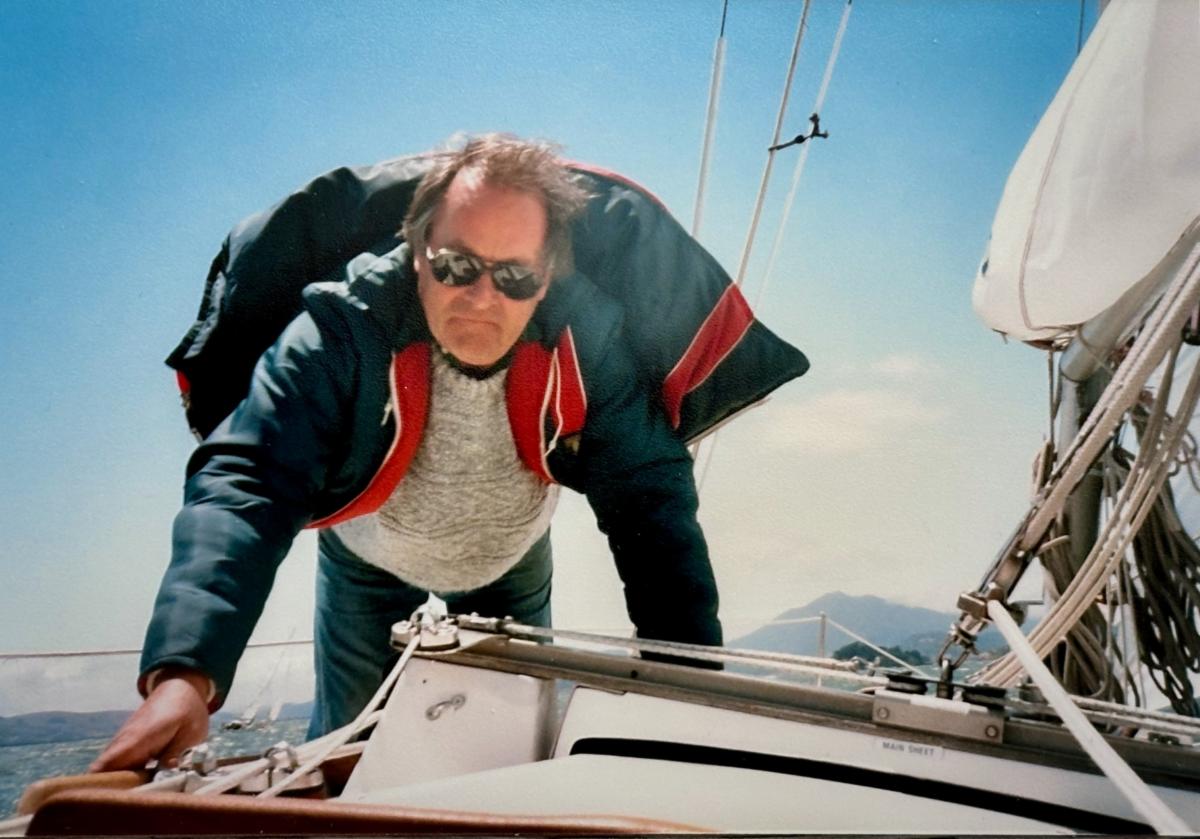
But there was much more to Sal than photography. He was a sailor, pilot, bicyclist and motorcyclist. In his younger days he enjoyed many forms of ice sports -- hockey, figure skating, and even barrel jumping.
| Sal Veder sailing on San Francisco Bay in the mid 1980s. Photo by Eric Risberg. | |
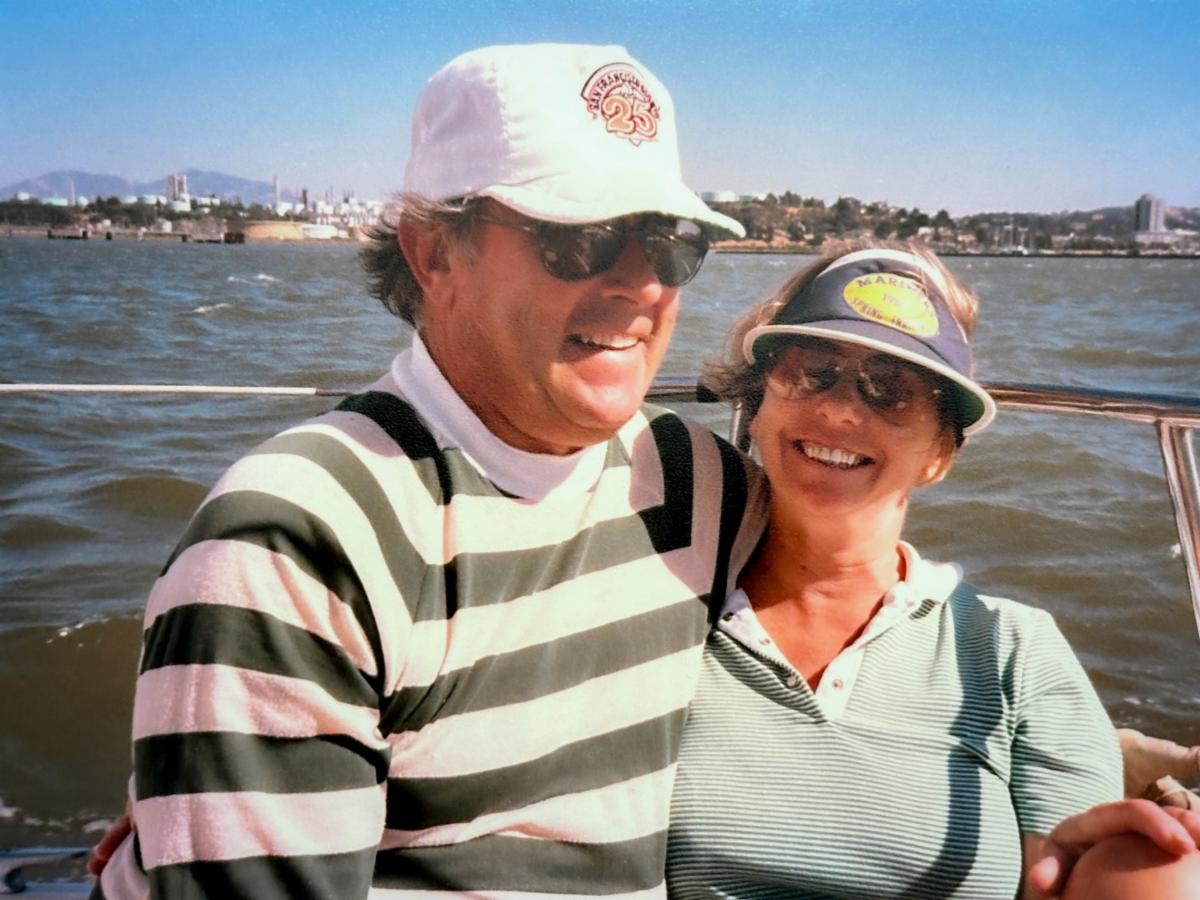
Sal Veder and his wife Nel aboard his beloved sailboat, the Sentosa, near his home in Martinez, Calif., in the 1980s. Photo by Eric Risberg
I especially loved sailing with him aboard his beloved sailboat, the Sentosa, which he kept docked not far from his home in Martinez. One of his favorite sails was out to see the Mothball Fleet in Suisun Bay. Those were special times, and I treasure them.
After retiring to the Sierra Nevada foothills, Sal volunteered with Cal Fire. I would visit him a couple of times a year and enjoyed staying with him and his wife, Nel. After Nel passed away in 2021, Sal moved to a senior care facility outside Sacramento.
Even as his memory began to fail, I continued to visit him several times a year, often taking retired Sacramento photographer Rich Pedroncelli along with me. Rich, my wife, Elizabeth, and I were all fortunate enough to see Sal one more time earlier this month.
This coming weekend, on August 30, Sal would have turned 100.
I will miss him very much.
I will miss the photographer, the mentor and the journalist. But most of all, I will miss the man who, from the moment we met, seemed to believe that his first responsibility was to make sure everyone else was okay.
That was Sal.
-0-
Doug Pizac -- Farewell my friend and mentor. His gentleness and helpfulness were well known, and he shared his expertise and guidance with me several times at various events we covered which I appreciated so much. You will be missed.
Remembering Dolly Parton
Susan Clark - One moment, I was sitting at my desk on the eighth floor of Rockefeller Center in the Corporate Communications office, the thing we heard Dolly was around, and soon enough Dolly Parton was walking past me in all her unmistakable glamour. I had seen plenty of famous faces pass through the building, but when Dolly appeared outside our office, I knew I couldn’t simply let her keep walking.
People often ask me, “What did you do at AP? Were you a journalist?” The answer is no, I wasn’t a journalist—but at some point, I was part of AP’s Corporate Communications team as an administrative assistant and office manager, and I certainly had plenty of fun.
During the early 2000s, our office was on the eighth floor of 50 Rockefeller Plaza—“50 Rock,” as we called it. Next door was NTV International, the New York bureau of Japan’s Nippon Television.
I believe it was July 2002 when Dolly Parton came walking past our office. She was at Rockefeller Center promoting her new album, Halos & Horns, and her first major concert tour in nearly ten years. After appearing on NBC, she came upstairs to be interviewed by Nippon Television.
Famous people regularly passed our office and instead of simply watching them go by, I would often invite them into our office and introduce them to everyone.
So, naturally, I did the same with Dolly!
And that is how Dolly Parton met AP Corporate Communications—thanks to its very unofficial celebrity welcoming committee of one!
Those truly were the best days.
-0-
Chris Sullivan - The sad news of Dolly Parton’s death reminded me of a funny moment when our paths serendipitously crossed.
The location was New York, AP headquarters, and more specifically the scene was the “fishbowl” conference room with its wall of windows overlooking the newsroom, where the morning news meeting was held around a large table. As usual, the main editors in NYC were seated around it, and others were on speaker-phone connections from around the country and the world, pitching and discussing stories for the day’s digest.
I don’t remember the big stories that day – or exactly when this was; maybe 2000 or thereabouts – but the news was serious, as always, and the faces around the table reflected that: focused, intent, some perhaps frowning.
Then, suddenly, Dolly Parton materialized.
She was led along by someone (maybe Frazier Moore?) who was interviewing her for a story; I guess she wanted a newsroom tour first. They were chatting happily as they passed – until she caught sight of the fish in the big fishbowl. All those serious faces.
She instantly stopped, moved up to the windows and mugged a huge smile -- exaggerating it with raised eyebrows and upturned fingers at the ends of her lips. It seemed to say: Come on, lighten up! It can’t all be that bad!
As the fishbowl faces began to smile back, some maybe a little sheepishly, I think she laughed a bit, shaking that blonde head, as she and her escort walked on.
No words, no songs, but a five-second Dolly Parton performance that none of us would have traded for an hour-long concert.
-0-
Dolly Parton – a life in pictures. A gallery of photos of Dolly Parton compiled by the Guardian that includes images from AP photographers Doug Pizac, Mark Elias, Marty Lederhandler, Mark Lenihan, Chris Carlson.
Click here to view. Shared by Ken Klein.
-0-
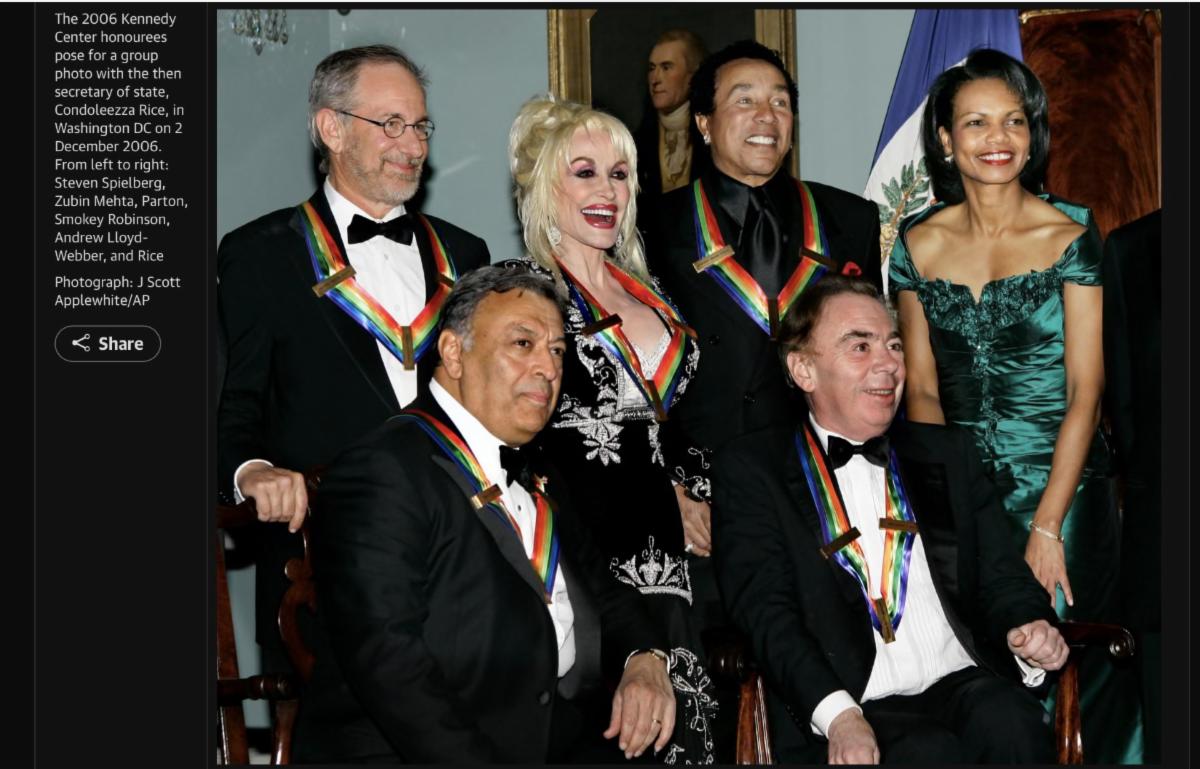
And this photo from J. Scott Applewhite
| | |
The 2006 Kennedy Center honorees pose for a group photo with then secretary of state Condoleezza Rice in Washington DC on 2 December 2006. From left to right: Steven Spielberg, Zubin Mehta, Dolly Parton, Smokey Robinson and Andrew Lloyd Webber, and Secretary of State Rice.
Remembering Tim Curry
| |
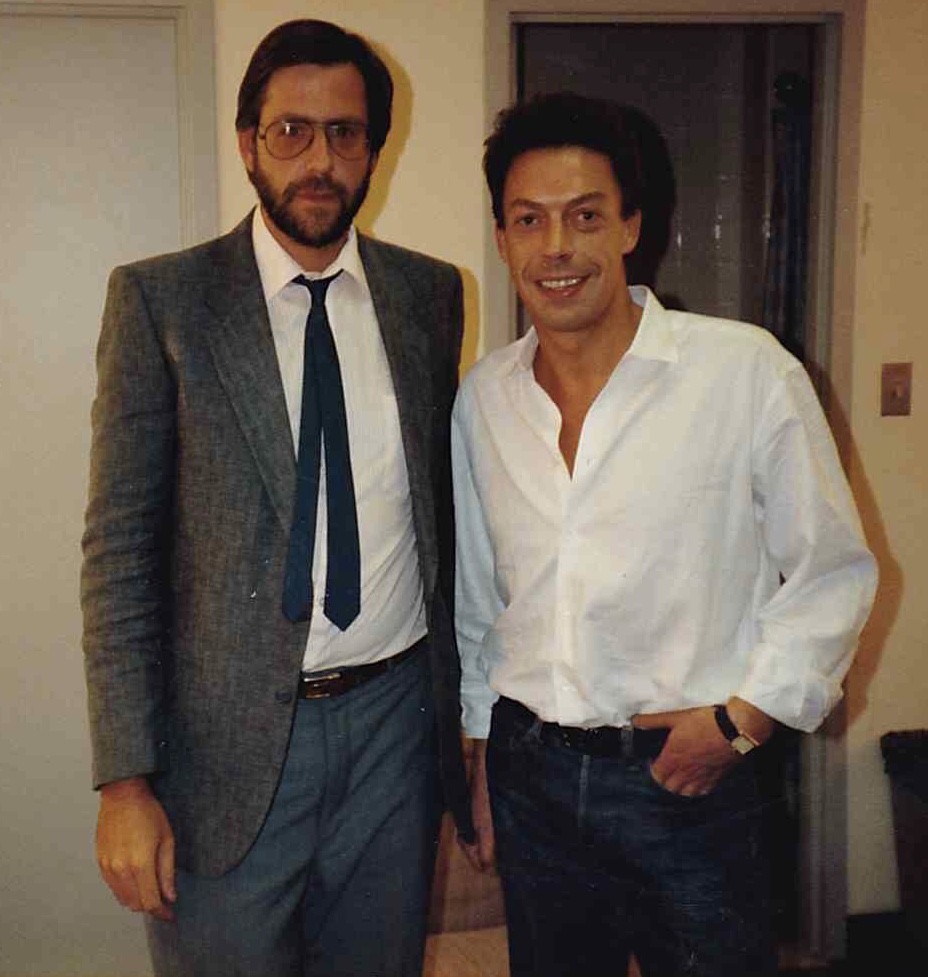
Michael Weinfeld - Though known for playing a “Sweet transvestite from Transylvania,” Tim Curry told me in 1988, “I was never outrageous as a person.”
Playing Dr. Frank-N-Furter in The Rocky Horror Picture Show was “a performance, you know?”
A performance he was continually asked about until his death yesterday at the age of 80.
“I thought that Boy George was going to take the heat off, but he didn’t prove to be a stayer,” he joked.
“One of the useful things about Rocky,” he told me at the National Theatre in Washington, DC, “is it’s kind of a calling card. Every new sophomore goes to see it and gets introduced to my work and then they see the other stuff. The letters that I get reflect that. I don’t think that they think I lounge around at home in fishnets. They’d be very surprised.”
So, what does he do at home? He’s an avid gardener. He also liked to take long holidays. “I’m a great vacationer.”
When the original Rocky Horror Show premiered on stage in London on June 19, 1973, Curry worried it might ruin his reputation as a serious actor.
“I certainly thought about it, yes. I knew it was a dangerous thing to do. I think that the dangerous things are the only things worth doing really. I didn’t want to bore myself to death as an actor. I guess I had enough confidence in myself to believe that I would be able survive it. As indeed I have.
My daughter loved another one of Curry’s movies, Legend where he played the devil. Filming it was a pain. Literally.
Putting on the devil prosthetics “was a nightmare. It was six and a half hours. And it was an hour and a half to take it off. Started an eight-hour day before I even acted. It wasn’t that heavy. It was very light. Some kind of polyurethane, polystyrene, I don’t know. Like a plastic foam. But it was surgically glued to my body from the waist up and the face was about four or five different pieces and that had to be painted every day. The rest was already airbrushed. The horns were light sort of plastic, but I had this kind of aluminum Snoopy kind of helmet underneath the head that anchored it. And then I had hooves that were like a foot high which were heavy cause they were metal. I also had contact lenses, sort of wolf eyes so I had tunnel vision as well and that was very peculiar.
He also needed a special chair with feet that were “about three feet off the ground. And it had a special hump rest. I had to be sort of led around everywhere because I could only see straight in front of me. It was very peculiar. But in a curious way it was very freeing because anything that’s really left of you is your teeth. My mouth was actually any real part of me that was visible. You do feel enormously free to do some pretty peculiar stuff. I did a lot of peculiar stuff that was cut.”
Curry had been confined to a wheelchair since suffering a stroke while having a massage in 2012. In his 2025 memoir, Vagabond, Curry said while he didn’t know he was having stroke, the masseur did and called 911, saving his life.
Here’s a link to an excerpt from my interview with Tim Curry.
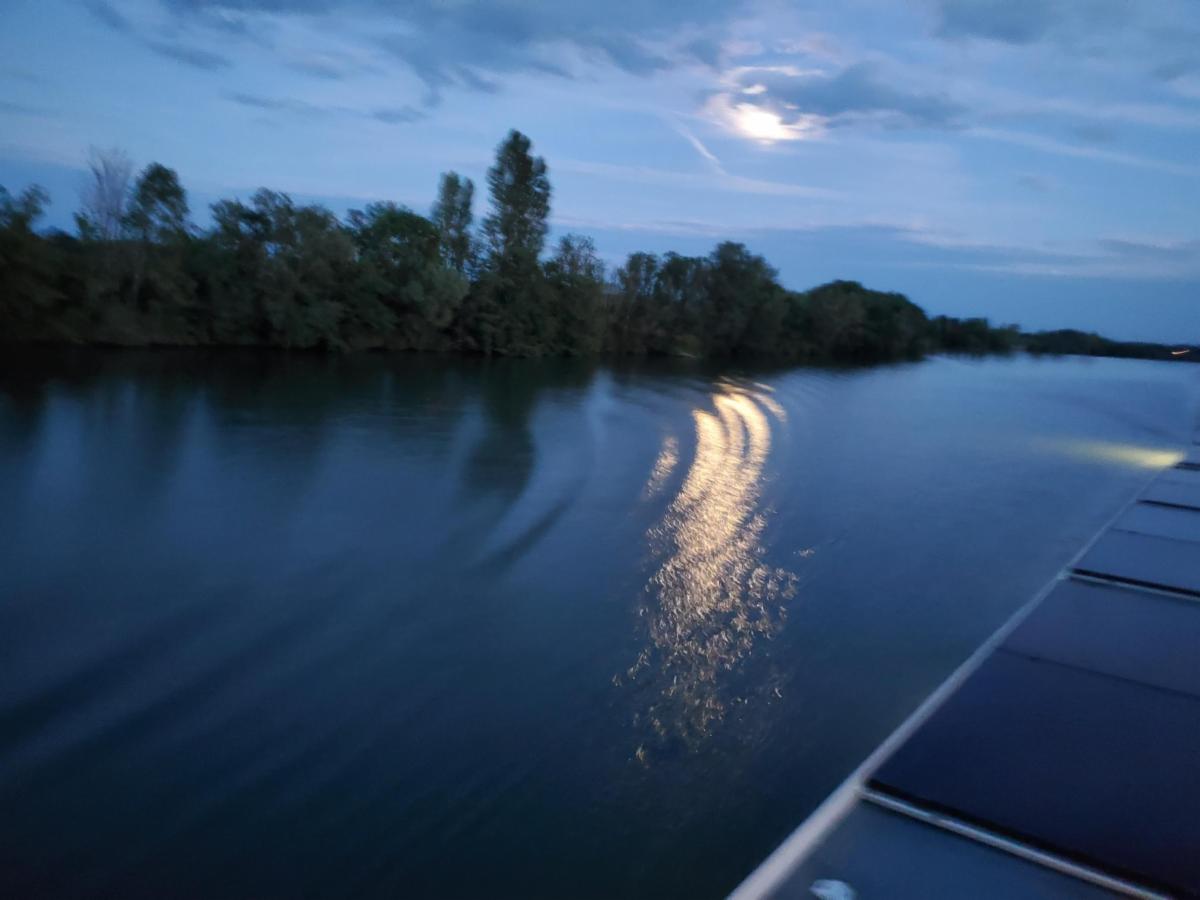
Connecting sky shot
| | |
Lynne Harris - Moonrise over the Saone River in France....taken from the top deck of my riverboat.
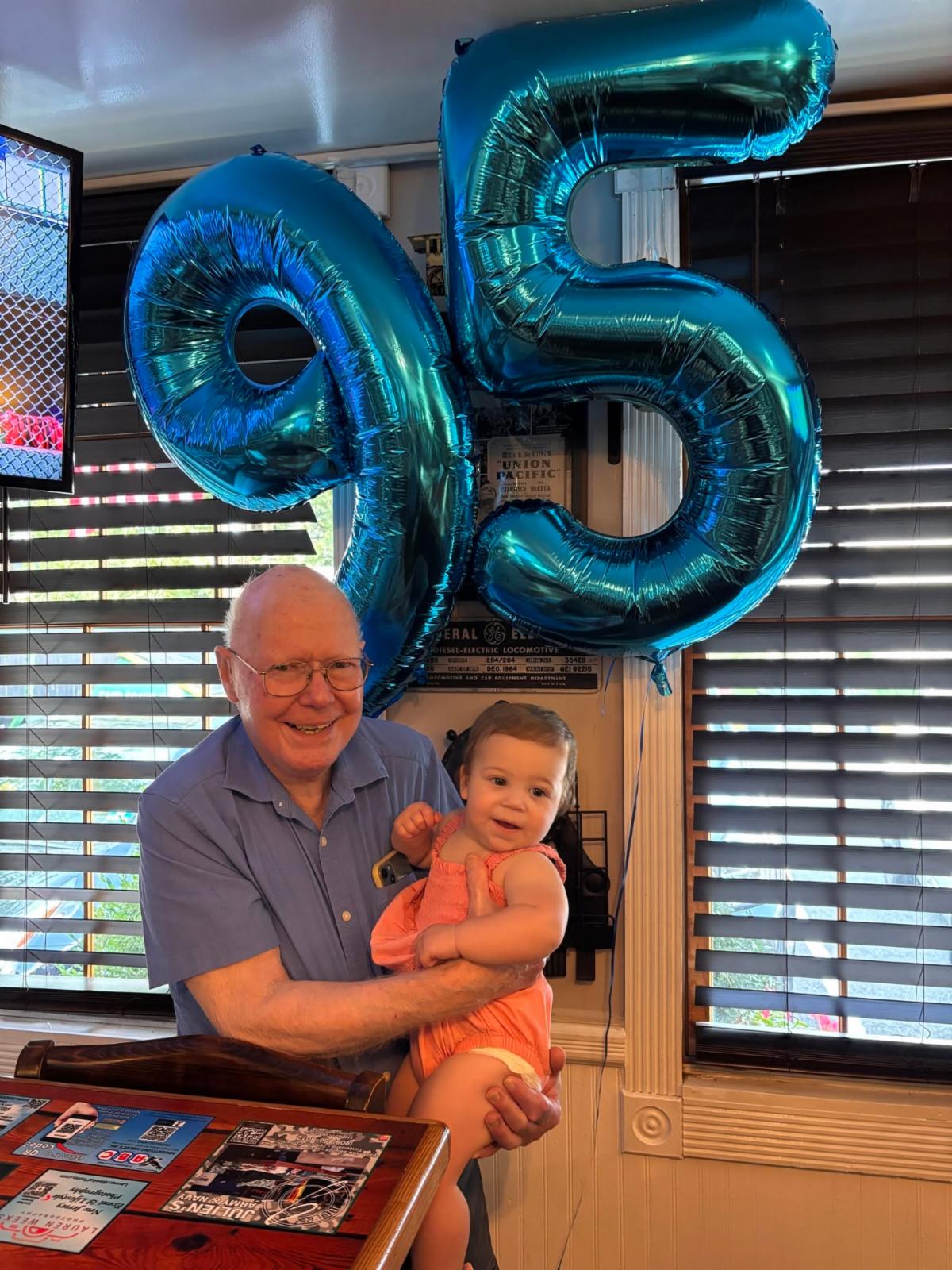
Celebrating 2 birthdays, 94 years apart
| | A few days ago, our colleague Charlie Monzella was surrounded by all his children, grandchildren and his great-granddaughter as they gathered for an early celebration of his 95th birthday, which is today. Here is Charlie with his great-granddaughter Maisie, whose first birthday will be next month. | | Connecting wishes Happy Birthday | | |
Stories of interest
The turbulent AI era is here. The choices we make now are critical.
By Bill Gates
The transition to the AI era will be one of the most turbulent times in human history. Right now, we are not preparing adequately for that transition. If the world takes the right steps, AI will be a force for good and leave everyone better off.
During my entire life I’ve only had two jobs. In the first one, I played a role in developing software to empower people through my work at Microsoft.
In my second one, which I started full time in 2008, I am giving back the wealth I made at Microsoft with the goal of making the world a healthier, better educated, and more equitable place. This is the job I will have for the rest of my life.
Both of these experiences inform my perspective on artificial intelligence. When I first learned about computers at age 13 I was fascinated by the idea of making them more intelligent and able to perform things that, at the time, only humans could do. Although the term “AI” was used from around the time I was born, the technology has only made significant progress in the last decade. It is now incredibly capable and it is continuing to improve at a mind-blowing rate. AI for the first time can replace and even exceed human cognition.
AI will either be the greatest equalizer ever invented, or the worst source of injustice.
In terms of equity, AI will either be the greatest equalizer ever invented, or the worst source of injustice. The challenge is monumental. Even under the best circumstances, the transition to this new AI era will be one of the most turbulent times in human history. How will we use this technology to make the world a fairer place and keep it from widening the divide between rich and poor? How will we protect the people who are most vulnerable to the harms caused by artificial intelligence, including those who lose their livelihoods and the sense that they are in control of their future?
I believe that answering these questions and acting on the answers should be the world’s top priority. If the world takes the right steps AI will be a force for good and leave everyone better off.
Read more here.
-0-
To survive, journalism must become indispensable
By Tom Rosenstiel
Poynter
One of the most important and misunderstood reasons for the crisis in journalism has little to do with revenue or technology. The problem is the journalism itself.
Much of what made newspapers, radio newscasts and TV news programs indispensable to people in the 20th century was not the journalism but what surrounded it. You couldn’t know what movie to see or TV show to watch without the listings. You couldn’t sell a bike or buy a house or rent an apartment without the classifieds. People got the last word on tomorrow’s weather from late local news.
Today, people find nearly all of that elsewhere.
Journalists, meanwhile, probably thought little about how to shape our work to help people live their lives or improve their communities. We were wary of effects. We tended to think if we spotted things that were wrong, or alerted people to problems, we were helping. And though it was something of a tautology, we thought if we covered something, it was “news,” which meant it must be important for people to know. If anything, we leaned the other way. We tended to label stories that were designed to help people as “service journalism,” helpful but not the exposés and prestige work we coveted. And we often derided anything celebratory as “puff pieces.”
Read more here. Shared by Doug Pizac.
-0-
Meta reaches landmark $18 billion settlement with states in trial over teen social media addiction
By BARBARA ORTUTAY, KELVIN CHAN and KAITLYN HUAMANI
OAKLAND, Calif. (AP) — Meta agreed Wednesday to pay up to $18 billion and add stronger child-safety measures to its Facebook and Instagram platforms as part of a landmark legal settlement that ended a trial over teen social media addiction and settled claims filed by nearly every state.
The settlement resolved a pivotal case years in the making that sought to hold the tech giant accountable for the role its platforms played in undermining children’s mental health. The effort targeted features designed to hook young people’s attention.
The agreement “institutes real change, real transparency, real protections for children and teens across the country,” California Attorney General Rob Bonta said.
If approved by the court, the deal will stop an avalanche of litigation by states against Meta, although the company still faces lawsuits from individuals and school districts throughout the U.S. For the states, the settlement delivers money for mental-health programs for kids, including after-school or summer activities and digital literacy counselors.
Read more here. Shared by Dennis Conrad.
| Today in History - Aug. 27, 2026 | | |
Today is Thursday, Aug. 27, the 239th day of 2026. There are 126 days left in the year.
Today in history:
On Aug. 27, 1883, the island volcano Krakatoa erupted with a series of cataclysmic explosions. The explosions (which could be heard 3,000 miles away) and resulting tsunamis in Indonesia’s Sunda Strait claimed some 36,000 lives in Java and Sumatra.
Also on this date:
In 1894, Congress passed the Wilson-Gorman Tariff Act, which contained a provision for a graduated income tax that was later struck down by the Supreme Court.
In 1964, the film “Mary Poppins” had its world premiere in Los Angeles, California.
In 1979, British war hero Lord Louis Mountbatten and three other people, including his 14-year-old grandson Nicholas, were killed off the coast of Ireland in a boat explosion claimed by the Irish Republican Army.
In 1982, Rickey Henderson of the Oakland A’s stole his 119th base of the season, breaking Lou Brock’s single-season stolen base record. (Henderson would finish the season with a still-unmatched 130 stolen bases.)
In 1990, blues musician Stevie Ray Vaughn and four others were killed in a helicopter crash near East Troy, Wisconsin.
In 2001, Israeli helicopters fired a pair of rockets through office windows in the West Bank city of Ramallah, killing senior PLO leader Mustafa Zibri.
In 2005, coastal residents jammed freeways and gas stations as they rushed to avoid Hurricane Katrina, which was headed toward New Orleans.
In 2008, Barack Obama was nominated for president by the Democratic National Convention in Denver, becoming the first Black presidential nominee from a major political party.
In 2011, Hurricane Irene made landfall in the United States; the storm would be responsible for 49 total deaths and more than $14 billion in damage.
In 2025, a shooter opened fire with a rifle through the windows of a Catholic church in Minneapolis and struck some of the nearly 200 children celebrating Mass during the first week of school, killing two children and wounding 17 people. The attacker shot dozens of rounds toward the children seated in pews at the Annunciation Catholic School; police said he later died by suicide.
Today’s Birthdays: Author William Least Heat-Moon is 87. Actor Tuesday Weld is 83. Actor G.W. Bailey is 82. Rock musician Alex Lifeson (Rush) is 73. Actor Peter Stormare is 73. Rock musician Glen Matlock (The Sex Pistols) is 69. Golfer Bernhard Langer is 69. Gospel singer Yolanda Adams is 65. Fashion designer and filmmaker Tom Ford is 65. Actor Chandra Wilson is 57. Baseball Hall of Famer Jim Thome is 56. Rapper Mase is 51. Actor Sarah Chalke is 50. Actor Aaron Paul is 47. Actor Patrick J. Adams (TV: “Suits”) is 45. Singer Mario is 40. Actor Alexa PenaVega is 38. Singer-songwriter Kim Petras is 34. U.S. Olympic and WNBA basketball star Breanna Stewart is 32. Rapper/singer-songwriter Rod Wave is 28.
| | Got a photo or story to share? | | |
Connecting is a daily newsletter published Monday through Friday that reaches more than 2,000 retired and former Associated Press employees, present-day employees, and news industry and journalism school colleagues. It began in 2013. Its author, Paul Stevens, retired from the AP in 2009 after a 36-year career as a newsman in Albany and St. Louis, correspondent in Wichita, chief of bureau in Albuquerque, Indianapolis and Kansas City, and Central Region vice president based in Kansas City.
Got a story to share? A favorite memory of your AP days? Don't keep them to yourself. Share with your colleagues by sending to Ye Olde Connecting Editor. And don't forget to include photos!
Here are some suggestions:
- Connecting "selfies" - a word and photo self-profile of you and your career, and what you are doing today. Both for new members and those who have been with us a while.
- Second chapters - You finished a great career. Now tell us about your second (and third and fourth?) chapters of life.
- Spousal support - How your spouse helped in supporting your work during your AP career.
- My most unusual story - tell us about an unusual, off the wall story that you covered.
- "A silly mistake that you make"- a chance to 'fess up with a memorable mistake in your journalistic career.
- Multigenerational AP families - profiles of families whose service spanned two or more generations.
- Volunteering - benefit your colleagues by sharing volunteer stories - with ideas on such work they can do themselves.
- First job - How did you get your first job in journalism?
- Most unusual place a story assignment took you.
Paul Stevens
Editor, Connecting newsletter
paulstevens46@gmail.com
| | | | |