|
A New Year of Curiosity and Connection
January 20, 2026
Dear Friends,
Happy New Year! As we begin 2026, I want to start by saying thank you. Your generosity makes it possible for children and families to experience hands-on science, curiosity, and connection at the JMZ. I’m excited to share what your support is already making possible and what’s ahead in the year to come.
We are off to a strong start with several highlights already:
- Construction is underway on the JMZ's new Rainbow Tunnel exhibit, which will debut next month.
-
We launched our JMZ Summer Camp scholarship applications with expanded outreach to families in East Palo Alto, eastern Menlo Park, and Redwood City. JMZ Summer Camp scholarships are Friends-funded, 100% camp-fee discounts to income-eligible families, providing enriching summer learning experiences to curious young learners. Please share the application with anyone you know who may be interested.
- We welcomed our new Development & Programs Manager, Chelsea Sansano. With her background as an educator, we look forward to deepening our work with our neighboring communities.
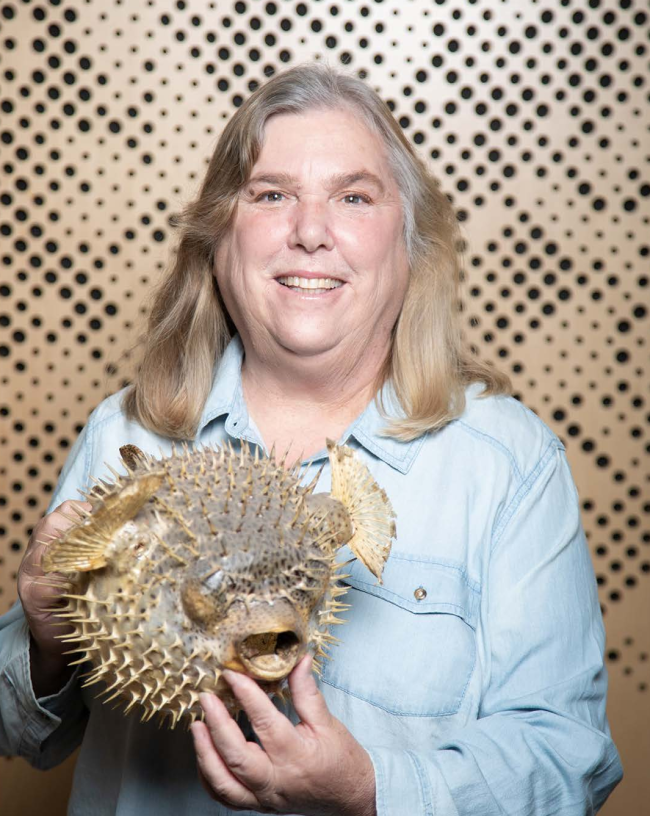
This month, I’m delighted to share a spotlight on longtime JMZ Educator, Jenny Nelson. With an extensive background in working with animals and teaching science, Jenny is passionate about sharing her knowledge and experiences with children through the JMZ Science Outreach program in underserved schools, funded by the Friends.
Planning is well underway for our third annual Spring Breakfast, which will take place on Friday, March 27 from 9:30-11 a.m. at Allied Arts Guild. Funds raised at this event directly support programs that expand access to science education. If you are interested in learning more about this event, please reach out to Chloe Green, Development & Operations Associate, by emailing chloe@friendsjmz.org. If you would like to become an early supporter, please consider making a donation online.
Warmly,
Lauren Angelo
President, Friends of the Palo Alto Junior Museum & Zoo
| | Spotlight on Jenny Nelson - JMZ Educator | | |
What first inspired you to become a JMZ educator, and what has kept you passionate about this work for so long?
Before joining the JMZ, I spent about 20 years working with animals in zoos, aquariums, and natural field settings. During this time, I noticed that, along with working directly with the animals, I loved sharing my knowledge of science with the public, especially children. This led me to become interested in science education and, then, in 1998, my former coworker, who was the JMZ Zoo Director at that time, introduced me to the JMZ and I have been here ever since!
Personally, I have immense pride in the fact that I have been able to share my passion for science with thousands of local school children over my 27 years here at the JMZ. I have even had previous students reach out to me after high school or college, sharing with me the profound impact my science lessons had on their lives and eventually careers. It makes me very proud!
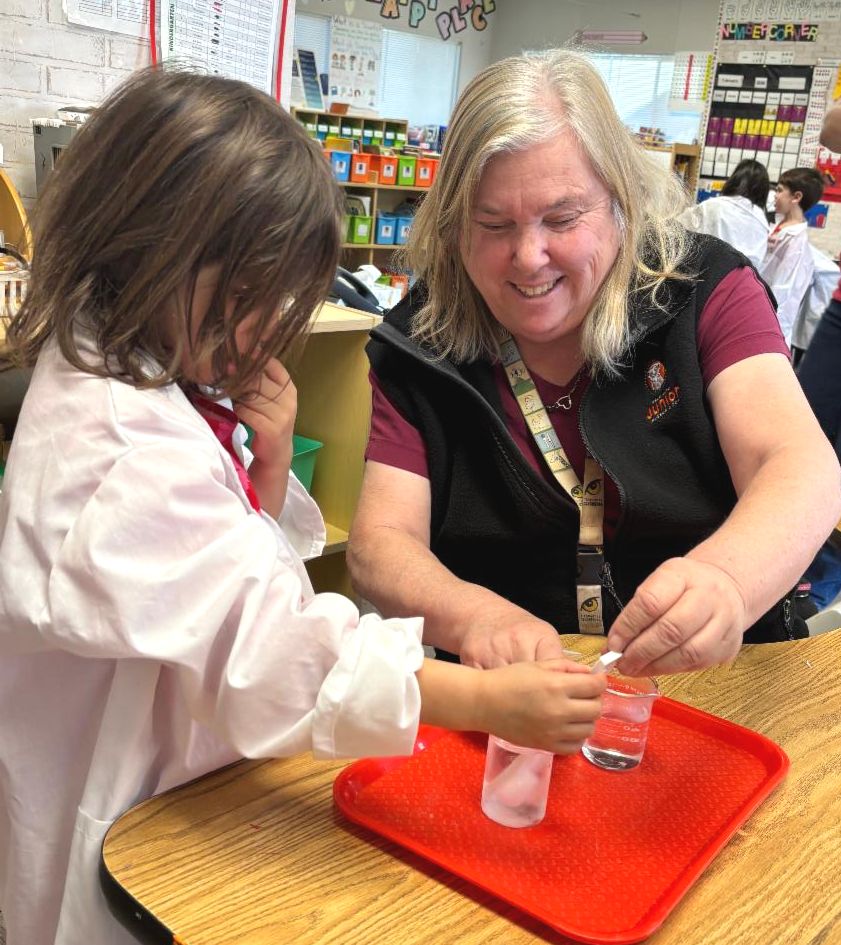
| | How would you describe the unique value the JMZ Science Outreach Program brings to students in underserved schools? | | Jenny helps a student measure water temperature. | | |
Over the past several years there has been a big push in underserved communities to bring up test scores in the basic skills of math, reading, and writing while subjects that are considered “extras”, like science, have often been incorporated less into the school curriculum, if not overlooked completely. Additionally, these schools face extraordinary challenges in accessibility to basic classroom supplies let alone scientific learning tools.
However, educators in these schools now see how we have incorporated these basic skills into our JMZ science lessons through hands-on labs, experimentation, measurement and data taking. They also view our lessons as supporting English language development. Since kids are naturally inquisitive and often fascinated by scientific topics, interest is there to begin with. I use a lot of visuals, such as enlarged photos, drawings, and scientific models to demonstrate my message and I am very animated, using hand gestures and body movements to describe things. I share a lot of personal, science related stories with my students, since I have worked with various animals at large zoos and aquariums and have travelled to places relevant to the topics I teach about.
For example, during a lesson on earthquakes, tectonic plates, and continental drift, I share my personal experience of visiting Iceland and snorkeling between two large tectonic plates, in 34-degree water, and being able to reach out and touch both plates at the same time. Kids are fascinated with stories and can relate more when they learn something through a story related to someone’s personal experiences.
For classroom teachers, a lot more has been added to their plates. Most teachers state that our lessons are such a valuable, hands-on addition to the science curriculum they are provided with within their district. They also love that we take care of supplying, preparing, and cleaning all of the materials, resulting in experiential learning for their students while freeing up some of their own time for other teacher tasks.
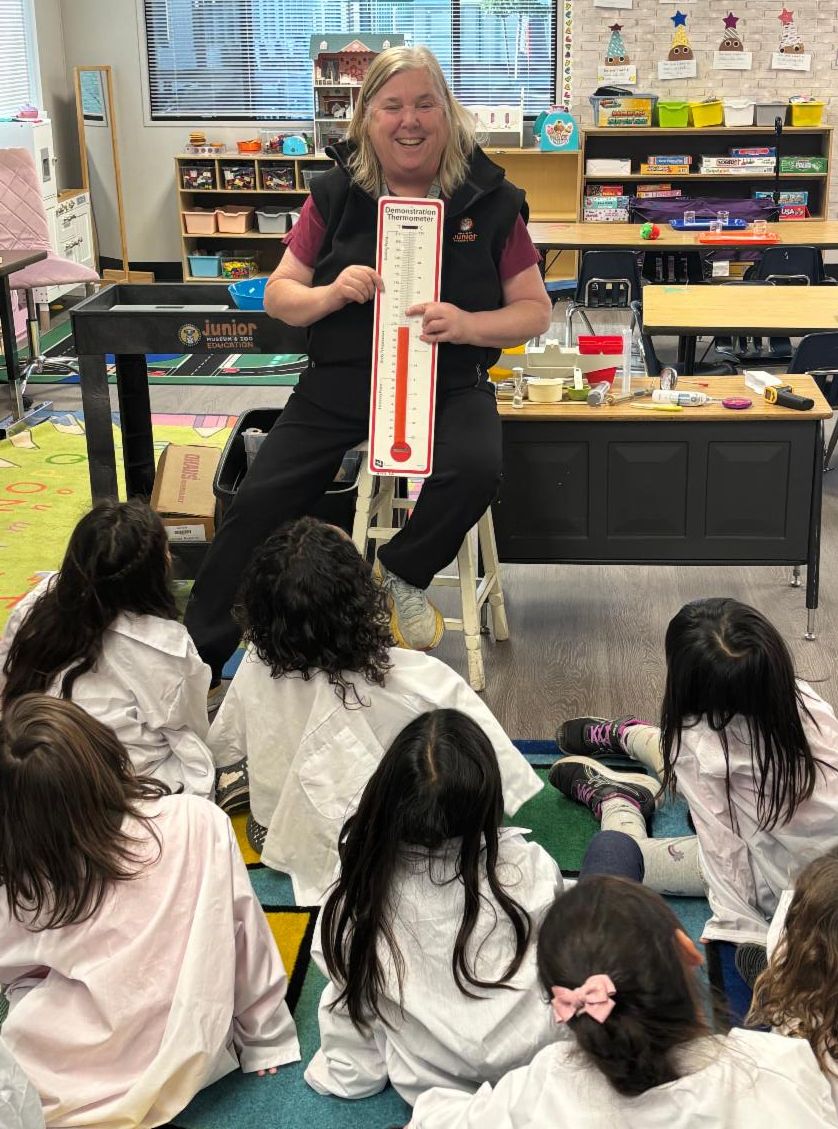
| How has your approach to teaching evolved as the communities and classrooms you serve have changed? | | Jenny uses a giant thermometer to teach measurement. | | |
As computers and other electronic devices have become such a large part of many students’ everyday lives, fine motor skills are on the decline. We have been more intentional to incorporate a lot of fine motor skill tasks into our lessons, which can be challenging at first, but are great skills to integrate.
We also need to reinforce the process of paying attention to details and following instructions through the Scientific Process, which involves thinking, trying, failing, re-thinking and re-doing; constantly reminding the students that they don’t always have to get things perfect and that trial and error is completely normal.
We also have grown in the sophistication of our lessons. In 1998, we were offering just a handful of lessons that were taught out of a kit. Today, we offer a selection of over 75 grade-specific and Next Generation Science Standards aligned science lessons, all developed by our experienced JMZ educators.
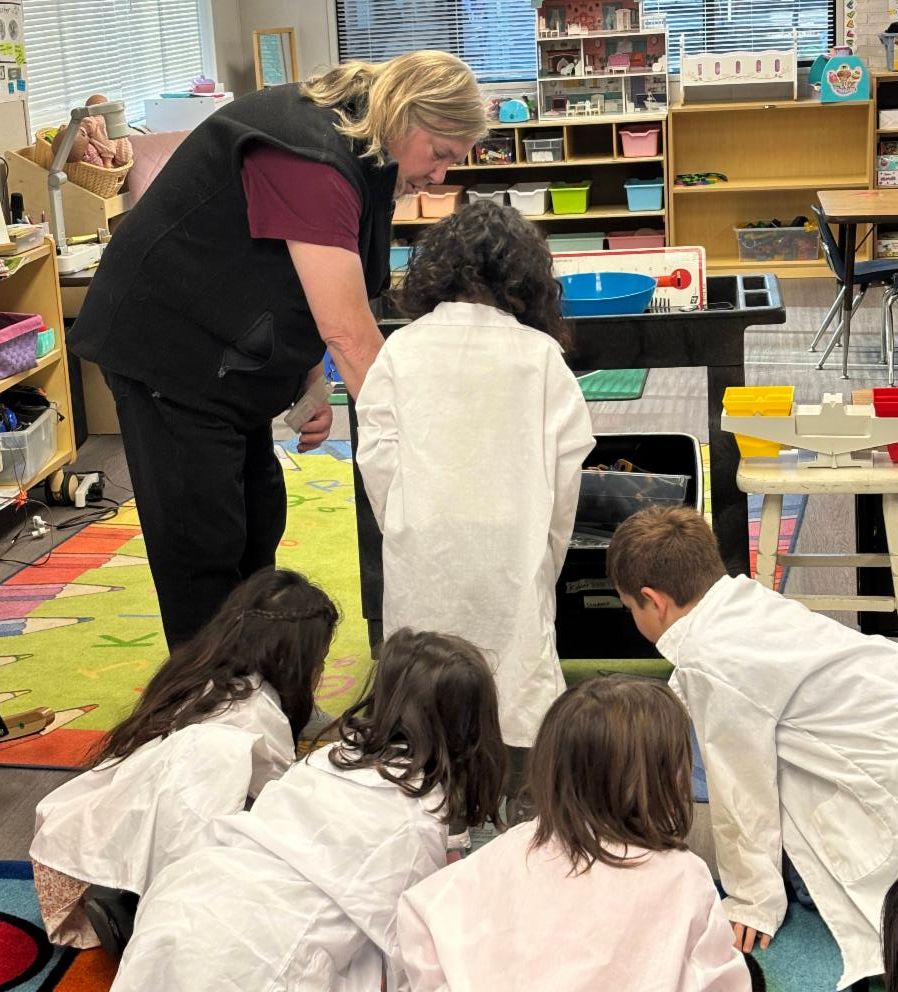
| | Why is hands-on learning so important in science education? | | Students use a scale during a measurement lesson. | | |
Science has shown that people learn in a multitude of ways. Reading books or watching videos is certainly one way to learn about something. The ability to perform a scientific experiment and see the results first-hand, use quality science tools and equipment, see and touch an animal biofact, or meet a live animal up-close and personal is extra meaningful.
One of my favorite lessons to teach is my 4th grade Circuits lesson. It is such a hands-on lesson that makes a complicated topic so understandable because they see the concepts happening right in front of them. Some kids come into the lesson with some word knowledge of how a circuit works, but when I hand them some wires, a light bulb, and a battery and tell them to make the bulb light up, they are stumped. By the end of the lesson, they are making both parallel and series circuits, adding multiple loads (components), and operating them by a variety of switches, all by experimentation and trial and error. They have a much more visual and understandable way of comprehending how everything electrical in their daily lives works. They work both individually and in teams so there is a real sense of accomplishment and team building. Watching their eyes open wide and listening to their excited, gleeful “oohs and aahs” when things begin to work, gives me great joy and a real sense of satisfaction that I have provided a successful, as well as fun, science lesson.
Children are scientists from the time they are born, constantly questioning, exploring, and learning new things. They should be encouraged to continue to be inquisitive and confident in their ability to learn and discover new things and understand that access to science should not be based on age, where you live, economic status, or ability.
| | | | |