Greetings!
As I recently wrote, I'll be doing a Zoom presentation live from the Project in Tanzania this coming Thursday evening, June 16 at 7:30 p.m. EST. If you would like the Zoom link, please contact Ethan.
I am happy to be writing you from Tanzania. It is so peaceful here now, but with another drought on the horizon, everyone is thinking ahead about their families, livelihoods, and staying healthy.
Food for people and for livestock is already becoming expensive, anticipating short supply in the near future, due to another impending drought. Worse conditions have already hit the communities north of Tanzania..
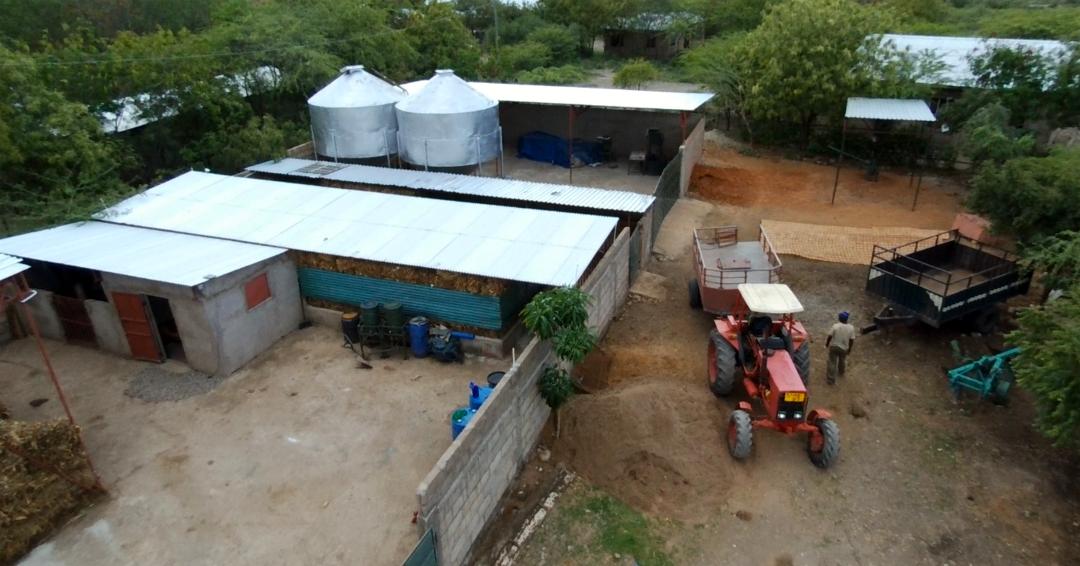
The International Collaborative has developed skills for participating in rural problem solving but, of course, the scale of the difficulties will be very large compared to our capacity. Nevertheless, we have built, equipped, and launched a good factory for producing supplementary cow fodder. Please read on below for more.
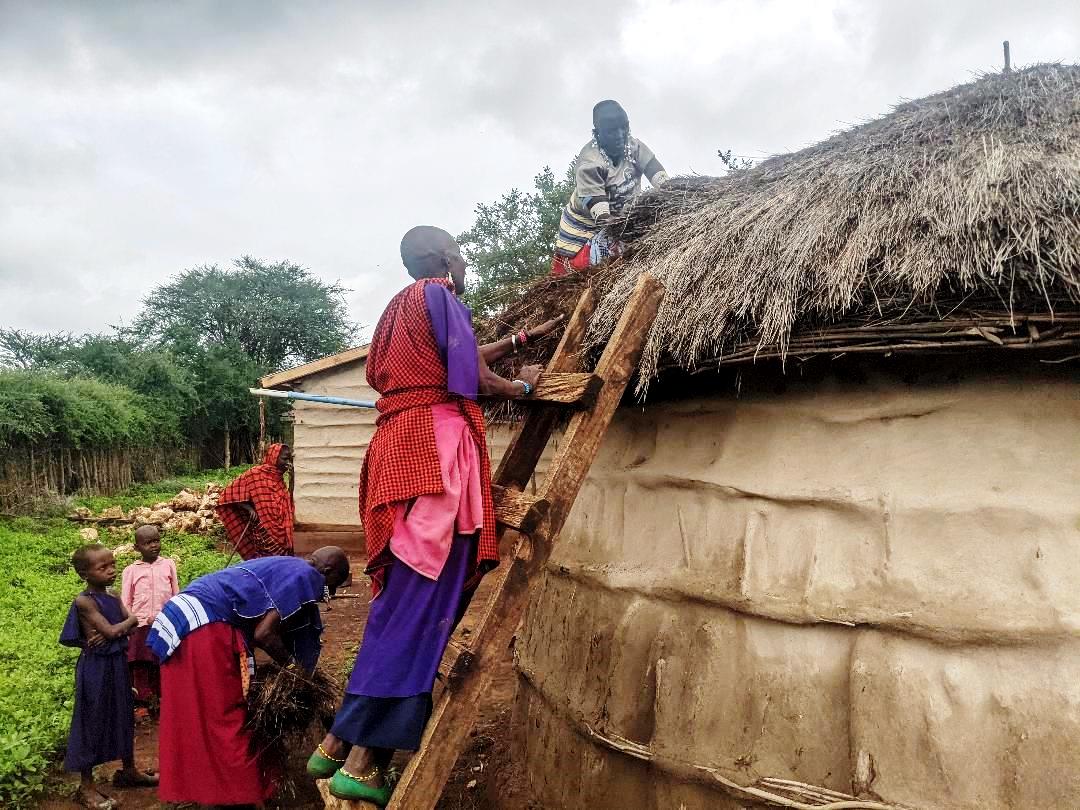
Normal life goes on. We hope to expand our collaboration with The Global Uplift Project (TGUP) who provided us with seed money to install stoves and solar micro-grids in two bomas. Read more here. Thank you for making all of this possible.
With deep appreciation,
|
|
Getting cattle through the drought |
|
Droughts in the African grasslands, where Maasai men graze their cattle, cause a double hardship. Not only do food and water amounts decrease, but their distribution becomes more problematic.
During drought, the grass that persists can be far from remaining water sources. The drought-weakened cattle have trouble making the trips to both.
There are no easy solutions, as most cattlemen don’t have the resources to gather or purchase hay or water and transport it to waiting cattle.
Our way of helping is to produce cow fodder supplements as inexpensively as we can. This lessens the pressure the men and animals experience in these increasingly frequent times of drought.
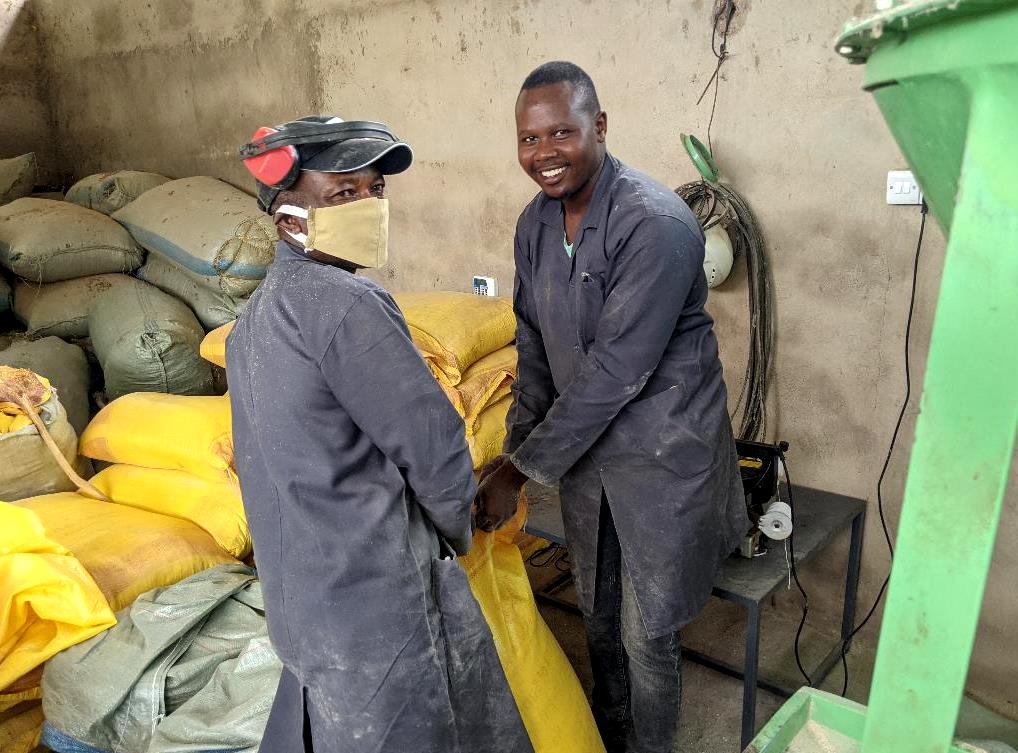
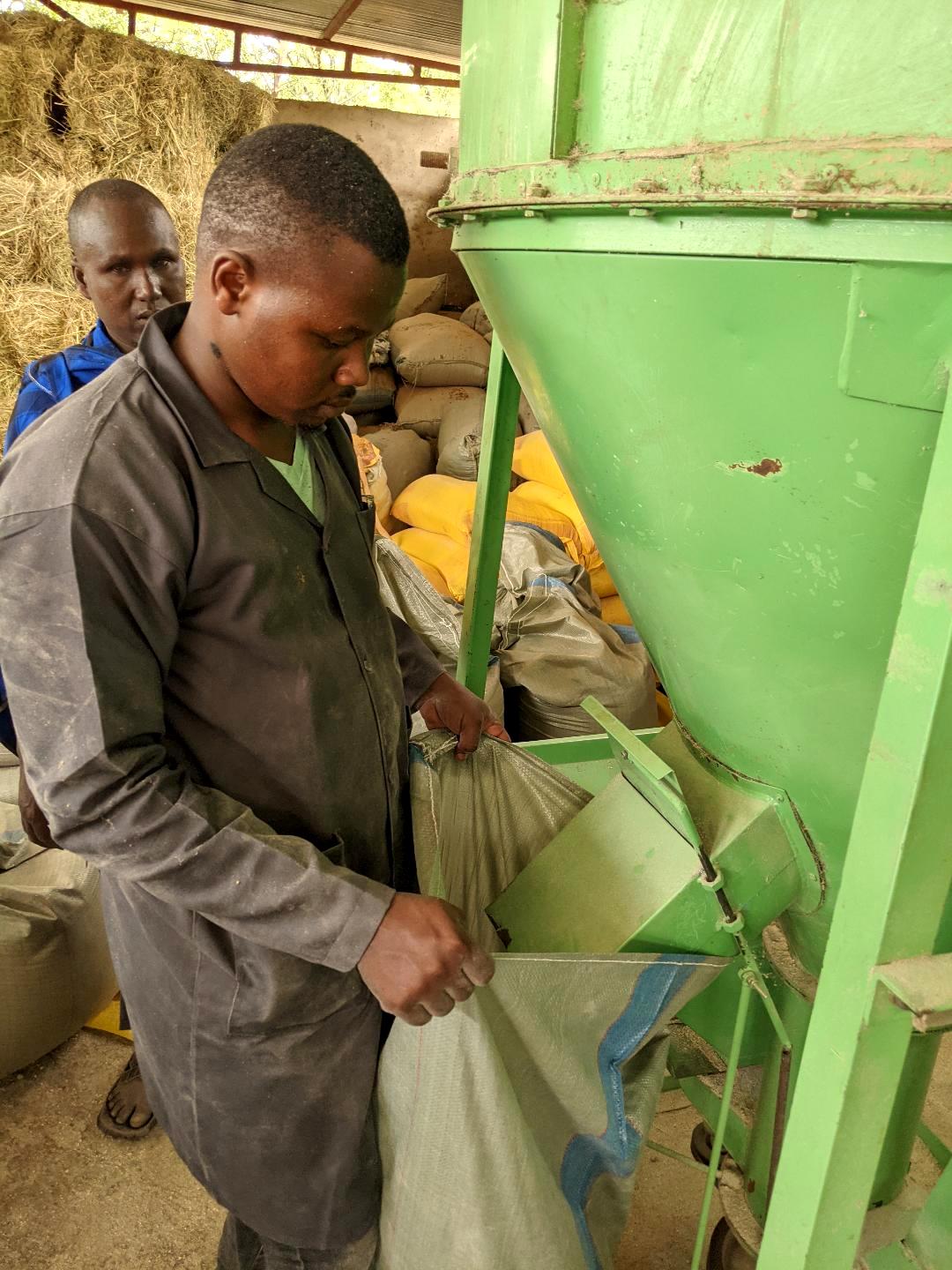
ICSEE buys material that is cast aside in flour and cooking oil production and turns this surplus into cow fodder the men can buy.
A cow needs one kilogram per day of ICSEE feed to survive. We currently produce 20 fifty-kilogram bags a day. If you think of one kilogram as “one cow-day survival” we are producing 1000 of these units each day.
I wish that was as impressive as it first sounds. But if the drought lasts two months, that means that our daily production can save only 16 cows. Once sales, production, and distribution ramp up, we believe we can increase this.
|
|
Two kinds of supplemental feed |
|
The first type of ICSEE fodder includes maize bran, the surplus from white corn flour production. It also has sunflower cake, the residue from sunflower oil pressing, and corn cobs, the residue from human corn consumption.
46 percent maize bran
36 percent sunflower cake
18 percent corn cobs
|
|
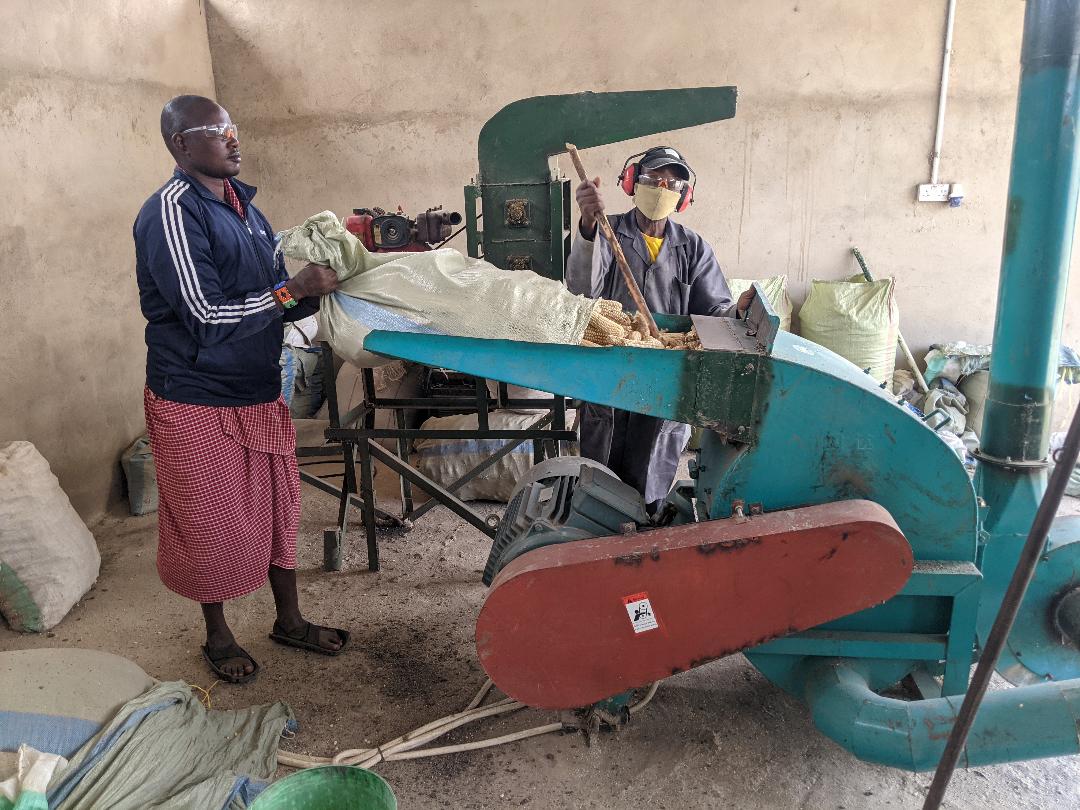
The second type of ICSEE fodder includes full ears of corn and sunflower cake, ground and mixed in this proportion:
67 percent whole corn ears (cobs plus kernels)
33 percent sunflower cake
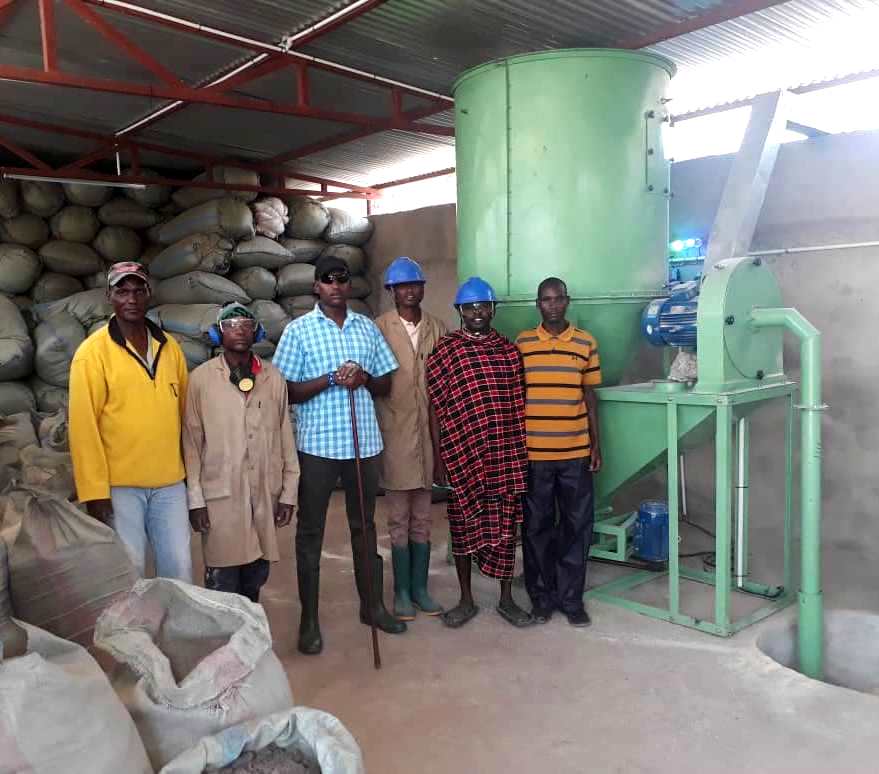
In both varieties, we grind the ingredient, and then mix thoroughly, together with a small but important addition of 400 grams of salt and minerals per 50 kilos. They are then bagged and stored, ready for distribution. (see behind the factory workers at the photo at the right).
We buy raw materials wherever we find them, and will soon be sending the finished product to distributors.
|
|
Partnering with The Global Uplift Program |
|
So many good things come from following through on accidents of meeting and shared values. Through mutual friends, we met the leaders of The Global Uplift Program (TGUP), discovering that we are definitely working along parallel lines for life improvement.
They find programs like ours that are valuable and supportable, and then connect with donors who would like to support the work in the field. View more about TGUP here.
|
|
Micro-grid electrical service
Seeing how much this work is already benefiting the people, TGUP has proposed a 100-stove installation project to their donors.
We are very happy to be working with TGUP, and look forward to the opportunity to install the 100 stoves.
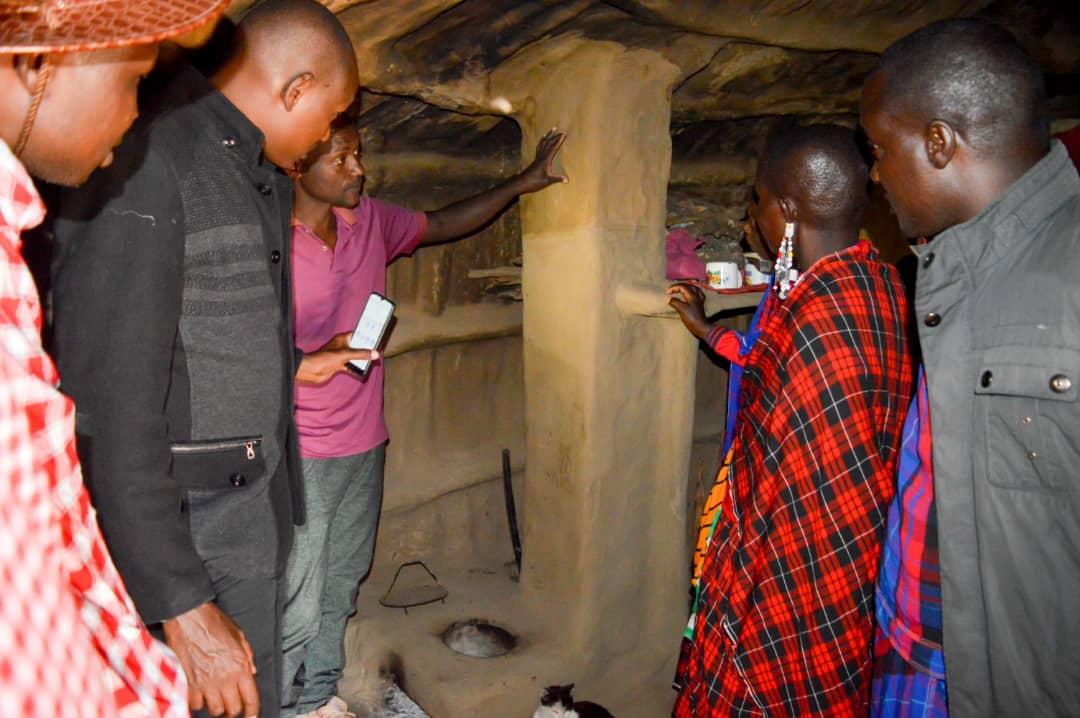
No matter what the external conditions are that require attention and resources, we continue our work with stoves. This means life in a smoke-free home, less menial labor gathering firewood, and less damage to the wood lots.
Thank you for making it possible to transform all of this into a reality.
|
|
|
|
Thank you for your commitment
and support
|
|
For a better life for rural Africans, and a cleaner environment for all
Office of Programs and Development
International Collaborative, Maasai Stoves & Solar Project
130 South Homeland Ave
Annapolis MD 21401 USA
1-508-735-9176
|
|
|
|
|
|
|