Campaigning for Democracy And Socialism | | |
Oct 23, 2026: The Week in Review
Our Upcoming Task: Protecting The Vote
The Crucial Weeks Between Nov. 3, 2026 and Jan 3, 2027
| |
|
We are in the final week of GOTV, Get Out the Vote. There’s no need to say more. So today we’ll focus on what comes next, which is less well known: PTV, or Protect the Vote. It covers the period between November 3, 2026, and January 3, 2027.
This period after Election Day deserves as much attention as Election Day itself, especially in the waning days of the fascist cabal in the White House. We know they either win elections. Or they claim they were rigged, and begin work to ‘unrig’ them.
Here’s what STV means for us. Watch certification timelines. Watch recounts. Watch court challenges. Watch pressure campaigns targeting local election officials and administrators. Watch efforts to transform routine procedures into evidence of conspiracy.
Most importantly, distinguish between legitimate disputes intended to resolve genuine questions and endless disputes intended to manufacture uncertainty. Democracy requires the former. It cannot survive an unlimited supply of the latter.
Citizens should also reject the comforting belief that institutions alone can solve this problem. Laws matter. Courts matter. Procedures matter. But democratic stability ultimately depends on our political culture. No judge can force people to value truth. No statute can compel good faith. No constitutional provision can substitute for a shared commitment to accepting lawful outcomes.
Here’s the real test: The central challenge after November will not be determining who won. The votes will be counted, the states will certify the results, and the legal disputes will be resolved. The deeper question is whether enough Americans will accept those outcomes once they are known.
Here’s an obvious potential spanner in the works. One obscure federal official, the Clerk of the House, presents the list of the newly elected House to be sworn in by a new House Speaker they have selected. What happens, for example, if President Donald Trump has the current Speaker, Rep. Michael Johnson (R-LA), fire the current Clerk of the House, and then replaces him with a Trump toady? Or doesn’t replace him at all, since, unlike the Senate, a continuous body, the old House evaporates by Jan. 3, 2027? ‘Regular order’ here means it has never happened before and is therefore below our radar.
Trump and the MAGA movement have spent years cultivating the opposite impulse. They have taught supporters to view defeat as evidence of fraud, institutions as enemies, and certification as merely the start of another round of grievance. That strategy does not require constitutional collapse to succeed. It requires only enough confusion, enough distrust, and enough repetition to convince millions of people that no outcome counts unless their side prevails.
If that Trump-imposed chaos takes over our political life, Trump’s fevered dream of invoking the Insurrection Act and trying to impose martial law comes into play. Should that occur, all bets are off.
Democracies do not die only through coups. Sometimes they erode through the systematic destruction of trust. The laws remain, the institutions remain, and elections continue on schedule. What disappears is the shared belief that any outcome is legitimate unless one's own side prevails.
Trump and the MAGA movement have spent years nurturing precisely that belief. They have taught millions of Americans to regard defeat not as a temporary political setback but as evidence of conspiracy. In doing so, they have transformed losing into something unbearable and compromise into something unforgivable. That is why the real struggle after November may not concern ballots, certifications, or court filings. It may concern whether enough Americans still believe that democracy requires something more difficult than winning.
It requires the willingness to lose. It means neither leaders nor political parties nor the government itself is the locus of sovereignty. The 9th and 10th Amendments, often referred to as ‘states rights’ amendments, are actually more than that; they display the influence of John Locke on our founders. The locus of our sovereignty is not in government, but in ‘the people’ themselves, stated twice for good measure, and alluded to again in President Abraham Lincoln’s Gettysburg Address.
A republic can survive recounts, lawsuits, and contested elections. What it cannot survive indefinitely is a political movement and its organizations that accept democratic outcomes only when they deliver power to themselves. This will be complicated work in the weeks after Nov. 3, 2026 for progressive lawyers and organizers alike until a new House is duly sworn in. Git’er done.
[All LeftLinks editorials, unless otherwise designated, express the views of our stalwart editor, Carl Davidson, and not necessarily any organizations he is connected with. Everyone, of course, is welcome to steal them and shamelessly pass them around, far and wide, with or without permission. A thank you note would be welcome, though!]
| | | | |
WE ARE INVITING FEEDBACK!
Please send us your letters, comments, queries, complaints, new ideas. Just keep them short and civil. Longer commentaries and be submitted as articles.
Click Here to send a letter
DIFFICULTY READING US?
View as Webpage
Food for thought: Our weekly format is missing too much of vital ideas in the news. What do you think of 'Daily Extras!' once or twice a week?
We're also considering 'Friday Night at the Movies' for 1940s Noir classics, as well as vital new films yet to gain top Hollywood status. Would you project us from a laptop onto your big screen TV and invite friends for popcorn and a 90-to-120 minute show?
Let us know.
| |
We're going to try something new, and you are all invited.
Saturday Morning Coffee!
Started in August 2022, then going forward every week.
It will be more of a hangout than a formal setting. We can review the news in the previous days' LeftLinks or add a new topic. We can invite guests or carry on with those who show up. We'll try to have a progressive stack keeper should we need one.
Most of all, we will try to be interesting and a good sounding board. If you have a point you would like to make or a guest to invite, send an email to Carl Davidson, carld717@gmail.com
*****************
Continuing weekly, 10:30 to Noon, EDT. Here's the ongoing link:
*******************
NEW FEATURE: A summary and transcript of the previous week:
Full Text and Zoom Summary AVAILABLE HERE
******************
Meeting ID: 868 9706 5843
Let's see what happens!
| |
NoWar2026 Conference:
Beyond Borders: A Global Online Conference Unpacking How the War System Drives Displacement & Militarizes Borders
Friday, October 23 -
Sunday, October 25, 2026
on Zoom
War and militarism drive people from their homes, causing mass displacement.
And the very same weapons companies profiting from war and conflict cash in when governments militarize borders and block the movement of people fleeing violence.
Throughout three days of panels, workshops, and breakout rooms, the #NoWar2026 Conference will examine the interconnections of the war system, migration, and the border industry, with case studies from around the world.
Get tickets!
| |
Jack Metzgar, Presente!
Jack Metzgar, an influential labor educator and working-class historian, died with his family at his home in Oak Park, Illinois, on October 15, 2026. The cause was congestive heart failure; he was 82.
A wake will be held for Jack Metzgar:
Date:
Friday, October 30, 2026
Time: 1:00 pm to 4:00 pm
Place: Zimmerman-Harnett Funeral Home 7319 Madison Street,
Forest Park, IL 60130
A dinner to follow immediately afterwards at: Jimmy’s Place,
7411 Madison Street, Forest Park, IL 60130.
Besides teaching General Studies and Labor Education at Roosevelt University in Chicago, Metzgar co-founded the Midwest Center for Labor Research (now Manufacturing Renaissance)
He long edited its nationally renowned labor education journal, Labor Research Review. Starting in 1982, the Review chronicled the fightback struggles of “Steeltowns” and other hard-hit factory communities, when the terms “Rustbelt” and “deindustrialization” were coined, well before NAFTA. Often featuring articles by labor dissidents, it profiled path-breaking labor organizing strategies that would later become accepted as best union practices. ...Read More and Subscribe
| |  | |
Peter D. Thomas, Presente!
1973-2026
It is with immense sadness and grief that we share the news of the death of our comrade, friend and long-standing member of the Historical Materialism Editorial Board Peter D. Thomas. Peter passed away due to a heart-attack on 11 October 2026, just after he had turned 53.
With an academic background in philosophy and literature from his studies in Australia, having obtained a BA and an MA from the University of Queensland, he came to Europe to pursue his doctoral research in 2000...
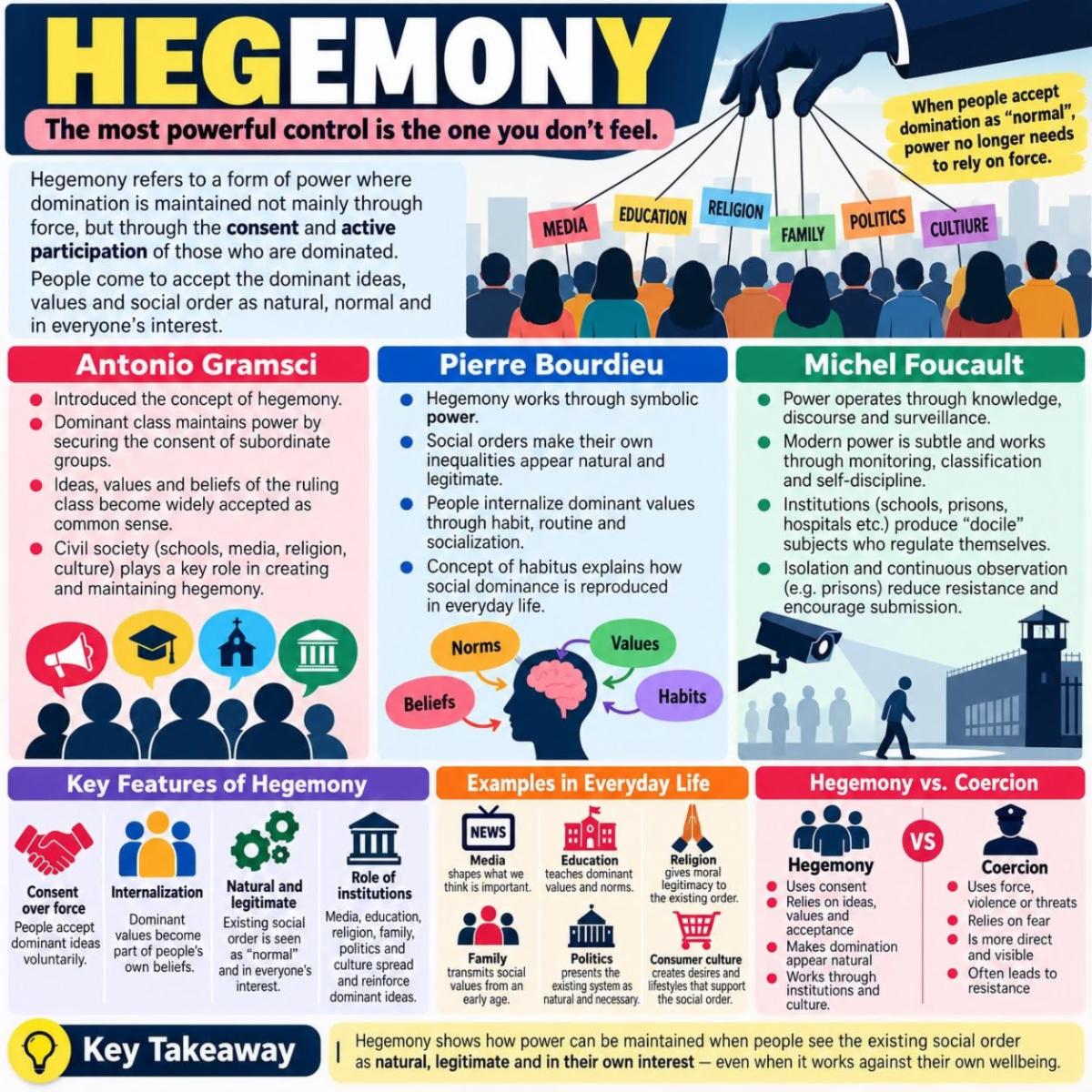
What started as a thesis that attempted an immanent critique of Perry Anderson’s and Louis Althusser’s respective readings of Gramsci – a thesis written under not always easy funding conditions – ended up as perhaps the most original contribution to Gramsci studies in the twenty-first century.
Combining the insights, philological and exegetical, of the Italian research on Gramsci that followed the publication of the critical edition of the Notebooks by Valentino Gerratana, with a non-dogmatic and non-sectarian reading of revolutionary Marxism, Peter produced a highly innovative reading of Gramsci. He understood Gramsci as a militant thinker of open questions of revolutionary practice, politically and intellectually, by both stressing the notion of the integral state and through an insistence on the radical novelty of Gramsci’s philosophy of praxis.
In contrast to traditional readings of Gramsci as a theorist of hegemony as consent, and beyond denunciations of Gramsci’s historicism or reformism, Peter managed to bring to the fore the full experimental richness of Gramsci’s carceral research project, demonstrating how it confronted questions of revolutionary strategy. The Gramscian Moment: Philosophy, Hegemony and Marxism stressed Peter’s ability to combine philological fidelity to Gramsci’s text with a broader engagement with the history of political theory while maintaining a constant focus on the open strategic questions associated with the traditions of revolutionary Marxism.
Peter’s writings on Gramsci, on Marx and on Marxism would only make more evident the creative and insightful character of his work, in particular his insistence that hegemony referred to an experimental and pedagogical subaltern political practice aiming at emancipation as transformation...His articles on the question of organisation, on the modern prince, his highly original return to the notion of the passive revolution, his writings on the subaltern, subalternity and translatability, and his 2023 book on Radical Politics: On the Causes of Contemporary Emancipation, were superb attempts to use his reading of Gramsci as a way to confront contemporary radical politics. ...Read More and Subscribe
| |
Over the next 4 weeks, SNCC Legacy Project will provide opportunities to see, understand, and become more knowledgeable about the history of voting. YOU MUST FIGHT FOR YOUR FREEDOM VOTE is an extension of the One Man, One Vote call to action.
Week 1: What is One Man, One Vote and its current translation to One Person, One Vote
Week 2: The Fight for One Person, One Vote
Week 3: The legacy of One Person, One Vote in the current movement: its impact and who is leading
Week 4: What now?: Actions, Turnout and Execution
View the campaign at www.sncclegacyproject.org
| Solidarity with Polisario: Got Here | |
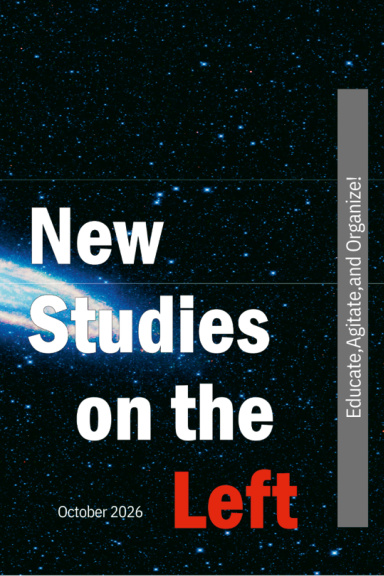
New Studies on the Left is a new socialist journal uniting theory and practice. While we focus mainly on the U.S. left, we cover issues in all countries. We are now in our fourth edition, October 2026 published twice yearly so far, but our aim is to be quarterly.
Editors (still in formation): Erica Carter, Carl Davidson, Bill Fletcher, Jr., Jerry Harris, Jay Jurie, Paul Krehbiel, Ellen Schwartz, Harry Targ, Janet Tucker, Meta Van Sickle, Steve Willett. Layout and Design: Carl Davidson and Lucy Clarke.
Our roots are in the now-discontinued CCDS publication, 'Dialogue and Initiative', 2012-2922, but we also pay tribute to the 1960s 'Studies of the Left' edited by James Weinstein. We hope to continue in his spirit and practice.
$14.95 per issue. Go here to purchase a copy. For discounted bulk orders, contact carld717@gmail.com
October 2026 Table of Contents:
Global Reach
Urgent: A Left Foreign Policy for 2026 and 2028. By Max Elbaum.
US-China Competition in a Multipolar Latin America.By Jerry Harris.
The United States, Israeli Genocide and the War on Iran.By Rod Such.
The Impact of Current Conflicts on the Evolution of World Order. By Wu Zhicheng & Dong Zuozhuang, Quishi.
Revisiting the Cuban Revolution. By Harry Targ.
Social Movements
The Epstein Class: Misogyny on Steroids. By Janet Tucker and Meta VanSickle
On Elections: A Worker-Veteran ‘Organic Intellectual’s’ Reflections on Battles Across a Difficult Terrain. By Vince Emanuele.
Angie Nixon in Florida: Profile of a Progressive Upset Victory. By Jay Jurie.
Theory for Our Time.
How Marxists Might View the UN’s Prospects Today: A Review of the Institution’s History Since Its Founding as a Fruit of the Anti-Fascist Victory in 1945. By Carl Davidson.
Linda Alcoff’s Race and Racism: A Decolonial Approach. An excerpt from the book with notes by the author.
Book and Film Reviews.
Song For a Hard-hit People, A Memoir of Antiracist Solidarity from a Coal Miner’s Daughter. Written by Beth Howard. Reviewed by Janet Tucker.
Writing For Kids Isn’t Baby Stuff. A Look At ‘Jane Addams: The Most Dangerous Woman in America’ and other books for children.By Marlene Targ Brill..
The Symbolic Uses of Politics, written by Murray Edelman. Reviewed by Harry Targ.
Film: Mohammad Rasoulof’s The Seed of the Sacred Fig, on Iran’s ‘Woman Life Freedom’ Uprising. Reviewed by Piruz Alemi & Francine Moccio.
| | | |
News of the Week, Plus More
Our News Editor Team for the week:
Jesse Crawford, Bill Fletcher Jr., Mike Klonsky
Meizhu Lui, Harry Targ, Janet Tucker, Susan Weiss
| | |
MAGA Depravity: Vivek Ramaswamy’s
Vile Attack Ad Is Trumpism in a Nutshell
By Matt Ford
The New Republic
Oct 22, 2026 - The Ohio Republican gubernatorial candidate’s ad against Amy Acton is disqualifying. It’s also precisely what you would expect from a MAGA regime that protects abusers.
President Donald Trump won Ohio by 11 points in 2024. Vivek Ramaswamy, the GOP’s candidate for governor in the Buckeye State, was trailing his Democratic opponent, Amy Acton, by seven points in a Marist poll released yesterday. Ramaswamy now hopes to revive his campaign in the most morally depraved way imaginable: by siding with the man who raped his opponent when she was 12 years old.
Ramaswamy’s campaign admitted this week that it was behind a grotesque attack ad targeting Acton that featured Donna Arthur, her mother. In the ad, Arthur calls her daughter a liar and tells voters not to vote for her in the upcoming election. “Don’t let her become your governor,” Arthur says. “If you think she’ll make your life better, you’re fooling yourself. It will only get worse.”
What the ad does not mention is that Acton is estranged from her mother and has not spoken to her since Arthur lost custody of her children in the late 1970s. Acton accused her mother’s husband, Cledith Arthur, of abusing her as a child, in 1978. Acton’s father reported it to the police, who found it credible—the man had faced prior allegations before—and a local prosecutor brought criminal charges against him.
Before he could be brought to trial, Cledith fled town. Donna Arthur sided with Cledith over her own daughter. She lost custody of her children and remained married to him until his death in 2004. Acton told the Youngstown Vindicator in 2019 that she had last seen her mother in the courthouse after he was charged. “I went to give her a kiss, and she just turned her cheek away,” Acton said. “That was the last time I ever saw her.”
A copy of the Ramaswamy ad circulated without the usual disclaimer language from a candidate, raising initial questions about who was responsible for it. The ad drew a furious response from Phillip Stearns, Acton’s brother, who denounced Ramaswamy and his mother in a statement. “After he was arrested and Amy and I were removed from their custody, our birth mother stayed married to Amy’s rapist until he died,” he said. “This desperate, disgusting attack reveals exactly who Vivek Ramaswamy is at his core—a pathetic excuse for a man who is willing to hurt anyone as long as it gets him what he wants.”
Ramaswamy has previously mocked the abuse that Acton experienced. At one rally, he told voters that as Ohio’s governor, he would “lay out a positive vision for our state, versus a governor who has none at all other than to complain about what someone else did to her.” His campaign initially demurred on whether it was connected to the Donna Arthur ad, out of cowardice, only to admit it was responsible and double down by committing $4 million to broadcast it.
“We don’t know what happened between Amy and her mother, who first spoke out about Amy in 2020, but we know that Amy Acton is a serial fabulist who has some serious problems with the truth that the public needs to be aware of before deciding who to entrust as governor,” Ramaswamy campaign spokesperson Connie Luck told reporters before the campaign acknowledged it was behind the ad.
Ramaswamy’s ad is morally reprehensible and electorally disqualifying. It demonstrates utter contempt for survivors of sexual abuse and domestic violence. It is also unsurprising. Protecting abusers is an organizing principle of Donald Trump’s Republican Party.
Ten years ago this month, The Washington Post released a 2005 video of then-candidate Donald Trump bragging to an Access Hollywood host about his penchant for trying to have sex with married women and sexually assaulting them.
“I better use some Tic Tacs just in case I start kissing her,” Trump said in the clip. “You know I’m automatically attracted to beautiful—I just start kissing them. It’s like a magnet. Just kiss. I don’t even wait. And when you’re a star, they let you do it. You can do anything. Grab ’em by the pussy. You can do anything.” The footage led to widespread condemnation and multiple calls for him to drop out of the race. Trump instead defended the comments as “locker room talk,” then, a few days later, brought women who had previously accused Bill Clinton of sexual misconduct to his second presidential debate with Hillary Clinton.
To support Trump’s political career is to be comfortable with his abuses. Roughly two dozen women have alleged that Trump harassed or assaulted them over the last four decades. He has never been charged with a crime for these allegations, and he has disputed or denied all of the allegations over the years. E. Jean Carroll, who said in 2019 that Trump had raped her in the mid-1990s in a Manhattan department store, was awarded $5 million by a New York jury after she sued Trump for defamation after he said she was “totally lying.”
Trump cabinet members face allegations of sexual assault
Two members of Trump’s second-term Cabinet have faced allegations of domestic abuse and/or sexual assault. Secretary of Defense Pete Hegseth reportedly paid a woman $50,000 after she accused him of sexual assault in 2017. Republican senators threatened to vote against his confirmation over the allegations, only to bow to pressure from the White House and, in particular, Vice President JD Vance.
When a former nanny said Robert F. Kennedy Jr. had groped her in the 1990s, during his 2024 presidential campaign, he simply replied, “I am not a church boy.” The allegations barely factored into his confirmation process as secretary of health and human services last year; every Republican senator voted to confirm him except Mitch McConnell, who rejected Kennedy’s views on vaccines.
Trump even tried to install a third Cabinet member with a history of sexual misconduct allegations when he nominated former Florida Representative Matt Gaetz for attorney general. That nomination only failed because so many congressional Republicans found Gaetz to be personally loathsome. A wave of leaks followed about a then-impending House Ethics Committee report that, among other things, said Gaetz had paid a 17-year-old girl for sex when he was 35 years old. Gaetz withdrew his name from consideration the following week.
Then there’s Jeffrey Epstein. Trump had a long-standing friendship with the billionaire sex trafficker that persisted well after Epstein’s first encounter with federal prosecutors in the 2000s. (He died in federal custody in 2018 while awaiting trial on a second bout of charges.) Trump allies hoped to crack open the Epstein files in the Justice Department’s possession to implicate Democrats in a wide-ranging scheme of child sex trafficking. What they revealed instead was strong evidence that Trump was personally aware of Epstein’s activities, as well as some unverified allegations that he partook in them... ...Read More and Subscribe
| | |
Ilhan Omar SPEAKS OUT After Home Raid: ‘Their Goal Is To Intimidate’
MS NOW's Chris Hayes sits down for an exclusive interview with Rep. Ilhan Omar following the raid of her D.C. home. “I think ultimately their goal is to intimidate and like scare people from wanting to participate and vote,” says Omar.
| | |
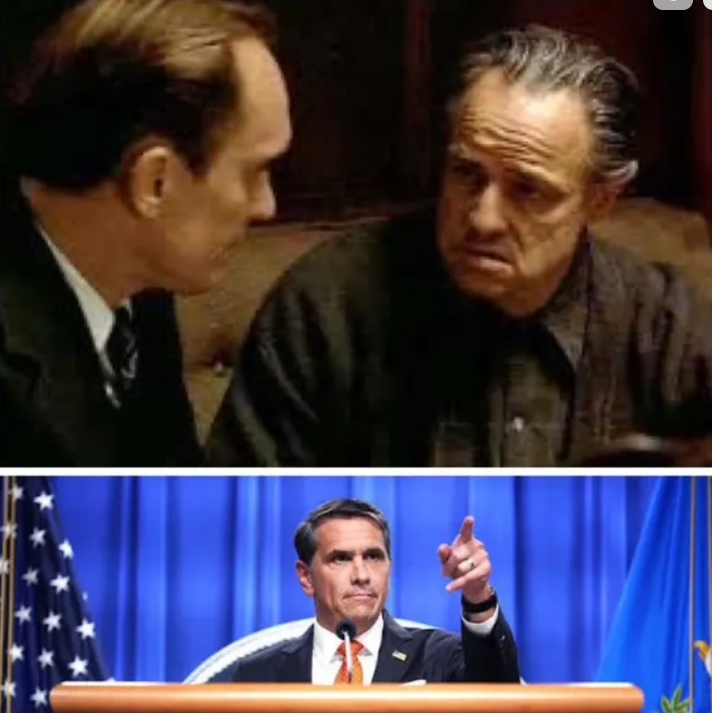
Photo: Consiglieres —AG Blanche and Tom Hagen (Robert Duvall) in The Godfather.
Blanche Is Trump’s Consigliere
When AG Blanche says, 'I work for the President,' Rep. Omar gets home raided in the middle of the night. What’s next? Protect the vote.
By Michael Klonsky
michaelklonsky.substack.com
Oct. 22, 2026 - American-style fascism looks to me more like a vast criminal enterprise (kleptocracy) than it does Germany’s Third Reich. It’s a blend of authoritarian criminal coercion and one of the most powerful mass‑ideological machines ever built. What Naomi Klein calls platform capitalism. Think ICE + Meta backed by the power of the president, the War Department, and the Supreme Court.
* * *
In that light, I’m listening to Attorney General Todd Blanche’s declaration that he “works for President Trump”, not us. He’s Trump’s consigliere, if you will. The Tom Hagen character in The Godfather is the archetype of the consigliere, the lawyer‑strategist whose loyalty is personal, not institutional.
Before becoming Attorney General, Blanche spent years as Donald Trump’s personal criminal defense lawyer, representing him in every major prosecution from 2023–2024. This included the New York hush‑money case, the federal classified‑documents case, and the federal election‑obstruction case.
I see a straight line between the predawn raid on Rep. Ilhan Omar’s home and Blanche’s declaration. You don’t need to squint to see it. You only need to take Blanche at his word.
The raid happened just before dawn, four days before early voting begins in Minnesota. Omar is on the ballot. Trump has continuously lashed out, not only at Omar, but at the entire Somali immigrant community in Minnesota. Omar is also one of Trump’s most frequent rhetorical targets, a fixture in his rallies, fundraising emails, and grievance repertoire. Federal law enforcement showed up at her door in the night, and Blanche tells the country that he does not serve the public, or the law, or the Constitution, but the president personally.
* * *
Now Blanche is warning us that he may challenge election certifications to block various states from certifying midterm election votes. He may even enlist the Supreme Court’s backing to tip the vote totals Trump’s way. Blanche said there could be some “doomsday” scenario in which the Justice Department would seek to get involved.
While private citizens and candidates can sue to challenge ballots or election results, no U.S. laws allow the Justice Department to challenge ballots or delay certification. State and local officials run U.S. elections and certify results.
But the consigliere knows how to get it done — law or no law. ...Read More and Subscribe
| | |
Student Uprising In France
An Interview With Basile Copin From La France Insoumise Youth
By Basile Copin
Amandla! Collective
Basile Copin is a law student at Nanterre University and co-organizer of the “Jeunes Insoumis” (La France Insoumise Youth Group) of Pantin and Aubervilliers- Seine Saint Denis.
October, 18, 202 - There are reports that this is a movement from below, originating in working-class high schools in the Paris suburbs. Is that correct? How did it start? What sparked it?
In Hexagonal [mainland] France, secondary-school students have been mobilizing since 18 September to protest against the lack of resources in the national education system, which prevents them from pursuing their studies properly and looking to the future with confidence. The first mobilization took place in Créteil, following a teachers’ strike at Saint-Exupéry secondary school. Very quickly, many other schools across the country followed suit, particularly in the poorest areas, such as Seine-Saint-Denis.
Protests had already broken out earlier in the overseas territories (Mayotte, French Guiana, the Antilles, etc.), but they had been ignored — there was no mention in the media, which now claims that the protests began in September. The erosion of the national education system, and of public services more generally, affects residents of the overseas territories more severely. They have less money to live on, problems accessing essential services such as water, inadequate infrastructure and greater social inequalities: unemployment is two to three times higher than in metropolitan France. They are also more severely affected by climate change. One of the main triggers is the increasing impoverishment of families living in areas that already lack the resources needed to guarantee decent living conditions.
How did it spread and become a national protest movement?
Through social media, many Parisian secondary schools joined the movement ‘in solidarity with the 93’. This refers to the department of Seine-Saint-Denis, a largely working-class area in the northeastern suburbs of Paris where blockades have been particularly widespread. The movement then spread throughout the country. Many other movements quickly expressed their support for the secondary-school students, beginning with university students, who had already mobilized at the start of the month to protest against the risk of universities being privatized.
In my view, media coverage and government repression raised awareness among some people who had traditionally shown little solidarity with young people from working-class neighborhoods. Many university campuses were closed, including institutions that have historically been reluctant to protest, such as the private Institut Catholique de Paris. Better-resourced Parisian secondary schools, including some private ones, also organized blockades. Public-sector trade unions, including those representing teachers and firefighters, also joined the movement. The firefighters had mobilized at the same time after having had to confront months of record summer heat and fires with ever fewer resources. Former prime minister Gabriel Attal had notably canceled an order for two new Canadair firefighting aircraft.
This is therefore an unprecedented mobilization, bringing together a wide range of people exasperated by the deterioration of French public services. A major Yellow Vests mobilization has also been called for 17 October.
What are the demands of the movement and are they evolving as the protest grows?
There are a wide range of demands, but most concern the underfunding of national education and public services, a consequence of the accelerating liberalisation of the country over several decades. Secondary schools have suffered funding cuts for several years. Urgent repairs cannot be carried out, particularly in the poorest areas on the outskirts of Paris. Buildings are poorly insulated (making indoor temperatures almost unbearable in summer and winter), and there are either not enough toilets, or they are not always available.
Where the uprisings began, secondary-school students are demanding the resources they need to study in decent conditions, particularly the effective replacement of teachers who are absent.
In the vast majority of secondary schools, most pupils are missing at least one teacher because of inadequate staffing. Even when teachers are absent for long periods (as much as several months), they are not replaced, except in the years leading up to examinations. Teachers are only recruited from within their own educational district, which means that sometimes there are fewer applicants than vacancies.
In Seine-Saint-Denis, a pupil loses an average of between 12 and 18 months of learning over the course of their schooling; that’s above the average for French pupils. Because of the increasing impoverishment of society, nearly one in four children have to skip at least one meal a day. School meals are supposed to be affordable, but the dilapidated state of schools in the suburbs makes these meals unfit to eat, with food sometimes contaminated by parasites or insects.
Access to water is also a very important demand because a considerable number of schools, especially in overseas territories, lack access to drinking water. Some schools are even contaminated, with faecal matter found in tap water. Finally, students are demanding decent premises: for example, many secondary schools and universities have mould in their buildings, which is extremely dangerous for respiratory health; cracked ceilings collapse onto pupils or staff; there are sometimes rats; and prefabricated classrooms intended as temporary solutions have remained in place for 20 years. University students are also demanding more affordable access to housing.
How is it organized? There are always challenges for such movements, with tension between horizontal and vertical forms of organizing. Is a form of national organization emerging or is this still a collection of local organizations?
What is notable about the emergence of this movement is that it was organized by the secondary-school students themselves. They organized independently and succeeded in coordinating their actions. Some, after ending their own blockade, went to support students at neighboring schools or in nearby towns.
This large-scale mobilization naturally drew organizations and trade unions into the struggle, while ensuring that they did not impose a top-down organizational structure. Social media also enabled young people throughout France to come together and create large-scale movements nationally, rather than limiting mobilization to the local level. For example, a call to ‘retake the Bastille’ emerged on social media, leading to one of the largest gatherings on Thursday 8 October. This is a reference to the storming of the Bastille on 14 July 1789, during the French Revolution, commemorated on France’s national day.
There are some suggestions that this is broader than just about issues of schools; it is a mobilization also against the rise of the right – a youth response to that, in the light of elections coming next year. How far is that the case?
Beyond demands relating to education, the movement has also taken a stand against neoliberal and far-right policies. This is not surprising when one considers that the parties supporting President Macron have voted together with France’s largest far-right party, the Rassemblement National (RN), on as many as 86% of its measures in the National Assembly. Many slogans have been heard, including ‘Everybody hates the RN’, ‘Youth says fuck the National Front’ (the RN’s former name), and the Italian slogan ‘Siamo tutti antifascisti’ (‘We are all anti-fascists’), making clear that young people reject reactionary policies. Record youth participation is anticipated in the next presidential election, and nearly one young voter in two is considering voting for Jean-Luc Mélenchon, the candidate of France’s radical left.
There’s a lot of violence against the protestors, with reports of 215 students and 85 teachers badly injured. How are the students responding to this?
Unfortunately, the number of abuses committed against secondary-school students has increased dramatically since you asked your question. This unjustified violence has deepened the already widespread distrust of the police and other public institutions. Many elected representatives of La France Insoumise (LFI), the movement represented by Jean-Luc Mélenchon in presidential elections, have supported young people facing violence. They have even gone as far as to intervene directly against the police, as the mayor of Saint-Denis, Bally Bagayoko, did. He and other elected representatives have also been roughly treated by the police.
Reactions have varied: some young people are terrified of an institution that is supposed to protect them but instead chooses to repress them, while a whole section of the population is outraged. They include elected members of the radical left, but also parents, teachers and lawyers mobilizing to defend the children.
There are reports that university students, parents, and also workers are becoming mobilised. To what extent is this true?
Large numbers of activists, parents and workers have mobilized alongside the young people. Some have formed human chains in front of the pupils to act as a barrier against the security forces. This is very important: the mobilization has grown and is supported by a much broader section of the population than university and secondary-school students alone.
This unprecedented mobilization presents an opportunity to put intersectionality and the convergence of struggles and demands across society into practice, as people express concern about the country’s future. Although many elected representatives and trade unions are present alongside the young people, they leave the young people at the front of the demonstrations, to emphasize the desire for change expressed by Gen Z and those who are even younger.
We have heard that, unlike other youth uprisings (including ours here in 2015), political party representatives are being welcomed rather than being treated with suspicion as opportunists. Is that the case? If so, why?
Many movements and political parties have joined the movement, but it is important to distinguish between them on the basis of what they say and what they do. The vast majority of parties that have joined are on the Left or identified with the Left. But there are significant differences in how they act. On one side are movements such as La France Insoumise, whose elected representatives have put themselves on the front line to protect young protesters from police violence. This movement is committed to responding to secondary-school students’ demands and investing heavily in education. As a result, its representatives and activists are welcomed by secondary-school students and young people.
On the other side is a significant section of ‘social democracy’, represented in particular by the Socialist Party, which has long demonstrated that it is neither social nor democratic. Its elected representatives promise support for young people in struggle, but their record when in power paradoxically demonstrates the opposite. Former president François Hollande, from the Socialist Party, was responsible for the largest cuts to funding for French public schools (before Emmanuel Macron) and facilitated Macron’s rise to power by appointing him economy minister. The right and far right have not even deigned to pretend to listen to the young people, preferring to call them ‘thugs’ and ‘layabouts’ on television. There is therefore only one bulwark left against the destruction of public education in France, which is why the radical left enjoys so much support among young people today.
Of course, as activists from far away, as soon as we hear of a student uprising in France, we think of May 68. We are probably dreaming. To what extent is there any resemblance?
There are strong parallels with the events of May 1968. Although the current movement has not yet reached the scale of that uprising, it is one of the largest youth mobilizations since then. The French government has expressed fears about the movement continuing, and some people are describing the days ahead as ‘the return of the Yellow Vests’, the mass movement that brought the country to a standstill in 2018 and 2019, with a first mobilisation planned for 17 October
It is encouraging to see that France’s young people still recognise that the French people are revolutionary by nature and have always known how to rise up when those in power take away their rights. Today, Gen Z and those who follow must decide: would they prefer to continue with a neoliberal system that is preparing to put the far right in power in 2027? Or are they ready to break with the logic of dismantling public services by rebuilding a new, more egalitarian society through the creation of a Sixth Republic, as advocated by La France Insoumise and Jean-Luc Mélenchon? ...Read More and Subscribe
| | |
'Trump Is Our Bully'
Why some Americans can't quit the president
By Chauncey DeVega
Reuters
Oct 21, 2026 - The American people are preparing to vote in what will be one of the most important midterm elections in the country’s history.
Leading political analysts and pollsters predict that Donald Trump and his MAGA Republicans are facing an electoral wipeout. They will likely lose control of the House — and perhaps even the Senate. Driving this is a collapse in support among Trump’s base voters who returned him to the White House in the 2024 Election.
A new Reuters/Ipsos poll puts Trump’s approval rating at a record low 31%.
But Trump has not lost all of his base.
Trump and the MAGA Republicans have inflicted a large amount of economic and material pain on the white working class and poor people in Appalachia and other rural parts of red-state America. Yet, many of these people still love him. Why?
Arlie Hochschild, professor emerita of sociology at the University of California, Berkeley, has spent years exploring this question. She is the author of many books, including Strangers in Their Own Land and, most recently, Stolen Pride: Loss, Shame, and the Rise of the Right.
Emotional Capture
In this conversation, Hochschild warns that President Trump has “emotionally captured” many poor and working-class voters by speaking to their economic insecurity, resentment, wounded dignity and sense of lost honor. Drawing on her recent experiences in eastern Kentucky, she explores the forces behind Trump’s enduring appeal and what liberals and Democrats should do to break Trump’s hold over the region.
NBC News recently featured a harrowing, just an outright sad story, about a rural community in West Virginia that overwhelmingly voted for Trump but is now experiencing widespread hunger. People are literally starving because of his administration’s cuts to the social safety net and the MAGA Republicans’ “Big Beautiful Bill.” Help me understand how these people can continue to support a man who is actively hurting them?
For the last five years, I have been spending time in Kentucky's 5th congressional district. It's the second poorest and whitest congressional district in the country, and it used to support the New Deal Democrats. In the last three elections, it zinged to the right. 80% for Trump, 20% for Harris among those who voted. This is a region of loss.
You had coal jobs. They were tough jobs. They gave you black lung. You died early, but they were well paid in a one-industry region. Those jobs have left, and everybody knows they're really not coming back. Opiates have come in big time. Jobs out, opiates in. The rise of the right around the country has to do with a response to loss, and these guys have lost a lot.
In comes Donald Trump. I describe what he did as emotional capture.
Part one: someone comes from out of town, a type of magic man, and he makes an appeal for recognition. How did a billionaire of New York City make Appalachian unemployed coal miners feel recognized? You talk to loss. He talked about how terrible things are. He says things like how low down you are. You used to be proud, and now you're ashamed. You used to have a lot and make a contribution to the country, and now you're nothing.
The second is a persuasive narrative. I call it the narrative of stolen pride. Who took that pride? It didn't just go away. Someone stole it. Trump signals that he recognizes that it was stolen. I'll get it back with retribution, he says. Maybe someone else is responsible. Maybe it's the immigrants, people in the press, government workers.
The third thing is an anti-shaming ritual. Donald Trump says something outrageous. He says Haitian immigrants are eating people's pet cats and dogs. The pundits shame him. The comics and left-wing commentators have at him. Donald Trump becomes the victim of the shamers. “Look how they're shaming me. Don't you, my supporters, know what that feels like? You guys that used to be something. They are doing to me what they want to do to you!”
And here is Donald Trump's hidden Jesus moment: I will take the shame off of you. I take it onto myself. Welding yourself to me must feel good. I'm heavier. I have the burden that was once on you.
When the camera is not on them, and the mic is off, do these people really believe in Donald Trump?
No. I talked to people before the second term, and they'd say, "Oh, I know he's a liar and a bully, but he's good for us. Nobody else is here for us. Trump is our bully. I heard that a lot. Don't think I'm fooled. They are allergic to anything they perceive as left-wing — and they really hate that more than a lying, depriving, Republican president.
The sense I have now is that they don't think Trump is wonderful. Now I hear people who are depressed. The shine is off the magic man Trump. But the people who live in this part of Appalachia are stoics. They are used to being punished by life, and they're going into an "Okay, I can bear it" mode. There isn't switching gears, but there's a retreat, a type of depressive withdrawal, and they are prepared to be shamed for having voted for the guy that's making them miserable.
But the Democrats should not go there. Instead, they should say we have better ideas. There are real problems in your region, and we're devoted to taking them on. The Democrats have to look at themselves and make every alliance they can. The Democrats have been marginalized in this culture — and they are in danger of that marginalization becoming worse.
Under Trump’s second term, are things getting better or worse for the working-class and poor people in rural Appalachia and similar communities?
It is terrible. All the promises have not come through. Donald Trump has not brought back coal. He has not brought back well-paying jobs in other industries. Trump has not substantively addressed the opiate crisis. And of course, all of the cuts made by the “Big Beautiful Bill” have been especially lethal for people in Appalachia and other parts of rural America. Food stamps have been cut. This is a food-insecure region. So, they're in a hole.
I'm very interested in how individuals and communities cope with adversity and stress. What are you seeing in the churches, the community centers, and other places where people gather and socialize in this part of Appalachia? What are you sensing?
I think that Donald Trump has found fertile territory in the social deserts that loss and downward mobility have created. The Rotary Club meetings and small shops have been undercut by Amazon and Home Depot. There are lots of dollar stores and gas stations, but not many social gathering places. That has to be addressed and rebuilt.
Eight or nine months ago, I went back to Pike County for what the people in Stolen Pride called a “hollerlogue.” Some were for Trump, and some were very against him. I thought it was brilliant. People on the left, liberals who are living in cities and highly educated, have a lot to learn from these folks about how to talk across the political divide.
One guy who was very anti-Trump began by saying, “I think every child, whether they come from a poor family or a rich family, ought to be able to eat three meals a day.”
The Trump supporters agreed. But the anti-Trumper said, “Donald Trump is cutting food stamps, and we're the second-poorest area in the country, so I'm against Donald Trump.”
The Trump follower replied, “I thought he wasn’t cutting food. If you're able-bodied, you should be able to work 35 hours for that food. And I believe in work.”
“Look, I believe in work too,” the anti-Trumper said, “but a lot of people are caring for others who are ill, and some are mothers of small children who can't work. The jobs here only pay eight or nine dollars an hour. We all drive clunkers and live in the mountains. Once you spend money on gas you have lost money. How can you say you have to work for food stamps with no sustaining jobs?”
But it was all respectful. They would take breaks to reaffirm what they had in common. I thought it was a local model for something that should be happening nationally.
Under Trump, there's been the lateralization of resentment and hate, so that the middle class is fighting the middle class. Meanwhile, money and resources are being transferred from the poor to the rich. Divide and rule is preventing the kinds of alliances that the liberal left needs to rebuild in the absence of unions.
What would you say to liberals, progressives, Democrats, and others who, like me, are losing — or have lost — much of their empathy for the Trump supporters who are being hurt by the very policies and man they put back in the White House?
I would introduce you to people on the other side that you would like, and that you would feel are kind and who share your concerns. It doesn't take long to peel back some of this Trump-fostered hate. What it takes is recognizing them as human beings and remembering that these were Clinton Democrats. They were big New Dealers in this area. This area. Same people, same lineage, same family. They are emotionally captured by Trump.
In whose interest is it to divide and rule? It's in the interest of Donald Trump. It is not in our interests as progressives and liberals and Democrats to divide rural from urban, poor from middle class, college-educated and those who are less formally educated. We're playing into Trump's hands the more we divide and separate. We're digging our own graves in this way without reaching out. ...Read More and Subscribe
Chauncey DeVega is a politics and opinion writer whose work considers American democracy, inequality, political power, and the enduring significance of race in American society and the wider world. He was formerly a senior politics writer at Salon. His essays and commentary have been cited by The New York Times, The Washington Post, the BBC, NPR, The Atlantic, and other leading publications. He hosts two podcasts: The Chauncey DeVega Show and The Truth Report.
| | |
OUR WEEKLY ICE ROUNDUP... Edited by Susan Weiss (right).
Photo ABOVE: Via Truthout: A protest against Immigration and Customs Enforcement (ICE) activities on October 9, 2026 in New York City. New Yorkers took to the streets a day after an Immigration and Customs Enforcement (ICE) agent shot a 28-year-old man,
Oscar Belgal, in the Marble Hill neighborhood of the Bronx. Stephanie Keith / Getty Images Oscar Belgal, the 28-year-old Dominican man shot by Immigration and Customs Enforcement (ICE) in New York City last Thursday, has not received surgery to remove a bullet lodged in his neck for over a week.
Lawyers for Oscar Belgal have called for his immediate release, citing inadequate care.
On Wednesday, the Legal Aid Society, which is representing Belgal, filed a habeas corpus petition decrying ICE’s “flagrant abuses of authority and categorically lawless conduct.”
Video Below: Video of masked ICE arrest in San Francisco sparks outrage
ABC7 News Bay Area: An immigration arrest of a San Francisco man caught on camera is fueling protests, calls for expanded legal aid and renewed debate over federal enforcement tactics.
| | |
|
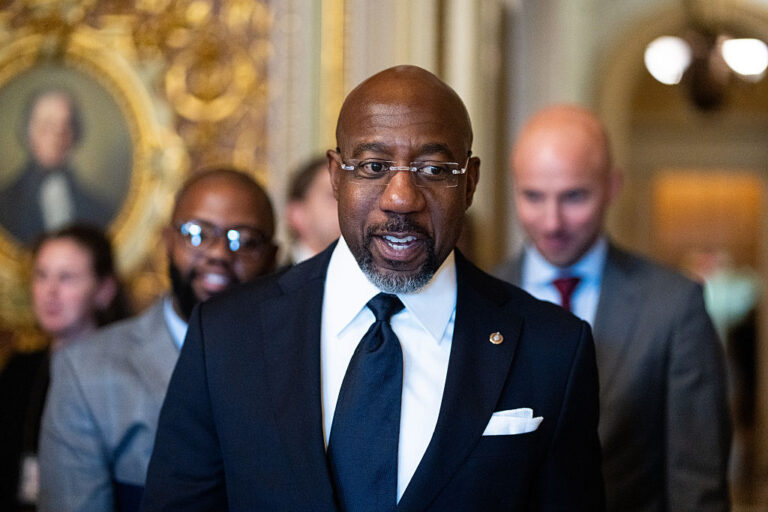
Photo: Sen. Raphael Warnock, D-Ga., walks through the Senate Reception Room to vote in the Senate chamber in the U.S. Capitol on Tuesday, September 29, 2026. (Bill Clark/CQ-Roll Call, Inc via Getty Images)
Sen. Raphael Warnock (D-GA) Secures $97.1M
for 10 Historically Black Colleges and Universities
Funds Will Put Black STEM Talent in Focus
By Ann Brown
Finurah.com
Oct 14, 2026 - Sen. Raphael Warnock announced that he is securing nearly $100 million in federal funding for science, technology, engineering and mathematics (STEM) programs at 10 Historically Black Colleges and Universities (HBCUs). The investment is expected to expand research opportunities and support the next generation of scientists and engineers.
Supporting HBCUs
The Georgia Democrat and Morehouse College graduate announced the $97.1 million award through the Department of Defense’s HBCU and Minority-Serving Institution program. The funding will support research initiatives and strengthen institutional capabilities as participating schools work toward achieving Research 1 (R1) status, the highest classification for research activity among U.S. colleges and universities.
“For too long, HBCUs have gone unrecognized for their contributions to our nation’s leading STEM industry,” Warnock said. “These institutions serve as stewards of academic excellence and innovation, and this federal investment specifically in STEM programs honors that legacy of greatness and expands opportunity for the next generation of scientists.”
The 10 HBCUs receiving funding are:
North Carolina Agricultural and Technical State University: $10 million
Florida A&M University: $10 million
Morgan State University: $10 million
Texas Southern University: $9,997,847
Delaware State University: $9,998,873
University of the District of Columbia: $9,982,865
Fayetteville State University: $9,905,607
Prairie View A&M University: $9,858,194
Clark Atlanta University: $9,784,632.00
Jackson State University: $7,573,527
Despite their contributions, Black professionals remain underrepresented in the nation’s STEM workforce, underscoring the importance of expanding access to research, training and career opportunities.
HBCUs have played a major role in preparing students for careers in STEM, producing approximately 28% of Black STEM graduates in the United States despite representing only about 3% of the nation’s colleges and universities, according to an August UNCF report entitled “HBCUs Still Punching Above Their Weight.”
North Carolina A&T State University is the nation’s leading producer of Black STEM and engineering graduates. Florida A&M University has a strong track record in biological sciences, mathematics and engineering. Alabama A&M University is recognized for its computer science, engineering and mathematics programs, while Howard University has educated generations of Black scientists, particularly in engineering and the biological and physical sciences.
Warnock has made federal support for HBCUs a priority since beginning his full Senate term in 2022. He has secured more than $17 billion for HBCU campuses nationwide, including nearly $275 million for institutions in Georgia.
Warnock has also worked to expand HBCUs’ access to federal research funding through the bipartisan HBCU Research Capacity Act. The legislation would establish a federally coordinated website compiling STEM research and development funding opportunities available to HBCUs.
In March, Warnock hosted more than 30 HBCU presidents at the U.S. Capitol to discuss ways to expand access to federal grants. ...Read More and Subscribe
| | |
Rare photo: Chinese Communist troops photographed after reaching the base established at Yenan in northern Shaanxi province, China, at the conclusion of the Long March, 1935. by GRANGER Rights Managed
History Lesson of the Week: The Long March at Ninety: Sovereignty and Dual Power
Dear friends, Greetings from the desk of Tricontinental Asia.
This month, ninety years ago, the Long March came to an end. On 22 October 1936, at Huining and Jiangtaibao, on the plateau where Gansu meets Shaanxi, the First, Second, and Fourth Front Armies of the Red Army joined forces. The last of the columns had arrived.
After two years of fighting and walking – traversing more than nine thousand kilometres, eighteen mountain ranges, twenty-four rivers, pursued from the air and by hundreds of thousands of enemy troops – the Chinese revolution arrived in Yan’an. The communists had travelled from southern Jiangxi to northern Shaanxi, making that dusty town of ten thousand inhabitants the new seat of resistance.
What arrived in the north was not only an army. Of the 86,000 who left the Central Soviet Area in 1934, some 8,000 reached the end of the road – ‘an odyssey unequal in modern times’, said US journalist Edgar Snow in Red Star Over China. Yet the marchers carried something no encirclement could destroy: the experience of the Chinese Soviet Republic established in Ruijin, Jiangxi, in 1931, an experience of building power before taking power – a state formed from below.
Never Forget Those Who Dug the Well
Long before the Chinese communists governed from Beijing, they learned to govern in the rural areas. In November 1931, 610 delegates from revolutionary base areas, Red Army units, and workers’ and peasants’ organisations gathered at Yeping, Ruijin, and founded the Chinese Soviet Republic – China’s first workers’ and peasants’ democratic government at the national level. Its outline constitution vested power in workers, peasants, and Red Army soldiers, extended the vote from the age of sixteen regardless of sex, and enacted land, labour, and marriage laws that turned the great questions of village life into matters of public right: who would cultivate the land, whether a woman could choose her husband, whether a poor family’s child could go to school.
The republic was dual power in practice: an alternative state growing inside the territory of an old and hostile order, with its own army, law, and money. Its National Bank opened in February 1932 with five staff members and began issuing the republic’s own currency – with Lenin’s face on the one-yuan note.
When the Kuomintang’s (KMT) blockade cut the base off from salt, medicine, and cloth, a Foreign Trade Bureau traded rice and tungsten for what the people could not live without. A news agency founded with the republic printed Red China, which circulated more than forty thousand copies by 1934. By January 1934, 3,052 ‘Lenin schools’ enrolled 89,710 children – about half the school-age children of the base – in classrooms improvised from ancestral halls.
Elections published candidate lists and allowed recall; in one township, voters removed a candidate who had taken good land for himself and another who could not account for donated funds. Cadres were schooled in the method that came to define the revolution: the mass line – learn from the people, concentrate their experience into policy, return to the people through organisation and action.
In the town of Shazhouba, Mao Zedong would sit beneath the old camphor tree outside his residence and talk with villagers about their daily lives. Through these conversations, Mao learned that they drew drinking and cooking water from muddy ponds also used by livestock. Mao investigated possible water sources with cadres and soldiers and argued for digging a well – overcoming local superstitious fears – and took responsibility for beginning the work. That well still stands, with a stone tablet behind it that reads: ‘When drinking water, never forget those who dug the well’.
The Long March was a strategic retreat after the communists understood that they could no longer withstand the KMT’s Fifth Encirclement, but it was not a retreat into nothing. They were carrying with them the experience of the republic – its laws, currency, schools, and method – across China. It was also during the Zunyi meeting of January 1935 – in the midst of the Long March – that Mao’s leadership of the Communist Party of China was established in practice.
Three Forms of Power
Here at Tricontinental: Institute for Social Research, we have been discussing different forms of power in preparation for an upcoming dossier. Social power is the organized capacity of the people to act together and shape common sense. Governmental power is the capacity to enter and use the institutions of office. Systemic power is the capacity to transform the class character of the state and bring the means of production and the social surplus under democratic authority. These distinctions matter because an electoral victory is not a revolution, and a social movement is difficult to sustain without building institutions.
Ruijin and Yan’an show the three forms built together, as one process, under the most hostile conditions. Social power was built through more than ten thousand cooperatives, women’s organisations, literacy classes that taught peasants to write, and political education that cultivated cadres. Governmental power was built through the soviet congresses, the constitution, and the commissariats of land, labour, finance, and education – institutions answerable to the mass base. Systemic power was built through land redistribution that abolished landlord property, an eight-hour day with equal pay, and a bank that placed finance under revolutionary authority.
In the base areas, social organization, armed authority, administration, land reform, and new political institutions developed together in territories contested with the old order. This is dual power as strategy in which power is understood as a process, with every institution measured by whether ordinary people increasingly gain the capacity to shape their lives... ...Read More and Subscribe
| | |
Book Review: Reading Jay’s Book Was Like a Homecoming
Outside the Box
by Jay Feldman
Ten16 Press
October, 2026
By Michael Klonsky
michaelklonsky.substack.com
So there it is: I grew up in a Communist household. I was a red diaper baby, weaned on tales of Joe Hill, Sacco and Vanzetti, and the Scottsboro Boys, and a veteran, at a tender age, of Camp Kinderland, the American Labor Party, and May Day rallies in Union Square. — Jay Feldman, Outside the Box (Ten 16 Press).
Oc 17, 2026 - Jay’s memoir hit me with a force I didn’t expect. Part of that is personal. Jay and I shared summers at Camp Kinderland in the 1950s, a place where Jewish/socialist consciousness wasn’t taught so much as lived. Reading Outside the Box felt like walking back into that world—the songs, the arguments, the sense that history was something we were already inside of, even as children.
Like me, Jay grew up in a communist family during the McCarthy period, when the old Soviet Union was more accusation than reality. His memoir captures that perfectly. The USSR appears not as a place he idealized, but as the political shadow cast over Jewish left‑wing families during the Cold War, a force shaping how others saw us more than how we saw ourselves.
Like me, Jay rejected the old left and headed west to join the new one. He went to Berkeley, got arrested during the Free Speech Movement, and became part of the youth counter-culture and commune movement of the ‘60s. I went to L.A., joined SDS, and then moved to hard-left politics in Chicago.
I lost touch with Jay after our Kinderland days and didn’t see or hear from him for nearly sixty years. Our lives spun off in different, but overlapping directions, until an old black‑and‑white photo of me and my bunkmates resurfaced. That picture—sunburned faces, crooked grins, the whole improbable world of our youth captured in a moment—became the bridge back to Jay. Reconnecting after all that time made reading his memoir feel less like picking up a book and more like recovering a shared history I didn’t realize I’d been missing.
One unexpected pleasure of the memoir is how his romance with the Brooklyn Dodgers sits alongside all the political upheavals, the communes, the folk music, and the activism. Baseball becomes an emotional home base, a reminder that even the most politically engaged lives are stitched together by private devotions. And of course, rooting for the Dodgers in Brooklyn, before the heartbreaking (for some) move west, was itself a cultural identity, a neighborhood‑bound loyalty that mirrored the tight-knit political world we grew up in.
For anyone who wants to understand the radical left from the inside — not as abstraction, but as lived experience, Outside the Box is a great read. For those of us who were there with him, back in the day, it’s more of a homecoming. ...Read More and Subscribe
| | |
The Racist Origins of Ancient‑Civilisation Myths
Lynch the Historian
Oct 11, 2026
The Ancient Aliens idea is one of the most persistent modern myths — a story that claims the great civilizations of the past were too “primitive” to build their own monuments, cities, and knowledge. But once you look closely, the real story is far more troubling. These theories didn’t arise from curiosity about the stars; they grew out of nineteenth- and twentieth-century racial hierarchies, colonial assumptions, and a refusal to believe that non-European cultures could achieve greatness on their own terms.
Seen through the lens of its history, the Ancient Aliens myth becomes less about extraterrestrials and more about the long shadow of racial thinking — and the extraordinary achievements of the cultures it tried to erase.
If you’d like to explore the scholarship behind this video, these books offer a clear and thoughtful path into the real history of ancient civilizations and the origins of pseudo-archaeology:
David S. Anderson – Ancient Aliens, Race, and Colonialism
Jason Colavito – The Cult of Alien Gods Kenneth
L. Feder – Frauds, Myths, and Mysteries
Eric H. Cline – 1177 B.C.: The Year Civilization Collapsed
Joyce Marcus & Kent V. Flannery – The Creation of Inequality
Michael E. Smith – The Aztecs
| | |
Photo: A group of village women in Uganda learn to use the Divya --The Washing Machine Project
High Design: Non-electric Washing Machine Chalks Up Big Win for Low-tech Ingenuity
The Divya washing machine is operated by a hand crank, and can be wheeled from one location to another
By Malcolm Azania
New Atlas
October 20, 2026 - Over much of the planet, women tend to do more unpaid domestic work than men do – much more. A 2025 Centre for Global Development study reported that across 50 countries, “women spend an average of 29.92 hours weekly on domestic work as a primary activity, while men spend only 9.78.”
While some men might shrug and say, “Division of labor!”, few men opt for such unpaid labor themselves.
That’s because of the massive opportunity cost such dollarless drudgery inflicts. Reduced or zero income means reduced or zero pension security, educational opportunity (including for daughters who generally must assist domestic labor), relocation freedom (to escape poverty, discrimination, violence, or other threats), leisure and personal development time, and general quality of life.
While few social problems can be solved through technology alone, some tools – especially if they’re dependable, easy to repair, available, and inexpensive – can certainly help reduce drudgery, thus freeing time to promote socio-economic advancement and personal liberty.
Enter Navjot Sawhney, a trained aerospace engineer who worked for Dyson UK, and inventor of the Divya washing machine. The company he founded, The Washing Machine Project, manufactures the device in India. It’s a zero-electricity, easily repaired, hand-cranked washing drum for clothing, aimed at people who have been expending countless hours hand-washing clothes.
After moving from the UK to a small South Indian village, Sawhney was alarmed to see how his new neighbor Divya spent up to 20 hours per week hand-washing clothes. After he offered to buy her an electric washing machine, she told him she didn’t have a dependable supply of electricity, access to a back-up generator, or even enough water for such a unit to function.
So, eventually Sawhney devised a solution.
With a capacity of up to 7 kg (15.4 lb) of clothing, his hand-cranked washing machine uses only 30 L (7.93 US gallons) of water, and a user can disassemble it with only two tools. According to the company, the analogue device cuts labor time (compared with manual washing) by 75%, reduces water use by 50%, will work for at least five to 10 years, and arrives partially assembled in a single box with easy-to-follow instructions. To honor the woman who inspired it, Sawhney named it the Divya.
Because the Divya requires no electricity, it’s perfectly suited for impoverished, remote, and/or disaster-stricken regions in which electrical utility is unreliable or non-existent. Therefore, beyond the 105,000 people that the Washing Machine Project has already reached in Iraq, Lebanon, Mexico, Uganda, and the US, the company is planning to reach a million users through development partners such as the UNHCR (United Nations High Commissioner for Refugees), Oxfam, and Plan International by 2030.
The machine has a capacity of up to 7 kg (15.4 lb) of clothing
"In our humanitarian and partner-funded programs, the machine is provided free to end users. We also work with organizations procuring machines for their own programs," Sawhney tells New Atlas. "There is no single retail price for households."
To ensure that their work met genuine local need, the Washing Machine Project says it has "conducted ethnographic research in 13 countries and interviewed more than 3,000 families in Uganda, Kenya, Iraq, Jordan, Lebanon, Cameroon, Jamaica, Nepal, India and the Philippines to gain insight into [local] clothes-washing tendencies."
While the Divya hand-cranked unit seems like a more efficient mechanism than a simple foot-crank washing machine such as the Drumi or the Gira Dora, why not attach the Divya to something like a geared bicycle, given that leg-power could rotate a larger drum?
"We wanted an electricity-free machine that remains self-contained and portable, without needing a separate bicycle or pedal frame," says Sawhney. "Simplicity, repairability and ease of use in households and shared settings have guided the design. A communal pedal-driven system is an interesting different use case, but it is not the current Divya."
The Divya comes with its own set of instructions
That said, Sawhney does have some thoughts on future innovations for the device.
"Our immediate development work is making Divya more useful and maintainable, rather than announcing a separate appliance," he says. Such improvements include "a built-in scrub surface, a wider opening for bulky laundry, faster drainage, and more durable wheels. We are also developing local manufacture, maintenance and shared-access models in India so the benefit lasts beyond delivery of a machine." ...Read More and Subscribe
| | |
New Journals and Books for Radical Education...
Use Changemaker for Your Holiday Gifts,
Thus Lending Us a Hand, Too!
| | |
From Upton
Sinclair's 'Goose Step' to the Neoliberal University
Essays on the Ongoing Transformation of Higher Education
By Daniel Morris
and Harry Targ
Paperback USD 17.00
This is a unique collection of 15 essays by two Purdue University professors who use their institution as a case-in-point study of the changing nature of the American 'multiversity.' They take a book from an earlier time, Upton Sinclair's 'The Goose-Step A Study of American Education' from 1923, which exposed the capitalist corruption of the ivory tower back then and brought it up to date with more far-reaching changes today. time. They also include, as an appendix, a 1967 essay by SDS leader Carl Davidson, who broke some of the original ground on the subject.
Click HERE to Purchase
| |
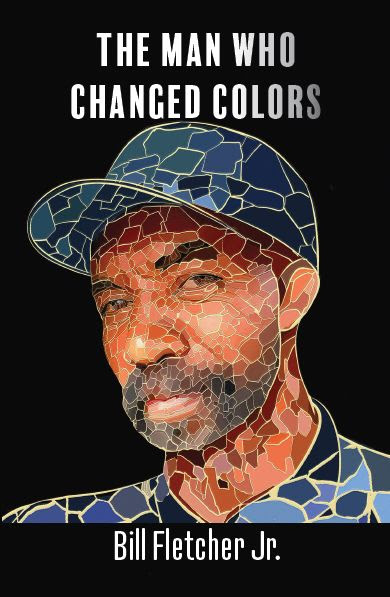
The Man Who Changed Colors
By Bill Fletcher, Jr.
When a dockworker falls to his death under strange circumstances, investigative journalist David Gomes is on the case. His dogged pursuit of the truth puts his life in danger and upends the scrappy Cape Cod newspaper he works for.
Spend a season on the Cape with this gripping, provocative tale that delves into the
complicated relationships between Cape Verdean Americans and African Americans, Portuguese fascist gangs, and abusive shipyard working conditions. From the author of The Man Who Fell From The Sky.
“Bill Fletcher is a truth seeker and a truth teller – even when he’s writing fiction. Not unlike Bill, his character David Gomes is willing to put his life and career in peril to expose the truth. A thrilling read!” − Tavis Smiley, Broadcaster & NY TIMES Bestselling Author
| | |
New Studies on the Left, October 2026
Paperback $14.95
...is a journal of socialist theory and practice. It is the successor to ‘Dialogue and Initiative, published as an annual journal of the Committees of Correspondence for Democracy and Socialism in book form from 2012 to 2022.
It will continue the CCDS policy of left unity, including articles with a variety of left perspectives, including debates.
This issue contains a dozen articles grouped under the headings of Analysis and Global Reach, Social movement campaigns, and Book Reviews. Some are reprinted from other sources, but many appear here for the first time.
Among the authors are:
Piruz Alemi, Maria Martin Alcoff, Marlene Targ Brill, Carl Davidson, Max Elbaum, Vince Emanuel, Jerry Harris, Jay Jurie, Francine Moccio, Rod Such, Harry Targ, Janet Tucker, Meta Van Sickle, Dong Zuozhuang, Wu Zhicheng
Table of Contents
Click HERE to purchase
| |
A China Reader
Edited by Duncan McFarland
A project of the CCDS Socialist Education Project & Online University of the Left
244 pages, $20 (discounts available for quantity orders from carld717@gmail.com), or order at :
The book is a selection of essays offering keen insight into the nature of China and its social system, its internal debates, and its history. It includes several articles on the US and China and the growing efforts of friendship between the Chinese and American peoples.
| | | |
Digging Deeper into the Meaning
of Palestine
By Rod Such
Author's note: My initial decision to begin reviewing books on Palestine and the Palestinian liberation struggle was to write for political activists, rather than academics or the general public. This book, which collects dozens of reviews over a decade, might also be regarded then as a kind of wide-ranging primer or introduction to Palestine that will lead hopefully to an ongoing learning experience.
316 pages, $19.00 (discounts available for quantity), order at:
Changemaker Publications
https://www.lulu.com/spotlight/changemaker
| | | |
Everything Feels Out of Whack
in the United States Today
By Heather Cox Richardson
Letter to an American
Oct 22, 2026 - First of all, the president’s behavior is becoming more and more erratic. Earlier this week, he walked past the open door of his armored car, known as “The Beast” and wandered toward an open field before Secret Service agents redirected him.
And he is losing any filter he used to have. At campaign rallies, he has taken to commenting on how he finds Ohio Republican senator Jon Husted physically attractive. “I looked at his a‑‑, and then I looked at his legs, and my—I said, ‘His a‑‑ is like, it’s like a pile of muscle.’ Then I looked at his legs, and I said, ‘Man, his feet are big.’ Then I looked at his shoulders, and I tapped him on the shoulder, and it actually hurt my hand. It was like a piece of steel. I said, ‘This guy’s a monster.’”
Today he snarled at CNN’s Kaitlan Collins: “You don’t know what you’re talking about. You’re a dummy. You’re a low-IQ person, you’re a dummy, and you work for CNN.”
Putin's Puppet
In the news, Trump’s abandonment of the traditional allies of the United States to embrace Vladimir Putin and Russia remains front and center. Today, videos circulated of Trump’s special envoy to Russia, Steve Witkoff, praising Putin as a “humanitarian” even as the Russian military continues to bombard Ukrainian civilians, this week killing a baby in a stroller at a public park.
Today, former secretary of state Hillary Clinton told Kara Swisher: “I continue to believe that Putin has things on Trump. I continue to believe that he is holding photos, videos, whatever it might be.” Clinton reiterated that Trump “is a willing Putin puppet to help Putin. Putin’s not going to stop with Ukraine…. I guess Trump has this idea that he wants to divide the world,” Clinton said. “He gets the Western Hemisphere, Putin gets Russia and Europe, and Xi Jinping gets the rest of the world.”
Meanwhile, Trump claims he had nothing to do with the slowing of Starlink over Ukraine, telling a reporter: “I wasn’t involved.” When asked if Elon Musk ordered it, Trump responded: “I don’t know who did it, but I was not involved.”
Congress members, including Republicans, have vowed to hold whoever was responsible for the cuts accountable. Representative Brian Fitzpatrick (R-PA) said on Monday that those limiting Starshield “will be fully investigated and will be held fully accountable.” He said Congress would investigate and mete out “immediate harsh and punitive budget cuts to any responsible agency or agency head.”
Musk is not taking that threat calmly. In response to a report by Calen Razor in Politico that Democrats intend to investigate Musk’s role in cutting Ukraine’s access to Starlink communications networks, leaving Ukraine vulnerable to Russian attacks, Musk posted on social media: “Live by the sword, die by the sword. Those who pick fights with me should understand that I will find out who is really pulling the strings and come for them, not just their puppets …”
His was a shocking threat against members of Congress, but the move of Europeans and Canadians to develop their own satellite communications systems given the dangers of relying on Starlink seems to be worrying Musk. If Congress also moves the United States away from his contracts, he could be in real trouble. As Douglas P. McCormick noted in Fortune last June, Musk’s trillion-dollar fortune is not real. Almost all of his net worth is unrealized equity in companies he runs. His wealth is simply the market’s estimate of the worth of his promises to deliver in the future, and those promises depend on government contracts.
Americans are beginning to see the costs of Trumpism more generally.
As Paul Krugman noted in his newsletter this morning, twelve million Americans have lost healthcare coverage under Trump, and those who still have it have seen the cost of their premiums rise sharply. The situation will get worse in the future, since when they wrote their One Big Beautiful Bill Act, Republicans put the worst of their cuts off until after the midterms.
The Center on Budget and Policy Priorities reports that enrollment in the Supplemental Nutrition Assistance Program (SNAP) fell by more than 5 million people, or nearly 13%, between July 2025, when the Republicans enacted the One Big Beautiful Bill Act, and June 2026. Nearly half of those no longer receiving benefits are children. Starting this month, more of the costs of SNAP will fall to states. The amount of their payment will be based on their error rates, causing them to err on the side of denying benefits and cut costs, leading even more to lose benefits in the future. Some states may have to withdraw from SNAP altogether.
In The Atlantic today, David Frum wrote that the bill for Trumpism is coming due. Although Trump promised in his first term to eliminate the national debt and in his second to balance the budget, maybe even financing a $2,000 check for every American taxpayer, the budget deficit for the fiscal year that ended on September 30 clocked in at about $2 trillion, about $160 billion more than it was during former president Biden’s last year as president. Next year’s deficit will likely be even greater.
How we got to this point, Frum reminds us, is that the Republicans’ 2025 extension of their 2017 tax cuts will reduce government revenues by $4.5 trillion over the next ten years. Their cuts to Medicaid and SNAP reduced spending by $1.1 trillion. That leaves a growing deficit that climbs to more than $4 trillion as the cost of servicing the debt grows.
Economist Justin Wolfers explained: “Washington has discovered a brilliant financial strategy. Cut benefits for people who need them, cut taxes for people who don’t, and borrow the difference from people who aren’t old enough to vote.”
Those numbers, Frum notes, don’t include the cost of Trump’s war on Iran. The administration acknowledges that fuel and munitions for that war have cost about $45 billion, but the real costs run far higher with the destruction, for example, of U.S. bases in the Middle East. The Department of Defense has asked for an additional $200 billion for the war, and Trump has asked for $1.5 trillion to fund the military in 2027, which Frum notes is up 44% from before the war on Iran.
Feeding the base 'fear porn'
In order to stay in power, Republicans are peddling what Jesse Watters of the Fox News Channel recently called “fear porn.” Matt Gertz of Media Matters quoted Watters’s explanation: to engage non-MAGA voters, he said: “You have to say, these people are going to take your healthcare, they’re going to let in the Third World, they’re going to jack up your taxes, and that’s what’s going to get people to come out to vote. You have to say, these people are scary and dangerous, you know what we’re all about. And that’s really a choice.”
In September, Watters warned that “the Democrat party and its communist base are running against America” and “want to shatter the pillars of Western civilization.” He continued his dark fantasy: “They want to abolish the Senate, police, ICE, and of course the border. Some of them are even calling for reparations and rent control. Others have a little bit of a problem with whites, and a majority of Democrats don’t prefer capitalism. It’s like we’re fighting the Cold War here in our own country.”
Host Sean Hannity told viewers: “We can vote to build on the successes of President Trump, his first two years in office, or you can shred your Constitution, allow our country to be taken hostage by this new radicalized leftist democratic socialist communist movement and their far-left extremist candidates.” He called Democrats “completely insane.”
A company formed last month in Wyoming has been circulating in Texas phony leaflets and text messages pretending to be from a trans rights group. Addressed to the “student” of the household, the flyers claim to be a resource guide for transgender and LGBTQ+ youth. The flyers are deliberately inflammatory, purporting to give a roadmap to children for how to separate from their parents and replace them with other adults or organizations.
Right-wing groups are sharing the mailers and linking them to Democrats. A Republican candidate for the U.S. House of Representatives called them “disgusting and evil” on social media and posted further: “The radical left is trying to brainwash Texan children and unravel the basic framework of our society.”
The Most Vile Ad in History
In Ohio, Republican gubernatorial candidate Vivek Ramaswamy released what the editor of the Cleveland Plain Dealer called “the most vile political ad in Ohio history.” It features the biological mother of his opponent, Dr. Amy Acton, saying Acton is a liar for saying she lived in a tent as a child. In the ad, the woman tells Ohioans not to “let her become your governor.”
Acton, 60, has not seen her biological mother since she was 12, when she and her brother were removed from the woman’s home after a grand jury indicted the woman’s second husband for raping Acton. The woman helped her husband escape custody and avoid trial until he died. Charles Hilu of the National Review reported that court records confirm Acton’s history, and noted that the impoverished family did, in fact, spend a winter living in a tent.
Acton’s brother replied to the ad, saying both of them had been abused, but she had received the worst of it as she tried to protect him. “Shame on Vivek,” he said.
While Vice President J.D. Vance defended Ramaswamy’s ad, others were appalled at his attempt to use her childhood trauma against her.
The Columbus Dispatch endorsed Amy Acton and called the ad “revolting.” MK Pritzker, the wife of Illinois governor J.B. Pritzker, donated $500,000 to Acton, saying: “Bad men gain power when we refuse to stand up and fight.”
New Jersey’s Republican former governor Chris Christie told Karen Tumulty and Dan Merica of the Washington Post: “The question for all Republicans is whether this type of attitude is what we want leading our party going forward. For the last decade, our party has been infected by a corrupted moral center. Vance’s acceptance of this campaign ad only breathes life into the disease that we should be seeking to cure.”
Today Ariana Baio of the Guardian reported that Neil Bush, the brother of President George W. Bush, has voted for Democrat James Talarico rather than Texas attorney general Ken Paxton to be the next U.S. senator from Texas. Bush explained: “I have been a Republican for most of my life, and I still believe deeply in many traditional Republican principles. But character matters more than party affiliation. Our democracy depends on leaders who respect our institutions, tell the truth, accept accountability, and seek to unite rather than divide.”
—
Notes:
https://thehill.com/homenews/administration/6161958-trump-on-remarks-about-gop-senators-a-this-guys-a-monster/
https://www.cnn.com/2026/10/20/politics/starshield-ukraine-elon-musk
https://www.politico.com/live-updates/2026/10/20/congress/dem-gavels-elon-musk-01127662
https://www.ft.com/content/555bbf91-4c38-43ce-94b6-90f7fc04e82c?syn-25a6b1a6=1
https://censor.net/en/news/4029237/europe-is-creating-an-alternative-to-starlink-financial-times
https://fortune.com/2026/06/23/elon-musk-trillionaire-paper-wealth-spacex-tesla-exposed-failure/
...Read More and Subscribe
| |
CHANGEMAKER PUBLICATIONS: Recent works on new paths to socialism and the solidarity economy
Remember Us for Gift Giving and Study Groups
Interested in Studying Gramsci? In a Serious way? We have a group that meets Sundays via Zoom, 11am-12:30pm, facilitated by Piruz Alemi. We go paragraph by paragraph, even line by line, reading aloud, then discussing, through The Prison Notebooks, using an online PDF. If you are interested contact Carl Davidson at carld717@gmail.com
HERE'S ONE OF THE LATEST FROM CHANGEMAKER:
| | Click William Ad Below to Go to Purchase Site | | |
HOLIDAY SALE ON EVERY TITLE BEGINS TODAY!
Hard Ball & Little Heroes Press is sharing the holiday spirit by offering a 25% discount on ALL TITLES from November 15-December 25. Enter SOLIDARITY in the discount box when you order a book, 25% will be automatically taken off your cost.
Happy holidays! Tim Sheard, editor
For the children...
Good Guy Jake...An inspiring Children’s Christmas story for Labor!
Imagine young children reading a book about a union that wins back the job of a sanitation worker unfairly fired for taking toys out of the trash. That’s what they will discover in Good Guy Jake.
For years Jake has repaired and painted broken toys he pulled from the trash on his rounds and given them to the children in the local shelter at Christmas. But when an angry motorist reports Jake to the sanitation company, Jake is fired for breaking city regulations.
His union takes the case to arbitration. There, the union brings in a crowd of children, who show the judge the toys Jake gave them and tell her that he taught them the true meaning of Christmas.
| | |
Digital Revolution Must De-Bureaucratize Mexico’s
Social Security Institute, President Sheinbaum Says
By Alonso Urrutia and Alma E. Muñoz
via Mexico Solidarity
This article by Alonso Urrutia and Alma E. Muñoz originally appeared in the October 22, 2026 edition of La Jornada, Mexico’s premier left-wing daily newspaper.
Oct 22, 2026 - To address the legitimate demands of the workers of the Mexican Social Security Institute (IMSS), that institution must carry out a “digital revolution” similar to the one being carried out at IMSS-Bienestar. The objective is to streamline procedures and de-bureaucratize processes for the benefit of staff and beneficiaries, said President Claudia Sheinbaum. However, she stressed, this transformation will require the collaboration of the workers’ union.
During her press conference, hours before IMSS director Zoé Robledo announced the new salary increase proposal for the institute’s staff, the President explained that for one week work was done to identify areas of opportunity where the agency could make adjustments to obtain savings that will make it possible to offer workers a larger salary increase.
Beyond the propaganda they have tried to make out of all this, there are other demands of IMSS workers that are legitimate and that have to be addressed, such as having the necessary materials at the time of performing a surgical operation.
President Claudia Sheinbaum
Addressing the conflict with IMSS workers, the President highlighted that intense work was done to offer a new proposal.
She stressed that substantial adjustments must be made to the IMSS’s operational processes, because there are inertias that come “from a very long time ago –they are not Zoe’s–, that should not be,” since what matters is an institutional functioning that makes it possible to improve working conditions for doctors, nursing staff and ultimately the service for beneficiaries.
Sheinbaum insisted that to address the current situation, a comprehensive proposal for the modernization of the agency will be promoted. ...Read More and Subscribe
| | |
ADELANTE#5 is hot-off-the-press.
This attractive English-Spanish 24-page pamphlet outlines Liberation Road's analysis of ICE and the nationwide resistance. It explains Trump's ethnic cleansing/mass deportation campaign, the roots of the so-called "immigration crisis", and elaborates a comprehensive program for winning immigrant rights and more.
It also contains a fabulous poem "No Borders" from our comrade Joe Navarro, reaffirming our commitment to the cultural-spiritual component of our struggle.
You can view and read it here, in both English and Spanish.
We can send you files to print copies as you need them on any 11 x 17 Color printer at a version of Kinko's near you, or also on an 8.5 x 11 home desktop color printer. You can bulk order hard copies with a union bug, but supplies are limited. Contact BilG4@gmail.com
Why is it important to use ADELANTE? First, the deep answer for LR and other socialist cadres. It's designed for what we can call 'red mass work.' It's not enough for us to be deeply engaged in this struggle. Thousands of progressives and liberals are working hard to 'build a movement.' But more is demanded of us. We have to build organizations within the movement, organizations at all levels, but especially our socialist organization.
This is what's special about Adelante.
It's designed as a collective organizer and a collective educator. First, it explains the deeper nature of the ICE battles and democracy. Second, it ties that explanation to the Chicano 'national question' and to solidarity with Mexico. And third, it introduces LR as a vital organization connecting everything to the need for revolutionary organization and socialism.
In brief, it draws the most advanced fighters to us.
So share it with your contacts, friends, and family members -- either the print or digital versions. Tell them it helps to make sense of issue of immigration and exposes the MAGA lies, and explains why immigrant defense is truly a frontline of the fight to prevent Trump from imposing a fascist regime on our country.
Use the ADELANTE series to organize discussion groups with your close ontacts. You can get support for this piece from the LR Immigrant Defense Leadership Team. You can also create your own podcasts of the ADELANTE! with support from Carl Davidson and Bill Gallegos, who are the main authors of its content. We also have comrades who can help you do this in Spanish. And of course you can disseminate ADELANTE! on Facebook, Instagram and other social media platforms that you use.
You can also distribute the ADELANTE! at mass events and actions, either the pamphlet itself (which you district can reproduce) or as a flyer with a QR code that folks can download to get the pamphlet. Most of all, have a plan for how you can use this powerful publication to advance our unique politics, sharing with folks from DSA or other left organizations in your area, Please let us know if you have any questions or help outlining what support you need on this and other revolutionary literature. Hasta La Victoria Siempre!
| | |
|
Our Amazing Resource for Radical Education
CURRENT FEATURE: In the 'Study Guides' Section
A 4-PART STUDY OF THE SHAPING OF THE
RUST BELT WORKING CLASS.
From the settlers to the present, and how its consciousness is conflicted. Prepared by Carl Davidson and Rebecca Tarlau,
with some help from the DSA Rust Belt group.
| |
There are hundreds of video courses here, along with study guides, downloadable books and links to hundreds of other resources for study groups or individuals.
Nearly 10,000 people have signed on to the OUL for daily updates, and more than 150,000 have visited us at least once.
Karl Marx's ideas are a common touchstone for many people working for change. His historical materialism, his many contributions to political economy and class analysis, all continue to serve his core values--the self-emancipation of the working class and a vision of a classless society. There are naturally many trends in Marxism that have developed over the years, and new ones are on the rise today. All of them and others who want to see this project succeed are welcome here.
October 2026 Updates to the Online University of the Left
New Video Course: Kate Crawford: A.I.’s Environmental Impact Will Threaten Its Own Supply Chain, on our Home Page.
New Course Text: The Civil War Hidden From History: A new generation of Civil War scholars is filling in what one commentator calls the ‘skipped history’ of White Southerners who fought for the Union Army, now on our Home Page.
A new post on our Blog Page: A New Multi-Polar World, the Battle of Ideas, and the Future of Marxist-Humanist Organization, By Peter Hudis.
Now in our Study Guides Section: ‘Updating Our Strategy: Revisiting the U.S. ‘Six Party System’ Hypothesis: 6.0 By Carl Davidson.’
Now in our Labor Studies Dept: The Rise and Fall of Tech Worker Power: Crushing our union drive at Twitter opened the floodgates for Silicon Valley’s assault on labor.
Now in our Science and Discovery Dept: ‘Marxism and Science: Totality: Decades of Debate and the Return of Nature’ by Helena Sheehan.
Now in our Philosophy Dept: ‘Hegel (1888)’ from ‘Feuerbach: The Roots of the Socialist Philosophy’. By Frederick Engels, Charles H. Kerr Publishers, Chicago, 1903.
In our Books Dept: A Review of From colonial domination to neo-colonial dependence: lessons from Kwame Nkrumah’s ‘Handbook of Revolutionary Warfare.
|
| | Tune of the Week: Eric Clapton, Buddy Guy, B.B. King & Jimmie Vaughan – 'Rock Me Baby' | Crossroads Guitar Festival 2004 ... 6:15 Min | | |
TV Review: 'The Trap,' Is an Intriguing
Mix of Mystery and Psychodrama
It's a Netflix series in six parts, in German, but nicely dubbed.
By Oene Kummer
oenek.substack.com
Oct 13, 2026 - The Trap (or: Die Falle) is a German mystery thriller series, starring Friederike Becht and Hans Löw, about a successful but reclusive female author who tries to set a trap for the journalist she believes to be her sister’s killer.
Based on the novel by Melanie Raabe, and written and directed by Isabel Kleefeld (Liebes Kind), this six-part series deals with themes like unreliable memory, isolation and agoraphobia, feelings of guilt, as well as good old obsession and revenge.
Kleefeld wastes no time setting the scene before the opening titles even appear. By the time they come around, we already know the following: Lisa Sophie Wilking (Becht) is a successful literary writer. She also had a sister, Anna (Josephine Thiesen), who she loved very much. One night, however, she found her bleeding to death in her sister’s apartment in Munich.
Lisa clearly remembers seeing a man quickly leaving the room, but unfortunately no one was ever captured.
Ten years later she has changed her name to Lisa Konrad and lives with her dog Bukowski in a luxurious villa in the country, never really leaving the premises, but still writing very successful books, and traveling to other countries, if only in her imagination, using television and internet as tools.
Imagine her surprise, though, when one night she sees the prime suspect on live television, although I guess shock would be a better word, as she immediately collapses.
The man turns out to be journalist Robert Lenzen (Low), a well-respected and award-winning reporter.
After the opening credits Lisa talks to the police, but when they’re not all that responsive she concocts a plan of her own: she will write a book about her sister’s murder and then she, as a highly reclusive author, will invite Lenzen over for an exclusive interview. Which she will use to trap him, take a DNA sample and force him to confess.
The interview, as is already teased at in the first episode, is bound to turn into a game of psychological cat and mouse, but who is what exactly? Cause Lenzen does his own investigation and comes prepared for the confrontation. And the question remains: what exactly did happen that fateful night?
Lisa’s memory may not be as reliable as she thought it was and Robert’s role may also be different to what we think it is. And what part does detective Schumer (Alexander Schubert) play in the proceedings?
The set up feels a bit contrived, but I must admit that The Trap is a decent potboiler, which takes some very interesting twists and turns. It is critical of the sensationalist turn that modern media often takes and questions the reliability of investigative reporters like Lenzen, who can use their abilities to dig up inconvenient truths just as easily as to protect their own lies and misdemeanors.
Kleefeld also uses every trick in the book to make the story visually appealing, including (but not limited to) flashbacks and distorted memories. She also brings to life fragments from the book that she is writing. In the book Lisa calls herself Sophie, a part played by Miriam Ohlmeier, which adds yet another layer to the story.
The money is definitely on the screen, and a bit of production value never hurts. Snappy editing adds extra life to the story, while the ominous score adds to an atmosphere of looming threats.
Becht is excellent in a demanding leading role, which forces her to confront her latent paranoia and mental instability quite a few times. Löw is mysterious enough as the journalist with plenty of tricks up his sleeve, while Matthias Brandt (as Lisa’s publisher), Anna Schudt (as her agent) and Malaya Stern Takeda (as her personal assistant) shine in supporting roles.
The Trap offers up an intriguing mix of crime thriller and meta fiction. I applaud its ambition and even though at times it all feels a little bit forced, most of the time it’s engaging enough to keep watching. ...Read More and Subscribe
| | |
Initiated by CCDS
522 Valencia St.
San Francisco, CA 94110
415 863-6637
| | | | | |