Weekly Digest Number 18 - May 4th, 2021 |
|
Let’s be Clear: "Right-to-Work" is Wrong. The PRO Act Will Wipe it Off the Map |
|
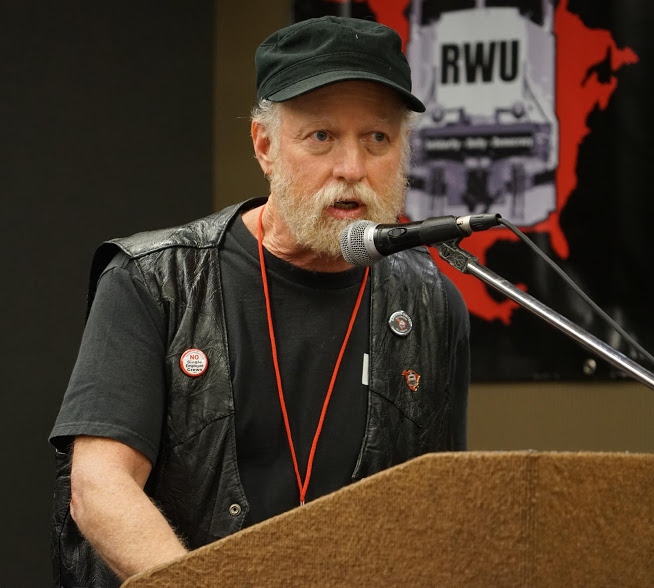
(Editor's Note: Ron Kaminkow is the General Secretary of Railroad Workers United).
Nearly 60 million people say they would join a union today if they could. The problem? Union-busters, Big Business, and woefully outdated laws continue to undermine the right to collectively bargain. Just take “right-to-work” laws, for example. Across the country, anti-worker legislators are relentlessly fighting to pass right-to-work, which has a more than 70-year track record of lowering wages, reducing benefits, and making workplaces more dangerous. As a railroad worker, I am fortunate to work in a heavily unionized sector of the economy. Why? Because railroad workers are not regulated by the National Labor Relations Act (1935) which governs most private-sector workers, and which was amended a decade or so after its passage by the Taft-Hartley Act (1947) which provides for “right-to-work.” Instead, railroaders are regulated by the Railway Labor Act, legislation that pre-dates the NLRA by a decade (1926) and remains uncorrupted by the anti-union Taft-Hartley. As a result, railroad workers have maintained a high degree of union density among our ranks. Other workers should be allowed this opportunity as well, free from oppressive laws that makes union organizing and maintenance difficult.
|
|
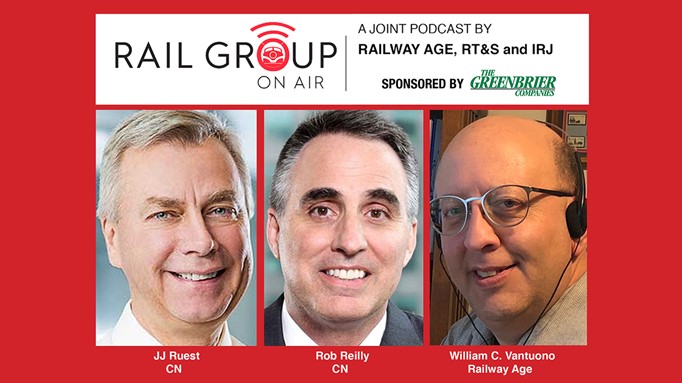
Podcast: CN’s Bid for Kansas City Southern, with JJ Ruest and Rob Reilly |
|
One month after Canadian Pacific and Kansas City Southern announced their intent to merge into CPKC (Canadian Pacific Kansas City), CN made a counter-offer it said is a “superior proposal” that “will result in a safer, faster, cleaner and stronger railway.” KCS, while moving forward with the CP deal, is now considering CN’s proposal. CN President and CEO JJ Ruest and Executive Vice President and Chief Operating Officer Rob Reilly discuss the merits of their offer with Railway Age Editor-in-Chief William C. Vantuono. Podcast sponsored by The Greenbrier Companies, Virtual Sample Railcar™.
|
|
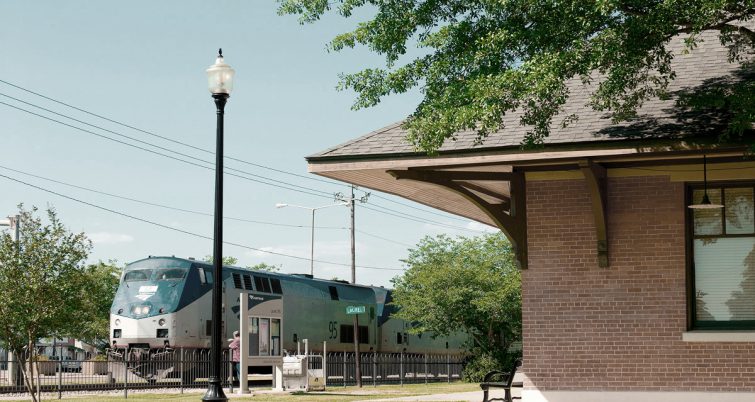
U.S. Rail Passenger Fairness Act Introduced to Improve Amtrak On-Time Performance
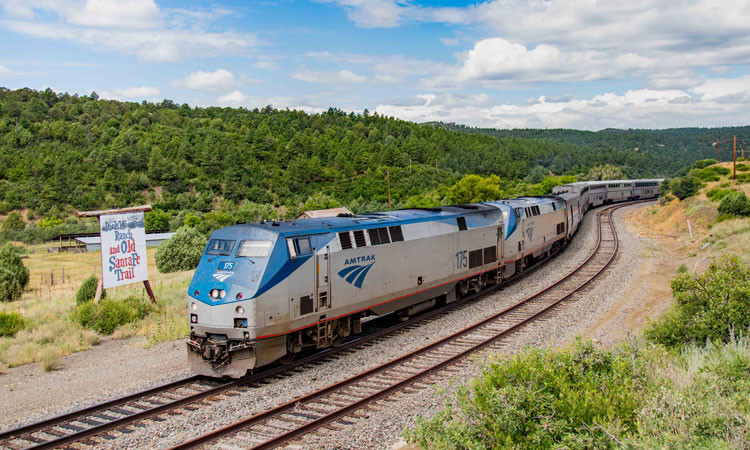
The U.S. Rail Passenger Fairness Act will give Amtrak the ability to take freight railroads to court if they fail to provide preference to passenger rail operating on their lines.
|
|
U.S. Senate Majority Whip Dick Durbin, U.S. Representative Donald M. Payne, Jr. and U.S. Senator Richard Blumenthal, have introduced the bicameral Rail Passenger Fairness Act to help improve Amtrak on-time performance (OTP) around the country. The bill provides Amtrak with the ability to take the freight railroads to court in order to enforce current law, which requires freight railroads to provide preference to passenger rail operating on their rail lines. The Rail Passenger Fairness Act would hold freight rails accountable, reduce Amtrak delays, and save taxpayer dollars. Amtrak President and CEO Bill Flynn, said: “Host railroads are required by law to provide Amtrak trains preference over freight trains. Unfortunately, some host railroads frequently fail to meet this requirement and ‘freight train interference’ is the largest source of delay to Amtrak trains on host railroads, violating the law and inconveniencing passengers. Amtrak thanks Senators Durbin and Blumenthal and Rep. Payne, Jr. for introducing legislation that upholds the rights of our customers to be on time and gives us tools to fight costly delays to Amtrak trains.”
|
|
Amtrak STB Petition Cites CSX, NS ‘Unwillingness to Engage Meaningfully’ |
|
Amtrak, on the eve of a 50th Anniversary virtual celebration slated to feature President Joe Biden, has filed a petition asking the Surface Transportation Board to deny CSX’s and Norfolk Southern’s motion to dismiss Amtrak’s application to restore passenger rail service to the Gulf Coast between New Orleans, La., and Mobile, Ala.
In its petition (download below), Amtrak refers to USCODE-2011 Title 49, Subtitle V, Part C, Chapter 243, Section 24308, “Use of facilities and providing services to Amtrak,” specifically, to subsection (e), “ADDITIONAL TRAINS”:
“When a rail carrier does not agree to provide, or allow Amtrak to provide, for the operation of additional trains over a rail line of the carrier, Amtrak may apply to the Board for an order requiring the carrier to provide or allow for the operation of the requested trains. After a hearing on the record, the Board may order the carrier, within 60 days, to provide or allow for the operation of the requested trains on a schedule based on le- gally permissible operating times. However, if the Board decides not to hold a hearing, the Board, not later than 30 days after receiving the application, shall publish in the Federal Register the reasons for the decision not to hold the hearing.”
|
|
Helping Amtrak Back on its Feet - U.S. DOT and FRA Providing $1.69 Billion |
|
U.S. Secretary of Transportation Pete Buttigieg today announced that the Department of Transportation’s Federal Railroad Administration (FRA) is making more than $1.69 billion available to the National Railroad Passenger Corporation (Amtrak) to provide relief from the impacts of COVID-19 to the company’s business operations, workforce, and state funding partners. The funding is provided under the American Rescue Plan Act of 2021. “Help is here. The President’s American Rescue Plan is already delivering for workers and the traveling public,” said Secretary Pete Buttigieg. “This new assistance for Amtrak will get employees back to work and restore service on routes across the country, at a time when this help is urgently needed.”
|
|
Is Electrifying the Freight Rail Network Cost Prohibitive? |
|
While electrification might suit such transportation modes as trucking, many say rail might not be a good fit. Much of the effort to decarbonize the U.S. freight rail industry has focused on the use of battery-electric or hydrogen-powered locomotives. The industry is also looking into increasing network capacity via technology as a way to improve rail service and encourage more volumes to rail from truck. But should the electrification of the freight rail network be viewed as another way the industry can reduce greenhouse gas emissions and address climate change? Within the freight rail community, that answer might be “no” because of the high costs associated with electrifying the rail network. Others say that decarbonizing freight rail must include efforts toward electrification. Meanwhile, pro-environmental interests appear to be prioritizing curbing the transport of potentially explosive materials, such as liquefied natural gas (LNG), over freight rail electrification.
|
|
Senators Introduce Bill to Fund Grade Crossing Separations |
|
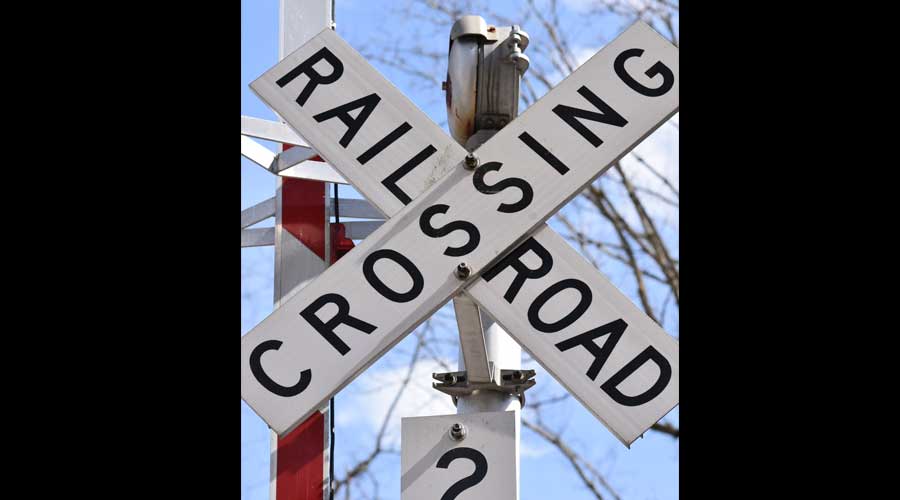
U.S. Senators Maria Cantwell (D-Wash.) and Roy Blunt (R-Mo.) have introduced the Railroad Crossing Elimination Act, which would provide $500 million annually for five years to support grade crossing separations and other track relocation projects designed to improve safety or reduce congestion.
Although rail is consistently rated one of the safest modes of transportation by the U.S. Department of Transportation, crossings are the second-leading cause of rail-related fatalities. Grade separations would eliminate those intersections, greatly improving safety and mobility for communities across the country, the senators said in a press release. “Communities throughout Washington state know the safety and congestion challenges posed by grade crossings,” said Cantwell, who chairs the Senate Committee on Commerce, Science and Transportation. “Too many people are injured or killed at at crossings, and the safest crossing is one that does not exist. Crossings can also delay the movement of people and goods all across the United States, hurting our competitiveness.” The Association of American Railroads (AAR) endorsed the legislation. The American Short Line and Regional Railroad Association (ASLRRA) also welcomed the new bill.
|
|
Metra Launches Online Recruitment of 100 Workers |
|
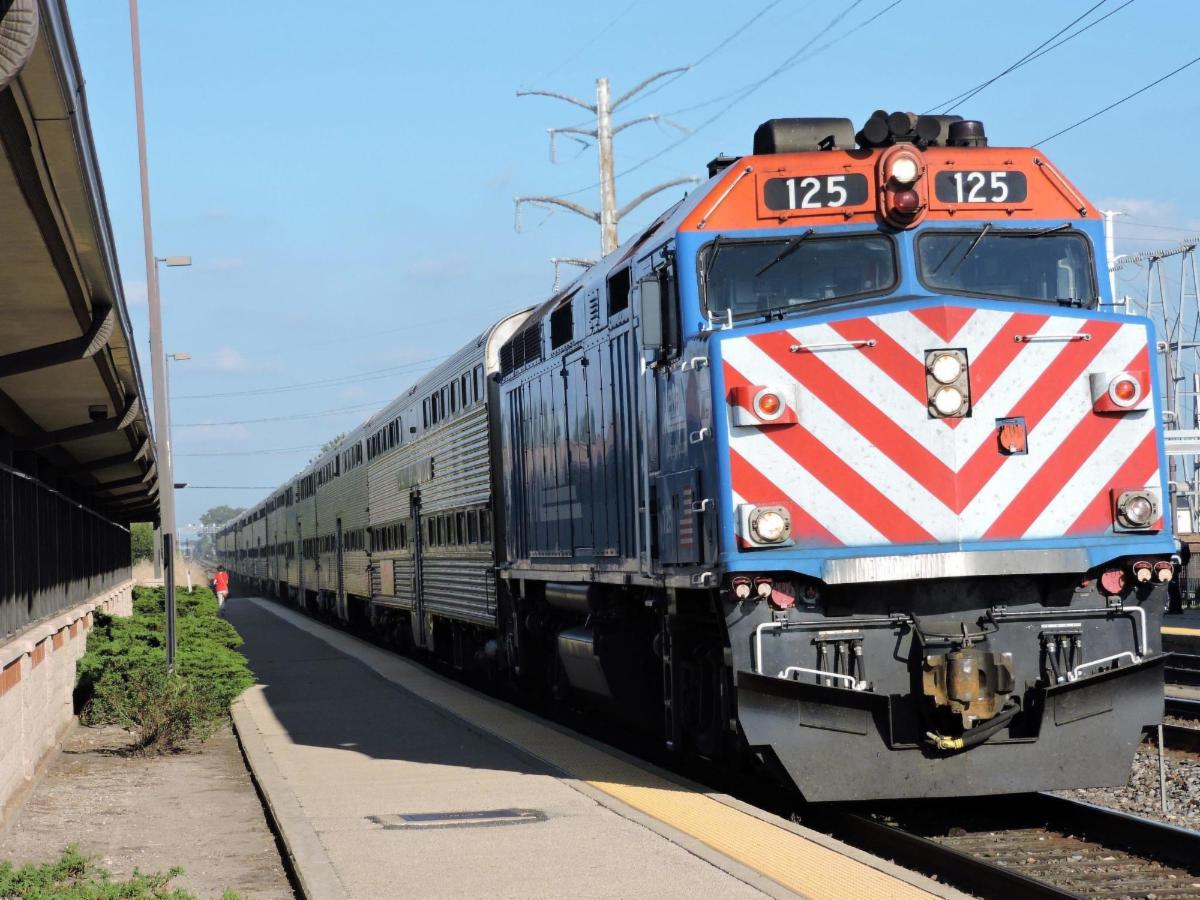
Metra plans to hire more than 100 workers in the coming months to prepare for an expected increase in ridership and to fill some positions that were left vacant during the depths of the pandemic, the Chicago commuter-rail agency announced yesterday. The positions will be posted and open to online applicants starting May 3. Hiring will take place between spring and fall. Metra will seek to fill a variety of positions, but especially extra list clerks, assistant signalmen, assistant building and bridge mechanics, trackmen, substation electricians, electrician apprentices, carmen and coach cleaners, agency officials said in a press release ... A video for each of those positions, featuring current job holders explaining the duties, is posted on Metra’s website.
|
|
Front Range Rail District Bill Wins Bipartisan Support In First Hearing |
|
Lawmakers on the Senate Transportation and Energy Committee on Tuesday advanced a bill that would represent a major step forward for Colorado's long-running efforts to establish passenger rail service between cities along the Front Range. Sponsored by top state lawmakers led by Senate President Leroy Garcia, a Democrat from Pueblo, the bill would create a Front Range Passenger Rail District comprising all or part of 13 counties between the Wyoming and New Mexico borders. The new state entity would have a broad range of powers, including the authority to ask voters within the district to approve up to a 0.8% sales tax hike to fund rail construction and operations. "We are still years away from a fully operational Front Range Passenger Rail System, and much work will still need to happen," state Sen. Rachel Zenzinger, a Democrat from Arvada and one of the bill's lead sponsors, said in Tuesday's committee hearing. "But this is a good next step." ... Many details of the proposed line have yet to be finalized. Service is likely to run between Fort Collins and Pueblo, with possible connections to Cheyenne and to the exiting Amtrak Southwest Chief line, which serves Lamar, La Junta and Trinidad. And the state's Passenger Rail Commission has closely studied three possible alignments for the route through the Denver metro area.
|
|
Nevada Governor Honors America's Railroaders |
|
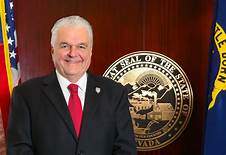
Nevada Governor Steve Sisolak has issued a proclamation praising America's railroaders, declaring Wednesday, April 28, 2021, as "A Day In Honor of Railroad Workers." A portion of the proclamation reads: "The safe and efficient movement of the trains transporting... freight and... passengers through Nevada is due foremost to the dedication and professionalism of those employees who are directly involved in train movements, including Train and Crew Dispatchers, Maintenance of Way personnel, Signal Maintainers, Mechanical personnel, and train crews." The BLET Nevada State Legislative Board and the SMART Transportation Division Nevada Legislative Board worked jointly to lobby Governor Sisolak regarding the proclamation. The two Boards issued a joint statement, which reads in part: "Every day, front-line railroad workers report for duty as required and perform the tasks of their jobs in a manner which ensures that the movement of freight and passengers by rail which is needed to keep this nation''s economy functioning is accomplished.
|
|
Biden Nominates Former FRA Official Hedlund to STB |
|
President Joe Biden has nominated Karen Hedlund, former deputy administrator of the Federal Railroad Administration (FRA), to serve on the Surface Transportation Board (STB). If her nomination is approved by the U.S. Senate, Hedlund could replace board member and former STB chairman Ann Begeman. Hedlund’s term would expire Dec. 31, 2025. Hedlund has worked with federal, state and local transportation agencies, and private companies to facilitate financing and development of transportation projects through public-private partnerships.
She was appointed FRA deputy administrator in November 2011 after serving as the agency’s chief counsel. During her FRA tenure, she provided leadership for the administration’s $12 billion high-speed rail grant program, including $3 billion of investments in the California High-Speed Rail (CHSR) project, and $3 billion in improvements to the Northeast Corridor. Hedlund advised on FRA-funded multistate locomotive and passenger equipment purchases, and on CHSR and Amtrak trainset procurements, including consideration of "Buy America" waiver requests for non-domestic equipment manufacturers.
|
|
Global Labor University's "Just & Green" Online Course |
|
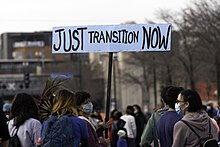
RWU has endorsed this free course about "Just Transition", as well as a one-time online workshop (date t.b.a. in late May/early June) on how workers in North America - including rail workers - can join the international struggle against global warming and simultaneously build an ecologically sustainable future of good union jobs for all.
|
|
Enrollment in the course is open to everyone, only requiring an internet connection and a digital device to watch 13 video lectures (7-10 minutes each) in 5 chapters, with 3-4 of the lectures released each week (finishing on May 12). After watching, there's a brief quiz and 2 short articles, as well as an (optional) exercise based writing a short reflection. The goal of the course is to find ways to successfully address the "jobs vs. environment" debate through the lens of current workers' struggles, as well as academic studies and policy analysis. For those wishing to complete the entire course, it's possible to receive a certificate of completion. But you are open to watch and participate as much as you want. |
|
|
|
|
|
|