|
Summertime!
The last e-newsletter reported on the legislative session just ended in March. Since then, the legislature received an updated forecast of the state's economy and projected revenue (a routine quarterly report), the spring (primary) election concluded and PeaceHealth reversed its decision to end its contract with the local physicians group and contract with ApolloMD (more on that below).
Making the most of summer: Maddux and Chris (my staff) and I have been soaking up the sights and sounds and experiences of summer in the Pacific NW. Among the three of us, we’ve: heard a master organist play a concert on the beautiful Brombaugh organ in Eugene and the world premiere of Friendship Songs and West Coast premiere of American Indian Symphony by Chickasaw classical composer Jerod Impichchaachaaha' Tate, walked at a college graduation, helped pull off a lovely wedding for a family member, took the train to watch World Cup matches in Seattle, saw theatrical productions Phantom of the Opera, Clue, and Back to the Future the Musical, marched in the St. Paul Independence Day Parade, and watched world class athletes at the Prefontaine Classic at Hayward Field.
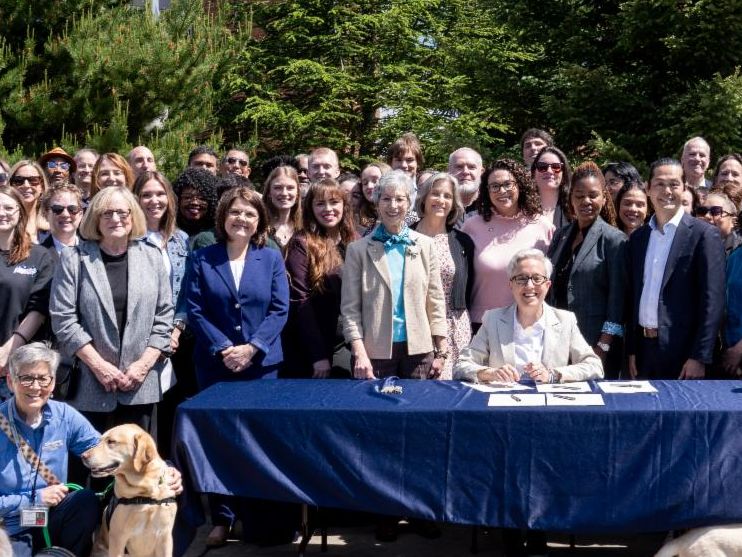
That’s off hours. During the day we’re working on the (still) dozens of new emails coming in every day, planning meetings, and district and constituent issues and topics that could be the subject of legislative proposals, or bills, next year, including healthcare, K-12 testing or assessments, emergency management and wildfire, and a few local issues including local access roads, free-standing emergency departments, and Eugene Airport. The photo on the right shows Gov. Kotek signing my bill to cut red tape to get workers to work more easily and get people the caregivers, therapists, or counselors they're waiting for. It's one of four, a package to expand access to mental and behavioral treatment.
It's been a long time since my last newsletter, so I'm dividing the material into two issues. The next one will cover data centers in more detail, and report on other community events and meetings not included in this one.
| | If you missed my latest e-news, here's the link to March 2026. | | |
In the sections below you'll find
- Surveillance pricing: sounds scary. It is.
- Data centers, what’s the story here? (part 1)
- Short stories: High tech tax fraud, Neuroscience research at UO, Mail in ballots
- Local area: Half price bus fare; our NASA connections
- Economic and revenue forecast
- Local health care updates: hospital ED, ambulances, Providence, free-standing ED for Eugene
- Snapshots from local events: Sheldon H.S. classes, Julian Castro visiting UO's Wayne Morse Center for Law and Politics, and new judges for Lane County Circuit Court
- Science Knight Out: research advancing society, 3-D printing for medical devices and ACL (anterior cruciate ligament) reconstruction!
| | |
Surveillance pricing ... huh?
Oregon Consumer Justice (OCJ) defines surveillance pricing as “The practice of setting individualized prices for goods and services based on personal data a company has collected or purchased about a consumer, including their app usage, browsing activity, location, demographic profile, and data obtained from third-party brokers.”
These types of practices are most common in online transactions, where there is no obvious “sticker price” for consumers to see what a product is usually sold for, or what prices other customers are being offered. Online sellers have been documented offering different prices to different individuals, based on harvested data such as their location, browsing patterns, and even their mouse movements on a webpage. They use this harvested data to predict the customer’s “pain point” or the maximum amount that an individual consumer is willing to pay for a specific product, then upcharging (increasing the price for) those they see as willing to pay more for a certain product or service.
Besides online transactions, concerns have also been raised about the potential for their use in brick-and-mortar grocery stores, as companies like Whole Foods, Walmart, and Kroger have started rolling out digital price tags, including in Oregon. Consumer advocates have warned that the use of these tags may allow stores to change prices on products and gouge customers.
Surveillance pricing can also be used to grant discounts or offer specialized coupons to customers. For example, customers who use the Safeway app are offered specialized coupons based on what they have bought in the past, or what the company believes they might be inclined to purchase if offered a discount.
Earlier this year, Maryland became the first state to ban surveillance pricing for grocery stores and food delivery services, elevating a nationwide conversation on the topic. Maryland’s law specifically prohibits companies from using personalized data to set higher prices for consumers, meaning that companies would still be allowed to use surveillance pricing to offer discounts to individuals. I’m working with legislative colleagues to monitor the developing situation and identify changes we may want to propose for Oregon. Read more about Maryland’s law here, and how surveillance pricing is used by airlines here. Watch the presentation from OCJ at the Feb. 13 legislative hearing.
| | Short stories (Quick takes) | | |
Mail in ballots: continuing attacks from federal level
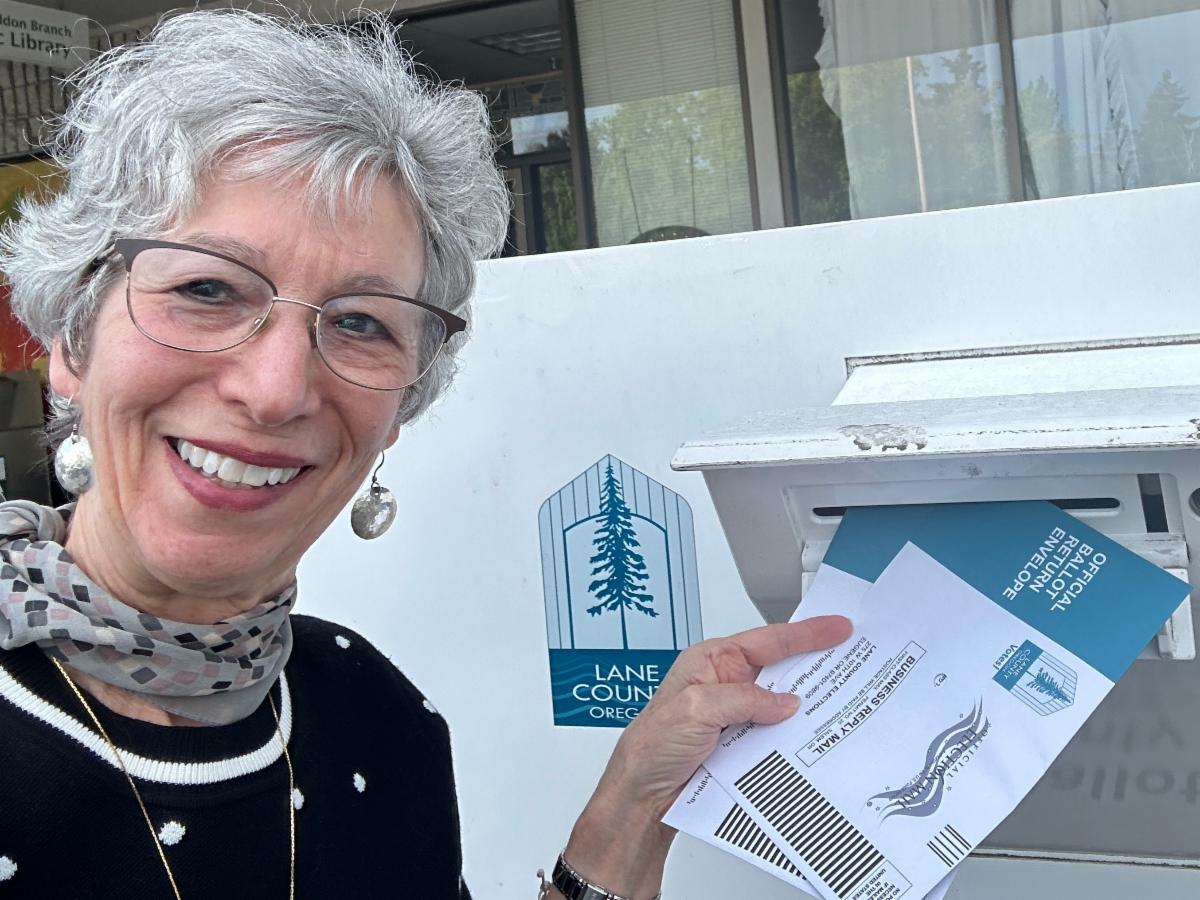
Mail-in voting has been the target of numerous attacks from the federal administration. I signed on to a multistate letter opposing proposed USPS rules which would add conditions for the Postal Service’s acceptance of mail-in and absentee ballots for federal elections, requiring a new envelope, enrollment, certification, and verification requirements administered through a federal database.
Oregon's vote-by-mail is safe, secure, and trusted by Oregon voters, and this proposed rule is an unconstitutional power grab which threatens the voting rights of millions of voters here and across the country. Full text of the letter opposing the proposed USPS rules.
In positive news, the Supreme Court has ruled that states are allowed to count ballots that were cast by Election Day, but delivered to elections officials after Election Day. Since 2022, Oregon law allows ballots that are received up to seven days post-Election Day to be counted, as long as they are postmarked on or before Election Day.
Secretary of State Tobias Read said, “Today’s decision is a win for Oregon voters. The post-Election Day grace period protects thousands of Oregonians’ votes from being thrown out because of delays at the Post Office. This ruling means those legally cast ballots that arrive within 7 days of the election will be counted and those Oregonians’ voices will be heard.”
| |
Technology and tax return fraud
The Oregon Department of Revenue (DOR) stopped nearly $2 billion in tax refund fraud over the past five years, with $1.4 billion of that coming in 2024 alone. DOR is working hard to safeguard public (taxpayer) money by identifying fraud patterns and suspicious activity including breaches of tax-preparer data, tax-related identity theft, and intentionally false claims for refunds.
"This isn’t a single parent who made a mistake when filling out their tax forms. It’s criminals running sophisticated scams," said DOR Director David Gerstenfeld. “This $2 billion in stopped fraud is the result of targeted efforts to stop large-scale bad actors who send in thousands of fraudulent returns in attempts to steal tens, if not hundreds, of thousands in taxpayer dollars."
| |
A great application of AI, speeding up research to benefit humans
Neuroscience researchers at the University of Oregon are using artificial intelligence for exciting new research on how neural circuits underlie behavior, applicable to how we understand motivation, treat various disorders, and map complex brain processes.
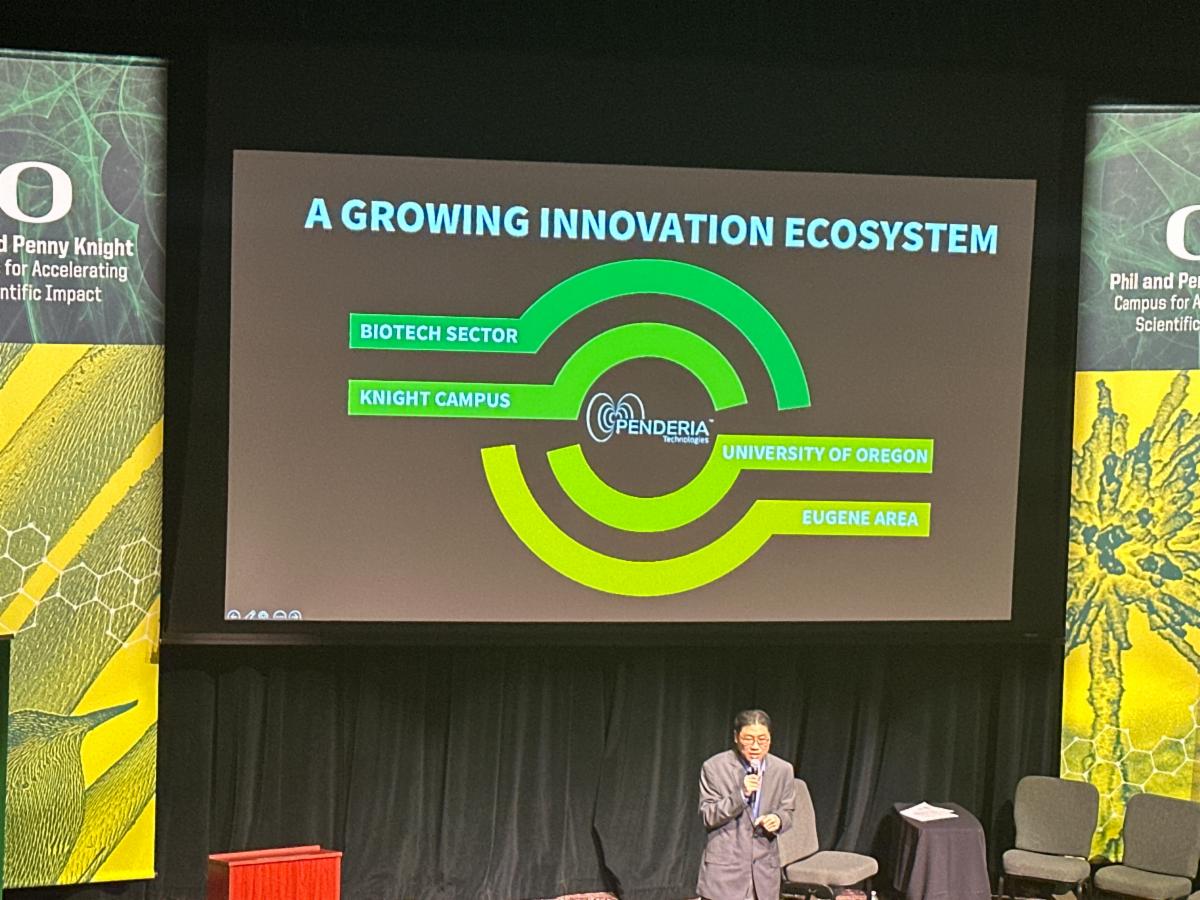
AI technology allows researchers to condense months of analysis into mere hours, correlating brain activity with specific movements. Artificial neural networks allow researchers to model how the brain responds to certain stimuli, to understand how disappointment is processed, or to test brain-computer interface to compensate for lost motor or sensory control. Read more about how UO neuroscientists are using AI to empower experiments. (photo: at Science Knight Out presented by UO at the Shedd Institute)
| | |
Here's a brief summary of a more thorough story that I will publish in my next e-enews in a couple of weeks.
If you have been following the news recently, you have likely seen some stories about large-load data centers that have come to Oregon in recent years. Much of the surge in new data centers is to support the AI boom. Large-load means data centers that have peak loads of more than 20 megawatts, about equal to the average load of the Hynix semiconductor plant that closed in 2008. In a Consumer Reports article published 3/20/26: "... hyperscale data centers demand a nearly unimaginable amount of energy. The International Energy Agency says a typical hyperscale data center might use 100 megawatts (MW), as much electricity as 100,000 households. And that’s at the low end. Meta’s Hyperion project in Louisiana, for instance, will need at least 5 GW to run. That’s three times as much electricity as the entire city of New Orleans, according to the Institute on Taxation and Economic Policy."
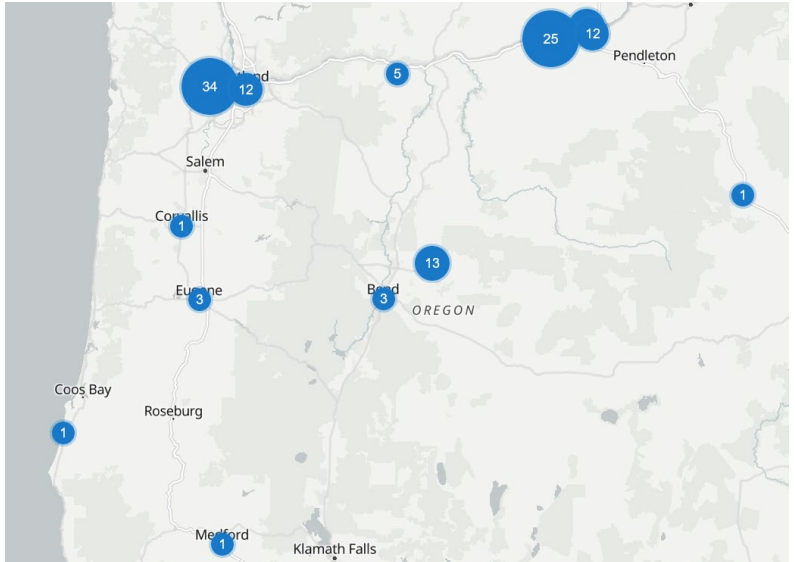
Oregon currently has 125 data centers, with 17 more planned, putting it ninth in the country for operating and planned data centers. Most of these have been, or are being, built in rural areas.
I recently called for an informational hearing on data centers in a permanent committee that I co-chair. The subject expert from National Conference of State Legislatures explained that data centers are increasingly recycling and returning water to community use, generally cleaner than what they received, or using a “closed loop system” so reducing the ongoing demand for “new” water. Power is a different story. The Oregonian reported earlier this year that, since 2010, total energy use in Oregon is up 30%, despite residential and commercial electricity demand remaining relatively unchanged in that period due to smart conservation efforts and efficiency improvements. The 30% overall increase has been largely driven by a 73% increase in industrial power usage, driven in large part by the addition of data centers to the energy grid.
In 2025, I joined my colleagues in passing the POWER Act (HB 3546) to ensure that energy-hungry data centers pay their fair share by requiring them to pay higher rates for their electricity usage to cover costs of required system expansion and upgrades, for example. And earlier this year, I authored an amendment to an economic development bill to put a one-year moratorium on enterprise zone tax breaks for data centers, allowing time for the Oregon Data Center Advisory Committee to prepare a report and recommendations.
As a publicly owned and managed utility, EWEB’s policies emphasize equity and affordability for ratepayers. While the POWER Act only applies to Investor-Owned Utilities (IOUs) like PGE, EWEB has had policies in place since 2014 to protect customers from rate increases should large load users like data centers join the system.
The next e-newsletter will have more detail about data centers, energy use, tax policies, and EWEB's safeguards.
| | |
The state economist explained in the most recent Quarterly Economic and Revenue Forecast how tariffs are affecting Oregon’s economy, noting that we are more trade-dependent than most other states. He also discussed the impact of the war in Iran, which is dragging down the overall growth of the US economy (projected at 1.6% vs. 2.4% at the last forecast), driving up inflation, and hitting personal budgets, particularly due to gas and energy prices. Specific business indicators such as “business distress” and bankruptcy filings show that Oregon’s business situation is tracking about the same as the nation as a whole.
In the quarterly Forecast the economists included a discussion of wealth (capital gains, real estate holdings, and other wealth-based income) vs. wages. In short, corporate profits and capital gains benefiting the wealthy are surging while wage growth is slowing and purchasing power for working Oregonians is declining. This is an explanation of a "K-shaped" economy (one line trending up, the other trending down). State revenue from taxing wealth is inherently more volatile and less durable than revenue from wages; as the proportion of our revenue coming from wealth increases, our revenue forecasts will have more uncertainty both near- and long-term, and will be harder to get right.
A kicker? Risk of an individual kicker is very low, but a corporate kicker of $157 million is currently projected (the corporate kicker is dedicated in the state constitution to K-12 education funding).
| |
Ride the bus - half price fares this summer
Lane Transit District (LTD) is reducing summer bus fares and passes by 50%, starting in July. Bus fare will be $1, and a day pass will be $2. LTD’s CEO stated that this was about providing temporary relief to Lane County households struggling to make ends meet with high gas prices and affordability concerns, as well as to encourage new ridership among residents. Click here to read about these changes, effective July 1 to August 31.
| |
Our NASA connection
In April the Artemis II completed its mission and “splashed down” in the Pacific Ocean. Like many of you, I was tuned in and watching as the astronauts who had just made the remarkable journey to the moon returned safely to Earth.
Eugene has a direct connection with the journey! The primary contact for the Artemis II astronauts at the Johnson Space Center Mission Control Center was Stanley Glen Love, a scientist, inventor, and astronaut whose hometown is Eugene.
Oregon’s connections with NASA and the moon go even further back. In 1966, when training for the original Apollo moon mission, NASA astronauts and scientists visited Oregon. They believed that Oregon’s volcanic landscape was similar to the moon’s topography, and used it to train and test space equipment.
You can read more about this historic connection at the Oregon Encyclopedia, or listen to the May 11, 2026 episode of OPB's The Evergreen (NPR).
| | More Local developments in health care | |
Providence Health Insurance bowing out
Providence Health and Services announced in May that its health plan would stop offering most of its insurance products by the end of the year, citing market forces, state and federal regulations, and strong insurance competitors as factors leading to the decision. There will be no immediate changes for those who receive benefits through the Providence Health Plan, and the 360,000 Oregonians covered will keep coverage through the end of 2026.
Providence will seek to continue operating its Medicare Advantage line via a new deal with a national insurance carrier. Providence hospitals and clinics will continue to operate and be available through other insurance plans in 2027. See the OPB story on Providence ending most of its health insurance business.
A stand-alone satellite Emergency Department for Eugene
Hopes for a satellite Emergency Department in Eugene: McKenzie Willamette secured a prospective developer and has received a waiver from Oregon Health Authority to open a satellite ED in Eugene (there are currently only two satellite EDs in Oregon). The biggest challenge is financial risk associated with the project. There's lots of vocal support for the idea but making it a reality is challenging. Meanwhile, McKenzie Willamette leadership has changed in the past few months and they are taking steps to change from for-profit to a not-for-profit institution. How this might affect finances isn't yet clear. I'm continuing to talk occasionally with Lane County health officials, the state agency, the hospital, and the developer.
| |
Riverbend Emergency Department
In my March newsletter I wrote about recent changes expected at the Riverbend Hospital Emergency Department, where PeaceHealth decided not to renew the contract with Eugene Emergency Physicians (EEP), their decades-long partner for emergency medical care, planning to replace the local group with Atlanta-based ApolloMD. My colleagues and I wrote several letters expressing concerns that this would lead to a loss or decline in quality of emergency medical care. Further, it seemed as if it might violate Oregon’s prohibitions on the corporate practice of medicine, legislation that I helped shape and pass in 2025 (SB 951).
Early last month, the U.S. District Court Judge Mustafa Kasubhai ruled that this arrangement did indeed violate Oregon’s prohibitions on corporate control of medicine under SB 951 (2025). And, a couple of weeks later, PeaceHealth announced that it had finalized a new three-year contract with Eugene Emergency Physicians, with a commitment to “establishing a more collaborative and accountable approach to emergency care delivery” which would focus on improving emergency department performance and patient experience, and lowering wall time. (Wall time or "ambulance patient offload time" is the time waiting to transfer patient from ambulance to hospital ED staff.) See the press release celebrating the ruling and my comments in May on Instagram and Facebook.
| |
Pressure on ambulances and emergency rooms
PeaceHealth Riverbend is convening a series of meetings for the Lane County Emergency Care Community Coalition to talk about the pressure on local emergency departments. About 30 people have been invited to join the discussion and brainstorming sessions, including local elected officials, representatives from PeaceHealth and McKenzie Willamette, Fire EMS Medical Transport, Lane County Medical Society, and Trillium. I've been attending these meetings with Rep. Fragala, Springfield Mayor Sean VanGordon, and others. We've heard from medical staff, emergency responders, Ko-Kwel Wellness Center, and the Hospital Association of Oregon.
Meeting topics will include an overview of the state of healthcare in Oregon, the impact of federal legislation and rules including H.R.1 and reimbursement rates for primary care, hospital and ambulance and long term care, Lane County Ambulance Service Area agreement and EMS opportunities and challenges, long-term care opportunities and challenges; Medicaid eligibility; primary care access for seniors; people who frequently use the ER, and reimbursement rates for different types and places of care. Recent legislation and funding sponsored by the local delegation for alternative approaches to emergency response has worked as designed, showing what works and what doesn't, laying the groundwork for new approaches.
More legislative oversight in the works
Rep. Ben Bowman has convened a group that includes Rep. Lisa Fragala, Sen. Lisa Reynolds and me to review possible legislation for for 2027, working more on corporate practice of medicine and the Health Care Market Oversight (HCMO) program. In our most recent virtual meeting, more than 90 stakeholders representing Oregon doctors, hospitals, consumers, and investors dialed in to listen and to share their concerns and ideas. Rep. Fragala and I will be reviewing our ideas to strengthen policies related to oversight and supporting local Oregon independent practices.
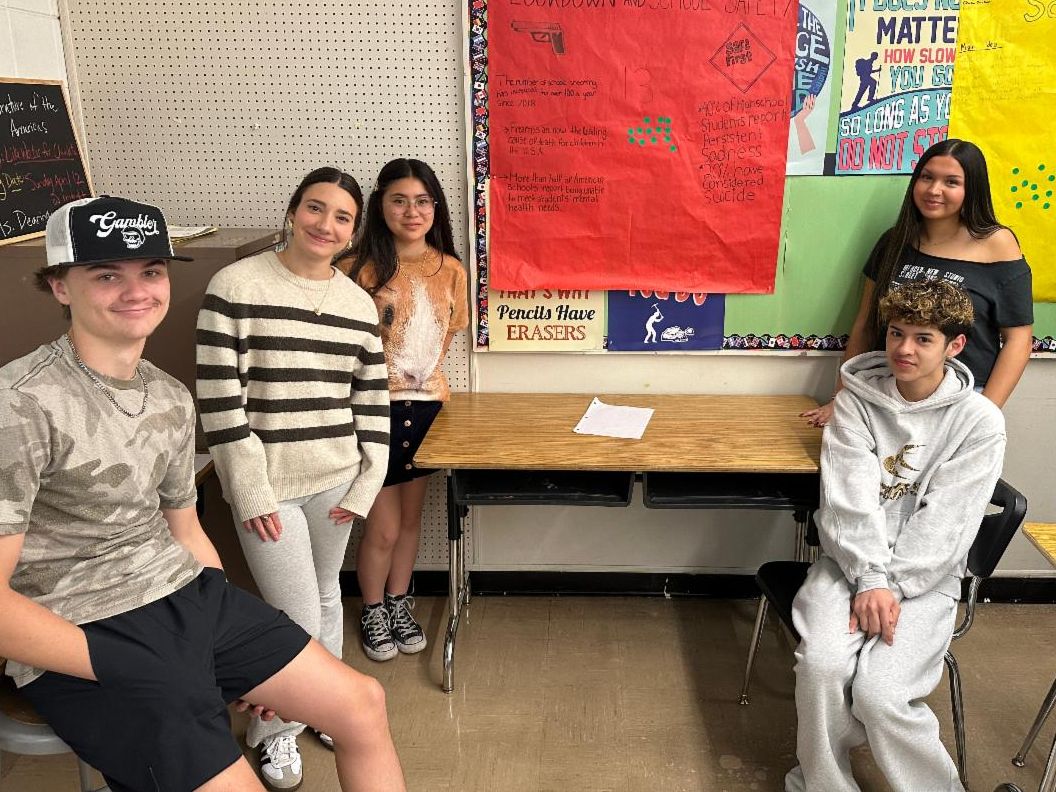
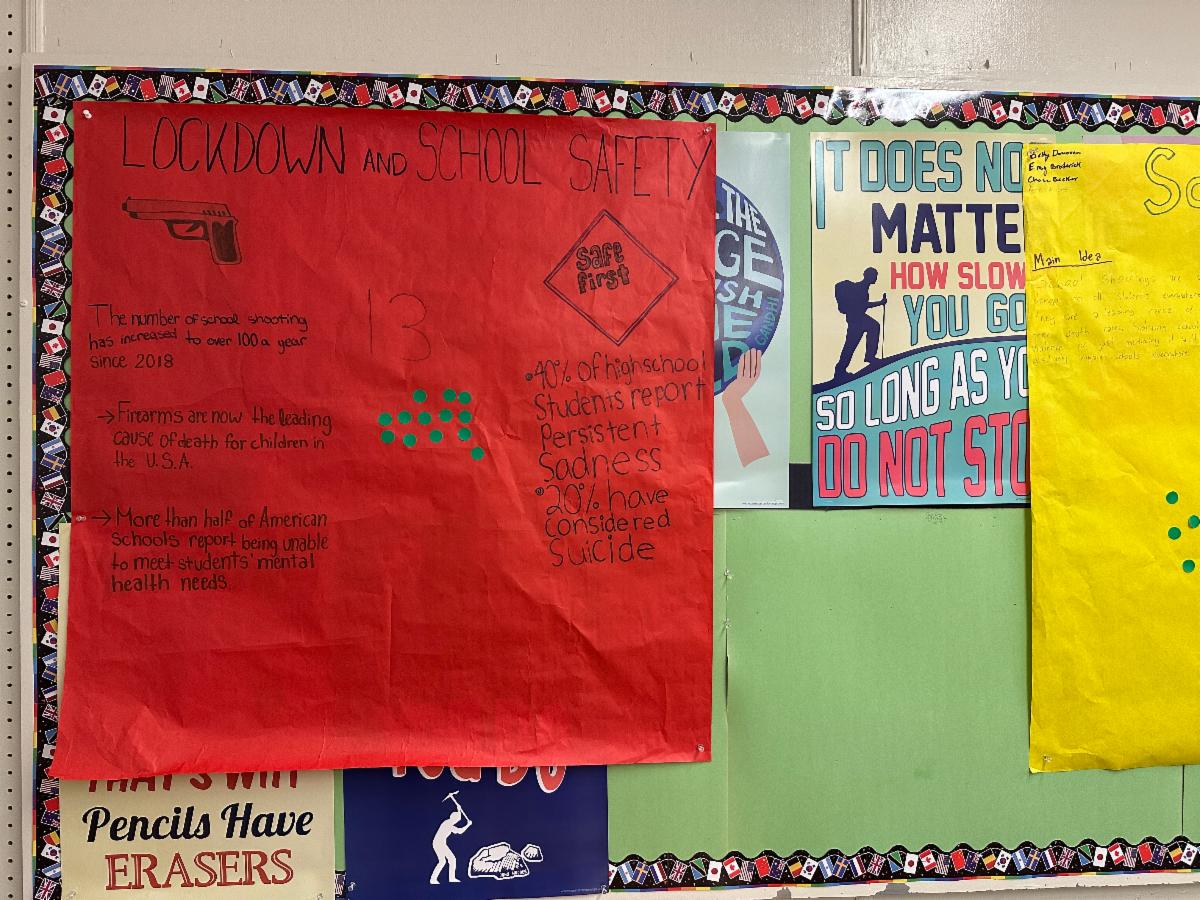
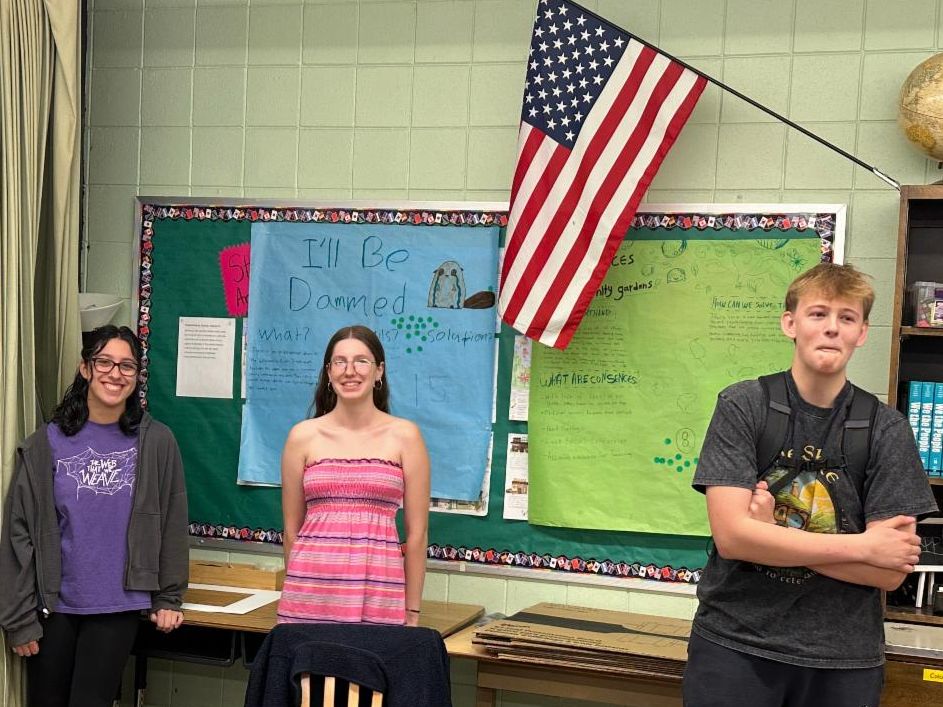
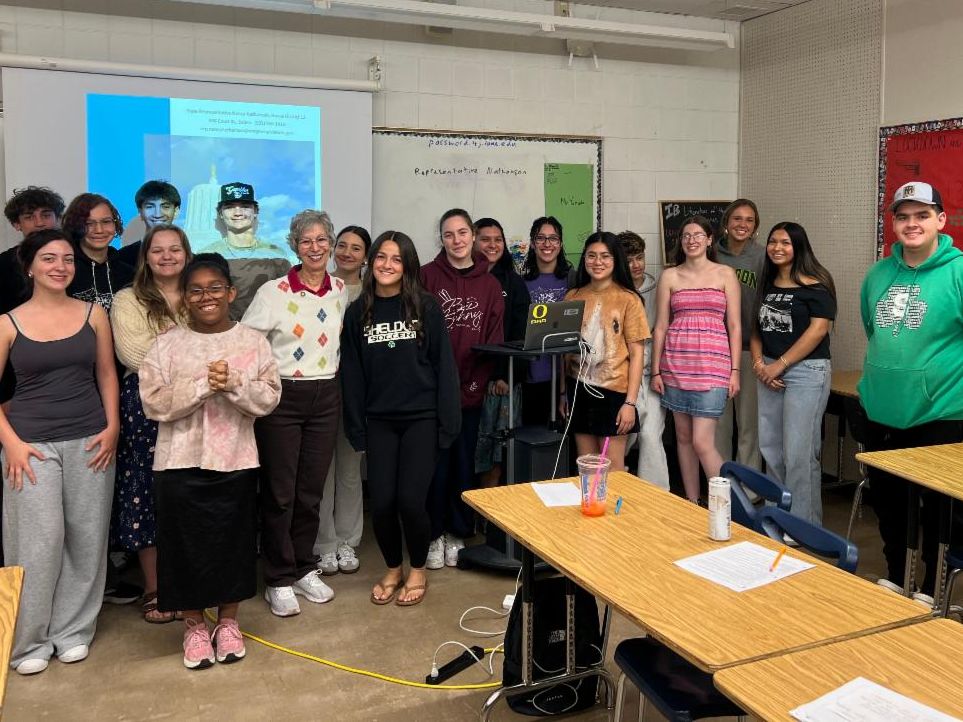
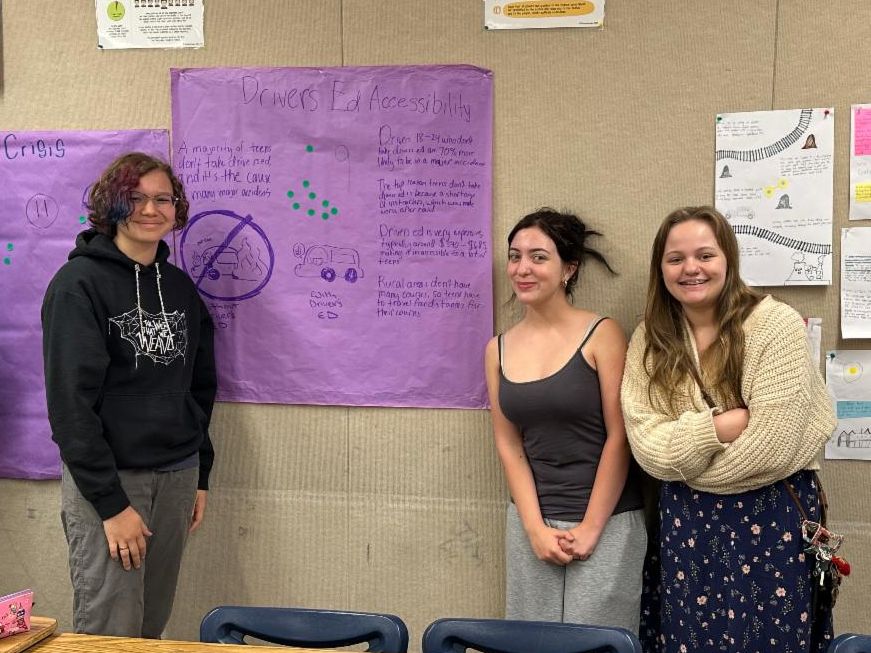
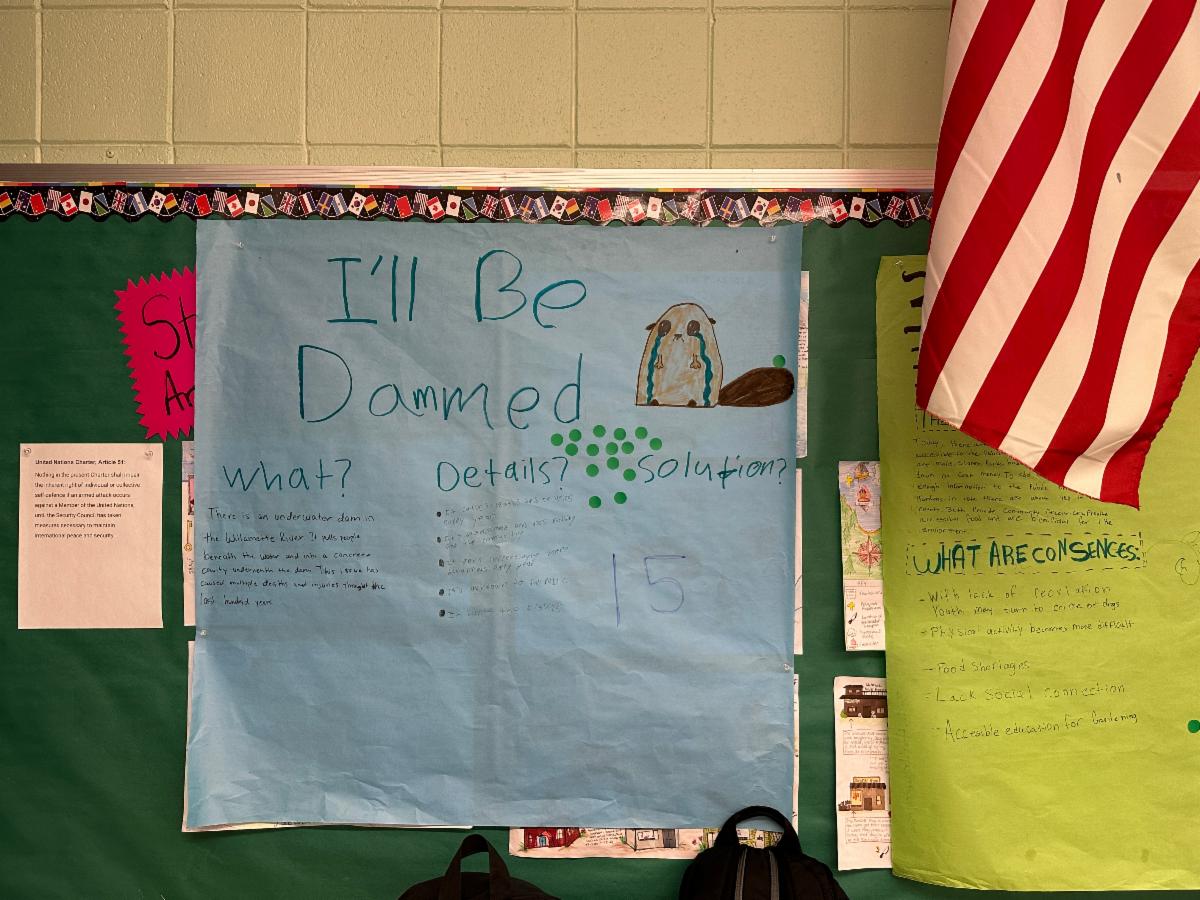
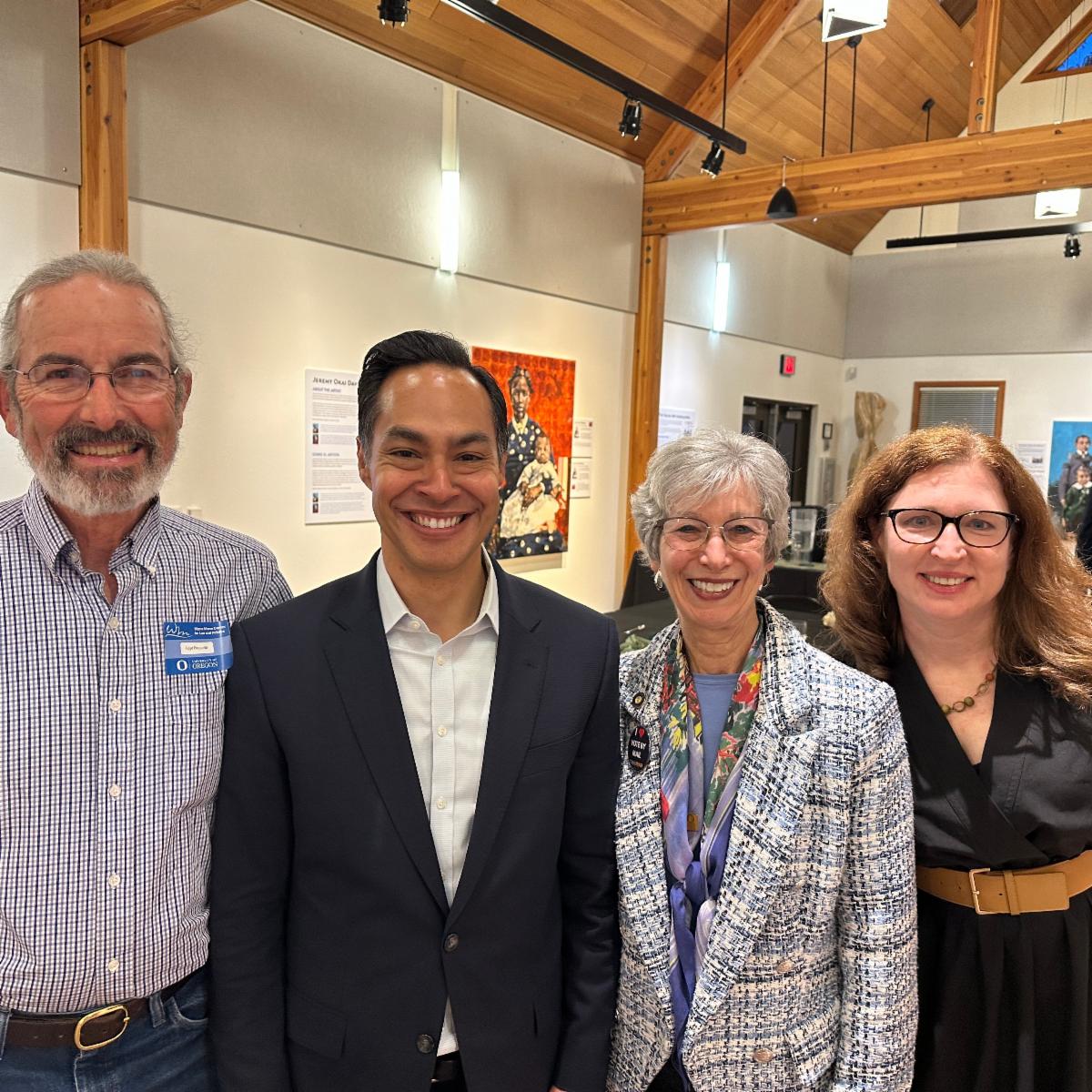
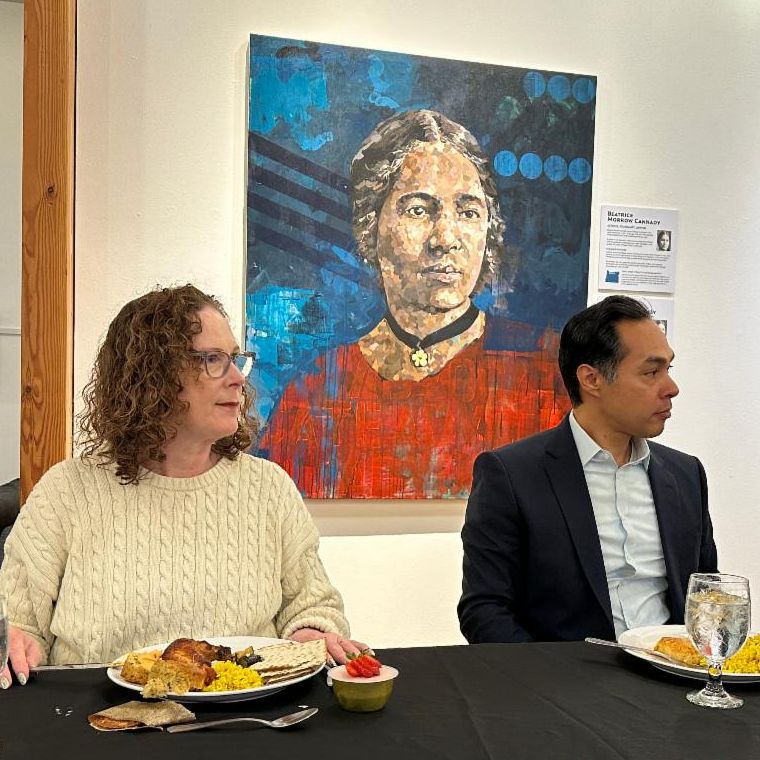
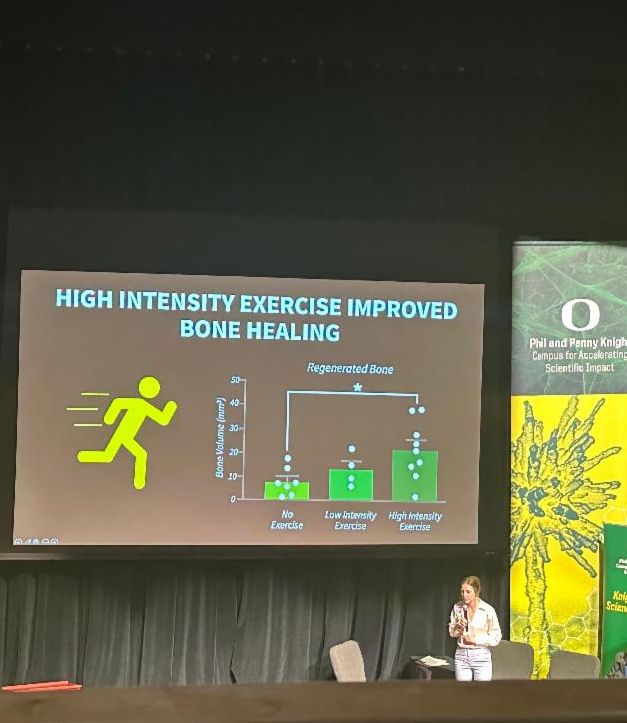
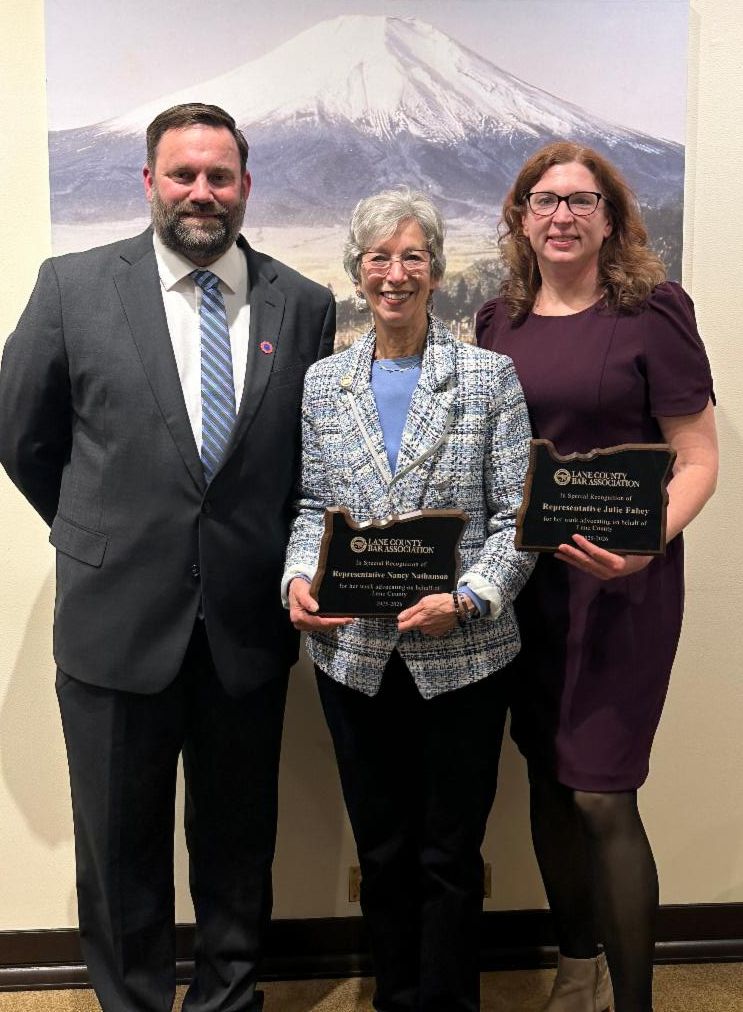
| | I visited with a couple of classes at Sheldon High School in May to talk with students about state government, my job, and how the legislature works. Students were working on a variety of research projects related to state and local government, ranging from lockdowns and school safety, peaceful protest, housing crisis, removing the dangerous underwater dam on the Willamette River in Eugene, the public defender shortage, and access to driver’s education. | | Wayne Morse Center for Law and Politics hosted an informal conversation with a few local elected officials and Julian Castro, 2014-17 Secretary of Housing and Urban Development under President Barack Obama, mayor of San Antonio 2009-14 and presidential candidate in 2019. We had time to enjoy a terrific art exhibit at the UO's Museum of Natural and Cultural History: Reinvisioned: contemporary portraits of our black ancestors by Jeremy Okai Davis. (Photos: Sen. Prozanski, Julian Castro, me, Rep. Fahey, Congresswoman Val Hoyle). Castro spoke at a separate event, then took questions from the audience. After all the points about critical social and economic issues, my favorite was his response to a student asking how to get involved in civic affairs or local government. | | UO presents Science Knight Out each year, a public talk on how research advances society. It's always fun, easily understood (truly), engaging, and inspiring. The bioengineering faculty and grad students talked about their work, including 3D printing technology capable of building microscopic scaffolds that support cells as they grow into tissues and organs, and wireless implantable sensors for surgeons performing ACL (knee ligament) reconstructions. Here's a link to watch this year's talk. And here's the story in Lookout. | | The Lane County Bar Association presented the entire Lane County legislative delegation a Special Recognition Award for our efforts to fund two additional judges for the Circuit Court. Judge Jay McAlpin (photo, left) was a primary contact and source of energy for the legislative work. As he explained, the number of judges had remained the same for 40 years while Lane County's population increased by over 40% and the Court developed programs to help with veterans, the behavioral health crisis, and drug treatment. | | | | |