|
Dear Community:
We're in the homestretch in preparation for two impactful events next Saturday, September 26!
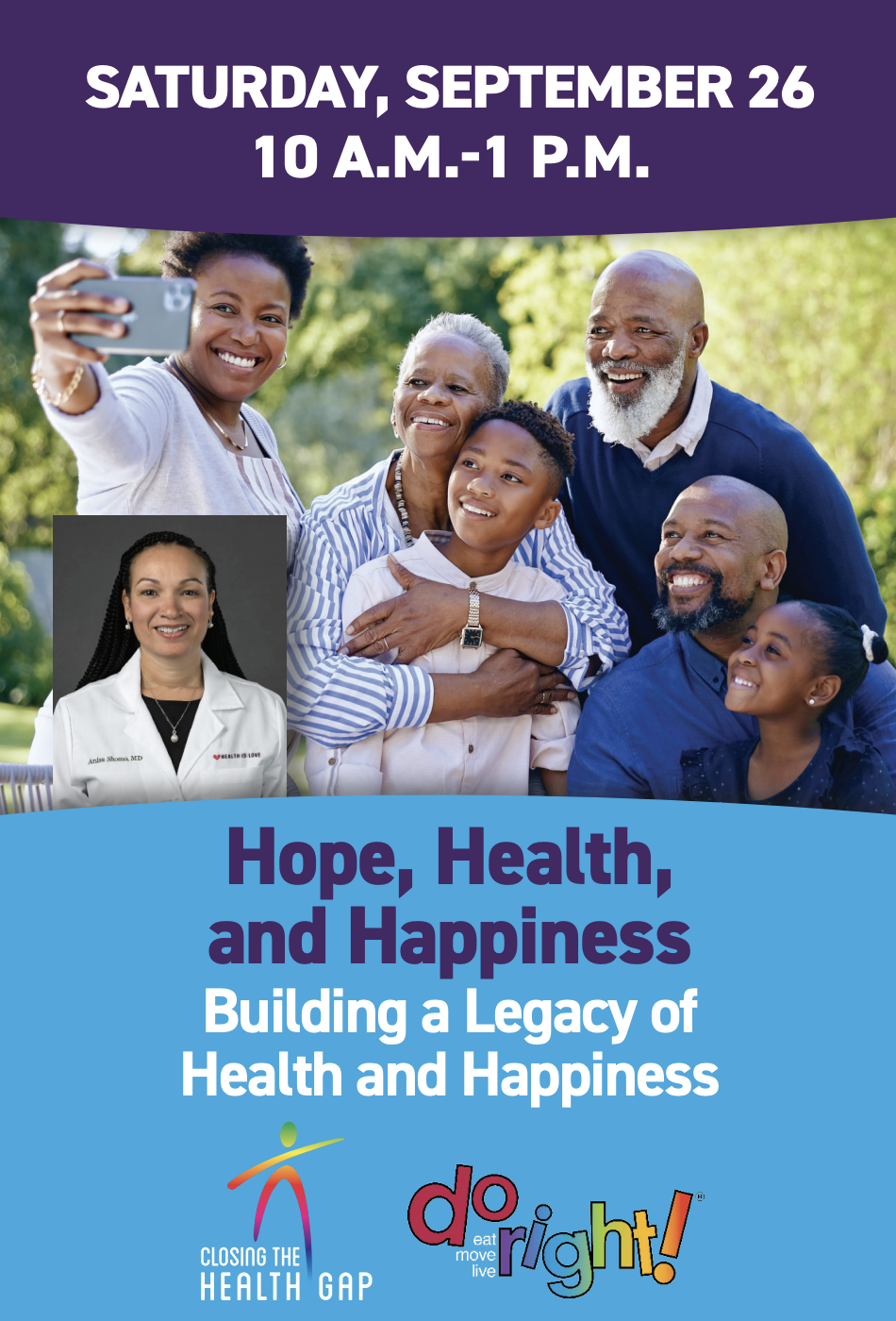
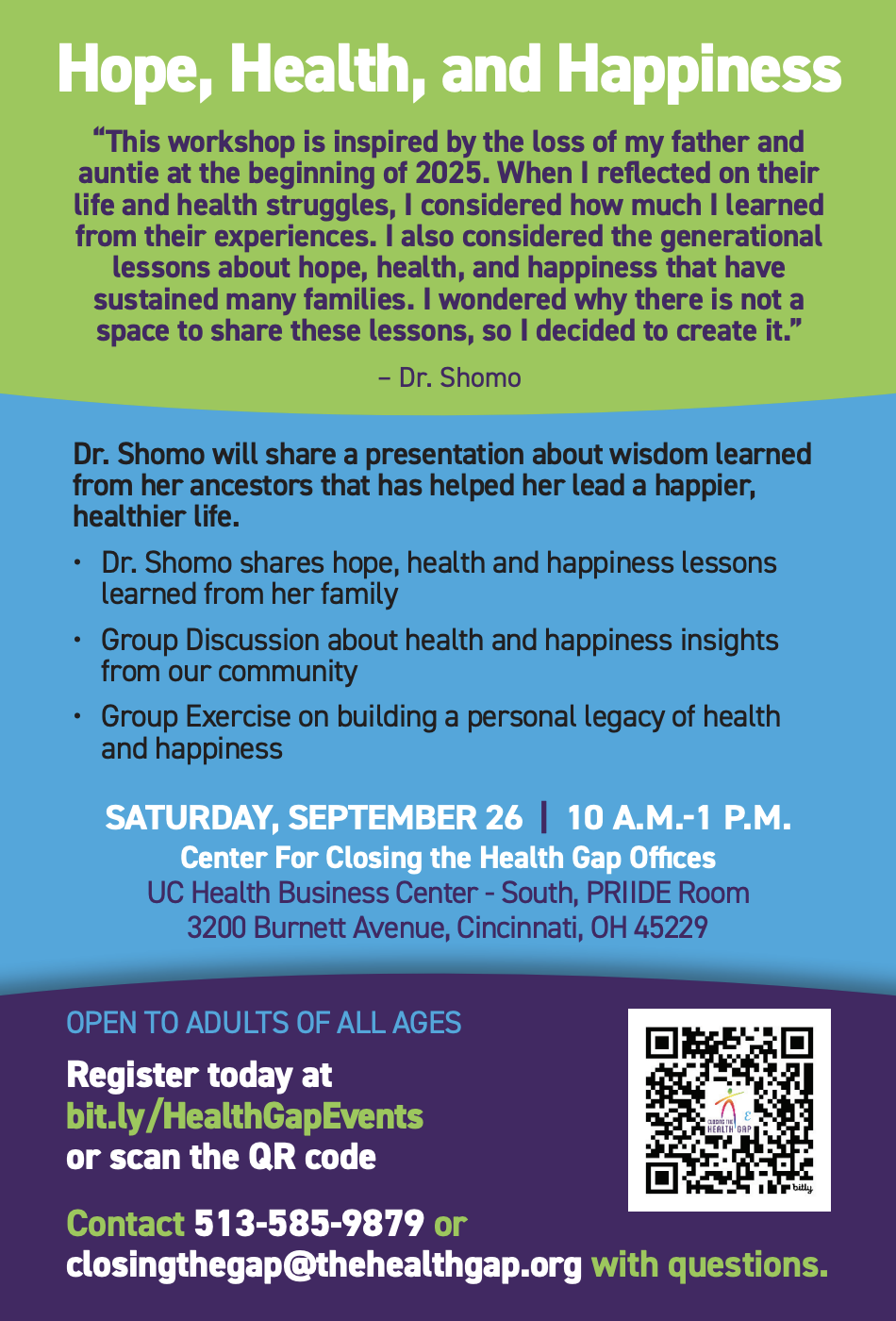
From 10am-1pm, Dr. Shomo is hosting Hope, Health & Happiness, a deeply inspiring morning of connection and community inspired by the generational lessons that sustain our families through difficult times. Dr. Shomo has created a powerful space to share wisdom from our ancestors, discuss community insights, and build a personal legacy of wellness.
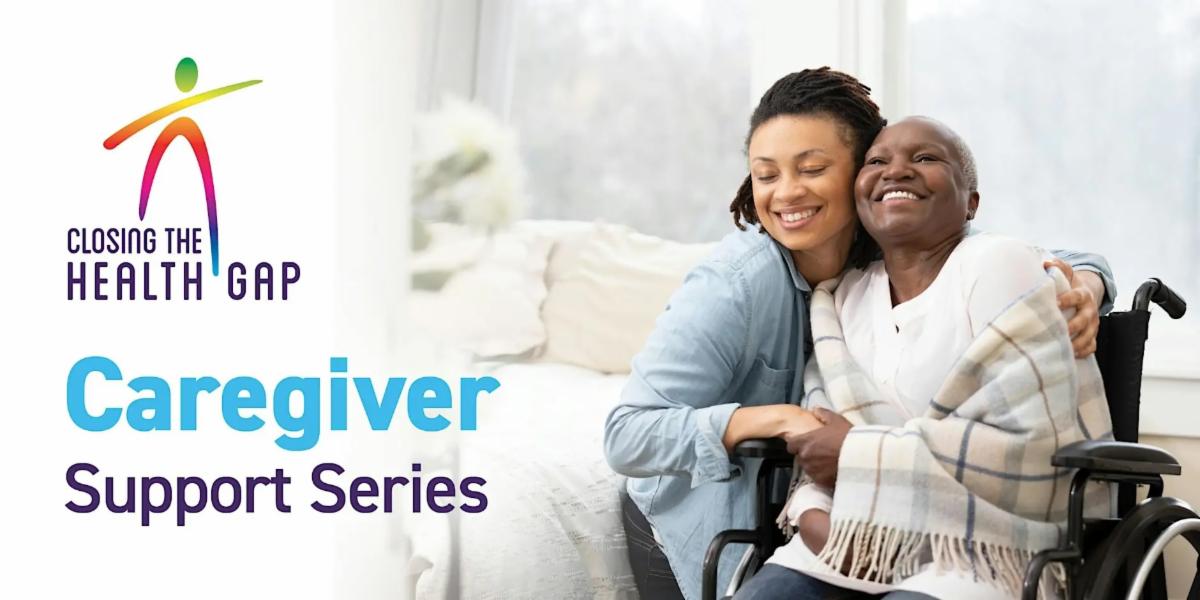
From 10am-2pm, we host opur next Caregivers Support Series event at the Mt. Healthy Branch Library. If you're caring for a loved one who is 60+ years old, we can help you find support and restoration, gain coping tools, and practice self-care, surrounded by others in similar situations
Click here to learn more about these two special events and sign up!
Blessings to all of you for a safe and healthy week ahead.
Renee Mahaffey Harris, MPH
President & CEO
| | |
Join Us September 26 for Our Next Caregivers Support Series Event
Saturday, September 26 • 10 AM - 2 PM
Mt. Healthy Branch Library, Cincinnati, OH
Click Here to Register
As the Caregiver of a Loved One Who is 60+ Years of Age, You Deserve Help, Too
Knowing you aren't alone is just the start of how our Caregiver Support Series can help you find support and restoration. When you're responsible for an adult who's 60+ years old, you're likely left to handle some or all of the following: their transportation, taking care of their daily needs (bathing, dressing, feeding), and managing their health. You might also be responsible for preparing meals, grocery shopping, taking care of the house, and managing finances.
You love the person in your care. You want to be there for them, but caregiving takes a toll. It increases the risk of depression and illness. That's where we come in. Our series gives you a space to share what you're going through, gain coping tools, and practice self-care. Even better? You'll be surrounded by others like you in similar situations.
Did You Know?
- Black caregivers spend more than 30 hours per week providing care and may experience stress, depression, and risk of illness.
- Black caregivers need emotional, financial, and healthcare support to maintain their well-being when caring for their loved ones.
- The Caregiver Support Series gives space to share your feelings and challenges, learn new ways to cope with stress, and practice self-care. You will gain valuable information and receive support from others who are going through similar experiences.
Questions? Please call 513-585-9879 or email closingthegap@thehealthgap.org.
| | Time Magazine: Who Gets Life-Saving Medical Care and Who Doesn’t? Health Leaders on Closing the Access Gap | |
Living in disadvantaged neighborhoods linked to adverse brain health
In a study analyzing nearly 3,000 brain MRI exams, researchers found that living in highly disadvantaged neighborhoods was associated with adverse brain health. Results of the study were published today in Radiology, a journal of the Radiological Society of North America (RSNA).
"We've long suspected that your living environment affects your brain, but until now it's not been proven at scale in clinical populations," said John-Paul J. Yu, M.D., Ph.D., associate professor of radiology, psychiatry, biomedical engineering and biostatistics and medical informatics at the University of Wisconsin School of Medicine and Public Health in Madison, Wisconsin, and an associate director at the Center for Health Disparities Research at the University of Wisconsin–Madison. "We've shown very robust, measurable metrics that our living environment has an outsized impact on the brain at the molecular and cellular level."
For the retrospective study, researchers investigated whether living in the most socioeconomically disadvantaged neighborhoods was associated with two key brain health metrics: higher brain age gap and decreased total brain volume.
| | |
More hospitals are adopting AI, yet the access gap is proving hard to close
In a recent study published in the journal Scientific Reports, researchers at Drexel University, USA, conducted a national observational analysis of 3,143 counties to investigate associations between hospital artificial intelligence (AI) and robotic systems and clinical outcomes, as well as geographic access disparities across the United States.
The primary analyses focused on 2023 data and included technology adoption records from the American Hospital Association (6,166 hospitals), clinical care metrics from the Centers for Medicare & Medicaid Services, and mortality data from the Centers for Disease Control and Prevention.
Study findings revealed that specific workflow AI capabilities were associated with statistically significant differences in hospital-level time-sensitive care outcomes (e.g., 5.4% relative decline in 30-day pneumonia mortality). The study also demonstrated that physical access to these technologies remains sharply unequal, estimating that approximately 114.6 million people in the access-analysis population lived more than a 30-minute drive from an AI-enabled hospital.
|
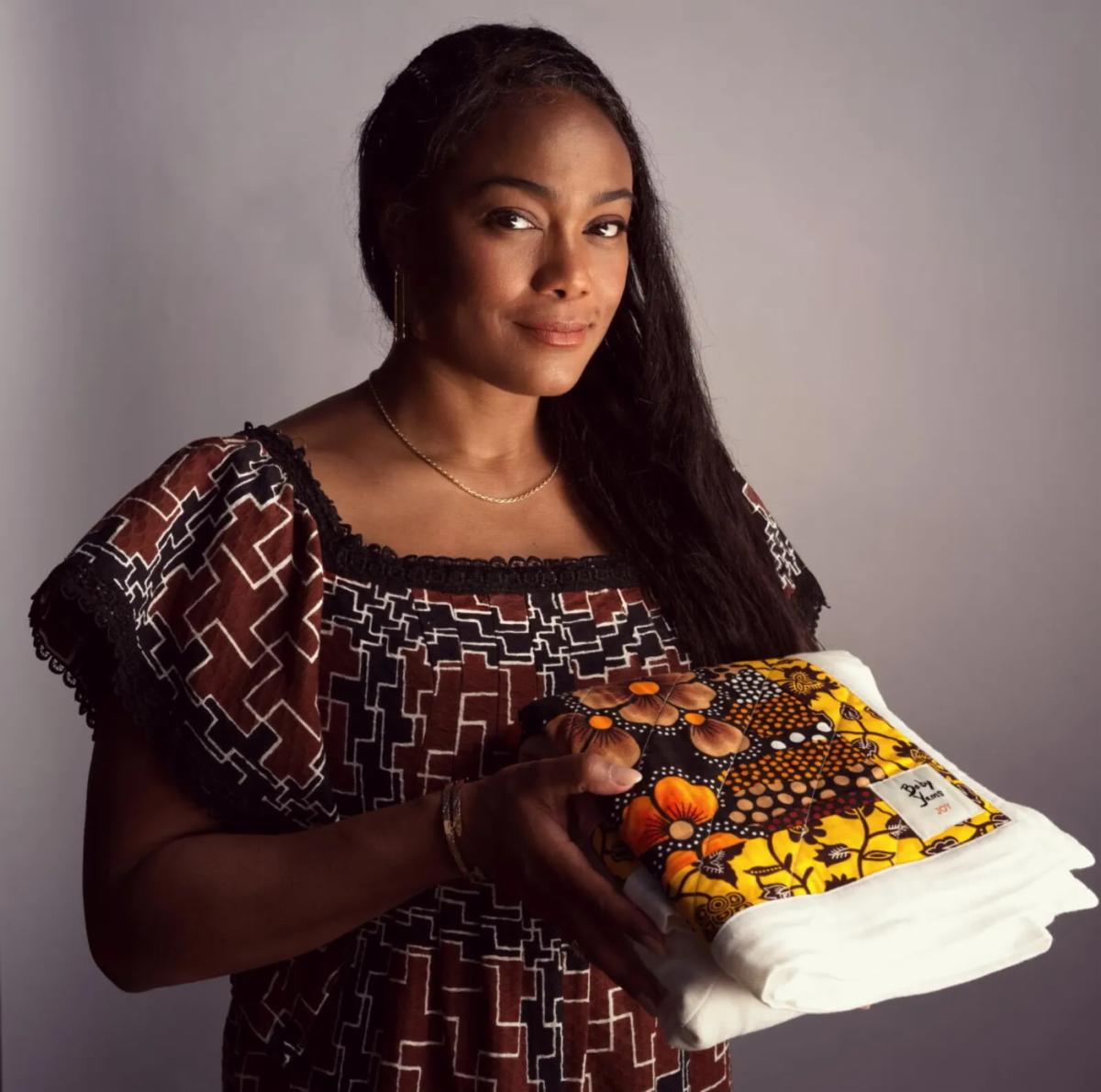
Actor Tatyana Ali is advocating for Black and Indigenous maternal health
Actor and singer Tatyana Ali has become an important voice in a growing movement to improve maternity health outcomes for Black and Indigenous mothers and babies by addressing systemic racism and inequity in maternity care. Ali has been calling for reproductive justice since experiencing what she calls "obstetric violence" during the delivery of her first-born son Aszi in 2016.
The United States is arguably the most dangerous country in the developed world to give birth to a baby, with a much higher rate of maternal deaths compared to other wealthy nations. 649 women in the U.S. died of maternal causes in 2024, according to federal data. But there is a huge disparity in the numbers: Black mothers were more than three times as likely to lose their lives from pregnancy-related causes than white women.
|
The CDC Division I Spent 15 Years Building Is in Peril
— Cuts to the Division of Nutrition, Physical Activity, and Obesity will not make America healthy
by William H Dietz, MD, PhD
The U.S. is in the midst of a chronic disease crisis. The Trump administration's focus on chronic diseases as part of the Make America Healthy Again (MAHA) movement is long overdue. More than 40% of U.S. adults now have obesity, and by 2030, estimates predict that nearly 50% will suffer from obesity and its associated diseases, such as heart disease, diabetes, liver disease, and 13 types of cancer. Controlling this epidemic will require effective, evidence-based preventive efforts that improve diet, increase physical activity, and provide access to quality care and treatment.
I know this firsthand because I served as the first director of the Division of Nutrition, Physical Activity, and Obesity (DNPAO) at the CDC from 1997-2012. Throughout our efforts at CDC, we built a foundation of trusted public health tools and programs that health professionals and communities rely on daily. We created CDC's growth charts, which pediatricians use to track children's growth, and the Body Mass Index calculator, a tool accessed over a million times per month.
|
Writing Style May Explain Patient Message Response Disparities
Bias in writing style explained nearly half of disparities in care team replies to patient portal messages from historically marginalized groups, according to a study published in JAMA Network Open.
Prior studies found these groups—including those who identify as Black or Hispanic, Medicaid recipients, and individuals with high school as their highest education level—were less likely to receive responses that were timely or from the originally addressed physician. Investigators examined more than 3.6 million message threads sent by about 511 000 adults from January 2021 to December 2023 for content and writing style—specifically emotionality, formality, and complexity—in relation to response rate and who responded. Overall, Black patients were less likely than White patients to receive a response from the care team, and the intended clinician was also less likely to reply—about 28% compared with 32% of the time.
Although message content was linked to who responded, patient writing style accounted for roughly 35% to 61% of disparities across racial, educational, and insurance gaps. The researchers highlighted this bias as an important intervention target.
| |
Morehouse School of Medicine and Atrium Health to Construct $700 Million Hospital in Atlanta
In partnership with historically Black Morehouse School of Medicine, Atrium Health is committing more than $700 million to build a new teaching hospital and care network on Metropolitan Parkway in Atlanta. Since Atlanta Medical Center and Atlanta Medical Center South closed in 2022, there has been a significant gap in access to hospital and emergency care for residents of South and West Atlanta. The new hospital aims to close that gap while developing a stronger pipeline of physicians and health professionals prepared to serve communities throughout Georgia.
|
Body composition, geography and ethnicity: understanding the associations with health
Human body composition varies substantially across populations, for a range of different reasons that remain poorly understood. Similar to body size and limb proportions, both fat-free and fat mass are geographically patterned, which may relate both to ancestry but also to persisting ecological stresses, whose effects may be transmitted through the life-course and across generations. The role of genetics in such variability remains uncertain, moreover relevant ecological stresses include not only physical (e.g. temperature) and biological (e.g. diet, subsistence, pathogen burden) components, but also societal factors including colonisation, conflict, migration and economic inequality.
Body composition variability has major implications for health inequalities, and improving our understanding of the different underlying mechanisms may help us understand how to design public health interventions, and optimise the prevention and management of disease. However, the terminology used to address population variability in body composition needs to be reconsidered.
| | |
More Articles of Interest
The Bay State Banner, September 16, 2026
Advances in Physiology Education, September 2026
Georgetown University McCourt School of Public Policy’s Center for Children and Families, September 14, 2026
American Heart Association, September 15, 2026
| | | | |