Weekly Digest Number 46 - November 16th, 2021 |
|
(Editor's Note: In addition to a new era for the U.S. travelling public, this represents a new era for U.S. railroad workers as well. As our numbers have been decimated in recent years by the Class One freight carriers and their cost-cutting operating model, this historic redirection in passenger service holds the promise of thousands of good union railroad jobs. Look for them to be posted in the coming months and years!) |
|
Infrastructure Bill Will Spur 'New Era' for U.S. Passenger Rail, Industry Execs Say |
|
The legislation — which includes $66 billion for railways and $39 billion for public transit — "will modernize vast stretches of the existing U.S. passenger rail network, undoing decades of disinvestment," said RPA President and CEO Jim Mathews in a written statement.
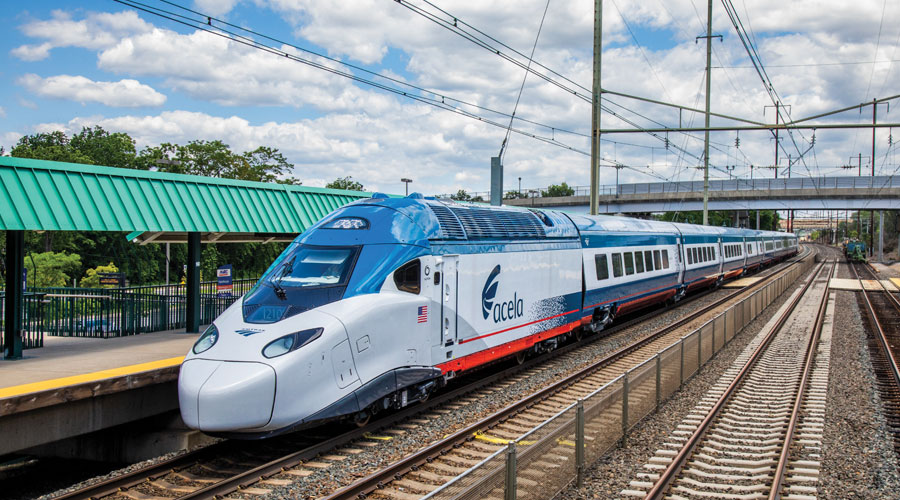
"Amtrak passengers will see newly refurbished train interiors and brand new trainsets; expanded and upgraded train stations and platforms; additional frequencies that offer more convenient travel options and connections; and new energy-efficient locomotives," Mathews said.
Riders will also benefit from "less glamorous" improvements to aging rail infrastructure — such as new bridges, rebuilt tunnels, upgraded signals, and additional sidings, crossovers and double-tracking — that will eliminate delays, add capacity and reduce trip times, he added.
Meanwhile, Amtrak CEO Bill Flynn said in an interview with "Axios on HBO" that the $66 billion in funding will be "transformational" for the intercity passenger railroad and represents "more funding than we've had in our 50 years of history combined."
About half of the funding targeted for Amtrak will go toward expanding intercity passenger rail across the United States, Flynn said.
The funding will help push "Amtrak Connects US," the railroad's 15-year corridor plan that calls for improving 25 existing routes, adding 39 new routes and bringing service to over 160 new communities. That’s on top of the 525 communities the railroad now serves.
|
|
(Editor's Note: RWU has opposed the transport of LNG by rail, as have all previous federal administrations until Trump. See our Statement on the question of LNG by Rail from 2019. It looks like the PHMSA will return to its traditional stance on the question, which is no LNG by rail.)
|
|
PHMSA, FRA Capping LNG By Rail? |
|
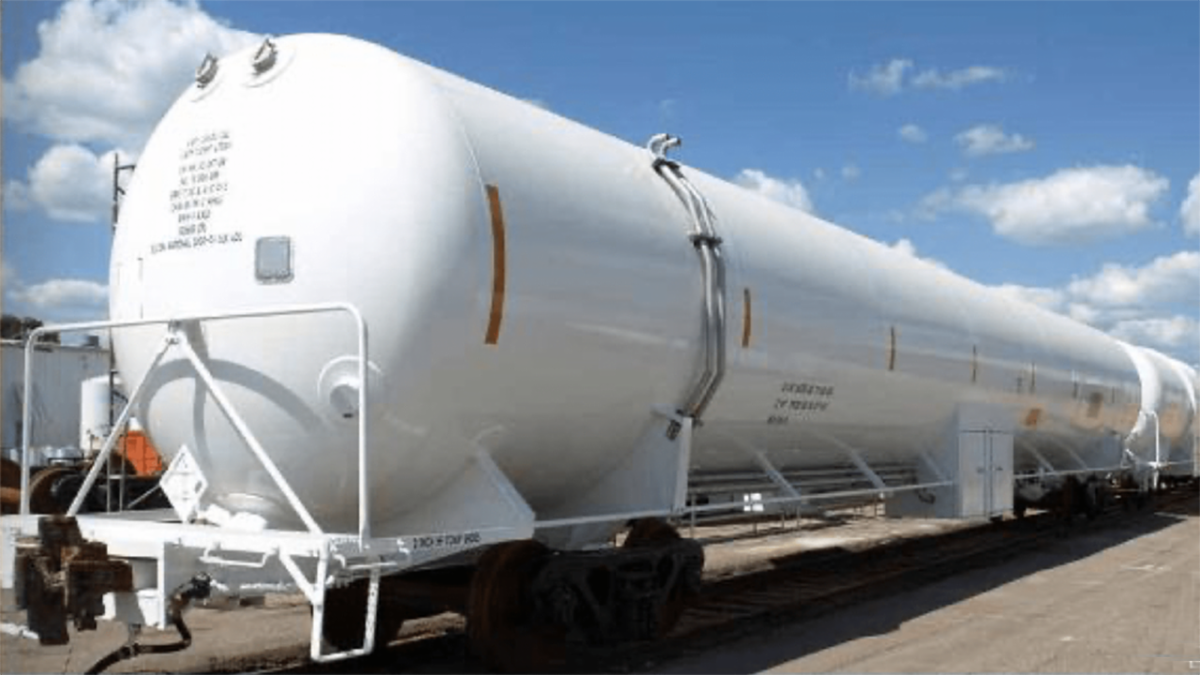
On Nov. 8, the Pipeline and Hazardous Materials Administration (PHMSA) published a Notice of Proposed Rulemaking (NPRM) that would suspend the transportation of liquefied natural gas by rail “until more research and testing can be done to ensure the safety of moving this commodity by rail.” The NPRM would presumably negate a Final Rule issued in 2019.
Now it appears PHMSA and FRA are seeking to reverse course on a regulation issued during the Trump Administration. A summary of the NPRM, 49 CFR Part 172, [Docket No. PHMSA–2021–0058 (HM–264A)] RIN 2137–AF55; Hazardous Materials: Suspension of HMR Amendments Authorizing Transportation of Liquefied Natural Gas by Rail, reads as follows:
“PHMSA, in coordination with the Federal Railroad Administration (FRA), proposes to amend the Hazardous Materials Regulations to suspend authorization of liquefied natural gas (LNG) transportation in rail tank cars pursuant to a final rule published in July 2020, pending the earlier of either completion of a separate rulemaking under RIN 2137–AF54 evaluating potential modifications to requirements governing rail tank car transportation of LNG, or June 30, 2024. Comments must be received by December 23, 2021. To the extent possible, PHMSA will consider late-filed comments as a final rule is developed.”
|
|
(Editor's Note: It appears that the Infrastructure Bill will be a boost for rail safety. One issue RWU has been working on in conjunction with environmental and community groups is the requirement that the rail carriers provide state and local officials with information on hazardous materials moving through their communities by rail. This is in the bill.)
|
|
Infrastructure Bill Includes NTSB's Rail Safety Priorities |
|
The NTSB's recommended rail-safety priorities in the bill would:
•incorporate the board's recommendations from its investigation into the deadly Amtrak Cascades train crash in Dupont, Washington in 2017, including emergency lighting and speed-limit action plans;
• require substance abuse testing for all rail safety-sensitive employees; and
• require railroads to provide state and local officials information on hazardous materials moving through their communities by rail.
In addition, the legislation includes dozens of other provisions to address safety issues in highway, rail, transit and marine transportation.
"This is a very big win for transportation safety," said NTSB Chair Jennifer Homendy in a press release. "From protecting vulnerable road users to equipping vehicles with advanced drunk driving prevention technology, this legislation will save lives."
|
|
Thirty-five Years of Data Shows 4th Quarter Spike in Fatal Roadway Worker Incidents |
|
A comparison of available roadway worker fatality data over a span of 29 years (1986–1994 and 1997–2020) indicates that the highest number of roadway worker incidents occur in the 4th Quarter. Roadway worker fatality data reviewed by FAMES for the 8-year period between 1986 and 1994 (pre-RWP rule) indicates 43 fatal roadway worker incidents. Of these 43 fatal incidents, 34.8 percent (15 of 43) occurred in the 4th Quarter (October–December). FAMES also reviewed 61 fatal roadway worker incidents which occurred between 1997 and 2020 (postRWP rule). Of these 61 incidents, 35 percent (23 of 61) occurred in the 4th Quarter, with October having 12 of these incidents. FAMES has not determined the reasons for the 4th Quarter spike in roadway worker fatalities, but the pattern is undeniable and alarming. In recognition of these trends, FAMES takes this opportunity to remind all roadway workers to be hyper-vigilant with regard to the application of on-track safety protection, especially during the 4th Quarter. If you see someone fouling a track without on-track safety protection, say something to them
If you have concerns regarding the application of on-track safety at the job site, invoke your legally protected right to make a good faith challenge and remain clear of the tracks until the challenge has been resolved.
|
|
(Editor's Note: This is of course the same railroad route that until passenger service was suspended following Hurricane Katrina 16 years ago, hosted an Amtrak train all the way from Jacksonville to New Orleans.) |
|
Statement on CSX and NS Filing on Gulf Coast |
|
“The breathless claims that adding a single daily roundtrip train to the operational environment of two Class I railroads would ‘devastate’ their freight operations are prima facie absurd. It’s clear this is just another stalling tactic by the railroads,” said Mathews. “CSX opened negotiations with a $2 billion price tag to restore Gulf Coast passenger rail service, this new filing prices the upgrades to accommodate the train at $400 million, but we have little explanation behind the difference in figures. It appears that the goal is to simply draw this process out in the hope that talks collapse. This new filing is yet another piece of evidence that the only way forward is for the STB to exercise its regulatory oversight to allow for transparency. If the U.S. hopes to benefit from the passenger rail provisions in the bipartisan infrastructure bill currently being considered by Congress, the STB must provide a path to a speedy resolution to this question of access.”
“This vital transportation link for the 2 million residents of the Gulf Coast in Louisiana, Mississippi and Alabama has been severed since Hurricane Katrina devastated the region in 2005, and it’s long past time to bring it back,” added Mathews. “It’s not just about moving people from Point A to Point B, but the economic value that connection brings. The obstructionism by CSX and NS is denying Alabama’s residents roughly $6 million in economic benefits from constructing and launching the new service, and anywhere from $12 million to as much as $220 million in annual benefits to Alabama’s economy. After 16 years of delays and deferrals, it’s time.”
|
|
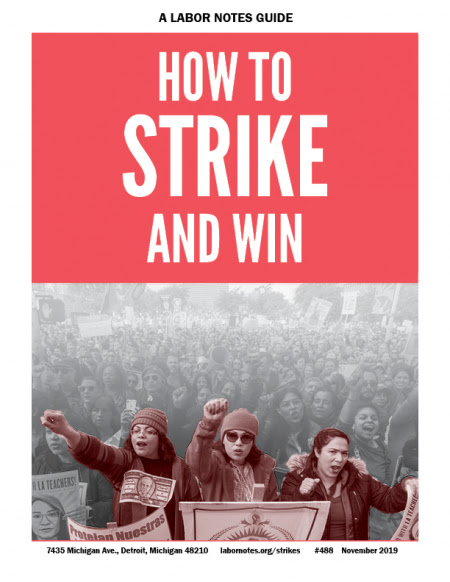
How to Strike and Win: A Labor Notes Guide |
|
Two years ago we published “How to Strike and Win: A Labor Notes Guide.” Given the recent wave of high-profile strikes and the leverage that workers are feeling in a tight labor market, we thought now would be a good time to recirculate it.
This booklet is meant to be of use to anyone who wants to know how to strike and win, whether you’re an officer charting a course for your union or a group of rank-and-filers who want to lead from below.
The stories and quotes included are drawn mainly from Labor Notes reporting, often from the frontlines of the strikes described, and from our handbooks. For our reporting on more recent strikes, visit our website at labornotes.org and follow us on Facebook and Twitter.
|
|
Peter Defazio Introduces Bill to Protect Workers, Passengers from Harm on Transit |
|
U.S. Rep. Peter DeFazio (D-OR), the chairman of the House Committee on Transportation and Infrastructure, introduced the Stop Sexual Assault and Harassment in Transportation Act (H.R. 5706) Oct. 25, legislation to help protect passengers and personnel from sexual assault and harassment in different modes of transportation that includes the creation of new civil penalties that would apply to physical assaults or threats against Amtrak employees and other covered transportation workers.
“When it comes to the transportation of people, safety must always come first, and that includes protecting people from sexual harassment and assault,” Chair DeFazio said. “With this legislation, we can make important strides toward adequately training personnel, establishing formal policies against sexual assault and harassment, and facilitating the reporting of these incidents. In addition, my bill would help the public understand the scope of this problem by establishing the first-ever federal clearinghouse for transportation-related sexual assault and harassment data. I look forward to working with my colleagues to get this legislation signed into law so we can help stop sexual violence and abuse on our roads, on our waters, on our trains, and in our skies.”
This legislation will help prevent sexual assaults and sexual harassment on airplanes, buses, passenger vessels, commuter and intercity passenger railroads, taxis and ride-sharing vehicles. Specifically, it would require covered companies to establish formal policies against sexual assault and harassment, facilitate the reporting of sexual assault and harassment incidents, establish civil penalties for individuals who physically or sexually assault—or threaten to assault—transportation personnel, and require the Department of Transportation to collect and publicly share data on the number of sexual assault or harassment incidents reported by transportation companies covered under the bill. The AFL-CIO Transportation Trades Department (AFL-CIO TTD), of which the SMART Transportation Division is a member, is among the entities that have issued endorsements of the bill.
|
|
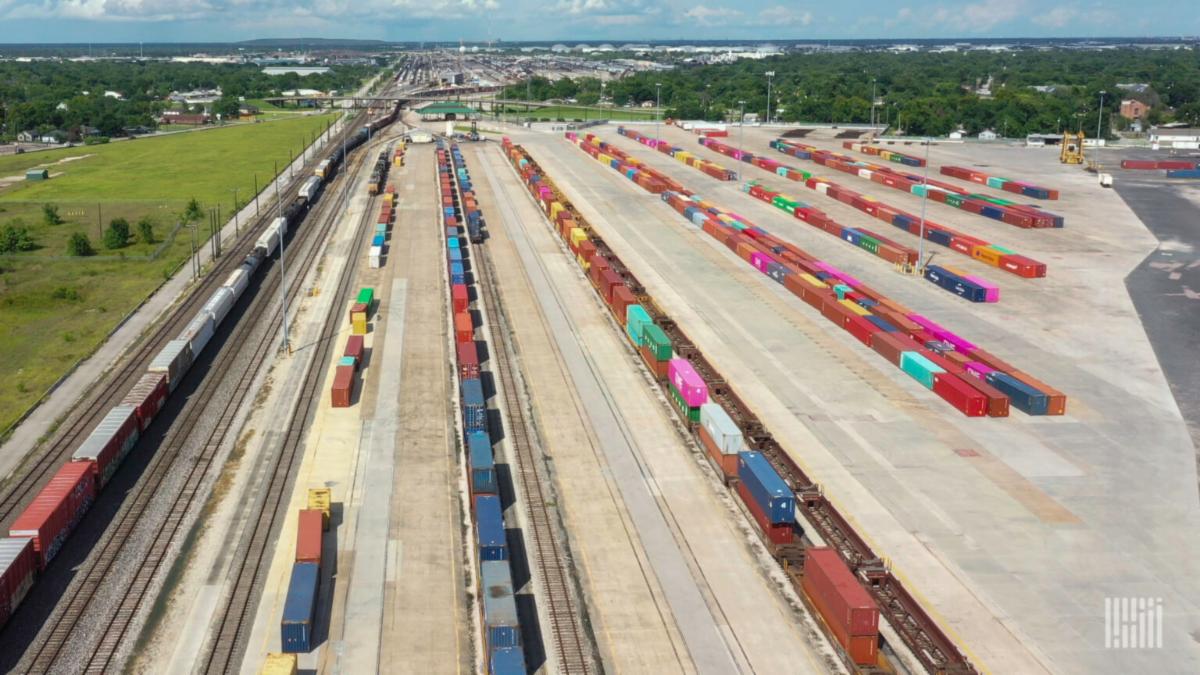
Two Talking Points Dominate Class I Railroads’ Discussions on Q3 |
|
With the third-quarter earnings season in the rearview mirror for the Class I railroads, two themes dominated companies’ commentaries and earnings calls:
- The supply chain congestion and ongoing efforts by the railroads to relieve that congestion and improve network velocity and terminal dwell.
- The need to attract and retain employees so that there are enough crews to handle volume growth.
These themes will likely persist in the fourth quarter and into 2022, sources said.
“From my perspective, the biggest issues in the rail industry in the third quarter (and so far in the fourth) are the congestion and network fluidity issues that have impaired intermodal service levels and have also hit intermodal volume despite there being plenty of demand,” said Mike Baudendistel, a FreightWaves market expert.
“On their analyst calls, the Class I railroads presented laundry lists of actions they are taking to address congestion that included reopening intermodal terminals and finding alternate sources of drayage capacity,” Baudendistel said.
“It was encouraging to hear both Schneider and Hub Group say that rail network fluidity has improved on their respective calls. That is consistent with SONAR data, which shows domestic intermodal volume in the past week up 10% from daily averages in August and September.”
|
|
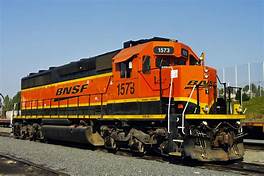
BNSF Joins Class I Legal Battles with Unions Over COVID Vaccine Mandate |
|
BNSF Railway Co. has joined other Class Is that have filed lawsuits against rail unions that are fighting implementation of the COVID-19 vaccine mandate, a company spokeswoman confirmed yesterday.
BNSF's stance had been that an employee's decision to get the vaccine was personal. But, the railroad implemented a vaccine mandate after the Biden administration required federal contractors to implement a vaccine policy. BNSF is a federal contractor.
"While we maintain that the decision to be vaccinated for COVID-19 is a personal one — and have encouraged employees to make the decision that is best for them and their families — the Biden administration’s vaccine mandate now obligates BNSF’s employees to be vaccinated and we all must work toward that end," spokeswoman Amy Casas said in an email. "That said, the company has processes in place for reasonable accommodations for employees exempting them from the vaccination requirement."
Casas confirmed that BNSF on Sunday joined other Class Is that are suing certain rail unions that are fighting the mandate.
"It was apparent that there is a Rail Labor Act (RLA) dispute requiring federal court resolution," she said. "BNSF thinks it's logical for all those RLA issues to be resolved in a single, coordinated litigation."
CSX and Kansas City Southern have said they are encouraging their employees to get vaccinated, but have not yet required them to do so.
|
|
Brightline West Project Advancing in California |
|
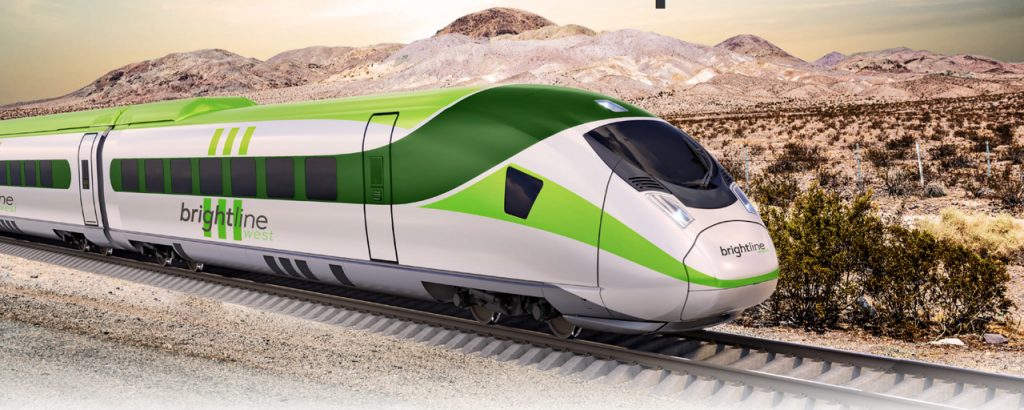
The planned $8 billion Brightline West high speed rail line is another step closer to connecting Las Vegas with Southern California.
Brightline, the private-sector passenger rail operator that runs a 67-mile line in South Florida, on Oct. 21 reported that it had signed a Memorandum of Understanding (MOU) with the California State Transportation Agency (CalSTA), California Department of Transportation (Caltrans), and California High-Speed Rail Authority. The MOU sets the framework for using 48 miles within Interstate 15 for Brightline West to link its proposed Victor Valley, Calif., station and a newly planned Cucamonga Station in Rancho Cucamonga, Calif., Brightline said.
The city of Rancho Cucamonga is currently designing a multi-modal station as part of a new transit district. That station will include the existing Metrolink regional/commuter rail platforms and a planned underground tunnel to Ontario (Calif.) International Airport. Metrolink offers service from its current Rancho Cucamonga station (adjacent to the planned facility) to Los Angeles along the San Bernardino line.
The trip time for Brightline West between Las Vegas and Rancho Cucamonga is expected to be two hours, Brightline said, or three hours between Las Vegas and Los Angeles. Brightline West is slated to support more than 11 million trips annually.
|
|
BNSF Posts Revenue, Income and Volume Gains in Q3 |
|
BNSF Railway Co. yesterday reported third-quarter 2021 net income rose 14% to $1.5 billion and total revenue climbed 12% to $5.8 billion compared with Q3 2020 income and revenue levels.
Operating income during the quarter was $2.3 billion, a 12% increase, and operating expenses were $3.5 billion, an 11% increase, compared to a year ago, according to financial results posted on BNSF's website.
The Class I reported an operating ratio of 59.5% in the quarter compared to 59.7% a year ago.
BNSF's revenue gain reflected higher volumes of 4% in the quarter. The average revenue per car/unit increased 5%. Higher rates per car/unit and increased fuel surcharges principally from higher fuel prices were offset by business mix changes.
Revenue changes were driven by continued improvements from the 2020 effects of the COVID-19 pandemic, partially offset by the ongoing disruptions in the global supply chain.
|
|
Tier 4, ‘All Notches, All the Time’ |
|
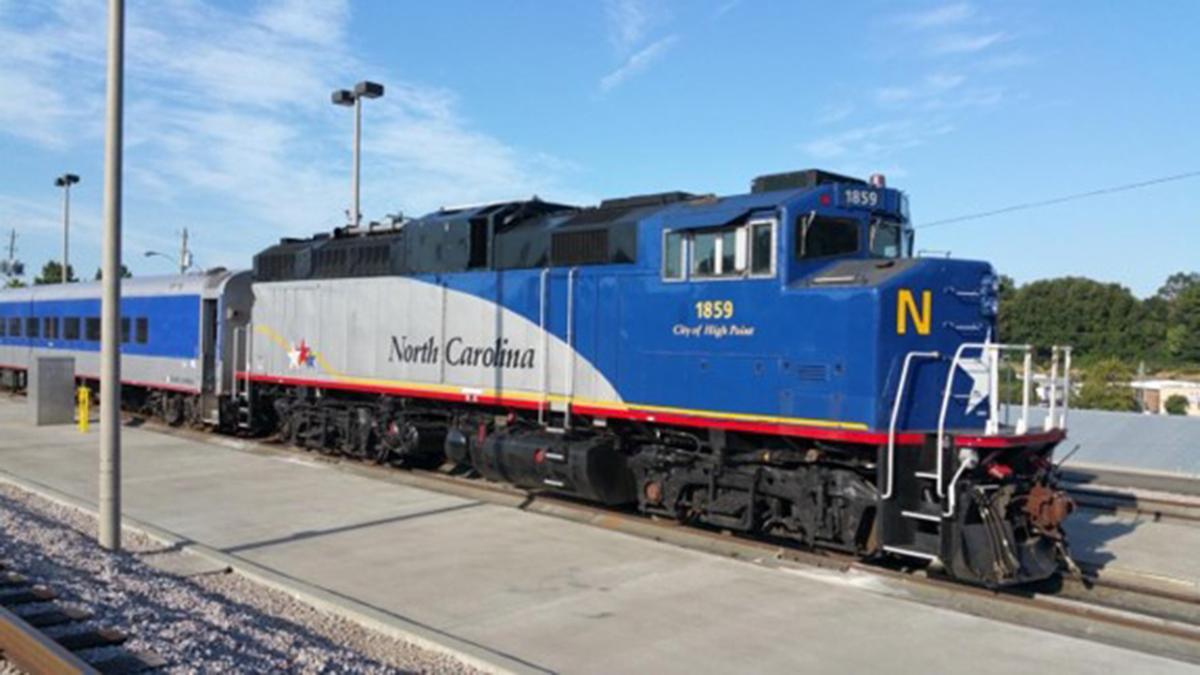
Fullerton, Calif.-based technology company Rail Propulsion Systems LLC (RPS), partnering with the North Carolina DOT, the North Carolina State Clean Tech Center and the Federal Highway Administration, has demonstrated what it’s describing as “the first diesel passenger locomotive in the United States with combined in-use emissions lower than the current EPA Tier 4 standard.”
RPS’s broad-patented BATS (Blended After-Treatment System), as deployed on a revenue-service EMD F59PH diesel-electric, has produced “lower emissions and fuel consumption, and is less expensive than a new Tier 4 diesel locomotive,” the company claims. “As an added advantage, the F59PH retains the separate Head End Power (HEP) engine for passenger car lighting and temperature control, preserving comfort and safety for passengers in the event of a failure of the main engine.”
|
|
|
|
|
|
|